Buyer Fit Snapshot
| Best fit | kraft shopping bags moq for packaging buyers comparing material specs, print proof, MOQ, unit cost, freight, and repeat-order risk where brand print, material, artwork control, and repeat-order consistency matter. |
|---|---|
| Quote inputs | Share finished size, material target, print colors, finish, packing count, annual reorder estimate, and delivery region. |
| Proofing check | Approve dieline scale, logo placement, barcode or warning zones, color tolerance, and any recyclable or compostable wording before bulk production. |
| Main risk | Vague material claims, crowded artwork, or missing packing details can create delays even when the unit price looks attractive. |
Fast answer: Kraft Shopping Bags MOQ: Pricing, Specs, and Lead Time should be specified like a repeatable production item. The safest quote includes material, print method, finish, artwork proof, carton packing, and reorder notes in one written spec.
What to confirm before approving the packaging proof
Check the product dimensions against the actual filled item, not only the sales mockup. Ask for tolerance on folds, seals, hang holes, label areas, and retail display edges. If the package carries a logo, QR code, warning copy, or legal claim, reserve that space before decorative graphics fill the panel.
How to compare quotes without losing quality
Compare board or film grade, print process, finish, sampling route, tooling charges, carton quantity, and freight assumptions side by side. A lower quote is only useful if the supplier can repeat the same color, closure quality, and packing count on the next order.
Buying kraft shopping bags MOQ usually starts with a simple number and then gets real pretty quickly. The minimum order quantity is not just a supplier line item; it is the point where setup time, paper yield, packing labor, proofing, and freight all start showing up in the unit cost. I have seen first-time buyers look at a 1,000-piece quote and wonder why it feels closer to the cost of a press changeover than the cost of paper. That reaction makes sense, because on small runs the fixed work is doing most of the heavy lifting.
From a packaging buyer's point of view, kraft shopping bags MOQ is shaped by how the line actually runs. A factory does not price bags around a neat idea of "minimum." It prices around how efficiently a size, handle, paper weight, and print layout can move through cutting, gluing, drying, inspection, and carton packing without creating a pile of waste. That is why one quote can look perfectly fine at 5,000 pieces and feel oddly stiff at 1,000.
Many projects begin with a deadline instead of a perfect spec. A store opening, a seasonal promotion, a trade show, a regional rollout, or a last-minute packaging refresh can all put pressure on the order long before the buyer has every detail locked down. So the real job is not just finding the smallest number a supplier will accept. It is matching the quantity to the use case, then simplifying the bag anywhere the brand experience will still hold up.
Kraft Shopping Bags MOQ: The Buying Reality
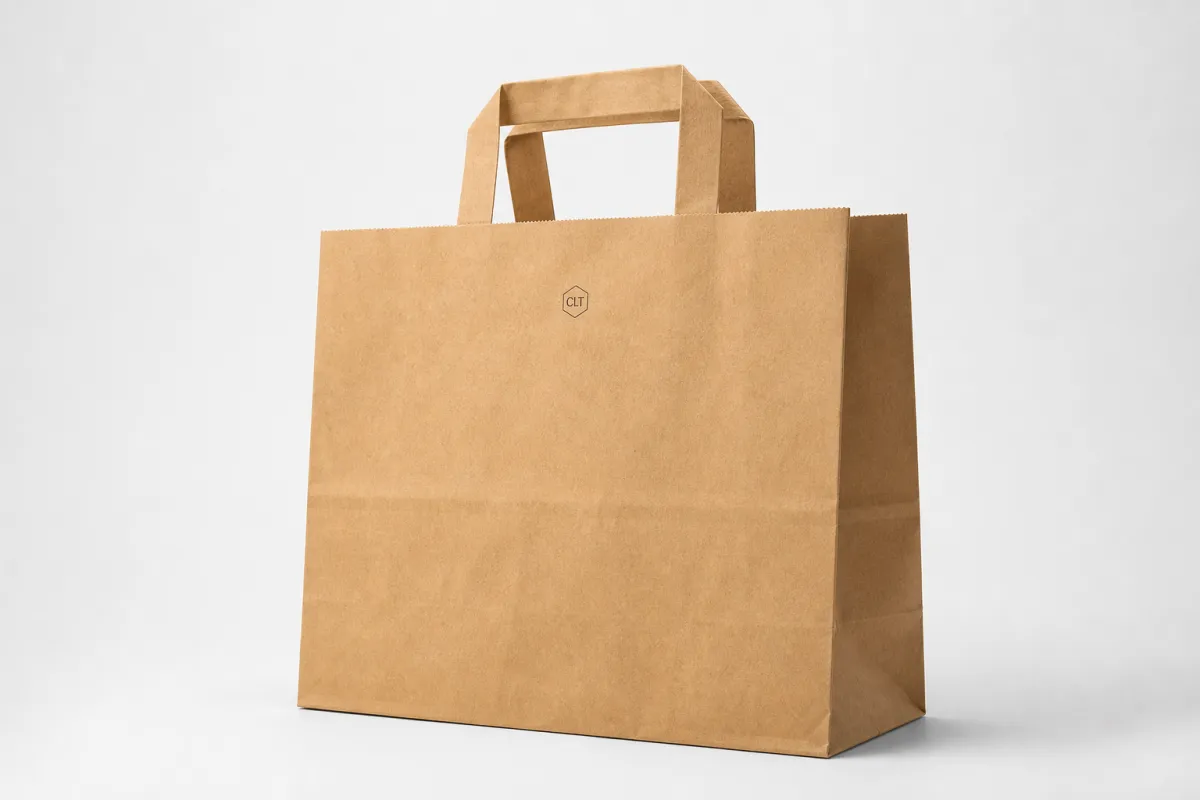
The first thing that catches a lot of buyers off guard is simple: kraft shopping bags MOQ can make a larger order cheaper per bag even when the bigger number feels harder to justify. Once a factory stops a line, changes a die, resets print, or shifts the way cartons are packed, the math moves quickly. That is why a quote for 1,000 pieces can sit much higher per unit than the same bag at 3,000 or 5,000 pieces.
For most production teams, kraft shopping bags MOQ is really a conversation about line efficiency. The factory needs enough volume to spread press setup, cutting, gluing, inspection, and spoilage allowance across a run that makes sense operationally. Non-standard dimensions, unusual handle choices, and multi-color artwork all push the break-even point higher. That is not a sales trick. It is just how paper converting behaves in the real world.
Most buyers run into this decision in one of three ways. A store is opening and needs branded bags on day one. A promotion is coming up and the packaging has to match the campaign. A retailer is refreshing stock across several locations and wants to avoid mixing old bags with new ones. Each scenario changes how kraft shopping bags MOQ should be judged, because inventory risk is part of the real cost, not an afterthought.
One thing that gets missed more often than it should: a bag order is not only a purchase, it is a brand consistency decision. If one location runs out of the right bag and substitutes a different style, customers notice. If a chain restocks late, the packaging story gets choppy. Smart buyers compare kraft shopping bags MOQ against forecasted usage, replenishment lead time, and how much stock they can carry without tying up too much cash.
The mistake is not ordering too few bags. The mistake is ordering the wrong spec at the wrong quantity and paying extra to fix it later.
For that reason, I treat kraft shopping bags MOQ as a business decision rather than a vague supplier term. The best result balances quantity, budget, and print requirements while keeping the run simple enough to produce consistently. That balance is where the real savings usually live.
Product Details: What You Are Actually Ordering
Before comparing kraft shopping bags MOQ options, define the product itself. "Kraft bag" sounds straightforward, but the details affect appearance, strength, print quality, and price more than most buyers expect. Natural brown kraft gives a warm, earthy look and usually supports a recycled message. White kraft creates stronger print contrast and often helps light brand colors read more clearly. Recycled-content paper can support a sustainability story, but only if the documentation actually matches the claim.
Handle style matters just as much. Twisted paper handles are common in retail because they strike a good balance between cost and comfort. Flat paper handles can work well for lighter carry loads and tighter budgets. Die-cut handles create a cleaner, more minimal look, while rope handles move the bag into a more premium lane. Each option changes how the bag feels in hand and how the line is set up, which means kraft shopping bags MOQ can shift depending on the handle chosen.
Bag construction deserves the same attention. Flat bags are efficient, but gusseted sidewalls add usable volume for folded apparel, boxed goods, or bundled purchases. Reinforced bottoms improve load support, especially when the bag carries heavier items such as candles, boxed cosmetics, or multiple garments. Folded tops and board inserts change presentation and durability. These are not decorative extras. They affect how the customer carries the bag and whether it survives the walk to the car.
Print choice is where many brands spend more than they need to. A single-color logo on natural kraft can look sharp if the mark is designed for the substrate. Two-color branding adds impact without always creating a big jump in complexity. Full-coverage artwork, gradients, or inside printing can be striking, but they also add press time, registration risk, and usually a higher kraft shopping bags MOQ. The right choice depends on whether the bag is meant to be a quiet carrier or a visible retail billboard.
Common end uses help define the right spec:
- Boutiques and apparel stores that want a polished, reusable-feeling carrier.
- Grocery and specialty food programs that care about carry strength and repeat handling.
- Trade shows and event kits where branding has to stay readable from a distance.
- Gift packaging for seasonal promotions, holiday sets, and VIP purchase moments.
- Multi-location retail rollouts where matching bags protect brand consistency.
The practical lesson is easy to see. If the bag has to support garments, boxed goods, or multiple impulse purchases, the spec should be built for function first and decoration second. That approach often keeps kraft shopping bags MOQ more manageable because the factory is not trying to solve three problems at once. In my experience, that is where a lot of pricing confusion starts and where a little clarity saves real money.
For buyers who need a recycled-content story, use actual documentation rather than broad green language. The EPA recycling guidance is a practical starting point for understanding how recycled paper claims are framed. For certified fiber sourcing, the Forest Stewardship Council is the reference many packaging teams use when they want a traceable forestry claim. If the claim matters on a label or in a retail pitch, the paperwork needs to be there too.
Specifications That Affect Performance and MOQ
Paper weight is one of the first details that changes kraft shopping bags MOQ pressure. A slightly heavier sheet can improve stiffness, reduce tearing, and make the bag feel more substantial, yet it also raises material cost and may change how efficiently the run can be produced. For many retail applications, 120 to 150 gsm sits in a common middle range. Heavier carry loads often move buyers into 170 to 200 gsm territory, especially when the bag has to handle repeated use.
Dimensions matter even more than many buyers expect. Width, gusset, height, and handle drop all influence usable volume and print layout. A small change in width can alter the carton pack count, which shifts freight efficiency and often the economics of kraft shopping bags MOQ. If a team keeps asking for "just a little taller" or "just a bit wider," the factory may need to revise the cutting pattern or the packing configuration. That kind of change sounds minor in a meeting and turns into a real production adjustment on the floor.
Print coverage changes the job in a very direct way. A one-color logo with plenty of open space is far easier to run than a full-bleed design or a multi-color pattern that demands tight registration. Inside printing adds another layer of setup. White ink on brown kraft can look crisp, but it may require different handling than dark ink on white kraft. Every extra step is another reason kraft shopping bags MOQ can move upward.
Strength is not only about paper weight. Handle attachment, bottom reinforcement, and glue quality all matter. A twisted handle attached cleanly and reinforced properly can carry more than a cheaper version with weak bonding. If the bag will hold multiple apparel items, boxed cosmetics, or small hard goods, ask for an honest load expectation rather than a sales promise. Buyers who match load needs to construction details usually see fewer complaints and fewer replacements, which is kind of the whole point.
Specs to confirm before quoting
- Exact size in width x gusset x height.
- Handle style and handle drop.
- Paper weight or gsm.
- Print colors, ink coverage, and print side.
- Bottom reinforcement or board insert requirements.
- Destination, shipping method, and required in-hand date.
There is another layer to check: standards and testing. If the bag will travel in cartons through a distribution network, transit stress matters. The ISTA family of test methods gives a useful reference point when a packaging team wants to think more carefully about crush, drop, and handling risk. A paper shopping bag is not the same as a corrugated shipper, but the logic is familiar: the package should survive the trip it is actually taking.
Sustainability claims belong in the spec review as well. Recyclable construction sounds fine, but buyers should ask whether the paper, inks, adhesives, and handle materials support that claim in practice. A bag that looks eco-friendly but lacks documentation is a weak trade. Keeping those details clear often reduces kraft shopping bags MOQ friction because the quote is based on a defined product instead of a moving target.
If you standardize size and handle style across multiple locations, buying flexibility usually improves. The factory can reuse a known setup, and your team can avoid spec drift from one reorder to the next. That is one of the cleanest ways to protect kraft shopping bags MOQ over time without settling for generic packaging.
Kraft Shopping Bags MOQ, Pricing, and Unit Cost
This is where kraft shopping bags MOQ stops sounding like a procurement phrase and becomes a real budget line. A quote is built from several cost layers: setup, material, conversion, packing, spoilage allowance, and freight. If the bag is customized, there may also be knife charges, tooling fees, or extra proofing steps. None of those items are unusual. They are just easy to overlook when a buyer focuses only on the headline unit price.
Fixed costs matter most at lower quantities. Press setup, plate preparation, machine adjustments, and first-article inspection all have to happen whether the order is 1,000 bags or 10,000 bags. Once those costs are spread over a larger run, unit cost drops quickly. That is why kraft shopping bags MOQ often creates a sharp change in cost per piece between the smallest tier and the next tier up.
Material choice shifts the economics too. Brown kraft is usually easier on the budget than white kraft, and recycled-content paper can be competitive depending on supply. Twisted paper handles are often more cost-effective than rope handles. Full-color artwork, heavy coverage, or specialty finishes can add significant cost. The most useful quote is not the cheapest quote. It is the one that shows how the price changes as quantity changes, because that reveals the real breakpoint in kraft shopping bags MOQ.
| Quantity Tier | Typical Spec | Estimated Cost Per Piece | Why It Costs That Way |
|---|---|---|---|
| 1,000 pcs | Standard size, 1-color print, twisted paper handle | $0.42-$0.68 | Setup charges are spread across fewer bags, so kraft shopping bags MOQ has a bigger effect on unit cost. |
| 3,000 pcs | Same size, 1-2 colors, standard brown kraft | $0.24-$0.39 | Better run efficiency, lower setup burden per bag, and improved carton packing. |
| 5,000 pcs | White kraft or upgraded brown kraft, moderate print coverage | $0.18-$0.31 | This is where many buyers see the strongest drop in kraft shopping bags MOQ related pricing. |
| 10,000 pcs | Heavier paper, custom size, premium handle | $0.14-$0.24 | Bulk pricing improves, but only if the spec stays straightforward enough to run efficiently. |
The table is directional rather than universal. A die-cut handle, thicker board insert, extra finishing, or unusually large bag can shift those numbers quickly. Freight is another swing factor. Air shipping can get a small order delivered on time, but it often pushes landed cost high enough to erase the savings of a lower quoted price. Ocean freight is slower, yet it usually protects the economics of kraft shopping bags MOQ better on larger runs.
For a buyer comparing suppliers, the cleanest method is to ask for tiered pricing at two or three quantities. Request the same spec at 1,000, 3,000, and 5,000 pieces, or at 3,000, 5,000, and 10,000 if the project is larger. That shows where the real unit-cost break sits and whether the factory has a sensible step between tiers. It also makes bulk pricing easier to compare without guessing which number is marketing and which number is operational reality.
Do not stop at the factory price. Compare total landed cost, including shipping, duties if applicable, packing format, and any repacking needed for distribution. A quote that looks cheaper by a few cents can disappear after freight is added. If your finance team cares about cost per piece, the landed number is the one that matters most. That is the number that tells you whether kraft shopping bags MOQ is truly affordable or only looks that way on paper.
One more practical note: if a supplier can quote a lower MOQ by simplifying the spec, that is often a useful trade. Standard dimensions, standard handles, fewer print colors, and modest coverage tend to reduce both setup time and risk. Buyers who know where to simplify usually get better answers from the factory and less friction around kraft shopping bags MOQ. Honestly, that is one of the easiest ways to protect budget without making the bag feel cheap.
Production Steps, Process, and Lead Time
A clean kraft shopping bags MOQ order usually moves through the same sequence: spec collection, dieline review, artwork proofing, sample approval, production, quality control, packing, and shipment. The order moves quickly when every detail is ready on day one. It slows the moment dimensions are unclear, artwork is incomplete, or the buyer takes too long to approve a sample.
Most delays are not manufacturing mysteries. They are approval delays. A brand team sends a logo file but forgets to confirm bleed. The customer approves the size but changes the handle style. A color reference arrives in words instead of a matching standard. Each one adds time. If you want kraft shopping bags MOQ to stay on schedule, the quickest win is a complete spec sheet and a single point of approval.
Typical lead times depend on the job's complexity. A straightforward order might move from proof approval to production in 10 to 15 business days. More customized runs can take 15 to 20 business days or more. If pre-production samples are needed, add time for that step. Shipping then sits on top of the production window, and transit can be a few days or several weeks depending on whether the goods move by air or ocean. For a store opening, that means working backward from the date on the calendar, not forward from the quote date.
Sample approval is worth the extra step when brand color matters, when the order will be repeated, or when the bag sits in a premium retail environment where presentation is part of the product experience. A physical sample can reveal handle feel, paper stiffness, and print contrast in a way a screen proof never will. If the project is simple, a digital proof may be enough. If the bag is tied to a major launch, the sample is cheap insurance against a very visible mistake. That is especially true with kraft shopping bags MOQ orders that will be used across multiple locations.
What can slow lead time
- Late artwork revisions after proof approval.
- Missing size confirmation or handle drop details.
- Color matching requests without a reference standard.
- Sample changes after production has already been scheduled.
- Freight delays or a mismatch between factory packing and warehouse receiving rules.
There is also a shipping side to the timeline. If the bags go into cartons and then into a distribution center, pallet configuration matters. If the team needs master cartons, labeled cartons, or a certain pallet height, say that early. Those details can affect both packing and lead time. In other words, kraft shopping bags MOQ is not just a number from the factory; it is a chain of decisions that touches receiving, storage, and deployment.
For larger orders, the freight choice can affect product integrity as much as schedule. Air keeps the launch on track, but it raises landed cost. Ocean keeps the budget healthier, but it asks for more discipline on the calendar. If the bags are part of a coordinated retail reset, that scheduling choice should be made while the design is still under review, not after the production slot is already booked. That is how experienced buyers keep kraft shopping bags MOQ from turning into a rushed compromise.
For teams that want a broader ordering checklist, our FAQ covers common proofing and shipping questions in a simple format. It is a useful companion when you are comparing bag suppliers or getting ready to send files.
Why Choose Us for Kraft Shopping Bags MOQ Orders
Custom Logo Things is a strong fit for buyers who want direct, practical answers on kraft shopping bags MOQ instead of layered handoffs and vague promises. A direct manufacturing relationship usually shortens the back-and-forth, clarifies what can be changed without resetting the run, and makes the quote easier to trust. For a transactional purchase, that matters just as much as the bag itself.
One reason buyers value a direct partner is spec control. If the size, handle, and print detail are clear, the order can move faster and the risk of inconsistency drops. That reduces the chance of weak handles, poor glue lines, off-register print, or bags that arrive slightly different from batch to batch. When kraft shopping bags MOQ is being compared across suppliers, the supplier who can explain the process in plain language is often the safer choice.
We also see a lot of value in recommendation support. Not every buyer knows whether twisted handles, flat handles, or die-cut handles are the right fit. Not every brand knows whether brown kraft or white kraft will reproduce the logo best. The right supplier should be able to say, "Here is the spec that fits the use case," rather than pushing the most expensive option by default. That kind of guidance keeps kraft shopping bags MOQ aligned with the actual job instead of the sales pitch.
Good packaging buying is not about chasing the lowest line item. It is about choosing the spec that survives the warehouse, the store floor, and the customer handoff.
Sustainability transparency is another reason to work carefully. If a bag is recyclable, made with recycled content, or sourced from certified fiber, the documentation should be available. Claims should be supportable, not decorative. Buyers increasingly ask for that evidence because their own customers do. A supplier who can tie claims to real material details makes kraft shopping bags MOQ easier to defend internally and easier to explain externally.
Compared with marketplace sourcing, a direct manufacturing model also reduces the number of people touching the order. Fewer middle steps usually mean fewer misunderstandings, faster corrections, and better accountability when a problem needs to be fixed. That is not marketing language. It is how real packaging programs stay on track when deadlines are tight and the bag is part of a visible retail touchpoint.
If you are evaluating kraft shopping bags MOQ across several vendors, the best signal is not who talks the loudest. It is who can give a clear spec confirmation, a realistic production window, and a useful explanation of where the cost is coming from. That is the kind of response that builds trust quickly.
Next Steps for Kraft Shopping Bags MOQ Orders
The easiest way to move a kraft shopping bags MOQ quote forward is to send a complete request the first time. The more precise the input, the faster the answer. A strong brief should include bag dimensions, quantity, paper weight, handle style, print colors, finish, destination, and target in-hand date. If any of those items are still undecided, say so clearly and ask for a recommended range.
Ask for at least two or three pricing tiers. That is how you see the unit cost curve instead of staring at one number and guessing whether it is good. If the price drops sharply at 3,000 or 5,000 pieces, the real answer may be to adjust quantity rather than spec. If the gap stays small, the smaller order may be the better move. Either way, the comparison gives you a cleaner read on kraft shopping bags MOQ.
When branding has to match an existing retail system, request a sample image, digital proof, or physical sample before you commit. That matters most when your bag will sit beside branded tissue, boxes, or other packaging in the same store. A mismatch in color or finish is easy to spot and expensive to correct. A little extra review time protects both the launch and the budget.
Work backward from the launch date. Identify the latest safe approval point, then add a buffer for production and transit. If the date is fixed, tell the supplier that upfront instead of waiting until the quote stage is over. A factory can usually advise whether a chosen kraft shopping bags MOQ fits the calendar, but only if the buyer shares the real deadline early.
Use this short ordering checklist:
- Confirm bag size, gusset, and handle drop.
- Decide on brown kraft, white kraft, or recycled-content paper.
- Choose the print method and number of colors.
- Set the quantity tier you want quoted.
- Share ship-to details and receiving requirements.
- Send artwork files or a logo reference.
- State the latest acceptable delivery date.
If you want a fast, accurate quote, send the target quantity, artwork, and shipping information together. That helps confirm kraft shopping bags MOQ quickly and keeps the job from drifting through avoidable revisions. It also gives the supplier enough information to recommend a sensible spec instead of a generic one. For buyers who care about cost per piece, lead time, and presentation quality, that is the cleanest route to a good result.
Done well, kraft shopping bags MOQ becomes less about fighting minimums and more about Choosing the Right balance between quantity, cost, and brand impact. That is the part that actually protects inventory, improves unit cost, and keeps the packaging plan under control. Keep the spec tight, ask for tiered pricing, and make the timeline part of the quote from the start.
Frequently Asked Questions
What is a typical kraft shopping bags MOQ for custom orders?
kraft shopping bags MOQ depends on size, paper weight, handle style, and print complexity. Simple, unprinted bags can often be produced in lower quantities than multi-color custom bags. The best way to judge the right threshold is to ask for tiered quotes so you can see where unit cost improves.
How does kraft shopping bags MOQ affect unit cost?
Fixed setup costs are spread across more bags as quantity rises, so kraft shopping bags MOQ has a direct impact on cost per piece. Heavier paper, special handles, and full-coverage printing usually increase the price. The lowest factory quote is not always the lowest landed cost once freight is added.
Can I lower the MOQ by simplifying the bag spec?
Yes. Standard sizes and standard materials are usually easier to produce at smaller quantities, which can help with kraft shopping bags MOQ. Reducing print colors or choosing a simpler handle can also improve pricing flexibility. Custom dimensions and premium finishes usually push MOQ higher.
What details should I send to get an accurate quote on kraft shopping bags MOQ?
Send dimensions, quantity, paper weight, handle type, print colors, and the shipping location so kraft shopping bags MOQ can be quoted correctly. Include artwork files or a logo reference so print feasibility can be confirmed. It also helps to share your target delivery date so lead time can be matched to production capacity.
How long does production usually take after MOQ is confirmed?
Timing depends on proof approval, material availability, and the print method, so kraft shopping bags MOQ should be paired with a clear schedule from the start. Straightforward orders usually move faster than highly customized bags with several print steps. The fastest way to protect the timeline is to approve proofs promptly and keep the spec stable.

