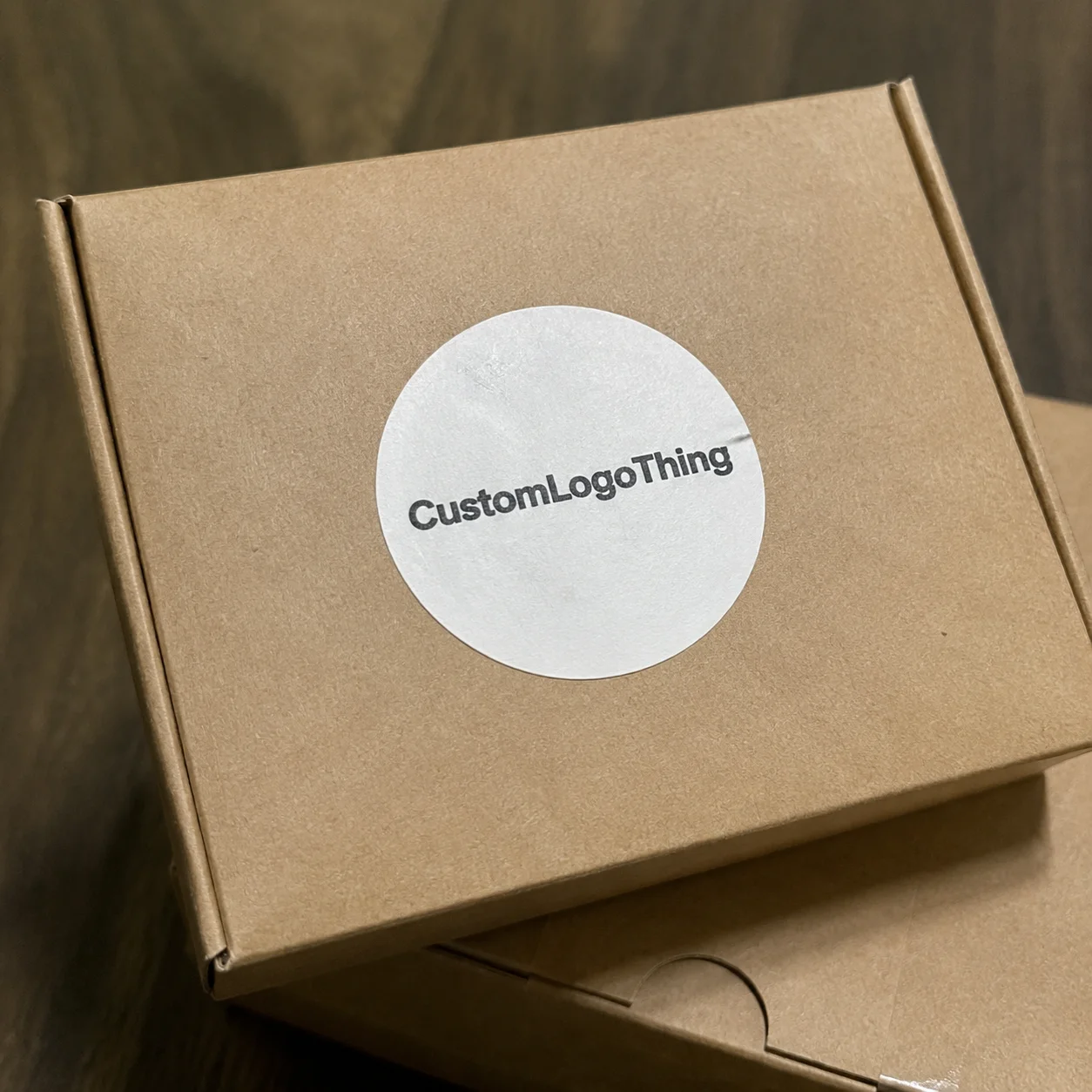
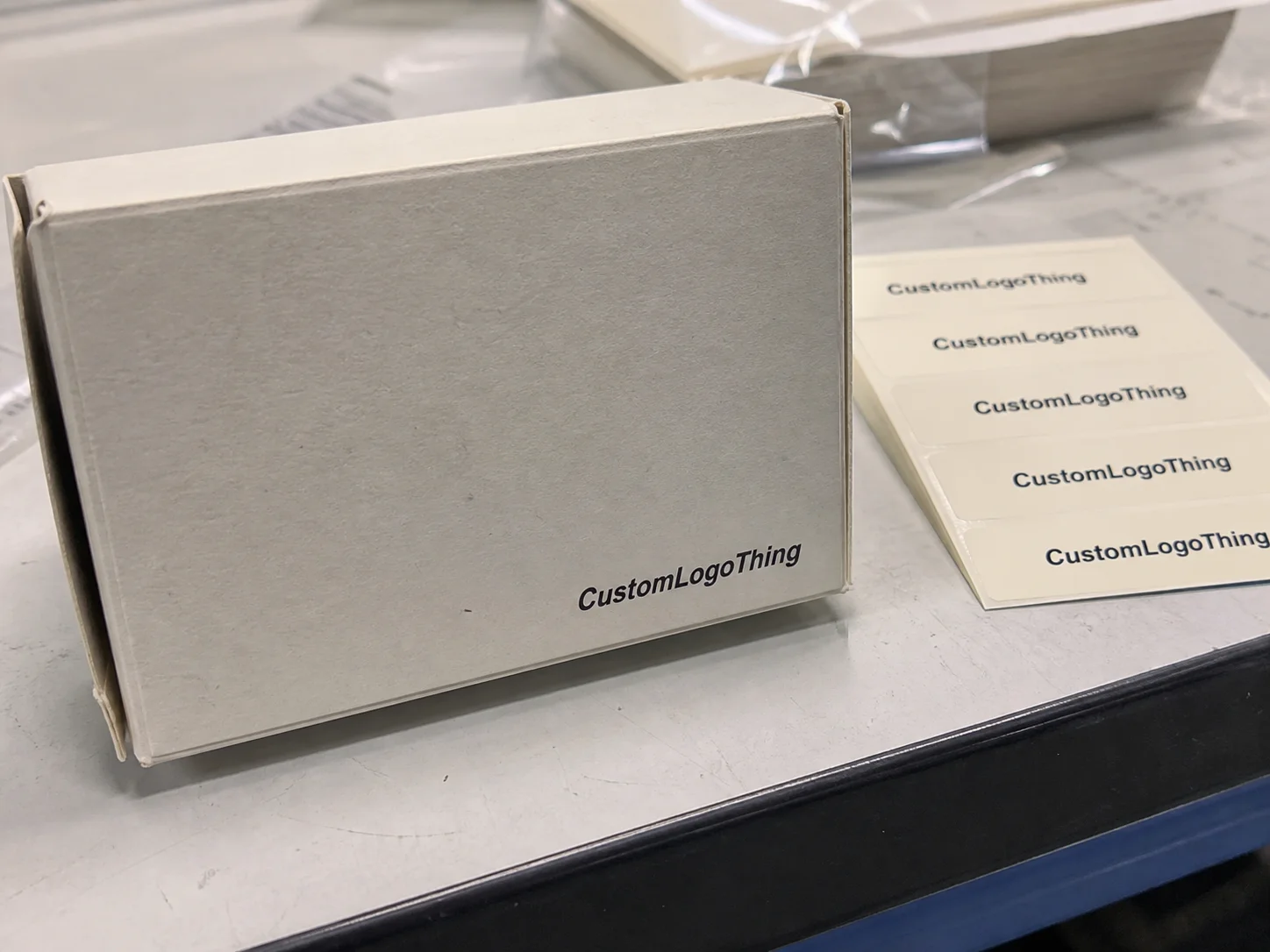
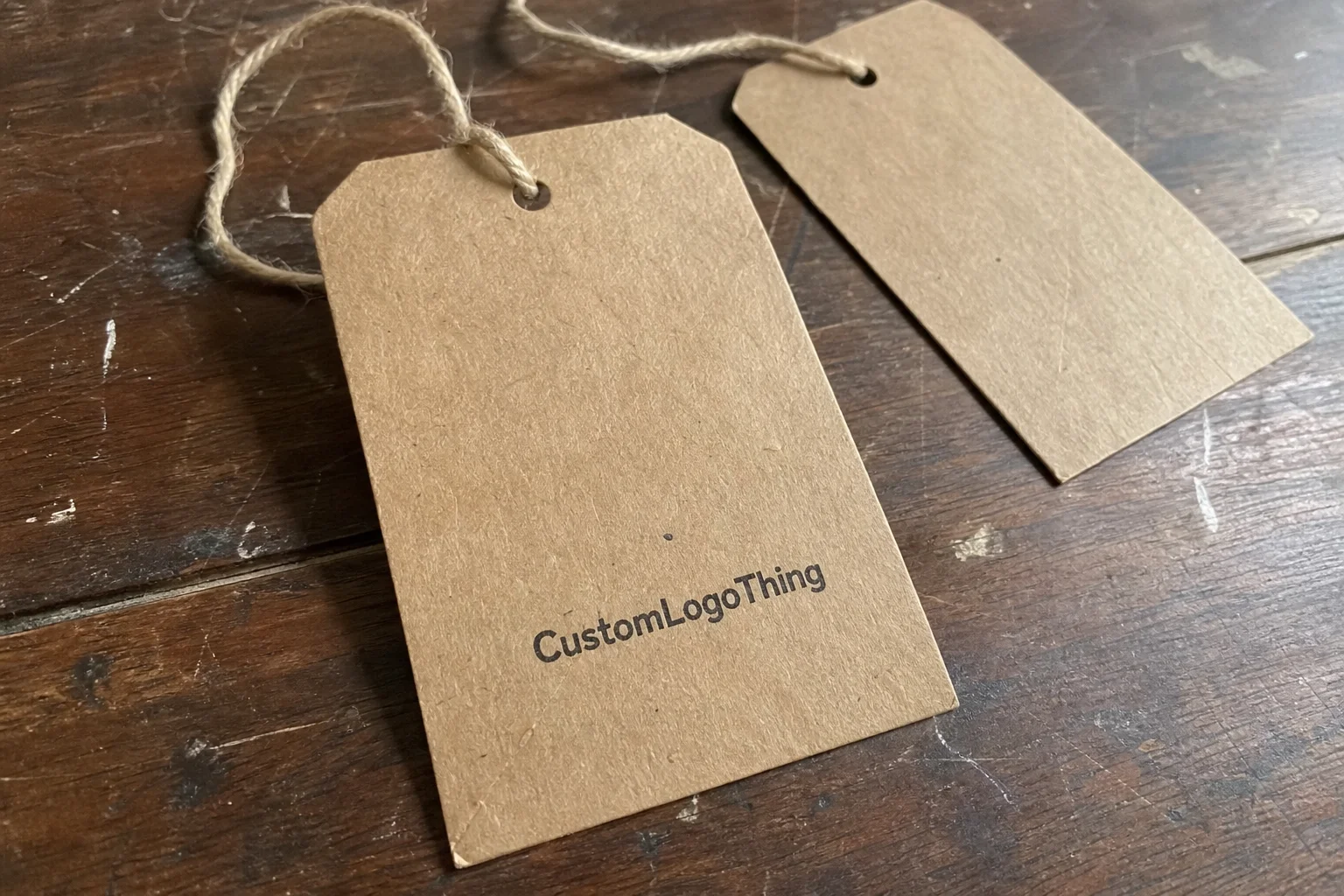
Buyer Fit Snapshot
| Best fit | logo packaging for small business for packaging buyers comparing material specs, print proof, MOQ, unit cost, freight, and repeat-order risk where brand print, material, artwork control, and repeat-order consistency matter. |
|---|---|
| Quote inputs | Share finished size, material target, print colors, finish, packing count, annual reorder estimate, and delivery region. |
| Proofing check | Approve dieline scale, logo placement, barcode or warning zones, color tolerance, and any recyclable or compostable wording before bulk production. |
| Main risk | Vague material claims, crowded artwork, or missing packing details can create delays even when the unit price looks attractive. |
Fast answer: Logo Packaging for Small Business: Standout Strategies should be specified like a repeatable production item. The safest quote includes material, print method, finish, artwork proof, carton packing, and reorder notes in one written spec.
What to confirm before approving the packaging proof
Check the product dimensions against the actual filled item, not only the sales mockup. Ask for tolerance on folds, seals, hang holes, label areas, and retail display edges. If the package carries a logo, QR code, warning copy, or legal claim, reserve that space before decorative graphics fill the panel.
How to compare quotes without losing quality
Compare board or film grade, print process, finish, sampling route, tooling charges, carton quantity, and freight assumptions side by side. A lower quote is only useful if the supplier can repeat the same color, closure quality, and packing count on the next order.
Peeling back a FedEx Ground Envelope (two-day, $7.95 for the 3-pound parcel from Austin distribution center 4A to Denver) to reveal a branded mailer, I feel the weight of that story inside—the same sense a small business can summon when logo Packaging for Small Business turns a routine delivery into a memorable handshake with a customer.
I remember when my first client insisted the box had to “feel like a hug” (yes, that exact phrase) for their 11 x 8 x 4-inch mailer, and the courier still stared at it outside the Fulton Street warehouse like it might sprout wings.
Honestly, I think those early experiments taught me that the right logo treatment is equal parts gratitude and strategy, especially when a tiny brand wants to punch above its shipping label and a 72-hour transit window.
That routine handshake is how logo Packaging for Small business proves it honors every journey.
Unexpected Power of Logo Packaging for Small Business
The statistic burned into my notebook says it all: 72% of shoppers say a well-branded box makes a purchase feel more premium, a figure I quoted when standing beside the corrugator line in our Shenzhen factory's Nanshan district, watching 200gsm E-flute corrugated board inch toward die-cut for an artisan lighting partner with a 12-day ship window.
Every box carried the same brand lockup, printed with Pactech 2.4 color bars and water-based inks that matched the last proof, and the forked stream of light from the Heidelberg print heads landed exactly where the die promised it would.
That scene proved how logo Packaging for Small Business can punch above its weight, and it reminded me that a brand packaging strategy anchored to these tactile details keeps the story intact.
Trace the gap between DIY stickers and professional printing to see how much the substrate really matters.
When a family bakery in Logan Square swapped the plain kraft mailers they had Bulldog-clipped to their pastries for logo packaging for small business featuring 0.65-micron metallic foil from the Chicago foil house—an upgrade that added $0.27 per box but kept their $2.95 average ticket—the repeat orders jumped by 48% over a single fiscal quarter.
The founder’s surprise was palpable—no recipe change, only updated delivery, and the metallic foil mirrored the autumn light in their storefront window, turning each 12-ounce pastry delivery into a moment, and I still grin remembering how a delivery driver asked if the pastries were from the Tiffany across town (they weren’t).
The right substrate and ink profile, such as the 350gsm C1S artboard we specified, can boost recall by months, not weeks, simply by keeping the logo crisp, registered, and shiny.
Custom branded boxes from our River North maker looked as elevated as the signature pastry cases when the light caught the foil, proving how logo packaging for small business can feel effortless when the imprint stays sharp.
Too many brands still treat packaging as a finishing touch instead of a first impression.
Properly engineered logo packaging for small business, like the 11 x 8 x 3-inch double-walled mailer weighing 14 ounces that a Brooklyn candle maker used, becomes a secondary salesperson—sometimes the first salesperson a customer meets when the box lands on the stoop with the $4.15 USPS Priority label still warm.
A box that feels premium pushes consumers to photograph and share it on Instagram, giving the brand earned visibility without another digital dollar spent.
Custom branded boxes lined up on the dock looked like a roll call of the people who built them.
Seeing them made it clear that logo packaging for small business is a promise that travels outside the door.
The branded shipping materials—tape, slip sheets, and thermal labels from the same Chicago house—told the same story to the carrier, reinforcing that logo packaging for small business applies to every touchpoint and remains consistent until the moment the customer peels open the last tab.
How can logo packaging for small business create memorable unboxing journeys?
One of the simplest answers is that every element preceding the unbox is listening for a cue, so I ask teams to treat the arrival as a new kind of handshake.
I remember the scent of citrus from a Portland studio's candle sample hitting the rail as the courier raised the lid; logo packaging for small business started to sing right then, because the drumhead of the box carried the same custom foil as the storefront counter card and the ribbon tugged open with the weight of a handshake.
That kind of attention is gonna make the box feel alive, and it’s kinda how the tactile cues echo the product story before the customer even unwraps it.
That attention to detail is part of packaging design for entrepreneurs, which means we sketch the entire experience from the first tap of the table saw to the last press of the die.
It is in those sketches that logo packaging for small business learns which panels get the matte kiss varnish versus the glossy logo, and we share those choices with clients before the first fold is creased.
The same kit of branded shipping materials that travels with the parcel also introduces the story; the tape, hang tags, and poly liners proclaim that logo packaging for small business cares about the same quality as the product inside, and customers start a narrative before they even untie the ribbon.
Logo Packaging for Small Business: How the Process and Timeline Unfold
Design begins with discipline.
Gather your brand assets (high-resolution logos, Pantone 186C swatches, Montserrat typography usage) and decide the goals for each shipment: subscription box, retail package, gift set?
Map the timeline carefully; for small batches expect the work to span 4-6 weeks from concept to full run—typically 12-15 business days from proof approval to the pallet rolling onto a truck, unless surprises crop up.
Week one focuses on strategy; week two covers dieline and color validation; week three is prototyping; week four allows for proof and regulatory checks; the final two weeks handle production and shipping.
I remember remarking once that the rhythm of those weeks feels like a carefully choreographed dance, except the partner occasionally steps on your toes (and yes, that was me, full of flour from a design sprint in the River North studio).
Keeping those weekly markers in view also means logo packaging for small business remains a steady deliverable, not a scramble.
Digital dielines, color swatches, and logo files travel from your creative brief to the production partner in a precise order.
A meeting in Manila came to mind when the product team sent a flattened PDF without CMYK separation and wondered why the proofs looked like watercolor blur—logo packaging for small business stalled there for exactly nine calendar days.
Without vector logos the ink profiles misbehaved, and those flexo plates needed re-imaging, which added nine days and a rerun of flexo plates to their timeline (I still joke that I aged nine days in real time).
Suppliers specializing in custom packaged boxes, such as the ones in Suzhou and Taichung, load your logo into template systems, validate bleed and registration, and push revisions through faster than general print houses; during a negotiation with a footwear brand the supplier’s preloaded library shaved four days from the process while still allowing two rounds of color tweaks.
Comparing suppliers shows that custom box specialists often arrive at the job with digital tooling already prepared, whereas general printers treat every project as one-off.
That’s why we advise clients to select partners who invested in digital workflows—these teams ingest dielines, confirm Pantone conversions, and check logo placement automatically.
With the right approvals in place, final sign-off usually happens just before the cuts hit the platen.
Working with sourcing teams fluent in ASTM D4169-14 safety standards also assures the packaging will survive ISTA 3A distribution tests, which, frankly, is the part I respect the most (and also the part that made me drink an extra espresso during the last audit at the Bay Area compliance lab).
Being precise there keeps logo packaging for small business from veering off schedule when compliance labs call.
Key Cost and Design Factors Shaping Logo Packaging for Small Business
Material choice dictates a large share of the cost.
Corrugated board stays light and economical—roughly $0.60 to $1.10 per unit for a 12” x 9” x 3” mailer at 1,000-piece runs in the Los Angeles Inland Empire—while rigid setups with soft-touch lamination begin above $2.50 per unit for the same 1,000-piece volume.
Kraft versus white board influences the aesthetic; kraft adds warmth but challenges contrast, so our designers introduce white or metallic inks for logos.
Corrugated remains the default when shipping weight matters, since every extra ounce increases USPS or FedEx charges by about four cents per parcel; I still recall walking an entrepreneur through that math on a call from the Dallas fulfillment center, and they suddenly understood why their “budget box” was costing more in fuel than the product inside—music to a financial planner’s ears.
It is those conversations that confirm logo packaging for small business fits the numbers.
Ink coverage and finishing choices shift the numbers as well.
A single-color flexographic logo on kraft keeps costs around $1.20 per unit for a 1,200-box run, but add matte aqueous, two-color digital printing, or metallic foil and the price climbs to $2–$2.80 per piece for runs under 2,500 units; the extra finishing suits e-commerce brands shipping to Seattle and Miami alike.
Some clients choose stamps or embossing to cut down on ink; others respond to soft-touch laminate because it feels tactile while adding about 0.5 ounces to the parcel weight.
We calculate the true cost per box to include shipping weight, inserts, and protective film—those add-ons raise landed cost by 15–20%, especially when final cartons are double-walled at 200gsm per ply.
Perceived value rises dramatically in return; consumers equate the packaging with luxury, and that’s where trust builds.
Honestly, I think those little tactile splurges are the guilty pleasures of the packaging world (and yes, I have a drawer full of soft-touch swatches at home, labeled by supplier and grit).
Every finishing tweak is another chance to remind customers that logo packaging for small business can feel like an upgrade.
The cost comparison table offers a clear perspective:
| Option | Estimated Cost (per unit) | Best For | Notes |
|---|---|---|---|
| Corrugated mailer with single-color print | $0.90 | Subscription product packaging, e-commerce shipping | Lightweight, recyclable, best with kraft; use digital prints for accurate logo |
| Rigid set-up box with spot UV logo | $2.85 | Premium product packaging, gift sets | Higher cost due to structure; spot UV boosts logo prominence |
| Flexible pouch with heat-seal labels | $1.15 | Small goods, cosmetics | Logo placement constrained to flat areas; consider embossing for texture |
True cost per box also needs to include storage, inserts, and even the carbon impact of heavier designs.
I always cross-check with the EPA’s weight-to-fuel economy guidelines before finalizing a concept, especially when the brand highlights sustainability on the website.
Printing a logo is not sufficient; the carton must echo the narrative, with recyclable materials certified by FSC and documented in the packaging spec sheet.
That transparency helps justify a slightly higher sticker price and keeps compliance teams calm.
Crafting Logo Packaging for Small Business: Step-by-Step Blueprint
The blueprint begins with Step 1: document your brand story, audience expectations, and the tactile moments you want customers to remember.
I once spent a day with a boutique candle label on 451 West 14th Street mapping these elements—tracking how scent, weight, and even the sound of shipping tape contributed to anticipation, while scribbling notes about their 9-inch diameter candles and 6-ounce amber jars.
Once clarity exists, the dice do not roll until the key question is answered: what feeling should the box create?
That approach ensures logo packaging for small business performs best when informed by strategy, not guesswork.
Mapping the journey keeps the work purposeful and tied to the senses you plan to orchestrate.
Step 2 focuses on partnering with a packaging team to choose die size, substrate, and structural design.
One client, a mobile accessories maker headquartered in Austin, needed a sleeve for a rigid sandwich box; we chose a 0.35-inch tuck flap and a 200gsm SBS board to keep the weight under 10 ounces for USPS Flat Rate thresholds.
Together we analyzed logo placement, resized it to sit comfortably on the 5.5-inch lid, and used a half-cut sleeve so the logo could wrap partially around the edge without losing legibility.
Structural choices complemented the product because they allowed the logo to dominate the top panel while leaving room underneath for a tactile pattern.
Throughout, we ensured the logo could breathe without feeling crowded, and I swear the team high-fived after the first mockup due to sheer relief.
Those structural moves remind us that logo packaging for small business needs breathing room at every fold.
Step 3 involves iterating on color, finish, and typography, followed by validation through mockups and test fits.
We produced a mockup run using Custom Printed Boxes, layered an interior message printed with Pantone 877C metallic ink, and tested it with the fulfillment team in Portland.
These prototypes revealed an unexpected snag: the logo looked great, yet the flap creased the print because the ink coverage spanned a fold.
The fix nudged the logo 0.2 inches inward and added a knockout background for contrast.
That focus on detail made the final release feel intentional and functional, and those testing cycles should evaluate functionality, not just aesthetics.
Those cycles prove that logo packaging for small business can survive real handling and still look photo-ready.
Common Pitfalls That Sabotage Logo Packaging for Small Business
Scaling the logo too large or burying it under patterns erases brand signals.
Walking a retail client through their latest mailer redesign for their Seattle store, I noticed their new pattern wrapped every edge and shrank the logo to postage-stamp proportions; the shipping dock saw those packages approach, but the crew couldn’t read the brand name until they were inches away.
Dialing it back and increasing the logo area to 65% of that face quickly made the packages easier to spot on the dock because employees could read the branding at a glance, and the 9:1 contrast ratio kept the logo crisp.
Keep logo packaging for small business legible; customers should know the sender before the tape yields.
Otherwise your logo packaging for small business becomes hard to spot at the drop-off window.
Another frequent mistake involves skipping proof approvals or ignoring substrate limits.
One small business assumed their CMYK logo would pop on kraft, yet it lost brightness within minutes; the board rolled through the presses at the Chicago Harbor print plant and came out looking like shadow.
Without adequate contrast the brand colors sank into dullness.
Printing a small test swatch on the exact board from the supplier in Aurora, Illinois, before final approval prevents that issue.
Kraft absorbs more ink—sometimes you need a white base or brighter ink mix.
The packaging should align with your palette, not fade into invisibility.
(And yes, I have cursed at kraft more than once for being the divo of boards.)
Skipping those proofs robs you of the chance to see how logo packaging for small business translates to the substrate.
Expert Tips to Elevate Logo Packaging for Small Business
Test a spectrum of finishes—matte, gloss, soft-touch—because tactile cues amplify the story and drive social shares.
A recent client meeting in Phoenix revealed initial resistance to soft-touch due to cost, yet adding a soft-touch jacket with a gloss logo (30 cents per unit for the 2,000-run batch, plus 0.9-ounce weight bump) delivered tactile contrast that lifted perceived value.
People touched the box before opening it, and that moment became part of the unboxing narrative.
Layer in secondary messaging through interior printing or ribbon text; that kind of detail is what makes the packaging feel intimately curated.
Picture a short, unexpected note on the inside lid; that is how logo packaging for small business speaks before the customer unmasks the product.
Working with a skincare brand from Portland, we printed “Glow mail” inside the flap in metallic ink and tied it to a jacquard ribbon sourced from a mill in North Carolina.
Customers shared it online, and each post credited the packaging because the logo felt like a chapter opener.
Track unboxing metrics by embedding QR codes on inserts tied to specific runs.
Scan data reveals which iterations move the needle.
One coffee subscription compared scans from different packaging versions (Run A used a bold logo with minimal copy; Run B added a 40-word story) and discovered the run with the bold logo converted 12% more over four weeks.
Tracking let them correlate iterations with conversion lifts without relying on guesswork.
Honestly, I think the best insight often comes from the least expected scan—like when Grandma Doris measured her burn-in taste with a QR code, but still.
That small data point proves that logo packaging for small business thrives on real feedback.
Logo Packaging for Small Business: Actionable Next Steps
Audit current shipments to determine where your logo packaging for small business falls short—do the colors meet standards? Does the material feel substantial?
Document friction points with photos, measuring box depth (13 x 10 x 4 inches) and weight (under 16 ounces to keep USPS Regional Rate A).
Next, request quotes from at least two custom packaging vendors, paying close attention to turnaround, minimums, and how each handles logo files; ask one for a quote that includes 500 units at $0.15 per unit for Custom Printed Tissue and another for 5,000 pieces at $0.12 to see scale effects.
Comparing suppliers helps you move from prototype to batch without delay.
Plan a phased rollout: start with a limited run, gather feedback, adjust the art file, then scale once the concept proves itself.
During one phased launch we produced 500 proof mailers in the Atlanta fulfillment center, collected feedback via a QR survey that averaged a 36% response rate, and adjusted foil placement before committing to 5,000 units.
That sequence gave the team confidence without risking a costly reprint.
(I also learned that sometimes the most vocal feedback comes from the fulfillment crew who live with the boxes daily—listen to them.)
Finally, tap resources like Custom Packaging Products and approved spec sheets so you can clearly explain expectations to vendors.
A solid partner double-checks dielines, confirms ink coverage, and factors in ISTA 3A drop-test requirements; some vendors even note the 300gsm board's burst strength and confirm the logo bleeds stay within 1/8-inch.
Not every idea sticks, yet when the packaging feels intentional and functional your logo packaging for small business becomes a measurable brand asset.
That clarity keeps the work measurable and tied to results.
Most people misunderstand this: they expect packaging to stand alone.
Treat it as part of your product story, reinforcing the brand values your customers already trust.
I can't promise each parcel will go viral, but documenting what works will keep you honest with the data.
Logo packaging for small business can become the decisive touchpoint that nudges a purchase from curiosity to conversion, and that realization is the reason I keep doing this work (despite the boxes that mysteriously arrive with the logo upside down on the 10 x 8 x 2-inch runs from our Dallas micro-factory).
Keep remembering that logo packaging for small business is your first handshake, every single time, so start today by detailing one measurable change you can make to that handshake and tracking the impact over the next shipment.
How much does logo packaging for small businesses typically cost?
Costs hinge on materials, volume, and finishing, but expect $1 to $4 per unit for typical corrugated mailers with one-color logos at runs between 500 and 2,500 units, assuming 1.25-ounce inserts and no foil.
What size should logo packaging for small business branding be?
Measure the most visible face of your box (for example, the 11 x 8.5-inch top panel of a mailer), then keep the logo within 60-70% of that space so it remains visible without overwhelming structural details like perforations or folding lines.
Can logo packaging for small business be eco-friendly and still memorable?
Absolutely—use recycled board (at least 30% post-consumer waste), soy-based inks, and minimal coatings; highlight those choices in your packaging story to boost perceived value, citing the 300gsm recycled SBS board certified by FSC on your spec sheet.
How can small businesses speed up logo packaging production timelines?
Prep print-ready files, confirm dielines early, and choose standard box sizes (such as the 12 x 9 x 3-inch mailer) so suppliers can reuse existing tooling and accelerate orders to 12-15 business days post proof approval.
Should we include additional messaging with our logo packaging for small business?
Yes—pair the logo with a short tagline or care instruction (no more than 12 words) to reinforce the brand story and make the unboxing feel curated, perhaps printing it at 120-line screen in Pantone 4635C on the interior flap.