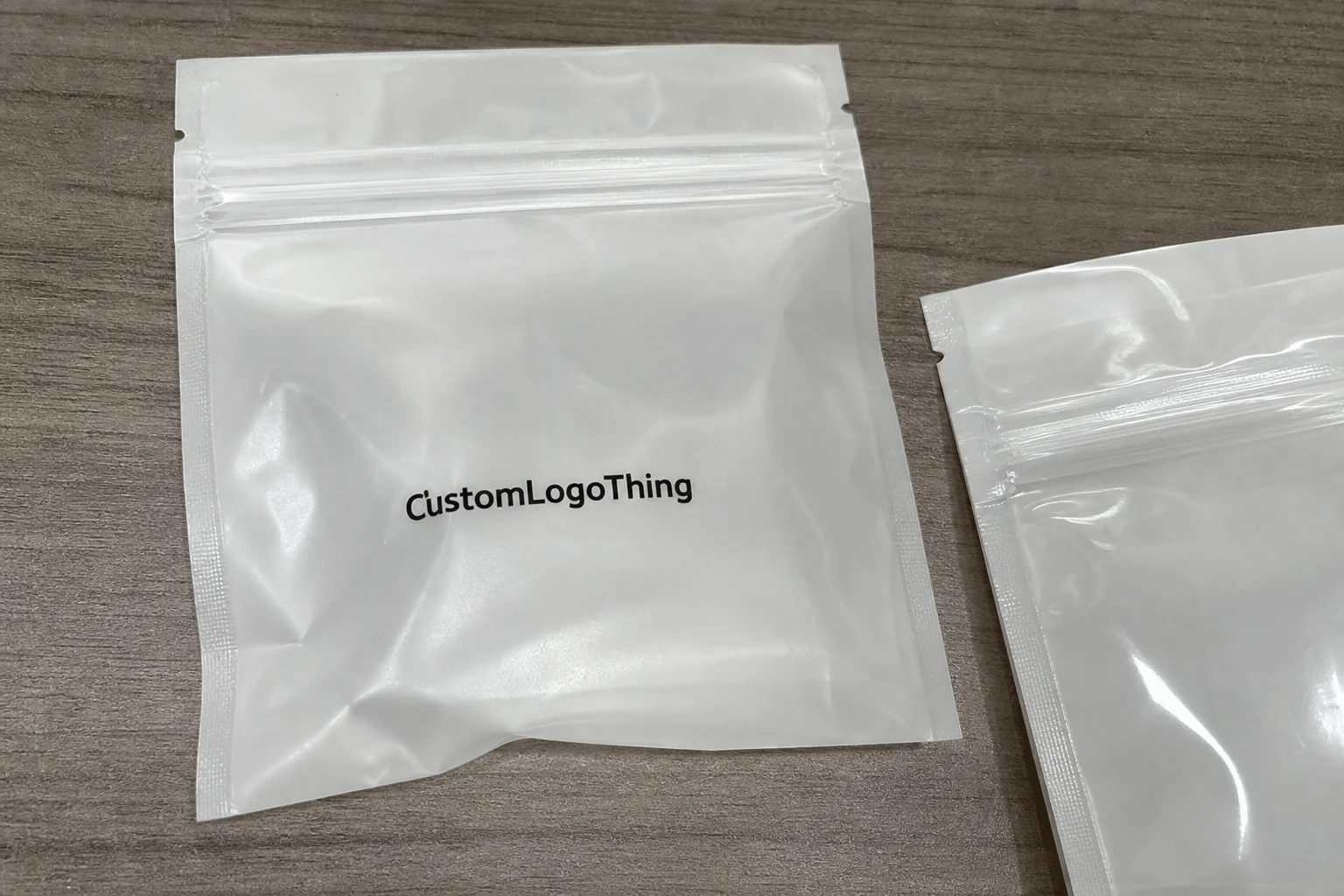
PE can look sharper than people expect. That is the useful starting point for a PE Garment Bags for retail brands logo printing guide: polyethylene is not automatically cheap-looking just because it is flexible plastic.
The difference usually comes down to unglamorous details. Film clarity. Gauge. Ink adhesion. Logo size. Whether the artwork was prepared for a moving plastic substrate instead of pulled from a website header at 72 dpi. None of that sounds especially exciting, but it is exactly where good garment packaging is won or lost.
For apparel brands, PE Garment Bags sit in a practical middle lane. They protect folded tees, sweaters, dresses, outerwear, and hanging garments without adding much weight or cost. They can be clear, frosted, tinted, flap-seal, zipper-style, vented, gusseted, or punched for hangers. Add a restrained printed logo, and the bag works harder at checkout, in a stockroom, inside a shipping carton, or during a wholesale handoff.
Why PE Garment Bags Still Work in Retail
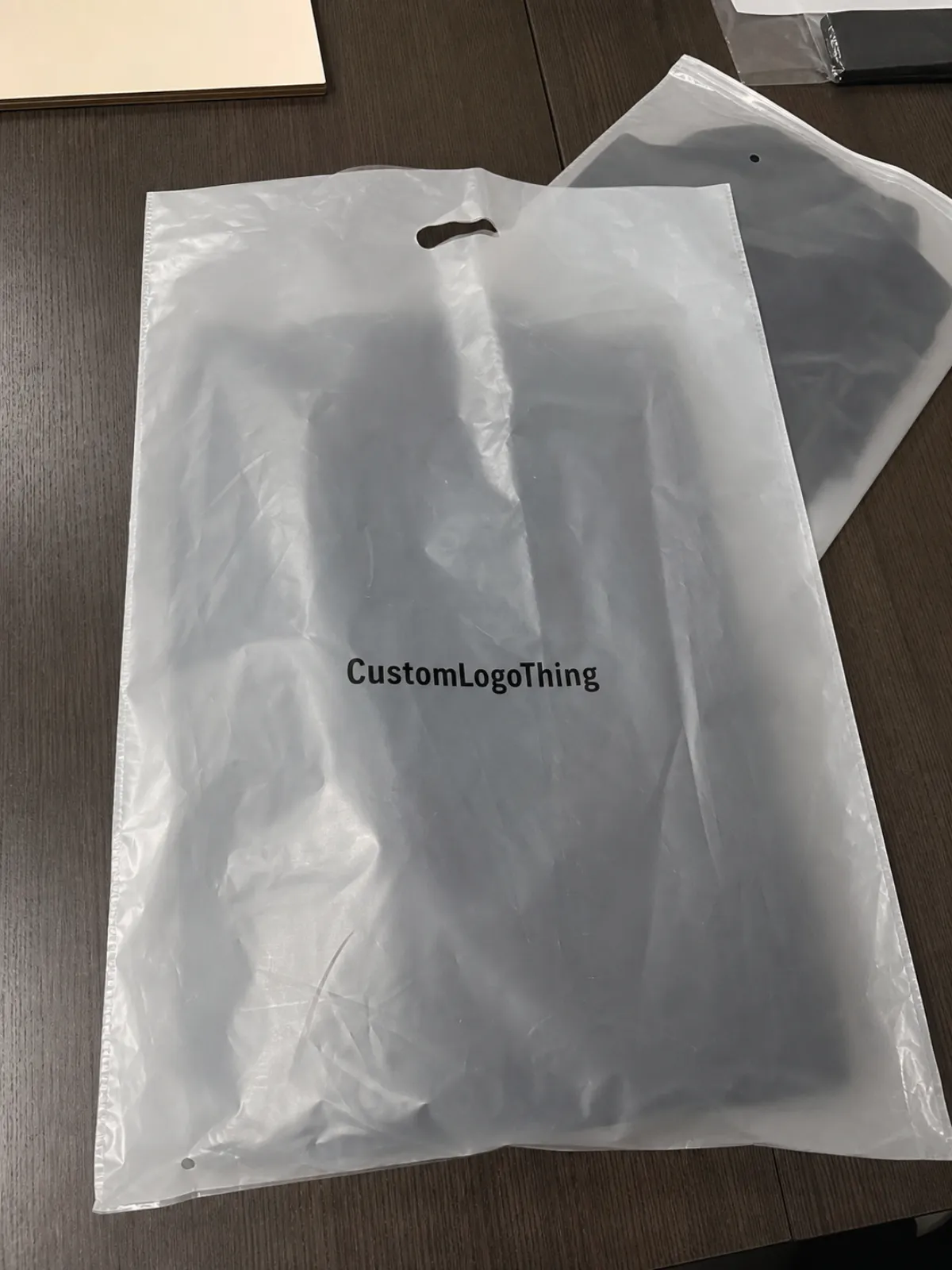
Retail packaging buyers sometimes dismiss PE garment bags because they picture thin, cloudy stock poly bags with a tiny suffocation warning and no personality. Fair. A lot of those bags have earned the reputation. A properly specified PE bag, though, can look clean, controlled, and retail-ready, especially with a one-color or two-color logo placed with some discipline.
PE solves three jobs at once: protection, visibility, and cost control. A 1.5 mil to 2.5 mil LDPE or LLDPE garment bag can keep dust, lint, light moisture, and warehouse grime away from apparel. It also lets staff and customers see the product color or folded presentation, which matters when inventory moves through stores, pop-ups, e-commerce fulfillment, or wholesale accounts.
From a buyer’s point of view, the appeal is straightforward. PE is light, it packs flat, and it usually costs less than rigid boxes, paper garment sleeves, or laminated retail pouches. It accepts basic logo printing well when the film is surface-treated and the artwork is not trying to behave like a full-color billboard.
There are limits. PE does not have the crisp paper feel of a kraft mailer or the glass-like clarity of some PP films. It can stretch slightly during handling, so tiny text and tight registration are not its strong suit. If the brief calls for photographic CMYK artwork, a rigid structure, or a luxury unboxing moment, PE may not be the best packaging format. Shocking, plastic bags are not magic.
For practical branded apparel protection, though, PE still earns its keep. A simple logo on a frosted flap-seal bag can look more polished than an overbuilt package that quietly eats the margin. A sensible logo printing plan should start with fit, handling, and print limitations, not hype.
Packaging reality check: PE garment bags work best when the design is simple, the film spec matches the garment, and the print method is chosen before anyone falls in love with a tiny gradient logo.
PE Garment Bags for Retail Brands Logo Printing Guide
Logo printing on PE film starts with surface treatment. Polyethylene has low surface energy, so ink does not naturally want to grip it. If the film is not corona treated or otherwise prepared for printing, the logo can rub, flake, smear, or fail a basic tape test. Ink adhesion is not a branding preference. It is chemistry.
Most custom PE garment bags use one of three printing approaches:
- Flexographic printing: The usual workhorse for PE bags. It suits spot color logos, repeat patterns, warning text, and medium to high quantities. Once plates are made, it is efficient for roll-fed plastic film.
- Screen printing: Useful for smaller runs, bold logos, and heavier ink coverage. It can produce a strong visual result, but it is slower and less friendly to very fine detail.
- Digital printing: Helpful for short runs or variable artwork when the supplier has the right equipment. Availability varies, and unit costs often stay higher than flexographic production at scale.
Offset printing is common for paper packaging, folding cartons, and rigid retail boxes, but it is not the typical first choice for PE garment bags. Flexible film generally favors flexographic printing because the process is built for rolls, repeat patterns, and plastic substrates.
Color matters more than many teams expect. A black logo on a clear 2 mil PE bag usually reads well. A pale beige logo on frosted film can disappear once a cream sweater sits behind it. White ink can look crisp, but it needs enough opacity to stand up against darker garments. Metallic-style effects, gradients, and soft shadows are risky unless the supplier confirms the method and shows a proof that reflects the actual substrate.
Print area has limits too. A bag may measure 12 x 16 inches, but that does not mean the logo should fill the full face. Keep print away from seals, zipper tracks, flap folds, hanger holes, vent holes, and side gussets. A practical placement tolerance of 1/8 inch to 1/4 inch is common for flexible bag printing, depending on equipment and bag construction. If the design requires perfect edge-to-edge alignment, PE will make everyone earn their gray hair.
For most retail brands, one or two spot colors beat complicated CMYK artwork. Cleaner. Cheaper. Easier to approve. Less drama on press. Too many teams over-design bags that mainly need to protect the garment and present the brand without distracting from the product.
Cost, MOQ, and Unit Pricing Basics
PE garment bag pricing is shaped by a handful of specs rather than one universal quote number. Size, film thickness, print colors, closure style, gussets, hang holes, vent holes, artwork complexity, and quantity all move the price. Pricing also changes depending on whether the supplier already has a similar bag structure available or needs to produce a more custom run.
For simple printed PE garment bags, many retail buyers see working ranges around $0.08 to $0.18 per unit at larger quantities for common sizes with basic one-color printing. Smaller runs, thicker film, zipper closures, frosted film, or multi-color artwork can push costs to $0.18 to $0.45+ per unit. Specialty finishes, unusual dimensions, or complicated bag formats can go higher. Treat those figures as planning ranges, not a fixed promise, because resin pricing, freight, pack-out requirements, and artwork revisions can swing the quote.
| Spec Choice | Typical Use | Cost Impact | Buyer Note |
|---|---|---|---|
| 1.5 mil clear PE, one-color logo | Folded tees, lightweight apparel | Lower | Good for basic protection and clean branding. |
| 2.0 to 2.5 mil frosted PE | Sweaters, retail sets, premium basics | Medium | Feels better in hand but reduces product visibility. |
| Two spot colors | Brand marks with an accent color | Medium | Usually more predictable than CMYK on PE film. |
| Zipper or slider closure | Reusable garment storage or higher-end retail | Higher | Adds function, cost, bulk, and production variables. |
| Side gussets | Bulky folded garments or sets | Medium to higher | Improves fit but requires tighter size planning. |
MOQ is where buyers often get surprised. A supplier may offer 1,000 pieces, but the unit cost can look painful after setup. At 5,000 or 10,000 pieces, plate charges and prepress time spread across more bags. A 3,000-piece order at $0.24 may lose to a 7,500-piece order at $0.16 if the bag is likely to be reordered anyway.
Setup fees are real. Flexographic printing often includes plate charges, commonly in the $80 to $250 per color range depending on print size, plate size, and supplier process. Screen charges may sit in a similar zone. Pre-production samples can cost $50 to $300+, especially if the sample uses actual printed film instead of a digital mockup. Annoying? Sometimes. Cheaper than a full reprint? Almost always.
Plain stock PE bags still make sense for internal handling, warehouse protection, or low-margin items where branding does not affect presentation. Printed bags are easier to justify when they face customers, wholesale buyers, store staff, or social media photos. If the bag travels with the garment all the way to the customer, logo printing has a stronger business case.
For broader packaging planning, Custom Logo Things’ Manufacturing Capabilities page is useful because print method, material, and finishing choices should be compared before a purchase order is placed. That beats discovering late in the process that the bag structure and the logo file are not friendly to each other.
Process and Timeline: From Artwork to Production
A normal custom PE garment bag order moves through quote, artwork review, proof, approval, production, and shipping. The delays usually come from ordinary packaging chaos: a blurry PNG, missing bag dimensions, a logo change after proofing, or a request for an exact Pantone match on translucent film without allowing a sample.
Start with artwork. Suppliers usually want vector files: AI, EPS, or print-ready PDF. Fonts should be outlined. Spot colors should be named clearly, preferably with Pantone references if brand matching matters. If CMYK is requested, ask whether the supplier can realistically reproduce the artwork on PE film using the chosen process. Do not assume a proof on a bright screen tells the truth.
During prepress, the production team checks logo resolution, line weight, print size, film color, bag dimensions, closure placement, and print location. They may separate colors, create a plate layout, and confirm whether artwork needs traps or simplified details. For flexible film, small type under 6 pt to 7 pt can become fragile, especially in reverse print or low-contrast colors.
Typical timing looks like this:
- Artwork and spec review: 1 to 3 business days if files are clean and dimensions are complete.
- Digital proof: Often 1 to 2 business days after artwork cleanup.
- Physical sample or pre-production mockup: 5 to 12 business days, depending on method and whether actual printed film is required.
- Standard production: Commonly 10 to 20 business days after proof approval.
- Shipping: 2 to 7 business days domestically, longer for ocean, air consolidation, or freight held for other packaging components.
Repeat orders are faster because the plates, bag dimensions, and approved spec sheet already exist. New custom orders take longer because every detail needs confirmation. If a seasonal launch or store opening depends on the bags, build in at least a two-week buffer beyond the quoted production time. Rush orders can work, but rushing artwork approval is how mistakes get printed onto thousands of plastic bags.
Color matching deserves a separate warning. Pantone ink on clear PE will not look the same as Pantone ink on white paper. The garment inside the bag can change the apparent color. Frosted film softens contrast. Tinted film shifts the logo. If brand color is non-negotiable, request a drawdown, printed sample, or written supplier note on expected variance.
Standards can help frame expectations, even when formal lab testing is not necessary. For shipping performance, apparel brands often reference testing protocols from ISTA, especially if the bag sits inside a mailer or carton. ASTM methods are also commonly referenced across packaging for film properties, though the exact test depends on material and use. A basic PE garment bag may not need lab work, but the vocabulary helps when a failure would be expensive.
Spec Choices That Change Retail Performance
Specs are not trivia. They decide whether the bag looks intentional or like someone grabbed whatever was cheapest at the last second. Film thickness is the first lever.
A 1.0 mil to 1.25 mil PE bag can work for very light garments or internal protection, but it may feel flimsy in retail handling. A 1.5 mil to 2.0 mil bag is the common middle range for folded apparel. A 2.5 mil to 3.0 mil bag feels stronger and more premium, especially for sweaters, hoodies, denim, and outerwear.
Thicker film improves puncture resistance and hand feel, but it raises cost and can change how the print lays down. Heavy ink coverage on thicker frosted film may need closer review. Again, boring details. Again, they matter.
Size selection is just as important. Folded tees often fit bags around 10 x 13 inches or 11 x 14 inches, depending on fold board and garment weight. Sweatshirts may need 13 x 15 inches, 14 x 18 inches, or larger. Hanging garment bags can run much longer, commonly 21 x 40 inches, 24 x 54 inches, or more for coats and dresses. Add 1/2 inch to 1 inch of practical clearance around folded products so staff can pack quickly without stretching seams or wrinkling the garment.
Closure style changes the experience. A peel-and-seal flap is inexpensive and fast for e-commerce or folded retail stock. A resealable adhesive strip is better if customers or staff may open the bag before final sale. Zipper closures feel more reusable but cost more and add bulk. Hanger holes or slits matter for hanging garments, while vent holes reduce trapped air during packing and carton loading.
Clear, frosted, and tinted PE each tell a different story. Clear film supports product visibility. Frosted film softens the look and can make a simple spot color logo feel more upscale. Tinted film can reinforce brand color, but it may distort garment color. A green-tinted bag over ivory apparel may not read as premium; it may just make the garment look slightly unwell.
Tiny decisions affect packing speed too. A bag that is 1 inch too tight slows the line. A flap that sticks to itself before insertion frustrates staff. A print location too close to the closure may get covered by folds, labels, or the adhesive strip. Good packaging is not just pretty. It behaves under pressure.
Common Logo Printing Mistakes on PE Bags
The most common mistake is bad artwork. Low-resolution logos, thin scripts, tiny taglines, and complex seals all suffer on flexible film. If the logo only looks good while zoomed in on a screen, it probably will not improve after being printed on a moving plastic substrate. Funny how that works.
Use vector artwork whenever possible. Keep minimum line weights practical. Avoid micro text unless it is legally required and sized properly. If a retail logo includes a detailed icon and a tiny descriptor line, consider printing only the icon and brand name on the bag. The bag does not need to carry the entire brand strategy deck.
Too many colors also create trouble. Every added color can mean another plate, another registration point, another approval step, and another chance for mismatch. One-color white, black, navy, or a strong spot color often looks better than a four-color attempt at subtlety. PE film is flexible, and its registration tolerances are not the same as a rigid folding carton printed by offset.
Transparency gets ignored constantly. A logo that looks bold on a white PDF proof may compete with the garment inside the bag. Dark logo over dark denim? Gone. Pale logo over a white sweater? Also gone. If product visibility matters, proof the logo over sample garment colors, not just on a blank template.
Placement is another trap. Logos centered on the flat bag may shift visually once a garment fills it. Flaps, seals, gussets, hanger holes, and warning text can interrupt the design. Ask for a proof showing the exact print area, finished bag dimensions, and closure style. Better yet, request a mockup with an approximate folded garment shape.
Skipping proof review is the expensive mistake. A digital proof catches placement, spelling, size, and general layout issues. A physical sample catches feel, opacity, closure behavior, and real ink appearance. If the order is small and low-risk, a digital proof may be enough. If the order supports a launch, a retail rollout, or thousands of units across multiple stores, sample the bag. The reprint bill always feels larger after the campaign date has passed.
For examples of how packaging decisions affect finished brand presentation, the Case Studies section can help buyers compare structure, print choices, and final retail use without relying only on a flat proof.
Next Steps for a Clean First Order
A clean first order starts before the quote request. Gather the basics: finished bag dimensions, garment type, fold size, target film thickness, closure style, print colors, print location, and estimated quantity. If the right thickness is unclear, ask for samples in 1.5 mil, 2.0 mil, and 2.5 mil. Touching the film will teach more in 30 seconds than a paragraph of adjectives.
Send clean vector artwork. Ask for a proof that shows logo size, placement, bag style, closure, venting, hanger holes, and any required warning copy. Confirm whether the logo is printing as a spot color or a process build. If print finishing matters, define it early, though PE garment bags usually keep finishing simpler than cartons or paperboard packaging.
Request a sample or pre-production mockup if the order is tied to a store opening, seasonal campaign, wholesale presentation, influencer shipment, or display reset. That does not mean every 1,000-piece test run needs a museum-level approval process. It means risk should decide the approval path, not wishful thinking.
Also handle sustainability claims carefully. PE can be recyclable in some film recovery streams, but local access varies and store drop-off programs have changed in many regions. Do not print broad recycling claims unless they are accurate for the market, structure, and collection path. The EPA recycling resources are a useful starting point for general guidance, but packaging claims should still be reviewed against selling regions and applicable rules.
Keep the approved spec sheet on file. It should list film type, thickness, dimensions, closure, print method, ink colors, logo size, print position, MOQ, carton pack count, and approved proof date. Reorders stay consistent when the original order is documented. Without that, someone will reorder “the same bag” and receive a cousin of the same bag: similar, but annoying.
The practical buying advice is simple: keep the design clean, spec the film around the garment, confirm print behavior before production, and build a reorder buffer. That is the short version of a useful pe garment Bags for Retail Brands logo printing guide, and it will save more money than arguing over a half-cent after the artwork is already wrong.
FAQ
What makes printed PE garment bags better than plain stock bags for retail apparel?
Printed PE garment bags give apparel a branded presentation without moving into a more expensive packaging format like rigid boxes or custom paper mailers. Simple logos can print cleanly on PE when the film, ink, and artwork are matched correctly. They are especially practical when the retailer needs protection, product visibility, and a controlled cost per bag.
How do I choose the right PE thickness for a printed garment bag order?
Choose thickness based on garment weight, handling frequency, and how polished the bag needs to feel. Lightweight tees may work in 1.5 mil film, while sweaters, hoodies, denim, and outerwear often benefit from 2.0 mil to 3.0 mil film. Thicker film usually improves durability, but it also raises unit cost and can change print behavior, so sample comparison is smart for premium apparel.
What is a realistic MOQ for custom logo printed PE garment bags?
MOQ depends on size, print method, bag structure, and number of print colors. Some suppliers may support smaller runs around 1,000 to 3,000 pieces, but unit costs are usually higher because setup, plates, and prepress are spread over fewer bags. Many buyers compare 5,000, 10,000, and 25,000-piece quotes before deciding.
How long does production usually take for branded PE garment bags?
Simple custom PE garment bag orders often take 10 to 20 business days after proof approval, with extra time for samples, complex artwork, or shipping. Repeat orders move faster because the approved spec and plates may already exist. Add buffer time if the bags are tied to a store opening, campaign launch, or seasonal rollout.
What artwork mistakes cause the most problems in PE garment bag printing?
Low-resolution logos, thin type, small taglines, too many colors, and gradients cause the most problems. Artwork that ignores print area, bag transparency, closure placement, or garment color often needs revision before production. Vector files and careful proof review save time, money, and the special embarrassment of receiving thousands of bags with a logo nobody can read.