Order Logo Patches for retail resale that actually help the product move. A patch can do more for a cap line than a heavier stitch count or another round of embroidery detail. On a peg hook, in a folded stack, or under harsh store lighting, the right patch makes a blank hat read as deliberate, finished, and worth a better ticket.
That matters because hats give you very little space to work with. The front panel is small, the brand read is quick, and shoppers usually decide on shape, texture, edge quality, and contrast before they ever inspect a label. A good patch earns that first glance; a weak one looks like something added late.
For logo patches for retail resale, the real job is not just decoration. The patch has to match the product’s price point, support the brand story, and hold up through packing, transit, and day-to-day handling in store.
What logo patches for retail resale mean on the shelf
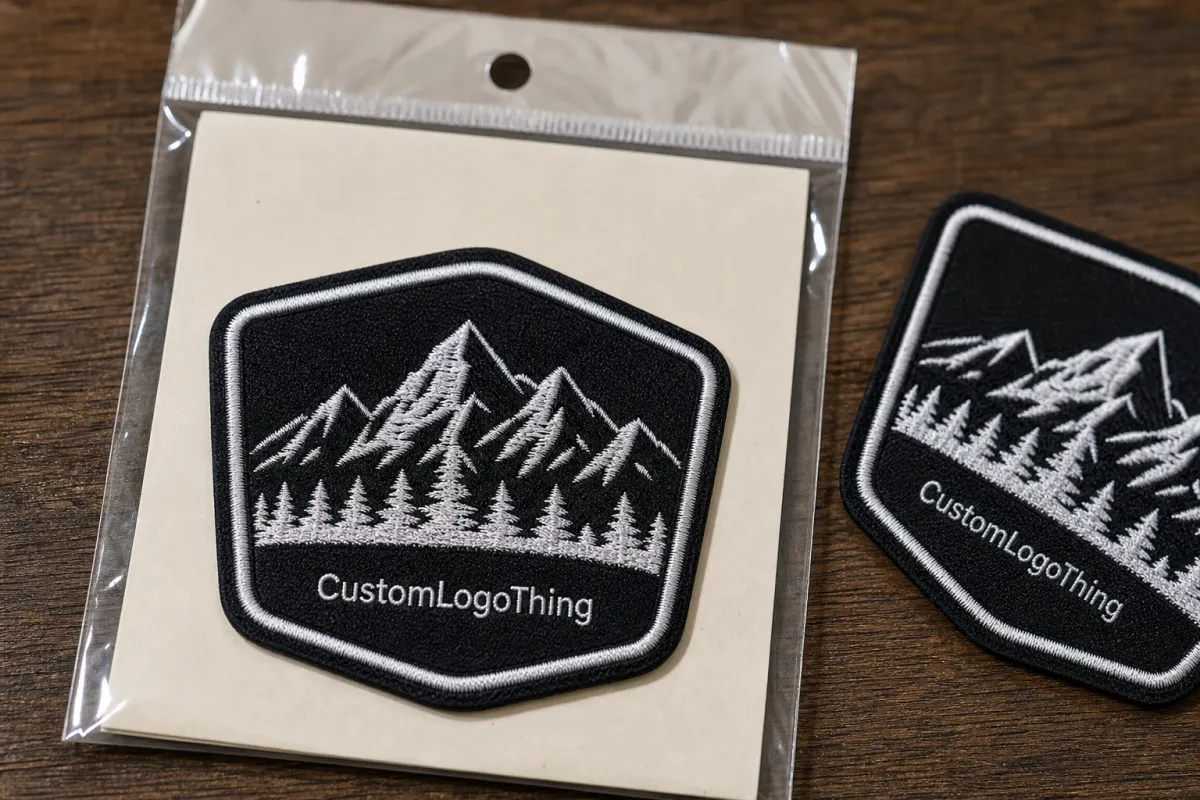
In practical terms, logo patches for retail resale are patches built for products that will be sold through a store, website, marketplace, or distributor rather than handed out at an event. That sounds like a small distinction, but it changes the spec. Retail buyers usually care about repeatable appearance, clean finishing, and how fast the item communicates value from a few feet away.
On hats, the patch often becomes the main visual anchor. A 2.5-inch embroidered circle, a sharp woven rectangle, or a leather patch with a simple debossed mark can feel more premium than dense all-over stitching, especially on structured caps with limited front-panel real estate. The eye reads shape and contrast faster than thread count.
That is why a disciplined patch program usually sells better than one that tries to say too much. If the cap body, patch size, and color palette stay restrained, the product looks easier to sort, display, and reorder. Consistency also helps the line look like a collection rather than a one-off sample run.
A patch should earn its space on a hat. If the shape, edge, and texture do not improve the first glance from three feet away, the spec probably needs trimming.
The patch also acts as a price signal. A plain blank cap and a cap with a well-made patch sit in different mental categories for shoppers. One reads as basic apparel. The other reads as a branded accessory with a clear point of view.
That is why the best logo patches for retail resale usually match the intended shelf price instead of chasing the most elaborate build available. A premium leatherette patch may be the right fit for a $28 cap, while a woven patch may suit a skate, workwear, or outdoor line that depends on cleaner linework and fast visual read. The goal is not maximum decoration. The goal is the right decoration for the retail story.
- High visual clarity: the logo can be understood quickly on a crowded shelf.
- Better perceived value: texture and edge finish help justify a stronger retail price.
- Cleaner merchandising: similar patch specs make product lines easier to sort and replenish.
- More predictable resale behavior: good patch programs tend to look like planned collections, not one-off samples.
There is also a practical buyer’s reason to prefer patches on retail hats: they can protect the logo from the overworked look that sometimes happens with very dense embroidery. A patch gives the design a boundary, and that boundary often makes the product feel more controlled on shelf.
Production process and timeline from artwork to carton
The production path starts with artwork cleanup. Even a simple logo often needs linework adjusted, tiny details thickened, and colors matched to the chosen patch construction. If the mark was originally designed for print or flat digital use, it may need simplification before it can be translated into a patch that still reads clearly at hat size.
That cleanup is not cosmetic busywork. Thin strokes can disappear, small counters can close up, and layered gradients can become muddy or impossible to reproduce consistently. Good suppliers flag those issues early because fixing them after sampling usually costs more time than fixing them in artwork prep.
After that comes format selection. The maker decides whether the artwork should be embroidered, woven, molded, debossed, or cut from leather or PVC, then builds a proof that shows dimensions, colors, edge style, and backing. This stage sets the retail look. A patch that is too busy, too small, or too soft in contrast can lose its impact before production even starts.
Once the proof is approved, a sample or pre-production strike-off is usually made. Buyers should look closely at stitch density, edge finish, legibility, and how the patch sits on the hat panel or seam. A sample that looks fine on a desk can still fail on the crown because the cap shape changes how the patch curves and how the light lands on it.
That is especially true with structured truckers and low-profile caps. The front panel tension, seam placement, and crown height can make a patch feel taller, flatter, or more fragile than it looked on the sample card. A product may technically match the proof and still feel wrong on the actual hat body.
After sample approval, bulk production moves faster than many buyers expect. For straightforward patches, 10-15 business days is a common window after proof approval, while more complex molded or mixed-material builds can stretch to 3-4 weeks. If the patches are being attached to hats, add decoration time on top of patch making. If they are shipping loose, add only packing and carton prep.
Artwork changes are the most common schedule drag. Color tweaks, logo revisions, and late sample feedback can add days quickly, even when the factory floor is ready to run. A buyer who wants a clean launch should lock the artwork early and keep the approval chain short. Waiting to make a small decision often creates a larger delay than the change itself.
For retail-ready programs, shipping details matter almost as much as production details. Carton pack counts, inner polybagging, barcode labels, and destination receiving rules all need to be settled before bulk starts. If transit testing matters for your channel, the standards libraries at ISTA are worth a look, and if your cartons need paper-based sourcing documentation, FSC certification can help keep that part of the conversation simple.
For programs that are going into chain retail or distributor fulfillment, the receiving spec can be as important as the decoration spec. A hat can be perfect and still get delayed if carton labels, case packs, or ship-to details are unclear. Production and logistics need to be planned together.
Materials, backing, and attachment choices that affect sell-through
The patch material changes the mood of the product immediately. Embroidered patches feel familiar and soft-edged. Woven patches hold finer detail and usually read a little flatter and cleaner. PVC or rubber patches bring bold color and a modern, utility-driven feel. Leather and leatherette push the hat toward a more premium, tactile category.
For retail resale, that material choice should track with the customer and the cap shape. A rugged trucker with an outdoor logo can handle a merrowed embroidered patch or a molded PVC badge. A boutique lifestyle cap may sell better with a matte leatherette patch or a woven patch that keeps the logo crisp without feeling loud. The texture has to support the brand promise.
Detail level matters too. If the logo includes thin letters, fine borders, or small internal shapes, woven construction usually gives a cleaner result than embroidery. If the design is simple and the goal is a warm, dimensional look, embroidery can be the better choice. A good buyer checks the art at actual size, not just at full-screen scale.
| Patch style | Shelf read | Detail level | Typical patch-only cost at 5,000 pcs | Best use case |
|---|---|---|---|---|
| Embroidered | Classic, tactile, familiar | Good for medium detail | $0.18-$0.35 | Caps that need a warm, heritage look |
| Woven | Clean, sharp, flatter | Very good for small text and fine lines | $0.22-$0.40 | Logos with tighter linework or small type |
| PVC / rubber | Bold, modern, dimensional | Strong for simple shapes and solid color blocks | $0.35-$0.75 | Outdoor, workwear, sport, and utility looks |
| Leatherette | Soft premium cue | Best for clean logos and debossed marks | $0.30-$0.70 | Lifestyle caps, boutique retail, giftable lines |
| Genuine leather | Natural, upscale, textured | Works best with simple artwork | $0.45-$0.90 | Higher-end retail or heritage-inspired collections |
Backing choices matter almost as much as the face material. Sew-on backing is the most durable for everyday apparel and usually the safest choice for retail hats that will be worn and washed. Heat seal can work well if the production line controls temperature, pressure, and dwell time carefully, but it is not my first pick for products that will see heavy wear. Hook-and-loop is useful when a removable look is part of the story. Adhesive backing makes sense for short-run or display use, but it is a weak fit for long-term resale apparel.
Edge finish is another quiet detail shoppers notice even if they cannot name it. A merrowed edge suits rounded shapes and can feel traditional. Laser-cut or hot-cut edges suit cleaner outlines and synthetic materials. On hats, a crisp edge keeps the patch from looking fuzzy or oversized, especially when the design is small.
Attachment method should also follow the product’s life cycle. Sewn patches hold up well through wear and repeated handling. Heat-applied patches can be efficient for finished goods, but quality depends on the substrate, the operator, and the equipment settings. If the line is being sold into retail, buyers should ask how the patch performs after repeated flexing, not only how it looks the day it is pressed.
Durability testing deserves a mention too. If the product will be worn often, ask about wash resistance, abrasion, and colorfastness. Not every patch program needs a full lab report, but it helps to know whether the construction has been checked against common textile expectations such as AATCC wash methods or ASTM abrasion references. A retail buyer may not ask for those standards on day one, yet they become useful fast if a chain account wants proof that the product will hold up.
Cost, pricing, MOQ, and quote drivers for patch programs
Patch pricing is driven by a handful of levers, and they are usually easy to understand once you have seen enough quotes. Size is a big one. A 2-inch patch does not cost the same as a 3.5-inch patch because material use, machine time, and finishing all rise with area. Shape complexity matters too. A simple circle is cheaper than a die-cut outline with several tight corners.
Color count and construction also move the number. More colors can mean more setup or more stitching changes, depending on the patch style. PVC and leatherette can look premium at a lower visual complexity, but complex logos in those materials may need tooling changes that push cost up. If the order includes retail labeling, individual bagging, barcodes, or sewn attachment to hats, expect the quote to climb beyond the patch-only number.
MOQ is where buyer confidence gets tested. Small runs are possible, but unit pricing usually rises when you keep quantities low. At lower volumes, the setup is spread over fewer pieces, so the per-unit math gets less friendly. At higher volumes, the cost per patch drops, but you also carry more inventory risk if the style does not move. The right order size is the one that matches actual demand, not the one that simply looks best on paper.
Here is a practical way to think about it: a patch that adds 60 cents to the cost of a hat may be a problem on a $16 wholesale item and perfectly reasonable on a $28 specialty item. The real question is not whether the unit price is low. The real question is whether the patch helps the product sell at the intended margin.
For logo patches for retail resale, packaging choices can quietly influence the quote as well. A loose patch packed in bulk is easier to price than a patch sewn onto a finished hat, bagged individually, labeled, and shipped by assorted color. More handling steps mean more labor and more chances for error, so the factory will price that risk into the order.
Cost also changes with the amount of correction a job requires. If the artwork arrives clean, the proof cycle is short, and the packing instructions are straightforward, the quote stays tighter. If the file needs cleanup, the sample needs revision, and the carton spec changes late, the final number almost always rises.
- Low-cost driver: simple shape, one or two colors, standard backing, loose packing.
- Mid-range driver: medium-size patch, clean edge finish, retail bagging, color labels.
- Higher-cost driver: complex die-cut shape, premium material, sewn attachment, barcode-ready packaging.
Think in landed value, not only landed cost. A slightly pricier patch that improves shelf appeal, supports a better story, and reduces discount pressure can be the smarter buy. That is especially true for logo patches for retail resale, where visual impact and margin live in the same conversation.
Step-by-step buying path for a retail-ready patch order
If you want a clean order, start with a one-page spec sheet. Put the logo artwork, patch dimensions, target hat style, preferred material, backing, expected quantity, retail launch date, and packing needs in one place. The shorter and clearer the brief, the easier it is for a factory or decorator to give you a quote that is actually useful.
Start with the product brief
Include exact artwork files if you have them, but also include a plain-language note about the customer. Is this for outdoor resale, fashion retail, workwear, or gift shop placement? That answer helps the supplier Choose the Right patch family before they waste time quoting the wrong one. A clean brief also makes it easier to compare two quotes side by side without guessing what changed.
It helps to state the target retail price too. A patch for a $14 impulse item should not be spec'd the same way as a patch for a $32 lifestyle cap. The price point sets the visual expectation, and the patch should support that expectation rather than fight it.
Check the sample on the exact hat body
Do not judge the patch in isolation. A patch that looks sharp on a sample card can sit differently on a five-panel cap, a low-profile six-panel, or a structured trucker. Check the sample on the exact hat body, under bright retail lighting, and from a normal shopping distance. Look for edge lift, seam interference, and how much the logo loses once the patch curves with the crown.
That sample check is also the best time to catch small problems that become expensive later. Is the text still legible at size? Does the backing hold on the panel shape? Does the patch sit too high and make the front panel look stiff? Those issues are easier to fix before bulk production starts.
Ask about a second sample if the first one is close but not right. One minor revision can save a large inventory problem. The cost of an extra round of approval is usually smaller than the cost of finishing a run that looks off once it reaches store shelves.
Lock the carton and labeling details
Before bulk runs, confirm carton pack counts, label placement, inner bagging, and the receiving location. If the product is going straight to retail distribution, ask how they want the cartons marked and whether they need case packs by color or by size. A lot of delayed launches have nothing to do with the patch itself; they stall because someone did not confirm the receiving spec early enough.
For buyers juggling store-ready goods and private-label requirements, the safest move is to write down the retail path in plain language: loose patches, sewn-on hats, or finished hats with retail packaging. Then share that language with the supplier and get it reflected in the quote. That one step cuts down on surprise charges later.
Common mistakes buyers still make
The biggest mistake is overdesigning the patch. If the artwork is packed with tiny lines, thin type, and several sharp transitions, it may look excellent on a screen and muddy in production. Another common miss is ignoring hat structure. A patch that works on a flat mockup may not sit well on a curved panel or a seam-heavy crown.
Another habit worth avoiding is reviewing only one sample and calling it done. Compare that sample with nearby competitors on shelf or in a digital assortment deck. You are not only judging craftsmanship; you are judging whether the product earns attention fast enough to support resale.
It also helps to be realistic about lead time. A clean approval cycle can keep the order moving, but late artwork changes, color swaps, and packaging revisions add friction quickly. Buyers who plan launches well usually build a little buffer into the schedule rather than assuming the shortest quoted timeline will hold under revision.
Once the design, sample, packaging, and timing are locked, place the order with a clear expectation of what success looks like. For some buyers, that means higher-margin specialty hats. For others, it means a simple retail line that looks organized, repeatable, and easy to replenish. Either way, logo patches for retail resale should be treated as a presentation decision and a profit decision at the same time.
Final advice: finalize artwork, request samples, compare at least two quote scenarios, confirm the timeline, and choose the construction that matches the customer, not just the catalog. That is usually the difference between a patch that merely decorates and one that helps sell the hat.
What type of logo patches for retail resale works best on hats?
The best choice depends on the brand look you want, but embroidered, woven, and leather-style patches are common because they read clearly on a hat front and feel retail-ready. For clean small logos, woven or PVC styles can preserve detail better; for a warmer premium look, leather or leatherette often fits the category well.
What MOQ should I expect for logo patches for retail resale programs?
MOQ varies by patch construction, decoration method, and whether the patches are sold loose or attached to hats. Smaller runs are possible, but unit cost usually rises when you stay low on quantity, so it helps to balance inventory risk against margin.
How long do custom patch orders usually take?
Timeline depends on artwork approval, sample revisions, patch type, and whether the order includes hat assembly or retail packaging. A clean approval process is the fastest path, while changes after sampling are the most common reason schedules stretch.
What drives the price of patches for retail resale hats?
Price is usually shaped by size, material, color count, edge finish, backing, and the number of patches or hats in the order. Packaging, labeling, and special handling can also add cost, especially when the product must be retail-ready out of the carton.
Do different patch styles affect how well hats resell?
Yes, because patch style changes perceived value, texture, and how quickly a shopper understands the brand from a distance. A patch that matches the hat body, target price point, and customer taste usually performs better than one chosen only for decoration. In that sense, logo patches for retail resale are never just an add-on; they are part of the sell-through strategy.

