If you are building a Logo Patches Material guide for tea brands, start with the part most buyers underestimate: people feel the patch before they study the logo. A small piece on an apron, tote, or pouch can make a tea brand feel crafted, modern, rustic, or clinically polished in a way flat artwork never will. Texture and finish do a surprising amount of branding work.
Tea brands use logo patches in more places than many suppliers first expect. They show up on staff uniforms, aprons, reusable totes, tea gift boxes, loose-leaf pouches, outerwear, and event merch. The patch has to survive handling, storage, humidity, frequent wear, and in some cases washing. A good choice looks right on day one and still holds up after the item has been folded, moved, and used for months.
This Logo Patches Material guide for tea brands focuses on the decisions that actually affect outcomes: material, backing, readability, care, turnaround time, and cost. The right answer is rarely the fanciest one. It is usually the one that fits the item, the brand tone, and the way the product will live in the real world.
Why logo patches matter on tea packaging and merch
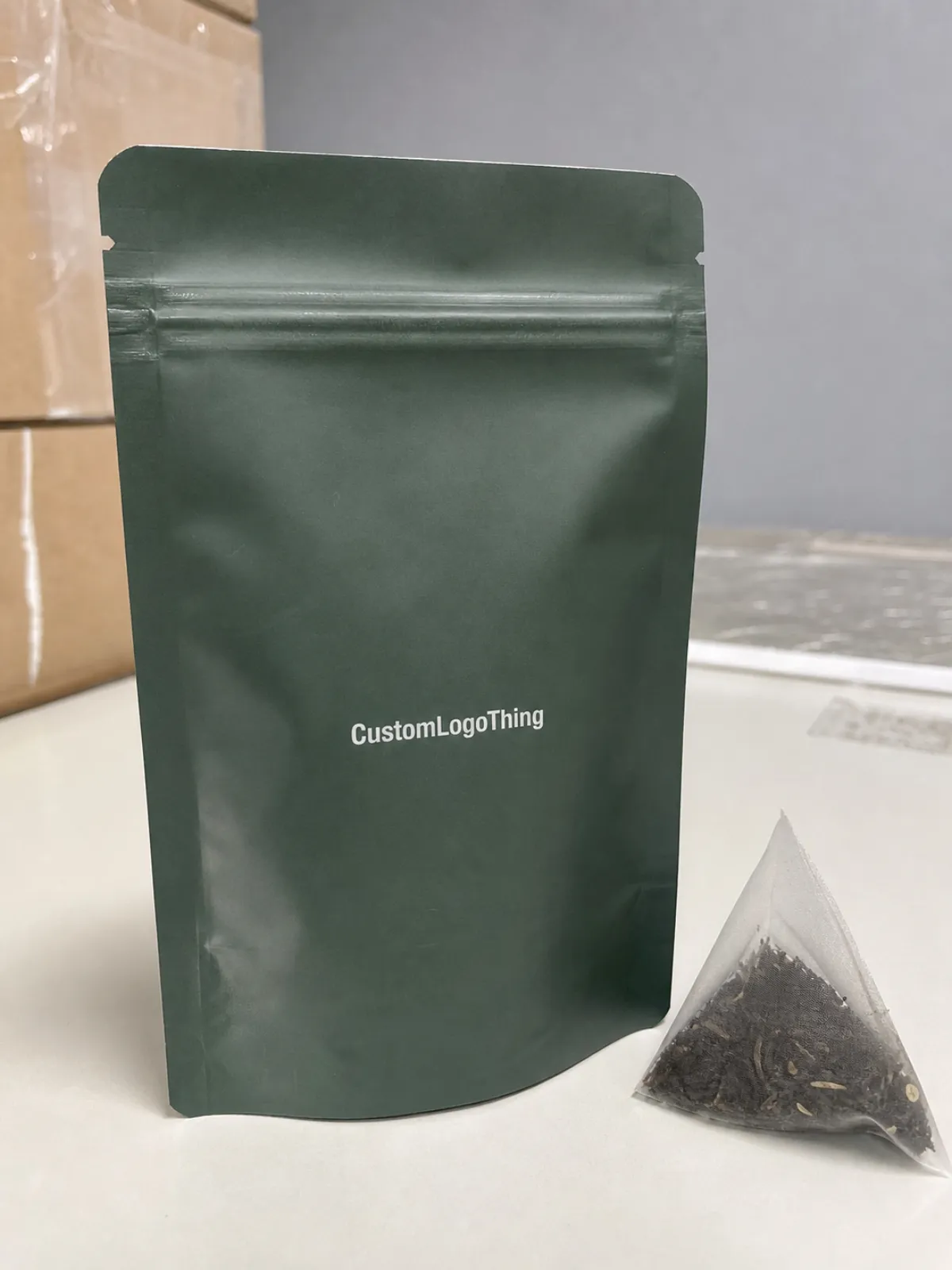
Tea is a category where surface quality carries meaning. A woven patch on a cotton apron can suggest small-batch care. A molded silicone patch on a pouch can signal clean lines and a more contemporary identity. A faux leather badge can push the brand toward heritage, craft, and pantry-apothecary warmth. Those signals are subtle, but they register fast.
Patches are not limited to apparel. They can be attached to reusable packaging, merch, staffwear, zipper pouches, box sleeves, or promotional accessories. In one program, the patch is mainly decorative. In another, it becomes the mark customers see every time they pick up the bag or reach for the apron. That difference matters because the best material for a display item is not always the best one for a garment that gets washed weekly.
Tea buyers also judge consistency. If the pouch uses recycled board, kraft paper, and soft neutral printing, a glossy or overly technical patch can feel out of place. The patch should sit naturally inside the larger packaging system. When it does, the brand feels deliberate rather than assembled from unrelated parts.
“A patch can do more for tea branding than a larger logo with the wrong texture.”
That is especially true for premium sets. A small patch on a reusable bag or wrap can quietly raise the perceived value of the whole item. But that only works if the material, edge quality, and placement are all controlled. A rough border or a shiny backing can undo the effect quickly.
How logo patch materials behave on fabric and packaging
Every patch combines three parts: the face material, the backing, and the edge finish. If one part is wrong, the patch can look acceptable in a mockup and disappointing in hand. That gap between artwork and production reality is where many first-time orders go sideways.
Woven patches are usually the safest choice for detail. They hold small text, thin lines, and structured logos better than many embroidered options. For tea brands with elegant wordmarks, botanical icons, or detailed seals, woven often gives the cleanest result at a small size. The tradeoff is feel: they look crisp, but they do not have the raised texture some brands want.
Embroidered patches have more depth and a stronger tactile presence. They suit simple logos, badges, and heritage styling well. The limitation is detail. If the logo depends on tiny type, narrow stems, or delicate linework, embroidery can blur the message. The rule of thumb is simple: the more intricate the artwork, the more likely woven will outperform embroidery.
Faux leather and suede-like materials fit brands that lean warm, natural, or artisan. They pair well with kraft paper, recycled cartons, and earthy color palettes. These materials also add a premium feel without demanding a lot of color complexity. The downside is that they are less forgiving of highly detailed logos and can be harder to color-match precisely from batch to batch.
PVC and silicone patches are the closest thing to a modern utility option. They resist moisture better than textile-based materials and clean easily, which makes them useful on reusable bags, event merch, and staff gear exposed to spills. They also maintain a sharp silhouette. The look is cleaner and more contemporary, though some tea brands feel the finish is too technical for a rustic or artisanal position.
Backing matters just as much as face material. Sew-on is the most reliable choice for long-term wear. Iron-on can be efficient, but it depends on fabric content, heat tolerance, adhesive quality, and application discipline. Hook-and-loop works when the patch must be removable. Some temporary adhesive or heat-seal solutions can help in controlled settings, though they are usually a poor match for items that need regular washing.
Substrate compatibility is where buyers need to slow down. Knit aprons stretch differently than flat woven canvas. Coated packaging behaves differently from cotton. Recycled polyester may accept heat differently from untreated cotton. A patch that performs well on a tote may not behave the same way on a pouch or a laminated wrap, so test on the actual surface rather than a close substitute.
Material types at a glance
| Patch material | Best for | Strengths | Watch-outs |
|---|---|---|---|
| Woven | Fine logos, small text, clean branding | Sharp detail, flat profile, good readability | Less texture than embroidery |
| Embroidered | Premium apparel, heritage tea branding | Rich texture, strong perceived value | Not ideal for tiny type |
| Faux leather | Artisan, rustic, natural positioning | Warm look, durable, pairs well with kraft paper | Can feel less precise for detailed artwork |
| PVC / silicone | Modern merch, outdoor use, easy-clean surfaces | Moisture resistance, clean shape, strong branding | Less traditional in feel |
| Suede-like | Premium gift sets, heritage packaging | Soft touch, elevated finish | Color matching can be trickier |
If sustainability is part of the brand story, the patch should visually agree with the rest of the pack. Tea brands often use FSC-certified cartons, corrugated shippers, kraft wraps, recycled paper inserts, and minimal printing. The patch does not need to be the most eco-forward component in the program, but it should not clash with packaging that is trying to communicate natural materials and responsible sourcing.
Key factors to compare before choosing a patch material
Durability comes first when the patch will be worn or washed. Staff uniforms, aprons, and event garments are exposed to friction, laundering, and repeated folding. A patch that curls after a few washes or frays at the border will make the whole program look tired fast. For retail merch, abrasion matters too, because bags are handled, stacked, and tossed into cars.
Visual style should reflect the brand position rather than chase novelty. A tea brand with an apothecary, farm, or garden identity often works well with woven, embroidered, or faux leather patches. A matcha line, wellness-focused tea range, or modern direct-to-consumer brand may be better served by silicone or a very clean woven badge. If the packaging already uses restrained typography and natural materials, the patch should reinforce that tone.
Brand legibility is usually the hidden problem. Logos that look elegant in vector form can become unreadable once they are shrunk to patch size. Tiny serif type, hairline stems, gradients, and overly intricate icons do not always survive production. Woven handles fine detail better than embroidery, but even woven has limits. Simplifying the mark for patch use often gives a better result than trying to force the full identity into a tiny space.
Hand feel and comfort matter on apparel. A stiff patch on a lightweight apron can rub against the body, curl at the edge, or feel bulky during a long shift. Tea café staff move constantly, bend, carry trays, and repeat the same motion dozens of times a day. A patch that feels good in a sample photo can still be wrong if it is too rigid or too thick for the garment weight.
Application environment changes the choice again. A low-heat packaging room may not be suited to iron-on products. Industrial laundry narrows the field further. For event merch or pop-up items, speed may matter more than long-term durability, but even then the attachment method should be realistic for the substrate. There is no single backing that works equally well everywhere.
Compliance and care are easy to overlook. Apparel patches can affect wash instructions and garment performance. Packaging-related patches may need to sit within specific quality or presentation standards. If the item will be used in hospitality, ask early how it should be cleaned and whether the chosen backing can withstand the expected cycle. These are small checks that prevent bigger disappointments later.
- Best for detailed logos: woven
- Best for textured premium feel: embroidered or faux leather
- Best for moisture exposure: silicone or PVC
- Best for heritage tea branding: faux leather or suede-like finishes
- Best for fast visual clarity: simple woven or molded styles
How to match patch material to tea brand positioning
Material choice should start with the brand story, not the supplier catalog. A tea company built around origin, craft, and traditional blends usually reads better with tactile surfaces such as embroidery, faux leather, or woven textures. Those materials feel grounded and familiar, which supports the product narrative.
Minimalist tea brands often need the opposite. Clean labels, monochrome palettes, and simple packaging usually pair better with silicone or a flat woven patch that keeps the design crisp. Too much surface texture can work against a brand that is trying to feel calm, modern, and organized.
Gift-focused tea lines sit in a separate category. The patch on a seasonal set or premium bundle can be more decorative because the package has a shorter life and a higher perceived-value target. In that case, a suede-like finish, a soft faux leather badge, or a more detailed embroidered mark can make sense even if the same material would be less practical on a wash-heavy garment.
For reusable merch, the question is longevity. If the item is meant to live in a customer’s car, kitchen, or office and be used often, ease of cleaning and a stable edge are more important than visual drama. Silicone and PVC often win here because they hold their shape and tolerate wipe-downs better than many textile-based options.
The smartest buyers compare patch material against the entire packaging system. A logo patch on a tote should feel related to the hang tag, carton print, and product label, not just the brand mark alone. That coordination matters more in tea than in many categories because tea buyers often respond to cues like restraint, calmness, natural materials, and trust.
Step-by-step process for selecting the right patch material
Step 1: Define the use case clearly. Separate apparel, packaging, merch, and reusable accessories. A patch for an apron faces different wear than a patch on a gift pouch. One general answer rarely works across all four.
Step 2: Match the material to the brand mood. Woven works well for detail, faux leather for heritage styling, and silicone for a cleaner modern look. If the tea line is earthy and handmade, a softer texture usually fits better than a glossy or technical finish.
Step 3: Review the artwork at production size. Set minimum line weights, text size, and color count before sampling. If the logo depends on fine detail, test it small. A patch is not the place to discover that a thin serif disappears or a secondary mark becomes muddy.
Step 4: Choose the backing based on use, not convenience. Sew-on is the most dependable. Iron-on can be efficient but needs the right fabric and heat conditions. Hook-and-loop is useful for removable branding. Heat-seal or adhesive systems may help in controlled production, but they are not the safest choice for everything.
Step 5: Request a sample or pre-production proof. Look at color, edge finish, thickness, and readability under ordinary lighting. Digital renders are useful, but they do not reveal how the border feels, how the patch sits on fabric, or whether the finish is too shiny for the packaging system.
Step 6: Check the workflow around the patch. The order has to fit into printing, cutting, sewing, bagging, and final pack-out. If the patch arrives late, the rest of the launch waits. If the artwork changes after sampling, lead time usually stretches faster than expected.
“Most patch delays start with artwork changes, not with the actual manufacturing step.”
There is also a coordination issue that buyers sometimes miss. If the patch sits on a reusable pouch, the pouch color, zipper finish, carton print, and shipping schedule all affect how the final item reads. A good patch placed inside a messy system still feels half-finished.
Logo patch material cost, MOQ, and pricing tradeoffs
Patch pricing is driven by a few predictable variables: material type, size, shape, color count, backing, and quantity. Simple woven patches with standard shapes tend to land at the lower end. Custom-shaped embroidered badges with specialty finishes cost more. Add soft-touch layers, leather-like surfaces, or molded detail, and the price rises again.
For small tea brands, minimum order quantity can matter more than the unit price. A quote that looks attractive at 1,000 or 2,000 pieces may be too heavy for a seasonal set or a limited staff uniform run. The better comparison is total landed cost: patch price, setup fees, sampling, and any rework risk.
Typical mid-volume pricing often falls within these ranges, assuming standard artwork and common finishes:
| Patch type | Typical unit range at mid-volume | Best use case | Pricing note |
|---|---|---|---|
| Simple woven | $0.18-$0.35 | Detailed logos, tote bags, pouch branding | Usually the best balance of cost and readability |
| Embroidered | $0.25-$0.60 | Premium uniforms, artisan positioning | Higher texture, but dense stitching can raise cost |
| Faux leather | $0.30-$0.75 | Heritage tea lines, gift sets | Die shape and finish details affect price |
| PVC / silicone | $0.28-$0.80 | Modern merch, moisture-prone use | Tooling and mold complexity can add setup cost |
Setup fees matter more than many buyers expect. Artwork prep, embroidery digitizing, mold creation, die cutting, and sampling can all add to the first order. If the logo changes after approval, the cost can rise again. In practice, simplifying the artwork before production often saves more than squeezing a few cents out of the unit price.
There is a strategic tradeoff here. For a seasonal gift set, a more expensive patch may be justified because it raises perceived value. For staff uniforms, a simpler woven or embroidered patch often makes more sense because repeatability matters more than decoration. Not every use case needs the most elaborate option.
For buyers comparing the patch against the rest of the packaging budget, it helps to keep perspective. A premium badge can be a meaningful upgrade on a limited-run tea box, but it should not force compromises in carton quality, print clarity, or label consistency. The patch is one part of the package, not the whole story.
Production steps, lead time, and approval checkpoints
The usual sequence is straightforward: artwork review, material selection, proofing, sampling, manufacturing, finishing, and packing. A standard custom patch order often lands in the 12-20 business day range after proof approval. Sampling adds time if revisions are needed, and complex embroidery or unusual backings can stretch the schedule further.
Seasonality can make timing tighter than expected. Tea brands often plan around holidays, trade shows, spring launches, and store refreshes. If the patch is part of a gift set or retail rollout, it has to align with labels, cartons, assembly, and shipping dates. Waiting until the last printing step to finalize the patch is how simple projects turn into rushed ones.
There are a few approval points that are worth checking carefully. Confirm the final logo size, Pantone target or visual color reference, backing type, border style, and exact placement on the item. A patch that is five millimeters too large can look awkward on a small pouch. A backing mismatch can weaken the whole run.
If the patch is for apparel, test it on the exact garment or on a textile that closely matches the final fabric. If it is for packaging, test it on the actual packaging surface and in the real storage environment. Heat, humidity, and repeated handling can change how a patch behaves after production, even if the sample looked acceptable in the sample room.
Quality control is not complicated, but it needs to be specific. Check edge clean-up, stitch or mold consistency, color variance, adhesive strength where relevant, and legibility at arm’s length. If the logo is supposed to read clearly from across a counter or shelf, that test matters more than a close-up photo.
For buyers who like process standards, external references can help frame the larger packaging system. ISTA is useful for thinking about distribution and transit stress, while FSC helps anchor responsible paper sourcing for the rest of the pack. Neither one picks the patch material, but both are useful when the patch is part of a broader packaging program.
Common mistakes tea brands make with patch materials
The first mistake is choosing a material that looks good in a render but fails at actual size. This happens a lot with embroidery and detailed logos. Once the patch gets small, thin lines and tiny type stop behaving the way they did on screen. Clean shapes almost always win in production.
The second mistake is backing mismatch. A patch that works on one cotton tote may fail on a stretchy apron or a coated pouch. Iron-on is convenient, but it is not universal. Adhesive options can be even more limited. If the substrate changes, the attachment strategy should change too.
Washability is another blind spot. Staff garments and hospitality apparel get handled hard. If the patch starts to curl, crack, or fray after a few washes, the visual effect drops quickly. Sew-on is often the safer choice for anything with repeated laundering in its future.
Tea brands also overcomplicate artwork more often than they need to. Multiple tiny details, too many colors, or gradients can make production harder without improving the result. A cleaner version of the logo usually performs better, especially when the patch needs to sit alongside kraft paper, recycled stock, or FSC-certified printed materials.
The last common mistake is treating apparel patches and packaging patches as if they were the same product. They are not. The wear pattern, substrate, and user handling are all different. That distinction sounds obvious on paper, but it is one of the main reasons orders get revised or remade.
Actionable next steps for tea brands planning a patch order
Start by separating every use case: apparel, merch, packaging, and reusable accessories. Then narrow the list to two or three patch materials that fit the brand tone, care requirements, and budget. That keeps the project grounded before anyone gets attached to a sample that does the wrong job.
Next, simplify the artwork if needed so the logo still reads clearly at final size. Ask for a sample or a production proof, and check it on the real fabric or packaging surface. If the patch is part of a gift set, make sure its timeline fits the carton, insert, and assembly schedule. Production does not forgive late decisions.
For tea brands that care about presentation, the patch should feel related to the rest of the package. That includes the carton, tag, wrap, and display materials. Good branding feels coordinated. Bad branding feels patched together, literally and visually.
If you need the shortest possible version of this Logo Patches Material guide for tea brands, it is this: choose for use, not for novelty. The best patch material is the one that matches the artwork, substrate, care requirements, and brand story without creating avoidable production problems. That is how you keep the result polished from first touch to final shelf use.
FAQ
What is the best logo patch material for tea brands using clothing labels?
Woven is usually the strongest choice if the logo has small text or fine detail, because it holds cleaner edges than many other options. Faux leather fits well when the brand wants a heritage or artisan look, while embroidery works best when the design is simple and the goal is a tactile, premium feel.
Which patch material lasts longest on tea staff uniforms?
Embroidered and woven patches are both good choices for repeated wear, but the backing matters just as much as the face material. For long-term durability, sew-on attachment usually performs better than temporary adhesives, especially on uniforms that go through frequent laundering.
How do I choose between sew-on and iron-on patch backing?
Sew-on is the safer pick when the patch needs maximum durability or will see repeated washing. Iron-on can save time, but it depends on the fabric, the heat tolerance of the garment, and the quality of the adhesive layer. Testing the exact substrate before approval is the smarter move.
What affects logo patch pricing the most for tea brands?
Material type, patch size, and artwork complexity are usually the biggest cost drivers. Quantity also matters because setup costs are spread across the run. Special shapes, custom molds, extra colors, and specialty backings can all increase pricing.
How long does a custom logo patch order usually take?
Lead time depends on the material, the design complexity, and how quickly proofs are approved. Sampling and revisions can add extra days or even weeks if changes are needed. Planning early is the safest way to keep the patch aligned with packaging, assembly, and launch deadlines.


