Buyer Fit Snapshot
| Best fit | Logo Printed Kraft Mailer Boxes projects where brand print, material claims, artwork control, MOQ, and repeat-order consistency need to be specified before quoting. |
|---|---|
| Quote inputs | Share finished size, material target, print colors, finish, packing count, annual reorder estimate, ship-to region, and any compliance wording. |
| Proofing check | Approve dieline scale, logo placement, barcode or warning zones, color tolerance, closure strength, and carton packing before bulk production. |
| Main risk | Vague material claims, crowded artwork, missing packing details, or unclear freight terms can make a low unit price expensive after revisions. |
Fast answer: Logo Printed Kraft Mailer Boxes: Branding, Cost & Process should be specified like a repeatable production item. The safest quote records material, print method, finish, artwork proof, packing count, and reorder notes in one written spec.
Production checks before approval
Compare the actual filled-product size with the drawing, then confirm tolerance on folds, seals, hang holes, label areas, and retail display edges. Reserve space for logos, QR codes, warning copy, and material claims before decorative graphics fill the panel.
Quote comparison points
Review material grade, print process, finish, sampling route, tooling charges, carton quantity, and freight assumptions side by side. A quote is only useful when the supplier can repeat the same color, closure quality, and packing count on the next order.
Logo Printed Kraft Mailer Boxes: Branding, Cost & Process
A plain brown shipper and logo printed kraft mailer boxes can hold the same serum, candle, shirt, or snack kit. The customer response is not the same. The box opens first, and the product follows behind it. That order shapes perception. In packaging tests and unboxing research, people tend to judge the package in seconds, long before they have formed a durable opinion about the product inside.
That is one reason logo printed kraft mailer boxes keep showing up across ecommerce, subscriptions, and direct-to-consumer launches. Kraft has a plainspoken look. It reads as sturdy, economical, and intentional. Add a logo and the carton stops feeling like anonymous freight. It starts acting like a brand asset, one that can move through warehouses, doorsteps, and social feeds without losing its identity.
Packaging does more than contain a product. It protects, organizes, identifies, and sells. A mailer with a logo has to do all four at once. That is a tall order for a corrugated carton, which is exactly why logo printed kraft mailer boxes deserve more scrutiny than a buyer might give a generic shipper. The right spec turns a carton into a repeatable system: easy to pack, easy to stack, easy to recognize, and hard to ignore.
I have seen that play out in real packing rooms. A skincare brand I visited had three nearly identical shipper options on the table. The cheapest one saved a few cents per unit, but the fulfillment team kept grabbing the printed kraft version because it closed better, stacked cleaner, and made the outbound shelf look organized. That is the sort of detail that rarely shows up in a spreadsheet, yet it changes the daily rhythm of shipping.
Logo Printed Kraft Mailer Boxes: Why They Catch Attention
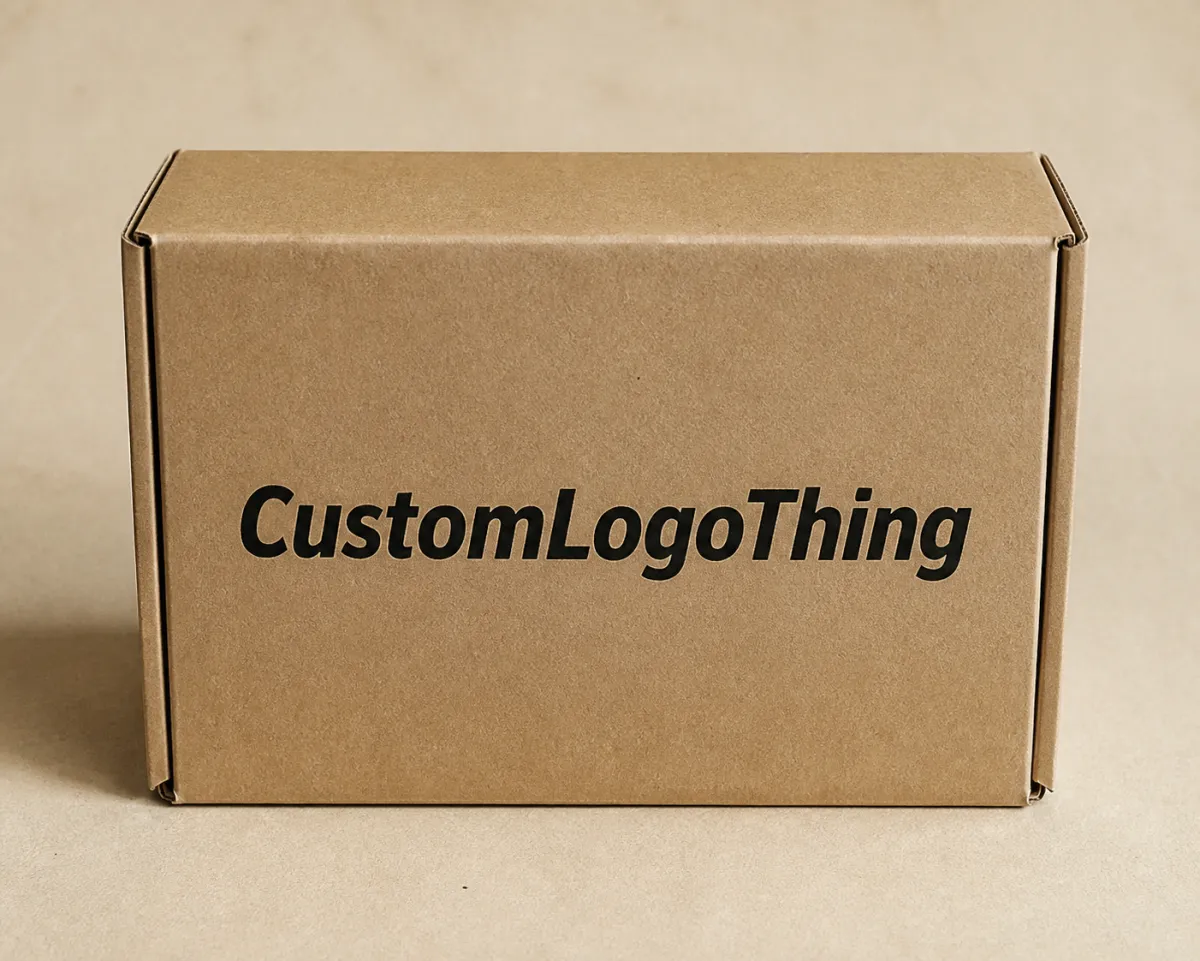
logo printed kraft mailer boxes work because they sit between modesty and presence. Kraft board brings texture and warmth. A logo, even a small one, lands as intention rather than decoration. That combination suits brands that want to look grounded instead of loud. Beauty brands use it. Coffee roasters use it. Apparel labels use it. The appeal is not mystery; it is contrast. The surface is plain enough that the mark stands out, and the mark is simple enough that the material still gets to speak.
For ecommerce and subscription businesses, logo printed kraft mailer boxes fit the way customers actually encounter brands now: at the end of a shipping label, not in a store aisle. The package arrives, gets opened, gets photographed, gets set on a counter, and sometimes gets kept around because the structure is useful. A plain outer carton can make the trip, but a printed mailer extends the brand moment beyond delivery. It turns a shipping event into a small reveal, which is often the only physical retail-like interaction a digital brand gets to own.
That visibility is surprisingly durable. A box may be handled by a picker, a packer, a driver, a recipient, and a roommate before it reaches the recycling bin. Each hand sees the same surface. For logo printed kraft mailer boxes, that repeated exposure is the advantage. A crowded graphic is not required. A clean logo, a short line of copy, or a restrained repeat pattern often lands harder than busy art because the eye has less noise to fight through. On kraft, empty space is not wasted space. It gives the brand room to breathe.
A mailer earns its keep when it protects the product, speeds up packing, and makes the customer feel the parcel was built with care.
Material choice does part of the selling. Natural kraft suggests paper-based construction and a lower-fuss aesthetic. Corrugation suggests strength. Put those together and logo printed kraft mailer boxes can say a lot without gloss, foil, or oversized imagery. The strongest versions usually do the simplest thing well: correct sizing, clear print, and enough restraint to let the substrate look intentional instead of unfinished.
There is also a system-level benefit. Brands often pair logo printed kraft mailer boxes with other packaging pieces so the customer sees the same identity across channels. A company might use corrugated shippers for ecommerce, paper bags at events, and Custom Packaging Products for retail displays or secondary packaging. That continuity helps the business look organized. Buyers notice consistency even when they cannot explain why the package feels more trustworthy than a one-off carton.
Operationally, these mailers are attractive because they change perception without changing the whole warehouse rhythm. The box still folds flat, still stacks efficiently, and still moves through fulfillment like a standard mailer. The brand value rises faster than the labor burden in most cases. That ratio is hard to beat, especially for teams watching both margins and customer sentiment.
How Logo Printed Kraft Mailer Boxes Are Made
logo printed kraft mailer boxes usually start as corrugated board: a kraft liner outside, a fluted medium in the middle, and another liner inside. The outer liner carries the visible brown tone and takes the print. The flute gives the carton its stiffness and recovery after compression. Board grade changes the result more than many first-time buyers expect. E-flute often works well for smaller items and sharper print detail. B-flute brings more cushion and crush resistance. Some products need a hybrid. A heavier item in transit is a different problem than a light box that only needs a polished first impression.
Flute profile affects the feel of the finished carton as much as it affects strength. Tighter flutes can produce a cleaner profile and a better-looking print face. Thicker flutes can make the box feel more rugged, but they may also increase bulk. That tradeoff is normal for logo printed kraft mailer boxes. A box for a bottle set or skincare kit does not need the same board as a box for a stack of hardcover books. The best choice depends on product weight, drop risk, and how much air the pack-out leaves around the contents.
Printing method is the next decision, and it changes both economics and finish. Flexographic printing is common on larger runs with simple artwork because setup becomes efficient once plates are made. Digital printing suits shorter runs, seasonal versions, and orders that need speed without plate costs. Post-print labels can work for pilot quantities, though the result often feels more like labeling a carton than designing one. For logo printed kraft mailer boxes, the right method depends on run size, logo complexity, and how much of the panel needs ink.
Here is a simple way to compare the common options:
| Print Method | Best Fit | Typical MOQ | Cost Behavior | Practical Notes |
|---|---|---|---|---|
| Flexographic print | Large runs, simple logos, one to two colors | Often 1,000+ units | Lower unit cost at volume, higher setup impact on small orders | Good when the design is stable and the brand wants repeatable output |
| Digital print | Short runs, seasonal art, frequent artwork changes | Often 100-500 units | Higher per-unit cost, lower setup friction | Useful for testing or launching logo printed kraft mailer boxes quickly |
| Post-print label | Very small runs, pilot projects, temporary branding | Often varies widely | Low upfront tooling, but labor can rise | Fine for proof-of-concept, less integrated than direct print |
Once printing is approved, the sheet is die-cut and creased so it can fold into shape. Mailers often use tuck flaps, locking tabs, or interlocking closures that reduce the need for tape. That matters in fulfillment, where a few seconds saved per unit becomes real labor over thousands of shipments. It also matters to the customer. A lid that closes squarely feels more deliberate. For logo printed kraft mailer boxes, the structure is not decoration; it is part of the experience and part of the protection.
Texture shapes the result too. Uncoated kraft absorbs ink in a way coated stocks do not. Darker colors often hold up better than pastel treatments because the contrast survives the paper grain. A rich black, deep brown, or a limited spot color can look sharper than a bright palette pushed too far. That is one of the quiet truths of logo printed kraft mailer boxes: the substrate sets the rules, and the design either respects them or fights them. The designs that respect the material usually age better.
When sourcing is being discussed, technical references help frame the conversation. ISTA offers guidance for transit testing and shipping performance, while the FSC system is useful when buyers want documented paper sourcing. Neither one chooses the box for you, but both give the project more structure than guesswork. A good packaging brief pairs brand goals with shipping reality. That mix is where logo printed kraft mailer boxes become easier to buy and easier to trust.
Cost, Pricing, MOQ, and Quote Factors
The price of logo printed kraft mailer boxes depends on a handful of variables that interact more than buyers expect. Board grade, box dimensions, print coverage, artwork complexity, quantity, and finish all push the number in different directions. A small box can still cost more than expected if it uses heavy board or a detailed print layout. A larger carton can sometimes land at a better unit price if the run is big enough to absorb setup work. Packaging pricing is rarely linear. It behaves more like a staircase than a ladder.
MOQ is usually the first friction point. Short runs are possible, but the economics change fast because cutting, printing, proofing, and setup do not shrink much at lower quantities. For simple logo printed kraft mailer boxes, a pilot run may work in the low hundreds. Efficient production often begins somewhere around 1,000 to 3,000 pieces, depending on the plant and the decoration method. Once the count rises, the fixed work spreads out and the unit cost can fall sharply. That is one reason many brands order a test batch first and treat it as insurance against expensive mistakes.
Useful pricing ranges are better than vague promises. A simple one-color flexo run on a standard corrugated mailer may sit around $0.35-$0.85 per unit at volume, while a short digital order can move closer to $1.00-$2.50 per unit depending on size, coverage, and quantity. Those numbers are directional, not universal. Freight, regional labor, board availability, and finishing choices can move them fast. logo printed kraft mailer boxes stop being commodity shipping cartons the moment print, tooling, and brand standards enter the room.
Quote comparisons need more than a headline price. Ask what is included. Does the quote cover dieline setup, structural sampling, printing, die-cutting, shipping cartons, and palletizing? Is freight separate? Are coatings or aqueous finishes part of the base cost? Are inserts, partitions, or special closure features included or added later? The lowest number can look attractive until the missing pieces return. With logo printed kraft mailer boxes, a fair comparison only works when every supplier is quoting the same specification.
Hidden costs tend to show up in predictable places. Oversized dimensions use more board and raise freight weight. Large artwork areas can require more setup time. Late dieline edits can trigger rework and more proof cycles. Inserts add fit and protection, but they also add material, tooling, and assembly steps. Even small tolerances can affect the final quote. That is why a concise spec sheet saves money quickly on logo printed kraft mailer boxes. It gives the supplier fewer ways to guess.
There is a broader cost question that often gets skipped. What does the package save? If a slightly more expensive mailer reduces void fill, lowers transit damage, speeds up packing, or cuts tape use, the landed cost may improve even when the box price rises. A carton that fits well can also reduce movement inside the shipper, which means fewer scuffs and fewer returns tied to packaging failure. Judged properly, logo printed kraft mailer boxes belong in the shipping system, not in a vacuum.
If your team is comparing formats, it helps to set corrugated mailers against options such as Custom Poly Mailers. Poly mailers can be smart for light, low-fragility items. Kraft mailers make more sense when the product needs structure, a premium reveal, or more crush protection. The right answer depends on the item, the shipping lane, and what you want the customer to feel when the parcel lands.
Process and Timeline for Logo Printed Kraft Mailer Boxes
The production flow for logo printed kraft mailer boxes is usually clear once the inputs are clear. A packaging brief defines the product dimensions, weight, shipping method, and brand goals. The structure gets sized. The artwork gets placed on the dieline. The proof gets reviewed. Then the job moves toward production. Projects slow down when those inputs are fuzzy, and they move faster when the team agrees early on what the box needs to do.
Lead time depends on several things at once: quantity, print method, material availability, and whether the design uses existing tooling or a custom dieline. A simple order with final artwork can move faster than a project with inserts, special closures, or multiple print stages. For logo printed kraft mailer boxes, the practical timeline is usually measured in business days after approval, not in hopeful guesses. Buyers should plan for proofing, sampling, and freight as part of the schedule, not as extra tasks tacked on after the fact.
Better information shortens the whole process. A complete brief gives the supplier fewer opportunities to pause and ask questions. At minimum, the supplier should know:
- Exact product dimensions and approximate weight
- Desired box style and closure preference
- Logo files in vector format if available
- Brand color references, ideally with Pantone or approved CMYK targets
- Finish preferences, such as matte, aqueous, or no added coating
- Any required labeling, recycling marks, or compliance text
- Whether the box must fit inserts, tissue, or void fill
Most delays come from avoidable issues. Low-resolution art is a frequent offender. A fuzzy logo can force a redesign or leave the print looking weaker than the mockup. Dieline changes after approval are another common problem, because changing a panel or closure can ripple through the entire structure. Unclear decisions about inserts, tape, or sealing methods create more churn too, especially when the fulfillment team was not part of the conversation. logo printed kraft mailer boxes feel simple only when the structure and the artwork are locked before production starts.
Launch timing deserves its own guardrail. A packaging order should be scheduled around the real shipping date, not around the date the PO was sent. If a product must be packed, tested, and shipped before a launch event, the cartons need to arrive with enough margin to check fit and teach the team how the box behaves in real use. A little buffer can prevent a costly scramble. When logo printed kraft mailer boxes show up too close to launch, there is no room left to catch the small failures that often become the expensive ones.
Quality control should happen before volume, not after complaints. A box that looks perfect on screen can still show issues when folded, stacked, or dropped from short height. A sample reveals whether the logo lands in the right place, whether the lid closes squarely, and whether the board survives handling. For many buyers, that sample is the line between a packaging idea and a packaging decision. It matters even more with logo printed kraft mailer boxes because the blend of structure, print, and paper texture is easier to judge in hand than on a monitor.
Key Design Decisions for Logo Printed Kraft Mailer Boxes
Designing logo printed kraft mailer boxes is a mix of branding judgment and practical layout work. The logo can sit centered on the lid, repeat as a pattern, or share the panel with a short brand line. The best choice depends on how much of the box will be seen, whether the logo already has recognition, and how the package needs to perform in shipping or retail. A centered mark often ages better than an overbuilt panel full of tiny decorative details. It stays readable, and readability is the first job.
Contrast matters more on kraft than on white board. The brown base is naturally warm, so pale ink can fade into the surface, and delicate type can disappear once the carton is folded or handled. Dark inks, simple palettes, and strong spacing usually outperform complicated art pushed onto a substrate that does not naturally support it. Many of the best logo printed kraft mailer boxes use just one or two inks. They still look premium because the layout is disciplined. The design does not strain for attention.
Sizing has direct consequences for both cost and performance. The box should hold the product securely without leaving so much empty space that it feels wasteful or unstable. Too much movement can lead to corner crush, surface scuffing, or a noisy unboxing experience. Too little room can make packing awkward and can press on fragile edges. For logo printed kraft mailer boxes, the sweet spot is usually a fit that is snug without being aggressive. The parcel should feel stable in transit and still be easy for the fulfillment team to close.
Structural details matter more than they first appear. Tuck depth, tab strength, and panel rigidity affect the feel of assembly and opening. If the box will carry tissue, a card, inserts, or void fill, those parts should be tested inside the real carton, not imagined on a render. That is the gap between designing for appearance and designing for use. The most reliable logo printed kraft mailer boxes are the ones that still close properly after the full pack-out is added.
Sustainability language should stay specific. Paper-based construction, recyclable corrugated board, and FSC-certified material are meaningful claims when they are true and documented. Broad green language does not help buyers, and it can create credibility problems if coatings or mixed materials complicate recycling. If the brand wants to talk about environmental choices, it should mention recycled content, material selection, and the local recycling path instead of relying on vague claims. That approach suits logo printed kraft mailer boxes because the material story is already strong enough to stand on its own.
Some brands benefit from thinking beyond one carton. A mailer may carry the primary shipped product, while inserts, labels, sleeves, or accessory bags carry the same visual logic into other touchpoints. That cross-category consistency matters. The same disciplined design thinking that shapes logo printed kraft mailer boxes can also guide stickers, wrap bands, and display pieces. The customer then sees one identity, not a scatter of unrelated packaging parts.
Common Mistakes With Logo Printed Kraft Mailer Boxes
One of the most common mistakes with logo printed kraft mailer boxes is overdesigning the surface. Too many colors, thin lines, tiny text, and crowded copy can sink into the texture of kraft board, especially after folding and handling. What looked crisp on a screen can turn muddy on paper. Cleaner layouts usually print better, cost less, and feel more settled in the hand. Kraft rewards restraint.
Skipping the physical sample is another costly error. A mockup cannot show how the box folds, how the closure feels, whether the lid springs open, or how the logo behaves under warehouse lighting. A sample shows all of that. It also reveals whether the dimensions are right, which matters when the product is irregular or fragile. With logo printed kraft mailer boxes, the sample is not a luxury add-on. It is the most direct way to protect both budget and brand presentation.
Wrong board strength causes real shipping problems. If the stock is too light, corners can crush, closures can weaken, and the carton can fail in transit even if it looks fine on a table. If the stock is too heavy, the box becomes bulky, more expensive, and harder to fold quickly at the pack station. The goal is not the thickest board on the list. It is the board that fits the product, route, and handling method. That balance is what makes logo printed kraft mailer boxes dependable instead of merely attractive.
Fulfillment planning is another place where projects get stuck. A hand-assembled box should be measured by the number of motions required. A label zone should be defined before production, not discovered later. If tape is needed, it belongs in the process from the start. Conveyor handling, cartoning, and pallet stacking can all affect the final structure. A carton that looks beautiful in a design review may still slow the line if the closure is awkward. That is why logo printed kraft mailer boxes should be tested in the same environment where they will actually be used.
The final mistake is treating the mailer like a one-off art piece instead of a repeatable packaging asset. Good packaging systems should support future launches, seasonal updates, and small SKU changes without forcing a complete redesign each time. If the box is too narrow in its logic, every new product creates a new structural problem. If it is built well, logo printed kraft mailer boxes can become part of a broader packaging family that scales with the business. That saves time, trims confusion, and keeps the brand visually consistent over multiple releases.
Expert Tips and Next Steps for Logo Printed Kraft Mailer Boxes
The fastest way to improve results with logo printed kraft mailer boxes is to create a one-page spec before asking for quotes. Include product dimensions, approximate weight, shipping method, quantity target, logo files, finish notes, and any details about natural kraft variation. A clear spec makes vendor comparisons much easier because every supplier is quoting the same box. That alone can save days of back-and-forth and keep the project from drifting into guesswork.
Ask for at least one physical sample or pre-production proof. A small sample run lets the team check fit, print clarity, closure feel, stackability, and the unboxing moment before volume is committed. If inserts or tissue are part of the pack-out, test the carton with those items inside. For logo printed kraft mailer boxes, a sample often exposes the details that matter later, like a logo placed too close to a fold or a tab that closes more tightly than expected.
Comparing two or three quotes with the same spec is also useful. That is the only fair way to see whether the difference comes from board grade, print method, lead time, or included services. One supplier may quote a lower unit price but need longer setup. Another may cost more per box and offer faster turn plus more support. Neither is automatically better. The right choice depends on your priorities for logo printed kraft mailer boxes, not just the bottom line in isolation.
Before final approval, run the real box through the real fulfillment workflow. Put the product inside, close the flaps, label it, and move it through the same hands and surfaces it will meet in production. That is where problems show up: a carton that is slightly too deep for a shelf, a closure that takes too much force, or a print layout that interferes with label placement. For logo printed kraft mailer boxes, that kind of test gives more useful information than another round of screen review.
Here is a simple next-step checklist:
- Confirm product size, weight, and packing orientation.
- Decide on the board grade and print method.
- Prepare logo files and color references.
- Request quotes using the same spec sheet.
- Approve a sample or pre-production proof.
- Test the final pack-out with the fulfillment team.
If the project is still in planning, review the wider packaging mix too. Some brands use corrugated mailers for premium or fragile shipments, while others mix in lighter formats for low-weight products. That is where a broader view of Custom Packaging Products becomes useful. The point is not to force every SKU into one carton. The point is to pick the right package for the job and keep the brand consistent across the lineup.
Used well, logo printed kraft mailer boxes are more than a brown carton with ink on it. They act as shipping container, branding surface, and cost decision at the same time. Size them properly, Choose the Right print method, and test them before volume, and they can do a great deal of work quietly and reliably. The practical takeaway is simple: start with the product, not the artwork. If the box fits the item, survives the route, and prints cleanly on kraft, the branding will follow naturally.
FAQs
What is the minimum order for logo printed kraft mailer boxes?
Minimum order quantities vary by supplier, print method, and whether custom tooling is needed. Short runs are usually possible, but the unit cost is higher because setup is spread across fewer boxes. If you are testing a new product, ask for a sample run or pilot quantity before placing a larger order for logo printed kraft mailer boxes.
Are logo printed kraft mailer boxes strong enough for shipping?
Yes, if the board grade and flute profile are matched to the product weight and shipping conditions. The box should also be sized to reduce movement inside the shipper, which helps prevent corner crush and product damage. Heavier items may need stronger corrugated stock or an insert to keep logo printed kraft mailer boxes stable in transit.
Which print method works best for logo printed kraft mailer boxes?
Digital printing is often best for short runs, faster turns, and artwork that may change frequently. Flexographic printing usually becomes more efficient for larger quantities and simpler one- or two-color designs. The best choice depends on your logo complexity, quantity, budget, and how much of the box needs ink coverage on logo printed kraft mailer boxes.
How long does production usually take for logo printed kraft mailer boxes?
Lead time depends on artwork approval, sample approval, quantity, and current production capacity. Simple orders can move quickly once the dieline and logo files are finalized, while custom structures take longer. The safest approach is to build in extra time for proofing, sampling, and freight so the boxes arrive before launch, especially for logo printed kraft mailer boxes.
How can I lower the cost of logo printed kraft mailer boxes without hurting the look?
Use a clean logo layout with limited ink coverage instead of full-surface artwork. Keep the box size tight to the product, since oversized cartons add material and shipping expense. Ask for quotes at different quantities and compare the unit cost against the brand impact of each option. In many cases, the smartest savings come from simplifying logo printed kraft mailer boxes rather than stripping away the parts customers actually notice.


