Buyer Fit Snapshot
| Best fit | Logo Stickers for Shipping Boxes projects where brand print, material claims, artwork control, MOQ, and repeat-order consistency need to be specified before quoting. |
|---|---|
| Quote inputs | Share finished size, material target, print colors, finish, packing count, annual reorder estimate, ship-to region, and any compliance wording. |
| Proofing check | Approve dieline scale, logo placement, barcode or warning zones, color tolerance, closure strength, and carton packing before bulk production. |
| Main risk | Vague material claims, crowded artwork, missing packing details, or unclear freight terms can make a low unit price expensive after revisions. |
Fast answer: Logo Stickers for Shipping Boxes: Material, Adhesive, Artwork, and MOQ should be specified like a repeatable production item. The safest quote records material, print method, finish, artwork proof, packing count, and reorder notes in one written spec.
Production checks before approval
Compare the actual filled-product size with the drawing, then confirm tolerance on folds, seals, hang holes, label areas, and retail display edges. Reserve space for logos, QR codes, warning copy, and material claims before decorative graphics fill the panel.
Quote comparison points
Review material grade, print process, finish, sampling route, tooling charges, carton quantity, and freight assumptions side by side. A quote is only useful when the supplier can repeat the same color, closure quality, and packing count on the next order.
Logo Stickers for Shipping Boxes: A Practical Brand Layer
Plain corrugated boxes get orders out the door, but they rarely say much about the brand behind them. Logo stickers for shipping boxes fix that with a simple, low-risk move: add a clean brand mark to the carton, and a package that once looked anonymous starts reading like it came from a business that pays attention.
That small change carries more weight than people expect. Logo stickers for shipping boxes are affordable to test, easy to reorder, and flexible enough to handle box size changes, seasonal pushes, and new product launches without stranding inventory. They do not change dimensional weight, they do not lock a company into printed cartons too early, and they give ecommerce teams a way to improve presentation without committing to packaging they may outgrow in a few months.
Packaging works as a system, not as a single item. A box, a sticker, a shipping label, and an insert all shape the same first impression, which is why many brands start with Custom Packaging Products and build outward from there. Pick the piece that will be seen first, then make sure it supports the rest of the packout instead of fighting it.
The goal is not to make a plain carton pretend it is luxury packaging. Logo stickers for shipping boxes make transit packaging feel deliberate, soften the “cheap box” problem, and keep protection and presentation moving in the same direction. That balance matters, because a customer can forgive simple packaging. They are less forgiving when simple packaging looks accidental.
What Logo Stickers for Shipping Boxes Actually Solve
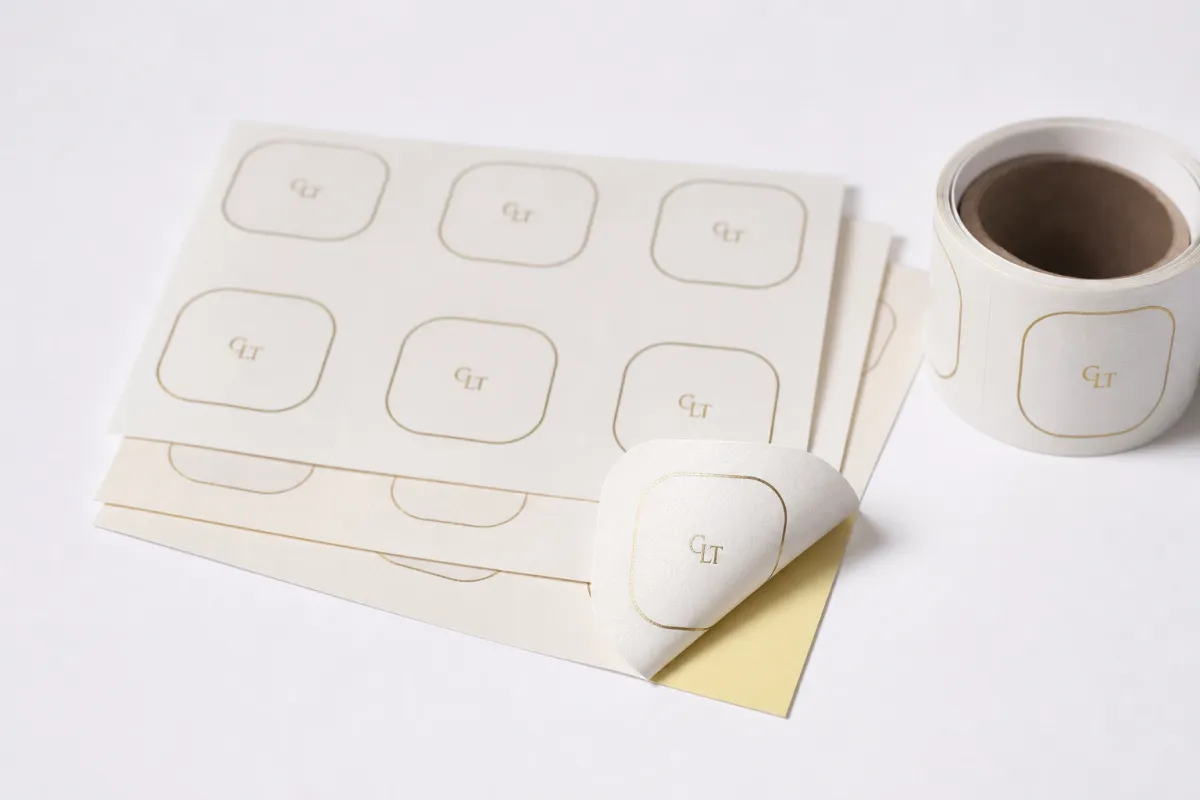
A plain corrugated box landing on a porch says very little. No brand color. No mark. No hint that someone thought through the experience. Logo stickers for shipping boxes close that gap with almost no disruption to the packing process. The sticker becomes the first visible signal that the parcel belongs to a real brand, not just a stack of generic cartons moving through a warehouse.
Direct-to-consumer brands, subscription programs, wholesale shipments, event kits, and sample boxes all run into the same problem: how do you create identity without paying for fully printed cartons? Printed boxes make sense at certain volumes, but sticker branding gets moving faster and leaves room to adjust. If the size changes or the seasonal run shifts, you are not stuck with obsolete inventory. That alone saves a lot of headaches.
They also help inside the fulfillment workflow. Packing teams can spot a box tied to a specific program, promotion, or SKU family without opening it. That matters in a warehouse where many products move through the same space and picking mistakes are expensive. Nobody puts that kind of efficiency on a mood board, but it absolutely shows up in labor time and error rates.
Logo stickers for shipping boxes also protect the feel of the brand. A customer rarely knows whether the carton cost 38 cents or 1.38 dollars, but they do notice whether it looks intentional. A sticker can make a recycled kraft box feel considered, which improves the unboxing experience without forcing a jump into expensive custom packaging before the business is ready.
There is also the shipping side of the equation. Stickers do not add the kind of bulk that oversized branded cartons can, which helps keep packaging costs under control when freight zones, carton dimensions, and packout costs are all under review. A brand mark on the box should make the shipment look better, not make it heavier, larger, or harder to manage.
“A plain box is acceptable. A plain box with a logo sticker looks intentional.”
That is the real tradeoff. Logo stickers for shipping boxes do not fix weak packaging on their own. They solve a middle problem that comes up constantly: the box needs a brand layer, but the business is not ready to commit to custom cartons across every size and sales channel. That is normal. It is also kinda the sweet spot for a lot of growing brands.
How Logo Stickers for Shipping Boxes Work in the Real World
The production path is straightforward, though the details still matter. The logo or brand mark gets prepared first. Next comes the format choice: round, square, rectangle, or die-cut. The printer checks the file, sends a proof, prints the order, finishes it, and ships it to the packing location. Logo stickers for shipping boxes are easy to understand, but they still need to fit the carton, the team, and the way the package moves through the building.
Placement tends to trip people up more than printing does. The most visible spot is not always the best one. Some brands seal the top flap with a sticker, which works well for a retail-style reveal. Others put the sticker on the front panel so it reads clearly from the porch or the receiving dock. Another option is using the sticker on tissue wrap or an inner carton layer. If you already use Custom Labels & Tags inside the box, the outer sticker should feel like part of the same packaging language instead of an isolated extra.
Adhesive choice matters more than many buyers expect. Permanent adhesive is usually the safest default for logo stickers for shipping boxes because cartons see handling, vibration, and temperature swings. Removable adhesive makes sense for promotional seals, reuse programs, or any packout where the sticker should come off cleanly. On rough corrugated board, especially recycled kraft, a stronger adhesive usually performs better than a bargain option that looks fine in a sample photo and then peels up in a real warehouse.
Shape and size deserve the same care. A circular sticker can look tidy for a simple icon. A rectangle can carry a wider logo lockup. Die-cut stickers feel custom, but they can cost more and create extra liner waste. Box size should guide sticker size. A 2-inch mark disappears on a large carton. A 5-inch sticker can overpower a small mailer. Most brands do best in the middle, where the mark is visible without shouting.
- Seal area: useful for top flaps and tamper-evident presentation.
- Front panel: useful for fast brand recognition in ecommerce shipping.
- Inner closure: useful for tissue, inserts, and limited-edition packouts.
- Mixed inventory: useful when one carton size serves several SKUs.
Application method matters operationally. Smaller teams often apply logo stickers for shipping boxes by hand, sheet by sheet or roll by roll. Higher-volume packing lines usually need a dispenser or a placement guide so every sticker lands in the same spot. That consistency keeps the box from looking sloppy and keeps barcodes, seams, and shipping labels clear. Pretty packaging matters. Functional packaging gets the box delivered.
Logo Stickers for Shipping Boxes: Cost, MOQ, and Quote Basics
Pricing is where buyers often get vague answers, so it helps to stay concrete. The cost of logo stickers for shipping boxes depends on size, material, finish, print complexity, and quantity. A small run of 250 pieces usually looks expensive on a per-piece basis because setup and handling are spread across fewer units. Move to 1,000 or 5,000 pieces and the unit cost typically drops sharply. That is not a trick. It is just how production works.
For a simple one-color or full-color digital job, small-run logo stickers for shipping boxes might land around $0.18-$0.35 per piece at 250 units, depending on size and finish. At 1,000 units, many buyers see something closer to $0.06-$0.14 per piece. At 5,000 units, the cost can fall into the $0.03-$0.08 range if the spec stays straightforward. Add specialty die shapes, foil, or a heavier stock, and the number rises. That part is predictable.
Minimum order quantity should be treated as a planning choice, not just a supplier rule. Lower MOQ runs help when you are testing a new logo, checking how the adhesive behaves on your carton stock, or making sure the sticker reads correctly in transit. Higher MOQ makes sense once the design is locked and monthly packing volume stays steady. The mistake is ordering a huge run before the layout has been proven. That is how people end up with thousands of stickers that look fine on a screen and awkward on the actual box.
If you are weighing a sticker program against printed cartons, the sticker usually wins on flexibility and cash flow. Printed cartons can make sense at scale, but they tie up inventory and can go stale quickly if dimensions or branding change. Logo stickers for shipping boxes often serve as the better bridge between plain cartons and fully custom packaging. They keep the brand visible while the business learns its real box demand.
| Option | Typical Unit Cost at 1,000 | Best For | Tradeoff |
|---|---|---|---|
| Paper sticker | $0.06-$0.11 | Dry ecommerce shipping, promo runs, light handling | Less moisture resistance on rough cartons |
| BOPP sticker | $0.08-$0.16 | Warehouses, scuffed transit packaging, humid storage | Slightly higher cost than paper |
| Vinyl sticker | $0.12-$0.24 | Rougher shipping materials, cold storage, heavy handling | Often more material than a simple carton brand mark needs |
When you request a quote, do not stop at unit price. Ask about setup fees, proof charges, freight, sample cost, and reprint policy. A quote that looks cheaper at first glance can become expensive after shipping and artwork changes are added. For logo stickers for shipping boxes, the real number is the landed cost, not the headline cost. That means the per-piece price, the freight, and the cost of any back-and-forth on the artwork all belong in the same calculation.
If your cartons are still being finalized, it helps to compare the sticker run with Custom Shipping Boxes at the same time. Sometimes the smarter move is to keep the box plain and use stickers for the outer brand layer. Sometimes the box itself deserves the print budget. A useful supplier should show that tradeoff instead of pushing the same answer for every brand.
Logo Stickers for Shipping Boxes: Process, Timeline, and Lead Time
Production begins with artwork review. That means checking file format, resolution, bleed, safe area, and shape. If the logo is too small or the border is too thin, the print can lose clarity quickly. Good logo stickers for shipping boxes start with clean artwork, because no finish can rescue a fuzzy file. A 300 dpi vector-based setup is usually the safest path for press-ready work.
The proof comes next. This is the point where buyers should slow down, not rush. A proof is not a box to tick off. It is the chance to catch the wrong color, the bad crop, or the awkward sizing before the run is printed. If stickers are going into an order fulfillment workflow, one missed proof can turn into a pile of unusable inventory sitting near the packing table. That is an expensive lesson.
- Artwork review: confirm size, bleed, shape, and file quality.
- Proof approval: check color, placement, and copy before printing.
- Print setup: prepare the file, stock, and die or cutting path.
- Production: print the labels, then finish and cure if needed.
- Packing: count, stack, roll, or sheet the order for shipment.
- Delivery: move the finished stickers into your packing workflow.
Lead time depends on the spec. Simple digital logo stickers for shipping boxes can often move through proofing and production in about 5-10 business days after approval. Custom die shapes, specialty finishes, thicker stocks, or larger runs can push that closer to 10-15 business days. A supplier that quotes speed without asking about artwork quality, quantity, and finish is guessing, and guessing is not a production plan.
For higher-risk shipments or fragile kits, it helps to look at the whole packout instead of the sticker alone. Transit packaging has to survive drops, vibration, compression, and handling. The sticker should not fail in the middle of a carton that is otherwise doing its job. If you need a benchmark for testing, ISTA testing standards are a useful reference point for transit performance, especially for brands that care about package protection as much as presentation.
Lead time buffers matter because stickers are often tied to launches, campaigns, and seasonal spikes. If carton inventory is low and the sticker order is still in production, you can end up shipping plain boxes right when the brand wants to look its best. Build a buffer. It is dull advice, which is exactly why it works. Logo stickers for shipping boxes should arrive before the cartons need them, not after the launch email goes out.
Best Materials for Logo Stickers for Shipping Boxes
Material choice is where many sticker decisions succeed or fail. Paper is usually the cheapest option and works well for dry environments, short transit windows, and cartons that will not see much abrasion. BOPP is a strong all-around choice for logo stickers for shipping boxes because it handles moisture better and resists scuffs more reliably. Vinyl is tougher still, but for most carton branding jobs, it can be more material than the application truly needs.
Finish changes the feel. Matte reads quieter and often looks more considered on kraft boxes. Gloss gives stronger visual pop, especially on white cartons or bright artwork. Soft-touch can feel rich, though it is not always the smartest choice for shipping materials that get handled often, because fingerprints and scuffs show differently depending on the coating. If the sticker is going to be touched during packing and delivery, durability matters more than marketing language.
The adhesive has to match the box surface. Recycled kraft corrugate is more textured and usually needs a stronger adhesive than a smooth coated carton. Glossy boxes can accept stickers differently than rough board. If your packaging mix includes multiple carton types, test the sticker on the exact carton stock, not on a random sample from a desk drawer. That sounds obvious, yet it gets skipped more often than it should.
Sustainability deserves a practical answer, not a speech. If your brand wants a lower-impact material story, compare paper stocks against your durability needs and ask whether the sticker can still survive warehouse handling. FSC-certified paper can be a strong signal for buyers who care about chain of custody, and FSC certification information is a useful reference if you are weighing paper-based options. The right choice is the lightest spec that still does the job.
| Material | Durability | Look and Feel | Best Use Case |
|---|---|---|---|
| Paper | Moderate | Classic, economical, printable | Dry shipping, short storage, lower-cost branding |
| BOPP | High | Clean, crisp, moisture-resistant | Most logo stickers for shipping boxes in active ecommerce shipping |
| Vinyl | Very high | Smooth, durable, slightly heavier | Rough transit packaging, cold storage, heavy abrasion |
One practical rule saves a lot of frustration: if the carton itself is rough recycled corrugated board, do not pair it with a weak adhesive and expect the result to hold. A sticker that peels at the corners after a day in the warehouse is not a detail. It is a packaging failure. Good logo stickers for shipping boxes should stay put through stacking, handling, and the occasional not-so-gentle move from truck to dock to porch.
Common Mistakes With Logo Stickers for Shipping Boxes
The easiest mistake to make is also the easiest one to avoid: making the logo too small. On a monitor, a tiny mark can look refined. On a taped carton at arm’s length, it can disappear. Logo stickers for shipping boxes need enough size to read after the box is stacked, photographed, and carried across a warehouse floor. If the mark cannot be seen from a few feet away, the sticker is not doing its job.
Contrast is the next trap. Light ink on brown kraft can vanish. Busy artwork can blur into the corrugate texture. Subtle design choices may look elegant in a digital mockup and then fail the second the box enters real shipping conditions. A shipping box is not a display shelf. It is a moving object with bad lighting and random handling. High contrast usually wins for outer box branding.
Placement mistakes create their own problems. A sticker that sits over a seam can wrinkle. A sticker that straddles a fold can peel. A sticker placed too close to the shipping label can interfere with scan readability. If the crew has to rotate the box or peel and reapply stickers because the layout is awkward, the whole point of easier branding disappears. Good logo stickers for shipping boxes should reduce friction, not add another step.
Another misstep is choosing a finish or shape that looks custom but works against the budget. Die-cut shapes can be attractive, but they are not always worth the extra cost if a clean rectangle does the same work. Gloss can look sharp, but it also shows scuffs more quickly in some transit packaging situations. The right spec depends on handling, not just the mood of the design.
Some brands also ask logo stickers for shipping boxes to do too much at once. If the sticker is trying to be a logo, a slogan, a warning label, a seasonal graphic, and a handling instruction all at once, it will probably fail at the main task: brand recognition. Keep the outer mark simple. Save the extra information for inserts, cartons, or additional Custom Labels & Tags where needed.
Expert Tips for Logo Stickers for Shipping Boxes
Test on the actual carton stock before placing a full order. Not a sample in theory. The exact box. Apply a few stickers, press them down properly, stack the boxes, and leave them for a day or two. Then check edge lift, wrinkle behavior, and adhesion. That small test catches more failures than a polished mockup ever will. With logo stickers for shipping boxes, the carton surface decides a lot.
Design for one-job clarity. Choose one strong brand mark, keep the copy limited, and make sure the logo reads quickly. If people need ten seconds to understand the sticker, it is too complicated for shipping. You are branding a carton that will be handled in warehouses and delivery vans, not building a billboard. The best logo stickers for shipping boxes are readable, durable, and easy for the packing team to place without second-guessing the layout.
Quantity planning should follow actual usage, not optimism. If you use 300 stickers a month, a 250-piece order is only a short patch. If you use 2,000 a month, ordering 500 at a time creates needless reorder overhead. Compare unit cost at 250, 500, 1,000, and 5,000 pieces before you decide on the first run. The right quantity often lands in the middle of what buyers expect at the start.
A spec sheet helps more than people admit. Keep the artwork version, size, material, finish, adhesive type, and placement rule in one place so every reorder matches the same setup. That saves time when a new team member or another warehouse needs to place the order. It is the unglamorous side of packaging operations, but it keeps logo stickers for shipping boxes consistent across launches and channels.
If your packaging stack includes cartons, mailers, and inserts, check the whole system rather than one item in isolation. A neat outer sticker on a weak carton is still a weak carton. A strong box without a brand mark still looks unfinished. Brands that handle packaging well usually make the pieces work together: shipping box, label, insert, and sticker all pulling in the same direction without crowding one another.
A simple way to begin is to audit your current box sizes, choose one sticker format, request a quote, and run a small pilot before scaling. That is the safest route to buying logo stickers for shipping boxes without getting stuck with the wrong spec. If the pilot works, scale it. If it does not, adjust the material, adhesive, or placement before spending real money. Practical beats pretty every time in packaging.
If you are comparing outer packaging options as a system, Custom Poly Mailers may fit lighter shipments better, while boxes plus logo stickers for shipping boxes can stay the stronger choice for heavier or more fragile kits. The right answer depends on product weight, breakability, and how much package protection the order needs in transit.
For most brands, logo stickers for shipping boxes are the cleanest way to improve presentation without taking on the cost and rigidity of full carton printing. Keep them readable, test them on the actual carton, match the adhesive to the box stock, and order enough to cover real packing volume. Do that, and logo stickers for shipping boxes stop being a tiny detail and start working like a very useful brand system.
How many logo stickers for shipping boxes should a small brand order first?
Start with 250 to 500 pieces if you are testing design, placement, or a new box size. That gives you enough volume to catch real-world issues without tying up too much cash in one spec. Move to 1,000 or more if the design is already approved and your monthly packing volume is steady. Unit price usually improves as you move up, so compare those breakpoints before deciding.
Are logo stickers for shipping boxes better than printed cartons?
Stickers work better when you want flexibility, lower upfront cost, and faster changes without reordering boxes. Printed cartons make more sense at higher volume when the box itself is part of the brand system and the dimensions stay stable. If demand is still moving around or you are validating a new SKU, logo stickers for shipping boxes usually win because they keep inventory simpler and less risky.
What material works best for logo stickers for shipping boxes?
BOPP is a strong default when boxes face moisture, scuffs, or warehouse handling. Paper is cheaper and can work well for dry, low-abrasion shipping environments. Vinyl is the tougher option when you want more durability and the budget can handle it. The best choice depends on your carton surface, storage conditions, and how rough your transit packaging tends to be.
How long do logo stickers for shipping boxes usually take to produce?
Simple digital jobs can move through proofing and production quickly once artwork is approved, often in about 5-10 business days. Custom dies, specialty finishes, and larger runs add more time to the schedule, sometimes pushing the run closer to 10-15 business days. The safest move is to build in a buffer so the stickers arrive before the cartons do, not after your launch is already live.
Can logo stickers for shipping boxes stick to recycled corrugated cartons?
Yes, but rough kraft surfaces need the right adhesive and enough pressure during application. Testing a sample on the actual box stock is the safest way to check adhesion, because recycled board varies a lot in texture. If the carton has a coarse surface, choose a stronger face stock and avoid tiny sticker shapes that can lift at the edges. That simple test is usually the difference between reliable branding and wasted logo stickers for shipping boxes.

