Buyer Fit Snapshot
| Best fit | Custom Barcode Labels for Boxes projects where brand print, material claims, artwork control, MOQ, and repeat-order consistency need to be specified before quoting. |
|---|---|
| Quote inputs | Share finished size, material target, print colors, finish, packing count, annual reorder estimate, ship-to region, and any compliance wording. |
| Proofing check | Approve dieline scale, logo placement, barcode or warning zones, color tolerance, closure strength, and carton packing before bulk production. |
| Main risk | Vague material claims, crowded artwork, missing packing details, or unclear freight terms can make a low unit price expensive after revisions. |
Fast answer: Custom Barcode Labels for Boxes: Material, Adhesive, Artwork, and MOQ should be specified like a repeatable production item. The safest quote records material, print method, finish, artwork proof, packing count, and reorder notes in one written spec.
Production checks before approval
Compare the actual filled-product size with the drawing, then confirm tolerance on folds, seals, hang holes, label areas, and retail display edges. Reserve space for logos, QR codes, warning copy, and material claims before decorative graphics fill the panel.
Quote comparison points
Review material grade, print process, finish, sampling route, tooling charges, carton quantity, and freight assumptions side by side. A quote is only useful when the supplier can repeat the same color, closure quality, and packing count on the next order.
Custom Barcode Labels for Boxes: A Practical Buying Guide
One bad carton label can slow a pick line, throw off receiving, and create a small pile of corrections before the first break. I have seen that happen on ordinary workdays, not just during peak season, and it is usually the kind of problem that starts quietly. That is why Custom Barcode Labels for boxes deserve more attention than they usually get; the label has to survive handling, scan cleanly, and still fit the way your boxes move through the warehouse, the dock, and the customer receiving area.
Custom barcode labels for boxes can sound simple on paper, but they are really small packaging components built to do a demanding job. They need the right contrast, the right adhesive, the right size, and the right placement on the carton surface, while still fitting into the wider product packaging and package branding system. A code can be correct in the file and still fail on the box if the finish is too glossy, the artwork is crowded, or the corrugated surface pulls the ink apart. That is the part people miss when they only look at the proof.
From a packaging buyer's point of view, the questions are practical: how do custom barcode labels for boxes work, what affects durability, what should they cost, and how do you roll them out without disrupting the floor? Those questions matter because a label that scans in a sample but fails on corrugated board is not useful. The goal is not decoration; the goal is dependable data capture that fits the real conditions of shipping cartons, retail packaging, and warehouse flow.
Custom Barcode Labels for Boxes: What They Do
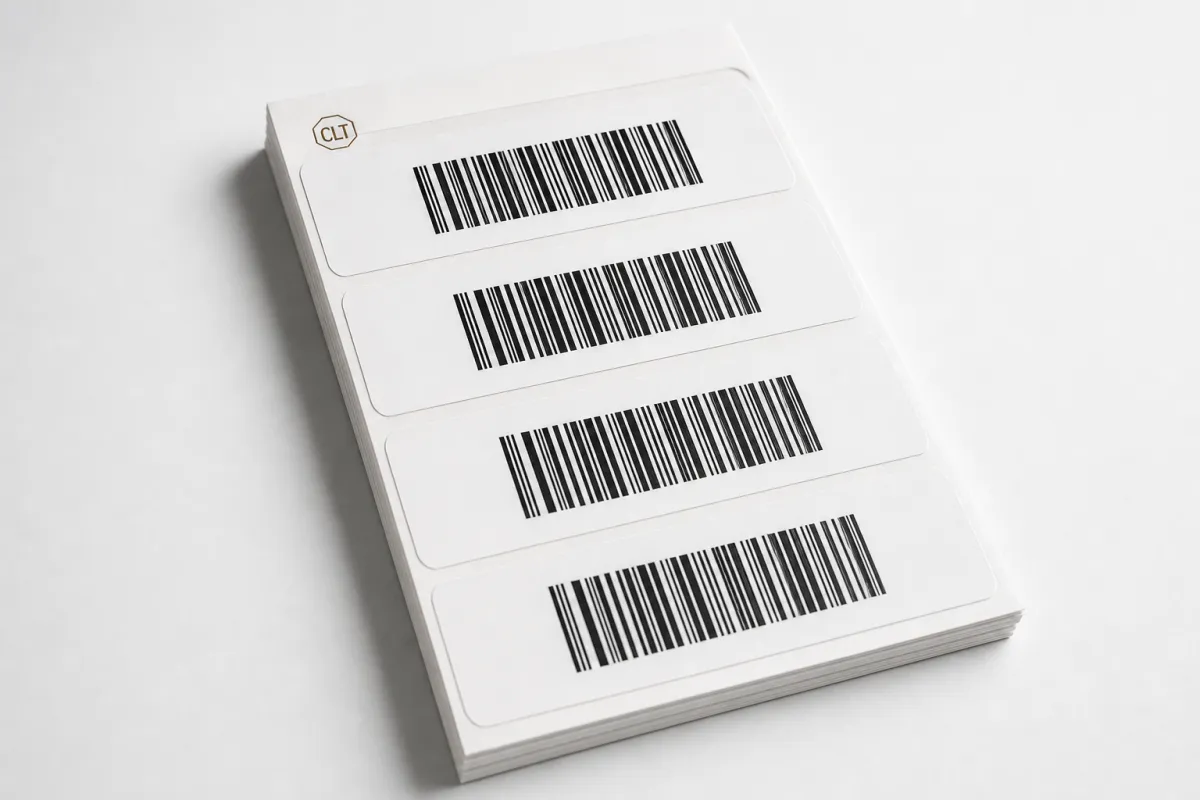
At the simplest level, custom barcode labels for boxes carry information that scanners can read quickly. That might be an item number, a carton ID, a lot reference, a routing code, or a pallet identifier. In practice, custom barcode labels for boxes are pressure-sensitive labels printed for a specific workflow, and the workflow matters as much as the barcode itself. A label used on a single-item shipper does not need the same structure as one used for mixed-SKU replenishment cartons or returnable transit containers.
The real value is speed and consistency. If a receiving team can scan a carton in one motion instead of typing a code by hand, errors drop and freight moves faster. If a shipping team can trace a box back to the right order or lot, rework and mis-picks fall away. That is why custom barcode labels for boxes show up in inbound receiving, kitting, picking, returns processing, cycle counts, and freight tracking. They become part of the box itself, not an accessory added at the end.
Technical accuracy does not guarantee field success. Custom barcode labels for boxes can still fail when the code is too small for the scan distance, the contrast is weak, the label crosses a seam, or the finish catches glare under warehouse lights. The file may be perfect, but the carton surface is the real test. Corrugated texture, tape lines, wrap, dust, and moisture all change the result. Data is only half the job; the physical label construction carries the rest.
Most operations need the label to answer three questions at once: what is this box, where is it going, and how should a person verify it if the scanner cannot read it? That is where human-readable text still earns its place under the barcode. A clear carton number, SKU, or destination line gives operators a backup when a label is torn, partially covered, or checked by eye. Good custom barcode labels for boxes keep both the machine and the person in mind.
The label also plays a role in package branding. On branded packaging, the design can include a logo, a short product description, or a clean color block, but the scan field has to stay open and uncluttered. If the label goes on Custom Printed Boxes, the artwork should be planned so the code zone stays quiet and the brand elements do not compete with legibility. That balance separates functional labels from labels that only look finished.
For teams building a broader packaging system, custom barcode labels for boxes often sit beside carton markings, shipping labels, and Custom Labels & Tags. If you also need corrugated cartons, inserts, or other packaging components, it helps to coordinate the label spec with the rest of the order through Custom Packaging Products so the carton, the label, and the handling instructions all point in the same direction.
How Custom Barcode Labels for Boxes Work in the Supply Chain
Custom barcode labels for boxes usually start in an ERP or WMS system, where the data record is created and assigned to a carton, pallet, or order line. That data then moves into label artwork or print software, which builds the barcode symbol, human-readable text, and supporting fields. After print, the label is applied to the box, and later a scanner reads it at receiving, storage, staging, or shipping. The path sounds simple, but every step can introduce a problem if the label spec does not match the workflow.
There is a real difference between one-dimensional and two-dimensional symbols. A 1D barcode is often enough for a simple item ID or carton number, and most warehouse teams know it well. A 2D code, such as a Data Matrix or QR-style symbol, can hold more data in a smaller space, which is useful when custom barcode labels for boxes need to carry multiple fields without growing too large. The right choice depends on how much data you need, how far the scanner sits from the label, and how much room you have on the carton.
Scan performance depends on the entire physical setup. Quiet zones around the code matter because scanners need a clear edge. Label width matters because a tiny code on a large, moving carton is harder to read. Print resolution matters because a 203 dpi printer may be enough for many shipping labels, while tighter symbols or smaller formats often benefit from 300 dpi. Even the angle of approach matters, especially on fast-moving conveyor lines where the scanner reads from a fixed position.
Human-readable text still matters, and not only as a fallback. Warehouse teams often use it to check whether the scanned carton matches the order on the screen. If the barcode is damaged by abrasion or covered by wrap, the text may be the fastest way to keep the box moving. That is one reason custom barcode labels for boxes should not be overloaded with artwork. Keep the essential copy clear, then let the barcode do its actual job.
In a well-run operation, custom barcode labels for boxes support a chain of everyday actions:
- Inbound receiving that confirms carton identity in a few seconds.
- Kitting and assembly where parts are grouped by work order.
- Pick-and-pack flow where one carton can be routed without retyping data.
- Returns processing where the original shipment needs to be matched back to records.
- Inventory counts where box-level identification reduces manual lookup.
- Parcel and freight tracking where the label ties the package to the shipment record.
That is also why many packaging buyers compare label specs the same way they compare board grade or adhesive tape. The material has to support the handling environment. If you are building a larger branded packaging system, the label should be treated as a control point, not a last-minute printout. When the artwork, code structure, and box size are designed together, custom barcode labels for boxes become a quiet source of operational stability.
For distribution programs that ship through multiple partners, it is smart to verify label quality against recognized transport testing practices. ISTA publishes test methods that many teams use to simulate vibration, drops, and handling hazards; you can read more at ISTA. That kind of reference does not replace your own in-house testing, but it gives your team a common language for what surviving transit should mean.
Key Factors That Affect Custom Barcode Labels for Boxes
The box surface is the first thing to think about. Corrugated board is not flat glass; it has texture, recycled liner variation, dust, and sometimes a little curl. A label that bonds beautifully to a smooth poly mailer may behave differently on a recycled carton with a rough face. That is why custom barcode labels for boxes need to be specified against the actual box surface, not just a generic substrate description.
Material choice makes a big difference. Paper stock works well for dry, indoor use and is usually the most economical option for custom barcode labels for boxes. Synthetic films, often polypropylene or polyethylene-based, handle moisture and abrasion better. Freezer-grade stocks are built for low-temperature conditions where adhesive performance can suffer. Removable labels matter in controlled returnable systems, but they are not the answer for rough freight or long dwell times. The best choice depends on how long the box remains in the system and what it passes through on the way.
Adhesive selection is just as important. Permanent adhesive is common for shipping cartons because it stays put through handling and transit. Extra-tack adhesive helps on recycled liners, dusty cartons, or surfaces with a little surface energy challenge. Low-temperature adhesive is the safer path for chilled or frozen environments. Repositionable adhesive can be useful during setup or for temporary routing, but it is not what you want if the label must stay attached through a long distribution cycle. For custom barcode labels for boxes, weak adhesion is often more expensive than a slightly better adhesive, because edge lift can create scan failures and manual overrides.
Print quality affects not just how the label looks, but how it reads. Sharp black bars on a white matte field are still the safest choice for high-speed scanning because they give good contrast and minimize glare. Glossy finishes may look clean in a sales sample, but under warehouse lighting they can create reflective patches that confuse scanners. On custom barcode labels for boxes, matte or low-gloss stocks are usually the safer route unless there is a specific reason to choose otherwise.
Operating conditions deserve a direct check. Ask where the box lives: on a conveyor, in a trailer, in a cold room, in a dusty staging area, or under outdoor dock exposure. Ask how it is scanned: handheld, fixed mount, or mixed. Ask how far away the scanner sits and whether operators scan one box at a time or multiple boxes in a stream. Those answers should shape the spec for custom barcode labels for boxes far more than a generic durable label request.
Data structure matters too. Internal SKU logic may work fine inside your own system, but if a box moves to a trading partner or retailer, you may need a more standardized format such as GS1-style data handling. Keep the code area clean, keep the fields simple, and do not let branding crowd the scan zone. A logo can support package branding, but it should never steal the white space the scanner needs. That is especially true for retail packaging, where the same carton may move through a retailer's receiving process and your own internal warehouse flow.
For paper-based components, procurement teams sometimes ask about sourcing standards as well as performance. If environmental documentation matters to your buyer, FSC certification can be relevant for carton and paper structures; learn more at FSC. That does not decide the barcode spec by itself, but it can shape the material shortlist for packaging design and broader product packaging decisions.
What fails most often is not the barcode itself; it is the gap between the spec sheet and the way the carton is actually handled on the floor.
Cost and Pricing for Custom Barcode Labels for Boxes
Pricing for custom barcode labels for boxes is usually built from a few core variables: label size, stock, adhesive, print method, number of colors, and whether variable data is involved. A simple one-color paper label will almost always cost less than a synthetic label with sequential numbering, tighter tolerances, and special adhesive. That sounds obvious, but buyers sometimes compare quotes without checking whether they are comparing the same build.
MOQ, or minimum order quantity, affects the number because setup cost gets spread across fewer pieces on smaller runs. If you order 500 labels, you may pay much more per unit than you would on 5,000 or 10,000 labels, even when the artwork is nearly the same. That is not a supplier trick; it is just how press setup, proofing, and material loading work. For custom barcode labels for boxes, the quote has to account for production efficiency, not only ink and paper.
There are also easy-to-miss costs. Artwork cleanup can take time if the barcode, serial numbers, or carton copy are not ready. Proofing often adds a round or two, especially if the team wants to verify the scan symbol against the exact substrate. Special die sizes or odd roll widths may add tooling or slitting cost. Variable data, serialization, and multi-up layouts can also shift the price because they change the way the print file is prepared and verified.
One of the better ways to think about cost is total cost of use, not just label price. If a slightly better label reduces misreads, repicks, damaged cartons, and manual corrections, it may save more money than the lower-cost option. That is especially true with custom barcode labels for boxes used in fast-moving operations. A label that costs a cent or two more can easily pay for itself if it prevents one scan failure per shift.
Here is a practical comparison many buyers find helpful:
| Label Type | Best Use | Typical Run Price | Notes |
|---|---|---|---|
| Paper thermal transfer | Dry indoor cartons | $0.06-$0.12 each at 5,000 pcs | Good contrast and low cost; best for short-to-medium handling cycles. |
| Paper with stronger adhesive | Recycled or dusty corrugate | $0.08-$0.14 each at 5,000 pcs | Better bond on rough cartons; useful for mixed warehouse conditions. |
| Synthetic film | Moisture, abrasion, longer transit | $0.10-$0.20 each at 5,000 pcs | More durable; a sensible choice for rough handling and brighter environments. |
| Freezer-grade label | Cold chain and chilled storage | $0.14-$0.28 each at 5,000 pcs | Uses low-temp adhesive; best validated with real cold-room testing. |
| Removable label | Returnable containers or temporary routing | $0.08-$0.16 each at 5,000 pcs | Useful for specific workflows, but not ideal for rough freight. |
Those figures are directional, not universal, because print coverage, roll count, and application method all matter. A label shipped on 3-inch cores in a single-up roll can cost differently from one packed for automated applicators. Exact pricing also shifts by region, press setup, and reprint risk, so it is worth asking for a quote in the same format every time. When you ask suppliers for pricing, request the quote by label count, roll count, application method, barcode type, and expected environment. That is the fastest way to keep custom barcode labels for boxes comparable across vendors.
For pilot programs, a little extra spending up front often buys confidence. A short validation run can reveal whether the label peels on a rough carton, whether the barcode scans at the right distance, and whether the line can apply it without slowing down. That small test often protects the bigger budget later, especially when custom barcode labels for boxes will be used across multiple shifts or multiple sites.
Production Process and Timeline for Custom Barcode Labels for Boxes
The production path for custom barcode labels for boxes is straightforward on paper, but it works best when the requirements are locked early. A clean process usually starts with a requirements review, then moves into code list confirmation, artwork setup, proof approval, sample testing, and final production. If one of those pieces is missing, the schedule often stretches more than people expect.
Lead time depends on more than quantity. The substrate, adhesive, label size, and printing method all affect how quickly the job can move. Standard paper labels with simple black print can move quickly once approved. Special synthetic materials, low-temp adhesive, or sequential variable data may add more time. For custom barcode labels for boxes, approval delay is often more important than press time. A plant can usually print a simple order faster than a buyer can finalize a confusing spec.
There are a few details worth finalizing before you ask for samples. Decide what printer type the labels need to work with, whether they will be applied by hand or by machine, what scan distance matters most, and how large the carton is. Also note where the box will travel, because a carton that stays in a dry warehouse is a different challenge from one that moves through cold storage or outdoor dock exposure. If the team knows those details, custom barcode labels for boxes can be engineered for the actual use case instead of guessed at from a generic brief.
A sensible rollout often looks like this:
- Confirm data structure and barcode type.
- Approve the label size, stock, adhesive, and artwork.
- Print samples and test them on the real box.
- Run scan checks in receiving, picking, and shipping.
- Simulate a little transport wear using your normal handling path.
- Release a small production batch before scaling up.
That sequence may feel cautious, but it saves money by finding mistakes where they are cheap to fix. ISTA-style distribution testing is useful here because it gives your team a structured way to think about vibration, drops, compression, and handling cycles. The key is not to overcomplicate the process; it is to match the test conditions to the real route your cartons take. Custom barcode labels for boxes are only useful if they still read after the box has moved through the same path your customers use.
Contingency time matters as well. Cold chain labels, special adhesives, and unusual roll configurations may need extra review. If you need serialization or variable data, allow time for file checks and proof sign-off. The faster a team wants to launch, the more important it is to freeze the artwork and the code list early. That is the practical way to keep custom barcode labels for boxes on schedule without cutting corners.
Common Mistakes to Avoid With Custom Barcode Labels for Boxes
The first mistake is making the label too small for the code. A barcode needs room for the symbol itself and for quiet zones around it, and those margins cannot be squeezed away just to save space. If the label is cramped, the scanner may slow down or fail entirely. On custom barcode labels for boxes, size is not vanity; it is part of the reading window.
The second mistake is choosing the wrong finish. A glossy stock can look sharp in a sales proof, but on a warehouse line it may reflect light and create unreadable patches. Strongly textured stocks can create their own problems by breaking up the print edge. For most custom barcode labels for boxes, a matte or low-gloss surface gives the scanner the cleanest contrast and gives the operator the best chance of a quick read.
The third mistake is bad placement. Labels across seams, corners, flap edges, or heavy tape lines are asking for trouble. A label that bends over a corner may scan once and fail the next time, depending on angle and pressure. Place the label on the flattest available panel and keep it away from the parts of the box that fold, rub, or get crushed in stacking. If the carton is wrapped, account for how the wrap can distort or cover the code.
The fourth mistake is ignoring the environment. Moisture, temperature swings, pallet dust, abrasion, and rough freight handling all affect adhesion and legibility. A label that is fine on a controlled indoor route may fail in a dock-to-dock shipment or a cold room. That is why custom barcode labels for boxes should be tested under the same conditions the carton will actually see. If you know the route, you can choose the material accordingly instead of guessing.
The fifth mistake is trusting the digital proof too much. A proof can show layout, color, and copy, but it cannot fully predict how a carton surface will behave under pressure-sensitive adhesive and real handling. The box, the wrap, the lighting, and the scan distance all change the result. A modest paper sample on the real box is worth more than a polished mockup that never reaches a warehouse floor. With custom barcode labels for boxes, real testing beats screen confidence every time.
The sixth mistake is inconsistent naming or numbering. If one site uses one carton sequence and another site uses a different one, records start to drift. That creates extra work for customer service, receiving, and inventory control. Keep the rules simple, write them down, and make sure every team reads from the same version. Clean numbering may not feel exciting, but it is the kind of discipline that keeps custom barcode labels for boxes useful over the long haul.
Do not let branding overwhelm function. Custom barcode labels for boxes can still support package branding and retail packaging aesthetics, but the barcode zone has to stay calm and easy to scan. When the logo, color block, and copy all compete for space, the code becomes harder to read and the box becomes harder to process. Pretty labels that slow operations are expensive labels.
Expert Tips for Better Custom Barcode Labels for Boxes
Start with a pilot order, even if the production volume is already clear. A short run gives you a chance to test custom barcode labels for boxes in receiving, picking, returns, and shipping before you commit to thousands of pieces. That pilot also helps operators build confidence, because they can see the label in their own workflow instead of in a sample folder.
Create a simple spec sheet and keep it tight. Lock in label size, stock, adhesive, barcode type, placement, minimum scan requirements, and the exact box surface the label will touch. If the label is for custom printed boxes, add the carton dimensions and a note about any graphics or seams that might interfere. A good spec sheet cuts down on back-and-forth and reduces the chance of a quote mismatch later.
Standardize the file names and code structure. That sounds basic, but it prevents a lot of confusion. Designers, warehouse staff, and suppliers should all be looking at the same carton reference, the same SKU logic, and the same revision. If a label changes, make the revision clear. Custom barcode labels for boxes work best when the data discipline is as good as the print quality.
Run scan checks at more than one stage. Test after print, after application, and after the box has moved a little through the normal handling path. A label that scans perfectly the moment it leaves the press may not behave the same way after being packed, stacked, wrapped, and transferred. That is especially true for custom barcode labels for boxes used in busy warehouses where abrasion and dust are part of the day.
Keep a backup version for edge cases. Cold storage, rough freight, and long-distance shipping may deserve a stronger adhesive or a synthetic face stock even if the main program uses paper. Having that backup ready keeps the operation from stalling when conditions change. It also helps with package branding, because you can keep the visual system consistent while adapting the material to the route.
Do not underestimate the value of a quick internal review before final approval. A buyer can compare artwork, a warehouse lead can check placement, and a shipping supervisor can confirm scanner behavior. That cross-check is often enough to catch a mismatch between the intended process and the real one. For custom barcode labels for boxes, those small reviews are usually cheaper than a rushed reprint.
A label spec should be written for the carton, the scanner, and the person who will trust the read when the line is moving fast.
If you are building a larger label and carton program, it often helps to line up the barcode work with your broader packaging purchases. The same review that covers cartons can also cover adhesive labels, shippers, inserts, and other Custom Packaging Products. That way the box, the label, and the shipping method are all working from the same assumptions instead of three different ones.
One more practical point: keep an updated reference sample on file. If a line operator or buyer can pull the approved version and compare it to a new run in under a minute, you catch drift early. That matters a great deal with custom barcode labels for boxes because a tiny change in size, finish, or adhesive can have an outsized effect on scan reliability. The best programs are the ones that stay boring in the warehouse.
Frequently Asked Questions
What size should custom barcode labels for boxes be?
Choose a size that leaves enough room for the barcode, human-readable text, and quiet zones without crowding the carton. The right size depends on the code type, the scan distance, and how much flat space the box gives you. For many carton programs, custom barcode labels for boxes in the 2 x 1 inch to 4 x 6 inch range are common, but the real answer is the one that scans cleanly on your actual box.
Which material works best for custom barcode labels for boxes?
Paper stock works well for dry indoor use when the box will not face much abrasion or moisture. Synthetic materials are better for humidity, handling wear, and longer shipping cycles. Freezer-grade or cold-temp materials are the safer choice when boxes move through refrigerated or frozen environments. The best material for custom barcode labels for boxes is the one that matches the carton surface and the route it takes.
Do custom barcode labels for boxes need special adhesive?
Yes, the adhesive should match the carton surface and the storage environment, because a weak bond can cause lifting or edge curl. Permanent adhesives are common for shipping cartons, while extra-tack versions help with rough or recycled surfaces. Low-temperature adhesives matter when labels are applied to chilled boxes or stored in cold conditions. For custom barcode labels for boxes, the adhesive is part of the performance spec, not a minor detail.
How long does production take for custom barcode labels for boxes?
Timeline depends on proof approval, material selection, quantity, and whether the order uses variable data or custom sizes. Simple jobs move faster, while special adhesives, testing, and multi-part approvals add more time to the schedule. The fastest way to protect turnaround is to finalize artwork, barcode content, and box specs before requesting production for custom barcode labels for boxes.
Can custom barcode labels for boxes include logos or text?
Yes, but the barcode area must stay clean and readable, with enough contrast and white space around the code. Add only the supporting text that operators actually need, such as item ID, carton number, or receiving notes. Keep branding secondary to scan performance so custom barcode labels for boxes still work when they are handled quickly or viewed at an angle.
If you treat the label as part of the box rather than an afterthought, custom barcode labels for boxes can improve scan speed, reduce rework, and support a cleaner shipping flow without forcing your team to change how they work. The most useful next step is simple: test one label on one real carton, in one real scanner path, before you approve the full run. That small check tells you far more than a polished proof ever will, and it keeps the whole packaging system pointed in the right direction.

