Buyer Fit Snapshot
| Best fit | Mailing Bags for Small Business projects where brand print, material claims, artwork control, MOQ, and repeat-order consistency need to be specified before quoting. |
|---|---|
| Quote inputs | Share finished size, material target, print colors, finish, packing count, annual reorder estimate, ship-to region, and any compliance wording. |
| Proofing check | Approve dieline scale, logo placement, barcode or warning zones, color tolerance, closure strength, and carton packing before bulk production. |
| Main risk | Vague material claims, crowded artwork, missing packing details, or unclear freight terms can make a low unit price expensive after revisions. |
Fast answer: Mailing Bags for Small Business: Artwork Proof, Packing Count, and Landed Cost should be specified like a repeatable production item. The safest quote records material, print method, finish, artwork proof, packing count, and reorder notes in one written spec.
Production checks before approval
Compare the actual filled-product size with the drawing, then confirm tolerance on folds, seals, hang holes, label areas, and retail display edges. Reserve space for logos, QR codes, warning copy, and material claims before decorative graphics fill the panel.
Quote comparison points
Review material grade, print process, finish, sampling route, tooling charges, carton quantity, and freight assumptions side by side. A quote is only useful when the supplier can repeat the same color, closure quality, and packing count on the next order.
Mailing Bags for Small Business: A Practical Guide starts with a simple truth I have seen play out again and again at packing tables: mailing bags for small business orders can protect the product, trim handling time, and keep shipping costs from creeping up, even when the daily order count is modest. A mailer that fits properly and seals cleanly often does more for margin and presentation than people expect, while an oversized or flimsy one quietly adds cost to every shipment. If you have ever watched a team pack a rush of orders on a Friday afternoon, you already know how much difference a good mailer can make.
Mailing Bags for Small Business: Why They Punch Above Their Weight
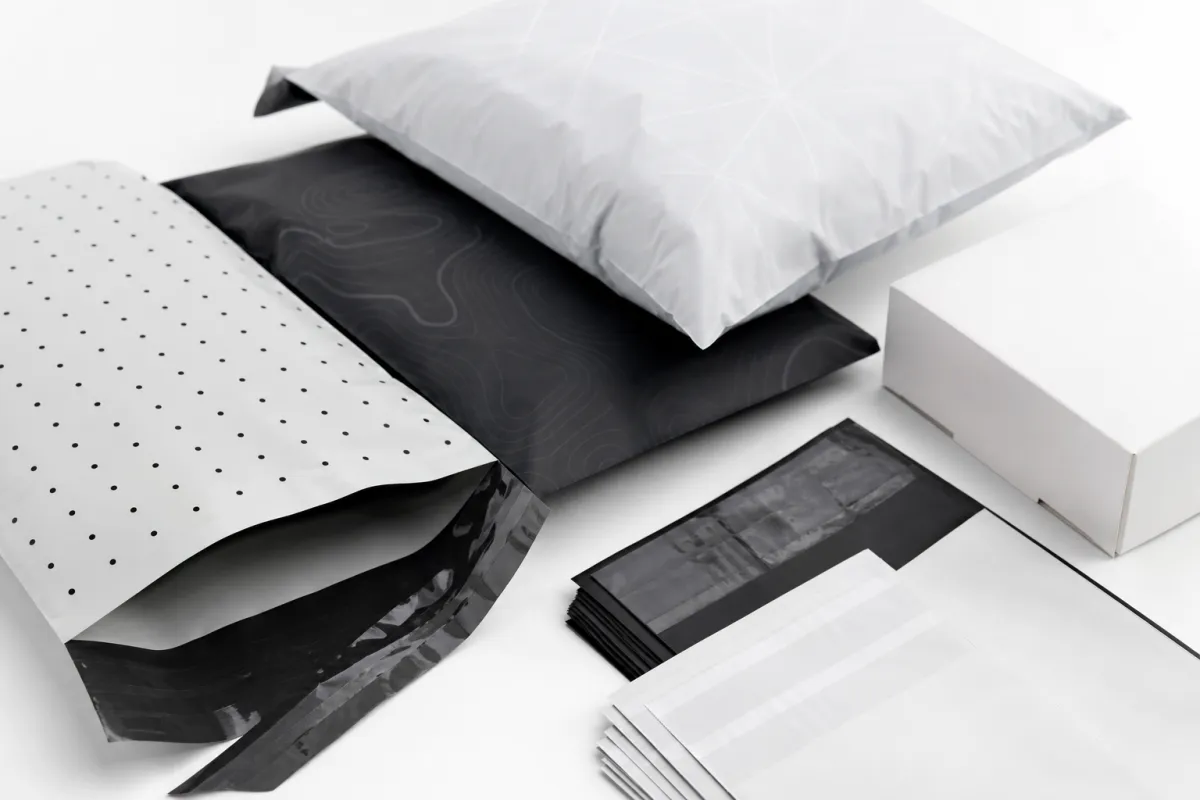
Picture a seller shipping eight apparel orders on a Tuesday. The products are not fragile, but they still need to arrive clean, dry, and folded neatly. If the packaging is too large, too thin, or awkward to seal, the process slows down, the parcel looks loose in transit, and the shipping bill climbs faster than it should. Mailing bags for small business shipping deserve more attention than they usually get because small differences in packaging ripple through the whole fulfillment process.
In plain terms, a mailer is a lightweight shipping bag made for soft goods or non-fragile items. Most are made from polyethylene film, though padded mailers, paper mailers, and tamper-evident versions are common too. Apparel, accessories, printed materials, and similar products often move through mailing bags for small business operations because the format keeps the parcel flat, fast to assemble, and easy to store.
The customer notices that difference immediately. A crisp mailer that fits the product well feels intentional. It shows that the order was packed with care, not with the nearest bag on hand. A loose mailer can wrinkle badly, shift in transit, and look cheap before the package is even opened. That matters, because for many small brands the package is the first physical brand touchpoint a buyer sees.
There is a practical reason mailing bags for small business use can beat boxes for many SKUs. A mailer usually takes less shelf space, weighs less, and needs less handling time. Less void fill, fewer steps at the packing table, and a better chance of staying under the next postage tier all follow from that one choice. For a business shipping at low to moderate volume, those gains show up in monthly numbers faster than most owners expect. I have seen shops go from using a box for almost everything to standardizing mailers on their soft-goods line, and the packing bench got calmer almost immediately.
Practical rule of thumb: if the product is soft, non-fragile, and does not need crush protection, a well-sized mailer is often the better starting point than a box.
As you work through the rest of this guide, keep five decision points in view: material strength, size fit, sealing method, shipping cost, and order volume. Those are the details that matter most when comparing mailing bags for small business operations. Get those right, and the rest usually gets easier.
How Mailing Bags for Small Business Shipments Work
Most poly mailers follow a very simple construction: a flexible film on the outside, a sealed edge or folded seam, and an adhesive strip that closes the bag after packing. That simplicity is part of the appeal. The material wraps around the product instead of forcing the product into a rigid shape, so the parcel stays compact without adding much weight.
The packing flow is direct, though good habits still matter. First, the item is folded or bundled to its shipping form. Then it slides into the bag with enough room to avoid stress on seams or corners. After that, the packer presses out excess air, peels the adhesive liner, and seals the mailer with firm pressure across the closure. Done well, the result is a tight, stable package that travels better than a loose one. That is the everyday value of mailing bags for small business shipping, and it is why a well-trained packer can move so much faster with the right size on hand.
Mailers handle dirt, handling scuffs, and light moisture well. They also reduce abrasion because the outer film is smooth and the package moves as one unit instead of letting the contents shift against a hard wall. Their limits matter just as much. Fragile glass, ceramic items, sharp-edged metal parts, and anything that can crack under pressure usually needs a box, inner cushioning, or a more specialized shipper.
Compared with a carton, mailing bags for small business orders usually lower dimensional bulk. That matters even more than weight in some shipping networks, because carriers increasingly price around package size as well as mass. A flat, compact mailer can move through the system more efficiently than a box stuffed with air.
It helps to separate the main mailer types:
- Standard poly mailers: Best for soft, non-fragile goods like tees, leggings, beauty pouches, and lightweight accessories.
- Padded mailers: Better when the item needs light cushioning, such as small electronics accessories or hard goods with modest risk of scuffing.
- Tamper-evident mailers: Useful for items where theft deterrence or visible seal integrity matters more than cushioning.
For many mailing bags for small business setups, standard poly mailers sit in the sweet spot. They are economical, easy to stack, and simple for new staff to pack correctly after a short training session. They also tend to keep the packing line moving without much drama, which is no small thing when orders start stacking up.
Cost and Pricing: MOQ, Unit Cost, and Real Value
Price is where many small brands get stuck, but the real question is not only what a mailer costs. It is what that mailer costs after packing time, spoilage, postage, storage, and the chance of rework from damaged or poorly sized packaging are included. Mailing bags for small business orders can look inexpensive at first glance, yet the wrong specification can quietly drain value in ways that are easy to miss.
A stock 2.5 mil poly mailer in a common size might land around a few cents per unit at higher volumes, while a custom printed version with special sizing, heavier film, or more complex artwork can move into a much higher range. In practical terms, a buyer might see a spread like $0.08 to $0.18 for a simple stock mailer, $0.14 to $0.30 for a Custom Printed Mailer at modest volume, and more for padded or specialty options. The exact figure depends on size, print coverage, film thickness, and freight, so treat any ballpark as a starting point rather than a promise.
Minimum order quantity, or MOQ, matters a great deal for mailing bags for small business planning. A business testing a new product line may not want 5,000 pieces of a bag that has not yet been proven in packing. Another seller with a stable SKU and predictable sales may happily commit to a larger run because the lower unit cost and steady consumption justify the inventory. There is no single right number; the correct MOQ is the one that matches sales velocity and storage space.
Hidden cost drivers are where buyers often get surprised:
- Thickness: Moving from 2.5 mil to 4 mil increases material usage and usually improves puncture resistance.
- Custom sizing: A unique size may reduce waste, but it can raise tooling and production complexity.
- Print coverage: Full-bleed branding typically costs more than a small logo or one-color mark.
- Closure style: Stronger adhesive or double-seal construction can add cost but also reduce returns from split bags.
- Freight: Large cartons of mailers can be expensive to move if the supplier is far away or the order is small.
Mailing bags for small business orders should also be viewed through labor. If a slightly better bag cuts pack time by ten seconds on each order, that is not trivial over a month of 500 or 1,000 shipments. Add the postage effect from staying flatter and lighter, and the value becomes clearer than the unit price alone suggests. A few seconds do not sound like much, but once a team repeats that motion all day, the difference is hard to miss.
Here is a simple comparison that helps many buyers think about value, not just sticker price:
| Mailer Type | Typical Use | Approx. Unit Cost | Strength | Best Value When |
|---|---|---|---|---|
| Stock poly mailer | Apparel, soft goods, repeat SKUs | $0.08-$0.18 | Good for non-fragile items | You need the lowest cost and fastest procurement |
| Custom printed poly mailer | Brand-forward ecommerce orders | $0.14-$0.30 | Good to very good, depending on film | Brand presentation matters and the order volume is steady |
| Padded mailer | Items needing light cushioning | $0.18-$0.45 | Better impact resistance | You want some protection without moving to a box |
| Heavy-duty custom mailer | Thicker garments, hardware, mixed product sets | $0.20-$0.40+ | High puncture resistance | Sharp edges or tougher handling conditions are part of the job |
If you want to see a format commonly used for branding and fulfillment, the Custom Poly Mailers page is a useful place to compare options. A second pass through custom printed poly mailer options can help when you are trying to match color, finish, and thickness to the order profile.
My advice stays simple: budget for a test run before you lock in a full SKU program. One size, one thickness, one print approach. That is enough to confirm whether the mailing bags for small business orders you chose actually fit the way your team packs, and it keeps you from buying a stack of packaging that looks good on paper but feels awkward in use.
Process and Timeline: From Quote to Delivery
The production path for mailing bags for small business use is usually more predictable than many buyers expect. It starts with size and material selection, then moves into artwork or proof review if the bags are custom printed, followed by manufacturing, packing, and freight. The cleanest projects are the ones where the buyer supplies accurate dimensions and a clear use case before asking for pricing.
Timeline depends heavily on whether you are buying stock or custom. Stock mailers can often ship faster because they already exist in the supplier’s inventory. Custom printed bags need artwork prep, proof approval, and a production slot, which extends the schedule. Made-to-size options can take a little longer still, especially if the request changes film gauge, print layout, or seal style.
For mailing bags for small business procurement, the questions to ask before placing an order stay fairly consistent:
- Can I get samples first?
- How fast will the proof come back?
- What is the normal production window after approval?
- How long does freight usually take to reach my warehouse or office?
- What happens if I need a partial reorder or a repeat run later?
In a normal custom run, a buyer may spend a few days on sizing and proofs, then wait a couple of weeks for production, and then add shipping time based on distance. A realistic expectation for many Custom Mailing Bags for small business orders is often 12 to 20 business days from proof approval to delivery, though stock items can be faster and more complex jobs can take longer. The important part is planning early enough that packing never stops because the packaging ran out.
That timing issue matters most during peak sales periods, launch windows, and subscription cycles. If a new product drops on Friday and the packaging arrives the following Thursday, the business either delays fulfillment or uses a substitute that may not fit properly. Neither outcome is ideal. A small reorder buffer is one of the cheapest forms of insurance a small shipper can keep, and it saves a lot of unnecessary stress.
For businesses that care about durability testing, it can be useful to ask whether the mailer has been evaluated against handling assumptions similar to those used in ISTA testing protocols. Formal certification is not always necessary, but the discipline behind standardized transit testing is worth respecting. The same goes for recycled content claims: if a supplier says the material contains recycled film, ask for clarity on how that claim is supported. The ISTA site is a solid reference point for packaging transit testing, and the FSC framework is useful when paper-based components or fiber sourcing enter the conversation.
Key Factors When Choosing Mailing Bags for Small Business Orders
Picking mailing bags for small business shipping is not just about finding a bag that fits. It is about choosing a bag that fits the product, the packing table, the shipping rate, and the brand image all at once. The better you understand those moving parts, the easier it becomes to select a format you can use repeatedly without second-guessing every order.
Size is the first filter. Measure the product in the form it will actually ship in, not just as a flat piece on the cutting table. A folded sweatshirt is different from a rolled T-shirt, and a bundled set of accessories is different from a single item in a sleeve. Leave enough room for a clean seal without leaving so much slack that the item slides around inside the bag. Mailing bags for small business use usually perform best when the fit is snug but not forced.
Thickness comes next. A 2.5 mil bag can be fine for soft, light items with no sharp edges. A 3 mil or 4 mil bag is often a better call for products with zippers, hardware, seams, or corners that could poke through thin film. The goal is not to buy the thickest bag available; it is to buy the right bag for the item’s actual stress points.
Closure strength deserves more attention than many buyers give it. A strong adhesive strip does two jobs: it holds the package closed and it speeds packing. Weak adhesive can create a messy line, a reopened seam, or an awkward retape situation. For mailing bags for small business orders, clean seal integrity matters because it affects both transit performance and the speed of the packing line.
Branding changes the feel of the parcel the moment the customer sees it. Color choice, print quality, and finish all play into that. A matte finish can feel quieter and more premium. A glossy finish can look brighter and more retail-oriented. One-color logos are cheaper than full-coverage art, but even a small, well-placed brand mark can make a package feel purposeful.
Sustainability should be handled with honesty. Some businesses need recycled content, some need downgauged material usage, and some are trying to move from boxes to lighter mailers to reduce transport impact. The right answer depends on the shipping profile, the product, and what the customer expects. The EPA has useful general material-reduction guidance at EPA, but the packaging decision should still be grounded in your own product mix and damage risk.
For many mailing bags for small business buyers, the best outcome is not a complicated packaging system. It is a short list of approved mailer sizes that cover the majority of SKUs, with one heavier option reserved for items that need more protection. That keeps training simple and reduces packing errors. It also makes reordering less of a headache because everyone already knows which bag belongs to which product group.
Step-by-Step Guide to Choosing the Right Mailer
If the packaging decision feels messy, narrow it into a sequence. Mailing bags for small business orders become much easier to select when you treat the choice like a fitting process instead of a guess.
- List the products: Group top-selling items by size, weight, and fragility. A thin sock set and a structured hoodie do not need the same mailer.
- Match the format: Choose standard poly mailers for soft goods, padded mailers for items needing light cushioning, and specialty formats only where the product justifies them.
- Order samples: Test fit, closure strength, print clarity, and the way the package feels after folding and sealing. A sample that looks good flat can behave differently once it has a product inside.
- Check transit behavior: Drop the packed sample from normal handling height, stack it under a few heavier parcels, and see whether the seal stays intact and the item remains presentable.
- Measure pack time: Compare how long it takes to finish a real order with each bag size. If one option saves fifteen seconds per parcel, the difference adds up quickly.
- Lock the approved list: Keep a short, written list of the mailers staff are allowed to use so packaging stays consistent as the team grows.
A lot of mailing bags for small business problems disappear once the business standardizes around two or three sizes instead of chasing a perfect custom option for every SKU. Standardization saves time, lowers picking mistakes, and makes reordering far less stressful. It also gives new staff a clear system to follow, which is especially helpful when orders spike and everyone is moving a bit faster than usual.
There is also a testing habit that pays off: pack the same product in two nearby mailer sizes and compare them side by side. The one that fits with less excess air and a cleaner seal is usually the better long-term choice, even if it costs a few cents more. That is especially true for mailing bags for small business operations where labor and postage matter as much as the bag itself.
One more point from a factory-floor perspective: do not assume the most expensive mailer is the safest or the cheapest one is the best deal. The right bag is the one that protects the item, moves quickly through the packing process, and arrives looking the way you intended. That balance is the real job of mailing bags for small business shipping, and it is what separates a good packaging setup from a merely cheap one.
Common Mistakes, Expert Tips, and Next Steps
The most common mistake is buying bags that are too large. Buyers often want a little extra room just in case, but too much room creates sloppy presentation, extra movement in transit, and wasted film. Mailing bags for small business orders usually perform best when they are close enough to the product to keep the parcel compact without forcing the item.
A second mistake is underestimating sharp edges, metal hardware, or zip teeth. Thin film can be perfectly fine for a folded T-shirt and still fail on a sweater with a heavy zipper or a set of accessories with exposed corners. If there is any chance of puncture, step up the thickness or move to a different format.
Another common issue is choosing custom printing before the fit is proven. Branding looks great, but a branded bag that is the wrong size or weak at the seal creates more problems than it solves. Test first, print second. That order saves money and avoids inventory that cannot be used confidently.
From a practical packing standpoint, a two-size system works well for many mailing bags for small business programs. Keep one smaller option for core products and one larger option for bulkier orders or bundled sets. That is usually enough to handle most of the packing flow without creating confusion at the table.
Here are a few expert habits worth adopting:
- Keep sample packs on hand and recheck them when product dimensions change.
- Measure the packed product, not the raw item.
- Train staff to press the adhesive strip across the full width of the seal.
- Review damaged returns by package style so you can spot patterns instead of guessing.
- Track cost per packed order, not only cost per bag.
Before making a bigger purchase, run a packaging audit. Look at the current shipping output and ask four questions: Are any bags oversized? Are any packages sealing poorly? Are there returns tied to transit damage or scuffing? Is packing time slower than it should be because the right mailer is not available? Those answers usually point straight to the fix.
If you want a simple next step, start here: measure your top three products in packed form, request samples for two mailer styles, compare cost per order, and place a small test run once the fit feels right. That gives you real data instead of assumptions, and it is the cleanest way to improve mailing bags for small business shipping without overbuying. You are gonna learn more from a 50-piece sample than from ten pages of product specs.
For a small brand, the smartest packaging decision is usually not the flashiest one. It is the one that makes packing faster, keeps products protected, and holds shipping cost where it belongs. Keep those goals in view, confirm the fit in real packing conditions, and choose the mailer that your team can use the same way every time. That is the most dependable path to better mailing bags for small business shipping.
FAQ
What size mailing bags for small business products should I choose?
Measure the product in its packed form, not just as a flat item, so the bag leaves room for a clean seal and a neat finish. The smallest size that fits without forcing the product is usually the best choice for mailing bags for small business shipments, because oversized mailers add cost, shift around in transit, and look less polished.
Are poly mailers or padded mailers better for mailing bags for small business orders?
Poly mailers are usually the better fit for soft, durable, or non-fragile items such as apparel and accessories. Padded mailers make more sense when the product needs light cushioning, but they typically cost more and add bulk, so they are better reserved for items that actually need that extra layer.
How many mailing bags for small business use should I order at once?
Start with a test quantity that covers a few weeks of normal sales so you can verify fit, seal quality, and packing speed in real use. Once the size is confirmed, order enough to reduce unit cost without tying up too much cash or taking over storage space.
Can I get custom printed mailing bags for small business branding?
Yes, custom printing can strengthen brand recognition and make the package feel more intentional. Before ordering, confirm artwork requirements, proof timing, minimum order quantity, and whether the finish matches your brand style, because those details affect both the timeline and the final look.
How do mailing bags for small business shipments help with shipping cost?
Mailers usually weigh less and pack flatter than boxes, which can lower postage and reduce dimensional bulk. The bigger savings often show up in faster packing time, fewer void fill materials, and less packaging waste per order, especially when the same format can be used across many SKUs.
