Make Custom Stickers That Sell: Specs, Cost, Timeline
Make Custom Stickers: What Buyers Usually Miss First
A sticker can look perfect on screen and still fail on the package. Many teams want to Make Custom Stickers for a launch, mailer campaign, subscription box, or product refresh, but the real buying decision is not just artwork. It is material, adhesive, finish, size, quantity, format, application speed, and the surface receiving the sticker.
The common failure is easy to picture. A brand orders sharp round stickers for cold brew bottles, candle jars, or kraft mailers. The logo is centered. The color looks close enough. Then condensation hits the bottle, wax residue touches the jar, or the mailer rubs against other parcels in transit. Edges lift. Ink scuffs. The cheap sticker becomes expensive because someone now has to relabel inventory, answer customer complaints, or approve a rush reorder.
Stickers are small packaging assets with oversized visibility. They seal tissue paper, identify flavors, add QR codes, mark limited editions, close mailer flaps, support retail displays, and turn plain boxes into branded touchpoints. Used well, they add branded packaging without requiring a full run of custom printed boxes. Used badly, they advertise every shortcut in the production brief.
Buyer language often adds confusion. Custom stickers usually means adhesive graphics used for branding, promotion, decoration, or sealing. Labels are often more product-specific and may carry ingredients, barcodes, warnings, batch codes, or compliance text. Decals tend to be more durable, sometimes intended for windows, equipment, vehicles, or outdoor surfaces. Seals close packaging. Sticker sheets group multiple designs on one backing sheet for retail sale, inserts, or giveaways.
Packaging buyer reality check: the lowest unit price is not always the lowest total cost. A sticker that peels, smears, arrives late, or mismatches the substrate can turn a small order into a missed launch window.
The goal is practical: what to specify before requesting a quote, how production usually works, what drives price, and how to avoid the reprints that quietly eat into a packaging budget.
How Custom Sticker Production Steps Work
Most sticker orders follow a familiar path: inquiry, artwork review, material recommendation, proofing, printing, finishing, die cutting, quality check, packing, and shipping. The sequence sounds tidy. The friction sits in small details, especially if the artwork was built for a website or social post rather than print.
During artwork review, a printer checks file resolution, vector lines, bleed, safe zones, cut paths, color mode, and tiny text. For image-based files, 300 DPI at final print size is a common baseline. Logos, icons, and custom shapes usually reproduce better from vector files such as AI, EPS, or print-ready PDF. Many suppliers ask for 1/16 inch to 1/8 inch bleed so the cut does not leave a white sliver along the edge.
The printing method changes cost and flexibility. Digital printing is often efficient for short runs, multiple designs, personalized sticker sheets, and orders from roughly 100 to 2,500 pieces. It avoids some plate costs and handles artwork changes more easily. Flexographic or offset-style production can make sense for larger runs, repeat label programs, roll formats, or jobs where setup is spread across tens of thousands of pieces. Not every printer draws the line in the same place; equipment, material, and finishing capacity matter.
Finishing changes both appearance and durability. Gloss lamination adds shine and stronger color contrast. Matte lamination reduces glare and often suits premium retail packaging. UV coating adds surface protection, although it is not a shield against every scratch, oil, solvent, or chemical exposure. Foil, clear stocks, holographic film, white ink, spot gloss, and soft-touch finishes create stronger shelf impact, but they also add proofing steps, setup cost, and lead time.
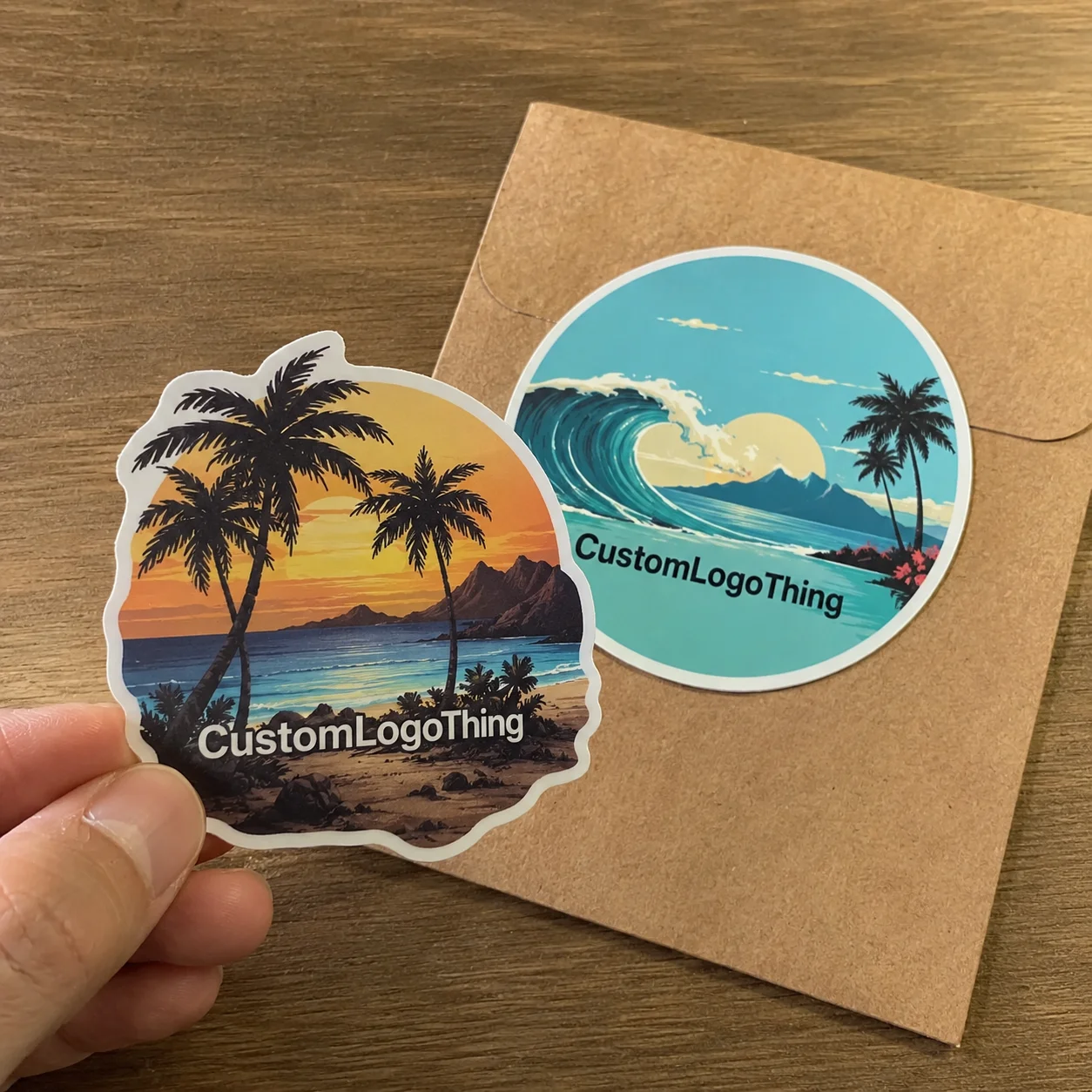
Format deserves the same attention as color. Die cut stickers are cut to the outer shape and supplied as individual pieces. Kiss cut stickers cut through the sticker layer but leave the backing intact, which makes peeling easier and protects delicate shapes. Roll labels support faster hand application and machine application, but they require roll direction details. Sheets work well for sticker packs, inserts, influencer kits, and retail promotions.
Proof approval is the checkpoint where buyers can still prevent expensive mistakes. Verify dimensions, spelling, colors, cut line, QR code function, barcode scanability, roll direction, hole spacing if any, and quantity. Once production starts, a “small copy change” may mean restarting the job.
Materials, Adhesives, and Finishes That Decide Performance
If artwork creates the first impression, material and adhesive decide whether the sticker survives real use. Paper stickers are usually economical and suitable for short-term indoor applications: dry product packaging, paper bags, thank-you seals, tissue wrap, and inserts. White vinyl is more durable, flexible, and better suited to handling, moisture, and curved surfaces. Clear film creates a “no-label” look on glass or plastic, although adhesive, trapped air, and surface texture can still show. Kraft paper supports natural or handmade positioning, but it is not the right answer for every wet, oily, or high-friction environment.
Water-resistant and waterproof claims need careful reading. A vinyl sticker with lamination may handle condensation on a cooler bottle. That does not automatically mean it is suitable for months outdoors, dishwasher cycles, freezer abrasion, bath oil, or cleaning chemicals. For packaged goods, standards from ISTA are a useful reminder: packaging performance depends on the full distribution environment, not one isolated material claim.
Adhesive selection is just as critical. Permanent adhesive is common for product packaging, retail labels, and mailer branding. Removable adhesive fits temporary promotions, pricing, event badges, and short-use campaigns where residue is a concern. Freezer-grade adhesive is built for cold chain products, frozen foods, ice cream pints, and refrigerated bottles. High-tack adhesive helps on rough, low-energy, or hard-to-stick surfaces, including some textured plastics and uncoated corrugated materials.
Connect the sticker to its environment. Bath products face humidity and oils. Beverage containers face condensation and cold. Mailers face abrasion. Candle jars may carry residue from wax, fragrance oil, or handling. Food packaging may require extra discussion about indirect contact, migration, inks, coatings, and applicable regulations. If sustainability claims are part of the brand story, buyers should also ask about paper sourcing, recyclability, liner waste, and chain-of-custody programs such as FSC.
| Material or Finish | Best Fit | Typical Watchout | Cost Impact |
|---|---|---|---|
| Paper sticker stock | Dry indoor packaging, inserts, tissue seals | Poor choice for moisture or heavy handling | Usually lowest |
| White vinyl | Bottles, jars, curved items, durable promos | Needs the right adhesive for textured surfaces | Medium |
| Clear film | Glass, cosmetics, premium product packaging | Air bubbles and opacity can affect the look | Medium to high |
| Kraft paper | Natural, handmade, organic-style package branding | Color appears muted; moisture resistance is limited | Medium |
| Foil or specialty effect | Retail launches, gift packaging, limited editions | Higher setup cost and longer proofing | High |
Shape affects performance too. Rounded corners often resist lifting better than sharp corners, especially on curved jars, tins, candles, and bottles. Thin points and delicate cutouts may look elegant in a mockup but tear during application or catch on sleeves, tissue, and mailers.
Before approving a full campaign, test samples on the actual substrate: glass, coated cardboard, kraft mailers, plastic pouches, candle jars, tins, tubes, or curved containers. Press them down the same way the packing team will. Check them after 24 hours, after handling, and after the expected temperature or moisture exposure. Adhesive bond strength often improves after application, so judging performance five minutes after sticking can be misleading.
Cost, Pricing, and MOQ Factors for Sticker Orders
Sticker pricing is rarely one variable. Size, shape, material, adhesive, finish, quantity, number of versions, print coverage, setup requirements, cutting complexity, and packaging format all push the price up or down. A simple 2 inch round paper sticker is a different job from a 4 inch clear vinyl decal with white ink, gloss laminate, and a tight contour cut.
Unit cost usually falls as quantity rises because setup, proofing, press calibration, file handling, and cutting preparation are spread across more pieces. A run of 250 stickers may carry a high per-piece cost because the job still needs review, setup, print time, finishing, and packing. At 1,000 or 2,500 units, the total spend rises, but the unit price can drop sharply.
Realistic ranges vary by supplier, but simple digitally printed paper or vinyl stickers may land around $0.12 to $0.45 per piece at 1,000 units, depending on size and finish. Small premium effects, clear film, specialty adhesive, or complex die cuts can move that into the $0.40 to $1.20 range. Very small runs can cost much more per piece. Freight, rush fees, custom packing, proofing charges, and split shipments can change the landed cost.
MOQ is practical, not mysterious. Some digital sticker jobs can support 50, 100, or 250 pieces. Specialty materials, foil stamping, custom dies, roll formats, or multi-SKU programs may require higher minimums because setup time and material ordering need to be justified. If you are building a wider packaging design system, it can help to quote stickers alongside Custom Labels & Tags or other Custom Packaging Products so sizes, finishes, and launch timing are aligned.
Hidden cost drivers deserve attention. Oversized stickers use more material per sheet. Intricate cuts slow finishing. Multiple versions create more file handling and proofing. Heavy ink coverage can affect drying or curing. Rush orders may add fees because the job interrupts the normal queue. Individually cut stickers often cost more to finish and pack than roll labels or sheets.
Ask for quantity breaks before approving. A quote for 250, 500, 1,000, and 2,500 units often reveals that the next tier is not much more in total dollars. Also ask whether proofs, die charges, lamination, shipping, and packaging are included. The useful number is full landed cost, not the headline unit price.
Timeline, Lead Time, and What Can Delay an Order
A sticker order timeline has more stages than many buyers expect: file preparation, proof review, buyer approval, production queue, printing, finishing, quality inspection, packing, and transit. The trap is assuming the clock starts with the first email. In practice, lead time usually starts after final proof approval and any required payment or purchase order is cleared.
For a straightforward digital order on common stock, production might take 3 to 7 business days after proof approval, plus shipping. More complex jobs can take 8 to 15 business days, especially with foil, special films, custom dies, roll finishing, or several versions. Large runs may need more time for material allocation and quality checks. These are working ranges, not guarantees.
Predictable delays are also the most preventable: low-resolution artwork, missing bleed, unclear dimensions, a logo supplied as a tiny JPEG, late proof approval, stock shortages, specialty finish queues, weather-related shipping disruptions, and copy changes after the job has entered production. One late barcode correction can push a sticker order behind other queued work.
Plan backward from the real deadline: event date, product launch, subscription box pack-out, retail delivery window, influencer mailer drop, or seasonal campaign. If stickers are part of a larger assembly with boxes, tissue, inserts, or bags, build in extra days. A packing line cannot wait for a 2 inch seal that was treated as a minor accessory.
Rush production may be possible, but the buyer has to help. Simplify the specification, choose stocked material, avoid specialty effects, approve proofs quickly, and freeze artwork after approval. If you need to make custom stickers on a compressed schedule, the fastest design is usually a standard size, simple shape, common adhesive, and clean print-ready file.
Step-by-Step Guide to Ordering Stickers Without Reprints
Reprints usually start long before the press runs. They begin with vague instructions such as “make it around logo size” or “use waterproof material” without defining the bottle, box, use conditions, application process, or deadline. A tighter brief can save days.
- Define the sticker’s job. Is it sealing tissue, branding a mailer, labeling a jar, giving instructions, adding compliance text, decorating a product, or supporting a retail display? One sticker can do several jobs, but each one affects size, material, and readability.
- Measure the application surface. A 3 inch sticker may fit a flat pouch but wrinkle on a curved bottle. Measure the panel, lid, mailer flap, box face, or insert. For curved containers, test paper mockups before ordering production stock.
- Choose material and adhesive by use conditions. Moisture, cold, heat, oil, friction, shelf life, and removal requirements matter. A candle warning label and a promotional laptop sticker do not need the same adhesive system.
- Prepare artwork correctly. Use final dimensions, bleed, safe margins, outlined fonts, vector cut lines, and brand color references. Keep small text large enough to read after cutting; 5 point type may pass a screen review and fail in a customer’s hand.
- Request a complete quote. Include quantity, size, shape, finish, material preference, delivery deadline, number of designs, application surface, and shipping destination. If you do not know the best material, describe the environment instead of guessing.
- Review the proof like an inspector. Check spelling, scale, QR code function, barcode scanability, roll orientation, cut line placement, color expectations, and final quantity. For retail packaging, confirm that any legal or ingredient copy has been approved internally.
- Test received stickers before full deployment. Apply them to the actual package. Rub the surface. Bend the mailer flap. Chill the bottle. Open and close the jar. Give the adhesive time to build bond strength before judging performance.
For product packaging orders, have a tolerance conversation before production. Ask what cutting variation is normal for the process. Many sticker jobs have slight movement in cut registration, and designs with ultra-thin borders can make normal production variation look like an error. Hairline borders are risky unless the supplier confirms they are safe for the chosen method.
If the sticker carries a QR code or barcode, print size matters. Many QR codes remain scannable around 0.8 to 1 inch square under good conditions, but contrast, quiet zone, surface curve, and print quality can change that. Test with multiple phones and lighting conditions before mass application.
Common Sticker Ordering Mistakes and Actionable Next Steps
The most common mistake is choosing based on appearance alone. Paper for wet environments. No bleed. Low-resolution artwork. A sticker ordered too small for the logo and required copy. No thought given to the application surface. Proofs approved in 40 seconds on a phone. These errors are boring, predictable, and expensive.
Color expectations can also go sideways. Screens are backlit; printed materials reflect light. Coated, uncoated, kraft, clear, and metallic stocks can all shift perceived color. A rich black on gloss white vinyl will not look identical on uncoated kraft paper. Brand teams with strict color standards should provide Pantone references or approved print samples, then ask how closely the chosen process can match them.
Shape deserves more discipline. Fragile points, narrow bridges, thin cutouts, and sharp corners may lift or tear during application. A dramatic contour cut can look excellent on a sticker sheet but slow down hand application on a packing bench. For 5,000 mailers, a slightly simpler shape can save real labor.
Application conditions are another quiet problem. Dust, oil, cold surfaces, textured coatings, and rushing the packing line can weaken the result even when the sticker itself is correct. Clean, dry surfaces and consistent pressure are not glamorous specs, but they matter.
Here is a practical checklist before requesting pricing:
- Confirm the use environment: dry shelf, cooler, freezer, shower, mailbox, outdoor window, or high-friction shipping.
- Measure the exact surface and note whether it is flat, curved, textured, coated, oily, or flexible.
- Choose quote quantities such as 250, 500, 1,000, and 2,500 pieces.
- Gather vector artwork, brand color references, barcode files, and copy approvals.
- Decide finish preferences: gloss, matte, soft-touch, uncoated, foil, clear, or no lamination.
- Set the target arrival date and add buffer for proofing, transit, and packing.
You can copy this mini brief into a quote request:
Sticker brief: Size: ____. Shape: ____. Material: ____. Adhesive: permanent / removable / freezer-grade / high-tack. Finish: ____. Quantity: ____. Number of versions: ____. Delivery zip code: ____. Application surface: ____. Use environment: ____. Target arrival date: ____.
The smartest way to make custom stickers is to treat them like packaging components, not decorative afterthoughts. Small specs decide cost, lead time, application speed, and real-world performance. That matters most when a sticker is the first visible signal of the brand.
FAQ
What file format do I need to make custom stickers?
Vector files such as AI, EPS, or PDF are usually best for logos, cut lines, and crisp edges. High-resolution PNG or PSD files may work for image-based artwork, but they should be at least 300 DPI at final print size. Include bleed, safe margins, outlined fonts, and a clearly marked cut line if the sticker has a custom shape.
How long does it take to make personalized stickers?
The schedule depends on proof approval, material availability, order size, finishing complexity, and shipping distance. Simple digitally printed stickers can move faster than specialty finishes, custom dies, or large multi-SKU runs. Count lead time after final proof approval, not after the first inquiry.
What is the cheapest way to make custom stickers in bulk?
Choose a standard size, simple shape, common material, and one finish to reduce setup and finishing complexity. Request quantity breaks because the unit cost often drops when setup costs are spread over more stickers. Avoid unnecessary specialty effects, oversized formats, and multiple small design versions if budget is the priority.
Are custom stickers waterproof or weatherproof?
Paper stickers are usually not the best option for moisture, condensation, or outdoor exposure. Vinyl or film-based materials with suitable lamination or coating are better for water resistance and handling durability. Buyers should explain the exact environment, such as freezer, shower, cooler, mailbox, or outdoor window, before choosing stock.
What size should I choose when I make branded stickers?
Start by measuring the actual package, product, lid, mailer flap, or insert where the sticker will be applied. Leave enough space around logos, QR codes, barcodes, and small text so the design remains readable after cutting. If the sticker is used as a seal, test whether it bridges the opening securely without wrinkling or lifting.