Buyer Fit Snapshot
| Best fit | Matte Poly Mailers Bulk Order projects where brand print, material claims, artwork control, MOQ, and repeat-order consistency need to be specified before quoting. |
|---|---|
| Quote inputs | Share finished size, material target, print colors, finish, packing count, annual reorder estimate, ship-to region, and any compliance wording. |
| Proofing check | Approve dieline scale, logo placement, barcode or warning zones, color tolerance, closure strength, and carton packing before bulk production. |
| Main risk | Vague material claims, crowded artwork, missing packing details, or unclear freight terms can make a low unit price expensive after revisions. |
Fast answer: Matte Poly Mailers Bulk Order: Pricing, Specs, Steps should be specified like a repeatable production item. The safest quote records material, print method, finish, artwork proof, packing count, and reorder notes in one written spec.
Production checks before approval
Compare the actual filled-product size with the drawing, then confirm tolerance on folds, seals, hang holes, label areas, and retail display edges. Reserve space for logos, QR codes, warning copy, and material claims before decorative graphics fill the panel.
Quote comparison points
Review material grade, print process, finish, sampling route, tooling charges, carton quantity, and freight assumptions side by side. A quote is only useful when the supplier can repeat the same color, closure quality, and packing count on the next order.
Matte Poly Mailers bulk order decisions usually come down to a test that sounds simple and turns out to be pretty unforgiving: does the package still look intentional after conveyor belts, truck vibration, and a stack of other parcels leaning on top of it? Matte finishes tend to pass that test better than gloss. They soften fingerprints, mute tape glare, and keep apparel, accessories, and subscription shipments looking composed even after a rough route through the carrier network.
A matte Poly Mailers Bulk order is not just a surface choice for brands sending dozens or thousands of parcels a week. It shapes how the shipment feels in the warehouse, how consistently it presents on the doorstep, and how much of the brand story survives the trip. A mailer that looks polished on the packing table but arrives with scuffs, glare, and rubbed corners is only doing part of its job. The rest is optics, and optics matter more than people want to admit.
Custom Logo Things works with buyers who want straight specs, honest pricing, and fewer surprises. If you need related packaging formats, start with Custom Packaging Products, compare options in Custom Poly Mailers, or review volume programs through Wholesale Programs. If you need a quick answer first, the FAQ page helps with that too.
Matte poly mailers bulk order: why matte wins on shelf appeal
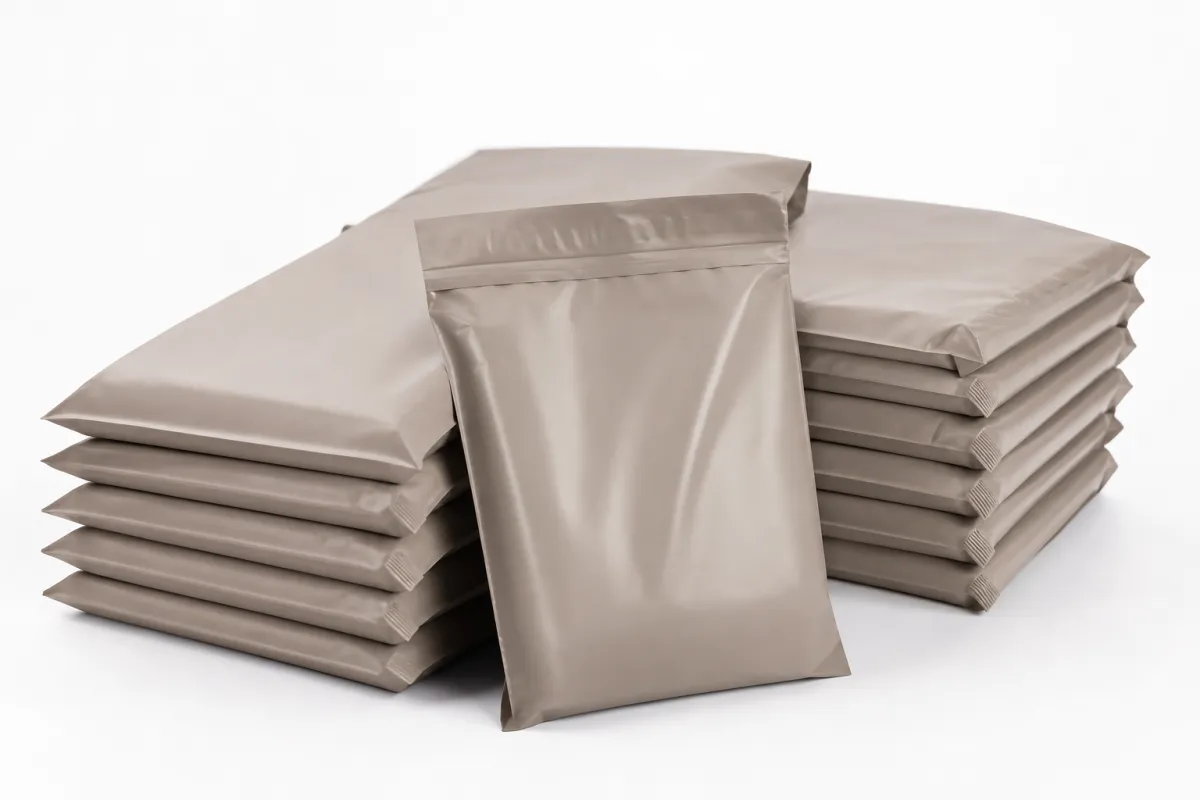
A matte Poly Mailers Bulk order makes sense because matte film keeps a shipment looking controlled under real shipping conditions. Glossy mailers can look sharp in a studio setup, then pick up fingerprints, drag marks, and hard reflections the moment they move through a sorting facility. Matte is less theatrical. That restraint is the point. It holds up in transit and photographs cleanly in customer posts, returns, and social content.
That cleaner surface matters for apparel, beauty tools, accessories, and subscription kits where the outer mailer is part of the brand experience. A Matte Poly Mailers bulk order can support a premium first impression without pushing you into heavy ink coverage or expensive specialty finishes. A restrained logo, deliberate typography, and a matte base often outperform a crowded design fighting for attention on flexible film. I have seen more than one brand save money simply by printing less and choosing better contrast.
For packaging buyers, matte is easier to standardize. Parcels get stacked, slid, and bumped. Carrier handling is not gentle, and most of it is invisible until the mailer arrives at the customer door. Matte reduces the visibility of that wear, so the package still feels like it belonged in the order instead of surviving a minor accident. Customers notice that difference even if they do not describe it that way.
Matte hides the ugly stuff better. It does not strengthen a weak mailer, though. Thin film is still thin film, and a poor seal is still a poor seal. Matte just makes the surface less revealing while the construction does the actual work.
The finish also helps with photography. E-commerce teams reuse packaging images across product pages, confirmation emails, social ads, and support content. A Matte Poly Mailers bulk order gives a steadier result because the surface does not throw light around the frame. Logos stay readable. Colors look less washed out. The picture looks planned instead of accidental, even when the light is not perfect.
Most buyers do not need packaging that tries too hard. They need a clean surface, a seal that holds, and a finish that does not make the brand look cheaper than it is. Matte gives that at a price most mid-range and upper-mid-range brands can justify. It supports the product instead of competing with it.
Matte is not locked into a luxury aesthetic either. Plain black or white mailers with a tidy logo can look more credible than a glossy package covered in too much ink. For many stores, that is the sweet spot: clean, durable, and easy to reorder without rethinking the design every season. Honestly, that is where a lot of good packaging lives.
Product details: what matte poly mailers actually include
A matte poly mailers bulk order usually starts with low-density polyethylene or linear low-density polyethylene, then adds a matte outer finish and a pressure-sensitive self-seal flap. That structure sounds simple because it is simple, but the details change the outcome. Film thickness, seal width, opacity, and the print area all affect how the mailer behaves once it is packed and handed to a carrier.
Common constructions run from about 2.5 mil to 5 mil. Thinner film can work for lightweight tees, socks, small accessories, and flat items with little puncture risk. Heavier garments, boxed goods, and anything with sharp corners usually need more film and better tear resistance. A matte poly mailers bulk order that ignores thickness is how people end up paying twice: first for the wrong mailer, then again for replacements or damaged product.
Color choices are usually straightforward: white, black, gray, kraft-look tones, or custom PMS-matched shades if the order size supports them. Buyers should also ask whether the finish is matte on the outside only or matte throughout the visible structure. That sounds small until the packing line starts moving and the inner surface changes how smoothly the product slides into place.
Print choices usually fall into three buckets:
- Unprinted stock for fast replenishment and lower risk.
- One-color logo print for controlled branding and better cost management.
- Full-color print for campaigns, seasonal drops, or visual-first brands.
Flexible film has limits. A matte poly mailers bulk order with heavy ink coverage needs careful artwork setup because print can crack, smudge, or lose depth if the finish and ink system are not matched well. Keep important elements away from the edges, leave a proper safe area, and do not bury the logo under background art just because the full canvas is available.
For material and transit standards, serious buyers should ask for proof rather than promises. ISTA test protocols are a practical benchmark for shipping abuse, and the EPA's recycling guidance at epa.gov/recycle helps if your team makes claims about end-of-life handling. On the material side, ASTM methods such as tensile and dart impact testing are useful references for comparing film strength. If you use paper inserts or outer cartons, FSC chain-of-custody is worth asking for there too.
Before you lock a matte poly mailers bulk order, verify the details that affect daily use more than most buyers expect: seal integrity, opacity, odor, slip resistance, and how the bag behaves with labels. Some films accept thermal labels well. Others resist them. A good supplier should know the difference before production begins.
Warehouse flow matters as much as appearance. If your team packs by hand, a softer film can be easier to manage. If you run higher volume, consistency matters more than hand feel. Either way, a matte poly mailers bulk order should be checked against the real packing process, not only a clean sample sitting on a desk.
One more thing from the warehouse side: I have watched teams approve a gorgeous sample and then discover the label printer hated it. That kind of mismatch is common. It is also avoidable, which is why sample testing with your actual label stock and your actual tape is so useful.
Matte poly mailers bulk order specs that affect performance
The specs that change results are usually the plain ones buyers skip when they are moving too fast. For a matte poly mailers bulk order, the first items to confirm are thickness in mils, usable interior dimensions, seal width, and print safe area. Get those four right and most of the rest becomes manageable.
Here is the pattern I see most often: lightweight apparel usually fits the 2.5-3.0 mil range, standard e-commerce apparel often sits around 3.0-4.0 mil, and heavier or sharper items tend to need 4.0-5.0 mil. That is not a law of packaging physics. Product shape, warehouse handling, and crush risk all matter. Still, it is a sensible place to begin a matte poly mailers bulk order conversation.
Sizing should come from the product, not from box logic. A folded tee behaves differently than a rigid insert or a boxed set. Too much extra room allows movement and makes the package look loose. Too little room stresses the seam, distorts the logo, and can turn a good mailer into a failure. The correct size reduces waste and helps your carrier charges stay closer to reality.
- Nominal size is the advertised dimension.
- Usable size is what actually fits after folds and seals are counted.
- Seal width affects closure strength and tamper resistance.
- Edge finish affects puncture resistance and warehouse handling.
A matte poly mailers bulk order should also be checked for recycled content claims and material language. If a supplier says the mailer contains post-consumer recycled resin, ask for the exact percentage and whether it is backed by documented chain information. If the brand wants to make a recyclability claim, the claim needs to match the real structure. Mono-material films are easier to explain than mixed constructions, and the wording should fit the market where the package is sold.
Automation creates another problem buyers often ignore until the pack line starts slowing down. Some matte films glide too easily, while others drag too much through friction feeders or label applicators. If your warehouse uses automation, ask for sample tests with your actual label stock. A matte poly mailers bulk order that looks beautiful in a photo can still be troublesome on a high-speed line.
One more operational detail: if the package includes a return label pouch, insert card, or external sticker, confirm how the matte surface interacts with adhesive. Some combinations hold well. Some peel early. It is a small thing until a carrier scan fails or a brand label lifts before the package reaches the customer.
Matte poly mailers bulk order pricing, MOQ, and landed cost
A matte poly mailers bulk order is priced by more than size alone. Stock colors and common dimensions usually carry lower minimums because setup is simple and material waste is lower. Custom print, special colors, custom dimensions, and heavier film all raise MOQ and unit price. That is normal. What is not normal is a vague quote with no spec breakdown and a shrug when the final price changes.
For reference, a practical pricing range for a matte poly mailers bulk order often looks like this:
| Option | Typical MOQ | Typical Unit Price | Best Use Case |
|---|---|---|---|
| Stock matte mailers, unprinted | 500-2,000 pieces | $0.08-$0.18 | Testing, replenishment, quick shipping starts |
| Custom one-color logo print | 1,000-5,000 pieces | $0.12-$0.24 | Most apparel brands and repeat SKUs |
| Full-color or two-sided print | 3,000-10,000 pieces | $0.20-$0.40 | Campaigns, stronger visual branding, higher perceived value |
| Custom size or heavy-gauge film | 5,000+ pieces | $0.22-$0.55 | Special dimensions, heavier contents, lower damage tolerance |
Those numbers are not a quote. They are a buying range. A matte poly mailers bulk order can land outside them based on print coverage, film width, gussets, packaging configuration, freight, and whether the order is domestic or imported. The more custom the spec, the less useful unit price becomes on its own. Landed cost is the number that matters.
Here is what belongs in landed cost:
- Unit price for the mailer itself.
- Freight from factory to your warehouse.
- Duty or taxes if they apply.
- Storage if inventory sits too long.
- Spoilage risk from a size mismatch or artwork error.
That last one gets missed all the time. If the mailer is too large, you pay for empty space and higher shipping volume. If it is too small, you get seam stress, damaged product, and reorders. A matte poly mailers bulk order should be judged by what lands safely at the customer door, not by the cheapest line on a quote sheet.
For buying strategy, I usually suggest three order bands. Start with a test run that covers roughly 1 to 3 months of shipping volume. Move to a mid-size repeat order for stable product lines, usually the best balance between cash flow and unit cost. Then place a larger production run for established SKUs where artwork and sizing have already been proven. A matte poly mailers bulk order gets cheaper per unit as volume rises, but only if the spec is right from the start.
One warning: if a supplier quotes an unusually low price and will not explain thickness, film type, or print method, be skeptical. Cheap packaging often means thin film, weak seal adhesion, or poor color control. That is not savings. That is a future problem with a smaller invoice attached to it.
Process and timeline for a matte poly mailers bulk order
A matte poly mailers bulk order works best when the process stays simple. The fewer handoffs, the fewer chances for a dimension to be misread or a logo to be placed too close to the edge. Start with a quote request that includes size, thickness, quantity, color, print coverage, and destination. If those details are missing, the pricing will wobble and the timeline usually follows.
- Quote request with product dimensions, quantity, and print details.
- Spec confirmation so thickness, size, and seal style are fixed.
- Artwork review for layout, color count, bleed, and safe area.
- Digital proof or sample approval before production begins.
- Production followed by inspection and packing.
- Final shipment to your warehouse or fulfillment center.
Stock items can move quickly because there is no artwork setup or color matching. A matte poly mailers bulk order with custom print takes longer, mostly because proofing takes time and the supplier needs approval before production starts. Special finishes, custom dimensions, and larger volumes stretch lead time further. That is not delay for its own sake. It is the cost of making a package to spec rather than off the shelf.
Reasonable timing often looks like this: quote and spec review may take 1-2 business days; proofing can take 1-3 business days if the artwork is clean; production often runs around 12-18 business days for custom work; freight may add another 3-7 business days domestically, or more if the shipment travels a longer route. A matte poly mailers bulk order can still move fast, but only if the proof gets approved quickly and the spec stays frozen.
The most common delay points are predictable:
- Artwork arrives without bleed or a usable vector file.
- The buyer changes size after the quote is locked.
- Color expectations are not documented clearly.
- Proof approval sits in somebody's inbox for a week.
Planning backward helps. Set the launch or restock date first, then leave time for proofing, production, inspection, and freight. For a matte poly mailers bulk order, I would rather see an extra week in the schedule than a rushed email asking whether freight can move by Friday. Frantic is not a sourcing method.
If you are comparing options across packaging lines, keep the same discipline everywhere. A buyer who orders boxes, tissue, and mailers separately without a shared spec sheet usually ends up paying for duplicate approvals and duplicated mistakes. The easiest reorders come from documented dimensions, approved artwork files, and one reference sample that everyone trusts.
Why choose us for matte poly mailers bulk order projects
A good supplier does more than collect an order. For a matte poly mailers bulk order, the real value sits in spec control, honest guidance, and fewer handoffs between quote, artwork, sample, and final production. Every extra handoff creates another chance for a size to be misread or a logo to drift too close to the edge.
What buyers should expect is not flashy language. It is straightforward behavior: clear MOQ guidance, spec-by-spec pricing, responsive artwork checks, and lead times that match reality. If a supplier cannot explain the difference between a safe test run and a production run, keep looking. A matte poly mailers bulk order should not require decoding jargon just to know what is being made.
First-time buyers need support even more. Many teams know their product but not packaging tolerances. They may need help choosing between a 3 mil and 4 mil film, or between a standard flat mailer and a slightly larger size to reduce seam strain. A supplier that compares samples and explains tradeoffs is doing useful work. That beats hearing everything is "premium" and being left to guess.
Here is a practical way to think about the relationship:
- Before order: you should get a clear size recommendation and a quote that matches the spec.
- During proofing: artwork should be checked for safe area, color count, and print feasibility.
- Before shipment: you should know the final count, packing method, and delivery window.
Repeat-order buyers see the biggest payoff. Once a matte poly mailers bulk order is approved, the next run moves faster if the supplier stores the spec sheet, artwork file, and final sample reference. That reduces mistakes and keeps the finish consistent from batch to batch. Color drift can still happen if materials change, but a clean process cuts the risk sharply.
For brands selling across multiple channels, continuity is the real prize. A mailer that looks the same in DTC orders, wholesale replenishment, and seasonal campaigns helps the brand feel stable. It also makes inventory management less chaotic because the approved mailer spec becomes part of the operating system instead of a guess repeated every quarter.
Buyers do not need magic. They need a supplier who will tell them what a matte poly mailers bulk order can and cannot do, then build to that spec without drama. That is the job. If you want to compare broader packaging options, keep Custom Packaging Products open in one tab and your target ship date in the other. That usually keeps the conversation honest.
Next steps for your matte poly mailers bulk order
If you are ready to move a matte poly mailers bulk order forward, start with four decisions: product dimensions, target thickness, print coverage, and quantity range. Those four items shape most of the pricing, lead time, and performance. If they are unclear, the quote will be fuzzy and the reorder will be harder than it needs to be.
Use samples or sample photos before you commit. Matte finishes vary more than many buyers expect. One supplier's surface can look soft and smooth; another can look slightly chalky or more satin than matte. That difference changes the brand impression. If you are comparing suppliers for a matte poly mailers bulk order, ask for actual samples, not just a screen mockup. Screens are flattering in ways the material never promised to be.
Then lock the timeline before artwork approval. Too many buyers approve a proof and only afterward realize the launch date is too close. That sequence creates panic. A matte poly mailers bulk order should be scheduled from the restock date backward through proofing, not from the day the idea sounded good in a meeting.
A simple action list helps:
- Measure your folded product and add a small fit buffer.
- Choose a thickness that matches item weight and handling risk.
- Decide whether one-color or full-color print is worth the cost.
- Request a sample or photo set before final approval.
- Document the approved spec sheet for the next reorder.
The last step is the one most teams skip. Do not skip it. A documented spec sheet makes the next matte poly mailers bulk order faster, cheaper to repeat, and less likely to drift. That means the second order should feel boring. Boring is excellent in packaging. Boring means predictable, and predictable means your brand looks organized instead of improvising with shipping supplies.
The cleanest takeaway is also the most practical: measure the product, choose the film thickness, test the sample with your own labels, and lock the spec before you approve artwork. If those four pieces line up, a matte poly mailers bulk order will do its job quietly, which is exactly what good packaging is supposed to do.
What is the usual MOQ for a matte poly mailers bulk order?
Stock sizes can start fairly low, often in the hundreds or low thousands, because there is little setup work. Custom printed runs usually need a higher minimum since artwork setup, material waste, and press time have to be spread across more units. If you are testing demand, a smaller run tied to 1 to 3 months of shipping volume is usually smarter than guessing big and sitting on inventory.
How thick should matte poly mailers be for apparel shipping?
Light apparel often works in the 2.5 to 3.0 mil range, while heavier garments or items with edges usually need 3.5 to 5.0 mil. Thickness reduces puncture risk, but it also raises cost and can add bulk. Match the film to the product weight, handling conditions, and whether your team packs manually or at speed.
Can matte poly mailers bulk order options be printed on both sides?
Yes, if the supplier offers dual-side printing and the artwork fits the available print area. Two-sided printing usually raises both cost and lead time, so it makes sense only if the second side adds real value, such as brand messaging, return instructions, or handling guidance. For most e-commerce brands, one-sided print is the better tradeoff.
How long does a matte poly mailers bulk order take to produce?
Stock mailers usually move faster because there is no custom artwork to approve. Custom printed orders need proofing, production, inspection, and freight transit, so they take longer. If the artwork is clean and approvals are quick, the schedule is much easier to control. Rush jobs can happen, but simple specs make them far more realistic.
Are matte poly mailers recyclable?
Some are recyclable where soft plastics are accepted, but local rules vary and buyers should not assume curbside pickup will take them. Mono-material construction is easier to explain than mixed-material packaging. If recyclability is part of your brand message, confirm the structure and label the package accurately instead of making a claim that cannot be supported.


