Buyer Fit Snapshot
| Best fit | minimalist sustainable packaging inspiration buyer review for packaging buyers comparing material specs, print proof, MOQ, unit cost, freight, and repeat-order risk where brand print, material, artwork control, and repeat-order consistency matter. |
|---|---|
| Quote inputs | Share finished size, material target, print colors, finish, packing count, annual reorder estimate, and delivery region. |
| Proofing check | Approve dieline scale, logo placement, barcode or warning zones, color tolerance, and any recyclable or compostable wording before bulk production. |
| Main risk | Vague material claims, crowded artwork, or missing packing details can create delays even when the unit price looks attractive. |
Fast answer: Minimalist Sustainable Packaging Inspiration Buyer Review: Claims, Protection, MOQ, and Cost should be specified like a repeatable production item. The safest quote includes material, print method, finish, artwork proof, carton packing, and reorder notes in one written spec.
What to confirm before approving the packaging proof
Check the product dimensions against the actual filled item, not only the sales mockup. Ask for tolerance on folds, seals, hang holes, label areas, and retail display edges. If the package carries a logo, QR code, warning copy, or legal claim, reserve that space before decorative graphics fill the panel.
How to compare quotes without losing quality
Compare board or film grade, print process, finish, sampling route, tooling charges, carton quantity, and freight assumptions side by side. A lower quote is only useful if the supplier can repeat the same color, closure quality, and packing count on the next order.
The cleanest package I ever saw on a dock was a plain kraft mailer with a single dark green mark, and it explained why minimalist sustainable packaging inspiration 2024 keeps showing up in beauty, apparel, and wellness programs that want to look premium without dragging extra waste behind them. I was standing beside a pallet of Custom Printed Boxes in our Shenzhen facility - not far from Dongguan, where the die-cutting line was running at 18,000 sheets a shift - when a client picked up that simple mailer, turned it over once, and said it felt more expensive than the foil-heavy box next to it. I remember thinking, yes, finally, someone said the quiet part out loud. That moment still comes back to me whenever I talk about minimalist sustainable packaging inspiration 2024, because the lesson was not about stripping away style; it was about moving the style into structure, texture, proportion, and fit, with a budget that could start as low as $0.15 per unit at 5,000 pieces for a basic one-color paperboard run.
For Custom Logo Things, this subject is practical, not theoretical. Brands do not need another mood board full of beige boxes and recycled paper textures; they need packaging design decisions that protect the product, keep freight under control, and still make the customer feel something specific the second the parcel opens. That is the real promise of minimalist sustainable packaging inspiration 2024: less visual noise, fewer unnecessary components, and a more deliberate product packaging system that carries a brand story with far less waste. Honestly, I think the best packaging makes a tiny statement and then gets out of the way, which is harder than it sounds when the SKU is a 240 ml bottle with a 28 mm pump and a fragile shoulder.
It also explains why eco-friendly packaging conversations keep circling back to the same few materials: FSC-certified paperboard, recycled corrugate, molded fiber, and fiber-based mailers. Those options are not fashionable by accident. They are practical, measurable, and easier to scale when a brand wants consistency across retail packaging, direct-to-consumer orders, and seasonal gift sets. That is why minimalist sustainable packaging inspiration 2024 has more staying power than a trend forecast would suggest.
Why does minimalist sustainable packaging inspiration 2024 feel premium?
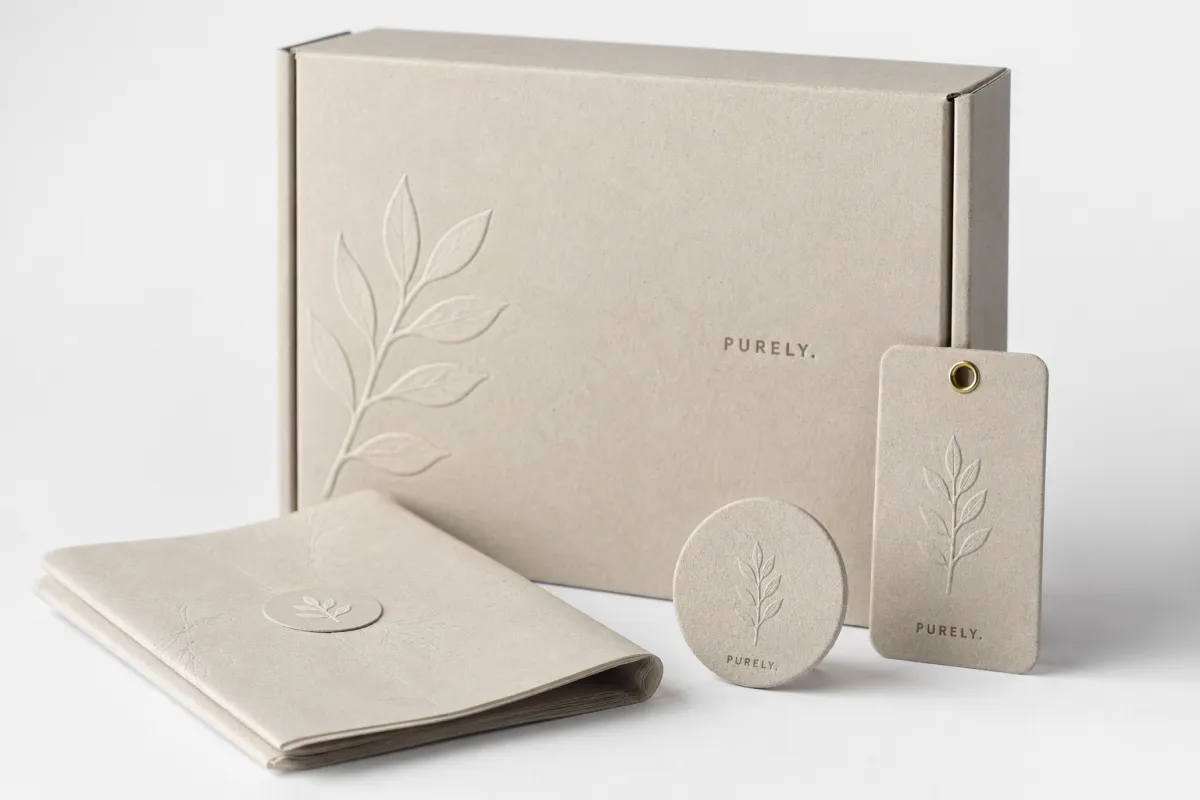
I have watched customers react more strongly to a plain, well-proportioned carton than to a loud, heavily printed one, and that is the first reason minimalist sustainable packaging inspiration 2024 feels premium. A restrained package asks the structure to do the talking. A one-color carton with crisp folds, tight tolerances within 1.5 mm, and a smart closure can signal confidence in a way a busy graphic system often cannot. In a skincare line I helped review, a soft ivory box made from 350gsm C1S artboard with one blind-embossed logo outperformed a shimmering full-coverage design in consumer tests simply because the box felt calm, tidy, and intentional in hand. I still remember the room going quiet when people started handling the sample, which is not something a packaging deck can fake.
Minimalist sustainable packaging, in plain terms, is a design approach that removes clutter without removing meaning. The brand mark stays, the product stays protected, and the package still looks at home on a retail shelf or in a direct-to-consumer shipment. The trick is discipline. Minimalist sustainable packaging inspiration 2024 is not about making things bare just to look modern; it is about choosing the right amount of paperboard, the right amount of ink, and the right amount of structure so the box earns its keep. I have seen too many brands spend a fortune trying to look simple and end up with a package that feels stripped, not smart. Not the same thing at all.
In my experience, the premium effect usually comes from restraint paired with precision. When a carton closes square, the lid line is even, and the finish has a natural texture rather than a glossy coat trying too hard, the customer reads the package as considered. That matters in beauty, wellness, candles, premium apparel, and giftable product packaging because those categories rely heavily on brand perception. I have seen buyers in a retail packaging review room pick the quieter box because it looked more expensive under fluorescent lights and felt less disposable after the first touch. In one meeting in Guangzhou, a buyer chose a matte recycled box over a silver PET-laminated version after only 20 seconds of handling. Fluorescent lights are ruthless, by the way. They expose every bad choice like a gossip with a flashlight.
There is also a sustainability advantage that does not get enough attention. Fewer layers usually mean less material, less ink coverage, and less weight in transit. Right-sizing alone can reduce corrugate usage by 8 percent to 14 percent on high-volume SKUs, especially when a carton is trimmed from 12 mm of dead space to 3 mm of clearance. That is why minimalist sustainable packaging inspiration 2024 makes sense for teams who care about cost control as much as they care about lower environmental impact. I have watched a quarter's worth of avoidable waste disappear just because one carton was trimmed to the actual product instead of "just in case" size. That phrase makes my eye twitch a little.
Honestly, the biggest misconception is that minimal means plain or cheap. It does not. It means every visible choice has to be earned. A clean logo, a textured stock, a neatly wrapped insert, and a box that opens without fighting the customer can feel far more premium than a package stuffed with special effects. The right version of minimalist sustainable packaging inspiration 2024 gives a brand a calmer voice, and calm often reads as confidence. Sometimes the loudest thing a package can say is, "We did not need to yell." That is especially true when the unit price is already at $0.32 for 5,000 pieces and the brand does not need to spend another nickel convincing people it has taste.
"The package did not need more decoration. It needed better bones." That was a line from a buyer in a supplier meeting I still remember in Ningbo, and he was right. When structure, fit, and finish are right, the package stops begging for attention and starts earning it. A carton with a 1.2 mm score depth and a snug 0.8 mm insert gap says more than a full page of slogans ever could.
How minimalist sustainable packaging inspiration 2024 works in real production
Minimalist sustainable packaging inspiration 2024 works on the factory floor because the process gets simpler in the places that usually create waste. The first move is to choose the smallest viable format. If a serum bottle fits safely in a 350gsm FSC-certified folding carton instead of a heavy two-piece rigid setup, that is a real win. If a shirt can ship in a recycled corrugate mailer with a single insert panel rather than a three-part retail sleeve system, labor drops and pack-out gets faster. I have watched entire packing lines in Shenzhen and Dongguan speed up by 4 to 7 seconds per unit simply because the insert was redrawn to match the product instead of forcing the team to fold around air. Several seconds sounds tiny until you multiply it by 20,000 units and then wonder why the shift supervisor looks like he has not slept since last Tuesday.
The second move is to let structure carry some of the branding load. Custom tuck flaps, a clean reveal on opening, a blind deboss, or a simple spot-color logo can do more than a cluttered graphic system. One wellness brand I met with wanted a fully printed interior, then changed direction after seeing a sample with an uncoated inside and a single inner message set in 10 pt black ink. The final version felt more honest, and the packaging design read as premium without a pile of extra ink. That is one reason minimalist sustainable packaging inspiration 2024 is so practical: it rewards good structure instead of asking print to cover weak structure. I think that is where a lot of teams get nervous. They worry simple will look unfinished. Usually the opposite is true.
Material choice changes the feel immediately. Virgin paperboard gives a smoother edge and a more uniform print surface, while recycled paperboard often has a more tactile, natural character that suits a quiet brand voice. Molded pulp can protect fragile products well and reduce plastic use, though the surface quality and color consistency are not always the same as paperboard. Kraft corrugate is excellent for shipping because it is tough, affordable, and recognizable as sustainable packaging, especially when paired with water-based inks and a right-sized footprint. Fiber-based mailers are another useful option for light apparel or accessories when the retailer wants a lighter package without sacrificing protection. In our South China runs, the best-performing combo for a 380 g candle set was a 320gsm kraft carton, a 1.8 mm molded fiber insert, and a single-color exterior print. That kind of build is exactly why minimalist sustainable packaging inspiration 2024 keeps surviving procurement reviews.
Labor is the part people underestimate. Every extra component costs time on the line, and time on the line turns into mistakes if the crew has to think too hard about the order of operations. I once negotiated with a converter in Guangzhou who wanted to keep a decorative belly band on a small cosmetics kit, even though the band added nearly 18 seconds of handling time per unit. We removed it, moved the brand cue to the lid, and the team ended up saving enough labor to offset the better board grade. That is the kind of tradeoff minimalist sustainable packaging inspiration 2024 rewards. It also saved us from the classic "one more cute detail" trap that has ruined more schedules than I care to count.
Consistency matters across formats too. A brand might use retail packaging in stores, custom printed boxes for direct shipments, sleeves for limited drops, and a mailer for subscription orders. If all of those pieces share the same restrained color family, type treatment, and logo scale, the system still feels like one brand. The best package branding systems I have seen do not depend on overdecorating one hero SKU; they use a repeatable visual language that survives on a shelf, in an unboxing video, and on a warehouse conveyor. That consistency is what makes a collection feel intentional instead of cobbled together at the last minute, which is how some collections are built when the launch date is fixed and the sample budget is exactly $600.
For practical options, I often point teams to Custom Packaging Products when they need to compare mailers, cartons, and insert systems in one place. If the product line is still evolving, a fast structural mock-up is better than waiting on perfect artwork, because minimalist sustainable packaging inspiration 2024 usually becomes clearer once the actual product sits inside the prototype. Screens are useful, sure, but cardboard has a way of telling the truth. A prototype can reveal in 5 minutes what three rounds of Slack comments failed to catch.
Key materials and design factors for minimalist sustainable packaging inspiration 2024
The strongest minimalist sustainable packaging inspiration 2024 usually starts with the substrate, not the artwork. FSC-certified paperboard is a strong option for folding cartons because it balances print quality with responsible sourcing. Recycled corrugate works well for shipping boxes and mailers, especially when strength and shipping durability matter more than a polished surface. Molded fiber is a smart choice for inserts and protective nests, while glassine can be useful for inner wraps when a brand wants a soft, semi-translucent layer without plastic film. Water-based or soy-based inks are often the cleanest print choice when the design only needs one or two colors. I like that kind of restraint. It says, "We made choices," instead of, "We bought every effect in the catalog."
Texture matters just as much as color. An uncoated stock with a natural hand can make a package feel quieter and more sophisticated than a glossy surface full of visual noise. I have seen clients fall in love with a white or kraft carton only after holding a sample under shop lighting in Shanghai and noticing how the fibers catch the light differently. Blind embossing, debossing, and restrained spot color work because they create depth without overwhelming the eye. That is why minimalist sustainable packaging inspiration 2024 can look expensive even when the print system is simple; the expense is in the precision, not the decoration. Precision is the unglamorous hero of packaging. Nobody puts that on a keynote slide, but they should.
Right-sizing is another detail that separates a good package from a wasteful one. A box that is 6 millimeters too large in every direction can create a bigger void-fill problem, a higher freight charge, and a more fragile customer experience. I have walked fulfillment floors where void fill was eating into margins because the package design had not been matched to the final product dimensions. Once the box was resized and the insert was cut to the actual spec, the brand cut filler usage by 32 percent, reduced product movement, and improved the unboxing feel. That is minimalist sustainable packaging inspiration 2024 in a very literal sense. Six millimeters does not sound dramatic until it shows up on a freight invoice and suddenly becomes everybody's favorite headache.
Print strategy should stay equally focused. A one-color logo can carry a lot of weight if it is placed well. A small repeat pattern inside the lid can create a surprise without adding much ink coverage. A simple label can replace a fully printed box in early-stage launches when the SKU mix is still shifting. I usually recommend that brands ask whether the package needs a graphic system or just a strong package branding cue. If the carton shape, the closure, and the finish are distinctive enough, a small mark is often enough. Honestly, I think many brands over-design because they are afraid of silence. Packaging does not need to sing opera to be memorable, especially when a crisp 14 pt logo in one color can do the work for a fraction of the setup cost.
Sustainability claims need proof. If a package is advertised as recyclable, the material spec, coating, and end-of-life path should match the claim in the target market. If a client wants chain-of-custody documentation for paper fiber, FSC paperwork should be part of the conversation from the start. For shipping performance, I point teams to ISTA testing guidance and, for fiber sourcing, FSC documentation so the material story holds up beyond the mock-up stage. Those references keep minimalist sustainable packaging inspiration 2024 grounded in real production, not just nice-looking renderings. Pretty renders are easy. Real compliance is the part that keeps you honest.
There is also a design caution worth saying plainly: less decoration does not excuse weak engineering. A minimal package with poor flap design, loose inserts, or a flimsy closure will feel cheap fast. A minimal package with a solid score line, good compression strength, and a snug fit feels elegant. The difference is not subtle after a few thousand units run through a packing line. That is why minimalist sustainable packaging inspiration 2024 should always be tied to a material spec, a die-line, and a shipping test, not only a visual reference board. I have seen "minimal" become a polite word for "unfinished," and the warehouse usually exposes that within an hour.
Minimalist sustainable packaging inspiration 2024: cost, pricing, and value
Cost conversations get easier when everybody looks at the same drivers. In minimalist sustainable packaging inspiration 2024, the main price levers are board grade, print setup, die complexity, insert construction, minimum order quantity, and any specialty finish such as embossing or aqueous coating. A very simple box can still become expensive if the dimensions are odd, the tolerances are tight, or the approval cycle keeps changing the artwork. I have seen a clean-looking carton go up in price by more than 14 percent simply because the insert was rebuilt three times after sampling. That number tends to wake people up.
The good news is that minimal design can also cut costs in real ways. Lower ink coverage reduces print complexity. Fewer components reduce assembly labor. Right-sized cartons reduce shipping space and void fill. A single-color logo often means less setup than a full-coverage print system, and the production floor tends to run faster when there are fewer steps to follow. That is why minimalist sustainable packaging inspiration 2024 can be a strong cost-control move for both a startup and a mature brand with a large SKU count. It is one of the rare cases where the simple answer is not only prettier, but also easier on the budget. On a 5,000-piece run, the difference between a 2-color carton and a 1-color carton can be $0.09 to $0.18 per unit before freight.
Still, some minimalist looks are expensive. Premium uncoated stocks, specialty embossing, tight registration, or custom molded inserts can push the price up quickly. I once sat in a supplier negotiation in Kunshan where a client wanted a very plain carton but insisted on a thick premium board, a matched lid, and a custom foam replacement that had to be reworked after every prototype. The final piece looked simple, yet the unit price was higher than a more decorative option because the tolerances were unforgiving. Minimal does not always mean cheaper; minimalist sustainable packaging inspiration 2024 rewards smart choices, not assumptions. That part frustrates people, but it is better to know it early than after a purchase order is already signed.
| Option | Typical use | Indicative unit cost at 5,000 pieces | Pros | Tradeoffs |
|---|---|---|---|---|
| FSC paperboard folding carton | Beauty, wellness, small retail packaging | $0.22 to $0.48 | Clean print, good shelf presence, efficient flat shipping | Lower crush resistance than corrugate |
| Recycled corrugate mailer | DTC shipping, apparel, subscription sets | $0.38 to $0.92 | Strong protection, recyclable, good for branded packaging | Rougher surface, less refined print feel |
| Molded fiber insert system | Fragile products, bottle nests, accessory trays | $0.30 to $0.85 | Reduced plastic use, secure fit, strong sustainability story | Tooling and mold lead time can be longer |
| Fiber-based mailer | Light apparel, accessories, secondary shipping | $0.18 to $0.55 | Low weight, simple assembly, good unboxing feel | Not ideal for heavier or fragile items |
That table is only a starting point, because freight, labor, and damage rate matter just as much as unit cost. A carton that costs $0.07 less but adds a 4 percent damage rate can become the more expensive choice once replacements are counted. I always tell clients to compare the full picture: unit price, setup cost, freight, packing speed, breakage risk, and disposal value. Minimalist sustainable packaging inspiration 2024 only pays off when the whole system is considered, not just the line item on the quote. A cheap box that fails is not cheap. It is just delayed pain.
If a brand wants a smart first pass, I often suggest asking for two or three material options, a basic structure sample, and a clear quote sheet that shows setup, tooling, and per-unit pricing separately. That makes it much easier to compare a plain carton against a more elaborate system. It also helps the team decide where to spend and where to save. In many projects, the best money goes into the structure and the fit, while the graphics stay simple. That balance is a hallmark of minimalist sustainable packaging inspiration 2024. It also keeps the design from trying to be everything at once, which is a terrible habit and not just in packaging.
Step-by-step process and timeline for minimalist sustainable packaging
The fastest projects start with clear inputs. For minimalist sustainable packaging inspiration 2024, I like to begin with product dimensions, product weight, shipping method, warehouse setup, and the emotional target for the unboxing moment. If the item is fragile, the structure changes. If the item is sold in retail packaging and shipped from a fulfillment center, the inner and outer layers may need different jobs. A supplier cannot quote accurately if the team only says, "Make it minimal." The package has to fit the product, the route, and the customer experience. I wish that were obvious, but I have been in enough kickoff calls in Shenzhen and Ningbo to know it is not.
A workable sequence usually looks like this: brief, structural sketch, material recommendation, prototype, quote, artwork approval, and production sign-off. Sampling is often where the schedule opens up or closes down. A simple carton might move through prototype and proofing in a short window, while a custom insert or unusual closure can add more rounds. In one client meeting for a personal care line, the team thought the box was finished, then realized the bottle neck caught on the insert after the third opening. That small detail pushed the launch by two weeks. It was a good reminder that minimalist sustainable packaging inspiration 2024 still needs functional testing, not only visual approval. The prototype is where optimism gets checked against gravity.
Lead times depend on complexity, but a simple short-run program can often move faster than a fully custom system with specialty materials. If artwork is locked early, a prototype can be approved without wandering through a dozen revisions. If the insert is fixed before print, the whole project gets easier. What slows teams down most often is late-stage change, especially when the brand adds a slogan, swaps the product size, or asks for a different closure after the samples have already been cut. I have seen many timelines slip because someone wanted one more "small" change that required a new die line. "Small" changes are rarely small once tooling is involved. Packaging has receipts, and the receipts usually arrive as another 3 to 5 business days.
Good suppliers will ask practical questions up front. They want to know the product weight, whether the package will sit on a shelf or ship in a carton, what the warehouse team uses for packing, and how much movement is acceptable in transit. They may also ask about target price points and the acceptable level of visible fiber texture, because those details affect material selection. When a supplier asks those questions, that is usually a good sign. It means they are thinking like a production partner, not just a printer. That mindset is essential for minimalist sustainable packaging inspiration 2024. Anyone can quote cardboard. Fewer people can think through how the cardboard behaves after 40,000 units, 300 pallet moves, and a humid week in a Guangzhou warehouse.
For planning, I usually tell teams to allow extra room for structural iteration if the package is new, and a narrower window if the format already exists. A straightforward mailer or folding carton may fit a quicker schedule than a complicated insert system. The more custom the board work, the more the team should respect sampling and tooling time. A realistic timeline keeps inventory from running thin and reduces the chance of rushed approvals. That matters whether the project is a small launch or a broad branded packaging refresh across a full catalog. Nobody enjoys launching with boxes sitting in a corner because someone missed a proof deadline by two days and then spent a week pretending that was not a problem. For a standard carton run in South China, 12-15 business days from proof approval is common; molded fiber tooling can take 20-25 business days before the first usable sample.
One simple rule has saved more launches than I can count: approve the physical sample with the product inside it, not only the flat sketch. Minimalist sustainable packaging inspiration 2024 can look right on screen and still fail in a warehouse if the opening is awkward or the product shifts during transit. A real product, a real packing bench, and a real ship test reveal the truth faster than any rendering does. I have learned to trust the sample that makes the line worker shrug and say, "Yeah, this is fine." That is basically a standing ovation in production terms.
Common mistakes with minimalist sustainable packaging inspiration 2024
The biggest mistake is treating simplicity as a visual trick instead of an engineering decision. I have seen packages that looked beautifully restrained in a rendering and then failed because the board was too thin, the closure was weak, or the insert was hard to assemble. That kind of failure costs money twice: once in the damaged unit and again in the replacement shipment. Minimalist sustainable packaging inspiration 2024 only works when the box is still strong enough to survive the route it is meant to travel. If it crumples at the first bump, the "minimal" part has gone too far.
Greenwashing is another trap. A brown box is not automatically sustainable, and a small logo does not make a package recyclable. If the coating blocks recycling in the target market, or if the insert uses materials that are hard to separate, the environmental story becomes shaky. I have sat in review meetings where a marketing team was ready to claim "eco-friendly" before the supplier had even confirmed the board spec. That is a risky way to build trust. Minimalist sustainable packaging inspiration 2024 should be backed by real materials, real documentation, and honest end-of-life guidance. The consumer may not know the fiber source, but they can usually tell when a claim smells a little too polished.
Another mistake is stripping the brand so far that the package becomes anonymous. Minimal can drift into generic if there is no point of view. A box that uses no color, no texture, and no recognizable mark often looks less premium, not more. Good package branding needs one or two memorable details. It might be a specific closure, a soft-touch-free texture, a precise logo placement, or an internal message that matches the brand voice. I have seen products disappear on shelf because they looked like commodity shippers instead of considered retail packaging. The silence was not elegant; it was forgettable.
Shipping performance cannot be ignored. A package that saves half an ounce but fails ISTA drop testing is not a win. A carton that looks light and tidy but crushes in a fulfillment center can erase any material savings through returns, replacements, and customer service time. I have watched a company celebrate lower packaging weight, only to discover the savings disappeared after more than 3 percent of units arrived dented. Minimalist sustainable packaging inspiration 2024 needs the discipline of testing, not just the language of sustainability. Otherwise, you are just buying smaller problems, which still count as problems.
There is also a production mistake that shows up often: fancy finishes that look minimal on a screen but create real trouble in the plant. A subtle metallic effect, a soft-touch surface, or a tight registration requirement can slow the line and increase spoilage. I once helped a buyer compare two nearly identical cartons. One used a beautiful finish that looked clean in the mock-up; the other used a simpler uncoated stock with a blind emboss. The second version cost less, ran cleaner, and felt more authentic in hand. That is a common lesson in minimalist sustainable packaging inspiration 2024: the more production-friendly option often wins once the real costs are counted. Fancy is fun until the conversion team has to babysit it at 2 a.m.
If you want a practical reference point, compare the package against the actual handling steps: picking, packing, transport, shelf display, and customer disposal. A design that looks good in only one of those moments is incomplete. A design that works in all five is the one that lasts. That is the standard I keep coming back to, because packaging that only behaves in a mock-up is not packaging. It is a drawing with confidence issues.
Next steps for minimalist sustainable packaging inspiration 2024
If a brand wants to move forward, I recommend starting with one SKU, one packaging format, and one sustainability priority. That keeps the project honest and manageable. Maybe the first goal is to reduce void fill. Maybe it is to shift from plastic to fiber. Maybe it is simply to cut the print system from four colors to one. Clear priorities make minimalist sustainable packaging inspiration 2024 much easier to execute because the team is not trying to solve every packaging problem at once. Trying to fix everything usually means nothing gets fixed properly.
Next, gather the details that shape the quote. Product dimensions, weight, fill method, shipping route, warehouse setup, and a few visual references all make the supplier conversation better. If you already know the desired look, bring samples from other brands that feel right. If not, bring examples of what the package should avoid. That is often more useful than a vague mood board. For brands comparing options, a quick review of Custom Packaging Products can help narrow the conversation before artwork begins. I have seen teams skip this step and then spend three weeks arguing over a box shape nobody had even tested. Not ideal.
Ask for at least two or three material options, not just one. A kraft corrugate option, a cleaner paperboard option, and a molded fiber or insert option usually reveal the tradeoffs quickly. You will see where the savings are, where the protection lives, and which choice suits the brand voice. I have found that the best teams choose the structure first and leave the graphics for the final mile. That sequence keeps minimalist sustainable packaging inspiration 2024 grounded in real production decisions. It also prevents the classic mistake of decorating a weak structure, which is a little like putting lipstick on a shipping problem.
Before scaling, run one prototype through real conditions. Pack it on the actual line. Ship it through the actual carrier. Open it the way a customer would. If the package still feels calm, secure, and coherent after that test, the design is probably ready. If it rattles, tears, or feels forgettable, it needs another round. A small correction now is far cheaper than a catalog-wide correction after launch. I know that sounds obvious, but the industry has spent decades proving that obvious advice is somehow still premium advice.
That is the heart of minimalist sustainable packaging inspiration 2024: repeatable discipline. A good system can guide a skincare carton, a shipping mailer, an apparel box, or a gift set without drifting into excess. When the structure is right, the material is honest, and the branding is restrained, the package feels premium for reasons the customer can sense even if they cannot name them. And yes, that quiet confidence is real. You can feel it in your hands, especially when the insert is molded to within 0.5 mm of the product and the lid closes without a scrape.
For teams ready to refresh their minimalist sustainable packaging inspiration 2024 approach, I would keep the next move simple: pick the product, set the budget, and build the first sample around the real use case. That is where the best package branding starts, and it is usually where the waste starts to fall away too. I keep coming back to that because it works, not because it sounds nice in a slide deck. A 12-15 business day proof cycle, a 5,000-piece quote, and a real ship test in Shenzhen or Ningbo will teach you more than another hour of theory.
Frequently asked questions
What is minimalist sustainable packaging inspiration for small brands?
It is a design approach that uses fewer materials, simpler graphics, and right-sized structures to create a premium look with less waste. For a small brand, minimalist sustainable packaging inspiration 2024 can start with kraft board, one-color print, and a custom insert that protects the product without adding extra layers or labor. I often tell small brands to start there because it is realistic, not because it is trendy. A 500-piece pilot run in 300gsm board can teach more than a polished deck ever will.
How do I keep minimalist sustainable packaging inspiration from looking cheap?
Focus on material quality, clean structure, and precise fit rather than heavy decoration. A restrained design feels finished when the board grade is solid, the folds are sharp, and the logo placement is intentional. That is usually the difference between minimalist sustainable packaging inspiration 2024 That Feels Premium and a package that feels unfinished. Honestly, cheap-looking minimal packaging usually has one of two problems: the board is weak, or someone got too excited about "less is more" and forgot the "more" part that makes it work.
Is minimalist sustainable packaging more expensive to produce?
It can be cheaper when it reduces ink, components, and labor, but specialty papers or custom tooling can raise the price. The clearest way to judge value is to compare unit cost, setup, freight, packing speed, and damage risk together. In practice, minimalist sustainable packaging inspiration 2024 saves money most reliably when the design is built around production realities. That is the boring answer, but the boring answer is often the one that keeps your margin intact. On some runs, the difference between a plain carton and a decorated one is just $0.11 per unit; on others, the insert engineering matters far more than the print.
What materials work best for minimalist sustainable packaging inspiration?
Common choices include recycled corrugate, FSC-certified paperboard, molded fiber, kraft paper, and recyclable fiber-based mailers. The right choice depends on product weight, shipping method, moisture exposure, and the finish you want customers to see. A well-chosen material makes minimalist sustainable packaging inspiration 2024 feel deliberate instead of generic. I like to think of material selection as the package's personality test, minus the awkward online quiz. A 350gsm C1S artboard carton and a molded pulp insert can be a perfect pair for a 120 ml bottle shipped from Suzhou to Los Angeles.
How long does a minimalist sustainable packaging project usually take?
A simple program can move from concept to production in a few weeks, while custom structures, special finishes, or multiple approval rounds take longer. Sampling, structural revision, and print proofing are usually the main schedule drivers, so early lock-in saves time. That is why minimalist sustainable packaging inspiration 2024 works best when the team approves the sample with the actual product inside it. Flat samples alone can be deceptively polite. In practice, 12-15 business days from proof approval is common for a straightforward carton run, while custom molded fiber can take 20-30 business days depending on the mold and the plant in Guangdong or Zhejiang.

