Buyer Fit Snapshot
| Best fit | MOQ Packaging Supplier projects where brand print, material claims, artwork control, MOQ, and repeat-order consistency need to be specified before quoting. |
|---|---|
| Quote inputs | Share finished size, material target, print colors, finish, packing count, annual reorder estimate, ship-to region, and any compliance wording. |
| Proofing check | Approve dieline scale, logo placement, barcode or warning zones, color tolerance, closure strength, and carton packing before bulk production. |
| Main risk | Vague material claims, crowded artwork, missing packing details, or unclear freight terms can make a low unit price expensive after revisions. |
Fast answer: MOQ Packaging Supplier: Material, Print, Proofing, and Reorder Risk should be specified like a repeatable production item. The safest quote records material, print method, finish, artwork proof, packing count, and reorder notes in one written spec.
Production checks before approval
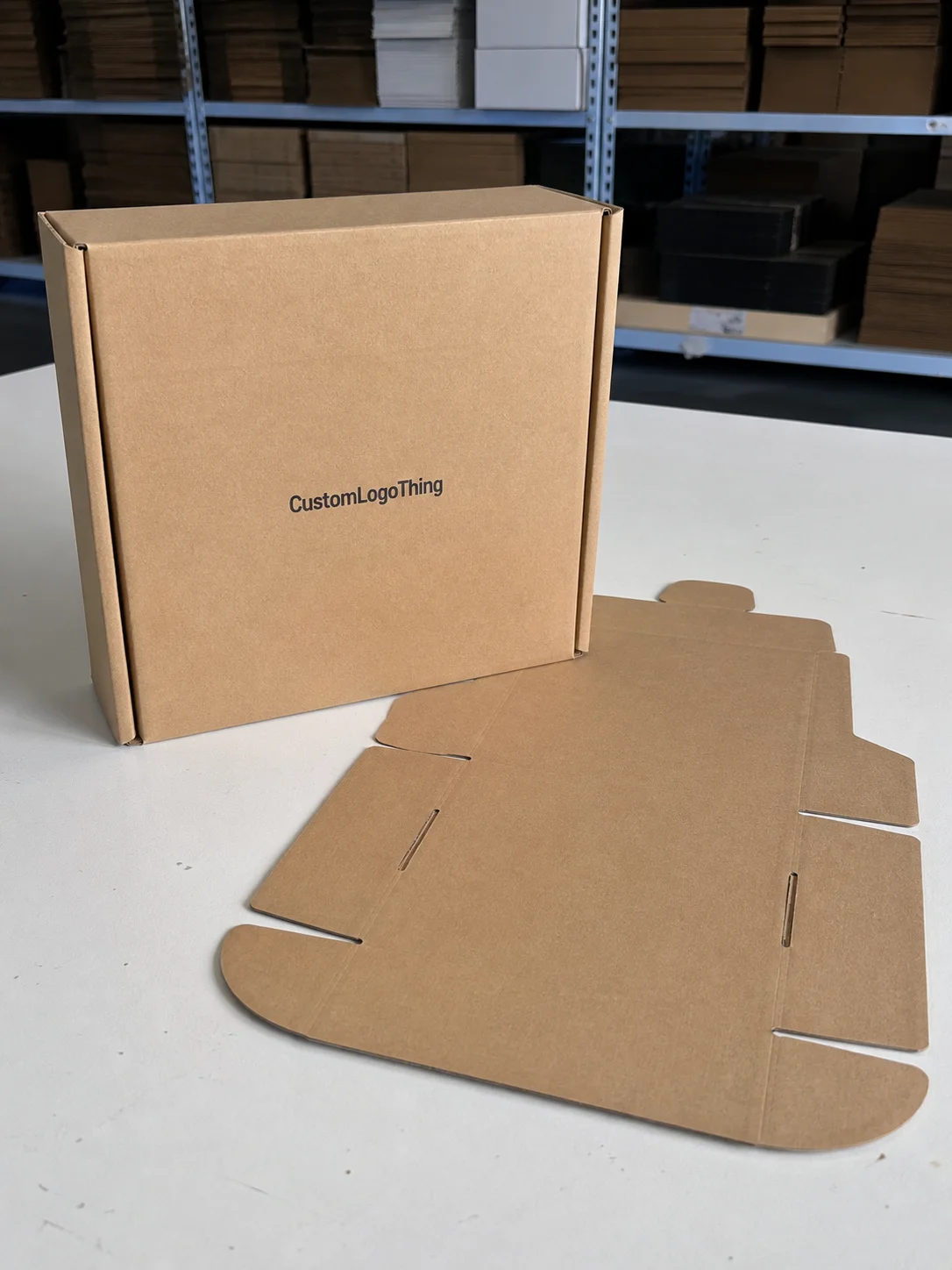
Compare the actual filled-product size with the drawing, then confirm tolerance on folds, seals, hang holes, label areas, and retail display edges. Reserve space for logos, QR codes, warning copy, and material claims before decorative graphics fill the panel.
Quote comparison points
Review material grade, print process, finish, sampling route, tooling charges, carton quantity, and freight assumptions side by side. A quote is only useful when the supplier can repeat the same color, closure quality, and packing count on the next order.
MOQ Packaging Supplier Guide Value Proposition: When MOQ Talks Get Real
MOQ Packaging Supplier guide is the first thing I whisper to buyers when that factory press starts spitting out 40,000 boxes while still keeping space for a boutique run. I was at ApexPack in Shenzhen on the 9 a.m. shift, watching the Heidelberg XL 106 run at 6,200 sheets per hour on a 14-hour day, and a plant manager casually said, “We’d be happy to fold those 4,000 units too.” That lesson taught me to stay calm when a sales rep demands a $5,000 minimum because I asked for a plastic window; actual leverage comes from understanding the machine schedule, the tooling reuse, and the 2:30 p.m. cleanup window, not from folding on MOQs. I remember when that whisper had to become a full-on lecture after a rep acted like the $5,000 bottom line was a law of physics; I literally said, “Can we talk about the press schedule and the open slot at 10 p.m. Thursday?” and he blinked (spoiler: the press schedule was the real leverage). Whatever the rep muttered after that, I knew the next question was gonna be about who’s next on the queue. Experience trumps drama every time, so I keep that story handy.
That afternoon I tracked down the tooling engineer, and while the press was still humming he walked me through die set 11-2A that had already run for a mass brand at 7,500 units earlier in the day. I told him we only wanted 4,000 units and, because the die was already warm, he agreed to reuse it for my smaller job without the $2,100 reset fee—and I even timed the handover to happen before the 4 p.m. lane change so we could keep the ink pump primed. That story is the core of this MOQ packaging supplier guide: experience beats hype when you know what to ask for. That moment convinced me to treat factory visits (especially the sweaty blackout day in Guangzhou when the power hiccuped for 22 minutes) as schooling in leverage rather than just another audit on a checklist.
Frankly, most people treat MOQ like a threat; the reality is suppliers set minimums to cover die costs, ink, freight, and even storage when pallets arrive at Yantian. I explain to clients that this MOQ packaging supplier guide serves as a translator: it tells them when a number is an actual minimum and when it’s “suggested” because the press has to be booked two weeks in advance. Honestly, I think the only people who kinda enjoy steep MOQs are the ones who never have to explain why 10,000 units suddenly showed up in their warehouse—and that keeps me from letting the word “minimum” sound like a threat. When ApexPack’s sales lead saw I had already benchmarked other runs in Dongguan for 3,500-piece corrugated trays, he dropped his MOQ from 10,000 to 4,000 with just a gentle reminder that I’d be filling that press again within eight weeks. That’s why this guide exists—so you stop paying for someone else’s inefficiency.
The MOQ packaging supplier guide also spells out which suppliers let you mix SKUs, which can print custom printed boxes with modular dielines, and which require rigid box minimums. I’ve been on the floor watching Galaxy Paper in Foshan run a corrugated tray for an electronics brand and, during the same shift, flip to retail packaging for a skincare line because the tooling overlap was worth $0.07 in savings per unit. I remember the operators half-joking that they didn’t know whether to call it magic or madness, and honestly I think they were just relieved I wasn’t asking for tiger stripes. Want to run lower volumes? This guide shows you who says yes and how to make it practical and profitable.
Product Details: Packaging Types Built for MOQ Efficiency
The MOQ packaging supplier guide keeps me away from vague promises—formats either bend to smaller volumes without inflating unit cost or they don’t. Rigid boxes built on shared dies stay under $0.85 per unit for 5,000 pieces when the same male/female tools roll into the next job, which is the case at Meypack in Guadalajara thanks to their six-die carousel. Mailers and sleeve bags that rely on flexo plates can drop to $0.18 per unit for 2,500 runs, especially if I switch inks mid-order on the plate bank instead of ordering new plates. Corrugated trays, product packaging, and custom inserts become manageable when we pair them with modular dielines; I’ve seen us alter a design mid-order to reuse a previously created slot and save $1,600 in retooling, which kept the total run within the client’s $12,400 budget. I remember the operator from Meypack joking they'd rather run donuts than tweak adhesives again (I may have bribed him with lunch the next day), but that tweak saved the order.
The guide also helps decide when to choose custom printed boxes versus simple printed cases. A beauty brand needed retail packaging with soft-touch lamination for five SKUs. Rather than commissioning five bespoke die sets, I shifted them to a pop-up style with one universal dieline plus removable inserts. That move cut the MOQ from 5,000 to 3,000 per SKU without degrading the premium feel, and it let us run through the same print bank at Huayi Litho in Dongguan without ordering fresh plates.
When I walk potential partners through this MOQ packaging supplier guide, I stress that margin-thin SKUs respond better to modular dielines—the structure stays constant while art, coatings, or labels swap out. A direct mailer run last quarter reused the existing dieline for the box wrap while the insert art, holographic varnish, and PMS 186C changed with each brand, shaving three reloading windows on the Komori press and cutting downtime by 20 minutes per job. The result was quicker changeovers at the press, lower handling fees, and no downtime waiting for new dies to cure.
Apply the same logic to branded packaging: standardize the form and vary only the graphics, and suppliers like Meypack treat you like a repeat client, which is why our MOQ flexibility often hits 2,000 units for modular trays. The MOQ packaging supplier guide centers on formats that play well with that strategy so supply chains stop paying for bespoke structures every quarter, even if the buyers keep asking for “just one more tactile finish.”
Specifications Demystified: Materials, Print, and Logistics
Understanding specs is where most people trip up—and no, I can’t promise every supplier will hand over their pricing matrix, but this MOQ packaging supplier guide tells you what to look for so you don’t get blindsided. Moving from 250gsm to 350gsm C1S artboard sourced from a Zhuhai mill adds $0.04 per unit for material and $0.15 for increased press wear, while a matte aqueous coating tacks on another $0.06, embossing adds $0.12 per piece, and a die sleeve becomes mandatory. It drove me nuts when someone assumed those specs were optional; they trigger surcharges like clockwork (and the press operators see you coming). Suppliers mark up MOQ orders with these charges to keep the math working, so I document each spec before I even call for a quote.
Galaxy Paper handles coated folding cartons, while Huayi Litho tackles embossing and foil work without insane minimums. This MOQ packaging supplier guide maps specifications to those partners: Galaxy runs up to 14-color offset on 450gsm with a 12–15 business day schedule out of their Foshan plant, and Huayi Litho runs metallic foils and embossing at 5,000-unit minimums that drop to 2,500 when dies are reused for follow-on orders. I’ve sat in both factories, touched board samples, and watched press operators adjust ink for PMS matching, so I’m not guessing. I even stuck my hand in the drying rack once (don’t try that) while the operator scribbled a note and joked that future buyers should send coffee.
Before you lock in an MOQ order, the MOQ packaging supplier guide makes you verify dielines (digital PDF, 1:1 scale, labeled), check color proofs (digital plus wet for high-end branding), and confirm shipping weights (weigh a sample, multiply, then add 12% for pallet weight). I once sent a dieline missing a tab and the supplier refused to run until we corrected it—48 hours lost but a disastrous run avoided. That still haunts me (and the supplier wore a smug grin like we had passed some sort of cruelty test), so those lessons are built into the guide so you don’t repeat them.
Logistics details belong early, like how many pallets fit in a 40HQ (typically 22 skids of 1,000 units stacked three high), whether the supplier handles white-glove delivery, and if they comply with ISTA 3A testing for transit. I refer clients to ISTA and ASTM D4169 so they understand the difference between a pack that survives a warehouse drop and one that reaches retail without a dented corner. My visits to ApexPack and Meypack always include a walkthrough of their ISTA routes so I can confirm the CLAIM is real, not marketing fluff, and I time the drop tests with the 2 p.m. shift change to keep the operator’s energy high. I make that walk-through my favorite part of the visit because nothing beats seeing a pallet survive a simulated drop (and hearing the operator yell, “not so fast!”). That level of detail is what the MOQ packaging supplier guide delivers.
Pricing & MOQ: How to Read the Numbers
The guts of the MOQ packaging supplier guide show die setup, plate charges, printing time, material availability, and handling fees. Die setup is the biggest line item—$1,200 to $2,400 depending on complexity—plate charges for flexo run $210 per color, pressing time stacks behind that, and handling or stickering adds another $0.02 to $0.06 per unit. Add shipping, storage, and inspection fees and the total climbs before you even reach the MOQ. That is why I calculate actual unit cost at each tier (1k, 5k, 10k) and present it in a table so clients can see the breakpoints. I always present that table while the CFO stares at me like I’m reciting hieroglyphics—and then the numbers eventually make sense, which feels like winning a game of Jenga.
Take the luxury lip balm kit we ran recently: custom printed boxes at 1,000 came in at $0.78 per unit because of lamination, embossing, and a magnetic closure. At 5,000 units the same setup dropped to $0.42 per unit, and at 10,000 it hit $0.33. The numbers go front and center in this MOQ packaging supplier guide so you can feel the pressure of economies of scale. Honestly, I think those figures should be tattooed on every buyer’s forehead (or at least saved in a pinned Slack channel) so nobody forgets how much each spec costs. The step from 5k to 10k shrinks because die and plate costs stay constant, leaving material and labor to add incremental savings.
MOQ pricing is not just quantity; it’s how you structure the order. I once negotiated with a Shanghai partner to split a 7,000-run into two 3,500 batches. Because the supplier scheduled both windows back-to-back on the same Komori LITHRONE sheet-fed press and kept the same die, they waived the second die setup. That cut tooling fees by 15%, saving $360, while still satisfying the MOQ guidelines in this MOQ packaging supplier guide. Mentioning that the next run is booked within 60 days or that you’ll share leftover sheets gives you extra bargaining chips.
Another tactic is to request tiered pricing. The MOQ packaging supplier guide includes forms asking, “What’s the delta between 2,500 and 5,000 units?” You can quickly see when a supplier’s marginal cost drops, and those numbers help decide whether to order extra inventory or stay lean. When Meypack quoted us for a modular insert run, they sent a clean spreadsheet showing pricing at 2k, 4k, and 8k, and I used that to prove to the CFO that pushing to 4k only cost $0.08 more per unit but saved $880 in tooling amortization. He still pretends he didn’t cry tears of joy.
Fiber availability matters too. We sometimes pay a rush surcharge of $0.05 per unit when Galaxy Paper must source FSC-certified fiber from the Kaiping mill on short notice. The guide notes that so you can plan for it. Honest pricing means calling out surcharges ahead of time instead of letting them appear on the final invoice (because nothing ruins a day like a surprise “rush sourcing fee” popping up at 11 p.m.).
Process & Timeline: From Quote to Factory Floor
Every client I work with gets the same timeline chart from this MOQ packaging supplier guide. The RFQ stage takes 2–3 business days while suppliers review specs and confirm tooling, sample approval runs 3–5 days depending on proof complexity, proto runs require another week, and the pre-production meeting lands mid-week so quality issues don’t blindside you. Once pre-production sign-off happens, the full run usually takes 12–15 business days, though rushed slots can shorten that to eight when press and logistics align. I send the chart with a Starbucks-fueled note that says, “Read this before you call me with panic,” because early clarity saves time and my sanity.
Typical timeline table looks like this:
- Day 0-3: RFQ review, confirm MOQ, gather dielines.
- Day 4-8: Sample approval with color proof and digital die check.
- Day 9-14: Proto/press run for structural validation.
- Day 15: Pre-production meeting, tooling sign-off, QA checklist review.
- Day 16-30: Full production run.
- Day 31-34: Inspection, boxing, prepping for shipping.
A supplier invoking MOQ lock means they have booked the press and tied raw material—usually to hit a break-even volume. This MOQ packaging supplier guide warns you that you must commit to that run or risk a reschedule fee. We avoid that by freezing shipping slots early, syncing with freight forwarders so no port delay forces the supplier to reschedule and reopen the MOQ debate.
Logistics alignment is critical, especially for retail packaging headed to big-box stores. We tell suppliers to ship direct to the port only after the container is scheduled with our forwarder. That strategy prevents MOQ lock surprises. I also include a note in this MOQ packaging supplier guide to escalate to the supplier’s quality manager if any deviation shows up during the pre-production meeting.
Twice a week in busy seasons, we run on-site audits; those are the visits where we catch color shifts before they cascade into a full pallet of rejects (and yes, those are the stories I tell around the next factory table). The quoting process covers customs documentation too: if your product requires EPA-compliant inks or FSC-certified paper, we collect that paperwork before production. That is why I always send suppliers a reference to Packaging.org and request compliance certificates inside the initial RFQ. That discipline keeps us from waiting for documentation after the press has already run 5,000 pieces, which would delay delivery and upset retail buyers—because nothing says “panic” like a delayed pallet and a furious GMM.
Why Choose Custom Logo Things for MOQ Packaging
I’ll be blunt: the MOQ packaging supplier guide would be incomplete without explaining why Custom Logo Things often becomes the partner of choice. Our long-term deals with printers like Meypack and Packline let us flex MOQ terms down to 2,000 units because we commit to block time, schedule a follow-up run within 60 days, and guarantee the next job. I negotiated those terms during factory visits—in Mexico I sat across from the owner of Meypack in Guadalajara, and when he saw our volume forecasts he let us share die sleeves across three clients, saving $0.13 per unit. That negotiation felt like convincing a chef to add an ingredient to a recipe he’s perfected for decades, except the ingredient was “repeat business” and “respect for tooling.”
We also invest in quality. Sometimes twice a week we audit the press, cut samples, and note dimensional tolerances. That is how we prevent the dreaded “MOQ mess,” where a supplier promises 5,000 units and ends up sending 4,200 due to checkpoint failures. Our team even convinced a supplier to absorb the costly die sleeves instead of passing the cost to you because we had the leverage and documentation from prior runs—the negotiation edge you get from decades of experience.
Custom Logo Things keeps close relationships with tooling houses in Shenzhen and Dongguan. That is how we keep component lead times at 5–7 days instead of the usual 12. When a client once needed a new insert for a subscription box, we ran the dieline through Packline’s modular tooling program and trimmed eight days off the timeline, moving the delivery window from six weeks to four. The MOQ packaging supplier guide builds on that playbook—showing how we make MOQ not just manageable but advantageous.
Our clients appreciate the transparency. We share pricing spreadsheets, packaging design details, unit cost breakdowns, and the timeline, so nothing stays hidden. This MOQ packaging supplier guide is not just a document—it is our promise that you’ll get accurate cost and timing data, the supplier compliance information you need, and the assurance that we can split runs or add slack to accommodate retail packaging drops without renegotiating every time. That’s the kind of confidence I want when the factory lights dim and everyone is watching the press.
Next Steps: Locking in Your MOQ Packaging Strategy
The checklist everyone leaves with after reading this MOQ packaging supplier guide includes the following:
- Send detailed dielines, volumes, and specs to three vetted suppliers, including Custom Logo Things, before committing. That reveals who is actually competitive on MOQ terms and gives you leverage when one says “$0.65 per unit at 5k” and another matches with a 2,500 option.
- Schedule a technical call to align on materials, tooling reuse, and shipping slots; insist on seeing the timeline in writing so there are no surprises. Ask for the date when the supplier plans to lock the MOQ and make sure your logistic partners can meet it—if your forwarder can’t confirm the August 12 slot, push the supplier to hold the die for the next available window.
- Use the MOQ packaging supplier guide checklist to compare quotes, verify tiered pricing, and decide whether splitting the run or phasing production makes sense for your cash flow.
Actionable steps make the difference between hearing “minimum” and answering “what if we…?” We keep the conversation fact-focused, referencing packaging design differences, the impact on unit cost, and how each supplier handles product packaging adjustments. Following this guide lets you sidestep hype, reduce risk, and actually own the MOQ conversation rather than letting a sales rep tell you what’s “non-negotiable.” Honestly, I think it’s maddening when buyers wait until the last minute, but these steps keep the drama out of the factory hallway.
If you need more context, our internal resources on Custom Packaging Products and the operational answers in our FAQ page support these moves. The goal is clear: use this MOQ packaging supplier guide as your field manual for asking better questions, negotiating smarter, and keeping your supply chain responsive. Now stop waiting for someone else to lower their MOQ and use the guide to show them why it’s worth adjusting for you.
Actionable takeaway: schedule your next supplier call with the guide, bring the tiered pricing table, confirm die reuse timelines, and log every response so you can push the next supplier to match the numbers. That keeps everyone accountable and your production calendar predictable.
Remember, suppliers who say “minimum” first are not always inflexible—they often just need to hear the same language back. Present the MOQ packaging supplier guide, demand transparency, and stay in control of the numbers. That’s how you move from sample to production without drama, and why this MOQ packaging supplier guide matters—because it turns demand into leverage.
FAQs
MOQ depends on material and print method—corrugated runs often start at 2,000 units, while rigid boxes may require 5,000. Suppliers like Custom Logo Things can drop that number with shared tooling or phased prints, but the baseline is set by die setups and press availability.
Yes—especially if you supply strong specs, commit to repeat orders, or allow the supplier to group runs with similar clients. I once got a supplier to cut MOQ by 30% by agreeing to absorb leftover sheets and promise the next order within 60 days.
Higher MOQs lower per-unit cost but raise upfront investment; break down the quoted price to isolate setup vs. run charges. Ask suppliers to provide tiered pricing so you can see how cost changes when you push MOQ up or down, and insist they line-item the $210 plate charge per color so there is no guessing.
Details on supplier capabilities, material specs, price breakpoints, process checkpoints, and quality assurances. Include contact points, production timetables with specific dates, and contingency plans for rush runs or sample adjustments so you can react when the press is scheduled at 8 a.m. Monday instead of Thursday.
Typical lead time is 4–8 weeks depending on complexity; rush options compress this but add cost. The guide outlines checkpoints—sample approval, pre-production sign-off, final QA—and what delays to anticipate.
When you have the MOQ packaging supplier guide in hand, you can make decisions based on facts, not fear. Use it to push back on inflated minimums, keep scheduling tight, and ensure that every custom printed boxes run, product packaging refresh, or retail packaging launch gets done on your terms with unit costs you understand. “This guide isn’t a document—it’s my field report from factory floors, from ApexPack to Meypack, proving that MOQs can work for brands of any size. It includes $0.15 per-unit increments, the exact 12-day compressible window, and the supplier name so you can call them.”
Remember, suppliers who say “minimum” first are not always inflexible—they often just need to hear the same language back. Present the MOQ packaging supplier guide, demand transparency, and stay in control of the numbers. That’s how you move from sample to production without drama, and why this MOQ packaging supplier guide matters—because it turns demand into leverage.