Buyer Fit Snapshot
| Best fit | Mother's Day Custom Gift Boxes projects where brand print, material claims, artwork control, MOQ, and repeat-order consistency need to be specified before quoting. |
|---|---|
| Quote inputs | Share finished size, material target, print colors, finish, packing count, annual reorder estimate, ship-to region, and any compliance wording. |
| Proofing check | Approve dieline scale, logo placement, barcode or warning zones, color tolerance, closure strength, and carton packing before bulk production. |
| Main risk | Vague material claims, crowded artwork, missing packing details, or unclear freight terms can make a low unit price expensive after revisions. |
Fast answer: Mother's Day Custom Gift Boxes: Ideas, Costs, and Steps should be specified like a repeatable production item. The safest quote records material, print method, finish, artwork proof, packing count, and reorder notes in one written spec.
Production checks before approval
Compare the actual filled-product size with the drawing, then confirm tolerance on folds, seals, hang holes, label areas, and retail display edges. Reserve space for logos, QR codes, warning copy, and material claims before decorative graphics fill the panel.
Quote comparison points
Review material grade, print process, finish, sampling route, tooling charges, carton quantity, and freight assumptions side by side. A quote is only useful when the supplier can repeat the same color, closure quality, and packing count on the next order.
Mother's Day Custom Gift Boxes: Ideas, Costs, and Steps
The fastest approvals I see in packaging usually happen after a shopper has spent less than a minute making up their mind, and that is exactly why mother's Day Custom Gift Boxes carry so much weight. A 2-piece rigid box wrapped in 157gsm art paper, paired with a soft-touch finish and a clean 2 mm greyboard shell, can reset the perceived value of a $22 candle bundle before the ribbon is even cut, shape the emotional tone of the gift, and tell the buyer whether the set feels thoughtful or rushed. I remember standing on a factory floor in Dongguan, watching that same candle bundle suddenly look like a $60 present simply because the package was sized correctly, printed with restraint, and finished with lamination that made people want to keep touching it, which, to be fair, is kinda the whole point.
For beauty sets, candles, baked treats, apparel, and curated bundles built in Dongguan, Guangzhou, or Shenzhen, mother's day Custom Gift Boxes are not just packaging. They are part of the message, part of the keepsake, and part of the memory the recipient takes home. In practical terms, the best mother's day custom gift boxes do three jobs at once: they protect the contents during transit, carry the brand identity with clarity, and make the opening feel intentional from the first lift of the lid. Honestly, I think that last part matters more than most teams admit, especially when the box is built around a 350gsm C1S artboard sleeve and a molded pulp insert that keeps everything centered to within 3 mm.
Why Do Mother's Day Custom Gift Boxes Matter?
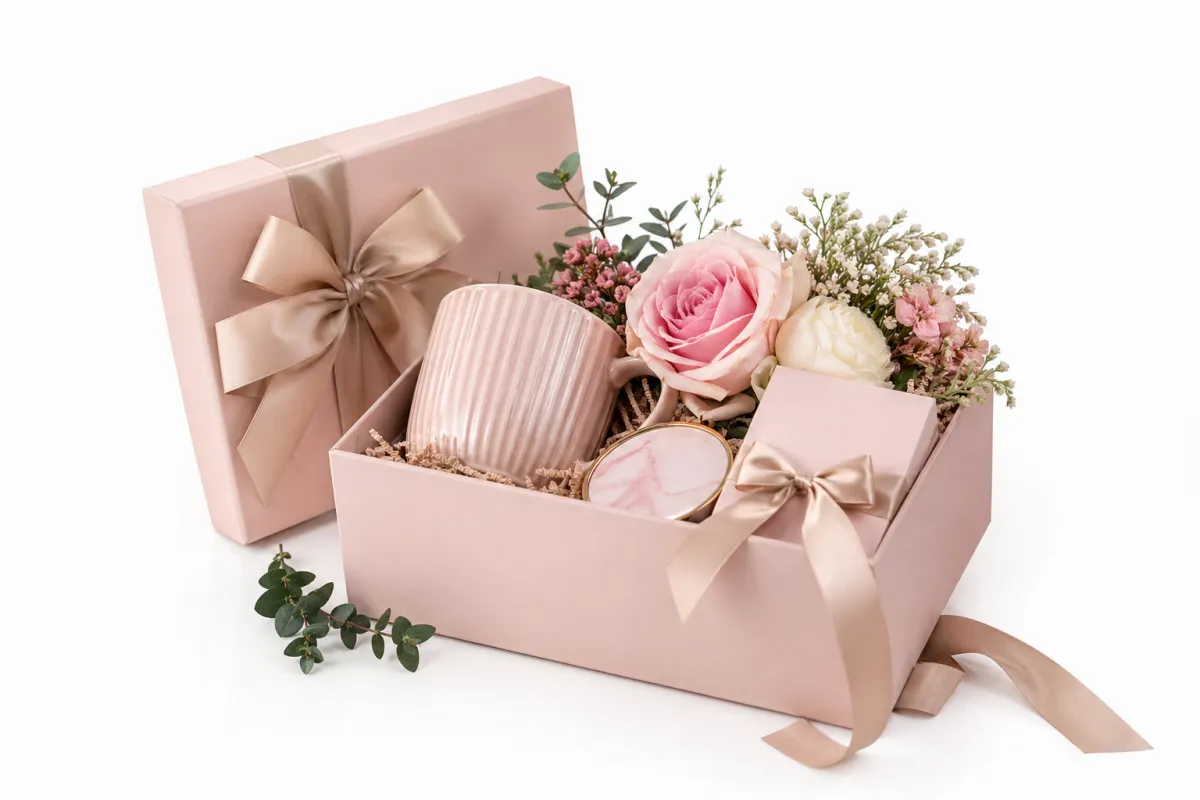
mother's day Custom Gift Boxes matter because they turn a product into a present before the recipient even sees the contents. A standard carton can protect a candle, tea set, or beauty kit, but a custom package creates a moment, and that moment is often what people remember when they talk about the gift later. In seasonal packaging, that difference affects perceived value, repeat purchases, and whether the buyer feels proud to hand the box over or feels like they need to apologize for it.
For brands building Custom Printed Boxes around a Mother's Day launch, the value is both emotional and practical. The box can reinforce the message, support the product structure, and reduce damage in transit, which matters a lot when the set includes glass, wax, or delicate inserts. I have watched a plain product instantly feel more considered once it moved into a well-fitted rigid box with a precise insert, and I have watched the opposite happen too, which is why I am stubborn about fit, finish, and unboxing sequence. That attention is not theatrical; it is what keeps a seasonal package from feeling like a rush job.
That is also why mother's day custom gift boxes work so well across categories. A beauty set, a candle duo, a bakery sampler, or a small apparel bundle can all use the same packaging logic: keep the product secure, keep the presentation clean, and make the reveal feel deliberate. When those three things line up, the packaging stops acting like a container and starts acting like part of the gift.
What Are Mother's Day Custom Gift Boxes?
mother's day custom gift boxes are printed, sized, and finished packages built around a specific product mix, a specific occasion, and a specific opening experience. A standard retail carton says, "This fits." A custom package says, "This was planned for a reason." That difference sounds small until you hold the box, feel the closure line, and notice how the insert keeps every item in its place without making the presentation feel stiff or fussy, whether the structure is a 6 x 6 x 3 inch mailer or a rigid keepsake box with a magnetic flap.
One reason these boxes matter so much is that Mother's Day shoppers often decide quickly and emotionally, sometimes in a 38-second scroll on a phone screen. I have watched a buyer pick a box structure after a short scroll because the lid reveal felt warm, polished, and ready to give. That is not decoration for decoration's sake. That is packaging carrying its share of the work. When the design speaks clearly, the shopper does not have to guess whether the gift feels sincere, and that matters because nobody wants to hand over something that looks like it was assembled in a panic at 11:30 p.m. the night before.
In real use, mother's day custom gift boxes can support almost any category. Beauty brands use them for serum-and-mask sets with 30 ml droppers and 50 ml jars. Candle makers use them for two- and three-piece bundles with molded pulp or paperboard dividers. Food brands use them for tea, chocolate, short-run bakery assortments, and seasonal samplers packed into 350gsm folding cartons or E-flute mailers. Apparel brands use them for scarves, socks, and small accessories. The same package structure can support very different branding goals, but the paperboard grade, insert style, and print finish need to match the contents instead of fighting them. I have seen more than one gorgeous concept fall apart because the board was too flimsy for the product, which is a very expensive way to learn a very basic lesson.
Here is where a lot of projects go sideways: the team thinks of the box as a container only. That leaves half the value on the table. A well-built box creates anticipation. It slows the reveal by 8 or 10 seconds, and those seconds are where the memory settles in. For branded packaging, that pause matters. It is the moment the recipient realizes someone chose the gift with care, not by accident. And yes, I am biased toward that kind of detail, because the brands that sweat the reveal usually sweat the rest of the experience too, down to the 1.5 mm of headspace around the product.
"When the box feels deliberate, the gift feels more expensive even if the product cost did not change." I heard that from a retailer in Austin, and after seeing dozens of seasonal launches, I still think it holds up.
For brands building retail packaging or direct-to-consumer sets, mother's day custom gift boxes also become a keepsake. A rigid lid-and-base box with a magnetic closure may sit on a dresser for months, especially if it is wrapped in 157gsm art paper and laminated with soft-touch film. A printed mailer might get repurposed for storage. That is one reason material choice matters so much. The package is part of the gift, not just the transit shell. And if you have ever tried to throw away a nice rigid box after opening a gift, you know the awkward little pause I mean. Nobody wants to be the person who tosses something beautiful too quickly.
If you want to compare formats before you commit, browse Custom Packaging Products and sort through box styles by structure, finish, and use case. A 10-minute side-by-side review usually saves one 3-day sample round later, sometimes two, and I will happily trade a few minutes of browsing for a week of avoiding back-and-forth emails.
How Mother's Day Custom Gift Boxes Are Made
The production flow for mother's day custom gift boxes should start with a brief, not with artwork. That brief needs to spell out the product dimensions, the weight of each item, the number of pieces in the set, and the emotional tone you want the box to carry. A vague brief forces the packaging team to guess, and guessing gets expensive fast. I have seen a 4 mm insert mismatch turn into a 600-unit rework because the bottle necks were taller than the original spec accounted for, and that kind of mistake is exactly why I get cranky about skipping the boring part up front.
From there, the supplier usually picks or develops a dieline. That dieline defines the folds, glue panels, tuck points, and insert locations. For mother's day custom gift boxes, the dieline choice changes the whole experience. A tuck box is fast and light. A sleeve adds a clean layer of reveal. A rigid two-piece box brings a stronger premium feel. A mailer box tends to work well for e-commerce because it ships flat before assembly and gives the contents a sturdier ride through parcel carriers. I personally like mailers for seasonal kits that need to survive a few rough hands before they reach the recipient, which is, admittedly, most parcel carriers.
Once the structure is set, the artwork team builds the print file around the dieline. This is the stage where package design starts to earn its budget. Bleed areas, safe zones, barcode placement, foil zones, and interior print all need to line up with the structure. If you are using custom printed boxes for a seasonal launch, the inside panel can matter as much as the outside panel. I have watched a skincare brand earn repeat orders because the lid interior carried a short message and a simple mirror graphic that made the reveal feel personal without becoming crowded. That tiny inner detail did more work than the loudest part of the outside artwork.
Proofing comes next, and that is the step too many teams rush. Digital mockups can catch color drift, missing copy, and flipped panels. Physical samples catch scale, fit, and assembly behavior. For mother's day custom gift boxes, I prefer both whenever the timeline allows it. A digital proof shows the layout. A sample shows the hand feel. The difference between 157gsm art paper wrap and 200gsm art paper wrap becomes obvious the moment you lift it, and that tactile difference is hard to judge on a screen. I have argued with enough PDFs to know that a screen will lie to you if you let it.
After approval, manufacturing begins. Depending on the structure, a run may include board cutting, offset printing, lamination, foil stamping, embossing, die-cutting, and gluing. On a Heidelberg Speedmaster, a clean four-color sheet can move quickly if the artwork is disciplined and the coverage is not too heavy. If the order includes inserts, those are often cut and assembled separately, sometimes on a Kluge foil press or a dedicated converting line depending on the finish. Then comes packing and shipping, which sounds like the final step but often creates the last surprise. A box that passes on a screen may still need extra carton protection if it is going onto a pallet for long-distance freight. Packaging always has one more opinion to express right when you think you are done.
"The sample looked perfect, but the first assembled unit told the truth." That came from a supplier manager I worked with in Shenzhen, after we found out a magnetic closure needed another 1.5 mm of lid depth for a clean snap.
Lead time depends on how many of those steps overlap. A straightforward run of mother's day custom gift boxes can move in 12 to 15 business days after proof approval if the structure is standard and the finish list is short. Add custom inserts, foil, embossing, and a rushed freight lane, and the schedule can stretch to 18 to 25 business days. Seasonal demand tightens the window as well. In April, everyone is chasing the same production slots, the same finishing crews, and the same freight schedules. It gets a little chaotic, frankly, and if you have ever tried to book a last-minute finishing run during peak season, you know the feeling of staring at an email inbox like it personally offended you.
When you are sorting through Custom Packaging Products, try to think in production steps instead of just pretty concepts. The design that looks best on a mood board is not always the one that is fastest to make or easiest to ship, especially if the quote needs a 24-hour turnaround and the sample window is only 72 hours. In packaging, the cleanest concept is often the one that survives proofing, assembly, and freight without drama. A pretty box that turns into a headache at the factory is not pretty for long.
For brands comparing structure against transit performance, I also recommend looking at ISTA packaging test standards. A box that looks elegant but fails an ISTA 3A-style vibration or drop check is not a win, especially if the set includes glass, wax, or fragile decorative pieces. That kind of mismatch gets expensive in returns and costly in brand trust. I would rather lose ten minutes in the planning phase than spend three weeks apologizing to customers later.
What Affects the Cost of Mother's Day Custom Gift Boxes?
The cost of mother's day custom gift boxes is shaped by six main variables: structure, material thickness, print coverage, finishing, insert design, and quantity. Shipping distance adds a seventh layer, but the first six usually decide whether your packaging lands in the low cents, the high cents, or the premium-dollar range. In a supplier meeting last spring, I watched a client cut $0.14 per unit simply by moving from a full foil wrap to metallic ink with a spot varnish. Across 8,000 units, that change mattered a lot more than the creative team expected.
Material choice drives a lot of the budget. A 350gsm C1S artboard mailer with simple four-color print usually costs less than a rigid 2 mm greyboard box wrapped in 157gsm art paper with foil stamping and an EVA insert. If you are building branded packaging for a seasonal promotion, the question is not "Which option is best?" The better question is "Which option earns its cost back in perception, protection, or repeat use?" That is the kind of question that keeps a project grounded.
Quantity matters too. A smaller run of 250 units carries more setup cost per box because the die, plates, and finishing setup are spread across fewer pieces. A run of 5,000 units usually cuts the unit price sharply, but only if you can store and distribute the inventory. That trade-off is why product packaging planning should happen before you place the order, not after. If you have a forecast of 600 direct orders and 400 retail placements, the math looks very different than if you need 2,000 boxes for one launch weekend. And yes, I have watched teams discover that distinction on a Tuesday afternoon, which is never a fun way to spend a Tuesday.
| Structure | Typical Build | Approx. Unit Cost | Best Use |
|---|---|---|---|
| Printed mailer box | E-flute corrugated, 4-color print | $0.78-$1.25 at 1,000 units | E-commerce gifts, light sets, shipping-first programs |
| Tuck box | 350gsm SBS or C1S board | $0.18-$0.42 at 5,000 units | Small cosmetics, tea, lightweight accessories |
| Rigid two-piece box | 2 mm greyboard, wrapped sheet, optional foil | $1.80-$3.50 at 1,000 units | Premium gifts, keepsake packaging, luxury retail packaging |
| Corrugated gift box with insert | Single-wall board, custom insert, matte finish | $0.95-$1.70 at 2,000 units | Fragile bundles, mixed SKU sets, direct mail gifts |
Those numbers are not universal, because board grade, ink coverage, and freight lanes shift the final quote. Still, they help frame the decision. If your set contains a 300 ml candle and a ceramic lid, a rigid box may be worth the extra $1.20 because it reduces damage risk and feels more like a gift. If your set contains tissue, a note card, and two small beauty items, a well-designed mailer might do the job at a fraction of the price. I am a big fan of paying for the box only where the customer actually notices the difference.
Setup fees matter too, especially on smaller runs. A die line or cutting tool may add $85 to $250. Foil plates can add another $60 to $120. Sample production often costs $35 to $90, depending on the structure. These are the costs that disappear when people compare only the unit price. They should not disappear. In my experience, the cheapest quote is often the one with the most hidden assumptions, and hidden assumptions are where budgets go to quietly die.
If sustainability is part of the brief, ask for FSC-certified board and paper wraps. That does not automatically make the box "green" in every sense, but it does give you a traceable sourcing standard and a cleaner story for package branding. You can review certification guidance at FSC. For certain brands, that one decision carries more weight than a decorative finish because it aligns with the customer's values and the retailer's expectations. I have seen buyers choose the FSC mark over a metallic flourish more than once.
There is also a budget strategy that works better than people expect: spend on one premium touch and simplify the rest. A soft-touch coating plus precise sizing can feel more luxurious than a box with foil, embossing, spot UV, ribbons, and multiple inserts all competing for attention. I have seen mother's day custom gift boxes look richer at $1.10 than competing boxes at $2.40 simply because the structure was disciplined and the print choices were tight. That is not magic. That is editing.
Step-by-Step: Planning Mother's Day Custom Gift Boxes
The planning process for mother's day custom gift boxes should start with the recipient, not with the artwork. Decide who is receiving the gift and what feeling you want the box to create in the first 15 seconds. Warm and sentimental? Minimal and modern? Bright and cheerful? If that decision comes late, the packaging drifts toward whatever looks attractive in isolation, which is how seasonal packaging starts looking generic. I have seen plenty of "nice" boxes that forgot to feel like they were made for a real person.
Next, define the product mix. Count every item in the set and write down exact dimensions. A body lotion at 42 mm wide behaves differently from a candle at 68 mm wide, even if they are the same height. If you are building mother's day custom gift boxes for three products, measure the tallest item, the widest item, and the most fragile item separately. The insert should be designed around those three numbers, not around a guess or a showroom sample. Guessing is how you end up with a beautiful box that is just a little bit wrong, which is frankly the most annoying kind of wrong.
After the measurements, choose structure and insert style before the graphic concepts. That order matters. A rigid box with a foam insert creates a different unboxing experience than a corrugated mailer with paperboard dividers. If the structure changes later, the artwork often needs to move with it. One client of mine reordered the same mother's day custom gift boxes twice because the first concept looked elegant but could not hold a 250 ml bottle without tipping. The fix was simple once the structure came first, but getting there required a modest amount of teeth-grinding.
- Lock the dimensions: use the product's real measurements, plus 2 to 4 mm of tolerance for fit and assembly.
- Choose the structure: select tuck, mailer, sleeve, or rigid based on weight, shipping, and shelf presence.
- Map the insert: decide whether you need paperboard, molded pulp, EVA, or no insert at all.
- Set the visual system: choose the palette, fonts, message copy, inside print, and closure details.
- Approve the sample: test assembly, closure, print quality, and shipping strength before the full run.
After that, move into the creative layer. I like to work in this order: color palette, typography, messaging, outer print, inner print, tissue, ribbon, and finally any specialty finish. That sequence keeps the design from becoming crowded. For mother's day custom gift boxes, one strong message often lands better than five decorative ideas fighting for space. A simple line like "Made for the person who made everything" can out-perform a long poem because it fits the moment without asking the reader to work for it. A good line should feel like a note, not a lecture.
Sampling is the checkpoint that saves money later. A digital mockup catches layout errors. A physical sample catches the things a mockup cannot, such as lid friction, insert depth, and how the box behaves after one closure cycle and one reopen cycle. If transit matters, I recommend testing at least one packed sample through a basic 1-meter drop sequence before approval. Even a quick pass can reveal whether the box needs stronger corners or a heavier liner. There is nothing glamorous about a box corner failing at the wrong moment, but there is a lot of value in catching it before a customer does.
For brands moving from concept to quote, the fastest path is usually to gather three things before asking for pricing: product dimensions, quantity, and finish preferences. If you already know those, a supplier can build a much cleaner estimate. You can also check Custom Packaging Products to match your format idea to a production-ready structure before requesting samples. That little bit of homework tends to save everyone from the eternal "can you quote this again with one more version?" email chain.
That planning sequence might sound cautious, but it is what separates polished mother's day custom gift boxes from boxes that only look good in a presentation deck. I have seen too many seasonal projects lose margin because the team approved graphics first and structure later on a 2,000-unit run. If you reverse that order, the box usually costs less, ships better, and feels more intentional in the hand. Also, the factory team will like you more, which is not nothing.
Common Mistakes With Mother's Day Custom Gift Boxes
The first mistake is size. A box that is too small crushes product edges, while a box that is too large makes the contents look like they are floating. I remember a 1,500-unit candle project where the team chose an oversized rigid box for a single jar. The jar arrived intact, but the presentation looked sparse and the shipping carton added 18 percent to the freight cube. Better fit would have solved both problems, and would have spared everyone a painfully long meeting about "premium whitespace."
The second mistake is late ordering. Seasonal packaging always tightens the schedule because every brand wants the same print and assembly capacity. If you want mother's day custom gift boxes with foil, inserts, and proof revisions, you should start several weeks in advance. Not because the work is dramatic, but because one late artwork round can push a project past its production slot. I have seen brands lose their best freight rate over a 48-hour proof delay. Two days sounds small right up until it turns into real money.
The third mistake is overdecorating. It is easy to assume that more finishes mean more value, yet crowded packaging can feel less heartfelt. Too many metallic accents, too many script fonts, and too many patterns can make the box read as busy instead of personal. With mother's day custom gift boxes, the design should leave room for emotion. A restrained palette, one meaningful message, and one tactile detail often do more than a stack of decorative effects. Honestly, I think people sometimes add glitter because they are nervous, not because the design needs it.
The fourth mistake is skipping durability checks. If the gift contains glass, wax, powder, or dense items, the box should be tested in realistic conditions. I do not mean lab theater. I mean a packed box moved, stacked, and opened the way a customer will actually use it, including a 1-meter corner drop and an ISTA 3A-style vibration pass. If you need more structure guidance, the system standards from ISTA help frame what a real transit test should consider, especially for shipping-heavy programs. It is a lot cheaper to crush a sample in the warehouse than to crush a launch in public.
The fifth mistake is ignoring the inside. So much attention goes to the outer artwork that the interior gets forgotten, yet the inside often defines the memory. When a recipient lifts tissue and sees a 70 mm by 40 mm message panel, a color block, or a neat insert layout, the box feels complete. Without that layer, even good mother's day custom gift boxes can land flat. The outside attracts; the inside convinces. I am very opinionated about this because the interior is where the brand either sounds thoughtful or sounds like it ran out of steam halfway through.
Another error I see is assuming all suppliers quote the same way. They do not. Some quote the box only. Some quote box plus assembly. Some quote shipping to the port, others to your door. If you do not ask for a line-item estimate with box, insert, printing, sampling, and freight separated out, comparing two bids can become meaningless. Ask what is included, whether the sample is part of the fee, and how many revision rounds are built in. That conversation saves time and keeps the project honest. It also prevents that delightful moment where a quote looks cheap until the "extras" show up like uninvited relatives.
Expert Tips for Better Mother's Day Custom Gift Boxes
My strongest advice is to choose one premium touch and make it count. Soft-touch coating, foil, embossing, debossing, or spot varnish can each lift mother's day custom gift boxes if used with restraint. The mistake is stacking them all at once. A single tactile finish on a clean structure usually feels more premium than a box loaded with every effect the supplier can offer, especially on a 350gsm wrap with a 10 mm foil logo. I know it's tempting to ask for everything, but packaging, like a good outfit, usually looks better after one accessory gets left on the table.
Think carefully about the unboxing sequence. The strongest boxes unfold in stages: outer look, opening moment, message reveal, product reveal, and keepsake moment. I have seen a skincare brand add a 20-word note under the lid, then place the product on top of a printed card tray. The result felt thoughtful because the recipient met the message before the product. That is not accidental. That is intentional package branding built from a real sequence of actions. It is also a nice reminder that packaging can have pacing, which is a fun nerdy fact until you realize how much it matters.
Match the structure to the product's weight and fragility. A 50 g lip balm does not need the same board as a ceramic diffuser. A 2 mm rigid shell may be ideal for a premium set, but a corrugated mailer with a smart insert may perform just as well for a shipping-first bundle. mother's day custom gift boxes should feel elegant, yes, but they still need to hold up in transit. Beauty without function becomes expensive trouble very quickly, and I have seen enough dented lids to have strong feelings about that.
Personalization works best when the base structure stays stable and the variable details are easy to change. Names, short notes, color variants, and product selection changes are all useful. Variable artwork should be the exception, not the rule, unless your run is small and your timeline generous, such as a 500-unit program with 12 recipient names. That is one reason custom printed boxes can scale nicely for seasonal campaigns: the base dieline stays the same, and the emotional detail changes only where it matters. It keeps production sane, which is a gift to everyone involved, especially the person who has to pack the boxes on the line.
I also like to use one manufacturing decision to support both cost and presentation. For example, on an 8,000-unit run, switching from full wrap foil to a single foil line on the lid can free enough budget to upgrade the insert stock from 300gsm to 400gsm. That kind of trade is invisible to the shopper, but it improves the box where the hand actually touches it. In practical terms, it is smarter than spending money where nobody notices. The factory floor has taught me that every time.
For sustainability-focused brands, ask whether the board is FSC-certified and whether the finish choices affect recyclability in your market. The answer is not always simple, because coatings and adhesives behave differently by region. Still, a traceable paper source and a reduced-material structure usually help, whether you are specifying FSC 100% board or FSC Mix wrap on a 2 mm greyboard shell. If your brand story depends on responsible sourcing, that belongs in the packaging brief from day one, not as a last-minute add-on. Last-minute sustainability is usually just stress with a nicer label.
One more detail from the factory floor: always verify the final assembly sequence with the packout team. I once watched a neat-looking box lose half its efficiency because the insert had to be folded in three steps instead of one. That added 9 seconds per unit. Across 2,000 units, that is real labor. Packaging is design, yes, but it is also time, hands, and machine rhythm. If a box is beautiful but annoying to assemble, somebody on the line will absolutely let you know, usually with a sigh that says more than words.
And if you want a grounded starting point, compare structures and finishes in Custom Packaging Products before you finalize the brief, ideally before a Friday 4 p.m. approval window. That simple step can prevent a lot of expensive back-and-forth later.
Next Steps for Mother's Day Custom Gift Boxes
The cleanest path forward is to treat mother's day custom gift boxes like a short project with clear checkpoints. First, confirm the product dimensions and weight. Second, decide whether the box is meant to be a one-time seasonal piece or a reusable brand format you can adapt later. Third, set a target budget that includes box, insert, sample, and freight. If you do those three things before asking for quotes, the conversation gets sharper immediately. I honestly wish more teams would do this before they fall in love with a sketch that cannot survive contact with reality.
Next, gather the assets that suppliers need to price accurately: logo files, copy, Pantone references if you have them, product photos if the concept is still being shaped, and shipping details. I have seen quotes vary wildly when a buyer sends only "need gift box" in a message and nothing else. With mother's day custom gift boxes, precision shortens the process. A supplier can price a 200-unit printed mailer in minutes when the box size, finish, and destination are all known. That is the sort of clarity that makes the whole project feel less like a scavenger hunt.
From there, use a simple timeline. Day 1: specs and brief. Day 2 to 4: dieline and concept review. Day 5 to 8: proof and revisions. Day 9 to 18: production. Day 19 to 23: packing and shipping, depending on lane and quantity. That schedule is not fixed, but it is a realistic starting point for many seasonal programs. If you need custom inserts or premium finishes, add extra review time before the print run begins. Nobody ever says, "I wish we had less time for the sample," but people do say the opposite, usually after the deadline has already started barking at them.
Here is the part I would not skip: request one sample if the order is important, even if the sample fee adds $40 or $75. That small cost often prevents a much larger mistake. The sample shows you whether the closure feels right, whether the insert clears the product, and whether the overall look matches the emotional tone you wanted. For mother's day custom gift boxes, that single step is often the difference between a good launch and a stressful one. I would rather pay for certainty than pay for regret, which is not really a difficult choice once you have lived through enough packaging launches.
If your team needs a starting point for box formats, use Custom Packaging Products to narrow the field, then ask for a quote with exact dimensions, quantity, and finish notes. That is the fastest way to move from idea to production without losing margin or time.
In the end, the best mother's day custom gift boxes balance emotion, structure, and timing. They feel personal because the copy and finishes are thoughtful, whether the run is 500 units or 5,000 units. They work because the insert and board are chosen for the product. They arrive on time because the brief was specific from the start, which usually means 12 to 15 business days from proof approval instead of a rushed scramble. The most practical next move is simple: lock the size, choose one finish that carries the mood, and request a physical sample before artwork is frozen. That keeps the box honest, and it gives the factory something real to build from.
How far in advance should I order mother's day custom gift boxes?
Plan several weeks ahead, ideally with 12 to 25 business days for proofing, production, and shipping depending on finish complexity. If you need inserts, foil, embossing, or multiple revision rounds, build in at least 1 extra week so the schedule does not collapse under seasonal demand. I have seen teams try to shave off that cushion, and it almost always becomes a story they tell with a grim smile later.
What do mother's day custom gift boxes usually cost?
Price depends on structure, board grade, print coverage, finishing, quantity, and freight. A simple printed mailer can land around $0.78 to $1.25 per unit at 1,000 pieces, while a rigid premium box can move into the $1.80 to $3.50 range at smaller quantities. The fastest way to estimate accurately is to lock dimensions and quantity before requesting quotes.
What materials work best for mother's day custom gift boxes?
Folding carton, corrugated board, and rigid board are the most common choices. Lighter gifts usually work well with 300gsm to 350gsm board, while fragile or premium sets often need 2 mm greyboard or single-wall corrugated. The best material is the one that matches the product weight and the unboxing experience you want, not just the lowest price.
Can I personalize mother's day custom gift boxes for different recipients?
Yes. You can vary names, short messages, insert layouts, or colorways within one packaging program, even across 12 recipient names or more if the base dieline stays fixed. Personalization works best when the base structure stays consistent and only a few elements change, because that keeps production simpler and lead times more predictable. Ask your supplier which custom details can be changed without triggering a full rework.
How do I make mother's day custom gift boxes feel premium on a budget?
Choose one strong tactile finish, such as soft-touch coating or a single foil detail, then keep the graphics clean. Precise sizing, a well-cut insert, and a thoughtful message inside the lid often do more than a long list of decorative effects. A simple box that fits well almost always feels more premium than an overdesigned box that feels busy, especially on 350gsm board or 2 mm greyboard.

