Buyer Fit Snapshot
| Best fit | Offset Printed Kraft Boxes Wholesale for Sustainable Brands projects where brand print, material claims, artwork control, MOQ, and repeat-order consistency need to be specified before quoting. |
|---|---|
| Quote inputs | Share finished size, material target, print colors, finish, packing count, annual reorder estimate, ship-to region, and any compliance wording. |
| Proofing check | Approve dieline scale, logo placement, barcode or warning zones, color tolerance, closure strength, and carton packing before bulk production. |
| Main risk | Vague material claims, crowded artwork, missing packing details, or unclear freight terms can make a low unit price expensive after revisions. |
Fast answer: Offset Printed Kraft Boxes Wholesale for Sustainable Brands should be specified like a repeatable production item. The safest quote records material, print method, finish, artwork proof, packing count, and reorder notes in one written spec.
Production checks before approval
Compare the actual filled-product size with the drawing, then confirm tolerance on folds, seals, hang holes, label areas, and retail display edges. Reserve space for logos, QR codes, warning copy, and material claims before decorative graphics fill the panel.
Quote comparison points
Review material grade, print process, finish, sampling route, tooling charges, carton quantity, and freight assumptions side by side. A quote is only useful when the supplier can repeat the same color, closure quality, and packing count on the next order.
Many brands still assume plain kraft is the safer budget choice. In practice, offset printed Kraft Boxes Wholesale can outperform plain stock on shelf presence, perceived value, and the number of jobs the package has to do. One carton can carry the product story, the compliance copy, the visual hierarchy, and the brand mark without relying on a sticker, a belly band, or a second insert that has to be assembled separately.
The real buying question is not the lowest box price. It is whether the package helps the product sell, ship, and arrive in one piece. A well-executed kraft box with offset printing can do all three. It can look restrained without looking unfinished, which is a harder balance to achieve than many packaging briefs suggest.
Offset printing also suits wholesale buying patterns. Once a design is approved, the press can hold detail and color more consistently across larger runs than short-run methods. That predictability matters for private label programs, retail replenishment, and subscription brands that cannot afford visual drift from one batch to the next.
Why offset printed kraft boxes wholesale can outperform plain stock
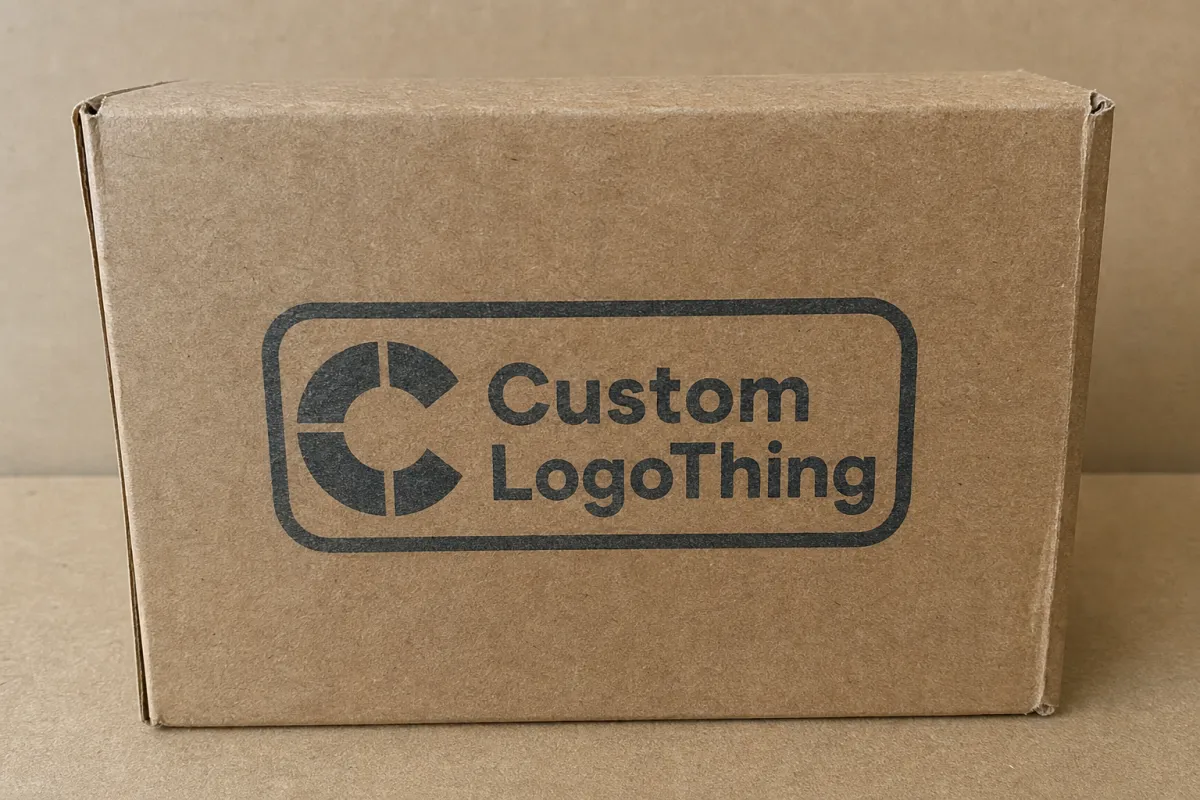
Plain kraft has a straightforward, honest character. That can be an advantage. It can also leave too much unsaid. A box has only a few seconds to communicate category, price tier, product type, and brand tone. Offset printed Kraft Boxes Wholesale compress that message into the carton itself, which reduces friction at the point of purchase and inside the fulfillment center.
There is a practical operating difference, too. A plain stock box often needs extra components to finish the job: a label, a hang tag, a printed sleeve, or an insert card. Each additional component creates more touchpoints, more SKUs, and more room for mistakes. A single printed kraft carton simplifies pack-out while still giving buyers the information they need.
Offset printing is especially useful where typography, line work, and controlled color matter. Fine type can remain legible, logos can hold shape, and restrained graphics can still feel intentional on natural board. The result is not the same as printing on a bright white substrate, and it should not be expected to be. Kraft has texture, absorbency, and a warmer base tone. Good artwork accounts for that rather than fighting it.
The sustainability conversation is more credible when it stays specific. Kraft board is often chosen for recycled content, fiber efficiency, and a low-noise visual language. Offset printing supports that strategy because it lets brands keep the package system tight: one carton, fewer add-ons, and less secondary material. That is not a marketing slogan. It is a materials decision.
For a buyer evaluating total cost, the box should be judged on cost per impression, not unit price alone. A plain box may look cheaper on a spreadsheet, but if it underperforms in retail or needs extra decoration to feel complete, the economics shift. A printed kraft carton can become the better value once launch performance and reorders are in play.
| Option | Typical MOQ | Approx. unit cost | Best use case | Commercial note |
|---|---|---|---|---|
| Plain kraft stock box | 500-2,000 units | $0.18-$0.55 | Internal shipping, low-visibility packing, early testing | Lowest entry cost, but often needs extra branding pieces |
| Offset printed kraft boxes wholesale | 1,000-10,000+ units | $0.32-$1.10 | Retail display, DTC launches, subscriptions, private label | Strong balance of print quality, brand impact, and repeatability |
| Digital printed kraft box | 100-1,500 units | $0.60-$1.80 | Samples, short runs, rapid tests, small product drops | Useful for speed, but press economics can rise quickly at volume |
The pattern is consistent across categories. Digital printing can make sense for early testing or limited drops. Once demand is clearer, offset Printed Kraft Boxes wholesale usually offers better unit economics and a more stable visual result. The question is not whether offset is always cheaper. It is whether the program has reached the volume where offset starts to reward planning.
For retail brands, the box is a sales tool as much as a container. Candles, wellness kits, supplements, apparel accessories, gifts, and personal care products all benefit from packaging that reads cleanly, packs efficiently, and signals competence before the customer opens it.
Offset printed kraft box styles, finishes, and uses
There is no single correct kraft box structure. The right choice depends on how the product moves through the channel. A lightweight cosmetic carton has different needs from a mailer that survives parcel handling or a rigid presentation box that sits on a boutique shelf. Suppliers who ask about use case before quoting usually produce better results.
Mailer boxes are common for e-commerce because they ship flat, assemble quickly, and create a strong unboxing moment. Tuck-end cartons suit compact retail products that need efficient storage and straightforward assembly. Rigid presentation boxes feel more premium and usually support higher perceived value, although they require more board and higher labor. Sleeve-and-tray sets add a tactile layer without making the package overly complicated. For many lightweight products, folding cartons remain the most efficient structure.
Style matters because structure affects shipping cost, storage, and brand positioning. A cosmetic line may use a rigid box for gift sets and a folding carton for single units. An apparel brand may prefer a sturdy mailer for online orders because it combines pack-out speed with a finished opening experience. Food and snack brands often choose folding cartons or product mailers depending on barrier requirements and retail rules.
Finishes change how kraft reads. A matte varnish keeps the box quiet and natural. Gloss increases contrast and can make graphics feel more polished. Aqueous coating is often selected for print protection with a lighter visual footprint. Soft-touch lamination creates a velvety feel, though it does not always align with a fully recyclable claim. Spot UV can highlight a logo, pattern, or product name without overwhelming the base stock. Embossing and foil can work as well, but they should stay controlled if the goal is a calm kraft aesthetic.
A useful rule applies here: the more the design depends on the natural kraft surface, the less ink coverage and finish weight you usually need. Many brands use limited palettes, low-VOC or soy-based inks where appropriate, and recyclable coatings that match the sustainability story. That keeps the package aligned with the brand promise. It also avoids overstating what any one finish can do for recycling outcomes, which still depend on the coating, the board, and the local recovery stream.
Offset printed Kraft Boxes Wholesale also works well for products that need a sturdy but approachable feel. Candles, supplements, soaps, gifts, promotional kits, tea, coffee, and a wide range of lifestyle products fit that description. The package has to say trustworthy before it says luxurious.
"The best kraft box is the one that carries the message cleanly, protects the product, and fits the channel without adding unnecessary cost or assembly time."
For buyers building a broader packaging system, it helps to review Custom Packaging Products alongside the box style. Sometimes the correct answer is a single carton. Sometimes it is a carton plus insert, or a shipper plus retail sleeve, or a seasonal variant for a product family.
Key specifications to confirm before you request a quote
Most quoting delays come from incomplete information, not from the printer itself. A supplier can price a box quickly when the inputs are clear. Without those inputs, the first estimate is often only a rough guess, and guesses create revisions. That slows the project down and weakens comparison across vendors.
The core specifications are straightforward: box dimensions, board caliper, print side, color count, finish, insert requirements, and whether the boxes must ship flat or pre-assembled. If any of those items are undecided, the quote will be less reliable. For wholesale buyers, a reliable number matters more than a low starting number that changes later.
Print coverage is one of the most important variables on kraft. Heavy solids, especially dark colors, can read differently on brown stock than they do on a white proof. White ink also needs special attention because it may appear more translucent on natural board. Buyers should ask for a proof that reflects the actual substrate, not a generic white-paper simulation. That one step can prevent expensive disappointment before production starts.
Structural performance matters just as much as appearance. The carton has to hold product weight, survive transit compression, and fold accurately during packing. Ask about score quality, glue tab width, fold memory, and crush resistance. If the box will move through e-commerce channels, ask how it performs under parcel handling and whether the corners or lid edges are likely to dent.
Compliance needs vary by category, but they should be raised early. Food contact rules are different from cosmetic or apparel packaging. Some products need grease resistance, odor barriers, or an inner liner. Some retail channels ask for FSC-certified material or recycled-content documentation. If a buyer waits until artwork is finished to raise compliance questions, the project often becomes more expensive and less elegant.
- Dimensions: internal length, width, and depth in millimeters or inches
- Board spec: kraft board weight, fluting if applicable, and caliper
- Print setup: CMYK, spot colors, white ink, or limited-color layout
- Finish: aqueous coating, varnish, lamination, embossing, foil, or none
- Function: shipping box, retail carton, presentation box, or subscription mailer
- Compliance: FSC, recycled content, food contact, or retailer rules
- Artwork files: dieline, bleed, safe zone, linked images, and font handling
Industry bodies such as the International Safe Transit Association and the Forest Stewardship Council are useful references when buyers need to discuss transport testing or responsible sourcing. For broader packaging context, the Institute of Packaging Professionals is a practical source for current terminology and packaging practice.
If a supplier gives you a spec sheet, use it. Better yet, create your own comparison sheet. Include the exact dimensions, material, print count, finish, packaging format, and required documentation. That one move makes supplier comparison much cleaner, especially when you are requesting multiple quotes for offset printed kraft boxes wholesale.
Cost, pricing, and MOQ for offset printed kraft boxes wholesale
Offset printing has setup costs. That is the central economic fact. Plates, die cutting, proofing, and machine preparation all need to be covered before the first finished carton moves off the line. Because of that, the unit price usually falls as quantity rises. This is why offset printed kraft boxes wholesale becomes most attractive once the brand has enough volume to absorb setup and still land at a competitive per-unit cost.
What drives the quote? Size is obvious, but not the only factor. Board thickness affects material cost and performance. More print colors increase setup and press time. Coatings and lamination add labor and material. Inserts, windows, foil, embossing, and specialty folds can raise the price more than many first-time buyers expect. Even the packaging configuration matters. Flat-packed cartons are usually more efficient to ship and store than pre-assembled structures.
MOQ behavior is usually more flexible than buyers assume, but the price curve still tells the truth. A factory may accept a smaller order, yet the best per-unit price will appear at the volume where setup cost is spread across a larger run. That is why a test run, a launch order, and a replenishment order often price very differently. The factory is not being arbitrary. It is reflecting how offset production works.
A practical comparison method is simple: ask for tiered pricing at three volumes. Use a test quantity, a target launch quantity, and a full replenishment quantity. A quote that shows only one volume hides the cost curve. Three tiers reveal whether the supplier is competitive at the quantity you actually plan to buy.
| Volume tier | Why it matters | What to watch | Typical buyer signal |
|---|---|---|---|
| Test run | Checks fit, print look, and pack-out behavior | Higher unit cost, smaller setup dilution | Best for new SKUs or color-sensitive artwork |
| Launch quantity | Supports first sales and early reorders | Balance between risk and unit economics | Common for DTC launches and retail pilots |
| Replenishment quantity | Reflects steady demand and repeat purchase | Lowest cost per unit if forecasts are accurate | Best for established products and seasonal winners |
Rough market ranges help buyers plan, though every quote depends on exact specs. For a relatively simple kraft carton at mid-volume, pricing may fall around $0.32-$0.70 per unit. Add heavier board, more color coverage, coating, or inserts, and the number can move closer to $0.75-$1.10 or more. Larger runs with simpler finishes can sit lower. Smaller runs can sit higher. The honest answer is that pricing depends on size, print complexity, material grade, and the line item mix.
Do not compare box cost in isolation. Compare landed cost. Freight, customs, warehousing, damage allowance, and rework all affect the real budget. A supplier with a slightly higher unit price but better packing efficiency and fewer defects can be cheaper overall. That is especially true in wholesale packaging, where one weak shipment can erase the savings from a low initial quote.
If you are negotiating a broader supply program, the commercial structure matters as well. Ask whether the supplier can support Wholesale Programs with repeat order pricing, reorder file retention, and production continuity. The right partner should be able to explain not only the first order, but the next three.
Process and timeline: from file check to delivery
Production usually follows a predictable path: inquiry, spec confirmation, artwork review, proofing, sample approval if needed, plate and die preparation, printing, finishing, inspection, and shipment. The order only feels slow when one of those steps is unclear. Once the workflow is mapped, the timeline becomes much easier to manage.
Artwork review is where many issues surface. Files are checked for bleed, dieline alignment, image resolution, color mode, font handling, and hidden layer problems. If the art is not built correctly for the substrate, the supplier may need to pause and request revisions. That pause is rarely dramatic, but it can add days. On a tight launch schedule, days matter.
Proof approval is another critical gate. A delayed sign-off can cost more time than the printing stage itself. Buyers often underestimate this because the proof sits in an inbox waiting for someone in marketing, operations, or procurement to approve it. The plant cannot move forward until the proof is signed off, so the clock stops there.
A realistic timing framework for offset printed kraft boxes wholesale often looks like this:
- Artwork and dieline check: 1-3 business days
- Digital proof or flat mockup: 1-3 business days
- Physical sample, if required: 5-10 business days
- Production run: often 10-18 business days after approval
- Finishing and inspection: included in the production window, but can add time for complex jobs
- Transit time: separate from production and should be planned independently
Those numbers are typical, not universal. A simple run can move faster. A seasonal order with heavy finishing can take longer. Peak demand periods can extend lead times, and shipping mode changes the entire calendar. A buyer planning a retail launch should build in margin rather than assuming every part of the schedule will cooperate.
For product launches, the safest planning method is to work backward from the store date or the first customer ship date. Add room for proof revisions, sample review, packaging inspection, and freight delays. If the box is part of a promotional release or a retailer reset, the packaging should arrive before the rest of the operation starts to feel pressure.
Good suppliers reduce friction at each step. They answer artwork questions quickly. They flag structural risks early. They know when to recommend a sample and when a proof is enough. For buyers, that kind of coordination is often more valuable than trimming a small amount from the quote.
Why choose us for offset printed kraft boxes wholesale
Custom Logo Things is built for buyers who need packaging that looks deliberate, ships well, and holds up under real production conditions. The value is not just in printing a logo on kraft board. It is in matching construction, artwork, and order quantity to the way the product actually sells.
That starts with consistent color management. Offset printing needs control, especially on kraft where the substrate itself affects the final appearance. A strong supplier gives clear feedback before the press starts running. That reduces rework. It also reduces the frustration that comes from discovering too late that a rich color build reads differently on brown board than it does on a white proof.
Another advantage is structural guidance. A box that looks good in a design file may not be the best choice for packing speed or transit durability. Good packaging advice prevents weak folds, awkward assembly, and oversized cartons that inflate shipping cost. That is the kind of detail that protects margin in a wholesale program.
There is also value in responsive prepress support. If the dieline needs adjustment, if a logo sits too close to a fold, or if a coating choice might alter recyclability claims, the buyer should hear that early. Fast feedback keeps the project moving and makes the eventual sample more likely to pass without extra rounds.
- Clear proofing: fewer surprises between screen and substrate
- Practical structure advice: box style matched to product weight and channel
- Transparent quoting: line items that explain what is included and what is extra
- Sampling support: physical or digital proof paths before the full run
- Channel awareness: retail, subscription, and e-commerce needs treated differently
Speed matters, but clarity matters more. A supplier that responds quickly and precisely tends to save more money over the life of the program than a low-cost source that creates constant ambiguity. Buyers do not need packaging theater. They need dependable execution.
That is why operational transparency is part of the value proposition. If you want to understand what the factory can support across box styles, print methods, and finishing options, review our Manufacturing Capabilities. It is easier to scope a strong packaging program when the production limits and opportunities are clear from the start.
Next steps to order offset printed kraft boxes wholesale
The fastest way to move from idea to quote is to lock the fundamentals first. Decide the product dimensions. Choose the box style. Confirm whether you need a coating, insert, or special finish. Gather print-ready artwork or at least a clean dieline reference. Once those pieces are set, the supplier can give you a quote that is actually comparable across vendors.
Use the same spec set with every supplier. Same dimensions. Same print count. Same finish. Same quantity tiers. If one vendor is quoting a different board weight or a different closure style, you are not comparing like for like. That mistake is common, and it makes a low quote look better than it really is.
Requesting one physical sample or a solid digital proof is a smart move, especially if the design depends on kraft texture, white ink, fine typography, or exact brand color control. A sample is not a formality. It is a buying tool. It shows how the structure assembles, how the colors hold, and whether the packaging feels right in the hand.
Plan the milestones before the order is placed. Approvals, production start, shipping method, and receiving date should all be visible on the calendar. That removes ambiguity for internal teams and prevents the common problem of assuming the boxes are moving sooner than they really are.
For buyers comparing options, the smartest decision is usually not the cheapest box. It is the box with the best landed cost, the cleanest proof, and the most realistic lead time. That is why offset printed kraft boxes wholesale remains a strong choice for brands that need packaging to protect the product and carry part of the sales job. A carton that looks good, packs well, and arrives on time usually outperforms a cheaper box that solves only one of those three problems.
FAQ
What is the typical MOQ for offset printed kraft boxes wholesale?
MOQ depends on box style, size, and printing setup, but wholesale offset runs often start higher than digital runs because plates, dies, and press setup need to be spread across the order. Smaller launch quantities may be possible for simple constructions or stock sizes, yet the best unit pricing usually appears at larger quantities. Ask for tiered pricing at several volumes so you can see where the price curve becomes meaningful.
Can offset printed kraft boxes wholesale use recycled kraft board?
Yes, many buyers specify recycled-content kraft board as long as the required strength, print result, and finish can still be achieved. The supplier should confirm board weight, stiffness, and coating compatibility before production begins. If sustainability claims matter on pack, request documentation such as recycled-content details or FSC options so the statement is supportable.
How long does production take after artwork approval?
The timeline depends on order size, finishing, and whether a pre-production sample is required, but production generally starts only after final proof approval. Complex finishes and busy seasonal periods can extend lead time, so buyers should build in extra margin before launch. Shipping time is separate from production time and should be planned on its own schedule.
What file format works best for offset printing on kraft boxes?
Print-ready PDF or Adobe Illustrator files are commonly preferred, with dielines supplied on a separate layer or clearly marked layer structure. Text should be outlined and images should be high resolution so the kraft surface does not reveal file weakness. Spot colors, CMYK builds, bleeds, and safe zones should be checked before submission to reduce proof revisions.
Are offset printed kraft boxes wholesale suitable for food products?
Yes, but food packaging needs the right construction, coatings, and compliance review for the specific product. Grease resistance, inserts, and any direct-contact requirements should be confirmed before quoting. If the box will touch food, ask whether a liner, barrier coating, or alternate board grade is needed for the application.
For brands that want packaging to support sales without wasting material or margin, the next step is practical rather than promotional: compare landed cost, proof quality, and lead time together, then move ahead with offset printed kraft boxes wholesale once the specifications are locked and the artwork has been checked against the actual board.


