Buyer Fit Snapshot
| Best fit | Offset Printed Recycled Cartons projects where brand print, material claims, artwork control, MOQ, and repeat-order consistency need to be specified before quoting. |
|---|---|
| Quote inputs | Share finished size, material target, print colors, finish, packing count, annual reorder estimate, ship-to region, and any compliance wording. |
| Proofing check | Approve dieline scale, logo placement, barcode or warning zones, color tolerance, closure strength, and carton packing before bulk production. |
| Main risk | Vague material claims, crowded artwork, missing packing details, or unclear freight terms can make a low unit price expensive after revisions. |
Fast answer: Offset Printed Recycled Cartons: Board, Finish, Dieline, and Unit Cost should be specified like a repeatable production item. The safest quote records material, print method, finish, artwork proof, packing count, and reorder notes in one written spec.
Production checks before approval
Compare the actual filled-product size with the drawing, then confirm tolerance on folds, seals, hang holes, label areas, and retail display edges. Reserve space for logos, QR codes, warning copy, and material claims before decorative graphics fill the panel.
Quote comparison points
Review material grade, print process, finish, sampling route, tooling charges, carton quantity, and freight assumptions side by side. A quote is only useful when the supplier can repeat the same color, closure quality, and packing count on the next order.
Offset Printed Recycled Cartons: Costs, Process, Tips
Recycled board does not have to look recycled in the rough sense people usually mean. Well-made offset printed recycled cartons can carry crisp type, deep solids, and a polished shelf presence without drifting into a plastic-heavy finish that feels disconnected from the material itself. Getting there takes more than attractive artwork. The board, the press, and the finishing choices all have to work together, or the carton ends up feeling like a compromise instead of a confident brand decision.
That is why packaging buyers keep coming back to offset printed recycled cartons. The format offers steady color control, repeatable results on larger runs, and enough material range to support folding cartons, subscription packaging, and shipping-ready presentation boxes. If you want a sense of the structures that can be built around a product, the Manufacturing Capabilities page is a useful place to start.
"Most bad carton jobs do not fail because the printer was bad. They fail because the spec asked the recycled board to behave like coated art paper."
What Are Offset Printed Recycled Cartons?
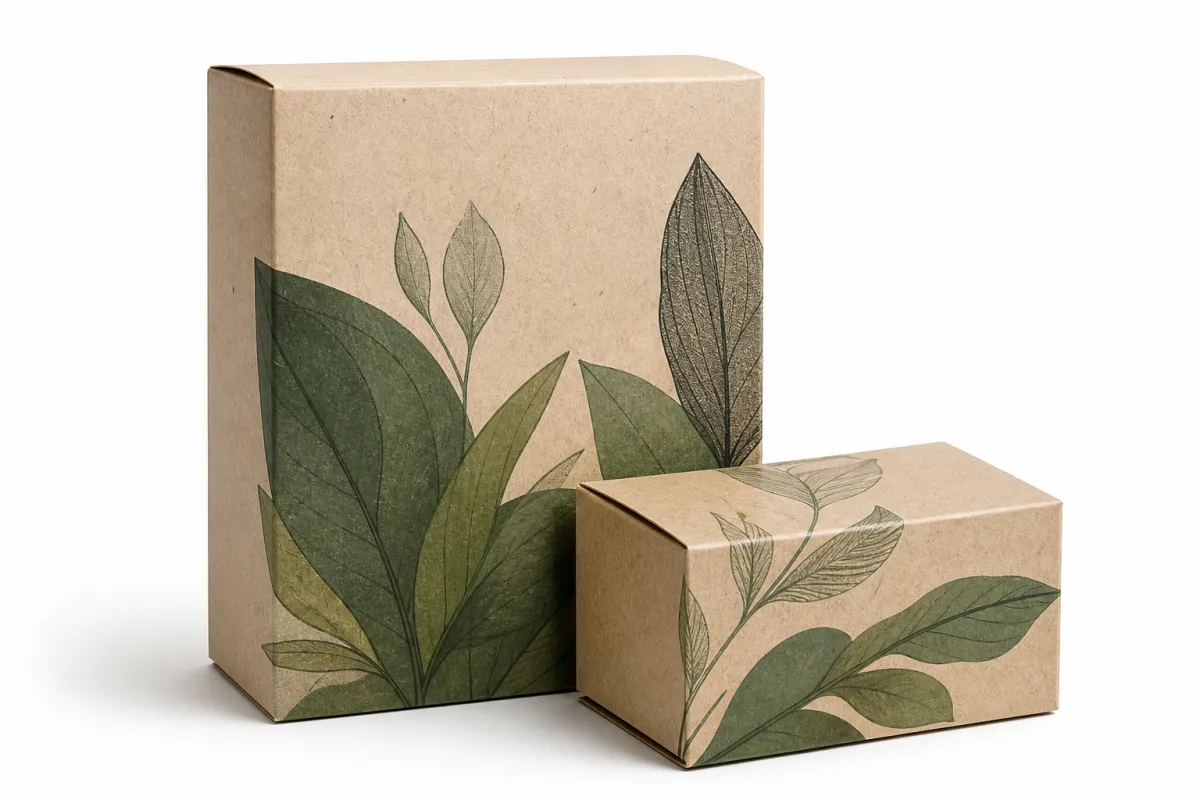
Offset printed recycled cartons are cartons made from recycled-content board and printed with offset lithography. The image transfers from plate to blanket, then from blanket to board. That transfer path is why offset remains a strong choice when a brand needs fine type, tight registration, smooth solids, and steady color across a larger run.
Recycled does not need to mean dull, rough, or unfinished. A recycled carton can still print beautifully when the board is chosen with care and the artwork respects the surface. Some boards use a brighter white top layer, which helps print contrast and keeps color cleaner. Others keep the natural fiber tone visible, which gives the carton a warmer, more honest look. Both can be right. Problems start when a recycled board is treated like premium coated paper and expected to act the same way. It will not, and the press room will make that clear fast.
These cartons show up in a lot of places: folding cartons for cosmetics, supplements, candles, and food; subscription box sleeves; branded mailers; retail shippers; and product cartons that need a premium presentation without leaning into plastic-heavy packaging. Brands like them because offset printed recycled cartons usually strike a better balance between appearance and material responsibility than cheaper-looking alternatives.
Offset sits in a different lane from digital and flexo. Digital is handy for short runs, variable data, and quick artwork changes, yet unit cost usually stays high once volume climbs. Flexo can shine on corrugated and simpler graphics, though it is not always the best fit for delicate gradients, small type, or a high-end shelf look. Offset lands in the middle many buyers want: cleaner imagery than flexo, better economics at scale than digital, and enough control to support brand colors without turning production into a constant negotiation.
Recycled stock still brings a substrate tradeoff, and it is better to face that early than learn it during approval. The board absorbs ink differently, may show texture in the finished print, and can soften bright colors a bit. That is not a flaw. It is the character of the material. Good offset printed recycled cartons work with that character instead of pretending it is not there.
For brands that want a packaging story grounded in material choice rather than decoration for its own sake, this is a sensible path. FSC-certified sourcing where appropriate, a finish that does not bury the paper feel, and a structure that holds up in real use can make the carton feel intentional from the first touch.
How Offset Printed Recycled Cartons Are Made
The production flow for offset printed recycled cartons looks straightforward on paper and can be unforgiving in practice. Ink moves through a plate, a blanket, and then onto the board. Before a sheet ever reaches the press, though, prepress has to be clean. Sloppy files do not stay quiet for long; the carton will carry those mistakes through every unit in the run.
Prepress begins with the dieline. The artwork has to match the exact carton shape, folding sequence, glue tabs, bleed, and safe zones. After that come trap, overprint settings, color separation, and image resolution. A careful prepress team checks whether reverse type can survive on a textured recycled board, whether spot colors are actually necessary, and whether the layout can hold together without adding expensive print complications. That part is not glamorous, but it is where difficult jobs get rescued.
After proof approval, plates are made and the press is set for the exact board. Make-ready matters more than most buyers realize. The press crew has to balance ink density, moisture, tack, and drying behavior for that specific substrate. A recycled board with a different brightness or caliper can change the way ink lays down, which is why the first few hundred sheets often become setup waste. Nobody enjoys that part, though it is built into the economics of offset printed recycled cartons.
On recycled stock, the operator often needs to back off the ink a little compared with a smoother coated sheet. Too much ink can make the print heavy or slow drying. Too little and the color can look thin or washed out. Press operators do not always get enough credit for this work. They are the ones keeping a natural-fiber board from turning muddy under pressure, and they are usually making those calls with a pretty limited window once the press is running.
Once the sheets print, they usually need drying time before finishing. Depending on the ink system, coverage, and press speed, that can mean same-day finishing on some jobs or overnight rest before die-cutting and folding on others. From there, the sheets move through one or more finishing steps:
- Aqueous coating for scuff resistance and a cleaner touch.
- Varnish for a lighter protection layer and controlled sheen.
- Die-cutting to create the carton shape and window openings.
- Folding and gluing if the carton is supplied pre-formed.
- Carton packing for flat shipment or finished assembly.
The finish does more than change appearance. It affects feel, rub resistance, and whether the carton still supports the recycling story the brand wants to tell. Aqueous coating is common because it protects the print without burying the paper look. Heavy lamination can make recycling harder and push the carton into a different material category altogether. That matters if the point of offset printed recycled cartons is to keep the structure honest.
One more practical wrinkle: recycled stock can vary by mill and batch, so the operator may need to adjust density, drying, or finish from run to run. That does not mean the product is unreliable. It means the material has personality. Packaging does that to people. If you have ever stood on press checking a recycled board against a proof, you know the difference between a clean adjustment and a painful one is often just a couple of hundred sheets and a calm crew.
Offset Printed Recycled Cartons: Cost Drivers and Pricing
Pricing for offset printed recycled cartons is not mysterious, but it does react quickly to small spec changes. The main drivers are board grade, recycled content level, carton size, number of printed colors, ink coverage, coating choice, finishing complexity, and the quantity ordered. A change in any one of those can move the quote more than a buyer expects.
Offset becomes more economical as quantity rises because setup cost gets spread across more cartons. Plates, press setup, proofing, and make-ready all have to be paid before the first sellable unit exists. That is why a short run can look expensive on a per-unit basis even when the total invoice seems manageable. For offset printed recycled cartons, the cost curve usually starts to feel friendlier once the order moves beyond the low-thousands range.
The range below is a planning guide based on common folding carton jobs. It is not a promise, since board choice, coverage, and finishing can shift the numbers quickly.
| Run Size | Typical Unit Range | What Drives the Price | Best Fit |
|---|---|---|---|
| 1,000 - 2,500 | $0.65 - $1.20 | Setup cost dominates, especially with multiple colors or special finishing | Pilot launches, seasonal tests, small brand runs |
| 5,000 | $0.22 - $0.55 | More efficient use of plates and press time, but finish choices still matter | Regular ecommerce and retail packaging |
| 10,000 | $0.14 - $0.32 | Setup gets diluted, unit pricing starts to look much healthier | Growth-stage products, repeat seasonal orders |
| 25,000+ | $0.08 - $0.22 | Best spread of fixed costs, though storage and forecast risk can rise | Established SKUs with steady demand |
Those figures assume a common folding carton format, moderate print coverage, and standard aqueous coating. Add foil, embossing, complex windows, specialty die lines, or heavy flood coverage and the price climbs. A quote only becomes useful when it shows the exact board, the exact finish, and the exact quantity. Otherwise you are comparing apples to something that only kinda resembles fruit.
Several cost levers get missed during early planning:
- Board choice - White-top recycled board usually costs more than natural kraft, but it may present the product better on shelf.
- Color count - CMYK plus two spot colors costs more than a clean four-color build, especially if the spot colors are not truly necessary.
- Ink coverage - Heavy solids and full-bleed backgrounds use more ink and demand more press attention than lighter layouts.
- Tooling - New dielines, custom windows, and special scores add setup and cut-tool costs.
- Waste allowance - Poorly prepared files or unstable board specs can increase scrap, and scrap is never free.
The hidden money leak is often not the carton itself. It is the paperwork around the carton. Last-minute artwork changes, unclear dielines, and late approval cycles can trigger new plates, new proofs, or extra press time. That is why the spec sheet matters. If the structure is still in flux, it is smarter to work through the options on the Manufacturing Capabilities page first and ask for quotes once the build is settled.
If you want a cleaner comparison, ask suppliers to quote the same board, same finish, same dimensions, same quantity, and same delivery terms. A quote that leaves out freight is not a full quote. It is bait with a spreadsheet attached.
Choosing the Right Spec for Offset Printed Recycled Cartons
The right spec for offset printed recycled cartons starts with the product, not the mood board. A fragile item, a heavy glass container, or a carton that has to survive repeated handling needs a different board and finish than a lightweight skincare box sitting inside an inner shipper. Attractive artwork does not matter much if the carton crushes in transit.
Board strength should match the load. In carton terms, that means thinking about caliper, rigidity, and how the board behaves when scored and folded. A common range for folding cartons sits roughly around 250-400 gsm, or about 14-24 pt depending on construction. Thin stock can save money and print well, though it may not hold corners cleanly. Thicker stock adds stiffness, but it can complicate folding and raise cost. There is no perfect answer, only the compromise that serves the product best.
Recycled content changes the print story as well. Higher recycled fiber content can look more natural and support sustainability messaging, yet it may soften color and reduce brightness. A white-top recycled board gives better print contrast and can make brand colors appear cleaner. Natural kraft offers a warmer, more grounded look, but the design has to accept that tone instead of pushing against it. Bright cosmetic colorways often do better on white-top stock. Earthy, minimalist, or heritage-driven brands can feel right on kraft.
Finish decisions matter just as much. The short version looks like this:
- Uncoated - Best if you want the paper feel to stay visible and the brand story to feel grounded.
- Aqueous coating - Good everyday protection with a slight upgrade in rub resistance.
- Matte varnish - Softer visual finish, often a strong middle ground for premium recycled cartons.
- Soft-touch - Luxurious feel, but it deserves a hard look if recyclability claims matter.
Brands that make environmental claims need the structure to support the message. FSC-certified board, recycled content documentation, and a finish that does not sabotage recyclability all matter. If the box says recycled, recyclable, or responsibly sourced, the build behind that claim should be clean. Buyers, retailers, and auditors are far less forgiving than they used to be, and they are usually right to be skeptical.
Compliance can shift the spec too. Food-contact requirements can restrict inks and coatings. Retail cartons may need barcode legibility that holds up under store lighting. Shipping cartons may need enough compression strength to survive stacked pallets. Testing earns its keep here. Packaging teams often reference standards like ISTA when cartons need to survive actual distribution instead of just looking good in a photo.
A simple rule helps: if the carton is for premium presentation, choose the board and finish that protect appearance. If the carton is for shipping, choose the board and finish that protect the product. Trying to force one spec to do both jobs perfectly is how teams end up paying twice.
For support on structures that fit those tradeoffs, the Manufacturing Capabilities page can help you match the carton to the production method instead of guessing from a product photo.
Step-by-Step: From File Prep to Delivery Timeline
Most delays in offset printed recycled cartons happen before the press even starts. That is the frustrating truth. Buyers can shorten the production window by giving the printer a clean brief, a ready dieline, and realistic approval timing. A messy launch turns even a simple carton into a moving target.
The usual path from brief to delivery looks like this:
- Define the carton - size, product weight, quantity, board preference, finish, and shipping requirements.
- Review the dieline - check folds, glue area, panels, barcode placement, and bleed.
- Prepare artwork - clean vector files, convert or outline fonts, and separate only the spot colors that are actually needed.
- Proof the job - color proof, layout proof, and any structure sample if the carton is new.
- Make plates and set up press - setup time depends on color count and the way the board behaves.
- Print, dry, and finish - then die-cut, fold, glue, or pack flat depending on the spec.
- Ship and receive - confirm pallet count, carton count, and delivery method before the truck rolls.
Simple repeat orders can often move in about 12-15 business days after proof approval, sometimes faster if the material is in stock and the finish is basic. New carton builds usually need more like 3-5 weeks, especially if tooling, samples, or multiple approval rounds are involved. Complex offset printed recycled cartons with special coatings, windows, or heavy coverage can take longer. That is not the plant dragging its feet. That is the calendar doing what calendars do.
Approval lag causes a lot of the slowdown. Someone opens the proof, says it looks good, then changes the barcode, the legal copy, and the back panel a week later. That small delay can turn into a new plate or a new press slot. Stock availability is another common stop. Recycled board grades can shift by mill, region, or season. If the carton depends on a specific white-top or caliper, confirm inventory before the launch date is locked.
Testing belongs in the schedule too. If the cartons need to survive shipping, ask for a sample run or at least a production proof on the actual recycled stock. If the product is fragile or distributed through retail, it makes sense to test in the spirit of ISTA methods or similar transit checks. Nobody enjoys finding out a carton is weak after the first pallet gets crushed. That lesson is expensive and hard to forget.
Leave buffer time for three things: file corrections, transit testing, and any finishing issue that appears after the first physical proof. The screen proof is a guide. The carton in your hand is the truth.
Common Mistakes With Offset Printed Recycled Cartons
The biggest mistake with offset printed recycled cartons is treating recycled board as a visual problem instead of a material problem. A designer can make the carton look excellent on screen and still create a print job that fights the substrate from start to finish. That is how muddy solids, fussy registration, and a box that looks cheaper in person than it did in the file enter the picture.
One classic error is approving color from a coated digital proof and expecting the recycled board to match it exactly. It will not. Board texture, brightness, and absorption all affect the final result. If the brand color matters, ask for a proof on the actual recycled board, or at least a simulation that comes close in tone and finish. The goal is to see real behavior, not a fantasy version of the print.
Another mistake is overdesigning the carton. Dense coverage, tiny reverse type, too many special effects, and stacked textures can make recycled cartons look dirty instead of premium. Simple layouts usually print better and age better. Strong typography, one or two brand colors, and controlled white space can look more expensive than a design that tries to use every trick at once. There is no prize for putting everything on the box.
Skipping sample checks is another costly habit. If the carton has to hold product weight, protect a fragile item, or fit a shelf planogram, the physical build needs to be inspected. A tiny change in score depth or glue flap can change folding behavior. A small shift in board caliper can change fit. Offset printed recycled cartons are not difficult, though they are less forgiving than people assume.
The claim issue deserves a clear look. If the box says recycled, recyclable, or eco-friendly, the actual build has to support that claim. Heavy lamination, mixed materials, or decorative add-ons can weaken the message. Sometimes they still make sense. Sometimes they are the wrong choice and the greener route is simply a cleaner structure with a better board spec.
Late changes are the final trap. Once plates are made and setup has started, changes get expensive fast. New artwork, new finish instructions, or a new carton size can trigger new prep and new waste. If there is one place to slow down and get it right, it is before the press schedule locks.
Here is a short checklist that saves headaches:
- Confirm the exact carton dimensions.
- Approve the board grade before artwork is finalized.
- Check color expectations on recycled stock, not just on screen.
- Keep the finish aligned with the recyclability goal.
- Lock the dieline before production starts.
Next Steps for Offset Printed Recycled Cartons
If you are planning offset printed recycled cartons, the smartest next move is pleasantly boring: gather the specs before asking for quotes. Have the carton dimensions, target quantity, product weight, artwork files, shipping method, and any sustainability requirements ready. That one step makes supplier conversations sharper and quotes much more useful.
Ask for pricing at multiple volumes. A quote at 2,500, 5,000, 10,000, and 25,000 units often shows where setup cost stops being painful and where the unit price begins to make sense. Sometimes the jump from one quantity to the next is small. Sometimes it is dramatic. Either way, you want the numbers before you commit to a production plan.
Request a board sample or press proof on the actual recycled stock, not just a generic paper sample. That matters even more if you care about brand color, matte finish behavior, or a natural kraft look. The paper sample may be attractive. The production proof is the one that matters when the order moves into the press room.
Lock the timeline early too. Approval date, production window, packing method, and delivery target should all be confirmed before the order is placed. If the cartons support a product launch, leave room for one round of adjustments. Packaging schedules have a strange habit of colliding with marketing deadlines, which is not charming when the shipment arrives late.
When you compare suppliers, compare the same spec sheet. Same board, same finish, same color count, same artwork assumptions, same shipping terms. That keeps the conversation tied to reality instead of marketing language. From there, choose the version of offset printed recycled cartons that best balances cost, appearance, durability, and the actual job the carton has to do.
The best carton is not always the fanciest one. It is the one that prints cleanly, protects the product, supports the claim, and still fits the budget without turning the launch into a headache. In practice, that is what makes offset printed recycled cartons worth the effort.
A practical takeaway: lock the board, finish, and quantity before the artwork gets polished to a shine. That order of operations keeps the project grounded, and it saves a surprising amount of money and friction later on.
Frequently Asked Questions
Are offset printed recycled cartons still recyclable?
Usually yes, if the board itself is recyclable and the finish works within local recycling rules. Heavy lamination, foil, or mixed-material add-ons can reduce recyclability, so the structure matters as much as the ink. Always check the actual carton build instead of assuming every recycled-looking box is easy to recycle.
How much do offset printed recycled cartons cost per unit?
Pricing depends on quantity, board grade, colors, coatings, and finishing, so there is no honest one-size-fits-all number. Short runs cost more per box because setup and plate costs are spread across fewer units. Ask for quotes at several volumes to see where the unit price drops enough to justify a larger order.
What files work best for offset printed recycled cartons?
Use print-ready vector files with the correct dieline, bleed, and safe zones. Embed or outline fonts, check image resolution, and separate spot colors only when they are truly needed. A clean prepress file reduces waste, shortens setup, and keeps recycled board from getting chewed up by revisions.
How long does it take to produce offset printed recycled cartons?
Simple repeat jobs can move faster, while custom cartons with new artwork or finishes need more time for proofing and setup. The biggest timeline variables are approval speed, plate making, drying time, and finishing complexity. Build in buffer time if the cartons are tied to a launch, because packaging delays are obnoxiously good at ruining marketing plans.
Which finishes work best on recycled carton board?
Aqueous coating and varnish are common choices because they protect the print without overpowering the recycled look. Matte and uncoated finishes can feel more natural, while soft-touch may look premium but needs extra scrutiny for recyclability. Pick the finish based on the product use, not just the mood board.
If you are comparing suppliers for offset printed recycled cartons, keep the board, finish, and quantity consistent across quotes. That is the only way the numbers mean anything.