Buyer Fit Snapshot
| Best fit | Offset Printed Shipping Envelopes Bulk for Mail Runs projects where brand print, material claims, artwork control, MOQ, and repeat-order consistency need to be specified before quoting. |
|---|---|
| Quote inputs | Share finished size, material target, print colors, finish, packing count, annual reorder estimate, ship-to region, and any compliance wording. |
| Proofing check | Approve dieline scale, logo placement, barcode or warning zones, color tolerance, closure strength, and carton packing before bulk production. |
| Main risk | Vague material claims, crowded artwork, missing packing details, or unclear freight terms can make a low unit price expensive after revisions. |
Fast answer: Offset Printed Shipping Envelopes Bulk for Mail Runs should be specified like a repeatable production item. The safest quote records material, print method, finish, artwork proof, packing count, and reorder notes in one written spec.
Production checks before approval
Compare the actual filled-product size with the drawing, then confirm tolerance on folds, seals, hang holes, label areas, and retail display edges. Reserve space for logos, QR codes, warning copy, and material claims before decorative graphics fill the panel.
Quote comparison points
Review material grade, print process, finish, sampling route, tooling charges, carton quantity, and freight assumptions side by side. A quote is only useful when the supplier can repeat the same color, closure quality, and packing count on the next order.
For high-volume mail rooms, offset printed Shipping Envelopes Bulk can do more than carry a logo. They can reduce handling, speed up pack-out, and keep outbound pieces looking consistent from the first carton to the last. That matters in a shipping line that sends documents, samples, inserts, invoices, or customer notices every week. The envelope is part of the operation. It affects labor, accuracy, and the way the brand is experienced before a parcel is even opened.
The economics improve as volume rises. Plate setup, press readiness, and make-ready time are fixed costs, so they shrink on a per-piece basis as the run gets larger. A job that looks expensive at 1,000 units can look far more sensible at 10,000. Add the labor saved by removing separate labels or routing stickers, and the case strengthens again. A packer who no longer needs to stop, align, and apply an extra adhesive piece is moving faster. Across 20,000 or 50,000 envelopes, that time adds up quickly.
Custom Logo Things works with buyers who need packaging that behaves in the real world, not just in a proof file. The stock, print method, and closure style all matter once the piece has to move through a busy shipping line. A clean layout is useful. A clean layout that survives handling is better.
Bulk envelope programs often save money twice: once through offset pricing and again through the labor removed when extra labeling steps disappear.
Why offset printed shipping envelopes bulk can lower real costs
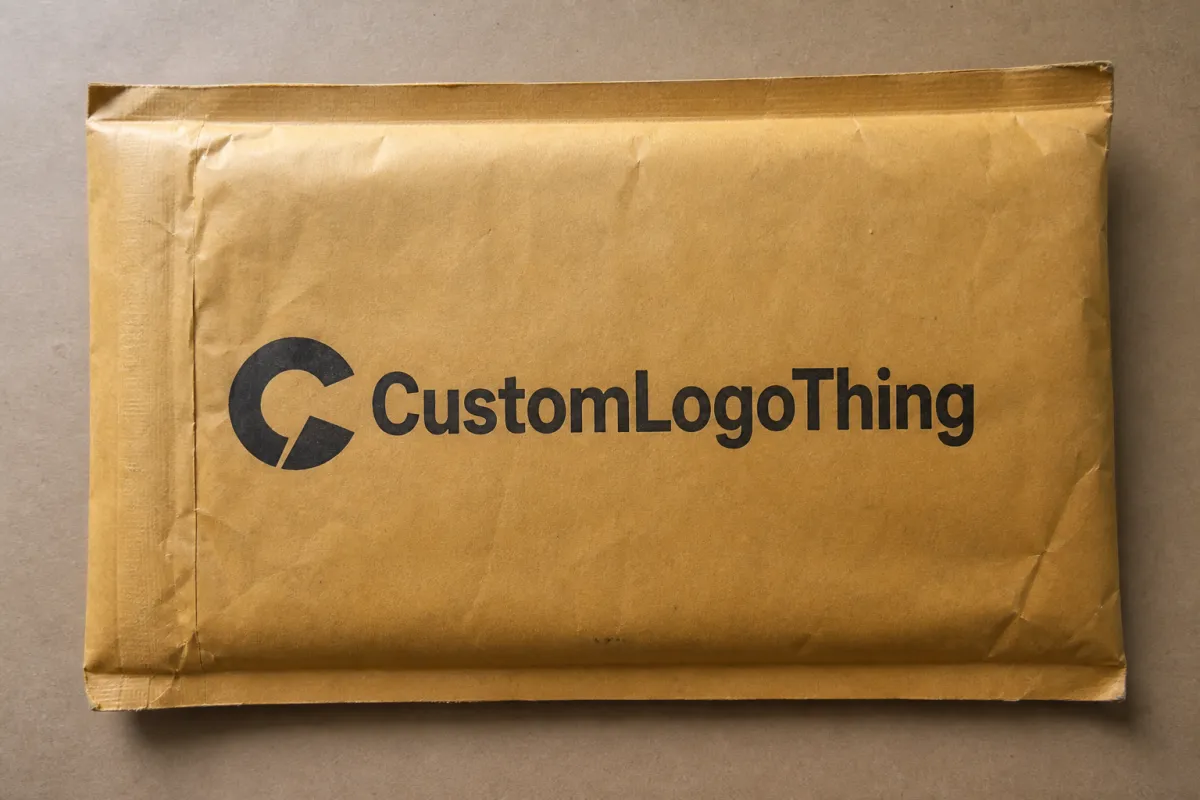
Extra handling looks small on a spreadsheet. In a mail room processing hundreds or thousands of pieces a day, though, every extra motion becomes part of the cost. A plain envelope needs a label, a return address sticker, a routing note, or some combination of the three. Each step adds time and introduces a chance for error. Labels can misalign. Adhesives can fail in cold storage. Printed information on the envelope itself removes several of those risks at once.
Offset pricing also rewards volume. The setup work is real, but the cost is spread over more units on a long run. That is the same logic behind buying by the pallet instead of the ream. The per-unit cost falls because the fixed work has already been done. For repeat mailings, the savings can become more visible with every reorder.
Brand consistency matters too. A shipping envelope is not a box, but it is often the first physical item a customer sees. A clean, correctly printed envelope suggests control. A mismatched or improvised envelope suggests the opposite. That contrast can be surprisingly strong. A 10,000-piece mailing with consistent envelopes feels organized; a 500-piece run with inconsistent labels can feel assembled in a rush.
The real value is usually operational rather than decorative. Printed return addresses, department codes, window placements, and routing marks can save minutes on every tray of mail. That sounds modest until it is multiplied across a month or a quarter. A 20-second shortcut on 3,000 pieces is about 16.7 hours of labor. In a staffing conversation, that is not a rounding error.
The same planning logic shows up across packaging categories. The decisions behind Custom Shipping Boxes and Custom Poly Mailers are similar: match the material to the contents, the construction to the handling, and the print method to the run size. Offset printing usually makes the most sense when the artwork stays stable and the quantity is large enough to justify setup.
What offset printed shipping envelopes bulk include
Most envelope programs begin with a format decision, and that decision shapes everything else. Document envelopes, clasp envelopes, open-end mailers, and custom sizes all solve different problems. Some buyers need a clean envelope for invoices and correspondence. Others need something stronger for inserts, folded collateral, or samples that will pass through several hands before the postal stream ever sees them. The envelope has to fit the contents, and the contents have to fit the process.
Stock choice changes both appearance and performance. White wove gives a polished look and usually handles type and brand color well. Kraft leans more functional and can suit warehouse operations or brands that want a warmer tone. Recycled stock supports sustainability goals and often fits broader packaging policies. A heavier paper weight can resist tearing and edge scuffing better, which matters when the envelope is rubbing against cartons, bins, or conveyors during transit. For buyers who track sourcing standards through systems such as FSC, the stock can also carry procurement value beyond the print itself.
Printed details make the envelope useful. A bulk program may include a logo, return address, service instructions, a mailing panel, routing marks, warning copy, or department identifiers. Some companies add seasonal messaging or product-specific language. Others keep the face minimal because the envelope has to feed through automated handling equipment and the front panel needs to stay clear. Either approach can work if the job is planned correctly. The print should support the work, not compete with it.
Offset printing is strongest when the artwork is stable and the envelope needs repeatable color and crisp text across a large quantity. A press operator can hold a solid brand color, a repeated logo, or a consistent layout more reliably on a long run than a patchwork of labels can. That matters for shipping programs that reorder every month or quarter. The customer sees the same face, the warehouse sees the same markings, and the production team does not have to rebuild the piece every time inventory runs low.
Seal and construction details deserve a decision before prepress begins. Window or no window. Self-seal, gummed, or clasp. Security tint or open interior. Reinforced seams or standard construction. Those choices affect not only the quote, but the way the envelope moves through packing and mailing. A good specification sheet removes guesswork.
- Document envelopes: best for paperwork, inserts, and correspondence that needs a clean front face.
- Clasp envelopes: useful for repeated opening and closing during internal routing or multi-step handling.
- Open-end mailers: practical for flat content and fast insertion.
- Custom sizes: ideal when the contents are defined and you want less void space and fewer fold issues.
Buyers who already manage Custom Packaging Products or Wholesale Programs usually recognize the pattern. Specific specs prevent expensive surprises. Vague specs invite them.
Specifications that affect print quality and mail performance
Good buying starts with a handful of practical decisions: finished size, flap style, seal type, paper weight, color count, and whether the envelope needs to fit a specific insertion or mailing process. Those details look ordinary, but they control most of the result. A buyer who settles them early usually gets a sharper quote and fewer production corrections later.
Stock quality changes print behavior. Smooth white wove can hold fine type, barcodes, and solid brand blocks with strong readability. Kraft and textured papers carry a different visual character, but heavy ink coverage may absorb differently and shift the appearance slightly. That does not make the stock wrong. It means the artwork should be built for the paper rather than forced onto it. Thin lettering and tight reverse type need extra care on more absorbent surfaces.
Color management matters just as much. CMYK process printing handles photos and layered graphics well, yet many Branded Shipping Envelopes work better with a controlled spot color palette. Spot inks help keep a logo color steady from one reorder to the next. A buyer trying to match a standard across several campaigns will usually find that consistency more valuable than extra color complexity. A bank envelope, a retail insert envelope, and a wholesale remittance envelope can all need different color discipline even when the format looks similar.
Registration, bleed, and safe area deserve real attention. A border that looks elegant on-screen can show tiny shifts on press, especially on a minimal envelope layout. Window placement, seam placement, and dieline accuracy all need checking before ink touches paper. If the envelope has to run through automated pack-out or labeling, the geometry needs to respect that workflow. A design that ignores the machine rarely survives contact with it.
Keep the checklist direct:
- Confirm the finished size and flap style.
- Confirm the stock and paper weight.
- Confirm the seal method and any window or clasp requirements.
- Confirm color targets and whether spot colors are required.
- Confirm how the envelopes will be packed, cartonized, and shipped.
The fifth item gets overlooked often. An envelope can look excellent in prepress and still create friction if the carton count or pallet pattern does not fit the receiving team. Shipping materials have to move well after production, not just look good during approval.
Organizations such as the International Safe Transit Association think about packaging from the handling side first, and that order of thinking is useful here too. Define the route the piece will travel, then specify the envelope to survive it.
| Option | Typical Fit | Approximate Cost Behavior | Best Use Case |
|---|---|---|---|
| Offset printed envelopes | Large recurring runs with stable artwork | Lower unit cost as quantity rises; setup spread across volume | Shipping programs, repeat mailings, branded document delivery |
| Digital printed envelopes | Shorter runs or frequent design changes | Higher unit cost at scale, lower setup burden | Pilot orders, small batches, variable messaging |
| Plain stock with labels | Very flexible, no print commitment | Low upfront cost, higher labor and label expense | Unpredictable volume, temporary programs, test campaigns |
| Preprinted stock from inventory | Standardized usage with limited customization | Can be efficient if the design never changes | High-volume repeat mailings with simple branding |
The table points to the same conclusion from another angle. Offset printed shipping envelopes bulk make the most sense when the order is large, the artwork stays stable, and the buyer wants a production asset rather than a temporary workaround.
Pricing, MOQ, and quote factors for bulk orders
Envelope pricing depends on more than the face size. Setup, stock, dimensions, color count, finishing, and quantity all influence the number. A buyer who assumes volume alone will bring the price down can get caught by the wrong stock or an unusual seal. Buying too few pieces often leaves the unit cost uncomfortably high. Buying too many can tie up cash and storage space. The right quantity lands where usage is real, not where optimism is.
MOQ, or minimum order quantity, reflects more than a press rule. It is tied to press efficiency, paper availability, and whether the construction is standard or custom. A stock envelope with a familiar format may clear a lower threshold than a special size with multiple print passes or added finishing steps. Ask where the price breaks begin. The jump at the next tier can be sharper than expected.
Fair comparison requires identical inputs. Match the finished size, stock, color count, seal type, and quantity on every quote. Ask which items are included: plates, proofs, freight, and taxes. Headline pricing can hide a landed cost that tells a different story. For a buyer managing budget and replenishment, landed cost is the number that matters.
Bulk orders often fall into rough ranges like these, though the final quote always depends on size, artwork, stock, and finishing:
- Simple one- or two-color runs: often around $0.18-$0.35 per unit at higher quantities.
- Heavier stocks, larger formats, or more complex art: often around $0.28-$0.55 per unit.
- Special seals, windows, custom folds, or tight color matching: pricing can move higher because the job takes more control.
These are buying ranges, not promises. They help a packaging manager check whether a proposal is in the right neighborhood. A small spec change can shift the number quickly, especially if the setup is carrying a lot of the production burden.
Offset printing usually beats digital when the run is large enough and the design is stable. Digital can make better sense if the order is still exploratory or if the artwork changes often. The right answer depends on cadence, inventory strategy, and how much uncertainty sits in the forecast. A company with steady mailings should make a different choice than one testing a new program.
The same setup-versus-volume logic shows up in other packaging categories too, whether the project covers envelopes, cartons, or broader Manufacturing Capabilities. Fixed setup costs like volume. Volume likes planning.
Process and timeline: from artwork approval to delivery
A solid envelope program follows a familiar order: request review, specification confirmation, artwork prep, proofing, plate making, press setup, printing, converting or finishing, quality control, and shipment. Each step depends on the one before it. Missing information at the front creates delay at the back. The fastest job is usually the one with the clearest starting packet.
File quality matters. Vector PDF, AI, or EPS artwork keeps logos and type sharp at print size. A custom envelope should include the dieline, bleed, and any spot color references. Low-resolution art and missing files create a round of questions that slows proofing. Those delays are not cosmetic. They push the production date back because no one should lock up paper and press time until the file is ready.
Approval speed changes the schedule more than many buyers expect. A standard bulk run can move quickly if the stock is available and the proof is approved without revisions. Add a special stock, several print colors, a window, security tint, or unusual finishing, and the timeline naturally stretches. That is not inefficiency. It is care applied where care matters.
Freight time belongs in the schedule from the start. A quote that ignores shipping transit is only half a plan. If envelopes need to land before a mailing window, the delivery date should be worked backward from that need, not guessed from the day the artwork landed in the inbox. Warehouse receiving windows, shelf space, and carton handling all belong in the plan too.
Keep the sequence tight:
- Finalize the quantity and finished size.
- Choose the stock and seal type.
- Confirm the print colors and brand references.
- Send vector artwork and any existing sample.
- Approve the proof quickly so production can begin.
- Set the delivery destination before the run starts.
That sequence prevents rework and keeps the shipping team from scrambling when the cartons arrive. In order fulfillment, the envelope is only one piece of a larger rhythm, and the rest of the rhythm matters.
Bundling the envelope order with other replenishment items can reduce friction too. A vendor that understands packaging programs as a whole can align freight windows, production timing, and inventory needs with much less back-and-forth than a narrow supplier can.
Why Custom Logo Things is a strong fit for shipping programs
Custom Logo Things fits buyers who want volume, consistency, and real specification control. That is not a flashy promise. It is the baseline for a shipping program that has to work month after month. Large runs need clear proofs, stable artwork, dependable materials, and communication that answers the practical questions before production starts.
For offset printed shipping envelopes bulk, support around stock selection and construction details matters. Which paper will hold up in handling? Which print method will hold brand colors without drift? Which seal works best for the way the envelopes are opened, filled, and packed? Those questions shape the result more than the logo alone. A logo can be beautiful and still fail the job if the envelope tears, misfeeds, or arrives with the wrong feel in the hand.
Durability versus budget is another area where guidance pays off. A thicker stock may add cost, but it can lower the risk of tearing and reduce damage in transit. A restrained print layout can trim expense while still looking polished. A buyer sending sensitive documents may need a different envelope than a buyer sending brochures or samples. The right answer is tied to use, not assumption.
Repeatability matters just as much. Bulk buyers do not want to discover that the second run looks different from the first. The art should match the proof, the stock should match the sample, and the production should stay aligned across reorder cycles. That kind of consistency is what keeps a packaging program from becoming a constant firefight.
Programs that touch more than one format also benefit from coordination. A company ordering envelopes may also need mailers, cartons, or wholesale replenishment support. One practical vendor relationship can reduce coordination time and keep the supply chain cleaner. In shipping materials, every mismatch creates another task downstream.
Good transit packaging always starts with the same three questions: does it protect the contents, does it support the brand, and does it move through the workflow without friction? If the answer is yes, the package has done its job.
A good bulk envelope program is quiet in the best way: it prints cleanly, packs easily, ships on time, and does not create extra work for the people handling it.
That is why offset printed shipping envelopes bulk keep appearing in serious mailing operations. They are practical. They are repeatable. They hold a brand together without asking the warehouse to slow down.
Next steps to move your offset printed shipping envelopes bulk order
The fastest quote starts with a complete specification set. Before sending a request, gather the finished size, approximate monthly or annual usage, desired stock, print colors, seal type, and delivery zip code. If the order ties to a shipping cycle, include the date the envelopes need to be on hand. That lets the schedule run backward from a real deadline instead of a guess.
Send vector artwork if possible, along with any current envelope sample. A sample shows how the existing piece behaves in the real world, which helps if the new layout needs spacing changes, color correction, or bleed adjustments. If the brand follows a matching standard, include that too. The more complete the packet, the less time the proof stage consumes.
Compare at least two quantity tiers. That usually shows where the price breaks start and whether it makes sense to order to current demand or carry a modest buffer. A buffer can help with repeat mailings, but only if storage and cash flow can handle it. If usage is still developing, a tighter order may be the smarter move.
Keep the action path clean:
- Request a quote with full specs.
- Review the proof carefully.
- Confirm the timeline and freight method.
- Approve production.
- Receive and schedule the next outbound mail cycle.
If you are starting a new mailing program or replacing an older stock envelope, begin with the details that affect the outcome most. Send the specs, compare the tiers, and let the quote reflect the actual job. That is the most reliable route to a dependable offset printed shipping envelopes bulk order that fits the operation, the budget, and the brand without delay.
FAQ
What MOQ is common for offset printed shipping envelopes bulk?
MOQ depends on envelope size, stock, and the number of print colors, but offset runs become far more attractive once the quantity is large enough to spread setup across the order. A modest volume may be better served by unprinted stock or another print method. Ask for quantity tiers so you can see where unit pricing starts to improve.
How do I compare offset printed shipping envelopes bulk quotes?
Use the same finished size, stock, color count, seal type, and quantity on every quote. Confirm whether plates, proofs, freight, and taxes are included so you are comparing landed cost instead of only the headline price. The right quote is the one that matches the actual production plan.
What file format works best for custom shipping envelope art?
Vector PDF, AI, or EPS files are the strongest options because they keep logos and text sharp at print scale. Include the dieline, bleed, and any spot color references so prepress can review the file cleanly. Low-resolution files slow the process and often create avoidable revisions.
Can offset printed shipping envelopes bulk match brand colors?
Yes. Spot colors are usually the most consistent option for holding a brand color across a large run. CMYK can work for some designs, but solid logo colors and precise brand matches often perform better with controlled ink choices. If color accuracy matters, ask for a proof or a color reference before production starts.
How long does production take after artwork approval?
Production time depends on quantity, stock availability, print colors, and any finishing steps such as windows or special sealing. Straightforward bulk runs are usually faster than custom or multi-step jobs, and approval speed has a major effect on the schedule. The timeline should begin after final proof approval, not when the first file is sent.


