Buyer Fit Snapshot
| Best fit | Order Branded Shipping Cartons in Bulk projects where brand print, material claims, artwork control, MOQ, and repeat-order consistency need to be specified before quoting. |
|---|---|
| Quote inputs | Share finished size, material target, print colors, finish, packing count, annual reorder estimate, ship-to region, and any compliance wording. |
| Proofing check | Approve dieline scale, logo placement, barcode or warning zones, color tolerance, closure strength, and carton packing before bulk production. |
| Main risk | Vague material claims, crowded artwork, missing packing details, or unclear freight terms can make a low unit price expensive after revisions. |
Fast answer: Order Branded Shipping Cartons in Bulk: Structure, Print Proof, Packing, and Reorder Risk should be specified like a repeatable production item. The safest quote records material, print method, finish, artwork proof, packing count, and reorder notes in one written spec.
Production checks before approval
Compare the actual filled-product size with the drawing, then confirm tolerance on folds, seals, hang holes, label areas, and retail display edges. Reserve space for logos, QR codes, warning copy, and material claims before decorative graphics fill the panel.
Quote comparison points
Review material grade, print process, finish, sampling route, tooling charges, carton quantity, and freight assumptions side by side. A quote is only useful when the supplier can repeat the same color, closure quality, and packing count on the next order.
If you need to order branded shipping cartons in bulk, the first move is simple: stop guessing and start with the specs. Too many brands discover too late that flimsy packaging, bad sizing, and panic reorders cost more than the cartons themselves. One client in Los Angeles had plain cartons arrive crushed from a regional supplier, then spent another $1,420 on repacks and relabeling just to ship 3,800 orders that week. That kind of mess is exactly why businesses order branded shipping cartons in bulk instead of treating packaging like an afterthought. A 5,000-piece run of the right carton, printed once and received on time, is usually less painful than three emergency replenishment orders from three different ZIP codes. Honestly, a lot of people only learn this lesson after the invoice hits their inbox and they make that little “oh no” face at the screen.
I’m Sarah Chen. For 12 years, I’ve worked around custom print shops, corrugated plants, and freight docks where the forklifts don’t care about your brand story. They care about dimensions, board grade, pallet count, and whether the boxes hold up in transit packaging. I remember one warehouse in Ohio where a stack of cartons collapsed like a bad Jenga game. Very educational. Very annoying. If you want your cartons to protect product, keep order fulfillment moving, and still look good when they land on a customer’s doorstep, you need a clean buying process. That’s what this guide covers, minus the fluff. And yes, the details matter: a 350gsm C1S artboard mailer behaves very differently from a 32 ECT single-wall corrugated shipper, even if both fit on the same pallet in Columbus or Cleveland.
Branded cartons do more than hold product. They travel farther than most ads. A printed shipping box seen in a warehouse, on a delivery truck, and on a customer’s porch does part of your marketing for free. Not magic. Just visibility. And yes, it still has to survive dimensional weight billing, stacking in a truck, and the occasional overenthusiastic carrier toss. That’s real life. I’ve seen boxes look fabulous in a render and then get treated like a football by a sorting belt. The boxes did not file a complaint; they just failed. A clean one-color black logo on kraft board can outperform a flashy six-color panel if the box arrives in Minneapolis without corner crush. For many buyers, branded shipping cartons also help reinforce brand recall without adding extra inserts or packaging steps.
Why Order Branded Shipping Cartons in Bulk Now
If you order branded shipping cartons in bulk, your unit cost drops because setup, printing, and freight get spread over more pieces. That’s not theory. It’s arithmetic. A 1,000-piece run might land at $1.18 per unit, while 5,000 pieces can come down closer to $0.62 per unit depending on size, flute, and print coverage. I’ve seen buyers chase tiny savings on small orders, then pay $180 in emergency freight three weeks later because they ran out of shipping materials at the worst possible time. That’s the kind of “savings” that makes me want to stare out a window for a minute. In Shenzhen, Dongguan, and Foshan, factories quote differently depending on board source and print queue, so bulk volume often matters as much as the artwork itself.
Piecing together orders creates chaos. One month the carton is 12 x 9 x 4 inches, next month it’s 11.5 x 8.75 x 4.25, and suddenly the packing team is hunting for void fill, changing inserts, and re-training staff. For ecommerce shipping, consistency matters. A carton that fits the product correctly and prints the same way every time keeps operations boring. Boring is profitable. I’ll say that again because it seems to offend people who enjoy drama: boring is profitable. A consistent carton spec in Houston, Atlanta, and Phoenix also means your receiving team can stack the same master case count without reworking the whole rack plan. It also keeps branded shipping cartons easier to store, count, and reorder.
I once walked a floor in New Jersey where a subscription box brand was re-labeling plain cartons by hand because they “weren’t ready” for custom packaging yet. Two pallets of crushed cartons later, they were paying temp labor $22 an hour to fix a problem that a stronger corrugated spec would have prevented. They later switched to bulk ordering and saved roughly $0.31 per unit across 8,000 boxes. That’s real money, not marketing theater. It’s also the kind of cost that sneaks up quietly and then sits on your balance sheet like it owns the place. When they moved production to a factory outside Guangzhou, they also standardized the board at 44 ECT, which cut rework and reduced corner failures on their West Coast lanes.
Branding still matters, even without the hype. A clean logo, a clear return address panel, and a simple handling message can make the customer feel like they bought from a company that actually knows what it’s doing. You don’t need gold foil on a shipping carton. You need a box that survives the trip and looks intentional. If it does that, it’s pulling its weight. And if it arrives looking like it lost a fight with a forklift, well, no amount of fancy brand language can save that. A matte kraft carton with a 1-color imprint often photographs better in Chicago apartment lobbies than a glossy carton that shows scuffs by mile two. For direct-to-consumer shipments, branded shipping cartons can also cut down on the need for extra marketing inserts.
There’s also the risk side. Emergency orders usually mean higher freight, higher per-unit cost, and a smaller choice set. Wait until stock is low and you’re forced to accept whatever your supplier can rush out. That’s how people end up with mismatched board grades, odd print colors, and dimensions that don’t fit the product. When you order branded shipping cartons in bulk, you get to plan instead of react. That alone is worth a real budget line. In practical terms, a planned 10,000-piece order from Qingdao or Ningbo is often less volatile than four rushed mini-orders split across two months.
“We stopped buying cartons in small batches and saved almost $2,700 over one quarter,” a warehouse manager told me after we standardized three carton sizes. “More importantly, the pack line stopped stalling every time inventory dipped.”
If you want proof that packaging affects operations, talk to any fulfillment lead who has had to fix a broken pack-out at 5 p.m. They’ll tell you the same thing: the right box reduces mistakes, the wrong box creates overtime. For brand owners, order branded shipping cartons in bulk is less about looking fancy and more about controlling costs across shipping, storage, and labor. I’ve seen teams save time, reduce damage, and stop arguing over box sizes for once. That alone can feel like a small miracle. One brand in Dallas cut pack-line touches by 18% after moving to a single master carton size, and the labor savings showed up before the second reorder landed.
Product Details: What Branded Shipping Cartons Actually Include
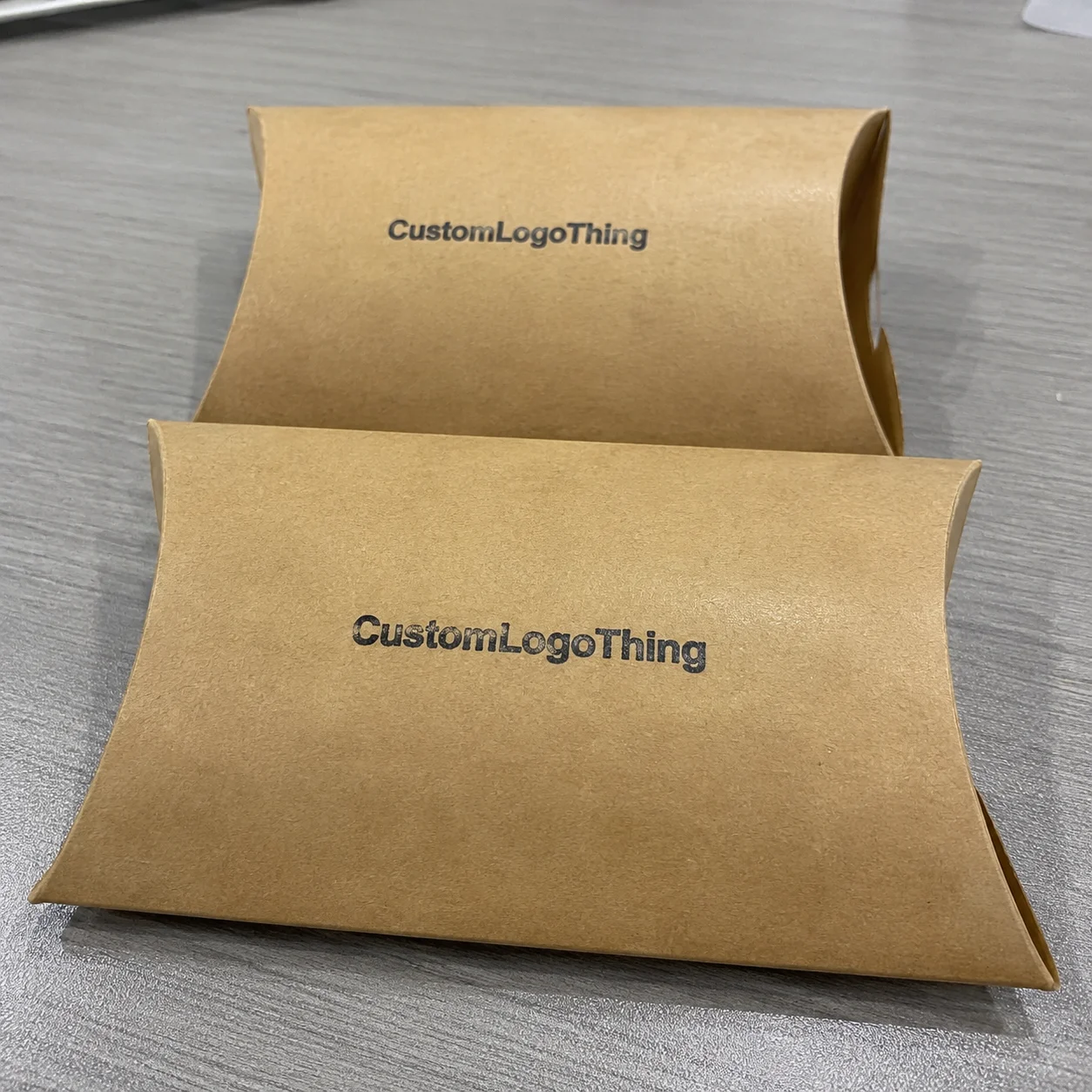
When buyers ask me what they’re actually getting when they order branded shipping cartons in bulk, I start with the carton style. The most common options are regular slotted cartons, mailer-style shipping cartons, die-cut cartons, and reinforced double-wall boxes. Regular slotted cartons are the workhorse. They’re simple, stack well, and are usually the cheapest option for standard shipping. Mailer cartons are better when the unboxing experience matters a bit more, especially for ecommerce shipping. Die-cut cartons work when you need a precise fit or a more premium presentation. Double-wall is for heavier product, weak product, or shipments that get abused on purpose by the universe. A 16 x 12 x 8 regular slotted carton in 32 ECT is a very different animal from a die-cut mailer with a locking front tab and 350gsm C1S artboard face.
Printing is where things get interesting. You can do a 1-color logo, 2-color branding, full outside print, inside print, or spot messaging like “Handle with Care,” “Scan Here,” or a return instruction panel. I’ve seen clients overspend on large coverage when a single black imprint on kraft board would have looked cleaner and cost $0.09 less per unit on a 4,000-piece order. Small choices matter. If you order branded shipping cartons in bulk, every ink color and print area affects price. A two-color flexo job in Suzhou can add 12% to 18% to the print line versus a single-color run, especially if the carton uses a large flood print. And yes, someone will always insist on a bigger logo because “we want it to pop,” which is a sentence I have heard far too many times in warehouses with bad coffee.
Material choice matters too. Kraft corrugated is the common standard because it’s durable, printable, and usually cheaper than white-lined board. White-lined kraft can look sharper for retail-facing brands, but it shows scuffs more easily. Recycled board makes sense for brands with sustainability targets, but you still need to confirm performance. Flute type changes the story as well. E-flute gives a smoother print surface and a slimmer profile. B-flute can offer more crush resistance. C-flute is often used when more protection is needed. Double-wall, such as BC or EB, is worth considering when the carton must survive long-haul transit packaging or higher weight loads. A 44 ECT BC flute box is not overkill for a 28-pound shipment moving through Texas heat and a three-stop route.
There are add-ons, and they’re not all fluff. Tamper-evident sealing can help with high-value goods. Die-cut handles matter for larger carry boxes. Inserts can stop product from sliding. Custom panel messaging can help your fulfillment team pack the right SKU faster. I’ve seen a warehouse in Texas shave about 14 minutes off every pallet build just by printing a bold internal panel note that matched their pick list flow. That’s the sort of operational detail people ignore until they’re trying to hit a ship cutoff. Then suddenly every second feels expensive. A simple “This Side Up” panel on a carton leaving Newark for Miami can also reduce misloads if the carrier changes trailers mid-route.
When I review a spec sheet, I expect to see dimensions, board grade, flute type, print method, pack-out instructions, and carton orientation. I also want the buyer to tell me the actual product weight, not just the item name. “It’s a candle” is not a spec. Is it 8 ounces or 3.2 pounds? Big difference. If you want to order branded shipping cartons in bulk without getting burned, make sure the quote reflects the real use case. Otherwise you end up paying for a box that is either overbuilt and overpriced or underbuilt and useless. Neither option is charming. A 2.1-pound candle set in Nashville may need a different wall structure than a 7-ounce beauty kit shipping from Portland.
Good suppliers should also ask about the shipping environment. Is the carton going to Amazon prep, a B2B warehouse, or direct-to-consumer fulfillment? Will the cartons sit in a humid dock in Florida or a dry climate in Nevada? Are they palletized 48 x 40 or hand-packed into master cartons? These questions change the board choice and print finish. Real packaging work is not “pick a box and hope.” It’s matching the carton to the route. I’ve had buyers try to use the same carton for everything and then act surprised when one lane wrecked the damage rate. The box was innocent; the strategy wasn’t. A carton stored for 60 days in Savannah has different needs than one built, packed, and shipped out of Sacramento the same afternoon.
| Carton Type | Best For | Typical Cost Impact | Notes |
|---|---|---|---|
| Regular Slotted Carton | Standard shipping, storage, general order fulfillment | Lowest | Simple, efficient, easy to stack |
| Mailer-Style Shipping Carton | Ecommerce shipping, branded unboxing | Low to moderate | Great for small goods and subscription kits |
| Die-Cut Carton | Precise fit, premium presentation | Moderate | Higher tooling cost, cleaner look |
| Double-Wall Carton | Heavy product, high damage risk, long-distance transit packaging | Highest | Worth it when protection beats penny-pinching |
For packaging standards and corrugated basics, I often point clients toward the Packaging Corporation resources at packaging.org and testing guidance from the International Safe Transit Association. If you’re serious about package protection, those references are useful. Not glamorous. Useful. The dull stuff is usually what keeps a shipment from turning into a customer-service headache. A sample carton tested against an ISTA 3A profile in a lab near Atlanta will tell you far more than a polished sales deck ever could.
What specs should you check before you order branded shipping cartons in bulk?
Before you order branded shipping cartons in bulk, start with internal dimensions. Internal size protects the product. External size affects shipping costs because carriers bill by dimensional weight. That’s the game. A box that is 16 x 12 x 10 outside may bill very differently from one that is 15.5 x 11.5 x 9.75 outside, even if the product inside only changed by half an inch. I’ve had buyers save $0.07 on board and lose $1.40 per shipment to dimensional weight. That math never feels clever after the invoice arrives. It feels like a trap with a logo. On a 3,000-shipment month, a quarter-inch mistake in Denver can mean real money leaving through the back door.
Next, check the strength rating. Burst strength and ECT rating are not decorative numbers. They tell you how much stacking and crushing the carton can handle. For lighter ecommerce shipping, a 32 ECT single-wall carton may be enough. For heavier orders, 44 ECT or double-wall is often smarter. I’ve stood beside a corrugated press in Guangdong watching a sample carton fail the Edge Crush Test by a narrow margin, and the factory manager wanted to “ship it anyway.” I said no. They re-ran the board. That’s the difference between a supplier and a liability. Also, it saved everyone a lot of future grief, which I consider a win. A 44 ECT carton can be the difference between surviving a seven-high pallet in a Chicago warehouse and getting crushed by the second shift.
Print placement tolerance matters too. If your logo is too close to the edge, it can get clipped in production. Bleed and safe zones are not optional. A logo that looks perfect on screen can shift 2 to 4 mm in print, and that’s enough to ruin a clean panel. If you want to order branded shipping cartons in bulk with real consistency, ask for a dieline and confirm where the print is centered relative to score lines, flaps, and folds. I’ve seen “minor” artwork mistakes turn into 5,000 unusable boxes. Those boxes look great in a landfill, I guess. Not exactly the brand moment anyone had in mind. A factory in Dongguan can print beautifully and still miss a panel if the artwork file does not include a proper 3 mm bleed.
Storage and handling are part of the spec, not an afterthought. Cartons should be palletized in a way your warehouse can actually receive. Ask how many cartons per master bundle, how many bundles per pallet, and what the stack height will be. If the cartons sit in a humid room for two months, does the board hold up? If your warehouse ceiling is low, can you still rack the pallets safely? If your team uses narrow aisles, will the pallet size create issues? These details affect order fulfillment and labor more than most sales decks admit. I know that sounds unglamorous, but so is paying people to re-stack boxes because nobody asked the right questions. A pallet packed 50 bundles high in Savannah will behave differently from a 36-inch stack planned for a Dallas dock.
I also recommend asking for a sample or pre-production proof before the full run. Not a photo of a drawing. A real sample. A flat sample. A folded sample if the carton design is tricky. We once caught a fit issue on a subscription box where the lid kissed the product insert by 3 mm. On paper it was “fine.” In real life it jammed the line. A sample saved the client roughly $900 in labor and a one-week delay. That’s why I push proofing so hard when someone wants to order branded shipping cartons in bulk. The sample stage is where you can still fix things without filing regrets. In our experience, proof approval to production start usually takes 2 to 5 business days if the file is clean and the decision maker is in the room.
Simple spec checklist
- Internal dimensions in inches or millimeters
- Product weight per carton and per master case
- Board grade and flute type
- Print colors, placement, and finish
- Closure method like tape, glue, or tab-lock
- Storage conditions and pallet count
If you’re trying to improve shipping materials across SKUs, it helps to compare carton specs against your broader packaging lineup. Our Custom Packaging Products page is a useful place to compare options if your project includes inserts, mailers, or secondary packaging. And if your brand uses soft goods, you may want to look at Custom Poly Mailers too. Different job. Same need for clean specs. Same need to keep the warehouse from improvising at 4:45 p.m. A 9 x 12 poly mailer and a 12 x 9 x 4 shipping carton do not solve the same problem, even if a spreadsheet says they’re “close enough.”
One more thing: sustainability claims need backup. If recycled content or certified sourcing matters, ask for documentation. The Forest Stewardship Council has clear information at fsc.org. I’ve had buyers ask for “eco boxes” with no certification, no recycled content percentage, and no supplier traceability. That’s not a sustainability strategy. That’s a brochure sentence. And honestly, the planet deserves better than brochure sentences. If a supplier says the board is 70% recycled, ask for the certificate and the mill location, whether that’s in Oregon, Wisconsin, or Hebei.
Pricing and MOQ for Branded Shipping Cartons in Bulk
Pricing is where buyers either get disciplined or get surprised. If you order branded shipping cartons in bulk, the main drivers are size, board strength, print colors, quantity, tooling, and freight destination. Large cartons cost more to ship because they eat trailer space. Heavy cartons cost more to make because they use more board. More print colors mean more setup. Custom die lines and special finishes add cost. Nothing mysterious here. Just inputs. I know that sounds boring, but boring pricing is better than mysterious pricing every single time. A carton shipping to Miami from a plant in Vietnam may include more freight volatility than the same carton running from a factory in Monterrey or Mexico City.
For a practical example, a 10 x 8 x 4 corrugated shipping carton in kraft board with one-color print might land around $0.48 to $0.72 per unit at 5,000 pieces, depending on current board pricing and destination. The same carton in a white-lined finish with two-color print might move closer to $0.78 to $1.05 per unit. A double-wall version can jump well above that. These are market-style ranges, not promises. If someone quotes you $0.19 all-in for a Custom Printed Shipping box, they either forgot freight or they’re planning to explain the surprise later. I’ve met that supplier. Everyone pretends not to know that supplier. For a larger 20 x 14 x 8 mailer-style shipper with 2-color flexo, I’d expect a very different number than a compact 8 x 6 x 3 retail carton, and the freight from Qingdao to Long Beach will not be the same either.
MOQ matters. Custom printed cartons usually have higher minimums than stock boxes with a label or stamp. A plain stock carton with branded tape is easier to source in a short run, but it doesn’t give the same presentation. If you want to order branded shipping cartons in bulk, the sweet spot is usually where the setup cost gets diluted enough to justify the branding. For many buyers, that’s somewhere between 1,500 and 5,000 pieces, though larger brands often go far beyond that to reduce unit cost. In my experience, the right MOQ is the one that matches your actual usage, not your optimistic spreadsheet fantasy. A beauty brand in Nashville using 600 cartons a month can justify 3,000 pieces far more easily than 1,200 if the unit price drops from $0.92 to $0.61.
Comparing quotes is where people make expensive mistakes. A quote for 3,000 boxes is not comparable to another quote unless the dimensions, board grade, print method, finish, and delivery terms are the same. I’ve seen buyers compare a 32 ECT single-wall quote to a 44 ECT double-wall quote and think one supplier was “cheaper.” Of course it was cheaper. It was also weaker. Apples to apples is not optional. It’s the whole point. I’d rather annoy someone with one extra question than watch them order the wrong carton and spend the next month apologizing to customers. A quote that says “FOB Shanghai” is not the same as a quote delivered to a warehouse in Illinois with duties and inland trucking included.
Here’s a simple pricing comparison to help buyers think clearly before they order branded shipping cartons in bulk:
| Option | Approx. Unit Cost | MOQ | Best Use |
|---|---|---|---|
| Stock carton + label | $0.22 to $0.55 | Low | Fast start, lower branding impact |
| Custom printed single-wall carton | $0.48 to $1.05 | Moderate | Everyday ecommerce shipping and retail orders |
| Custom printed double-wall carton | $0.88 to $1.85 | Moderate to high | Heavy goods, fragile items, long transit routes |
| Premium die-cut mailer carton | $0.72 to $1.50 | Moderate | Subscription kits, gift packaging, presentation focus |
Cost control is mostly common sense. Simplify print colors. Standardize carton sizes across SKUs. Avoid weird dimensions unless the product truly needs them. And don’t order 800 cartons if your monthly usage is 600. That creates storage headaches and ties up cash. I’d rather see a buyer order branded shipping cartons in bulk with a realistic buffer than pay rush freight three times a year because inventory planning was wishful thinking. I’ve watched wishful thinking get very expensive, very quickly. A 5,000-piece purchase at $0.15 per unit can be a smart move if it eliminates two emergency reorders and a $260 freight surcharge from Los Angeles to Chicago.
If you want to save more, ask about bundling carton runs with related shipping materials. Some buyers combine carton projects with inserts or mailers to reduce coordination time. Our Wholesale Programs page can help buyers who need recurring supply planning instead of one-off purchases. That matters when your operation grows from 200 orders a month to 2,000. The carton count gets serious fast, and the warehouse starts behaving like the floor plan matters (because it does). A supplier in Shenzhen may quote one structure differently from a factory in Ho Chi Minh City, so comparing regions can uncover real savings without sacrificing print quality.
How do you order branded shipping cartons in bulk without delays?
The buying process is straightforward if the buyer brings proper information. First, you request a quote with dimensions, product weight, board preference, print details, and delivery ZIP code. Then the supplier reviews the spec, checks feasibility, and returns pricing. If you want to order branded shipping cartons in bulk without wasting two weeks, have your artwork and measurements ready before you ask for numbers. That’s not me being fussy. That’s me trying to save everybody emails. A lot of emails. The kind that make you question your life choices at 6:10 p.m. It also helps if you know whether the cartons are shipping to New York, Dallas, or a 3PL in Ontario, California, because freight changes fast.
After the quote, the proofing stage begins. A digital mockup or dieline is prepared so you can verify print placement, panel orientation, and carton structure. This is where mistakes are cheap. A logo shifted 8 mm on a screen is easy to fix. A logo shifted 8 mm on 5,000 cartons is a problem. I’ve sat through proof calls where the client said, “Can we make the logo larger?” Sure, if you want it to wrap across a crease and look amateur. Better to catch that before production. If you order branded shipping cartons in bulk, proofing is not a formality. It is the insurance policy. Honestly, it’s the cheapest insurance you’ll ever buy. A clean PDF proof can be approved in 2 to 5 business days if the carton is standard and the artwork is already in vector format.
Production time depends on complexity. A simple single-color corrugated run might take 12 to 15 business days after proof approval. A more detailed carton with special sizing, multiple print colors, or queue delays can stretch to 18 to 25 business days. Add freight time on top. Domestic trucking may take 3 to 7 business days. Ocean freight, if involved, takes longer and adds port risk. I’ve had one shipment sit because a container was rolled at the terminal and nobody thought to tell the buyer until the boxes were already “on the water.” Charming. Not. The boxes were fine; the communication was not. A shipment moving from Shanghai to Oakland can also face customs timing that a domestic Louisville run will never see.
Reorders are faster. Once the dieline and artwork are locked, repeat production usually moves with fewer questions. That’s one reason brands choose to order branded shipping cartons in bulk instead of piecing together buys from month to month. After the first run, the machine knows the spec, the warehouse knows the count, and the buyer knows what the carton should cost. The second order is where the process starts paying back. You stop reinventing the wheel and start acting like a business that likes predictable margins. In many factories, a reorder can shave 2 to 4 days off the front-end setup because the tooling and print plates already exist.
Here’s the basic timeline I usually give buyers:
- Quote and spec review: 1 to 3 business days
- Artwork and proofing: 2 to 5 business days
- Production: 12 to 25 business days, depending on complexity
- Freight and delivery: 3 to 10 business days, depending on destination
Delays usually happen in three places: missing dimensions, unclear artwork, and indecision. I once had a buyer hold up a run for six days because three people were debating whether the logo should be centered or shifted 0.25 inches left. The boxes were for a warehouse, not a museum. Pick a layout and move. That’s how you keep the timeline real when you order branded shipping cartons in bulk. If everyone wants to become an art director halfway through, the schedule starts bleeding. A 10,000-piece carton order in Qingdao can move quickly, but only if the art team stops rewriting the safe zone on day four.
For standards-minded buyers, it helps to know that package protection should align with the shipment environment. ISTA testing methods can be a good benchmark if your goods are fragile or your damage rate is high. And if your operation has sustainability goals, the EPA’s packaging and waste resources at epa.gov are a decent starting point for waste-reduction thinking. I’d rather have a buyer ask the right questions than pretend all cartons are equal. They’re not. Some are built for a rough route and some are basically cardboard optimism. A 12 to 15 business day timeline from proof approval is realistic for many standard runs; a custom die-cut piece from a plant in Ningbo may need longer if tooling changes.
Why Buyers Choose Us to Order Branded Shipping Cartons in Bulk
Custom Logo Things is built for buyers who want practical packaging help, not a motivational speech. We help customers order branded shipping cartons in bulk with clear specs, direct communication, and realistic pricing. I’ve seen too many packaging vendors hide behind vague language. “We’ll see what the factory says” is not a plan. It’s a stalling tactic. We prefer honest answers up front, especially on MOQ, board grade, and print limits. That kind of clarity saves time, money, and a fair amount of stress-induced snacking. It also helps when your project is being made in Shenzhen, Dongguan, or a corrugated plant outside Chicago and the buyer needs a straight answer before 3 p.m.
Direct factory communication matters because packaging gets delayed in the details. A dimension entered wrong by 5 mm can ruin a run. A print file saved in the wrong format can force a proof correction. A carton that looks fine on a rendering may fail stack tests once it’s built. I’ve spent enough time on factory floors to know that the best projects are the ones where the buyer, the factory, and the pack team all share the same spec sheet. That’s how you avoid expensive surprises when you order branded shipping cartons in bulk. Clear specs do not sound glamorous, but they are the difference between “on time” and “why is this happening again?” A clean 350gsm C1S artboard mailer made in Dongguan can look excellent, but only if the fold and glue points are defined before production starts.
One of my favorite memories is standing next to a corrugator in Shenzhen while a buyer insisted their 28 ECT carton was “probably fine” for a 14-pound product. We tested it anyway. It wasn’t fine. The board bowed on the first stack. The buyer wasn’t happy in that moment, but they were thrilled later when we changed the board and cut damage claims by 38% over the next two months. That’s the kind of thing that separates real packaging support from guesswork. It also saves everyone from pretending the damage claim was “just bad luck.” A switch to 44 ECT single-wall or BC double-wall often solves a problem that no amount of tape can fix.
Another time, a skincare brand asked for high-gloss outside print on a shipping carton. I told them no. Not because gloss is bad, but because the carton was moving through a humid fulfillment center and would be handled by five different carriers. We switched to a cleaner matte finish with one-color branding. It cost less, looked better on arrival, and reduced scuff complaints. People love to spend extra on shine when the box spends most of its life in transit. Strange habit. I suspect some brand meetings are just people saying the word “premium” until the budget gives up. A matte finish in a Phoenix or Tampa warehouse also hides abrasion better than a glossy coat.
We also focus on repeatability. If your first run is 4,000 cartons and your next run is 12,000, the box should look and perform the same. That means keeping the same tooling, the same print position, and the same board spec where possible. Consistency reduces training issues in order fulfillment and keeps shipping operations predictable. Our Case Studies page shows examples of what consistency can do when packaging is handled like a business decision instead of a side project. A 4,000-piece reorder that matches the first run exactly is worth more than a prettier carton with different dimensions.
Clients also choose us because we’ll tell them when a custom run is not the smartest first step. Sometimes a stock carton plus branded tape is the better move for a launch. Sometimes a poly mailer is more efficient for lightweight goods. Sometimes a buyer needs a hybrid solution. I’ve told clients to hold off on a custom box when they were still changing product size every two weeks. That’s not me being difficult. That’s me saving them from a warehouse full of obsolete cartons. Nobody wants to explain that storage problem to finance. A 1,000-piece test run can be a smarter launch tactic than a 10,000-piece commitment if the product is still changing.
If you want a supplier who only says yes, keep shopping. If you want someone who understands package protection, freight math, and print realities, then our process is built for you. The goal is simple: help you order branded shipping cartons in bulk that arrive on spec, on time, and ready to move through your operation without drama. We work with buyers in Los Angeles, Atlanta, Chicago, and regional distribution centers across the Midwest, so the logistics conversation stays grounded in real transit lanes rather than theory.
Next Steps to Order Branded Shipping Cartons in Bulk
If you’re ready to order branded shipping cartons in bulk, gather the facts before you request a quote. Start with product dimensions, product weight, estimated monthly volume, branding files, and the delivery ZIP code. If you know your pack-out method, include that too. A carton that fits loose product is not the same as a carton designed for an insert and a sticker. Details save money. They also save arguments, which is a quieter but very real benefit. A 2-pound skincare kit shipping from San Diego needs different board and print decisions than a 14-ounce apparel bundle leaving Newark.
I recommend requesting 2 to 3 carton size options instead of locking onto the first idea that sounds good. Why? Because small dimension changes can materially affect pricing and dimensional weight. I’ve seen a 0.5-inch reduction in height save enough freight cost to justify a small redesign. When you order branded shipping cartons in bulk, even small size adjustments can change the whole budget. That’s not theory. That’s monthly invoicing. It’s the kind of number that makes a CFO raise an eyebrow and ask, “Why didn’t we know this sooner?” A carton that drops from 10.5 inches high to 10 inches high can change both pallet count and carrier billing on a 2,500-unit monthly program.
Then ask for a spec confirmation and sample approval. Don’t skip it. If you’re ordering 2,000 or 10,000 units, one sample can save you from a bad run. Check the logo, the fold lines, the closure, the fit, and the stacking behavior. Put the sample in your warehouse. Put it on a pallet. Hand it to the pack team. If they can’t pack it quickly, the design isn’t ready. I always say the warehouse is the final judge, because it is. The warehouse never lies. A sample that closes cleanly in Houston and stacks at 48 inches high in the receiving area is worth more than three rounds of email opinions.
Here’s the simple checklist I give buyers:
- Confirm internal and external dimensions
- Choose board grade and flute type
- Lock print colors and placement
- Approve sample or digital proof
- Set timeline and freight plan
- Schedule warehouse receiving
That’s it. No drama. No mystery. Just a clean process that keeps shipping materials aligned with your brand and your operation. If you need help deciding between carton styles, print options, or board strength, start with a quote request and compare options side by side. That’s the fastest way to see where your money actually goes when you order branded shipping cartons in bulk. And if you do it with the right specs and a real budget, the carton will do its job every single day it moves product. Which is exactly what a shipping carton is supposed to do, despite everyone’s best efforts to overcomplicate it. A good run in Guangzhou or Monterrey should read like a spreadsheet, not a drama series.
FAQ
What is the minimum order when I order branded shipping cartons in bulk?
MOQ depends on carton size, print method, and board grade. Custom printed cartons usually have higher minimums than plain stock boxes, and larger or double-wall cartons often require more volume to make pricing sensible. Ask for MOQ by size so you can compare options before you commit to a run. I’d rather see a buyer get a clean answer up front than discover the minimum after they’ve already built a plan around the wrong number. For many factories in Shenzhen or Dongguan, a practical starting point is 1,500 to 3,000 pieces, though 5,000-piece runs usually bring better unit pricing.
How much does it cost to order branded shipping cartons in bulk?
Price is driven by size, material strength, print colors, and quantity. Setup and freight can affect the total, especially on smaller runs. In many cases, the best savings come from standardizing sizes across SKUs and ordering enough units to spread out print and tooling costs. If you want the short version: the box gets cheaper when your strategy gets smarter. A 5,000-piece order priced at $0.15 per unit can be realistic for a simple one-color run, while a more complex double-wall carton may land closer to $1.20 per unit depending on origin, board grade, and freight to the U.S. coast.
How long does production take for bulk branded shipping cartons?
Timeline depends on artwork approval, carton complexity, and factory schedule. First orders usually take longer because proofs and specs must be confirmed. Once the dieline and print file are approved, repeat orders are usually faster and more predictable. A straightforward run can move quickly; a run with unclear artwork can turn into a parking lot of delays. For many standard cartons, production is typically 12 to 15 business days from proof approval, plus 3 to 7 business days for domestic freight or longer if the cartons are coming from Asia.
Can I get a sample before I order branded shipping cartons in bulk?
Yes, samples or pre-production proofs are strongly recommended. Check fit, print placement, fold lines, and stacking strength before full production. A sample can prevent expensive mistakes on a bulk order, especially if your product is heavy or the carton fit is tight. I’m a big fan of this step because it catches the stuff that looks fine in email and awful in real life. A single sample run can save $900 or more in labor and rework if the carton is close but not quite right.
What files do I need to place an order for branded shipping cartons in bulk?
Have your logo in vector format if possible, along with carton dimensions, print colors, and placement notes. A clear dieline or spec sheet speeds up proofing and reduces errors. The more exact the information, the faster your order moves. Clean files, clean quote, fewer headaches. If your artwork is still in JPEG format, expect slower proofing; if it’s in AI or EPS with a 3 mm bleed, production usually moves faster.
If you’re ready to move forward, send your dimensions, volume target, and artwork, then compare your options carefully. The right way to order branded shipping cartons in bulk is to match the carton to the product, the freight, and the budget before production starts. That’s how you keep costs down and keep the boxes doing what they’re supposed to do.