Packing bucket hats for hotel retail fulfillment sounds simple until a soft crown gets crushed inside a carton and the brim never quite springs back. The product itself is forgiving on a display hook. The packaging is not. Once a brim takes a hard bend or a crown collapses under stack pressure, the damage shows up quickly in a resort boutique, a lobby gift shop, or a small retail corner where presentation is part of the sale.
That is why the pack-out changes the buying decision. A low-cost carton can look fine on paper, then create receiving labor, markdowns, or returns later if the hats arrive misshapen, mislabeled, or short-counted. The goal is a practical balance: enough protection to keep the hat retail-ready, enough cube efficiency to keep freight under control, and enough consistency that hotel staff can put the stock away without opening every case. For most programs, that means defining the hat spec, the bag spec, and the carton spec together instead of treating them as separate decisions.
For hotel programs, the pack-out also has to match the way inventory is actually handled. Some properties receive by the case and move product straight to a back room. Others want shelf-ready inners that can be opened and displayed right away. That difference matters more than buyers expect, because it affects carton size, label placement, and how much labor the receiving team must spend before the first sale. A case built for 12 or 24 hats, with scannable labels and a predictable inner layout, usually performs better than a loose bulk pack that forces manual sorting at destination.
Bucket Hats Packing Requirements for Hotel Retail Fulfillment
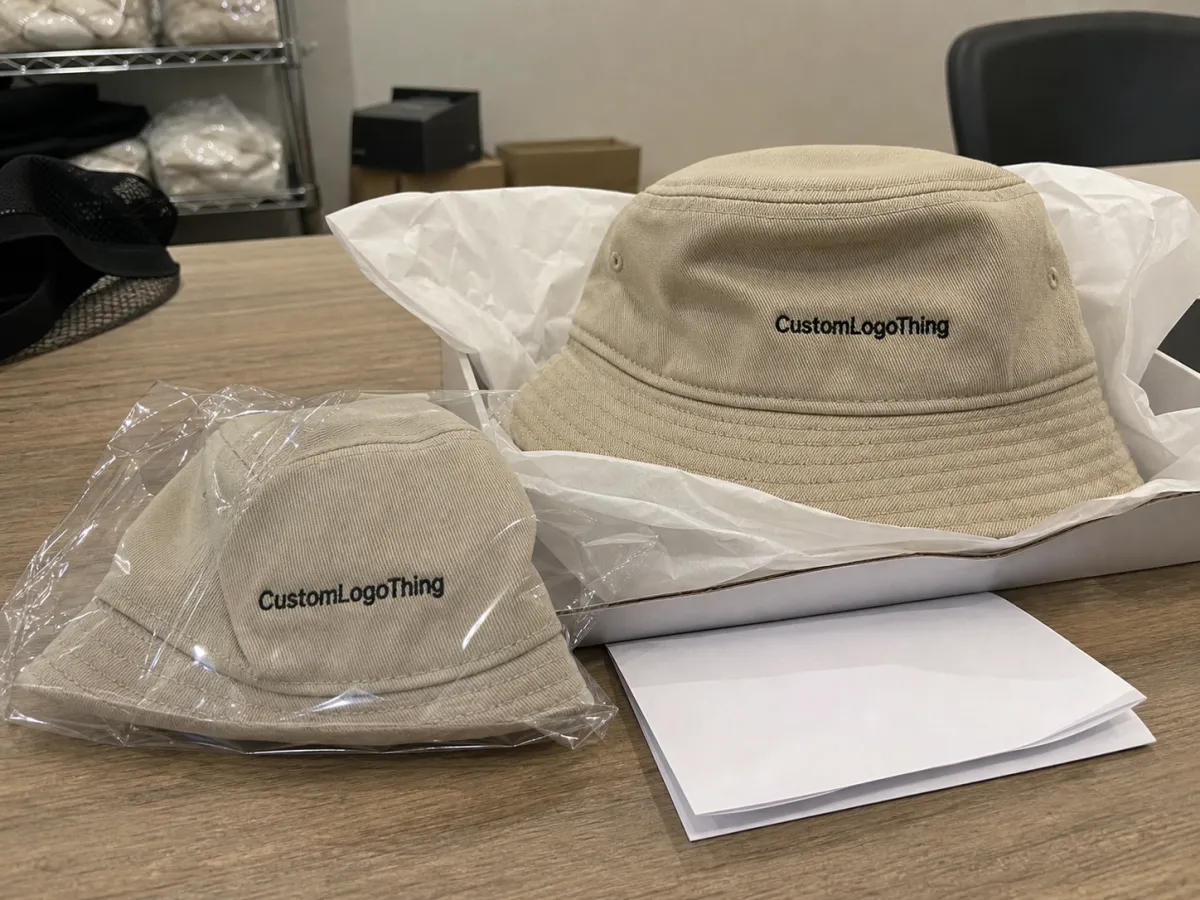
Bucket hats are small, but the shape makes them sensitive. The fabric may be soft, yet the stitched brim defines the profile, and a tight carton can leave a visible crease or wave that never fully disappears. A standard bucket hat for retail often measures about 58-60 cm head circumference, 8.5-10.5 cm crown depth, and a 5.5-7 cm brim, so even a minor fold in the wrong place can change how the hat hangs on a hook or sits on a shelf.
Hotel retail adds another layer. These programs support gift shops, resort boutiques, spa counters, and lobby stores, so the product often needs to arrive shelf-ready or very close to it. A carton that opens into a neat, count-verified inner pack is easier for a receiving team than loose hats rattling around in a case. The buyers who get the cleanest result usually define the retail presentation and the shipping method at the same time instead of treating them as separate decisions. For many programs, that means one hat per polybag, 12 or 24 units per master carton, and labels that can be scanned without opening the bag.
The cheapest carton is rarely the cheapest total solution if it creates wrinkling, repacking, or hand sorting at destination.
There is also a hidden labor cost on the hotel side. If the store team spends 20 minutes opening a case, counting units, fixing folded brims, and labeling shelf stock, that work has to come from somewhere. Multiply that by replenishment shipments over a season and a bargain pack-out starts to look expensive. A practical retail-ready pack usually keeps the gross carton weight around 10-14 kg so it can be handled safely by one person, while still leaving enough room for protective tissue, a shape insert, or a small desiccant bag if the route is humid.
Material choice plays into this too. A cotton twill bucket hat tolerates a different pack than a lightly structured polyester style with embroidery or a patch. A 100% cotton twill at 180-240 gsm behaves differently from recycled polyester or nylon taslan, especially when the crown includes foam backing, lining, or appliques. Lightweight nylon or polyester often packs more efficiently, yet it wrinkles more easily if the case is oversized or the inner bag is loose. These differences are why one generic packing rule rarely works across every style.
How Retail-Ready Packing Keeps Shape, Labels, and Counts Aligned
The packing workflow usually starts with the loose hat, then moves into a controlled fold or nest pattern, then into a protective layer such as tissue, a light insert, or a polybag. The fold should be the least aggressive one that still makes the carton dimension work. If the brim can lay nearly flat without a hard crease, that is usually better than forcing a deep fold to save a little space. A soft crown sometimes benefits from a lightweight insert made from 250-400 gsm paperboard or a molded pulp support that keeps the top from being crushed by the next unit in the stack.
Retail-ready packing is also about identification. A clean inner pack usually includes a size sticker, barcode placement that can be scanned without opening the bag, and a visible SKU or color code that makes receiving faster. That matters for hotels because replenishment orders are often handled by a back-of-house team that is not familiar with every style detail. If the case label and the inner pack label agree, the shipment moves through the system quickly. If they do not, the shipment becomes an administrative problem before it reaches the sales floor. A common setup is a 1-inch barcode label on the polybag and a matching master carton label with style, color, size range, carton count, PO number, and country of origin.
Standardized inner packs help more than buyers expect. Once the carton contains a fixed count, with the same bag type and the same label position in every case, the destination team knows what to expect carton to carton. That reduces labor, but it also protects product consistency across colorways and logo placements. A resort program with three colors may want each case built the same way so the display looks uniform and the replenishment process stays predictable. It also helps if each inner pack uses the same fold direction, because mixed fold direction can cause the stack to tilt and press on the brim.
A practical retail-ready pack usually includes three layers of control. First, the hat shape stays stable during transit. Second, the labels stay visible and scannable. Third, the count stays exact so the receiving team can verify inventory without opening every unit. Miss any one of those and the process slows down. In production, that means more than just packing carefully; it means checking the fabric roll, the stitch line, the trim placement, and the final carton count before seal-up.
- Polybags: use 0.03-0.05 mm clear bags for dust protection and scuff control; size them so they do not trap excess air.
- Barcode labels: place them where they scan cleanly without opening the pack, usually on the flat front of the polybag.
- Count verification: confirm the inner count before sealing the master carton, then re-check the carton against the packing list.
- Separation material: tissue or a light divider can help protect the brim from rubbing during transit.
- Shape support: use a simple insert if the crown collapses easily during stacking or if the brim curls under pressure.
For some hotel buyers, the ideal setup is a shelf-ready inner that can be opened and displayed right away. For others, the best setup is a compact backroom pack that prioritizes cube efficiency and fast replenishment. The right answer depends on how the hotel stores inventory, how often it restocks, and whether the retail space has room for open merchandising or needs simple stock rotation behind the counter. If the product is part of a seasonal or branded assortment, many teams also ask for a master carton with mixed size stickers but a single colorway per case to keep merchandising tidy.
Process and Lead Time: From Sample Approval to Dock Arrival
A clean program usually follows the same sequence: spec sheet, sample, packing approval, carton labeling, production, and shipment. The spec sheet is where the details live, and it should include the hat dimensions, fold method, inner pack count, outer carton count, label copy, and any special handling note for the crown or brim. Once that is approved, the supplier can build a sample pack so the buyer can see how the product actually sits in the bag and carton instead of guessing from a sketch.
The most reliable sample flow is usually three steps. First comes a proto sample to confirm the silhouette, fabric hand feel, and logo placement. Next comes a pre-production sample that uses the actual production fabric, thread, labels, and packaging. Finally, a sealed golden sample is signed off and referenced during mass production. If the product is made from organic cotton or recycled content, this is also the stage to confirm documentation for GOTS, OEKO-TEX Standard 100, or GRS where applicable, plus factory compliance files such as WRAP or BSCI if the buyer requires them.
The fastest schedules are won or lost in a few places. Design confirmation can stall if the logo placement is not locked. Barcode approval can slow down if the retail label format is not clear. Material availability can add days if the order needs custom hangtags, printed polybags, or shaped inserts. First runs usually take longer because the packing method itself needs to be proven. Reorders move faster because the supplier already knows the fold, the carton fill pattern, and the label layout. For bucket hats, embroidery on a 4-head or 6-head machine, heat-transfer labels, and sewn-in woven labels should all be approved before bulk cutting begins.
As a practical range, a simple reorder with no new packaging changes may be ready for production within about 10-15 business days after proof approval, while a first-time program often needs 18-22 business days before shipment leaves the dock. Freight is a separate clock. Domestic truck service may add only a few days, while ocean freight can add several weeks. That difference matters for hotel openings, seasonal drops, and renovation launches, where a late carton is not just inconvenient; it can leave an empty shelf during a peak booking window.
Lead time also depends on how much the pack-out differs from standard stock. If the hats are being packed flat in a basic polybag, the process is straightforward. If the order needs branded inserts, photo hangtags, or case labels that match a specific chain format, there is more room for delay. Buyers sometimes assume those add-ons are minor. In practice, each one adds a separate approval step, and every approval step can add 1-3 business days if the artwork, barcode, or carton data needs revision. A new style can also require shrinkage testing after wash, a seam-strength check, and a carton drop test before the final pack-out is released.
For production planning, the MOQ often starts around 300-500 pieces per style for a simple stock-color bucket hat and can move to 800-1,000 pieces when the order includes custom printing, specialty labels, or recycled trim combinations. Sample charges are commonly $45-$120 per piece depending on the complexity of the crown, stitching, and decoration, with the cost sometimes credited back against bulk if the order is confirmed. That is why the sample stage is not a formality; it is the cheapest place to catch a packing mistake.
Cost, Pricing, and MOQ Tradeoffs for Retail-Ready Packs
The unit price depends on the fabric, decoration, and pack-out. A plain cotton twill bucket hat with a woven label and basic polybag packaging may land around $2.50-$4.00 per unit at a 500-piece MOQ. Add embroidery, a lined crown, custom hangtags, or a printed polybag and the cost can move to roughly $3.40-$6.20 per unit. A recycled polyester version with GRS-backed content and a more detailed label package may sit a little higher because the yarn, trim, and documentation steps are more involved.
Packing itself is not free, but it is usually cheaper than downstream damage. Standard retail-ready packing additions often cost about $0.12-$0.45 per unit for polybags, inserts, barcode labels, and carton coding. A printed hangtag, custom tissue, or shelf-ready inner can add another $0.05-$0.25 per unit depending on artwork count and print volume. If the order requires laser-printed carton markings or QR-coded labels for inventory systems, there may be a small setup fee on the first run.
MOQ tradeoffs matter because the lowest-piece order is rarely the best value. A 300-piece order may be possible, but it often carries a higher material waste rate and a higher unit cost than a 1,000-piece run. At 500 units, the factory can usually plan fabric cutting, thread consumption, and packing labor more efficiently. At 1,000 units or more, the buyer may be able to reduce the per-unit price by 8%-15% if the design is stable and the packaging remains standard across colors. The same logic applies to case pack size: 12 units per carton may be more expensive to ship than 24 units per carton if the product still holds its shape.
Certifications can also affect the quote. If the buyer wants OEKO-TEX Standard 100 fabric or lining, GOTS organic cotton, GRS recycled polyester, or a factory audit such as WRAP or BSCI, the supplier may need to use certified mills, documented trims, and traceable production records. Those requirements can add lead time and sometimes a small premium, but they reduce risk in retail programs where compliance matters as much as appearance. For hotel chains with sustainability goals, the extra documentation can be worth more than a lower sticker price.
There is also a freight tradeoff. Smaller, overpacked cartons raise volumetric cost. Bigger cartons can protect shape but take up more cube. In practice, the sweet spot is often a carton that keeps the brim relaxed and the crown supported without leaving too much dead air. A well-sized master carton may save 10%-20% on freight cube versus a loose pack, while also cutting repacking labor at destination. That is why unit price should be judged alongside landed cost, not in isolation.
Step-by-Step Packing Specs for Hotel Retail Replenishment
The cleanest hotel replenishment packs are built from a written spec, not from habit. A strong spec sheet should name the exact material, decoration method, bag type, carton size, and label placement before production starts. For example, a cotton twill style may use a 200 gsm outer shell, polyester thread stitching, a woven side label, and a 0.04 mm clear polybag with one desiccant sachet per inner if the route is humid. That level of detail removes guesswork from the pack-out floor.
The next step is to define the fold. Some bucket hats are packed with the brim laid flat and the crown lightly nested. Others are packed with a shallow half-fold that reduces width without creating a hard line across the brim. If the hat has embroidery, a patch, or a structured foam front, the fold should avoid pressure on the decorated zone. A simple insert may be needed to keep the crown from caving in when cartons are stacked two-high or three-high in transit.
- Step 1: confirm fabric, decoration, and label approval on the signed spec sheet.
- Step 2: produce a proto sample and inspect the brim curve, crown depth, and stitch density.
- Step 3: approve the pre-production sample with actual polybag, barcode, and carton marking.
- Step 4: pack one hat per bag, with the barcode facing the same side on every unit.
- Step 5: count inner packs before sealing the master carton and record the lot number.
- Step 6: inspect carton weight, label accuracy, and seal integrity before palletizing.
Inspection checkpoints should be specific and repeatable. At incoming fabric inspection, check GSM, color consistency, shrinkage, and any visible slub or print shift. During sewing, verify stitch density, seam allowance, and the alignment of the brim seam. After decoration, check thread tension, patch placement, and embroidery registration. During packing, confirm that the polybag is not overinflated, the barcode scans on the first pass, and the carton count matches the packing list. Before release, a drop test from about 80-100 cm and a compression check can help reveal whether the crown will survive normal transit.
For hotel retail replenishment, it is also smart to standardize the master carton. A common setup is 12, 24, or 36 pieces per carton depending on the hat size and the amount of shaping material used. Smaller counts give better shape control; larger counts lower freight cost. The right choice depends on whether the hotel prioritizes display readiness or backroom efficiency. If the program includes multiple sizes, the carton label should show the size breakdown clearly so the receiver does not need to open the case to verify content.
Final packing should include carton sealing with consistent tape width, corner protection if the carton will be stacked, and a visible ship mark on two sides. If the product is destined for a humid climate or a long sea route, a small moisture barrier bag or kraft wrap can help protect the fabric finish. The goal is simple: when the carton arrives, the hats should be presentable with no extra labor beyond opening the case and placing the units on the shelf.
Common Mistakes That Cause Damage, Delays, or Rework
The most common mistake is over-compression. A brim that is forced into a sharp fold during packing can show a permanent line after transit, especially on cotton twill or lightly structured polyester. Another common error is using a carton that is too small for the insert, which forces the team to compress the crown just to make the lid close. That kind of shortcut saves cubic space but usually creates a retail problem when the box is opened.
Label mismatch is another frequent issue. If the barcode on the polybag does not match the master carton label, receiving teams may quarantine the shipment until the discrepancy is resolved. The same thing happens if the packing list says 24 units and the carton contains 23, or if the color code is abbreviated differently on the bag and the carton. These are small errors, but they often create a bigger delay than a sewing defect because they require manual recounting.
Bad material pairing can also slow things down. A stiff patch on a soft crown, a heavy woven label on a light nylon body, or a recycled polyester fabric paired with a bag that traps moisture can all create packing issues. In production, the right solution is usually to test the hat the way it will actually ship, not the way it looks on a sample table. If the product needs GOTS, OEKO-TEX Standard 100, GRS, WRAP, or BSCI documentation, the paperwork should be checked before bulk packing starts, not after the cartons are sealed.
Another avoidable problem is skipping a pre-shipment inspection. A good final check should include fabric shade review, stitch quality, label placement, carton count, carton sealing, and a random scan of barcode readability. Many teams also verify AQL on a standard lot basis before release. If the order is for a hotel opening or a seasonal launch, even a one-day delay can affect display setup, so catching issues before freight pickup is far less expensive than correcting them at destination.
Finally, do not ignore the destination environment. A bucket hat packed for an air-conditioned lobby store may travel differently than one going to a humid coastal property or a resort with long storage time in a back room. Humidity can affect tissue, labels, and the way a fabric relaxes after packing. A small desiccant, a breathable polybag, or a slightly larger carton can make a big difference without adding much cost.
Expert Next Steps for a Clean First Order
If you are building a first hotel retail program, start with the retail format before you finalize the product decoration. Decide whether the hats will hang, sit flat, or ship in shelf-ready inners. Then lock the carton count, label format, and fold method. Once those are fixed, the supplier can quote the hat more accurately and reduce the chance of a repack later.
Ask for a proto sample, a pre-production sample, and a sealed golden sample before bulk starts. Confirm the material spec in writing, including fabric weight, color standard, and any certification requirement. If the program needs organic cotton, request GOTS documentation. If it uses recycled polyester, request GRS support. If the retail buyer expects compliance controls, ask for WRAP or BSCI status and keep the audit file with the order records. Those details are easier to resolve before cutting than after cartons are on the dock.
For pricing, ask the supplier to separate the base hat cost from the packaging cost. That makes it easier to compare options such as one hat per bag versus a shelf-ready inner, or 12 per carton versus 24 per carton. A quote that shows $2.50-$4.00 per unit for the hat and $0.12-$0.45 per unit for packing gives you a much clearer view of the tradeoff than a single blended number. It also helps you negotiate freight cube and replenishment efficiency without sacrificing presentation.
The cleanest first order is usually the one with the least guesswork. A precise spec, a realistic MOQ, a clear sample path, and a simple inspection checklist will save more time than any last-minute rush. Once the hotel team knows the cartons open cleanly, the count is exact, and the hats still look retail-ready, the program becomes much easier to reorder.
FAQ
What is a realistic MOQ for retail-ready bucket hats? For a simple style, 300-500 pieces per color is common; for custom printing, special labels, or more complex packing, 800-1,000 pieces is more typical.
How long does production usually take? A reorder may be ready in about 10-15 business days after proof approval, while a first-time program often needs 18-22 business days before shipment leaves the dock. Freight time is additional.
What certifications matter most? OEKO-TEX Standard 100 for restricted substances, GOTS for organic cotton, GRS for recycled content, and factory compliance files such as WRAP or BSCI are the most common requests in retail programs.
What does the packaging usually include? One hat per polybag, a scannable barcode label, a consistent fold method, a carton count that matches the packing list, and a master carton label with style, color, size, and PO information.
What should be checked before shipment? Inspect stitch quality, label accuracy, carton count, barcode scanability, carton seal integrity, and whether the brim and crown still hold shape after packing and a basic drop test.

