Cuffed Beanies MOQ Lead Time Guide for Bakery Chains
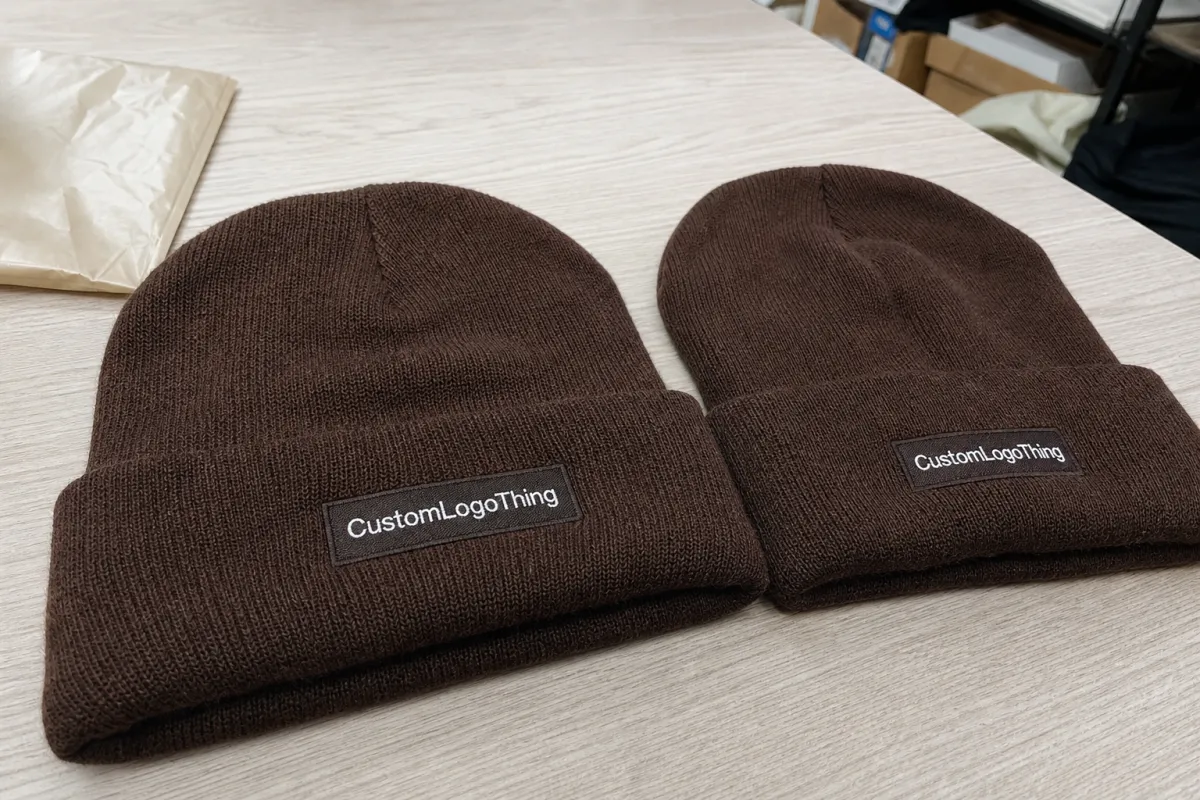
Bakery teams will debate a two-cent difference on pastry boxes, then approve branded staff wear with almost no operational planning. That gets expensive quickly. This cuffed beanies MOQ Lead Time guide for bakery chains is written for Buyers Who Need clear quantities, realistic timelines, and branded product decisions that hold up across multiple stores.
A cuffed beanie is not just a winter giveaway. It can serve as cold-weather uniform gear, early-morning loading wear, farmers market apparel, delivery driver kit, staff gifting, loyalty reward, or a limited retail item. One beanie may be seen across a pastry counter hundreds of times in a weekend. A takeout bag may be seen for a few minutes.
Disposable packaging still carries real marketing value, especially for gifting, catering, and takeout. A reusable branded item works differently. It keeps the logo visible after the purchase, and it asks more from the buyer because fit, fabric, decoration, wash wear, and distribution all affect the final result.
For multi-location bakeries, the common failures are rarely dramatic. They are practical: mismatched colors, late holiday deliveries, poor embroidery placement, cartons without store labels, or quantities that leave five locations short. A simple apparel order can become an operations problem by Tuesday morning.
The goal is to make the order easier to quote, approve, receive, display, and reorder. That means looking at product specs, decoration choices, MOQ logic, setup charges, lead time, packaging, quality checks, and the information Custom Logo Things needs before building a bakery beanie quote.
How Bakery Chains Use Cuffed Beanies Across Stores, Events, and Merch Drops
Bakery chains use cuffed beanies in more places than most first estimates capture. Staff uniforms are the obvious use. Then come new-store openings, outdoor kiosks, market crews, wholesale delivery drivers, catering teams, holiday preorder pickup staff, customer merchandise shelves, and gift bundles packed with mugs, jam, coffee, shortbread tins, or seasonal packaging.
The same base product can support different business goals. A small embroidered wordmark feels appropriate for back-of-house and counter teams. A woven patch with a bakery icon can justify a higher retail price on a merch shelf. Location-specific colorways can help regional campaigns feel planned rather than assembled from leftover blanks.
Bakery operations make the case on their own. Early bake shifts often start before sunrise. Delivery teams move between warm kitchens, cold loading zones, vans, and receiving doors. Market stalls may sit outside for four to six hours. A cuffed beanie solves a comfort problem while carrying the bakery brand in public.
Separate internal-use beanies from resale beanies before asking for pricing. Staff uniform beanies should prioritize durability, consistent color, easy reordering, and clear logo placement. Customer merchandise may need trend colors, a softer hand feel, hang tags, barcode labels, or kraft belly bands that visually connect with retail packaging.
Do the math by store count, not instinct. A 20-store bakery with 12 employees per location needs 240 staff beanies before adding manager spares, new-hire reserves, event stock, or retail merchandise. Add 10% to 15% for turnover, lost items, and size or fit preferences, and the first “small order” becomes a planned rollout.
Custom Logo Things is a custom packaging manufacturer, so the useful question is broader than whether a logo can be placed on a beanie. Apparel, labels, inserts, pastry boxes, and retail sleeves should look like one campaign, not five disconnected vendor outputs.
Product Details That Matter Before You Approve a Bakery Beanie Order
A cuffed beanie looks simple from ten feet away. It is not simple on a purchase order. Buyers should confirm the knit body, fold-over cuff, stretch fit, seam placement, decoration zone, and cuff height. A 3-inch cuff may show a logo differently than a 2.5-inch cuff once worn by real staff.
Acrylic is common because it offers a broad color range, controlled cost per piece, and dependable availability. Cotton blends can feel softer and more natural, though they may cost more and behave differently after washing. Recycled yarns can support sustainability messaging, especially when the packaging also uses responsible paper choices and clear sourcing language. Heavier knits are better suited to cold delivery routes, outdoor winter markets, and staff who spend time near open loading doors.
Decoration choice changes the character of the item. Embroidery gives a durable uniform look and often works well for simple bakery wordmarks. Woven patches hold small detail better than direct embroidery in many cases. Leatherette patches create a craft feel that may suit sourdough, coffee, and market-style bakery brands. Printed labels are lower profile and can fit minimalist identity systems.
The logo is usually the first constraint. Fine script, wheat illustrations, tiny “established” dates, thin circular seals, and delicate borders can collapse into thread noise on ribbed knit. The proof may look acceptable on screen because the artwork is flat, bright, and enlarged. The stitched beanie may not read across a pastry case.
Test simplification early. Convert a detailed logo into a short wordmark, monogram, icon, or two-color lockup that reads from six to ten feet away. Counter distance is a more useful test than zooming into a PDF at 200%.
Color also has an operational side. Flour shows on black. Cocoa and coffee dust show on cream. Butter and oil marks behave differently on heather gray than navy. Forest, charcoal, caramel, oat, dark olive, and warm brown tones often fit bakery branding while hiding daily wear better than stark white.
Practical rule: if the logo cannot be read by a customer standing across the pastry case, the decoration is too detailed, too small, or placed on the wrong surface.
Packaging add-ons can be useful when the beanies are sold, bundled, or distributed across stores. Belly bands, hang tags, kraft sleeves, barcode labels, or retail-ready header cards help staff count, display, and sell beanies beside mugs, jams, cookie tins, and gift boxes. For sustainability claims, align paper choices with credible standards such as FSC where appropriate, and avoid broad environmental language that the material spec cannot support.
Specifications to Confirm: Fit, Fabric, Decoration Area, and Packaging
A quote should be based on specifications, not loose preference. Before requesting pricing, confirm beanie style, yarn composition, finished dimensions, cuff height, decoration method, logo size, thread colors, patch material, packaging format, and carton labeling. The list looks fussy until a shipment arrives with the wrong cuff fold or no store sorting.
One-size-fits-most still deserves scrutiny. Bakery teams include kitchen staff, counter staff, delivery drivers, shift leads, managers, and seasonal hires. Some people prefer a snug watch-cap fit. Others want more crown height. A beanie that looks sharp on a product mockup may feel too tight during a 7-hour shift or too loose after repeated wear.
The decoration area is smaller than it appears. Stretch changes the surface. The seam can pull the logo off center. A fold that varies by half an inch can make the mark sit too high or too low. Most bakery buyers should prioritize legibility over maximum size; a compact logo often looks more premium than an oversized mark fighting the knit texture.
Use PMS or brand color references if available, while keeping expectations realistic. Yarn, embroidery thread, leatherette patches, woven labels, and printed packaging do not reproduce color in identical ways. A warm caramel thread may coordinate with the bakery’s kraft box print without matching it exactly. Approval should consider the full campaign, not one isolated swatch.
Packaging specifications matter for chain distribution. Store-sorted cartons, location labels, individual polybags, plastic-free sleeves, retail hang tags, and master carton counts can reduce receiving confusion. If a headquarters team has to open 18 cartons and manually divide 600 beanies, the hidden labor cost can erase savings from a cheaper unit price.
Ask about compliance and care details too: fiber content labels, care instructions, country of origin marking, and retailer-specific labeling if the beanies will be sold as merchandise. For transit testing principles and packaging performance language, ISTA is a useful reference point, even though apparel itself is not fragile in the same way as glass jars or boxed pastries.
- Fit: cuff height, crown depth, stretch, finished dimensions, and sample wear notes.
- Fabric: acrylic, cotton blend, recycled yarn, knit weight, hand feel, and color availability.
- Decoration: embroidery, woven patch, leatherette patch, printed label, size, placement, and thread colors.
- Packaging: individual bags, kraft sleeves, hang tags, barcode labels, master cartons, and store-sorted cartons.
- Approval: digital mockup first, then a pre-production sample when the launch calendar allows.
MOQ, Pricing, and Unit Cost Factors for Custom Cuffed Beanies
MOQ is not a random barrier between buyers and suppliers. It reflects setup labor, blank inventory, yarn planning, decoration setup, freight efficiency, packaging labor, quality control time, and the reality that small runs carry less room for error.
For bakery chains, MOQ logic usually splits into two paths. Orders using stock beanies with standard embroidery may start lower. Fully custom knit colors, private labels, custom patches, store sorting, and retail packaging generally push quantities higher because more materials and production steps have to line up.
Unit cost depends on beanie material, knit weight, order quantity, logo stitch count, patch type, number of thread colors, packaging style, sorting requirements, rush production, and destination freight. Setup charges and tooling fees can also apply, especially for custom patches, woven labels, hang tags, or retail-ready components.
| Order Scenario | Typical Best Fit | Cost Drivers | Buyer Watchout |
|---|---|---|---|
| Stock acrylic beanie with embroidery | Staff uniforms and delivery teams | Quantity, stitch count, thread colors, setup charges | Detailed logos may stitch poorly on ribbed knit |
| Stock beanie with woven patch | Retail merch and seasonal drops | Patch size, patch MOQ, attachment labor, packaging | Patch production may add time before sewing |
| Custom color or private-label beanie | Chain-wide brand campaigns | Yarn planning, higher MOQ, sampling, freight | Reorder planning must protect color consistency |
| Retail-packaged beanie | Gift bundles and store merchandise | Hang tags, belly bands, barcode labels, carton sorting | Low product cost can be offset by packing labor |
A low unit price can become expensive if the order arrives late, needs resorting by store, or uses weak decoration that makes the bakery brand look generic. Landed cost is the number to compare. Include setup, samples, packaging, freight, duties if applicable, rush charges, and any special handling.
Ask for tiered quotes at practical breakpoints: test quantity, staff-only rollout, staff plus spares, and retail merchandise volume. A 12-store chain might compare 150, 300, 600, and 1,000 pieces. The cost per piece often drops as the quantity rises, but inventory risk rises too, especially for seasonal colors or dated campaign artwork.
Reorder economics deserve attention. A stable yarn color, reusable decoration file, documented packaging spec, and approved carton mark can make replenishment faster and more predictable. Custom Logo Things treats beanie planning as a risk-control exercise, not a reason to push unnecessary inventory.
Lead Time and Production Steps From Artwork to Store Delivery
Lead time has a sequence: quote request, spec confirmation, artwork review, digital proof, sample approval if needed, bulk production, decoration, quality control, packaging, carton labeling, freight booking, and delivery. Miss one step and the calendar shifts.
The clock usually starts after usable artwork, approved pricing, confirmed specifications, and payment terms are complete. Delays often come from missing vector logos, low-resolution PNG files, unclear delivery addresses, late proof approvals, or undecided packaging requirements. Freight gets blamed often, but many schedule problems begin before production starts.
Standard orders can move faster when using existing blank beanies and simple embroidery. Custom knit colors, patches, private labels, belly bands, barcode labels, and store-sorted cartons need more planning. A patch that looks small on the finished item may require separate production before it can be sewn onto the beanie.
Seasonal timing is the quiet risk. Bakery chains ordering for holiday gift sets, winter uniforms, outdoor markets, or grand openings should build in buffer time because carrier capacity, supplier queues, and internal approvals compound quickly. A two-day artwork delay at the start can turn into a missed launch later.
Backward planning is the cleanest method. Start with the in-store launch date. Subtract receiving time, freight time, quality control, production, proofing, and sample approval. The remaining date is the real order deadline, not the day someone remembers the team needs beanies.
Rush production has limits. It may compress proof review, decoration scheduling, or packing priority. It cannot fix unavailable materials, incomplete artwork, unrealistic freight windows, or a buyer still deciding between navy and caramel.
- Vector logo file, preferably AI, EPS, or clean PDF.
- Pantone or brand color references for thread, patch, and packaging review.
- Quantity by store, plus spares and new-hire reserve.
- Delivery addresses, carton labeling rules, and preferred arrival date.
- Decoration preference, packaging format, and retail labeling needs.
Coordinated planning matters because beanies rarely launch alone. If your bakery is also ordering printed bags, gift box inserts, labels, or sleeves, Custom Logo Things can align branded merchandise and packaging timelines so the rollout looks intentional from the counter to the retail display.
Quality Checks and Supplier Questions That Prevent Expensive Reorders
Supplier selection is risk control. The cheapest quote may ignore logo distortion, inconsistent cuff folds, missed ship dates, weak packaging, or unmarked cartons. Those issues cost money after the invoice looks approved.
Ask direct questions before ordering. What is the true MOQ? Which decoration method fits this logo? Is a sample available? What is the current production queue? Can cartons be labeled by store? What artwork file is required? Are setup charges included or separate? What changes after reorder?
Proofs deserve more attention than they usually get. Check logo size, placement, thread color, patch edge, cuff orientation, beanie color, packaging label, and whether the design appears centered when worn. A centered logo on a flat mockup can shift once the cuff stretches around a head.
Quality control criteria should be plain: consistent knit tension, clean embroidery, correct thread colors, secure patch attachment, accurate quantities, readable labels, and damage-free packaging. If the beanies are retail items, packaging presentation matters nearly as much as the beanie itself.
Hidden labor is real. If cartons arrive unsorted at headquarters, a bakery team may spend paid hours repacking by location. If labels are missing, store managers may guess which box belongs to them. If the order is short, the loudest complaint will come from the location that had the strongest launch plan.
Brand perception is not abstract here. A bakery that obsesses over laminated dough layers should not put employees in loose, unevenly decorated beanies that tell a different quality story. Customers notice when the merch looks less considered than the croissants.
Keep documentation. Approved proofs, sample photos, spec sheets, carton marks, reorder notes, and packaging files should live in one place. If repeat ordering is likely, ask how long artwork files, thread references, patch specs, and packaging dielines will be kept on record. Custom Logo Things also routes buyers to its custom order FAQ for common artwork, production, and shipping questions.
Next Steps to Get a Fast, Accurate Beanie Quote for Your Bakery Chain
A fast quote starts with complete information. Before contacting Custom Logo Things for a custom cuffed beanie quote, prepare the total quantity, number of bakery locations, estimated quantity per store, staff versus resale split, target delivery date, logo file, brand colors, preferred beanie colors, decoration preference, and packaging requirements.
Include the business context. Uniforms, holiday gift boxes, market crews, delivery teams, grand openings, loyalty rewards, and retail merchandise do not need identical specifications. A staff beanie may call for simple embroidery and a durable stock color. A retail beanie may need a woven patch, hang tag, barcode label, and store-ready carton labeling.
Ask for options rather than one flat quote. A budget-friendly embroidered version, a premium patch version, and a retail-packaged version can reveal the real cost difference before approval. That comparison is especially useful when internal teams are weighing unit cost, MOQ, packaging labor, and reorder feasibility.
Review the quote like an operator, not just a buyer. Compare cost per piece, true MOQ, lead time, sample availability, setup charges, packaging assumptions, freight method, carton labeling, and reorder notes. If the launch date is fixed, send it early. The supplier can then identify whether standard production, rush review, or phased delivery is more realistic.
Custom Logo Things is built for branded packaging and merchandise decisions that need to work across multiple stores. For artwork, production, and shipping basics, review the Custom Logo Things FAQ, then send the operational details that affect your quote.
Use this guide as the briefing document before requesting pricing, so the quote reflects how the beanies will actually be used, packed, shipped, received, displayed, and reordered.
FAQ
What is the typical MOQ for custom cuffed beanies for bakery chains?
MOQ depends on whether the order uses stock beanies with decoration or fully custom materials, colors, patches, and packaging. Bakery chains should request tiered pricing so they can compare staff-only quantities against broader retail or seasonal merchandise quantities. A practical MOQ discussion should include setup, decoration, sorting, packaging, and reorder plans, not just the lowest possible starting number.
How long is the lead time for embroidered cuffed beanies for bakeries?
Lead time depends on artwork readiness, proof approval speed, decoration method, material availability, order size, packaging requirements, and freight method. Orders using existing blank beanies and simple embroidery usually move faster than custom knit colors, patches, private labels, or store-sorted retail packaging. Bakery chains should plan backward from the in-store date and build in buffer time for proofing, production, quality control, and shipping.
What affects the unit cost of cuffed beanies for a bakery uniform program?
Major cost drivers include quantity, knit material, beanie weight, logo stitch count, patch type, number of colors, packaging format, carton labeling, freight, and rush needs. The lowest unit price is not always the lowest total cost if the order requires extra sorting, arrives late, or needs replacement due to poor decoration quality. Ask for landed cost, including setup, packaging, freight, and any special handling.
Should a bakery chain choose embroidery or patches for branded cuffed beanies?
Embroidery is durable and clean for staff uniforms, especially when the logo is simple and readable. Woven, leatherette, or printed patches can work better for detailed logos, premium retail merchandise, or seasonal brand drops. The best method depends on logo complexity, desired look, budget, quantity, and whether the beanies are for employees or customers.
What files and details are needed for a cuffed beanie MOQ and lead time quote?
Prepare a vector logo, brand color references, estimated quantity, number of locations, delivery deadline, decoration preference, beanie color ideas, and packaging requirements. Include whether the order is for staff uniforms, resale, delivery teams, events, or gift bundles because use case affects the recommended specification. If store-by-store distribution is needed, provide location counts and carton labeling requirements before the quote is finalized. For related ordering questions, the FAQ can help clarify common production details before you request pricing.


