Custom Cuffed Knit Beanies for brewery winter drops work because they solve two problems at once. They keep people warm, and they turn the folded cuff into a clean brand surface that shows up in taprooms, on sidewalks, and in customer photos all season long. For a brewery, that combination is hard to beat. The item feels useful first, promotional second, and that is usually the difference between merch that moves and merch that sits.
The strongest versions are simple on purpose: a stretchy rib knit, a cuff that holds its shape, and decoration that reads clearly without crowding the fabric. That balance is what gives custom Cuffed Knit Beanies for brewery winter drops their appeal. The product looks seasonal and premium, but the order itself stays manageable if the art and construction are planned with real production limits in mind.
Breweries tend to come back to this style because it fits a wide audience. One one-size accessory can work for staff, regulars, and gift buyers. One decoration zone can carry the brand without clutter. One winter release can support a whole set of branded items, from boxes to inserts to taproom signage, without making the promotion feel overbuilt.
Custom cuffed knit beanies for brewery winter drops: what they do
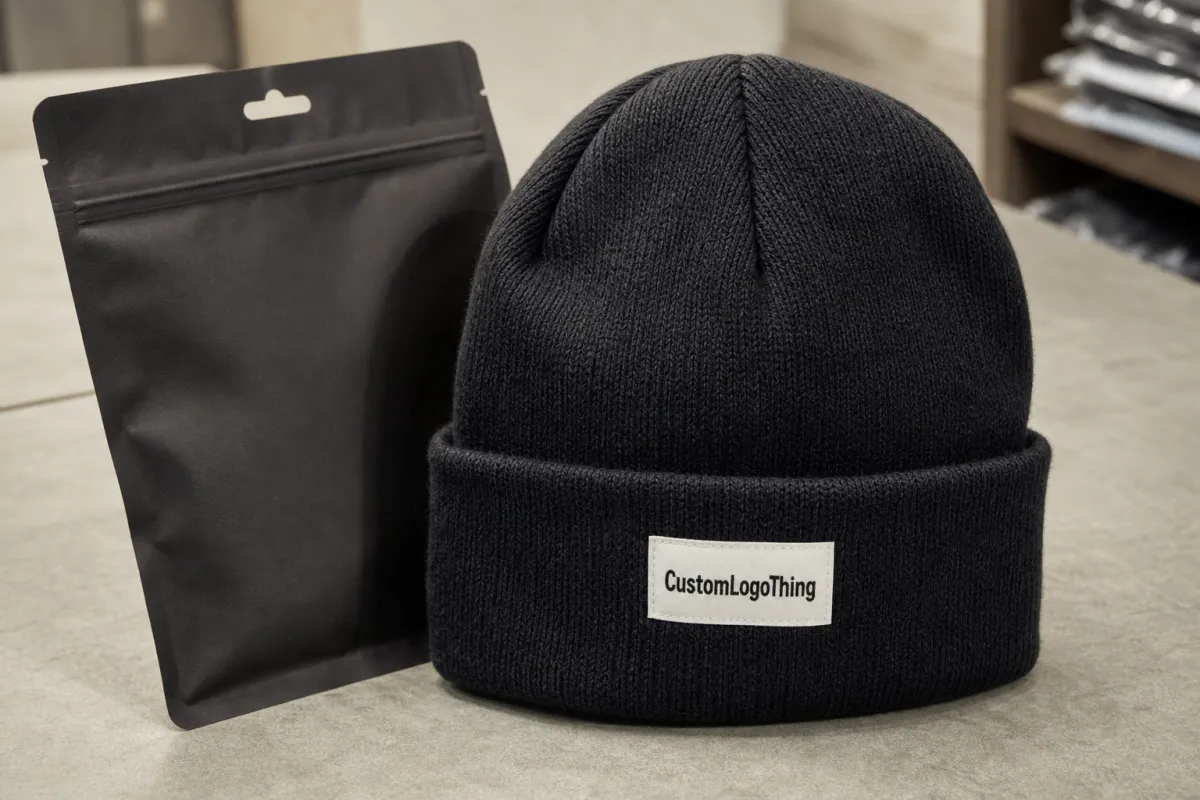
A cuffed knit beanie is a basic product, but the folded brim changes how it performs as merch. The cuff creates a visible panel right where the eye lands, so the logo has a much better chance of being noticed than if it were placed on the crown or hidden in a busy pattern. That is one reason these beanies often outperform novelty winter items. The decoration has a practical home.
The knit itself matters. Most styles use a rib structure that controls stretch and recovery, which affects comfort as well as appearance. A tighter rib usually feels more refined and helps embroidery or a woven label sit flatter. A looser knit can be softer at first touch, but it may let artwork distort once the beanie is worn. For brewery merch, that distinction matters because the product is going to be handled often, pulled on and off, and photographed in less-than-perfect lighting.
The best brewery beanies are usually the ones that look calm from a few feet away and still hold up close. A simple mark on the cuff, one or two brand colors, and a shape that sits cleanly on the head almost always ages better than a crowded graphic trying to say too much. If the item feels deliberate on the shelf, it has a better chance of feeling collectible instead of generic.
A winter beanie earns its place when it looks right in the taproom, in a bundled order, and after a few months of wear. If it only photographs well, the design missed the point.
How the knit structure and cuff decoration work
The construction details are where quality shows up. Crown shape affects how the beanie sits. The rib knit affects stretch and recovery. The folded cuff determines how much space you have for decoration. If those pieces work together, the beanie feels balanced. If they fight each other, the logo can look cramped and the fit can feel off.
Decoration choice changes both the look and the buying experience. Embroidery gives a classic stitched finish and works well for bold, legible marks. Woven labels are useful when the artwork is detailed or the logo needs sharper edges than knit construction can support. Sewn patches add texture and usually feel more retail-ready. Knit-in graphics can look excellent for simple artwork, but they need more planning because the knit grid softens fine detail. For custom cuffed knit beanies for brewery winter drops, the right method depends on the logo, the target price, and how elevated the final piece needs to feel.
Cuff height deserves more attention than it usually gets. A taller cuff gives more room for logo placement and usually improves visibility across a merch wall or crowded bar. The tradeoff is proportion. Push the cuff too tall and the beanie can sit high or feel top-heavy on some head shapes. Keep it too short and the branding area shrinks fast. That is why mockups alone are not enough. A proof should show the actual cuff height, not just a flat version of the artwork.
Material density plays into that same decision. A stable knit holds edges better and gives decoration a cleaner base. A loose knit can stretch in ways that make even good artwork look uncertain. That is especially noticeable in winter merch, where customers tend to handle the piece before buying and judge it by feel as much as by style. For a brewery release, that hand feel is part of the sale.
Cost, MOQ, and unit pricing basics
Pricing usually comes down to five levers: yarn blend, number of knit colors, decoration method, packaging, and whether the order includes custom labeling or retail finishing. If a quote is higher than expected, one of those levers is usually the reason. There is not much mystery in it, but the details change the landed cost quickly.
MOQ has a direct impact on unit price. Smaller runs carry more setup cost per piece because the knit program, decoration setup, and finishing steps still need to happen. Larger quantities spread those costs across more units. For custom cuffed knit beanies for brewery winter drops, a 200-piece run will usually cost more per beanie than a 1,000-piece run, even with the same artwork. That is normal and worth planning for early.
Here are broad ranges that reflect common production conditions before freight, duties, and domestic distribution:
| Option | Typical MOQ | Approx. Unit Price | Best For |
|---|---|---|---|
| Basic acrylic knit, single-color decoration | 100-250 pcs | $4.50-$7.50 | Taproom merch, staff wear, lower-risk seasonal tests |
| Acrylic-wool blend with woven label | 250-500 pcs | $6.75-$10.50 | Premium winter drops, online retail, gift bundles |
| Heavier knit with patch or embroidery and custom tag | 500-1,000 pcs | $8.50-$14.00 | Limited releases, higher perceived value, retail packaging |
Those ranges move with yarn selection and finishing complexity. Exact brand color matching, a second decoration location, split colorways, or special trims can push the quote up. Custom tags, hangtags, polybags, belly bands, and insert cards also add cost. If the beanie is going to sit beside custom printed boxes, gift sets, or other branded packaging, it is better to budget those details from the start than to add them after the margin is already set.
The more useful budgeting question is not what is cheapest. It is what version will actually sell at the target price point. For brewery merch, that answer depends on the audience, the season, and whether the item is meant to feel like a premium retail piece or a simpler add-on.
Production steps and lead time from proof to delivery
The production path is usually straightforward, but only if each step is handled in order. It starts with art setup and proofing, then moves to yarn and color confirmation, knitting, finishing, inspection, packing, and shipment. If any of those steps gets rushed, the risk rises fast. That is why winter drops work best when the artwork is approved early and the launch date is already fixed on the calendar.
Delays usually show up in predictable places. Artwork that is not vector-ready slows proofing. Color changes add back-and-forth. Late quantity changes can stall the order after it is already in motion. A pre-production sample can also add time, but it is often worth it because it catches stitch density issues, placement errors, and label alignment problems before the full run starts.
A realistic planning window is often 12-18 business days after proof approval for simpler orders, with more time needed for larger quantities, multi-color knits, or busy freight periods. That is not a promise. It is a planning range that helps keep a release from slipping into the wrong part of the season. If the beanie is tied to a beer launch, holiday promotion, or gift set, work backward from the on-sale date and leave room for transit and receiving.
Quality control should not be vague. The best checks are practical: measure cuff height against the proof, verify logo placement on several units, compare yarn color under neutral light, and inspect the decoration after the fabric has been stretched and released. Labels should sit flat. Patches should be centered. Edges should not curl in a way that makes the cuff look sloppy. Those are small details, but they decide whether the product feels premium or rushed.
If the beanie is part of a larger release that includes product packaging or counter display materials, the schedule should account for all of it together. A winter merch drop usually works better when the garment, the packaging, and the sales moment are built as one system instead of handled in separate silos.
Choosing yarn, fit, and color for brewery merch
Yarn choice is a balance of feel, durability, and budget control. Acrylic is the workhorse because it is consistent, easy to source, and comfortable enough for everyday wear. Wool blends usually feel warmer and a little more elevated, which can matter if the beanie is meant to sit at a higher retail price. Mixed yarns try to balance those strengths. There is no single right answer, only the right match for the audience and the target margin.
Fit should be judged by stretch recovery rather than a rigid size chart. Most cuffed beanies are intended to fit a wide range of heads, and the better ones bounce back after repeated wear. A beanie that stretches out too quickly starts looking tired before winter is over. Comfort matters, but recovery matters just as much because it affects how the item presents after a few weeks on shelves or in daily use.
Color strategy deserves more care than it often gets. High-contrast combinations read better in low light, outdoors, and across a busy taproom. A dark charcoal body with a light logo is usually easier to read than two shades that sit too close together. Tonal palettes can work, but they need deliberate handling if the goal is a premium look. If the beanie is meant to feel collectible, restraint usually helps. If it is meant to be highly visible, contrast matters more than subtlety.
Wear context should guide those choices. A beanie for ski weekends or outdoor beer festivals may need a denser knit and a deeper crown than one sold mostly in a heated retail space. In colder regions, buyers often prefer a cuff that sits low enough to cover the ears without losing the logo on the front. Those details are not cosmetic. They affect sell-through.
Common mistakes that weaken winter merch sales
The biggest mistake is forcing a logo that is too small or too detailed into a knit format. Textured yarn does not behave like paper or screen print. Tiny letters disappear quickly once the fabric stretches. If the cuff is the main branding zone, the artwork has to be bold enough to survive real wear. A mockup may look fine. The finished piece may not.
Weak contrast causes a lot of quiet failures. Colors that look attractive on screen can vanish once they are stitched or woven into a textured surface. Brewery teams sometimes choose colors they like individually without checking how those colors perform together in knit form. The result is a product that feels softer than intended and loses clarity from even a few feet away.
Ordering too few units can backfire too. Winter merchandise often has a short sales window, and a second run may arrive after the moment has passed. That does not mean every brewery should overbuy. It means the first quantity should reflect actual demand, taproom traffic, online reach, and the event schedule. If the beanie is tied to a limited beer release, sell-through matters more than inventory pride.
Another common issue is skipping wear testing. A beanie that twists, itches, or stretches out too fast will not feel premium, no matter how strong the logo is. A small sample round or even a quick staff check can catch fit and comfort issues before the bulk order is locked in. That is a low-cost step with a high return.
Bottom line: the lowest-risk beanie is usually the one with simple art, stable knit construction, a clear color contrast, and finishing that can survive a season of handling, weather, and repeat wear.
Expert tips to make a beanie drop feel collectible
The easiest way to make the item feel special is to tie it to the release itself. A limited colorway, a seasonal woven label, or a small mark that signals the winter drop can give the beanie a defined place in the brewery's calendar. That does not require a busy design. In fact, the strongest custom cuffed knit beanies for brewery winter drops are usually restrained and let the material, fit, and finishing do most of the work.
Keep the artwork simple, then add value through the details. A neat patch, a woven label with tight edges, or a clean hangtag can raise perceived quality without cluttering the front of the beanie. Those parts matter more than most first-time buyers expect because they are visible at the exact moment customers decide whether the piece feels worth the price.
Bundles can help move inventory without forcing a discount. A beanie paired with a winter beer release, a preorder package, or a gift set gives the item a clearer role in the sale. It also makes the product feel planned instead of leftover. That can be especially useful for breweries that want the merch to sit naturally beside other packaged goods rather than stand apart from them.
It helps to plan the design so it can be reordered cleanly if the first run performs well. Reorder-safe artwork saves time, protects consistency, and keeps the winter line easier to manage across multiple seasons. For custom cuffed knit beanies for brewery winter drops, that kind of setup often matters more than a flashy first run. A style that can be repeated well is usually more valuable than one that only works once.
Next steps for a smooth brewery beanie order
Start with the basics: vector artwork, brand colors, target quantity, preferred decoration method, and the delivery date tied to the winter release. If those five pieces are clear, pricing and proofing usually move faster. If they are fuzzy, revisions multiply and the schedule gets harder to hold.
Then decide what role the beanie plays. Is it a merch table item, a preorder bonus, an event giveaway, or a retail add-on? That choice affects quantity, finish level, and presentation. A giveaway can be simpler. A retail piece needs stronger visual appeal and more attention to display and packaging.
Ask for a proof that shows scale, placement, and color balance on the cuff. That single step catches more issues than most buyers expect. It shows whether the logo is large enough, whether the cuff height is working, and whether the contrast will read from across the room. If custom cuffed knit beanies for brewery winter drops are supposed to feel on-brand, the proof has to be treated like a production decision, not a formality.
A strong final checklist is still pretty short: confirm the decoration method, approve the art, lock the quantity, verify the release date, and make sure the finishing details match the rest of the merch system. That is usually enough to keep the order from drifting off schedule or landing with the wrong tone.
For breweries building winter merch with staying power, custom cuffed knit beanies for brewery winter drops remain one of the most dependable seasonal pieces. They are warm, wearable, and easy to merchandise when the structure, color, and finishing are handled with care.
Frequently Asked Questions
How many custom cuffed knit beanies should a brewery order for a winter drop?
Start with the channel that will actually move the product, then add a small buffer for staff wear, promo use, and late buyers. If the beanie is tied to a limited beer release, sell-through should matter more than a large speculative run, because winter merch can slow down quickly once the season shifts. Taproom traffic, online reach, and the event calendar usually tell you more than a generic industry number.
What decoration works best on brewery cuffed knit beanies?
Woven labels, embroidery, and sewn patches are the most common choices because they stay legible on textured knit fabric. A taller cuff gives more room, but simple logos usually look sharper than dense artwork with tiny details. The right method depends on the brand voice: subtle for premium presentation, bold for high visibility.
What drives MOQ and unit cost for brewery winter beanies?
Yarn selection, color count, decoration method, and packaging choices are the main cost levers. Smaller runs carry more setup cost per piece, while larger quantities usually bring the unit price down. If you want custom labels or retail-ready packing, build those finishing steps into the quote from the start so the landed cost is not a surprise later.
How long does production usually take after approval?
The timeline usually includes proof approval, knitting, finishing, inspection, packing, and shipping. Simple orders can move in a couple of weeks after approval, but complex colorwork, sample revisions, and seasonal freight demand can stretch the schedule. Approving art early is the easiest way to protect a winter release date.
Do cuffed knit beanies hold up after repeated wear and washing?
Acrylic and acrylic-rich blends usually recover well and are practical for everyday merch. Durability depends on stitch density, yarn quality, and how securely the decoration is attached. Follow the care guidance and avoid high heat so the beanie keeps its shape longer and the cuff stays crisp.

