Custom Cuffed Knit Beanies for Ski Resort Merchandise Buyers
A beanie sells because people can wear it immediately. That is why custom Cuffed Knit Beanies for ski resort merchandise often beat bigger apparel pieces: they are easy to size, easy to gift, and easy to grab at checkout without a fitting-room debate.
In a resort shop, that matters more than most buyers want to admit. Guests want something useful the moment they step outside, and a cuffed knit hat delivers that fast. The cuff also gives you a clean logo zone, which is a lot smarter than turning the whole hat into a billboard that nobody wears after the trip.
Good resort merch has to do two jobs. It needs to feel like a souvenir, and it needs to survive real mountain weather. That is where the humble beanie keeps winning.
Why One Small Beanie Can Outsell a Whole Apparel Rack
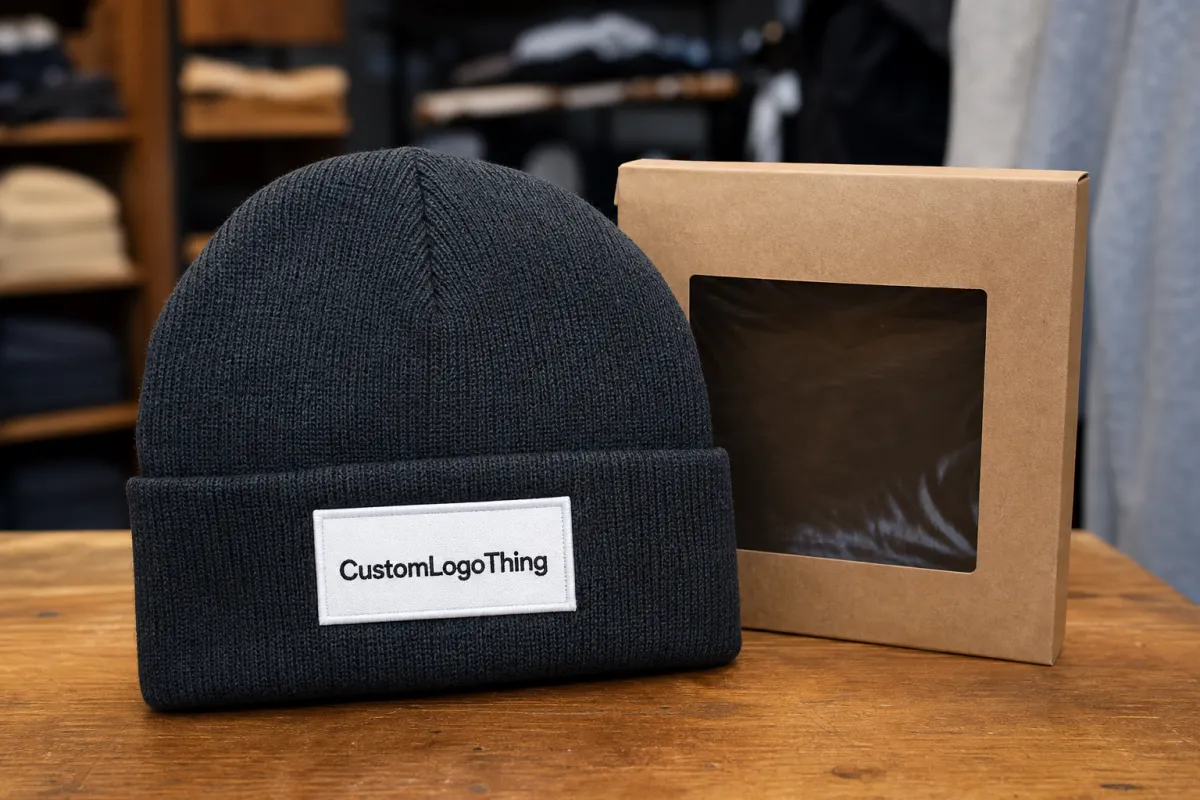
People buy with their hands before they buy with their heads. A beanie is small, tactile, and low-risk. Guests can hold it, stretch it, picture it on their head, and decide in seconds. A jacket or hoodie asks for more time, more size confidence, and more budget. Resort retail does not always have that luxury.
There is also the cold-weather impulse factor. A guest walks in with windburned ears, spots a knit hat with the mountain name on it, and the purchase suddenly feels practical instead of indulgent. That is a rare combination. It is why Custom Cuffed Knit Beanies for ski resort merchandise perform so well near lifts, lodge entrances, ticket counters, and checkout lanes.
The cuff helps in a second way: it gives you room for branding without making the hat look loud. A 2.5 to 3 inch cuff can carry an embroidered mark, woven patch, or sewn label clearly enough for photos, but it still leaves the beanie wearable in the real world. That balance is the whole trick. Resort shoppers want something they will actually wear after the trip, not a souvenir that sits in a drawer collecting dust like a sad receipt.
A good resort beanie is quiet branding. It does its job on the mountain and in every guest photo after that.
From a packaging buyer’s point of view, this is the same logic behind strong branded packaging and clean package branding: make the product easy to understand, easy to trust, and easy to carry out the door. The best items do not need a long pitch. They just need to look right.
How Custom Cuffed Knit Beanies for Ski Resort Merchandise Are Built
A cuffed knit beanie is simple on paper and slightly more annoying in production than most buyers expect. The body is usually a rib knit, which gives stretch and recovery. The cuff is folded and secured so the logo lands in the same spot every time. The knit gauge, yarn weight, and stitch density determine whether the hat feels soft and slouchy or structured and warm.
For resort merch, most buyers want a mid-weight winter knit that feels substantial without becoming stiff. A denser rib helps the hat hold shape after repeated wear, especially if the guest stuffs it in a jacket pocket and brings it back out ten times a day. Softer fashion knits can look good on a display wall, but they often trade away warmth and recovery. That tradeoff is not always wrong, just usually wrong for ski country.
Decoration changes the look fast. Embroidery is clean and durable for simple logos. Woven patches handle tighter details and give a more badge-like, premium finish. Sewn-on labels are best when you want minimal branding and a quieter retail look. On a cuffed beanie, the cuff becomes your front porch. Use it well.
Color also matters more than some buyers think. Heather yarns soften the look, while contrast cuffs can make the logo pop without adding much production complexity. Color blocking can help a resort stand out in a crowded gift shop, but too many yarn changes raise setup time and cost. The smart move is usually one clean body color, one accent, and one logo treatment that reads from six feet away.
If you are comparing this with other product packaging decisions, the logic is similar to packaging design for retail shelves: keep the structure practical, let the branding breathe, and do not make the customer work for the message. For hat programs that include hangtags, inserts, or display cards, the same discipline applies to Custom Packaging Products too.
Production Steps and Timeline: From Art File to Delivery
Most delays start before anything gets knitted. Bad artwork, fuzzy color expectations, and endless approval loops are the usual culprits. If the art file is clean, the process is straightforward enough: review, proof, sample, production, finishing, and packing.
- Artwork review: The vendor checks logo size, stitch count, and file quality. Vector art or a high-res clean file saves time.
- Digital proof: You confirm placement, colors, and decoration method. This is where small mistakes are cheapest to fix.
- Sample or strike-off: Some programs skip this, but when color match matters, sample approval is worth the calendar time.
- Yarn selection and knitting: The factory locks the yarn lot and starts the run.
- Embellishment and finishing: Patches, embroidery, labels, trims, and shaping happen here.
- Packing and shipping: Units are bagged, carton-packed, and prepared for delivery.
For timing, a simple stocked-beanie program with an embroidered patch can move in about 12 to 18 business days after proof approval, depending on factory load and shipping method. A more custom knit with multiple colors, woven labels, or a sample round often runs closer to 18 to 30 business days. Rush orders are possible, but they usually narrow decoration choices and raise the unit price. Fast and cheap is a lovely fairy tale. It is not a production plan.
If your delivery needs to hit before opening weekend or holiday traffic, build a buffer. Two weeks of extra breathing room can save the season. For cartons traveling through regional distribution, it is worth asking whether packaging and transit handling align with common testing methods such as ISTA. If your hangtags or insert cards are paper-based, FSC certification is a clean way to support the sustainability story.
In ski resort merchandising, missing the first snow window is not a small problem. It is the difference between full-price sell-through and boxes of inventory sitting in a back room until the next storm.
Cost, Pricing, MOQ, and Unit Cost Drivers
Pricing for custom cuffed knit beanies for ski resort merchandise usually lands in a few recognizable bands. Smaller runs cost more per unit because setup gets spread over fewer pieces. Bigger runs reduce the pain. That is not mysterious; it is just how production works.
For many resort buyers, a practical reference looks like this:
| Build | Typical MOQ | Common Unit Range | Best Use |
|---|---|---|---|
| Stock blank with embroidered patch | 100-200 pcs | $2.50-$4.50 | Fast seasonal fill-in or test order |
| Custom cuffed knit with simple embroidery | 300-500 pcs | $3.25-$5.75 | Core resort shop program |
| Custom knit with woven label or patch upgrade | 500+ pcs | $4.50-$7.25 | Premium souvenir or multi-location rollout |
| Heavier custom build with extras | 500+ pcs | $6.00-$8.50 | Flagship gift shop or bundled retail set |
The main cost drivers are pretty consistent: yarn type, knit complexity, cuff length, logo method, label type, packaging, and total quantity. A simple one-color body with one embroidered mark is easier on the budget than a multi-color jacquard knit with a custom woven patch and private-label hangtag. Buyers sometimes try to save fifty cents and then spend two dollars fixing the result. That is not a bargain.
If you want the smartest place to spend, put money into yarn quality and decoration clarity. A better hand feel and a cleaner logo usually matter more than another tiny design flourish nobody can see at checkout. Save the savings on extras that do not change the guest’s first impression.
How to Spec the Right Resort Beanie
The right spec starts with fit. If the beanie is too loose, it looks sloppy. Too tight, and guests will leave it on the rack. For most resort retail programs, a medium cuff depth and enough stretch to fit a broad range of adult heads is the sweet spot. If your shoppers often wear helmets or goggles, a lower-profile crown and a cuff that does not fight the eyewear will sell better than an overly bulky style.
Then decide how visible the brand should be. Simple embroidery works best for clean logos and sharp wordmarks. Woven patches are better for detail-heavy marks or badges that need a more premium feel. Sewn labels are the quiet option, which can be great for fashion-forward mountain shops that want the beanie to read as apparel first and souvenir second.
Color should follow the shop, not ego. Charcoal, black, navy, oatmeal, and forest green usually move well because they match most outerwear and do not scream for attention. A brighter resort colorway can be worth testing if the mountain already owns a strong visual identity. In crowded retail, contrast helps. In guest selfies, contrast helps again. Funny how that works.
For retail packaging and presentation, do not overcomplicate the beanie just because the word “premium” sounds nice in a meeting. A neat hangtag, barcode sticker, or folded sleeve often does more for shelf appeal than a heavy box. If you are building a gift set or online bundle, then custom printed boxes can make sense. Otherwise, keep the package branding clean and direct. The product should still be the star.
If you are coordinating hats with inserts, tags, or bundled pieces, it helps to keep the rest of the Custom Packaging Products in the same visual lane so the program feels intentional instead of patched together after a late-night email chain.
Honestly, the best resort beanie is usually the one that feels boring on paper and sells like crazy in the shop.
Common Ordering Mistakes That Waste Money or Time
The biggest mistake is approving art that looks fine on a screen but turns into mush at cuff size. A logo that is too thin, too detailed, or too compressed will not magically become legible because you want it to. Knit and embroidery both have limits. Respect them.
Another classic error is choosing the cheapest decoration and then discovering it cannot survive the actual use case. Ski resort gear gets snow, sweat, sunscreen, beanie hair, and repeated washing. If the logo needs to stay clean through all of that, a flimsy print is a bad bet. Better to spend a little more on the right decoration than to replace weak merch halfway through the season.
Skipping samples is tempting. It is also how color surprises happen. Knit texture changes the way colors read, and thread color rarely matches digital mockups perfectly. If the resort has a strict brand palette, ask for physical swatches or sample photos before production. A proof on a laptop is not a color standard. It is a guess with a nice font.
The last trap is underestimating shipping time. Resorts do not care that production was “almost done” if the boxes arrive after peak traffic. Put a buffer between approval and in-store launch. If you want to move fast, make that decision early and keep the spec simple.
Screen art is not cuff art. If the logo needs tiny detail to work, the hat is probably the wrong canvas.
Expert Tips for Selling More at the Resort Shop
Placement matters as much as the product. Put the beanie where guests feel the cold: near ticket counters, rental desks, locker areas, and checkout lanes. That is where the impulse hit happens. A wall of hats three aisles away from the door is a nice display, but it is not the same thing.
Bundling helps too. Pair the hat with gloves, neck gaiters, or a small patch card and the average ticket climbs without forcing a full apparel sale. That is useful product packaging strategy, not just merchandising. The customer is already in buying mode; your job is to make the next item easy.
Use limited colorways if you want the item to feel collectible. A resort-specific version, a lodge edition, or a staff-only color can move faster than a generic hat that looks like it came from a bulk bin. That is especially true in gift shops where guests want proof they were somewhere specific and slightly cold.
High-contrast branding also photographs better. Guests take selfies. They post them. Then your beanie becomes free advertising, which is a nice outcome if the logo is readable and the colorway does not fight the jacket. This is where strong branding design beats random decoration every time.
For shops that care about presentation, keep the shelf story consistent: a clean hangtag, a tidy fold, and a label that matches the rest of the seasonal line. That is the retail version of coherent branded packaging. If you also need inserts, labels, or display pieces, the same workflow can support Custom Packaging Products without turning the order into a mess of separate vendors.
Next Steps Before You Request Quotes
Before you ask for pricing, get the basics in one place. You will get cleaner quotes and fewer revision rounds if you send quantity, target delivery date, logo file, decoration preference, and a realistic budget range from the start. Buyers who skip that step usually spend the next week playing email ping-pong with themselves.
- Quantity: Confirm your opening order and whether you need the same item for multiple locations.
- Artwork: Send vector files or the cleanest version you have.
- Color target: Include PMS references or physical examples if the resort has strict brand colors.
- Decoration method: Decide whether embroidery, patch, woven label, or a mix makes sense.
- Delivery date: Work backward from lift opening, holiday volume, or a launch event.
- Packaging needs: Note whether you need hangtags, sleeves, retail packaging, or bundle boxes.
It also helps to ask for sample photos, knit specs, and lead-time ranges before you compare vendors. That keeps the comparison honest. A quote that looks cheaper may hide a weaker yarn, a slower schedule, or a decoration method that does not belong on a mountain shop floor.
If you want the order to feel easy on the first round, send the details that matter and leave the guesswork out. That is the fastest path to custom cuffed knit beanies for ski resort merchandise that look right, arrive on time, and sell in the place they are supposed to sell.
Frequently Asked Questions
What is the usual MOQ for custom cuffed knit beanies for ski resort merchandise?
MOQs usually depend on whether the beanie is stock-based or fully custom knit. A simple setup can sometimes start in the low hundreds, while more customized programs often begin around 300 to 500 pieces. Ask whether the MOQ changes by color, patch style, or private-label tag, because that is where the number can move.
How long do custom cuffed knit beanies usually take to produce?
Simple orders can move fairly quickly once the proof is approved, often in the 12 to 18 business day range before shipping. More custom builds, samples, or complex label work usually stretch that into 18 to 30 business days. Rush timelines exist, but they tend to narrow your options and raise the unit price.
Which decoration method works best for ski resort beanies?
Embroidery is strong for simple logos and durable wear. Woven or sewn patches are better when the logo has fine detail or should look more badge-like. The best method depends on your art, budget, and whether the hat needs to feel sporty, premium, or somewhere in between.
What yarn or knit style is best for resort merchandise beanies?
A mid-weight rib knit usually gives the best balance of warmth, stretch, and shape retention. Softer yarns can feel nicer on first touch, but denser knits often hold up better in cold, repeated-use conditions. If the beanie is meant for real mountain use, prioritize warmth and recovery first.
Can I match resort colors and still keep the beanie comfortable?
Yes, but the easiest path is to keep the design simple and avoid too many yarn changes. Contrast cuffs, small accent colors, or one strong brand tone can get you close without making the beanie stiff or expensive. Always review physical swatches or proofs before production, because knit color reads differently than a flat screen mockup. That is why custom cuffed knit beanies for ski resort merchandise work best when the spec stays disciplined and the branding stays readable from across the shop.

