One reusable magnet can replace a stack of disposable decals if the surface is metal and the message keeps changing. That is the practical appeal of custom magnetic stickers: they work like temporary signage, but without adhesive residue, scraper marks, or the commitment of a permanent decal.
For buyers, the decision is rarely about novelty. A service company can brand a vehicle during work hours, remove the sign later, and keep the door panel clean. A retail team can mark a steel shelf for a promotion, then swap the message next week. A warehouse crew can move location labels as inventory zones change.
The cost only holds up if the magnet is specified correctly from the start. Too thin, and it may curl or slide. Too large for the surface, and the edges become failure points. Printed without the right coating, it may scuff before the campaign is over.
What Custom Magnetic Stickers Are—and Where They Win
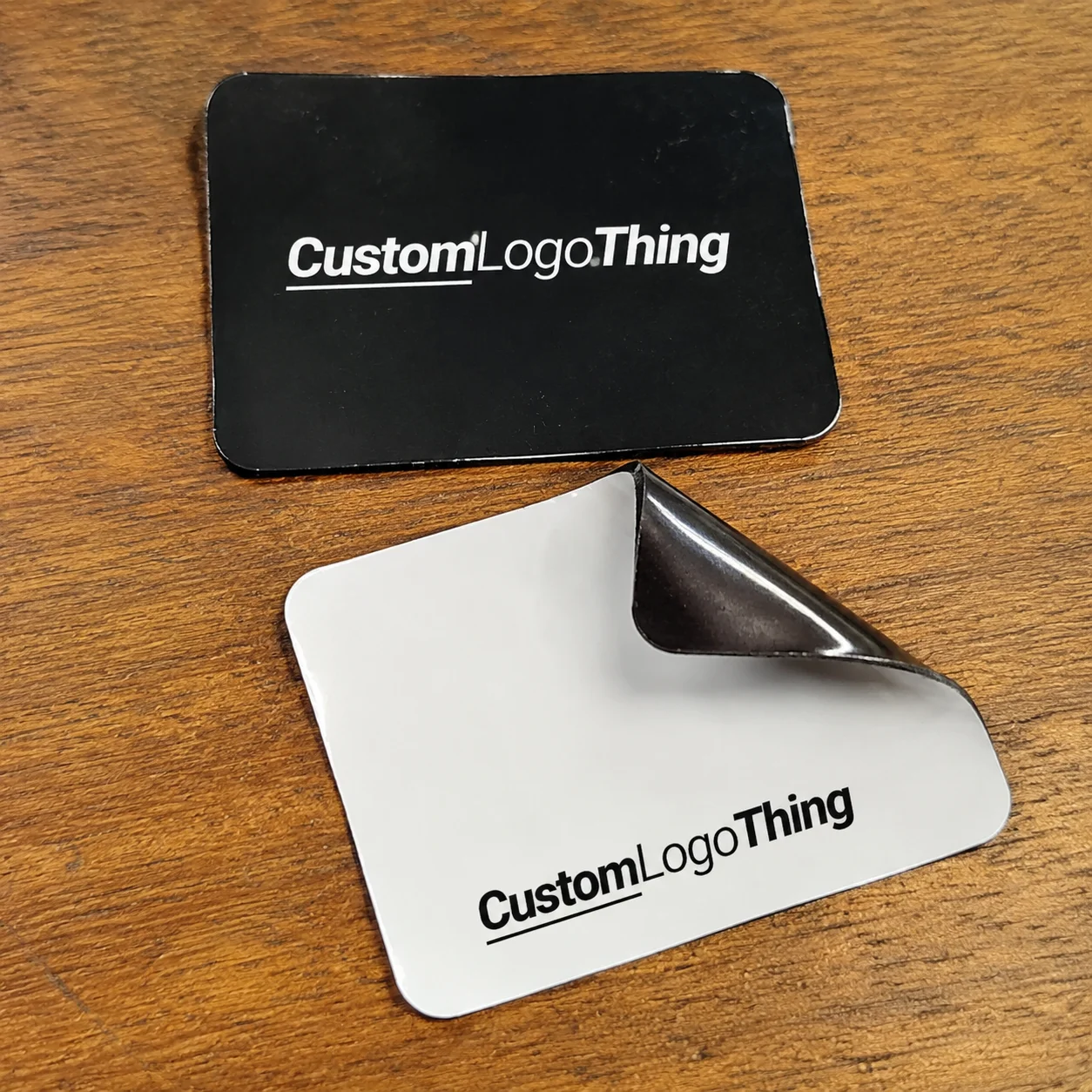
Custom magnetic stickers are printed flexible magnets. They are not adhesive stickers with a magnetic-looking finish. That distinction matters because the product grips by magnetic force, not glue. It can be removed, repositioned, stored flat, and reused on compatible metal surfaces.
The applications are broader than vehicle doors. Magnets are common as refrigerator promos, locker decorations, warehouse rack labels, event directional signs, retail shelf markers, machinery notices, temporary service alerts, and reusable menu or price panels. If the message needs to move, and the surface is steel or iron, a magnet is often worth pricing.
Vehicle door signs remain the familiar example, often ordered in pairs around 12 x 18 inches, 18 x 24 inches, or similar panel-friendly dimensions. Size should follow the vehicle, not the catalog template. Handles, trim, curves, and body lines can shrink the usable flat area faster than a spec sheet suggests.
From a packaging buyer’s perspective, magnets sit between printed labels and rigid signage. They are more reusable than paper labels, less permanent than adhesive vinyl, and easier to distribute than heavy display boards. They can also support wider package branding programs: a brand might use Custom Labels & Tags on products, custom printed Boxes for Shipping, and magnetic shelf markers for retail staff during seasonal resets.
Quick reality check: magnetic stickers only work on ferrous metal. They will not grip aluminum, plastic, glass, wood, fiberglass, many stainless steel grades, or a painted panel that is not metal underneath.
That limitation should be checked early. Stainless steel is a classic trap. Some grades contain enough iron to attract a magnet; others barely respond. Vehicle panels can be tricky too, especially if a door has body filler, a replacement aluminum panel, or a heavy paint repair. A small test magnet can prevent a costly wrong order.
The buying decision comes down to a few variables: material thickness, print finish, magnet strength, size, cost, proofing, and production timing. None is complicated alone. Together, they decide whether the finished piece looks sharp, stays flat, and survives actual use.
How Flexible Magnet Material Holds Without Adhesive
A typical flexible magnetic sticker starts with a magnetized sheet, usually ferrite powder mixed into a flexible polymer binder. The printed side may be direct printed or laminated with a printable face stock. A protective coating or film is added when the job needs scratch resistance, weather exposure, or a specific finish. Final pieces are cut square, rounded, kiss-cut on sheets, or contour-cut around the artwork.
The grip comes from the magnetic field connecting with iron-rich metal. More complete contact means better hold. Thickness helps, but it does not solve everything. A 30 mil magnet on a dirty, curved, wet surface can perform worse than a thinner magnet placed cleanly on a flat steel panel.
Surface condition is the unglamorous variable buyers underestimate. Dust creates tiny air gaps. Deep texture reduces contact. Moisture can allow sliding. Heavy paint layers weaken the pull slightly because the magnet is not touching bare metal. Curved panels make the edges work harder; once an edge lifts, wind and handling keep pulling at it.
Indoor use is more forgiving. Refrigerator magnets, locker magnets, and steel cabinet labels may use thinner material because they face limited wind, UV, and grit. Outdoor use is harsher. Rain, heat, road dust, freezing temperatures, and repeated removal all test the edges and print surface.
Vehicle magnets need the most caution because airflow changes the load. At highway speed, a lifted corner is not a minor cosmetic flaw. It is the start of a failure.
Safe handling habits are simple. Clean both the magnet and the metal surface. Dry them before application. Apply the magnet flat from one edge to the other, pressing out trapped air. Remove vehicle magnets before automatic car washes. Avoid fresh paint, body filler, and surfaces that feel warm enough to soften or distort flexible material.
ASTM material and print test methods can be useful reference points for abrasion, coating, and durability expectations. Distribution testing organizations such as ISTA also provide broader guidance on packaging and shipping performance for products that must arrive flat and undamaged.
Key Specs That Decide Durability, Grip, and Print Quality
Spec sheets can look dry, but they protect the budget. The same artwork can behave very differently depending on magnet thickness, coating, size, and cut style. Many ordering mistakes begin with a vague request for “a magnet” instead of a description of the job the magnet has to do.
Thickness and Use Case
Flexible magnet thickness is often described in mils, where 1 mil equals 0.001 inch. Light indoor promotional magnets may be around 15 to 20 mil. General-purpose magnets often sit near 20 to 25 mil. Vehicle and outdoor applications commonly call for heavier material, often around 30 mil, depending on size, surface, and exposure.
Not every order needs the heaviest option. A small indoor locker magnet does not need the same mass as a large truck door sign. Thicker material usually improves grip and flatness on vertical steel surfaces, but it also increases shipping weight and can be less forgiving on tight curves. Thin material mails cheaply and bends easily. Used in the wrong setting, it may curl sooner or lift at the edges.
Size, Shape, and Viewing Distance
Small magnets are easy to mail, hand out, and include in retail packaging kits. A 2 x 3 inch refrigerator magnet can carry a QR code, service phone number, or reorder reminder. Larger magnets create stronger visual impact, but they need flatter surfaces and more edge contact. A 24 x 36 inch magnet might look excellent on a smooth steel cabinet and fail on a curved vehicle panel.
Design for distance. Text viewed from 3 feet can be much smaller than text meant for a moving vehicle or event aisle. As a rough rule, increase letter height as viewing distance grows. Keep phone numbers, service categories, and action-oriented copy in high-contrast color combinations.
Print, Coating, and Cut Options
Full-color printing works well for photos, gradients, illustrations, and branded packaging graphics. Spot colors can help with brand matching, though exact matches depend on substrate, coating, and press setup. Digital proofs are essential for checking placement, spelling, margins, and cut lines, but they cannot perfectly predict how ink will look on every magnet face stock.
Gloss finishes make colors appear brighter and are common for promotional pieces. Matte finishes reduce glare, which helps in bright retail or warehouse lighting. Lamination adds a protective layer for scratch resistance and outdoor durability. Rounded corners are a small upgrade with real value because sharp corners catch, bend, and lift faster.
| Spec Choice | Best Fit | Trade-Off to Check |
|---|---|---|
| 15–20 mil magnet | Indoor promos, fridge magnets, mailers | Lower grip for outdoor or vertical stress |
| 25 mil magnet | General labels, lockers, steel cabinets | May still be light for large vehicle signs |
| 30 mil magnet | Vehicle doors and outdoor notices | Higher shipping weight and material cost |
| Gloss coating | Bright promotional graphics | More glare under strong lighting |
| Matte lamination | Readable signage and premium finishes | Slightly softer color appearance |
Artwork should be supplied as vector logos when available, with high-resolution images at final size. Add bleed. Keep critical text inside safe margins. Outline fonts. Avoid hairline strokes. If the magnet is contour-cut, the cut path should be clear and separate from the print art. These are the same habits that make packaging design, product packaging, and retail packaging print more cleanly.
Compared with adhesive vinyl decals, custom magnetic stickers win on removability and reuse. Adhesive decals win on non-metal surfaces, long-term mounting, and complex curves. Choose based on the surface and lifespan, not habit.
Pricing, MOQ, and Unit Cost Factors to Check Before Ordering
Pricing is not only about square inches, although size is a major driver. A quote usually reflects material thickness, magnet size, print coverage, finish, cut complexity, order quantity, packaging, and shipping weight. Oversized pieces can cost more than expected because they consume more magnetic sheet, require careful cutting, and often need protective packing to prevent curling or edge damage.
Unit cost normally falls as quantity rises. Setup, file review, proofing, press preparation, and finishing time are spread across more pieces. A small test run may be sensible even if the unit price looks high. A campaign for franchises, field teams, or retail distribution often benefits from larger quantity breaks.
Typical market pricing varies widely, but buyers often see small indoor magnets in the low cents to sub-dollar range at higher quantities. Larger laminated vehicle magnets can run several dollars each or more. For example, a 5,000-piece run of small printed fridge magnets might price around $0.18–$0.45 per unit depending on size and finish. A pair of larger 30 mil vehicle magnets may land closer to $18–$55 per pair depending on dimensions, coating, quantity, and packaging.
Those ranges are directional, not a promise. Freight, material selection, finishing, and rush timing can move the number quickly.
| Order Scenario | Common Quantity Range | Cost Factors That Matter Most |
|---|---|---|
| Small refrigerator promo | 1,000–10,000 pieces | Size, print coverage, sheet yield, packing method |
| Warehouse rack labels | 250–5,000 pieces | Variable data, kiss-cut sheets, readability, finish |
| Vehicle door magnets | 10–500 pairs | Thickness, lamination, size, flat packing, freight |
| Retail display markers | 500–20,000 pieces | Multiple artwork versions, color control, bundling |
Minimum order quantity depends on production method and supplier setup. Short runs are useful for pilot testing, sales samples, and one-location events. Larger runs make sense once the design is approved, the surface has been tested, and distribution is planned.
Hidden quote variables include rush production, multiple artwork versions, individual bagging, bundled sets, split shipping, and variable data such as SKU numbers or store names. Ask for a good-better-best quote. Compare thickness, coating, and quantity breaks side by side.
Also calculate cost per use. A reusable magnet that works for 30 events may beat a cheaper single-use sticker, especially on vehicles, recurring retail displays, and service notices. If magnets are part of a broader launch, coordinate them with Custom Packaging Products so the visual system feels intentional instead of patched together.
Process and Timeline: From Artwork to Finished Magnets
The ordering process should be boring in the best possible way. Choose the size and use case. Submit artwork. Confirm material thickness, coating, and cut style. Review a digital proof. Approve production. Receive shipment. Problems appear when one of those steps is skipped or rushed.
Proofing is more than a formality. It checks spelling, color placement, bleed, margins, cut line position, logo clarity, and whether the design fits the final shape. If the magnet includes a phone number, QR code, coupon code, compliance notice, or warehouse location, proof it like money depends on it. Sometimes it does.
Production usually follows a straightforward path: print, coat or laminate if needed, cut, quality check, pack, and ship. For simple rectangular magnets, production can be efficient after proof approval. Contour cuts, oversized pieces, multi-version artwork, variable data, or custom packaging add steps.
A realistic plan might allow several business days for proofing and file corrections, then additional production time based on quantity and complexity. Many standard jobs are measured in business days rather than weeks, but event deadlines deserve padding. Magnets are heavier than paper labels, so freight can become a schedule and budget issue, not just an afterthought.
- Before quoting: confirm finished dimensions, quantity, and intended surface.
- Before proofing: send vector logos, brand colors, fonts, and any required text.
- Before production: approve cut lines, bleed, margins, and coating choice.
- Before launch: build in time for shipping, repacking, and field distribution.
Delays often come from low-resolution logos, artwork built only for screens, late proof approval, unclear dielines, special material requests, and rush-order bottlenecks. A 72 dpi logo pulled from a website may look acceptable in an email and fall apart at 18 inches wide. A cut path hidden inside the art file can add another round of questions.
For trade shows, seasonal campaigns, retail launches, and vehicle fleet rollouts, a one-week buffer is cheaper than rush charges after a proof sits in someone’s inbox. For products that need responsible paper-based components alongside magnets, standards and certifications from organizations such as FSC may also matter for cartons, inserts, and supporting print materials.
Common Mistakes That Make Magnetic Decals Fail
The biggest mistake is assuming every shiny surface is magnetic. Aluminum shines. Glass shines. Stainless steel shines. None guarantees magnetic grip. Test the exact surface first, especially on vehicles, appliances, fixtures, and repaired panels.
The second mistake is choosing the thinnest material for outdoor vehicle use because the first quote looked attractive. Thin magnets can be excellent indoors. On curved doors, large panels, or speed-exposed applications, they are more likely to curl, slide, or lift. The cheapest spec can become expensive if replacements, refunds, or field complaints follow.
Dirty and wet surfaces cause another category of failure. Trapped grit can scratch paint. Moisture can reduce friction and invite sliding. Fresh paint may be vulnerable to staining or imprinting if covered too soon. Uneven surfaces create air gaps, and air gaps reduce hold.
Design mistakes are just as common. Tiny text disappears. Weak contrast looks fine on a backlit screen but fades in print. Cluttered layouts make the magnet work too hard. No bleed creates white edges after cutting. The fix is not glamorous: use proper files and design for the viewing distance.
Storage also matters. Do not fold magnets. Do not crease them. Do not stack printed faces against each other without protection if the finish can scuff. Store pieces flat in a cool, dry place. Extreme heat can encourage curling or distortion, especially if magnets are left in a vehicle or warehouse corner for long periods.
Finally, do not treat magnetic decals like permanent signage. Periodic removal and cleaning protect both the magnet and the surface. If a magnet slides, test the metal, clean both sides, try a flatter area, and consider stronger or thicker material. If the surface itself is not magnetic, no coating or clever artwork will fix that.
Build a Smarter Magnet Order Brief
A good order brief saves time, money, and rework. Start with the surface. Is it clean, flat, smooth iron or steel? Then define the environment. Indoor cabinet? Outdoor vehicle? Refrigerated fixture? Warehouse rack? Next, decide how long the message needs to last and how far away people must read it.
Measure the actual application area instead of guessing. A vehicle door may have trim, handles, panel curves, or body lines that reduce the usable flat space. A retail fixture may look magnetic from the front but use aluminum or plastic inserts. If there is uncertainty, photograph the surface and send the image with the quote request. Better yet, test with a small magnet before ordering thousands.
Select one primary job for the magnet. Identify a vehicle. Label inventory. Promote a service. Support an event. Create a reusable retail sign. Trying to make one piece handle every possible job usually leads to the wrong size, too much copy, and a compromised spec.
Prepare files like a print buyer, not a screenshot collector. Send vector logos when available. Include brand colors, outline fonts, provide the intended finished size, and add any mandatory disclaimers or contact details. If the magnet needs to match package branding across Custom Printed Boxes, retail packaging, and inserts, share those reference files too. Consistency is easier before proofing than after production starts.
- Which magnet thickness fits this surface and environment?
- Is lamination recommended for outdoor use or heavy handling?
- What is the MOQ, and where are the best quantity breaks?
- How are digital proofs reviewed, and what changes are included?
- Will the magnets ship flat, bundled, bagged, or packed in sets?
For larger campaigns, order a sample or short pilot run before full rollout. That is especially useful for outdoor use, multiple locations, vehicle fleets, or store fixtures with unknown metal content. Custom magnetic stickers work best when the order brief matches the surface, setting, budget, and timeline—not just the artwork.
FAQs
Are custom magnetic stickers the same as regular stickers?
No. Regular stickers use adhesive, while magnetic stickers use flexible magnet material that grips compatible metal surfaces. They are removable and reusable, but they only work on ferrous metal surfaces. They are better for temporary signs, vehicle panels, lockers, refrigerators, and labels that need to move.
What surfaces do magnetic stickers stick to best?
They work best on clean, flat, smooth iron or steel surfaces. They usually do not stick to aluminum, glass, plastic, wood, fiberglass, or many stainless steel surfaces. For vehicles, test the exact panel first because some doors, hoods, or repaired areas may not be magnetic.
How thick should custom car magnets or magnetic decals be?
Indoor magnets can often use thinner material because they face less wind, moisture, and handling. Vehicle or outdoor magnets usually need thicker material for better grip and durability. The right thickness depends on size, surface curve, speed exposure, and how often the magnet will be removed.
How much do custom magnetic stickers cost?
Cost depends on size, thickness, quantity, print coverage, coating, cut shape, packaging, and shipping weight. Larger quantities usually reduce the unit cost because setup and proofing are spread across more pieces. For accurate pricing, request quantity breaks and compare material options rather than asking for one flat price.
How should I care for reusable magnetic stickers?
Clean the magnet and the metal surface before applying to prevent trapped dirt, scratches, and sliding. Remove vehicle magnets before automatic car washes and avoid leaving them on freshly painted surfaces. Store magnets flat in a cool, dry place so they do not curl, crease, or lose edge contact.