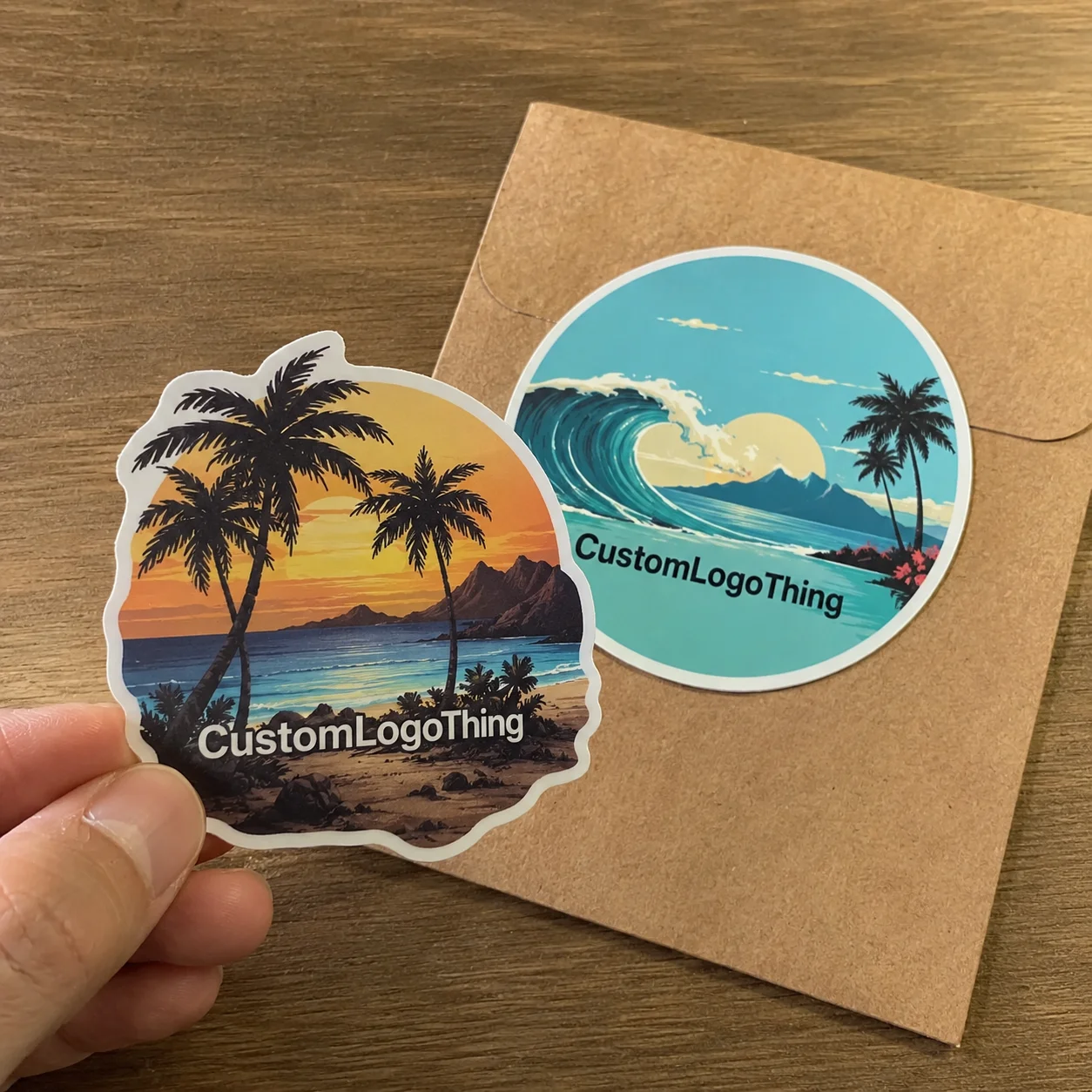
Order Custom Matte Vinyl Stickers That Look Premium
A small sticker can change how a plain mailer, jar, candle box, or retail bag feels before the customer reaches the product. That is why custom matte vinyl stickers deserve more attention in packaging design. They sit at the awkward, useful intersection of branding, function, durability, and first impression.
Matte vinyl is not the right answer for every label. Sometimes paper is enough. Sometimes gloss is smarter. But for brands that need a low-glare finish, stronger handling performance, and a more controlled shelf presence, matte vinyl often earns its cost.
What Custom Matte Vinyl Stickers Are Really Best For
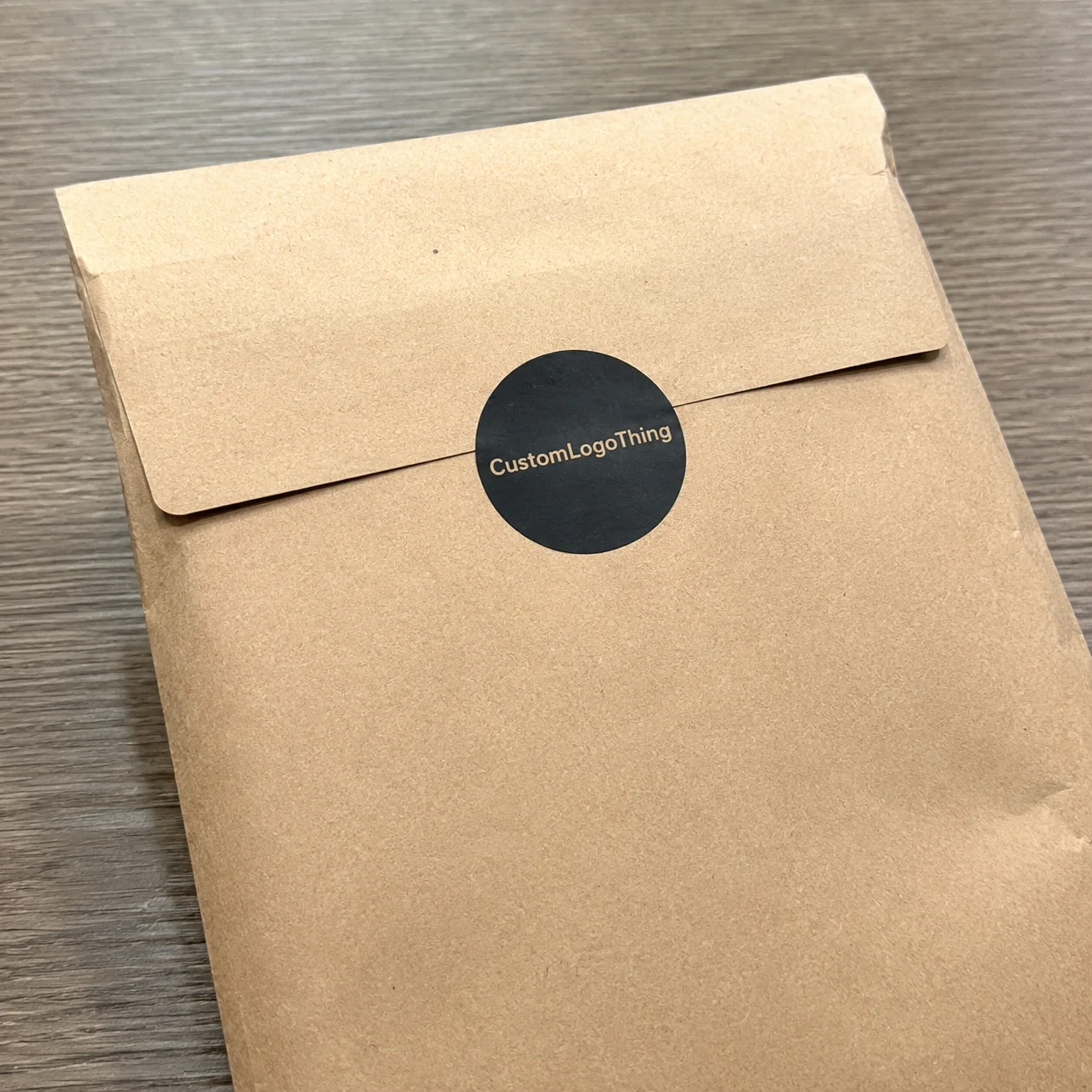
Custom matte vinyl stickers are printed adhesive pieces made from durable vinyl film with a non-gloss surface. The finish cuts glare and gives the print a softer, more deliberate look than a shiny label. That matters on premium candles, skincare jars, subscription mailers, coffee bags, event kits, merch inserts, and branded closures.
The practical material choice is simple. Paper stickers can work beautifully on dry indoor packaging, especially low-contact items. Vinyl is generally more moisture-resistant, more flexible, and better suited to handling, shipping, refrigeration, occasional outdoor exposure, and surfaces that bend slightly. If a sticker needs to survive a fulfillment center, a damp countertop, a tote bag, or a laptop, vinyl is usually safer.
Matte has a different psychological effect than gloss. Gloss shouts. Matte whispers. That restraint can signal craft, sustainability cues, boutique retail packaging, or a higher-end identity. It is not automatically premium, but buyers often connect low-glare finishes with intentional design because matte surfaces resemble soft-touch cartons, uncoated stocks, and luxury paperboard.
These stickers fit many jobs: logo seals, thank-you stickers, QR code stickers, product labels, event giveaways, laptop decals, subscription box inserts, branded closures, and small add-ons for Custom Packaging Products. Matte does not mean dull. Strong contrast, clean typography, and proper ink density can make a matte sticker look sharp, expensive, and quietly confident.
How Matte Vinyl Sticker Printing and Finishing Work
The normal production path is direct: prepare artwork, print onto vinyl, add the matte surface or protective finish, cut to shape, check quality, and pack for shipment. The result depends on the details inside those steps. A sticker can have the right design and still feel cheap if the cut is ragged, the ink rubs, or the adhesive does not match the surface.
Most short-to-medium custom runs use digital printing because it handles full color, variable artwork, and smaller quantities without plate costs. For many packaging buyers, that makes 250, 1,000, or 5,000 stickers practical without committing to a warehouse full of labels.
The matte appearance can come from different constructions. Some jobs use matte vinyl face stock. Others use a matte laminate over the printed ink. Some rely on a coating. For higher-contact uses, matte laminate is often the more durable choice because it can improve scuff resistance during shipping, retail display, or manual application.
Cut format matters too. Kiss-cut stickers stay on a backing sheet, which makes peeling easier. Die-cut stickers follow the outer shape of the design, useful for logos and merch. Roll stickers make sense when staff need to apply hundreds or thousands quickly, especially on product packaging lines or busy packing benches.
Adhesive is not a footnote. Permanent adhesive suits packaging seals, product labels, and retail closures. Removable adhesive may work for short promotions, temporary surfaces, or event badges, but it may not hold as aggressively under moisture, cold, or friction. Smooth glass, plastic, metal, coated paperboard, and many mailers are usually friendly surfaces. Dusty kraft, cold glass, oily containers, and heavy texture can cause lifting.
Production rule of thumb: approve a proof only after checking size, crop, spelling, contrast, cut path, material, finish, adhesive, and quantity. A five-minute proof review can prevent 5,000 wrong stickers.
Key Specs That Decide Durability, Feel, and Shelf Appeal
Size is not just a design preference. A 1.5-inch round logo seal works well on tissue paper, mailers, and small bakery boxes. A 3-inch or 4-inch product label can carry more information, but it needs cleaner hierarchy. A larger promotional decal behaves more like merch than packaging. Different job, different spec.
Shape sends a signal before the customer reads a word. Circles feel friendly and are fast to apply by hand. Rectangles make room for ingredient lists, batch codes, warnings, QR instructions, or barcodes. Ovals can feel boutique, especially on jars and candles. Custom die-cuts create stronger brand recognition, but complex edges may slow application and raise cost.
Thickness and flexibility deserve attention. A thicker vinyl can feel more substantial on a laptop decal or giveaway sticker. A thinner film may wrap better around curved jars, tubes, bottles, tins, and pouches. If the sticker crosses a fold, seam, or tight radius, ask for a material recommendation rather than assuming heavier is better.
Matte vinyl softens reflections, but a matte laminate adds practical protection. That extra layer can help resist light scratching, ink rub, and handling marks. For packaging that moves through packing benches, cartons, courier networks, and retail shelves, this can separate “premium” from “handled too much.”
Color shifts slightly under matte finishes. Bright reds, deep blacks, and saturated blues can still look strong, but muted palettes may feel quieter than expected. Build contrast. Use negative space. Avoid tiny gray text on beige or pastel backgrounds. On dark containers, clear pouches, or colorful Custom Printed Boxes, ask about white ink, transparent vinyl, and opaque coverage. Without a white underbase, some colors can look weak or translucent.
Environmental exposure changes the specification. Indoor box seals have different demands than stickers for water bottles, coolers, cars, outdoor gear, or refrigerated packaging. If the use involves moisture, sunlight, abrasion, or dishwasher-like conditions, say so before the quote. ASTM material tests and ISTA distribution standards are not sticker shopping terms most buyers use daily, but they are useful reminders: packaging is judged by real handling, not just the press sheet. For broader transit testing context, the International Safe Transit Association is a credible reference point.
Cost and Pricing Factors Before You Request a Quote
Sticker pricing usually depends on quantity, size, material, finish, shape complexity, print coverage, proofing needs, and packaging format. Unit cost drops as volume rises because setup, file preparation, machine handling, and material waste are spread across more pieces.
A small round matte logo sticker ordered in bulk will cost less per unit than a large contour-cut sticker with heavy ink coverage, laminate, and complex trimming. Obvious on paper. Less obvious in quoting, where many requests leave out size, surface, and end use. Missing details force suppliers to guess, and cautious guesses tend to cost more.
Minimum order quantity depends on equipment, material format, roll or sheet setup, and finishing. Some digital jobs can start around 100 to 250 pieces. More efficient price breaks often appear around 500, 1,000, 2,500, and 5,000 pieces. Treat those as planning ranges, not guarantees, because every supplier builds pricing around its own equipment and workflow.
| Sticker Scenario | Typical Use | Likely Cost Drivers | Planning Range |
|---|---|---|---|
| Small matte logo seal | Mailer flap, tissue wrap, retail bag | Simple shape, low ink coverage, bulk quantity | Often lower unit cost at 1,000+ pieces |
| Product label | Jar, pouch, bottle, candle box | Size, color coverage, adhesive, information density | Moderate cost; proofing matters |
| Die-cut brand decal | Merch, laptop sticker, event giveaway | Custom cut path, laminate, thicker vinyl | Higher cost per unit, especially at low volume |
| Roll-applied packaging sticker | High-volume packing station | Roll direction, core size, label gap, application method | Best value when repeated consistently |
The cheapest quote is often the least informative quote. If adhesive quality, color consistency, lamination, or cut accuracy are weak, a lower unit price can become expensive through returns, reprints, or slow application. Ask whether proofs, cut-line setup, revisions, shipping, rush handling, and tax are included. Compare total delivered cost, not just the first number in the email.
One practical budgeting move: order slightly more than the exact project count. For a launch needing 1,000 labeled boxes, ordering 1,100 or 1,200 stickers covers application mistakes, damaged packaging, photo samples, influencer kits, and last-minute wholesale requests. Running short by 37 stickers can delay a full packing schedule.
Process and Timeline: From Artwork to Finished Stickers
The ordering process usually follows a clean sequence: choose specs, upload artwork, receive a proof, approve or revise, move to production, complete quality checks, and ship. The timeline depends less on the word “custom” and more on proof speed, artwork quality, order size, finishing complexity, and the current production queue.
Common delays are predictable. Missing vector files. Low-resolution logos. Unclear cut lines. Unconfirmed sizes. Color expectations based on a glowing phone screen. Late proof approvals. None of these sound dramatic, but each can add a day or more if the supplier has to ask follow-up questions.
A useful proof should show final dimensions, bleed, safe area, cut path, material, finish, quantity, and any special notes such as roll direction. If the job uses a clear material, dark substrate, white ink, or a special adhesive, the proof should make that visible in plain terms.
Rush orders require realism. A simple repeat order with an approved file can often move faster than a new custom die-cut shape with three revisions. Shipping time should also be treated separately from production time. “Ready to ship” does not mean “arrives tomorrow,” especially near major retail resets, trade shows, holiday promotions, or subscription box packing deadlines.
For planning, many custom printed sticker orders land somewhere around several business days to two weeks after proof approval, depending on volume and finish. Larger roll jobs, specialty materials, and physical sample approvals can take longer. If the stickers support a launch, build in a buffer. Packaging rarely fails at one dramatic point; it fails through small timing assumptions stacked together.
Step-by-Step Guide to Preparing Artwork That Prints Cleanly
Good artwork preparation is inspection work. Not glamorous. Very profitable when it prevents reprints, blurry logos, off-center borders, and QR codes that refuse to scan.
- Measure the application area. Check the real box, pouch, jar, bottle, mailer, or insert card. A 2-inch sticker can look generous on a small tin and lost on a large shipper.
- Choose shape and size for use, not only appearance. If staff will apply 800 stickers by hand, a simple circle or rectangle may save serious packing time compared with a delicate contour shape.
- Build artwork at the correct scale. Vector files such as AI, EPS, or PDF are best for logos, type, icons, and clean illustrations. Use high-resolution raster files for photography or texture, built at final size.
- Add bleed and safe area. Bleed extends beyond the trim edge so no unprinted sliver appears after cutting. Keep text, borders, QR codes, and essential details inside the safe zone.
- Create or approve the cut line. Die-cut and kiss-cut stickers need a clear path so the finished edge follows the intended shape. Avoid overly tight details that may tear, lift, or look uneven.
- Check legibility at actual size. Do not trust a zoomed-in monitor. Print the design on office paper at 100 percent scale and read it from the same distance a customer would.
- Review the proof like an inspector. Check spelling, size, color expectations, finish, quantity, adhesive notes, and substrate assumptions before approval.
QR codes need extra care. Keep them large enough, give them quiet space, and test the printed proof or sample with multiple phones if the code drives warranty registration, reorder flows, event signups, or compliance information. A matte finish can reduce glare, which helps scanning, but tiny codes still fail.
If your sticker supports a larger product packaging system, keep it consistent with your cartons, pouches, hang tags, and Custom Labels & Tags. Package branding works best when each piece looks like it belongs to the same family, not like it was ordered in isolation.
Common Mistakes That Make Matte Stickers Look Cheaper
The fastest way to make matte stickers look cheap is to use a low-resolution logo or screenshot. Clean matte surfaces reveal fuzzy edges because there is less shine to distract the eye. If the logo is the hero, send a vector file whenever possible.
Low contrast is another frequent problem. Matte reduces glare, which is good, but it can also make already-muted designs feel too quiet. Pale gray text on ivory may look tasteful on screen and nearly invisible on a 1.25-inch seal. For small stickers, contrast is not a style preference. It is usability.
Tiny typography causes trouble too. Ingredient lists, social handles, QR instructions, batch notes, and promotional copy can look acceptable on a desktop monitor while failing at final size. If customers need to read it, test it at actual scale.
Surface testing is often skipped. Even well-made custom matte vinyl stickers can lift if applied to dusty kraft paper, oily glass, cold containers, condensation, or heavily textured stock. Test on the real packaging, not a perfect sample board.
Thin borders deserve suspicion. A hairline border around a circle or die-cut sticker can look uneven if normal cutting tolerances shift slightly. This is not necessarily a production defect; it is geometry being unforgiving. Use thicker borders, bleed color to the edge, or design without a border if precision is critical.
The quiet strategic mistake is treating stickers as afterthoughts. A sticker can carry logo recognition, unboxing cues, product information, tamper-evident behavior, or a thank-you message. On lean packaging budgets, it may be the most visible piece of branded packaging the customer sees.
Next Steps Before You Order Matte Vinyl Stickers
Before requesting a quote, assemble the basics: final size, quantity, shape, finish, adhesive type, application surface, indoor or outdoor use, deadline, and artwork file. This short list saves back-and-forth and usually produces a more accurate price.
Collect packaging samples first. A sticker tested on a real jar, pouch, custom printed box, coated mailer, or retail bag tells you more than a PDF. If the packaging has a textured coating, recycled kraft surface, soft-touch lamination, or cold-fill process, mention it early. Adhesion depends on the surface and environment, not just the sticker spec.
If the design is undecided, prepare two versions: one brand-forward version with a bold logo and one information-forward version for labeling, QR codes, or compliance needs. The best choice may differ by channel. A retail shelf needs quick recognition. A subscription insert may need a warmer message. A wholesale carton may need clarity over charm.
For larger or high-stakes orders, consider a physical sample or small test run before full production. Digital proofs catch layout problems; physical samples catch touch, scale, glare, adhesion, and color expectations. For sustainability claims or paper-based packaging systems, buyers may also want to understand how stickers interact with recyclability guidance. The EPA recycling resources are a useful starting point for broader packaging claims, though exact recyclability depends on local systems and material combinations.
Compare quotes by total delivered cost, including setup, proofing, revisions, shipping, rush fees, overage needs, and any special finishing. Then send the supplier artwork, target dimensions, quantity, surface type, deadline, and use case so the stickers can be quoted accurately and produced without preventable delays.
FAQs
Are matte vinyl stickers waterproof?
Matte vinyl is generally water-resistant and often suitable for bottles, jars, coolers, and packaging that may face moisture. For stronger protection, ask whether the sticker includes a matte laminate or coating, because ink protection varies by construction. Water resistance also depends on adhesive, application surface, cure time, and whether the sticker edges face repeated soaking.
Do custom matte vinyl labels cost more than glossy stickers?
They can cost slightly more if a matte laminate, specialty vinyl, or extra finishing step is used. The bigger pricing drivers are usually size, quantity, shape, print coverage, and order complexity rather than matte finish alone. Ask for matte and gloss options on the same quote if you want a direct comparison.
What file type should I send for custom vinyl sticker printing?
Vector files such as AI, EPS, or PDF are best for logos, text, and clean shape-based artwork. High-resolution PNG, TIFF, or PSD files may work for image-heavy designs if they are built at final size. Include bleed, safe area, and a clear cut line for custom shapes.
How long does it take to produce matte vinyl stickers?
Production time depends on proof approval speed, order quantity, material availability, finishing, and whether the shape is standard or custom cut. New artwork usually takes longer than a repeat order because proofing and file checks add steps. Plan backward from your event, launch, or packing date and include shipping time, not just production turnaround.
Will matte stickers stick to kraft boxes, glass, and plastic pouches?
They often adhere well to smooth glass, plastic, coated paperboard, and many mailers when surfaces are clean and dry. Rough kraft paper, dusty surfaces, textured boxes, condensation, and oily containers can reduce adhesion. Test the sticker on the real packaging material before ordering a large run.