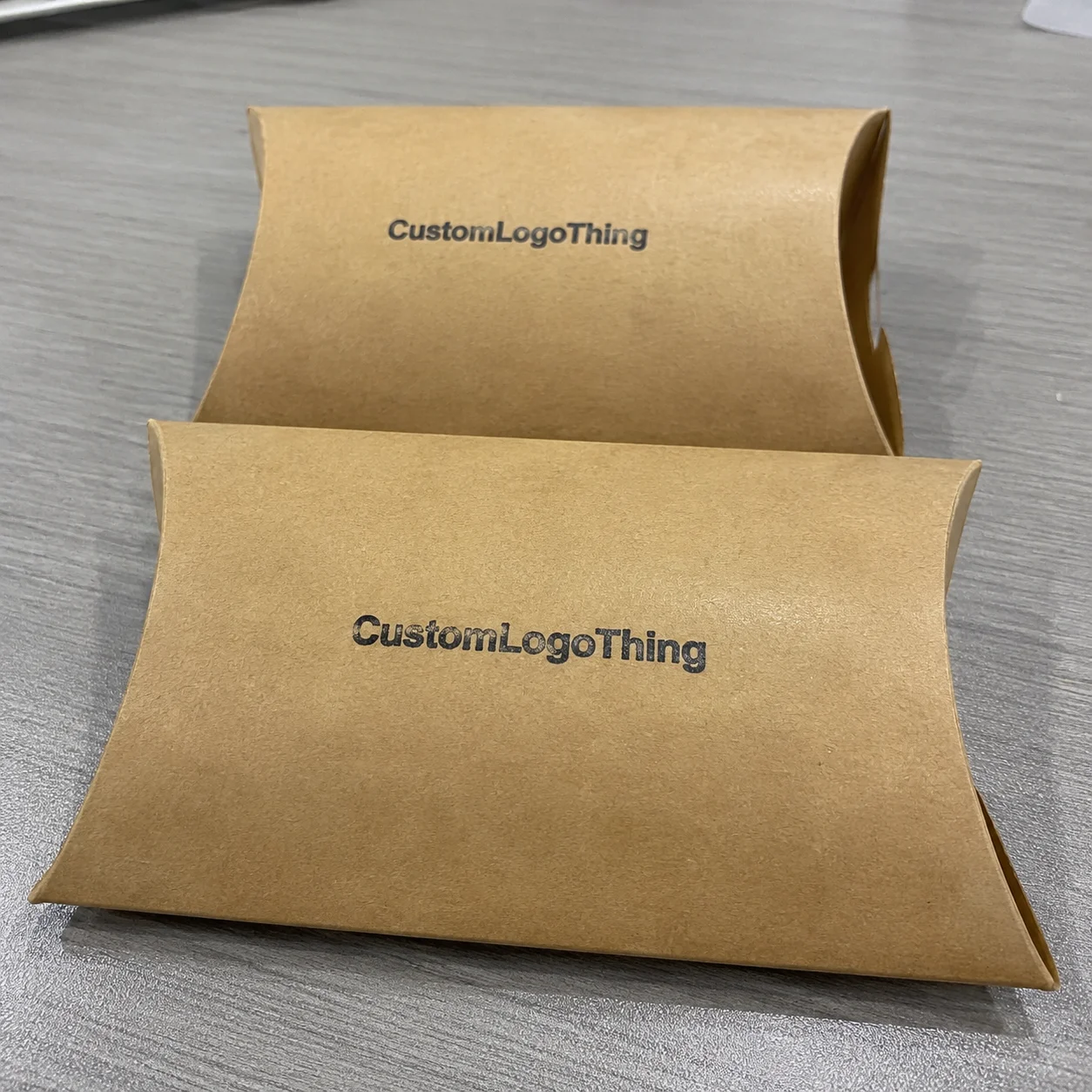
A clean stack of embroidered aprons can look sharp, or it can look like laundry. That difference often comes down to packaging, which is why custom PVC Zipper Garment Bags for bakery brands deserve more attention than they usually get.
Think about the first carton opened at a new shop, commissary, catering prep space, farmers market booth, or franchise location. Inside are staff aprons, chef coats, branded caps, size sets, and maybe a folded care card. If those garments are loose in a box or slipped into thin disposable sleeves, managers spend extra time sorting sizes, checking names, and trying to keep fabric clean before the first shift. A clear zippered garment bag changes the pace. Uniforms are easier to identify, easier to hand out, and less likely to pick up dust or handling marks before staff wear them.
Why Custom PVC Zipper Garment Bags for Bakery Brands Matter
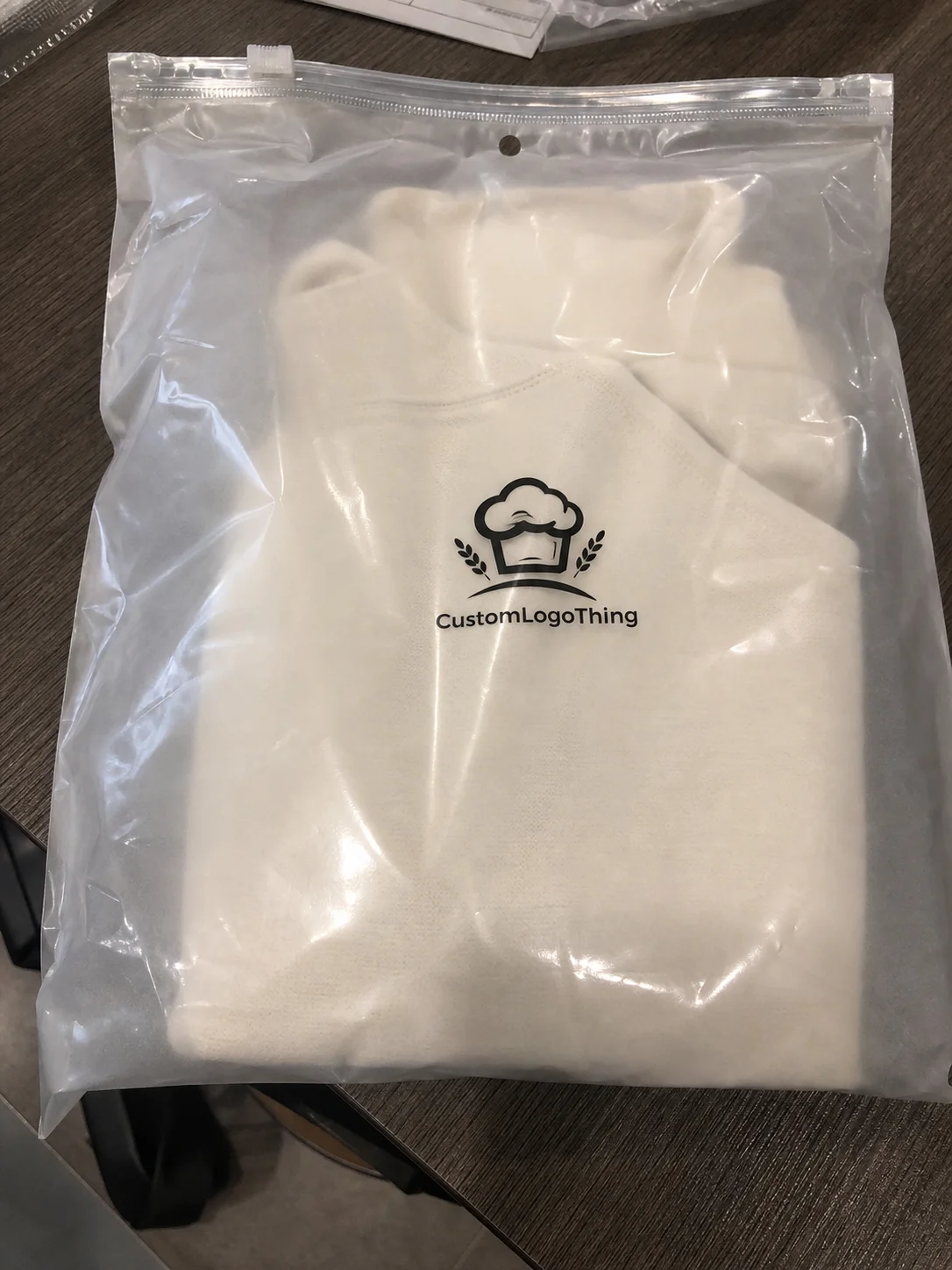
There is a practical overlap between garment packaging and bakery operations. Bakeries care about hygiene, presentation, moisture control, staff consistency, and the way a brand looks in motion. Apparel packaging has to solve many of those same problems, even when the garment is an apron issued to a team member rather than a jacket displayed for retail sale.
A PVC zipper garment bag is usually made from clear or frosted PVC film, cut and heat sealed into a flat pouch or garment-bag shape, then finished with a zipper closure. Bakery versions are most often sized for folded aprons, chef coats, branded T-shirts, staff hats, catering uniforms, or new-hire apparel kits. Some are slim, flat pouches. Others use a bottom or side gusset so thicker garments do not fight the seams.
One point needs to stay clear: these are not food-contact bakery bags. They are not intended for cookies, pastries, bread, cakes, or anything else that will be eaten. They are garment and staff apparel packaging used by bakery brands, cafes, pastry shops, commissaries, hospitality teams, and franchise groups that need a clean way to issue, store, or transport uniforms.
Buyers often choose PVC because it has good clarity, resists tearing better than very light poly film, wipes down easily, and can be made into a reusable bag that staff keep for storage or transport. A 0.20 mm PVC pouch feels very different from a thin disposable sleeve; move toward 0.30 mm or 0.35 mm, and the bag begins to feel more structured and retail-ready.
Practical packaging note: The right bag is not only about looking tidy in a carton. Thickness, zipper style, gusset depth, handle choice, printing method, and order quantity all affect performance and unit cost.
From a packaging buyer’s point of view, these bags sit between branded packaging and operational supplies. They protect fabric goods, support uniform management, and help bakery teams present staff apparel with the same care they give to counters, signage, and customer-facing packaging.
How PVC Zipper Garment Bags Work for Bakery Uniforms
The basic construction is straightforward, but the details decide whether the finished bag feels useful or frustrating. PVC film is cut to size, printed if needed, dried or cured depending on the ink system, sealed along the edges, and fitted with a zipper, slider, pull tab, or press-to-close closure. On gusseted designs, extra side or bottom panels are formed so the bag can expand around a folded chef coat or a full staff kit.
Common bakery apparel formats include flat zipper pouches for folded aprons, larger gusseted bags for chef coats, handled bags for onboarding kits, and clear-front bags that let managers identify the size or department without opening every unit. A clear front is especially useful if the garment has embroidery, color-coded trim, or a size sticker visible through the film.
Visibility saves time. A manager issuing 40 apron sets before a store opening does not want to unzip every bag to separate medium black aprons from large white coats. Clear PVC allows a quick check, while the zipper helps keep lint, dust, and light moisture away during storage, receiving, and internal distribution.
These bags can also improve how uniforms are grouped. One bag may hold an apron, cap, name badge, care card, and small onboarding insert for each employee. For seasonal hiring, catering crews, pop-up events, and franchise launches, that simple packing structure reduces handling errors. It also gives the staff member a dedicated place to return the garment after laundry or between shifts.
Reuse is where PVC zipper bags often justify their extra cost over a thin sleeve. A stronger bag can move between home, shop, locker, car, and laundry drop-off without immediately tearing at a corner. Not every program needs that durability. If employees are expected to keep and reuse the bag, state that requirement before the spec is quoted, because it affects film thickness, zipper choice, seam strength, and sometimes carton packing.
There are limits. PVC Zipper Garment Bags are protective, but they are not airtight, insulated, tamper-evident by default, or suitable for direct food storage. Specify them according to garment weight, expected handling, storage conditions, and whether the main purpose is presentation, transport, repeated use, or a mix of all three.
Material Specs, Thickness, Printing, and Zipper Choices
PVC thickness is one of the first decisions to settle. Thinner films cost less and pack lighter, but they can wrinkle more easily and may feel weak once a heavy chef coat is inside. Thicker films cost more, hold shape better, and tolerate repeated handling more effectively.
As a practical reference, many garment pouches fall around 0.15 mm to 0.35 mm PVC, depending on size and use. A simple apron pouch for one-time distribution may work near the lighter end. A reusable handled staff uniform bag, especially one carrying a coat, apron, cap, and paperwork, usually needs a sturdier film and stronger seams.
| Specification Choice | Typical Use | Practical Buyer Note |
|---|---|---|
| 0.15 mm–0.20 mm PVC | Light apron pouches or short-term storage | Lower cost, but less structure and lower reuse potential |
| 0.25 mm–0.30 mm PVC | Reusable staff uniform bags | Good middle range for durability, clarity, and hand feel |
| 0.30 mm–0.35 mm+ PVC | Premium kits, heavier chef coats, handled bags | More substantial, but higher material cost and freight weight |
| Gusseted construction | Bulky folded garments or multi-piece kits | Prevents corner stress and improves packing shape |
| Reinforced handle or hang hole | Store launches, staff issue kits, event uniforms | Useful only if people will carry or hang the bag regularly |
Clear versus frosted PVC is partly a branding decision and partly an operational one. Clear film gives the best visibility for garment color, size labels, embroidery, and inserts. Frosted film has a softer retail packaging look, but it can reduce contrast for pale ink and small logo details. Gloss finishes look bright and crisp; matte or frosted finishes may feel more refined but can show scuffs differently.
Zipper selection deserves more attention than it usually receives. A basic zipper closure can be enough for light storage. A stronger slider with a larger pull tab is easier for staff wearing gloves or moving quickly through a back-of-house area. If the bag will be opened and closed dozens of times, the zipper should be tested with real handling rather than judged from a flat drawing.
Printing can stay simple. For many bakery brands, a one-color logo in white, black, brown, navy, or a matched brand color gives a clean result without pushing cost too far. Multi-color artwork, spot color matching, full-panel designs, and large ink coverage can work, but those choices add setup time and require tighter artwork control.
Logo placement usually works best at the front center, lower corner, or on a label-style panel that leaves the garment visible. A large front logo may look strong in a mockup, then become inconvenient if it blocks size identification or hides embroidery. Good packaging design balances appearance with daily handling.
PVC can have a material odor when newly produced. That does not automatically mean the bag is defective, but buyers should discuss airing time, packing method, carton ventilation, and any regional retail or compliance requirements before ordering. If a brand has strict environmental or material policies, ask about alternatives or documentation before proof approval. For broader sustainability context, the EPA’s sustainable materials management hierarchy is a useful reference point.
Many buyers overbuild the visible parts and underbuild the working parts. A larger logo may not prevent complaints, while a better zipper or slightly thicker PVC often does. Match the specification to the use case: staff uniform storage, retail uniform kits, franchise launches, event apparel packs, and laundry return programs all need different durability levels.
Cost, MOQ, and Quote Factors for Bakery Apparel Bags
Pricing for Custom PVC Zipper Garment Bags for bakery brands is shaped by size, PVC thickness, zipper type, print colors, print coverage, gussets, handles, packing method, and order quantity. None of those factors acts alone. A small, thick bag with a strong slider may cost more than a larger thin pouch with a basic closure.
MOQ, or minimum order quantity, is mostly about setup. Custom printing, cutting, sealing, zipper application, and proofing take time before bulk production begins. Small runs carry those setup costs across fewer units, so the per-piece price rises. Larger orders usually reduce unit cost because artwork prep, machine setup, and changeover time are spread across more bags.
Realistic price ranges depend heavily on specification and sourcing, but a simple custom printed PVC apron pouch may land around $0.45–$1.20 per unit at moderate quantities. A larger gusseted handled uniform bag may sit closer to $1.50–$3.80+ per unit. Very small runs, thicker materials, multiple print colors, or special packing can push those numbers higher. Freight can also be meaningful because PVC has weight, especially on larger bags and dense carton counts.
Size changes cost quickly. An apron pouch uses less film than a full chef coat garment bag. A gusseted style requires more material and additional sealing steps. Add a handle, and there may be reinforcement patches or extra tooling decisions. Add a hanger opening, and the die-cut position has to be controlled so it does not weaken the top seam.
Printing is another driver. One-color logo printing is usually the most economical. Large ink coverage, tight registration, fine text, multiple colors, metallic effects, or specialty finishes add time and waste risk. If brand presentation is the main goal, those upgrades may be worth the expense. If the bag is mainly for internal staff distribution, clean and simple branding often performs better.
For an accurate quote, prepare these details before sending the inquiry:
- Bag dimensions: width, height, and gusset if needed, based on the folded garment size.
- Garment type: apron, chef coat, T-shirt, hat, full kit, or catering uniform set.
- Quantity: target order size and whether repeat orders are expected.
- PVC thickness: a preferred range, or a sample target such as “reusable staff bag.”
- Artwork: vector logo file, print colors, and preferred placement.
- Closure: basic zipper, slider zipper, large pull tab, or press-to-close style.
- Destination and deadline: shipping address, required arrival date, and any store-opening timeline.
The cheapest bag is not always the lowest-cost choice. If it tears, clouds, wrinkles badly, smells too strong at receiving, or makes uniforms look less polished, it costs time and brand trust. Bakery teams already manage ingredients, labor, sanitation, and retail presentation; uniform packaging should reduce friction, not add another problem.
Production Steps, Timeline, and Lead Time Expectations
A normal production path starts with specification review, then quotation, artwork preparation, digital proof, sample or pre-production confirmation, bulk production, quality check, packing, and shipping. It sounds linear, and it usually is, but delays often happen at proof approval or sample correction rather than on the sealing line.
Typical timing depends on whether a physical sample is required, whether the selected PVC thickness is in stock, how quickly artwork is approved, and how complex the print and bag structure are. Straightforward one-color printed pouches can move faster after proof approval. Gusseted Bags with Handles, multi-color printing, special carton labels, or detailed packing instructions need more room in the schedule.
As a practical planning range, digital proofing may take 1–3 business days once artwork is ready. A physical sample can add 5–10 business days or more, depending on material and shipping. Bulk production for a standard custom order often falls around 12–25 business days after final approval, though quantity, workload, inspection requirements, and seasonal demand can change that range. Freight timing is separate.
The proofing stage is where buyers should slow down. Confirm logo size, print position, bag orientation, zipper direction, handle placement, and how the garment will be inserted. A folded apron pouch may need the zipper at the top. A larger uniform kit may work better with a side opening. A bag used on a hanger needs a different top structure entirely.
Sampling can prevent expensive misunderstandings. One sample packed with the actual apron, coat, or hat tells you more than a dozen digital mockups. Thick embroidery, apron ties, folded seams, name badges, and care cards can create pressure points that do not show up in a flat drawing.
During production, the main steps have to happen in order: PVC cutting, printing, ink drying or curing, heat sealing, zipper application, trimming, inspection, and carton packing. Quality checks usually look at seal strength, zipper function, print position, visible scratches, odor level, dimensions, and packing count. If the bags will ship to multiple store locations, carton labels and packing lists should be discussed early.
Shipping planning matters for bakery brands preparing for new store openings, holiday hiring, event uniforms, or franchise rollouts. Build in time for freight, receiving, carton sorting, and internal distribution. If bags arrive the day before training, even a small carton count issue can create unnecessary stress.
For transit testing and distribution planning, some buyers refer to standards from organizations such as the International Safe Transit Association. Not every uniform bag order needs formal ISTA testing, but the principles are useful: pack the carton for the real route, real weight, and real handling conditions.
The fastest projects usually have clear dimensions, approved vector artwork, a realistic quantity, and one decision-maker handling proof approvals. Late-stage design opinions can cost more time than the actual manufacturing.
Common Mistakes When Ordering Bakery Uniform Packaging
The first common mistake is choosing the bag size from garment measurements alone. A flat apron may measure one size on a table, but once folded with ties tucked in, a size label attached, and an embroidered logo facing outward, the packed thickness changes. Chef coats are even trickier because collars, cuffs, buttons, and embroidery create bulk.
Under-specifying thickness is another issue. A very thin PVC bag can look acceptable when empty, especially in a photo, but feel weak once it holds a heavy coat or multiple aprons. Corners may stretch. The zipper may bow. The whole presentation can shift from polished to cheap in one handling cycle.
Artwork causes its own problems. Tiny bakery taglines, thin script fonts, pale ink on frosted PVC, and overly detailed illustrations may lose readability once fabric color or texture sits behind the print. Flexible PVC is not the same print surface as custom printed boxes or rigid retail cartons. Bold marks, controlled line weights, and sensible contrast usually produce cleaner results.
Zipper direction sounds minor until a manager is issuing dozens of uniforms at once. If the opening direction feels awkward, staff may fight the bag, pull the slider too hard, or bend the garment to get it out. A few seconds per bag becomes real labor when a team is outfitting a full store.
Storage conditions also matter. Bags packed too tightly, stored in high heat, or compressed under heavy cartons may wrinkle, stick, or arrive less presentation-ready. If the finished bags need to look sharp for a franchise presentation or employee welcome kit, ask about interleaving, carton count, lay-flat packing, or ventilation before production.
Another mistake is blurring the line between garment packaging and food packaging. Custom PVC Zipper Garment Bags for bakery brands are for uniforms and apparel kits, not direct contact with baked goods. If you need food-contact product packaging, ask for materials and documentation made for that purpose.
One checked sample with the actual apron, coat, cap, and insert inside is worth more than guessing from a flat drawing. That sample shows zipper strain, corner fit, logo visibility, and hand feel in one quick review.
Next Steps Before You Approve a Bakery Garment Bag Order
Start with the garments, not the bag. Gather the actual apron, chef coat, cap, T-shirt, or full staff kit. Fold each item the way employees will receive it. Add any name badge, care card, onboarding insert, or accessory that will be packed inside. Then measure the packed width, height, and thickness.
Add sensible clearance. A bag that fits too tightly may look neat for one sample but fail during bulk packing. For a flat apron pouch, a modest amount of extra width and height may be enough. For a thick chef coat or multi-piece kit, a gusset can be cleaner than oversizing the whole bag.
Next, write a simple use-case note. Is the bag for new-hire uniforms, retail staff kits, franchise store launches, catering crews, laundry return, or event apparel? A laundry-return bag needs different durability than a one-time presentation pouch. A franchise launch kit may need stronger brand presence and more controlled packing.
Decide what matters most before quoting. Lowest unit cost, premium reusable feel, fast turnaround, clear visibility, strong zipper, and polished branding are all valid priorities, but they do not always point to the same specification. If every priority has equal weight, the quote often becomes slower and more expensive than it needs to be.
Prepare artwork properly. Vector files such as AI, EPS, or print-ready PDF are usually preferred. Include print color references, logo placement preferences, and any restrictions around clear windows or garment visibility. If the garment itself has a busy pattern or dark color, ask for a proof that shows the logo against that background.
Ask for a proof, and when timing allows, request a sample packed with the real uniform pieces before bulk production starts. If you are also building broader branded packaging around staff kits, uniforms, merch, or customer-facing items, reviewing related Custom Packaging Products can help keep materials, artwork, and presentation consistent. For examples of how packaging choices support brand programs, the Case Studies section can also be useful.
Use this final checklist before approval:
- Final packed dimensions, including thickness
- PVC thickness and clear or frosted finish
- Flat or gusseted construction
- Zipper type, pull tab, and opening direction
- Handle, hang hole, or no handle
- Logo artwork, print colors, and placement
- Order quantity and repeat-order expectations
- Packing method, carton count, and labeling needs
- Shipping address, deadline, and receiving plan
Custom pvc zipper garment bags for bakery brands work best when the packaging is treated as part of the uniform system, not just a plastic sleeve. Specify the bag around the real garment, the real handling path, and the real people who will use it, and you will end up with cleaner storage, smoother staff distribution, and a more polished brand presentation.
FAQ
Are custom PVC zipper garment bags for bakery brands safe for food packaging?
No. They are intended for garments, uniforms, aprons, hats, and staff apparel kits, not for direct contact with baked goods. If you need food-contact packaging, ask for materials and certifications specifically designed for bakery products. Keep the messaging clear so staff and customers understand the bag is for uniform storage or presentation.
What size PVC zipper bag works best for bakery aprons and chef coats?
Measure the garment after it is folded the same way it will be packed, including ties, embroidery, seams, and any accessories. Add clearance so the zipper is not strained and the corners do not bulge. Aprons often fit in flatter pouch styles, while chef coats or full uniform kits may need a larger gusseted format.
How thick should a custom PVC zipper garment bag be for bakery staff uniforms?
Lightweight bags can work for one-time distribution, but reusable staff bags usually need a thicker, sturdier PVC film. Choose thickness based on garment weight, handling frequency, and whether the bag will be carried, stored, or reused. A sample packed with the actual uniform is the best way to confirm the right feel and strength.
Can bakery logos and brand colors be printed on PVC zipper garment bags?
Yes. Bakery logos can be printed in one color or multiple colors depending on artwork, budget, and production method. Simple, bold artwork usually prints cleaner on flexible PVC than very fine lines or small text. Logo placement should leave enough clear area to identify garment size, color, or contents.
What affects the lead time for custom zipper garment bags for bakeries?
Lead time depends on artwork approval, sampling needs, material availability, order quantity, print complexity, and shipping method. Projects move faster when dimensions, artwork files, quantity, and delivery deadline are confirmed at the start. For store openings, holiday hiring, or franchise rollouts, plan extra time for proofing, freight, and internal distribution.