A coffee roaster is rarely asking for PVC Zipper Garment Bags to hold loose roasted beans. Buyers comparing PVC Zipper Garment Bags Unit cost for coffee are usually working on coffee-adjacent packaging: branded apparel, staff uniforms, café merchandise, welcome kits, retail bundles, or event giveaways that need to look organized without the cost and storage burden of rigid boxes.
That distinction matters. Aprons, caps, T-shirts, cupping towels, brew guides, loyalty gifts, and brewing accessory kits do not need the same oxygen-barrier structure as a laminated coffee pouch, but they still need a package that protects presentation. Apparel and accessory packaging often gets less scrutiny than primary coffee packaging, even though it can shape the buyer’s first impression just as strongly as the label on a premium bag of beans.
Why Coffee Brands Ask About Reclosable PVC Packaging
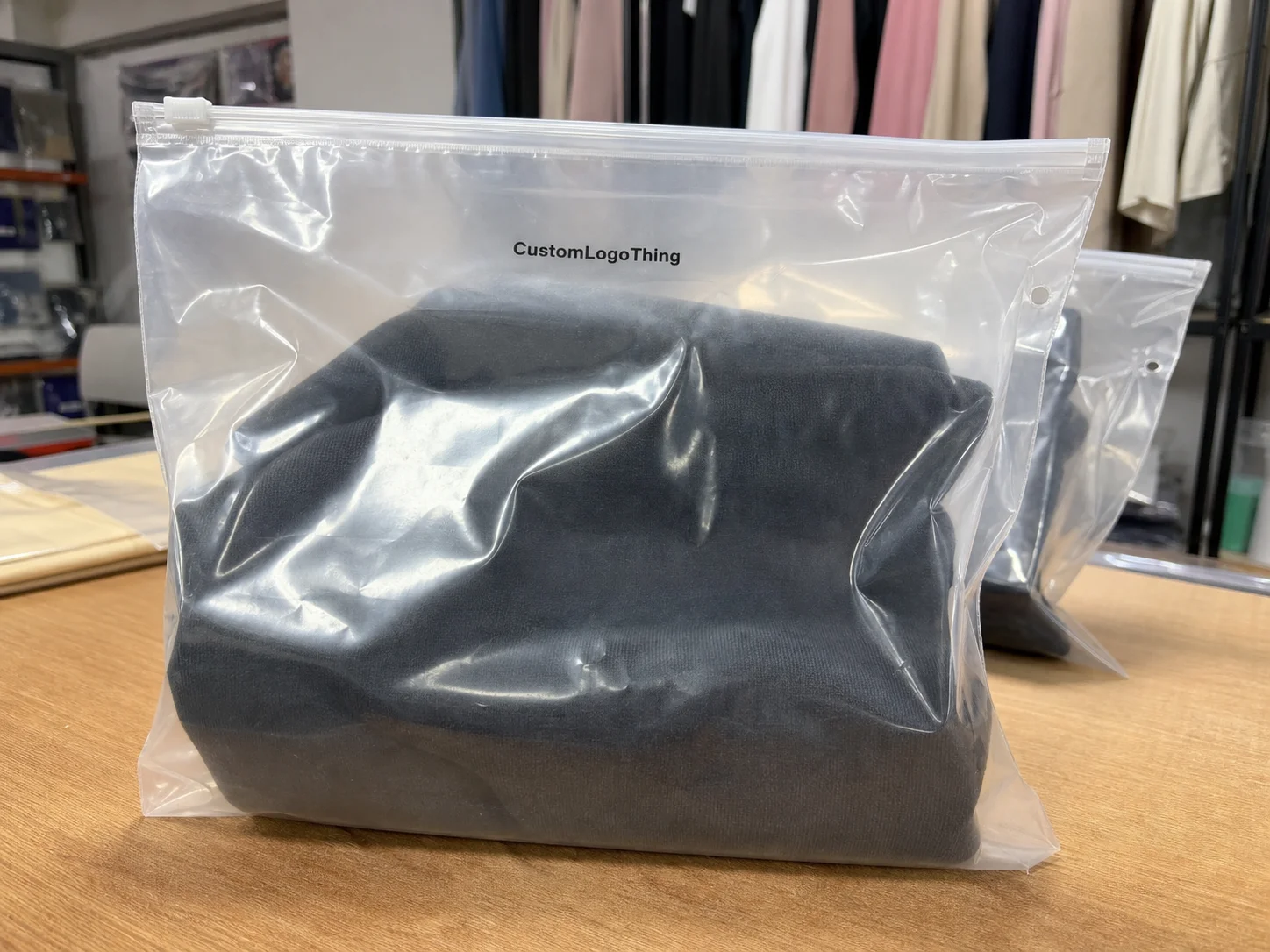
Clear PVC gives coffee merchandise a practical retail advantage: the buyer can inspect the product without opening the package. For a folded apron with embroidery, a café T-shirt with a limited-run print, or a gift kit with several small components, visibility reduces unnecessary handling. Customers can see color, fabric texture, logo placement, and kit contents before the zipper is touched.
The zipper adds a second kind of value. A reclosable bag can move from retail shelf to staff locker to customer closet, which gives it more life than a thin disposable sleeve. A $12 café cap in a noisy, wrinkled poly bag feels different from the same cap in a structured clear zipper pouch with a clean logo and a hang hole.
From a buyer’s point of view, PVC zipper bags sit between basic flexible packaging and premium gift boxes. They usually have lower setup and storage demands than rigid boxes, better product visibility than opaque mailers, and more reuse value than paper wraps. They also flatten well for carton packing, which helps when merchandise needs to be distributed across multiple café locations or packed into subscription shipments.
Practical boundary: PVC Zipper Garment Bags are best for non-food-contact coffee merchandise, staff apparel, event kits, retail bundles, sample-pack accessories, and gift packaging inserts. They are not the right direct-contact package for loose roasted coffee unless the coffee is already sealed inside a compliant inner food pouch.
If roasted coffee is part of a gift kit, use a proper coffee pouch first, then place that sealed pouch inside the PVC display bag with the apron, coupon card, or brewing accessory. Food-contact compliance is not a branding preference. It is a material and use-case specification, and it should be clarified before any quote is accepted.
The useful question is not whether clear zipper packaging is “premium” in a general sense. The useful question is what the bag must hold, how it will be displayed, how often it will be opened, and which construction choices actually change the final unit cost.
Product Details That Change Performance on the Shelf
A PVC zipper garment bag is a flexible transparent or tinted plastic bag with a reclosable zipper, commonly used for apparel, uniforms, accessories, and branded retail kits. The format sounds simple, but small construction choices change how the bag looks, handles, ships, and survives repeated use.
Coffee companies use this style of bag for packaged aprons, caps, T-shirts, cupping towels, brew guides, employee onboarding kits, loyalty gifts, seasonal merchandise drops, and home-brewing bundles. A roaster selling a “home brew starter” kit might use one clear bag for a folded shirt, enamel pin, recipe card, and sealed coffee sample. A café group might use a similar structure to distribute staff uniforms by size across several stores.
Zipper choice is one of the first cost and performance decisions. A standard pressed plastic zipper is usually the most economical option and works well for lighter garments or one-time retail presentation. A slider zipper improves usability on wider bags, especially when customers are likely to open and close the package more than once. A reinforced zipper track helps when the contents are bulky, such as a canvas apron with straps, a cap, and an accessory box. Top zippers suit flat folded garments; side zippers can make insertion easier for longer textiles. Larger garment sets may need a wider opening or double-slider design so the zipper is not under strain from the first use.
Visibility deserves more attention than it often gets. Clear PVC helps customers inspect fabric, color, embroidery, logo alignment, and multiple kit components without opening the bag. In a café retail display, that can reduce smudging, refolding, missing inserts, and the slow deterioration that happens when every curious buyer opens the same package.
Branding can stay modest or move toward a finished retail look. Common options include:
- One-color screen-printed logo for economical brand identification.
- Heat-transfer graphics for sharper edges or more complex artwork.
- Printed insert card when the buyer wants full color without printing directly on PVC.
- Embossed patch or sewn label for a more apparel-like finish.
- Hang tag for SKU, barcode, care instructions, or promotional messaging.
Retail features add usefulness, but they also add handling and labor. Hang holes allow peg display. Die-cut handles improve carry-out for event giveaways. Gussets increase capacity for thicker bundles. Reinforced seams reduce splitting under load. Edge piping and snap buttons shift the bag toward a reusable merchandise pouch. Document pockets can hold size cards, coupon inserts, onboarding forms, or brew instructions.
Be realistic about protection. PVC resists dust, light splashes, and handling friction. It is not insulated shipping packaging. It is not vacuum coffee packaging. It is not a long-term moisture or oxygen barrier for roasted beans. If the goal is premium appearance and reuse for non-food-contact merchandise, PVC zipper bags can outperform thin poly bags. If the goal is food-grade bean storage, laminated coffee pouches remain the correct structure.
PVC Zipper Garment Bags Unit Cost for Coffee: Main Price Drivers
The factory price is only one part of the calculation. PVC Zipper Garment Bags unit cost for coffee merchandise depends on material gauge, bag dimensions, zipper type, printing method, finishing details, order quantity, packing method, and freight destination. If one of those details is missing, the lowest quote may simply be the quote with the most assumptions.
Material thickness has a direct effect on both appearance and cost. Thicker PVC improves structure, clarity stability, and perceived value, but it also increases resin use, finished weight, carton size, and shipping cost. A light bag may be fine for one folded T-shirt. It may feel weak around an apron, cap, sample pouch, and accessory card.
Size economics are just as direct. A flat bag for one folded garment uses less plastic and shorter weld lines than a gusseted bag for an apron, cap, boxed accessory, and printed insert. Every extra inch increases material area. Every added seam adds labor and creates another point that must be inspected.
Printing changes cost in several ways. A one-color logo is usually the lowest custom option because setup is simpler and registration risk is lower. Full-panel multi-color printing, metallic ink, heavy coverage, or specialty patches add setup time and more reject-control steps. A large white logo on clear PVC may need opacity checks, because weak ink coverage can look gray or uneven against dark fabric inside the bag.
Zipper and hardware choices matter more than many buyers expect. Slider zippers, reinforced hooks, stitched trim, die-cut handles, and sewn edge binding all add labor compared with a simple pressed zipper closure. They may still be worth the spend if the bag is part of the customer-facing experience. For internal staff distribution, the simpler version may be the smarter choice.
| Cost Driver | Lower-Cost Direction | Premium Direction | Buyer Risk to Check |
|---|---|---|---|
| Bag size | Standard flat size for one folded garment | Custom gusseted size for a multi-item bundle | Too tight means slow packing and seam stress |
| PVC thickness | Lightweight film for low-load items | Heavier gauge for structure and reuse | Too thin can wrinkle, cloud, or split |
| Zipper | Standard pressed zipper | Slider, reinforced track, or double-slider | Poor glide creates returns or repacking work |
| Branding | One-color logo or printed insert | Multi-color panel print, patch, or hang tag | Artwork complexity can trigger setup charges |
| Freight | Efficient carton packing and consolidated shipment | Air freight for event deadlines | Dimensional weight can distort cost per piece |
MOQ behavior is not mysterious. Smaller runs carry higher cost per piece because setup, sampling, print screens, welding adjustment, and packing preparation are spread over fewer bags. A short run can still make sense for an event, a café opening, or a retail test, but the buyer should understand where the price break actually begins.
Freight can distort the final number. Clear PVC garment bags are flexible, yet they can become bulky after packing, especially with handles, gussets, inserts, or rigid reinforcement. A low factory price can lose its advantage if cartons ship by dimensional weight. Ask for carton quantity, carton size, gross weight, and a freight estimate before comparing suppliers.
For cleaner quote discipline, request line-item pricing for the base bag, printing, setup charge, sample charge, carton packing, freight estimate, and optional upgrades. The final unit cost should always be confirmed by size, thickness, artwork, quantity, packaging method, and delivery address.
Specifications to Send Before Requesting a Quote
A vague request produces a vague quote. “Clear zipper bag with logo” is not enough. The supplier needs physical dimensions, use case, artwork details, and shipping requirements to price the bag accurately.
Start with the core inputs:
- Bag width and height
- Gusset depth, if required
- PVC thickness or desired firmness
- Zipper style and opening direction
- Handle or hang hole requirement
- Print colors and logo size
- Order quantity and requested bulk pricing breaks
- Delivery address or destination region
- Deadline, event date, or retail launch timing
Measure the product after folding. Not the flat garment, and not the product photo from the catalog. A medium café T-shirt may compress into a compact retail fold, while a canvas apron with straps, metal hardware, or heavy fabric may need more depth than expected. Allow tolerance for seams, zipper clearance, and easy insertion. A bag that fits only with force will slow packing and put constant stress on the closure.
Send physical-use details as well. Will the bag stand upright on a shelf? Hang on a peg? Ship inside an outer carton? Be handed out at a coffee festival or staff training session? A bag designed for shelf display may need a flatter front panel and careful print placement. A bag designed for event giveaways may need a handle, a stronger zipper, and a little more room so items can be repacked without frustration.
Artwork should be treated as a production input, not a decoration added after the structure is chosen. Vector files are preferred for logos. Specify Pantone references if color accuracy matters. Mark the print location, safe margins, and clear areas that must remain unobstructed. If the customer needs to see the embroidered logo on a shirt through the front panel, do not cover that window with a large printed graphic.
Material options are broader than “clear plastic.” Buyers may choose clear PVC, frosted PVC, tinted PVC, matte finish, glossy finish, or an alternative material depending on feel, compliance preference, and retail position. Environmental claims need care. The U.S. Environmental Protection Agency provides general guidance on materials management and recycling claims at epa.gov/recycle, but local recycling acceptance varies widely by material, location, and program.
Compliance questions belong in the first conversation. If packaging is used near food products, the supplier must know whether there is direct food contact, indirect contact, or full separation by an inner pouch. If a roasted coffee sample is already sealed inside a compliant laminated pouch, the outer PVC bag has a different job than a package touching loose beans.
Custom flexible packaging also carries normal tolerances. Size, color, seam placement, and print registration can vary within accepted ranges. A pre-production sample helps prevent disputes, especially for first-time custom sizes, unusual gussets, or artwork that must align with a visible product inside the bag.
MOQ, Sampling, and Budget Control Without Overbuying
MOQ is a manufacturing reality, not automatically a sales tactic. Film sourcing, zipper setup, screen preparation, cutting, welding, trimming, inspection, and packing all need a minimum run to be economical. The question is whether that minimum fits the buyer’s sales plan and storage capacity.
Stock-size clear bags with a printed logo may support a lower MOQ than fully custom-sized bags with special gussets, stitched trim, custom handles, or several print locations. That difference can be significant because stock construction reduces setup changes and material waste.
Budget control starts with restraint. Choose a standard size if it fits the folded product. Reduce print colors. Use a simple zipper unless the bag truly needs a slider. Avoid hardware that looks good in a mockup but adds labor without changing customer perception. If several merchandise items are still being tested, one versatile bag size may be safer than three tightly fitted custom sizes.
Sampling should match the risk. A digital mockup checks layout. A material swatch checks feel, clarity, tint, and odor. A blank size sample checks fit. A printed strike-off checks ink color and coverage. A full pre-production sample checks real construction, zipper feel, seams, and final presentation.
Testing should be physical. Insert the folded apron. Add the cap. Include the brew guide, coupon card, boxed dripper filters, or sealed sample pouch. Then remove everything and repack it several times. A zipper that feels acceptable once may bind after repeated openings. A bag that looks roomy without the strap bundle may become tight during real packing.
False savings are common in accessory packaging. A bag that is too tight, too thin, or too cloudy may save a few cents on paper but increase repacking labor, damaged presentation, and customer dissatisfaction. The labor penalty of a package that almost fits is often larger than the material savings that caused the problem.
Ask for two or three quantities side by side. Compare a starter order, a mid-volume order, and a larger retail roll-out. Sometimes ordering more saves very little after freight. Other times, setup charges and printing costs spread out enough to justify the higher quantity. The point is to see the curve, not just the lowest possible unit price.
Production Steps and Timeline From Artwork to Delivery
A reliable order process is structured. It usually moves through consultation, specification confirmation, artwork review, sample approval, material preparation, cutting, printing, zipper attachment, heat sealing or stitching, quality inspection, packing, and shipping.
Timelines depend on complexity. A stock-size bag with a one-color logo can move faster than a custom gusseted bag with a slider zipper, edge piping, and printed insert card. Sample revisions add time. Seasonal production load adds time. Material availability adds time. Freight method can change the final delivery date by weeks.
Buyer responsibilities are simple but critical. Approve dielines quickly. Confirm Pantone references. Test samples with real products. Provide shipping details early. If five people need to approve the logo position, appoint one decision-maker before the sample arrives. Slow approvals are one of the most preventable schedule problems in custom packaging.
Supplier responsibilities are just as concrete. The supplier should check artwork for print feasibility, verify construction, flag risk points, confirm tolerances, document final specifications, and inspect production before shipment. For packaged goods that move through mixed distribution networks, buyers can also review general transit-testing resources from the International Safe Transit Association at ista.org. ISTA protocols are more relevant to outer shipping cartons than the PVC bag itself, but they are a useful reminder that display packaging still needs to survive the route to the shelf.
Skipping samples increases risk. Without a sample, buyers may discover fit, clarity, zipper feel, logo placement, odor, or seam problems only after production. At that point, fixes are expensive. Rework can mean reprinting, resealing, repacking, or replacing the entire run.
Freight planning should begin before production ends. Air shipping may be useful for a café opening, trade show, subscription drop, or seasonal merchandise release. It is also costlier. Ocean or consolidated freight can be more economical for larger retail programs, but it needs more schedule buffer and cleaner carton planning.
Build backward from the launch date. If the bags are needed for a café opening, count back through delivery, packing, inspection, production, sampling, and artwork approval. Timeline certainty improves when specs are frozen early and approvals stay inside one decision-making chain.
Action Plan: How to Buy the Right Bag on the First Quote
Start with the product. Identify exactly what goes inside the bag, confirm whether any food-contact requirement exists, measure the folded contents, and choose the desired retail presentation. A staff uniform distribution bag does not need the same finish as a customer-facing holiday gift kit.
Before asking for pricing, prepare three reference points: target quantity, target budget range, and must-have features versus optional upgrades. That keeps the quote grounded. If the must-have is a visible apron logo, the front panel should stay clear. If the must-have is event carry-out, a handle may matter more than a premium patch.
Request a quote matrix instead of a single number. Compare at least two sizes, two quantities, and one simplified version against one premium version. This makes pvc zipper garment Bags Unit Cost for coffee programs easier to judge because the buyer can see which feature is driving the price.
Send artwork early, even if it is not final. Print area, color count, line thickness, and logo complexity can change both production method and setup charges. A small one-color logo may suit screen printing. A large multi-color front panel may require a different approach and tighter registration control.
Use practical quality checkpoints before approval:
- Zipper glide: opens and closes smoothly after repeated use.
- Seam strength: holds the real packed weight without splitting.
- Logo registration: sits straight and within agreed tolerances.
- PVC clarity: shows fabric color and kit contents clearly.
- Odor level: acceptable for apparel and gift presentation.
- Carton packing: protects bags from crushing, scuffing, or distortion.
- Fit: allows fast insertion and removal of the actual coffee merchandise.
The decision framework is simple. Choose standard construction for budget discipline. Choose custom construction for presentation control. Choose premium finishing only when the bag is part of the customer-facing experience and not just an internal handling tool.
A useful quote should explain the construction, not just offer a tempting low number. For coffee merchandise and apparel kits, the right bag is the one that fits the product cleanly, protects presentation through handling, meets the required compliance boundary, and lands at a unit cost that still makes sense after printing, samples, cartons, and freight are included.
FAQ
What affects pvc zipper garment bag unit cost for coffee merchandise kits?
The biggest cost drivers are bag size, PVC thickness, zipper type, print colors, order quantity, finishing details, and freight method. Coffee merchandise kits with aprons, shirts, caps, or accessories usually need more space and stronger seams than a simple flat apparel bag. A quote should separate base bag cost, printing, setup, sampling, packing, and shipping so the true unit cost is clear.
Can PVC zipper garment bags be used for roasted coffee beans?
They are best used for coffee-related merchandise, gift bundles, uniforms, and retail accessories, not direct loose bean contact. If roasted coffee is included, it should remain inside a compliant inner coffee pouch before being placed in the PVC bag. Tell the supplier whether there is direct food contact, indirect contact, or no food contact so the material recommendation is accurate.
What MOQ should I expect for custom PVC zipper bags for a café or roaster?
MOQ depends on whether the bag is stock-size with logo printing or fully custom with special dimensions, gussets, trim, handles, or multi-color artwork. Lower-complexity designs usually support more flexible minimums than highly customized constructions. Request pricing at multiple quantities to see where the unit cost drops enough to justify ordering more.
How do I lower the unit cost of custom zipper garment bags without hurting quality?
Use a standard size where possible, limit print colors, avoid unnecessary hardware, and choose one versatile bag format for several products. Do not reduce thickness too far if the bag must hold heavy aprons, multiple accessories, or repeated handling. Ask for a simplified version and a premium version in the same quote to compare the actual savings.
What should I send to get an accurate quote for PVC zipper garment bags?
Send width, height, gusset depth, material preference, zipper style, quantity, artwork file, print colors, deadline, and shipping destination. Include photos or dimensions of the actual coffee merchandise going inside the bag. If you need samples, specify whether you want a material swatch, blank fit sample, printed proof, or full pre-production sample.