A café team opens a carton of branded aprons before a pop-up event, and the first thing they see is not the apron stitching, the embroidered logo, or the weight of the canvas. It is the protective bag around it. That is why Custom PVC Zipper Garment Bags for coffee brands matter more than many buyers expect: they protect apparel, organize staff kits, and create a clean branded handoff before the garment ever comes out of the bag.
These are not coffee bean bags. They are reusable Plastic Garment Bags designed for barista aprons, work shirts, softshell jackets, retail merch, trade show apparel, training kits, and uniform programs moving between roasteries, cafés, wholesale partners, and event teams. From a packaging buyer’s point of view, the value is practical first. The bag keeps garments clean, easy to identify, and presentable; the branding simply makes that useful object feel like part of the larger coffee brand system.
Why Coffee Brands Use Custom PVC Zipper Garment Bags
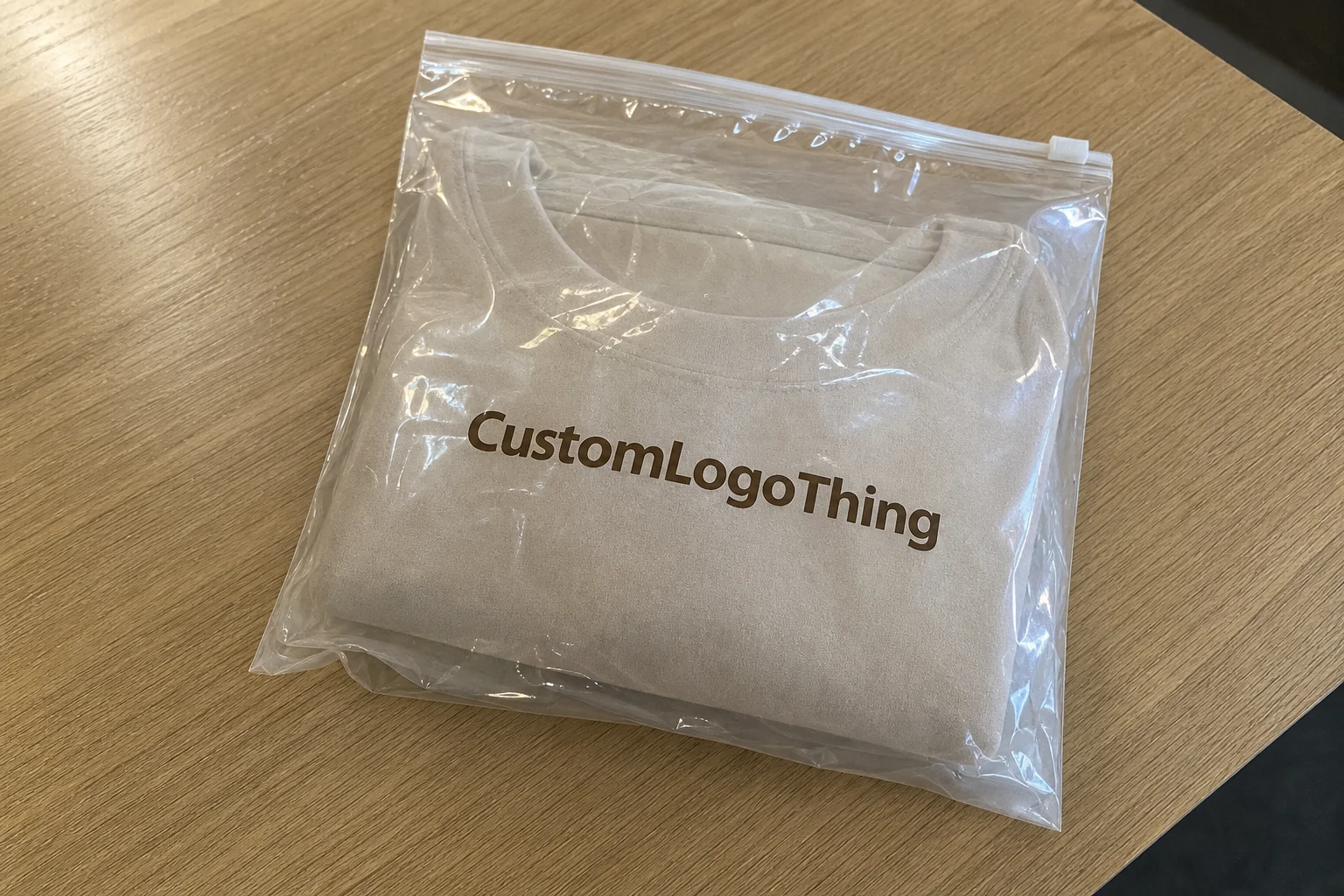
Coffee companies often put real care into apparel: heavyweight tees, waxed canvas aprons, caps, chore jackets, and limited-run merchandise tied to a roast collection or café opening. If those garments are handed over in a thin plain poly sleeve, the product can feel less considered than it actually is. A zipper garment bag gives the apparel a more intentional presentation while still doing the basic packaging work of dust, splash, and handling protection.
The usual construction is easy to understand. Most custom PVC Zipper Garment Bags use flexible PVC film for the front and back panels, a zipper closure, stitched or heat-sealed edges, and sometimes a hanger opening at the top. Add-ons may include reinforced handles, a document pocket, a clear size label window, snap buttons, side gussets, bottom gussets, or printed trim.
PVC is chosen because it has a practical mix of clarity, water resistance, wipe-clean handling, and structure. Clear PVC lets staff check garment color and size without opening every bag. Frosted PVC softens glare and hides light scuffing better. Smoky translucent film can feel more boutique, especially with black zipper tape or a single-color logo. None of these choices is automatically better than the others; the right one depends on whether the bag is being used for internal uniform control, customer-facing merch, or repeated transport between locations.
Practical rule: specify the garment bag around the way it will be loaded, zipped, hung, stacked, shipped, and reused — not just around how it looks in a mockup.
For coffee brands, the strongest use cases are barista apron programs, event uniforms, café opening kits, wholesale partner training bundles, trade show apparel, limited-edition merch drops, and retail display packaging. A clear label sleeve or printed size code can also reduce mix-ups when several sizes, locations, or collections are packed together in one shipment.
How PVC Zipper Garment Bags Are Built and Printed
A zipper garment bag looks simple, but every part affects usability. The main body usually includes front and back PVC panels, a top hanger slit or sealed top edge, a zipper track with puller, bound or stitched edges, and optional gussets for added depth. If the bag needs to carry folded garments or bulkier jackets, a side or bottom gusset of 30–80 mm can make loading much cleaner than forcing everything into a flat pouch.
Film choice changes both appearance and function. Clear PVC gives the best visibility and is useful for quick size checks. Frosted PVC reduces glare and gives a softer retail feel. Tinted PVC, such as smoky gray or tea-brown, can echo a roaster’s visual language without fully hiding the garment. Matte PVC can look refined, though it may show rub marks differently than glossy film. Colored PVC is stronger as a brand statement, but it reduces visibility, so it works better when a label window or printed identification system is included.
Thickness is usually discussed in microns, millimeters, or gauge, depending on the supplier. Lighter PVC around 0.10–0.15 mm may suit short-term dust protection or one-way distribution. Mid-weight film around 0.18–0.25 mm is common for reusable staff uniform bags and retail merch. Heavier options around 0.30 mm and above are better for jackets, coats, repeated transport, or Bags with Handles, but they cost more and take more carton space.
Printing is often handled by screen Printing for Bold logos, slogans, and spot colors. It is reliable for one-color or two-color marks, especially on slick plastic when the ink system is matched correctly. Heat transfer or digital methods may be considered for detailed artwork, gradients, or coffee bag-inspired graphics, but testing matters because PVC surface energy, ink adhesion, and curing all affect long-term performance. A quick tape test and rub test on a pre-production sample can prevent problems that are hard to fix after bulk production.
Zippers deserve more attention than they usually receive. Nylon coil zippers are flexible and smooth, which is why they are common on garment bags. Molded zippers give a chunkier look but may feel bulky on lighter PVC. Metal-look pulls can raise perceived quality without requiring a fully metal zipper. Before approving custom PVC Zipper Garment Bags for coffee brands, zip and unzip the sample at least 20–30 times, preferably with the actual apron, jacket, or shirt bundle inside.
These bags are not designed for direct coffee or food contact unless the material and full construction are specifically engineered and certified for that purpose. Roasted beans need proper food-grade coffee packaging with barrier films, valves, and heat seals. Apparel needs a different kind of protection: visibility, organization, clean handling, and enough durability to survive the route from packing bench to café floor.
Key Specs to Decide Before You Request Samples
Start with size. Garment length drives almost everything: material consumption, zipper length, carton size, and how cleanly the finished bag hangs. Aprons may only need a shorter vertical bag, while work shirts need more shoulder width and jackets usually need extra length plus a wider top panel. If the garment has straps, ties, a hood, or bulky sleeves, do not measure only the neat folded shape.
The best measuring method is simple. Put the garment on the hanger or folded format you plan to use, measure the widest point, then measure from hanger top or shoulder line to hem. Add clearance. For many apparel items, 25–50 mm of width clearance and 40–75 mm of bottom clearance keeps fabric from jamming into the zipper or bottom seal. A bag that technically fits can still feel cheap if the collar is crushed or apron ties are trapped in the zipper.
Next, choose the film thickness around the real use case. One-way protection can use lighter PVC. Retail display and customer handoff often benefit from mid-weight film. Reusable uniform programs, especially bags moving café-to-café or warehouse-to-store, usually need thicker PVC and reinforced stress points. If handles are added, the attachment area should be reinforced because repeated lifting concentrates force in a small zone.
Opening style matters too. A front vertical zipper is easy to load on a hanger. A side zipper can keep the front panel cleaner for artwork. A full-length center zipper is practical for jackets and uniforms that need quick access. Fold-over formats can work for folded merch bundles, although they are less traditional for hanging garments. For many coffee apparel programs, a top hanger opening plus a front zipper remains the safest, most familiar configuration.
Branding can be restrained or expressive, depending on the merchandise program. A single-color logo on the upper chest area of the bag keeps the garment visible. A full-panel pattern can look strong for retail packaging, but heavy ink coverage may reduce clarity and stiffen the hand feel. Coffee brands sometimes use roast collection names, café location markings, care notes, or kraft-toned paper inserts to echo coffee bag design without confusing the garment bag with food packaging.
| Specification Choice | Best Use | Typical Buyer Note |
|---|---|---|
| Clear PVC, 0.15–0.18 mm | Short-term shirt or apron protection | Economical, but less ideal for heavy reuse |
| Frosted PVC, 0.20–0.25 mm | Retail merch and staff uniform kits | Good balance of presentation and durability |
| Clear or tinted PVC, 0.30 mm+ | Jackets, coats, travel between locations | Higher cost, stronger structure, larger cartons |
| Side or bottom gusset | Bulkier apparel bundles | Adds loading room and assembly cost |
| Patch pocket or label sleeve | Size, location, or kit identification | Useful for operations teams managing many SKUs |
Compliance and handling details should be settled early. Ventilation holes may be useful if garments need air movement. Warning labels may be required in certain markets for plastic bags. If sustainability claims are part of the packaging design, ask precise questions about material composition, recycling availability, and labeling rules rather than accepting vague “eco” language. The EPA recycling resources are a useful starting point for understanding how recycling claims can vary by material and location.
Cost, MOQ, and Unit Pricing Factors to Watch
Pricing for custom printed PVC garment bags is shaped by material weight, bag size, film thickness, zipper type, printing coverage, labor intensity, and quantity. There is rarely one flat answer that applies to every project. A small apron bag with one-color logo printing may price very differently from a long jacket bag with a gusset, handles, pocket, custom zipper tape, and two-sided artwork.
As a rough buyer-facing range, simple custom PVC Zipper Garment Bags may land around $0.80–$1.80 per unit at moderate quantities, while larger or heavier retail-ready formats may run $2.00–$4.50+ per unit. Very small orders, unusual sizes, premium pullers, or heavy print coverage can push the cost higher. These are not fixed quotes; they are practical ranges to help buyers understand why a “bag” can vary so much.
Larger garment bags cost more for plain physical reasons. They use more PVC film. They require longer zipper lengths. They take more space during packing, which affects carton count and freight. They may need stronger edge finishing because long seams experience more stress. If the bag is intended for repeated use, saving a few cents by thinning the material can lead to zipper strain, corner tearing, or a tired-looking retail presentation.
Minimum order quantity is usually driven by fixed setup costs. Custom printing requires artwork preparation, screens or print setup, material cutting, zipper sourcing, sample handling, line setup, and quality control. For many custom PVC zipper garment bags for coffee brands, a practical MOQ might start around 500–1,000 pieces for simpler designs, with better unit pricing at 2,500, 5,000, or 10,000 pieces. Specialty constructions may require higher quantities.
Printing has a direct effect on unit price. A one-color logo in one position is usually the most economical. Large multi-color artwork, full-panel coverage, metallic inks, two-sided printing, or precise registration add time and risk. The same is true for accessories: reinforced handles, card pockets, label sleeves, snaps, custom zipper tape, and upgraded pullers all add function, but each part increases material cost and assembly minutes.
Ask for tiered pricing. A quote at 500, 1,000, 2,500, and 5,000 pieces often reveals the real cost break. If the target unit cost is tight, simplify print coverage, standardize one or two sizes, use a common zipper color, and avoid making every café location a separate construction. Custom Logo Things can help compare these choices alongside other Custom Packaging Products so the garment bag fits the broader packaging plan rather than becoming a one-off afterthought.
Process and Timeline From Artwork to Finished Bags
A good production process starts with clear requirements. The buyer should share garment type, dimensions, quantity, expected use, preferred PVC look, logo files, deadline, and delivery location. If the garment is unusual — a heavy apron with long ties, a padded jacket, or a merch bundle with inserts — photos and physical samples help remove guesswork.
The next step is artwork preparation. Vector logos are preferred because they scale cleanly and keep edges sharp. Pantone or spot color references help control expectations, especially if the brand’s brown, cream, black, or green has to match other retail packaging. Print placement should be shown on a flat bag layout, not only on a polished product mockup, because zipper position, hanger opening, seams, and pockets all create no-print zones.
Sampling can happen in a few ways. A stock material sample helps confirm PVC clarity, flexibility, odor level, and surface feel. A digital mockup helps confirm logo size and placement. A physical pre-production sample is strongly recommended when the bag has custom dimensions, gussets, special zipper details, pockets, or tight brand requirements. Skipping that physical fit test is one of the easiest ways to create disappointment later, especially with aprons, jackets, and folded merch kits that never sit quite as neatly as a flat drawing suggests.
Lead time depends on sample complexity, material availability, print method, quantity, production schedule, inspection, and freight method. A simple printed clear PVC bag is usually faster than a custom-sized frosted bag with a gusset, patch pocket, reinforced handle, and multi-color artwork. Typical sample development may take 5–12 business days after artwork is ready, while bulk production for standard custom runs often falls around 15–30 business days after sample approval. Freight adds more time, especially for ocean shipping.
Common bottlenecks are familiar: late artwork approval, dimensions changing after sampling, unavailable zipper tape colors, low-resolution logos, and failure to test the actual garment inside the bag. Another quiet delay is carton packing approval. If the bags must arrive flat and clean for a merch table, the packing method matters almost as much as the print.
Quality control should check bag dimensions, zipper movement, print registration, ink adhesion, seam strength, hanger opening reinforcement, film clarity, odor level, and carton condition. If bags will be shipped through parcel networks or stacked on pallets, ask whether transit testing or packing review is appropriate. The International Safe Transit Association publishes packaging test procedures that are often referenced for distribution performance, especially when products need to survive real handling rather than just look good at the packing bench.
Plan backward from the event, café opening, training session, retail launch, or uniform rollout. A bag feels like a small accessory until the launch date is close and the apparel is ready with nowhere clean to go. Build in time for sample review, proof approval, production, inspection, and shipping.
Common Mistakes That Make Garment Bags Feel Cheap
Undersizing is the big one. A bag can meet the written dimension and still look wrong. Collars crease. Apron straps bunch up. A jacket sleeve presses against the side seam. The zipper works, but only if someone pushes the garment down with one hand and pulls with the other. That is not a premium experience.
Thin film in the wrong use case is another common problem. Lightweight PVC can be perfectly acceptable for one-time dust protection, but repeated café-to-café movement, stockroom handling, or customer retail browsing usually needs a sturdier gauge. If the bag will be reused weekly, test it that way. Hang it. Stack it. Zip it. Put it in a carton. Pull it out again.
Overprinting can also cheapen the result. Large ink areas may reduce clarity, stiffen the front panel, and distract from the apparel. If the garment itself is the hero product, let it show. A clean logo, small roast collection mark, or simple line graphic often works better than trying to turn the entire PVC panel into a billboard.
Zipper quality is not glamorous, but it controls the user’s first physical impression. A zipper that catches, separates, or feels rough makes the whole package feel low grade even if the logo print is crisp. Test the zipper with the real garment thickness inside the bag, not on an empty sample sitting flat on a desk.
Poor artwork preparation creates avoidable delays. Low-resolution logos, unconverted fonts, missing color references, and no placement guide can all lead to extra proofing rounds. If the design includes bleed, edge-to-edge graphics, or a pocket window, the supplier needs a layout that shows safe print areas and trim positions. This is the same discipline buyers use for custom printed boxes, adapted to flexible PVC.
There is also the wrong-application problem. PVC garment bags are not for direct coffee bean packaging, hot-fill products, or food-contact use unless the material and construction are specified and certified for that exact application. Coffee bags need barrier structures, degassing valves, and proper seals. Garment bags need presentation, organization, and apparel protection. Mixing those requirements usually creates trouble.
Finally, poor carton packing can ruin a good bag. Permanent folds, crushed zipper pulls, scuffed clear panels, and bent hanger openings can happen before the bags reach a café stockroom. Ask how the bags will be packed: flat, lightly folded, interleaved, bundled, or carton-protected. If a retail merch drop is involved, arrival condition matters.
Next Steps Before You Brief a Packaging Supplier
Before requesting pricing, gather the details that affect the quote. You do not need a perfect technical drawing on day one, but you do need enough information to avoid vague estimates. A useful starter checklist looks like this:
- Garment sample or photos, including hanger or folded format
- Target bag dimensions, with width, length, and any gusset depth
- Preferred PVC style: clear, frosted, tinted, matte, or colored
- Film thickness target or expected durability level
- Zipper direction, zipper color, and puller preference
- Print colors, logo size, print position, and artwork files
- Quantity range and desired delivery location
- Launch, event, café opening, or uniform rollout deadline
If the bags serve two different jobs, create two specs. Internal staff uniforms may need stronger film, a label sleeve, and simple location marking. Customer-facing merch packaging may need better clarity, cleaner print placement, and a nicer puller. Trying to force one bag to do everything can work, but it often creates a middle-of-the-road spec that is neither durable enough nor polished enough.
Ask for a dieline or flat layout before final approval. The brand team should see logo position, zipper direction, hanger opening, pocket placement, trim lines, and safe print areas. Photos can be misleading because glare, opacity, and hand feel are hard to judge on screen. Material swatches are especially helpful if you are choosing between clear and frosted PVC.
Supplier questions should be practical: What thickness do you suggest for this garment? Can the zipper handle repeated use? Is the print method suitable for PVC? What is the packed carton size? Are there setup charges or screen fees? Can we see a pre-production sample before bulk production? If you want to compare how other brands structure similar packaging decisions, the Case Studies section can be a helpful place to review different approaches to packaging design and rollout planning.
Approach custom PVC zipper garment bags for coffee brands as a functional merch and uniform packaging project, not just a logo-on-a-bag purchase. Once the size, film thickness, zipper style, print method, and packing plan match the real handling path, the final bag is easier to price, easier to produce, and much more likely to look right in the customer’s hands.
Frequently Asked Questions
Are custom PVC zipper garment bags for coffee brands used for coffee beans?
No. They are normally used for apparel, uniforms, aprons, jackets, event kits, staff bundles, and retail merchandise. PVC zipper garment bags should not be used for direct coffee or food contact unless the material and construction are specifically specified and certified for that application. Roasted coffee beans typically need dedicated food-grade coffee bags with barrier films, valves, and heat seals.
What thickness works best for PVC zipper garment bags for café uniforms?
For light shirts or one-time distribution, a lighter PVC film may be enough. For reusable barista aprons, jackets, or garments moved between locations, a medium to heavier PVC film usually gives better durability. The best choice depends on garment weight, expected reuse, zipper length, and whether the bag will be shipped, hung in storage, or handed directly to customers.
Can PVC garment bags be printed with a coffee brand logo and artwork?
Yes. Logos, slogans, roast collection names, café graphics, care notes, and simple brand patterns can be printed on the bag. Screen printing is often used for bold spot-color logos, while other print methods may be considered for more detailed artwork. Vector artwork and clear color references help keep the print clean, consistent, and production-ready.
What information is needed to get a quote for custom zipper garment bags?
Provide bag dimensions, garment type, PVC thickness preference, quantity, zipper style, print colors, print size, and delivery location. Share photos or samples of the garment if possible, especially for aprons, jackets, or unusually shaped merch items. Ask for tiered pricing so you can compare unit cost at different order quantities.
How long does production take for custom PVC garment packaging?
Timeline depends on artwork approval, sampling needs, material availability, print complexity, quantity, quality inspection, and shipping method. A simple printed clear PVC bag is usually faster than a custom-sized bag with gussets, pockets, special zipper tape, or multi-color artwork. Plan early if the bags are tied to a café launch, event, merch release, or uniform rollout, because sampling and approval can add time before bulk production begins.


