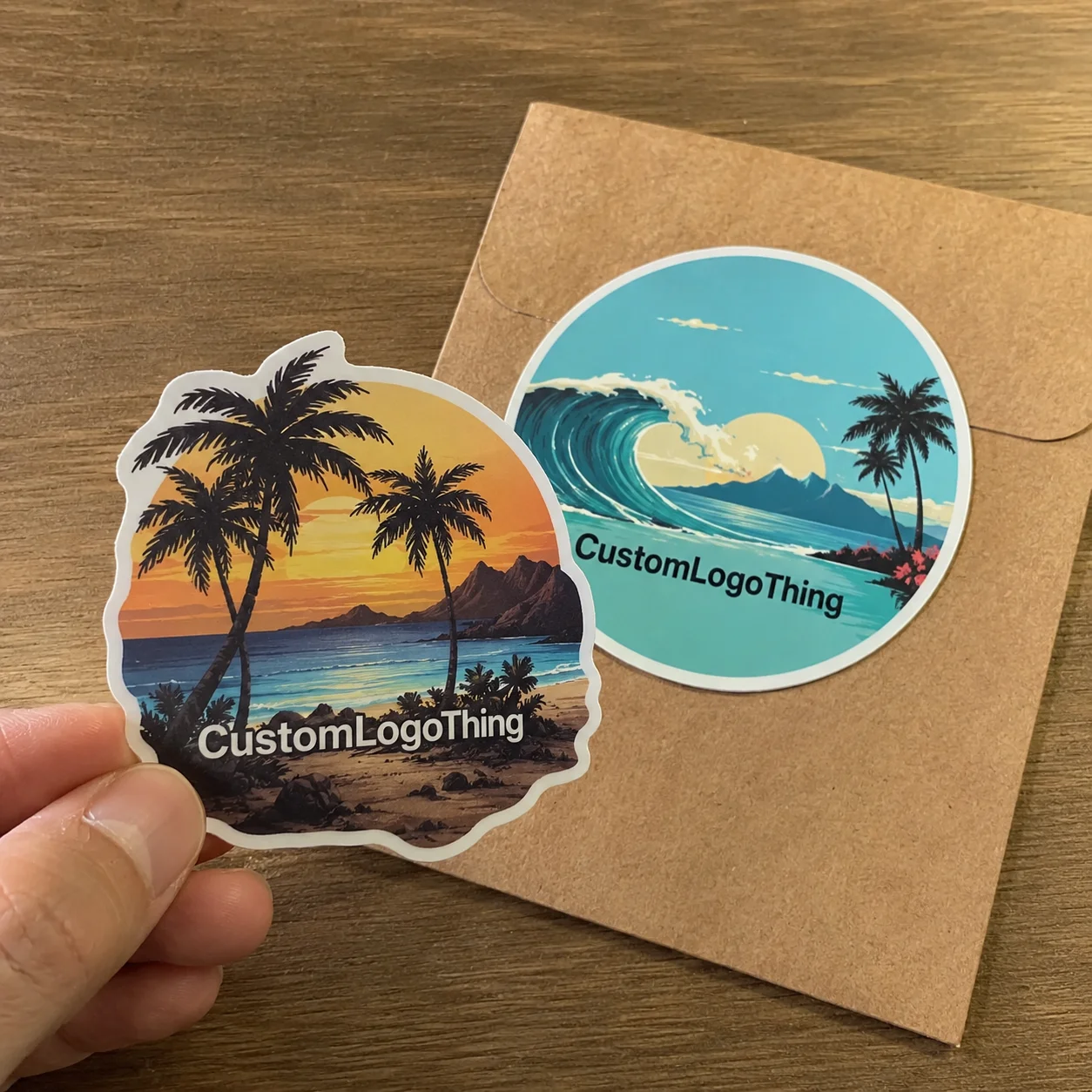
A sticker can cost a few cents and still carry the same brand risk as a box, label, or retail display. If it peels, fades, wrinkles, or looks flimsy, custom stickers for sale stop behaving like a small add-on and start acting like a visible packaging failure.
That sounds dramatic. It is not. A two-inch seal on a kraft mailer can make a small skincare order feel deliberate instead of improvised. Use the wrong adhesive on that same textured paper, though, and the corners may lift before the parcel reaches the customer. Tiny component. Big impression.
What Custom Stickers for Sale Really Means Before You Order
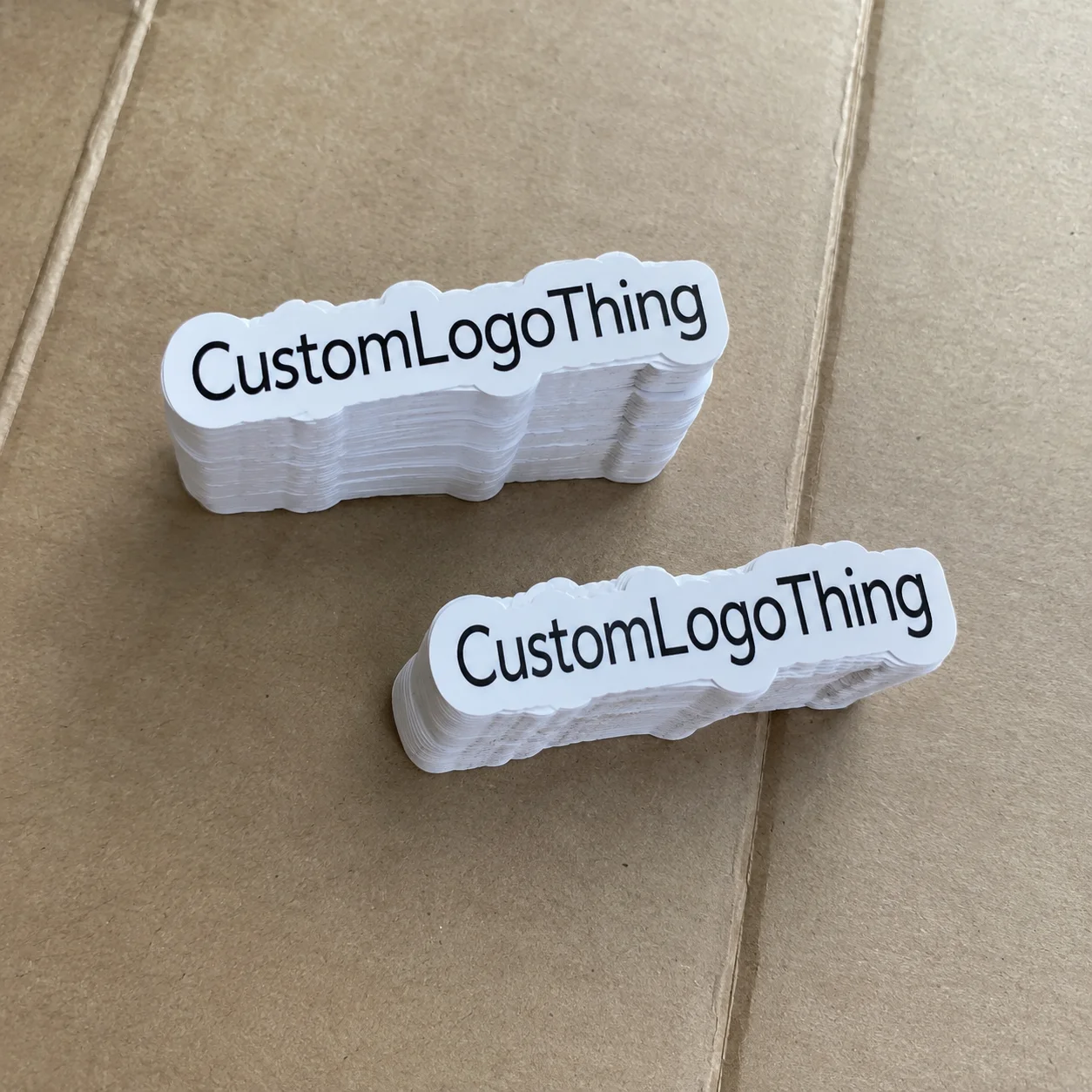
Custom stickers for sale are made-to-order adhesive graphics produced around a buyer’s artwork, size, shape, material, finish, adhesive, and use case. That definition matters because a sticker is not only a printed picture with glue on the back. It is a small packaging system with a surface, a job, and a failure point.
Stock sticker sheets are usually built around common designs, preset sizes, general-purpose paper or film, and modest performance expectations. Custom printed stickers have narrower jobs. They may seal a mailer, identify a batch, decorate a retail bag, carry a QR code, promote a short campaign, add compliance text, or unify packaging across several product lines.
The better question is not “Does the artwork look good?” It is “Where will this sticker live?” A paper sticker on an insert card has a very different assignment from a vinyl decal on a water bottle, a clear label on a glass jar, or a freezer-grade sticker on a chilled dessert cup. Coated cardboard, textured kraft, PET bottles, metal tins, compostable films, and corrugated mailers all change the specification.
From a packaging buyer’s point of view, stickers sit close to Custom Labels & Tags, hang tags, sleeves, belly bands, and small-format retail packaging. They are inexpensive per unit, but mistakes scale quickly. A $0.06 sticker that fails across 10,000 units is not merely a $600 loss if it delays fulfillment, forces repacking, or weakens the perceived value of the product.
This guide covers how sticker production works, what affects pricing, how long orders usually take, which mistakes create cheap-looking results, and how to prepare a quote request that gets cleaner answers from suppliers.
Packaging reality check: the lowest sticker price is only useful if the sticker survives the surface, handling, temperature, moisture, and application method it will face.
How Sticker Materials, Adhesives, and Finishes Work Together
Most stickers have three working layers: face stock, adhesive, and liner. The face stock is the visible material that gets printed. The adhesive controls how it bonds. The liner protects the adhesive until use and affects how easily operators peel, dispense, or machine-apply the sticker.
Paper is common for indoor packaging seals, thank-you inserts, event sheets, envelope closures, and short-life promotions. It prints well, keeps costs down, and often fits natural or kraft-style packaging. It is not automatically weak; it is simply less tolerant of moisture, abrasion, oils, and long outdoor exposure than film-based stocks.
White vinyl is more durable and usually better for laptops, bottles, outdoor promotions, handled products, and surfaces that may see moisture. Clear film creates a “no-label” look on glass jars, PET containers, and glossy plastic surfaces. Clear designs need careful white ink planning. Without an opaque white layer behind selected artwork, light colors can disappear against dark products, amber glass, or colored liquids.
Specialty stocks can shift a campaign quickly. Holographic film, metallic stock, textured paper, soft-touch lamination, and foil effects can make a small sticker feel closer to Premium Retail Packaging than a throwaway promo item. There is a cost tradeoff. A matte paper circle may be pennies at volume, while a laminated die-cut vinyl sticker or metallic finish can move into the $0.18 to $0.45 range depending on size, ink coverage, quantity, and cutting complexity.
Adhesive choice is where many bad orders begin. Permanent adhesive is used for long-term branding, product labels, and sealing applications where removal is not expected. Removable adhesive fits temporary promotions, window decals, event signage, or surfaces where residue would create complaints. Freezer-grade adhesives are designed for cold storage and condensation. Stronger adhesives may be needed for rougher surfaces such as textured kraft paper, uncoated corrugated board, or slightly curved containers.
There is no universal “best” adhesive. A strong permanent adhesive may be exactly right on a shipping carton and completely wrong on a reusable jar. A removable adhesive may protect a glass surface but fail on a textured mailer flap. Buyers should describe the real surface, not just the product category.
Finishes change both appearance and durability. Gloss makes color feel brighter and can be easier to wipe. Matte reduces glare and often feels more restrained. Soft-touch lamination adds a velvety surface, though it can show oils from fingers. Holographic and metallic effects catch attention on limited drops, retail inserts, and influencer kits. Lamination adds a protective film layer that can improve resistance to scuffing, moisture, and UV exposure, but it can complicate recyclability claims.
Surface energy is the quiet technical issue behind many failures. Stickers behave differently on glass, metal, coated paperboard, textured kraft, molded plastic, flexible pouches, and compostable packaging. Low-surface-energy plastics can resist adhesion. Rough paper reduces contact area. Curved containers create lifting stress along the edges. Cold products introduce condensation.
None of that makes the job impossible. It means the spec has to match the surface.
Adhesive failure is often blamed on print quality because the print is what everyone can see. The real cause may be moisture, low application pressure, dust, oil, a chilled product sweating after filling, or a label applied before the surface has stabilized. For packaging performance, standards bodies such as ISTA are useful reminders that distribution conditions are usually harsher than a design desk assumes.
Sustainability claims deserve the same skepticism. Ask whether the face stock, adhesive, liner, and final packaging system support the environmental goal. An FSC-certified paper face may help some campaigns; the Forest Stewardship Council explains chain-of-custody certification in more detail. Still, a compostable-looking sticker on non-compostable packaging can confuse disposal. The full system matters.
Pricing, MOQ, and Unit Cost Factors Buyers Should Compare
Sticker pricing is usually driven by size, shape, material, adhesive, print method, finish, order quantity, die-cut complexity, number of designs, proofing requirements, and shipping speed. The quote is not just ink plus material. It includes prepress time, setup, waste allowance, machine time, inspection, packing, and freight.
Unit cost falls as quantity rises because fixed costs are spread across more pieces. If a supplier spends the same time checking artwork, setting up a cut path, loading material, and preparing a proof for 250 pieces or 5,000 pieces, the larger run absorbs those costs more efficiently. That is why small custom sticker runs can look expensive while approved repeat runs often become economical.
Minimum order quantity, or MOQ, is practical rather than mysterious. Low minimums help brands test artwork, packaging design, or a new surface before committing. Larger runs make sense once the sticker is approved and reorder consistency matters. As a rough market range, a two-inch matte paper circle may cost about $0.20 to $0.45 each at a few hundred pieces, then drop toward $0.04 to $0.10 at several thousand pieces, depending on finish, supplier setup, and shipping terms.
Simple shapes are easier to price. Circles, squares, rectangles, and ovals usually cut efficiently and nest well on sheets or rolls. Intricate die cuts require tighter cutting tolerances, slower production review, and sometimes more waste around the shape. A spiky badge, script logo, or contour-cut mascot may look excellent, but thin points can lift, tear, or become irritating to peel.
| Sticker Option | Typical Use | Common Cost Influence | Buyer Watchout |
|---|---|---|---|
| Matte paper sticker | Mailer seals, inserts, indoor packaging | Often lowest cost at volume | Limited moisture and abrasion resistance |
| White vinyl sticker | Bottles, laptops, outdoor promotions | Higher material cost than paper | Confirm adhesive for curved or textured surfaces |
| Clear film sticker | Glass jars, plastic containers, minimalist branding | May require white ink layers | Artwork can disappear on dark products |
| Laminated die-cut sticker | Retail inserts, premium giveaways, durable branding | Added finishing and cutting cost | Complex shapes can slow production |
| Freezer-grade sticker | Cold food, refrigerated cosmetics, frozen samples | Special adhesive specification | Test against condensation and low temperature |
Finishes alter quote math. Lamination, foil, metallic substrates, holographic effects, and specialty adhesives add cost, but they may reduce waste or improve perceived value. A scuff-resistant sticker on a handled retail item may cost more up front and still be cheaper than reprinting a batch that looks worn after two days on a shelf.
A clean quote request should include size, quantity, material preference, finish, adhesive type, indoor or outdoor use, roll or sheet format, number of designs, deadline, and shipping destination. If you are also sourcing Custom Packaging Products, keep sticker specs tied to the same packaging brief so colors, surfaces, and application methods line up.
Do not compare only the headline price per sticker. Freight, rush fees, proofing delays, reorder consistency, and field failures can change the real cost. A $0.03 savings per piece means little if the sticker lifts on 15% of filled jars.
Process and Timeline: From Artwork Proof to Finished Stickers
A typical order follows a predictable path: submit specifications, upload artwork, receive a quote, review a digital proof, approve production, print, cut, finish, inspect, pack, and ship. Simple, at least on paper. Timelines stretch when fonts are missing, the cut line is unclear, the size is guessed, a barcode is too small, or the selected material is out of stock.
Clean artwork speeds everything up. Vector files such as AI, EPS, or print-ready PDF are preferred for logos, text, and cut paths. Fonts should be outlined. Images should be embedded and high enough resolution, commonly 300 dpi at final size for raster elements. Bleed should usually extend at least 0.0625 inch beyond the trim edge, though supplier requirements vary. Safe margins keep text, borders, and QR codes away from the cut edge.
The proof is not decoration. It is the buyer’s last checkpoint for size, spelling, layout, color expectations, barcode readability, QR code function, and cut placement. Twelve extra minutes of proof review can prevent three lost days after production starts.
Lead times depend on order volume, material availability, finish complexity, proof approval speed, die-cut detail, curing time, inspection load, and shipping method. A simple paper sticker reorder may move quickly. A first-time holographic die-cut sticker with lamination, multiple designs, and a tight color target needs more review.
Production time and delivery time are not the same. A five-business-day production schedule means the stickers are expected to be made in that window after proof approval. It does not mean the carton arrives at your door in five days. Add packing, carrier pickup, transit, and any customs or routing delays if the order crosses borders.
For launches, events, subscription boxes, and retail resets, build a buffer. Artwork corrections can take a day. Internal approvals can take two. Physical samples may add a week or more depending on the supplier. Transit can slip. If stickers are needed for 8,000 mailers, a missed date can stall fulfillment just as surely as a delay in Custom Printed Boxes.
Ask about reorder timelines too. Once the spec is approved, a second run may move faster because size, material, adhesive, finish, roll direction, and color references are documented. Not always. Material availability and production schedules still matter. But repeat orders usually remove several uncertainty points.
Step-by-Step Guide to Ordering Stickers That Fit the Job
- Define the job before choosing the look. Decide whether the sticker must seal, label, decorate, promote, instruct, identify, or survive repeated handling. One sticker can do several jobs, but one unclear sticker usually does none well.
- Measure the real surface. Do not guess from memory. A half-inch difference can make a label look crowded, tiny, or awkwardly placed. Measure flat panels, curved areas, lid diameters, mailer flaps, and available white space.
- Choose the format. Rolls suit machine application or fast hand application. Sheets work for small batches, office packing stations, events, and mixed designs. Singles are useful for giveaways, retail inserts, influencer kits, and promotional handouts. Kiss-cut stickers make peeling easier while keeping a backing shape around the design.
- Match material and adhesive to conditions. Surface, temperature, moisture, friction, oil exposure, and expected lifespan should guide the choice. A candle label, a refrigerated drink sticker, and a carton seal do not need the same adhesive.
- Prepare artwork for production. Add bleed, safe margins, high-resolution images, outlined fonts, and a separate cut path for custom die-cut shapes. Small text under 5 points can be risky, especially on textured material or high-speed print runs.
- Request and review the proof. Treat it like a production document. Check size, spelling, SKU references, QR codes, colors, cut lines, and orientation.
- Test new applications. Start with a test quantity when the sticker touches a new surface, new packaging material, cold storage, curved containers, or high-value goods.
- Document approved specs. Save material, adhesive, finish, size, roll direction, color references, artwork version, and supplier notes for reorders.
The best ordering process is not complicated. It is disciplined. Buyers who write down the job, surface, lifespan, and application method usually get better stickers than buyers who send only a logo and ask for the lowest price.
Common Mistakes That Make Custom Stickers Look Cheap
The first mistake is choosing the cheapest material without considering surface, storage, handling, or moisture exposure. Low-cost paper can be perfect for dry indoor packaging. It can also look terrible on a product that sweats in refrigeration or rubs against other items during transit.
The second mistake is sending low-resolution artwork and expecting print production to rescue it. A fuzzy 600-pixel logo pulled from a website will not behave like vector art. Thin lines, tiny reversed text, gradients, and small icons need special attention because they fail quietly: not as obvious errors, but as weak-looking packaging design.
Bleed and safe zones are another common trap. Without bleed, tiny shifts during cutting can create awkward white edges. Without safe margins, text may sit too close to the edge or get clipped. Digital cutting is accurate, but no production process is magic. Tolerances still exist.
Wrong adhesive is the expensive mistake. Textured kraft, flexible pouches, cold products, candles, oily cosmetics, reusable containers, and compostable surfaces can all challenge standard adhesive. If the surface is rough, curved, cold, wet, or handled frequently, say so before the quote is finalized.
Too much information can cheapen the result. Small stickers need ruthless hierarchy. A 1.5-inch circle cannot comfortably carry a logo, tagline, ingredients, website, social handle, QR code, discount code, and three icons. Pick the job. Then edit.
Roll direction is easy to ignore until packing staff are applying hundreds per hour. If stickers feed upside down, sideways, or with the wrong leading edge, application slows. For machine labeling, roll direction can be critical. For hand application, it still affects speed, fatigue, and consistency.
Proofs get approved too quickly. That is how spelling errors, wrong sizes, unreadable barcodes, dead QR codes, and color surprises enter production. Proof approval is not a courtesy step; it is a responsibility handoff.
Skipping real-world testing is the final large mistake. Test for condensation, oils, refrigeration, sunlight, abrasion, and curved surfaces if those conditions apply. A sticker that looks good on a desk for ten minutes has not proven much. A sticker that stays flat on a filled container after 48 hours of actual handling tells you more.
Next Steps: Build a Smarter Sticker Spec Before You Request Quotes
Before requesting quotes, build a simple worksheet. Write down sticker size, quantity, surface material, indoor or outdoor use, expected lifespan, application method, deadline, shipping destination, and budget range. Add the number of designs if there are several versions. Include whether the stickers should arrive on rolls, sheets, or individual pieces.
Photograph the packaging or product surface where the sticker will be applied. A supplier can often spot risks from a picture: texture, curve, flap direction, coating, tight corners, or areas likely to rub during shipping. One photo can prevent a long email chain.
Ask for material guidance, not only the lowest price. This is especially true if stickers will face moisture, friction, cold, heat, sunlight, oils, curved surfaces, or frequent handling. A better question is, “What material and adhesive would you recommend for this surface and lifespan?” That invites a technical answer instead of a race to the cheapest option.
Order a small test run or physical sample when launching a new product line, changing packaging materials, or applying stickers to high-value goods. Testing 100 pieces before ordering 10,000 is normal risk control, not indecision.
Compare quotes using the same specifications. A laminated vinyl sticker is not the same product as an uncoated paper sticker. A clear film sticker with white ink is not the same as a basic transparent stock with no opacity planning. If two quotes are far apart, check material, finish, adhesive, quantity, tooling, freight, and production schedule before assuming one supplier is simply cheaper.
Before choosing custom stickers for sale, confirm the spec, proof, timeline, and real use conditions. The finished sticker should perform like part of the package, not an afterthought added when the main packaging decisions are already over.
FAQ
What are custom stickers for sale usually made from?
Most are made from paper, vinyl, clear film, metallic film, or specialty substrates, paired with an adhesive and liner. Paper is common for indoor packaging and promotions, while vinyl and film options are better for moisture resistance, handling, or outdoor use. The right material depends on the surface, environment, lifespan, and finish you want.
How much do custom printed stickers cost per piece?
Unit cost depends on size, quantity, material, adhesive, finish, shape, number of designs, and shipping speed. Higher quantities usually lower the per-sticker price because setup and production costs are spread across more pieces. For accurate comparison, ask each supplier to quote the same size, material, finish, quantity, and delivery terms.
What file type should I send for custom sticker printing?
Vector files such as AI, EPS, or print-ready PDF are preferred for logos, text, and cut paths. High-resolution PNG or TIFF files may work for image-based designs if they meet print resolution requirements. Include bleed, safe margins, outlined fonts, embedded images, and a clearly marked cut line for die-cut stickers.
How long does it take to receive custom stickers after ordering?
Timing depends on proof approval, material availability, finish complexity, production schedule, inspection, packing, and shipping. Simple repeat orders often move faster than first-time orders because the specifications are already approved. For launches or events, build in extra time for artwork corrections, sample review, and transit delays.
Are custom stickers better on rolls, sheets, or individual pieces?
Rolls are best for fast hand application, labeling workflows, or machine use. Sheets are practical for small batches, office use, events, and mixed designs. Individual pieces work well for giveaways, retail inserts, influencer kits, and promotional handouts.