The hotel Woven Label Beanies material thickness guide is less about style and more about fit, handfeel, logo clarity, and how the beanie behaves after packing and wear. A small change in thickness can shift a label from flat and crisp to slightly wavy. For buyers, that means the spec is not cosmetic. It affects how premium the piece feels and how well it holds up in real use.
Thickness also changes the buying decision in practical ways. A beanie that is too light can expose seams and make the front panel look weak. One that is too heavy can feel bulky, cost more to make, and ship less efficiently. The best choice depends on the knit, the label size, the intended use, and whether the piece is for guest amenities, retail, or staff.
Hotel Woven Label Beanies Material Thickness Guide: Why It Matters
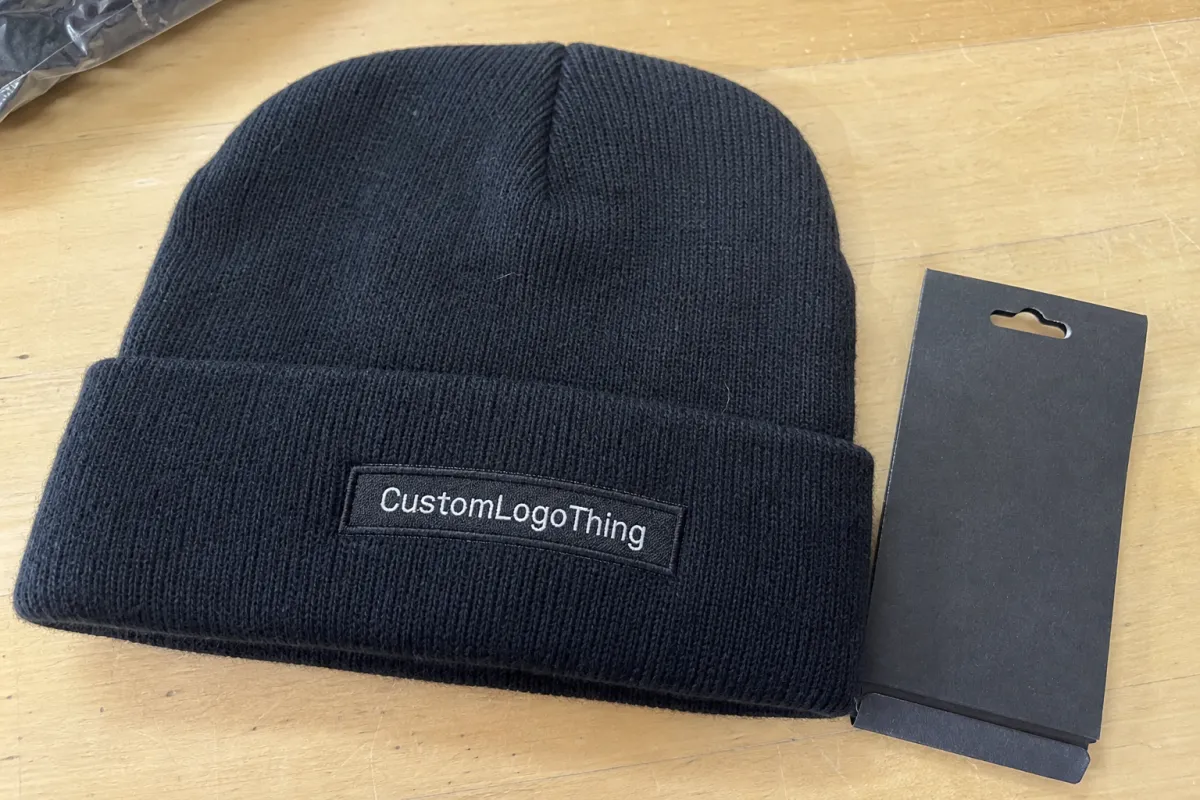
Thickness is not a single number. Buyers often ask for a "thicker" or "softer" beanie, but factories are balancing yarn weight, knit density, cuff construction, and label format at the same time. A dense 2x2 rib can feel substantial without being oversized. A looser knit may feel soft, but it can distort under a woven label or lose shape after folding.
The same woven label can sit very differently on two beanies with similar artwork. The main issue is the relationship between the label and the fabric underneath it. If the knit stretches too easily, the label ripples. If the fabric is too relaxed, the stitching around the label can look heavier than expected. Buyers should evaluate the full build, not just the decoration.
For hotel programs, thickness also affects consistency across the guest experience. A beanie in a welcome kit should feel aligned with the rest of the package. If the box uses FSC-certified board, kraft wraps, or recycled inserts, the beanie should not feel like it came from a separate sourcing line. That does not mean every detail has to be premium. It means the product should feel intentional.
Midweight beanies usually work best for hospitality because they balance comfort, warmth, and presentation. They are warm enough for practical use without feeling too heavy for a room amenity or gift set. Even so, "midweight" is only a starting point. On a thin knit, a small label may be the better fit. On a denser knit, a larger label can still sit cleanly if the front panel has enough structure.
How Woven Labels Sit on Different Beanie Knits
Rib knit, jersey knit, and double-layer constructions all affect label behavior. Rib knit stretches well and recovers nicely, which helps with fit, but it also moves more, so the label needs enough structure to avoid edge curl. Jersey knit is smoother and often looks cleaner, but it can appear too relaxed if the front panel is thin. Double-layer builds add warmth and body, yet they can become bulky quickly if the label is large or the fold line is stiff.
Placement matters as much as knit type. A center-front label on a cuff usually performs best because the cuff gives the front panel extra stability. Put the same label high on a soft crown and it may buckle when worn. That is usually a tension issue, not a decoration issue. The knit is moving, and the label has to move with it.
Label construction changes the result too. A sew-in label with a folded edge usually sits flatter than a raw-edge patch. A center-fold label needs enough seam allowance to avoid stiffness at the fold. On slimmer beanies, a label that is too tall can dominate the front panel and make the hat feel heavier than it is.
For hotel groups that need consistent branding across apparel and packaging, pairing the beanie spec with Custom Labels & Tags helps keep the logo treatment aligned. That matters when the same brand shows up across amenity items, inserts, and soft goods.
Key Thickness Factors Buyers Should Compare
The right decision starts with use case. A ski resort or mountain property usually wants more insulation and stronger shape retention. A city hotel handing out beanies at check-in may care more about packability, a lighter handfeel, and lower freight cost. Those are different briefs. A beanie for a room amenity tray should fold neatly and still look crisp. A retail-style piece may need a tighter gauge and cleaner edge control.
These are the specs worth comparing first:
- Yarn weight: heavier yarn adds loft and warmth, but it can reduce fine detail around the label.
- Knit gauge: a tighter gauge usually gives a smoother face and better logo readability.
- Cuff depth: a deeper cuff creates a better landing zone for the label and adds structure.
- Lining: fleece or jersey lining improves comfort, but it changes perceived thickness immediately.
- Finish: softening washes can improve handfeel, but they can also relax the knit more than expected.
Color changes how thickness reads. Dark knits hide small flaws better. Light colors show puckering, stitch inconsistency, and label shadow more easily. A white or heather-gray beanie usually needs a cleaner spec than a navy one.
Packaging affects the first impression as well. Beanies packed in individual biodegradable packaging or wrapped with paper sleeves stay cleaner in transit than beanies stacked loosely in a carton. Even a simple master shipper with corrugated cardboard dividers and kraft paper can reduce compression marks. If presentation matters, packing belongs in the product spec.
Before approval, check four things: feel, stretch recovery, label flatness, and edge softness after a wear cycle. That short list catches more problems than a desk review ever will.
Step-by-Step Spec Check for a Better Fit
Start with the end use, not the fabric swatch. If the beanie is for guest amenities, comfort and appearance matter most. If it is for staff uniforms, durability and repeat wear move up the list. Turn that use case into a target handfeel, a visible label size, and a thickness range that fits the brand.
A clean approval flow usually looks like this:
- Request two or three knit samples at different densities.
- Review them under the same lighting guests will see in the room or lobby.
- Place each sample on a head form or mannequin and stretch it slightly.
- Check whether the woven label lies flat, lifts at the corners, or pulls the front panel.
- Record the winner in measurable terms instead of adjectives alone.
The notes should include knit type, body thickness, cuff construction, label placement, thread colors, and any softness treatment. If the supplier offers different label backings or optional lining, write that down too. A "soft backing" can sound minor, but it changes how the label behaves after folding, packing, and handling.
It also helps to tie the product spec to the packaging spec. A beanie folded into tissue, then packed in kraft sleeves inside FSC-certified cartons, keeps the unboxing story aligned with a hotel brand that claims sustainability. If the property uses recycled materials in guest-facing supplies, the beanie should not look like it came from a different program.
If the factory sends a side-by-side comparison, look for three things: low curl, clear logo edges, and enough body to hold shape without feeling stiff. That combination usually separates an acceptable sample from a good one.
Cost, MOQ, and Unit Price Tradeoffs
Thicker beanies usually cost more. They use more yarn, take longer to knit, and can add freight weight. That does not mean the most expensive option is the right one. It means the buyer should understand what part of the price is buying warmth, what part is buying structure, and what part is buying a cleaner branded face.
As a rough guide for a 5,000-piece order, a basic promo beanie may land around $1.40-$2.10 per unit, a midweight amenity beanie with woven label around $2.10-$3.40, and a premium lined build around $3.40-$5.00. The actual number shifts with yarn choice, color count, label complexity, finishing, and whether each piece is individually folded or tagged.
| Option | Thickness Feel | Typical Unit Price at 5,000 | MOQ Pressure | Best Use |
|---|---|---|---|---|
| Lightweight promo | Soft, low bulk | $1.40-$2.10 | Lowest | Giveaways, short events |
| Midweight woven label | Balanced, structured | $2.10-$3.40 | Moderate | Hotel amenities, retail basics |
| Premium lined build | Denser, warmer | $3.40-$5.00 | Higher | Cold-weather hospitality, premium gifts |
MOQ usually climbs as the build gets more custom. Specialty yarn, multiple knit colors, or a more complex woven label can push the minimum order above a standard blank cap. Buyers often focus on unit price and forget landed cost. That is where budgets get hurt. Heavier beanies add freight, and at scale that can matter as much as the production quote.
The best value often sits in the middle. A clean midweight beanie with the right label size tends to give the strongest guest impression without the cost penalty of a heavyweight build.
Process, Timeline, and Production Steps
The production sequence is straightforward, but thickness issues can show up at every stage. Artwork approval comes first, then label weaving, knit sampling, bulk knitting, sewing or attachment, finishing, inspection, and packing. If the label is too large for the knit, the sample will expose that early. If the body knit is too soft, the issue may not show until the sample is stretched or folded.
Lead time depends on yarn sourcing, color matching, and seasonality. For many custom runs, a buyer should expect roughly 12-15 business days from proof approval for sampling and a similar or slightly longer window for bulk production after sign-off. Specialty yarn or extra finishing can stretch that timeline. Delays rarely come from one major failure. They usually stack up in small places: a missed proof detail, a label size change, a cuff height adjustment, or a second sample round.
Test shipping too. A beanie packed tightly in a corrugated cardboard master carton behaves differently from one shipped with loose inserts. If the hotel cares about opening presentation, specify whether the piece should be folded, lightly stuffed, or wrapped in tissue. That protects the first-hand feel and keeps the knit from looking tired before it reaches the room.
For transport validation, the ISTA test framework is useful because it simulates handling that real shipments go through. For packaging sourcing, FSC certification helps when the hotel group wants the carton story to match a recycled-content or lower-impact packaging policy.
A simple milestone schedule keeps the buyer in control:
- Spec sheet: confirm knit type, label size, placement, and acceptable variation.
- Sample approval: check fit, flatness, and handfeel on the intended knit.
- Pre-production proof: verify color, label weave, and packing method.
- Bulk release: approve only after the sample matches the order intent closely enough to repeat.
Common Mistakes That Cause Curling, Stretch, and Rework
The first mistake is choosing thickness by handfeel alone. A plush sample can feel luxurious and still fail once the label is stretched across the front panel. The second is oversizing the label for the knit density. A label that looks balanced on paper may create edge curl, visible stitch lines, or a front panel that pulls out of shape.
The third mistake is skipping real-use testing. A beanie can look perfectly aligned on a flat table and then twist after someone wears it for ten minutes. That is normal for knit goods. If the buyer never tests movement, the first real test happens after delivery, which is the most expensive time to find a problem.
Vague specs cause rework too. If the order says "soft black beanie with woven label," the factory has to interpret softness, thickness, label scale, and placement. Two people can read that line and imagine different products. A better spec uses numbers, samples, and tolerances. Even a simple note like "label must sit flat after moderate stretch" is better than leaving it open.
Packaging gets overlooked here as well. A hat may pass approval in a sample bag, then pick up crease marks after being packed too tightly with other soft goods. If the hotel order includes pillow gifts or welcome kits, ask how the beanies will sit alongside the rest of the contents. Corrugated cardboard dividers, kraft paper wraps, and recycled inserts all affect compression more than people expect.
Expert Tips and Next Steps for a Cleaner Approval
A three-way comparison is usually the cleanest way to approve thickness: one thin sample, one midweight sample, and one premium sample. That setup shows where comfort starts to drop, where the label begins to curl, and where the beanie gets too heavy for a hotel setting. A single sample can hide those tradeoffs. Three samples make them obvious.
Ask for a wear test and a fold test. Then check the sample again after handling, packing, and a few hours of use. The right piece should still look tidy. It should not go limp at the cuff or pull the woven label into a wave. Flat photos are useful, but they are not enough.
Lock the approval around measurable details: knit density, target handfeel, label dimensions, thread contrast, and any lining requirement. If the program includes amenity packaging, specify whether the beanie should arrive in biodegradable packaging, kraft paper, or a recycled-material insert. Small details like that shape the final impression and keep the product story consistent.
Use this guide as a buying tool, not a design slogan. Compare samples, confirm the cost tier, document the build, and release the final spec only after the knit and the label behave the way they should. That is how a decent sample turns into a product that holds up in real use.
How thick should hotel woven label beanies be for a guest amenity order?
A midweight knit usually works best because it feels warm without becoming bulky. Guest amenities need comfort and easy wear more than heavy insulation. The label should sit flat after stretching; if the front panel ripples, the knit is probably too soft for that label size.
Does a thicker beanie always make a woven label look better?
No. Extra thickness can help structure, but it can also reduce drape and make the label feel raised. The better result comes from matching label size to knit density. A balanced midweight build often gives the cleanest branded look for hotels.
What thickness works best for hotel woven label beanies in cold weather?
Cold-weather locations usually need a denser knit or a lined build so the beanie holds warmth and keeps its shape outdoors. If the label is larger, make sure the knit still has enough stretch recovery to avoid puckering. A wear test in the intended climate helps more than a desktop review.
How do thickness and MOQ affect unit price for branded beanies?
Thicker or more complex beanies usually raise unit cost because they use more yarn, take longer to make, and may need extra finishing. MOQ can rise with custom yarns, label complexity, or multiple colors. Compare total landed cost, not just unit price, because freight can move the final number.
What should I ask for before approving hotel woven label beanies samples?
Request at least two thickness options and confirm how each one feels after stretching, folding, and wearing for a short period. Ask for the knit gauge, yarn type, label size, and finishing steps. Approve only after checking flatness, edge curl, label visibility, and packed presentation.

