A smart skincare Woven Label Beanies unit cost review starts with a simple question: what is this item supposed to do after the box is opened? If the answer is "carry the brand, get worn, and stay visible," then the price needs to be judged differently than a paper insert or a one-time giveaway. A beanie has a longer life. That changes the economics fast.
Buyers usually compare item cost first because that number is easy to see. Fair enough. But the real decision sits one layer deeper. A beanie that looks clean, feels solid, and survives repeated wear can create more brand exposure than several cheaper components combined. A throwaway insert cannot do that, no matter how nicely it is printed.
That is why the useful metric is cost per impression, not just cost per piece. For skincare launches, staff kits, winter campaigns, and retail add-ons, the beanie often acts like a wearable billboard with a long shelf life. The right Unit Cost Review includes fabric, label application, packaging, labor, freight, and the practical value of the item staying in circulation.
There is also a perception problem buyers often underestimate. A skincare kit with a soft knit beanie feels more considered than a kit with another flat insert. The product does not have to be expensive to read as premium. It does have to be coherent. That is where the woven label, the fold, and the finish start doing real work.
Why Beanies Can Outperform Paper Inserts in Skincare Kits
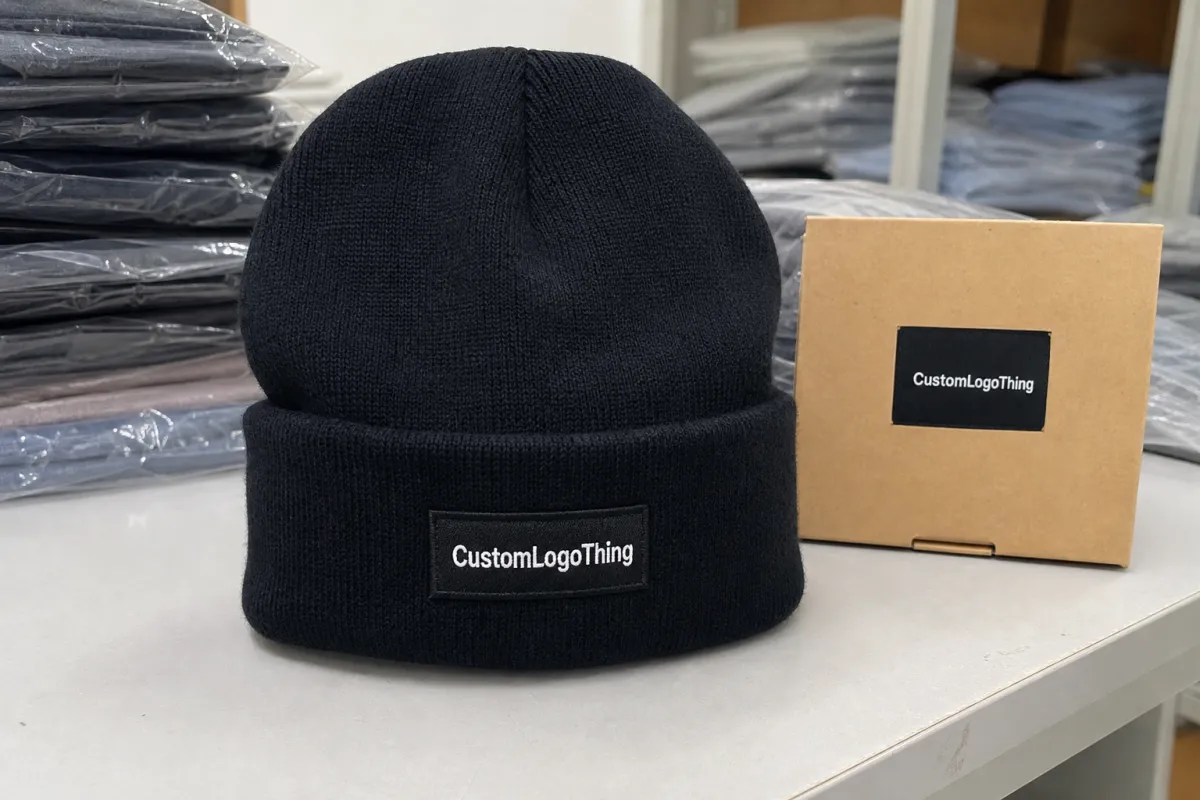
A paper insert is usually handled once and discarded. A beanie is handled, worn, photographed, and reused. That difference matters because skincare is a brand category built on presentation and repeat visibility. A folded sheet can explain the product. A beanie can extend the message after the unboxing is over.
That is the first reason a skincare woven label Beanies Unit Cost Review should go beyond invoice math. A $2.40 beanie worn 20 times is not the same as a $0.35 card that goes into the trash. The beanie may cost more upfront, but it can carry the brand for months instead of minutes. Buyers who work only from unit cost miss that imbalance.
There is also a merchandising advantage. A beanie adds volume, texture, and a seasonal cue that flat print cannot match. For a winter launch, that matters. A knit item can make a skincare bundle feel intentional without requiring the formula or primary pack to change. It gives the set a stronger retail read, which can support a higher bundle price or a more persuasive gift-with-purchase offer.
On the kitting side, a single wearable item can replace a few lower-value extras. A separate card, fabric swatch, and small promotional trinket each create their own cost and assembly step. One beanie with a clean woven label can simplify the packout. That does not make every program cheaper, but it can make the result cleaner and easier to ship.
"The item should be judged by how long it stays visible, not by how fast it leaves the box."
Brands also tend to get better photo mileage from apparel add-ons. A beanie is more likely to appear in user-generated content than a booklet or insert. If the goal is repeated brand exposure, that is a practical advantage, not a soft one. The cost per impression drops each time the item is worn again.
For broader packaging questions, buyers often cross-check transit standards with groups like ISTA and paper sourcing expectations through FSC. That is not overkill. A beanie that arrives crushed, misfolded, or damaged loses a lot of the value it was supposed to create.
What Buyers Should Specify Before Approving a Sample
The sample stage is where a lot of otherwise solid projects go sideways. Usually it is not because the factory is guessing wildly. It is because the buyer did not define the garment clearly enough. A cuffed beanie, a slouch beanie, a rib-knit version, and a heavier winter knit all carry different cost structures and different branding opportunities.
Start with the silhouette. A cuffed beanie is the safest option for visible woven-label placement. It gives the best front-facing branding area and the most predictable fit. A slouch style has a more relaxed look, but the label can disappear depending on how the crown falls. Rib-knit styles often feel more premium, though tighter knit structure can raise the production burden and make consistency harder on the line.
Fabric choice also matters more than buyers expect. Standard acrylic is usually the most cost-efficient and gives suppliers the easiest path to color matching. Acrylic-wool blends can feel softer or warmer, but they usually raise cost and may narrow color options. Recycled yarns can help a sustainability brief, though they may affect hand feel, shrink behavior, or the price band. None of that is a dealbreaker. It just needs to be named early.
Label placement is not cosmetic. It affects visibility, sewing time, and how the item reads in photos. Front cuff placement gives the strongest retail look. A side-seam label can feel quieter and work well for minimal branding. A back-tab placement can suit a cleaner premium aesthetic, but it will not always show in a product shot. If the woven label is part of the brand story, that decision should be locked before the sample is approved.
- Cuffed beanie - best for visible branding and predictable fit.
- Slouch beanie - better for casual styling, but label placement needs more care.
- Rib-knit beanie - stronger premium feel, with tighter control needed on gauge.
- Heavy-gauge winter beanie - warmer and bulkier, usually with a higher cost profile.
Color approvals deserve the same discipline. If the skincare brand lives in warm neutrals, muted olive, sand, charcoal, or stone will usually read more naturally than bright seasonal colors. Buyers should send artwork in vector form and specify Pantone references if they have them. Screen color is not enough. It can drift too far from the physical knit, and that creates avoidable back-and-forth.
One small but useful request: ask for the sample in its final fold and packaging state, not just as a loose beanie on a table. The way a beanie sits in a carton affects how the label shows in a box opening, how much empty space the packout needs, and whether the item looks planned or thrown in at the last minute. That is a real difference in branded skincare kits.
Skincare Beanie Unit Cost, Pricing, and MOQ Drivers
Unit cost is not one number. It is a stack of variables pretending to be a single line on a quote. For a skincare woven label beanies Unit Cost Review, the biggest drivers are yarn choice, knit density, label complexity, finishing, packaging, and order volume. A plain beanie with one woven label is not priced like a heavy knit with multiple trim steps and retail-ready packing.
Quantity changes the picture quickly. At low volume, setup time, knit programming, and sewing labor get spread across fewer pieces. The per-unit price climbs. At higher volume, those fixed costs flatten out and the quote usually improves. That is why a 300-piece order can look disproportionately expensive next to a 3,000-piece run even if the beanie itself is nearly identical.
| Beanie Spec | Typical MOQ | Unit Cost Range | What Pushes Price Up |
|---|---|---|---|
| Cuffed acrylic beanie with one woven label | 300-500 pcs | $2.10-$3.80 | Multiple label colors, dense knit, custom packaging |
| Rib-knit beanie with front cuff label | 500-1,000 pcs | $2.40-$4.20 | Tighter gauge, larger label, extra finishing labor |
| Heavy-gauge winter beanie with woven patch | 500-1,000 pcs | $2.90-$5.20 | Thicker yarn, more stitches, premium hand feel |
| Retail-ready beanie with hangtag and polybag | 1,000+ pcs | $3.10-$5.80 | Extra inserts, barcodes, carton labeling, assembly time |
Those ranges are planning tools, not fixed rates. Different factories will price them differently based on machinery, labor mix, and how much of the packout they handle in-house. Still, the pattern is reliable. More stitches, more trims, more packaging, and smaller quantities all move the price upward. Simple as that.
Material selection changes the story too. Acrylic is usually the baseline. Acrylic-wool blends raise the cost but may improve hand feel. Recycled yarn can bring a sustainability angle but sometimes tightens the color palette or complicates consistency. If the knit has to hold a very specific shade across multiple lots, buyers should expect the supplier to be cautious about matching tolerance.
Hidden costs are where budgets usually get bruised. Sample charges may be separate. Woven label application can appear as a labor line. Polybags, size stickers, hangtags, tissue, and carton labels add up faster than they should. Freight and duty can widen the gap between the clean factory quote and the real landed cost. If the quote does not spell those out, ask for a line-by-line breakdown before approval.
Tooling is less dramatic here than in hard-goods packaging, but it still exists. Custom knit programming, unusual label sizing, or special folding instructions can create setup charges. Some suppliers bundle those into the sample phase. Others split them apart. Either approach is fine, as long as the buyer knows which costs are one-time and which ones affect every reorder.
If the order ships in retail cartons or has to survive a longer route, it is worth thinking about transit testing before the goods leave production. Standards associated with ISTA can reduce damage surprises later. A cheap unit price is pointless if a carton crushes, the fold opens, or the label gets scuffed in transit.
Build the Spec Sheet That Gets Accurate Quotes
If the buyer wants a useful price, the supplier needs usable information. That sounds obvious, yet a lot of quote requests still read like a sketch. A strong spec sheet is the fastest way to reduce guesswork. For a skincare beanie order, it should include body dimensions, fabric type, label placement, artwork details, packaging format, and delivery expectations.
Exact measurements matter. Crown height, cuff depth, knit width, final folded dimension, and label size all shape the quote. A beanie that fits like a snug fashion accessory is not the same as one built for a looser unisex profile. Even if the difference seems small on paper, it affects knitting, folding, and final presentation.
Artwork should be treated as production input, not just a logo attachment. Vector files are best. For woven labels, buyers should indicate how many colors are in the art, whether the label is single-sided or mirrored, and how small the text runs. A seven-color label is a different job from a two-color one. If that difference is not stated early, the quote will either be loose or wrong.
Packaging format must be listed separately. A loose beanie in a bulk carton is one cost structure. A beanie in a polybag with a hangtag, barcode, tissue wrap, and retail carton is another. If the skincare team wants a branded insert card or a custom band, that needs to be called out too. Otherwise the beanie can be priced correctly while the packout quietly runs over budget.
- Body style and size spec
- Label position and label artwork
- Color reference and quantity split
- Packaging format and carton count
- Ship-to location and delivery window
It also helps to explain the end use. A launch kit, a retail merch item, employee gifting, and a PR sample all have different tolerance for finish quality and packaging complexity. A supplier can usually quote more accurately when it knows the item is part of a customer-facing box instead of a backroom giveaway. That context saves time on both sides.
If the same program includes labels or hangtags, keep them in the same request. One order can cover beanies and Custom Labels & Tags, which makes it easier to align fold position, trim size, and branding finish. Split orders are where simple mismatches start. The woven label looks right on its own, then gets swallowed by the fold or clashes with the rest of the kit.
Production Process, Timeline, and Approval Steps
A clear approval chain keeps the budget honest and the schedule intact. The usual flow is quote, artwork check, sample or strike-off, bulk approval, production, inspection, and packing. Skip a step, and the risk moves downstream. The result is usually avoidable delay, extra revision, or a final product that no longer matches the original quote.
For straightforward runs, a realistic planning range is about 12-20 business days after proof approval. That assumes the yarn is available, the label art is settled, and the packaging format is not overcomplicated. Add time for custom colors, more complex woven labels, multiple packout components, or a busy factory calendar. Buyers who want a fixed launch date should build some buffer. There is no prize for cutting it too close.
Delays usually come from the same places. Late artwork is a common one. Missing measurements is another. Last-minute changes after sample approval can also slow everything down, because even a small shift in label placement or fold structure may require another check before bulk production can continue. Once the project is moving, changes need to be controlled tightly.
Quality control should be planned before the cartons are sealed. Buyers can ask for in-line photos, pre-shipment inspection, or a third-party check depending on order size and risk. The details matter. A crooked woven label, loose stitching at the cuff, uneven fold height, or visible shade drift can make a polished skincare kit look careless even if the primary product is strong.
There are a few checks worth asking for every time:
- Compare sample and bulk shade against the approved reference.
- Check label centering, stitch tension, and edge finish.
- Measure cuff width, crown depth, and final fold consistency.
- Look for pilling, snagging, or loose yarn ends after handling.
- Confirm carton count and packout before shipment leaves the dock.
That last point matters more than it sounds. If the cartons are short, or if a few items are packed differently from the approved sample, it becomes hard to know what happened. A saved photo set, a written approval note, and the final measurement sheet make reorders simpler and keep the record clean for the next round.
What Makes the Program Easier to Buy
Buyers do not need more noise. They need fewer surprises. A useful beanie program should make the quote readable, the sample easy to judge, and the reorder easy to repeat. That matters even more in skincare, where the beanie is supporting the brand story rather than carrying the entire sale by itself.
Transparent quoting is the first part of that. If unit cost, setup, sample charges, packaging, and freight are separated clearly, a buyer can compare options without guessing where the numbers are hiding. Finance teams tend to like this too. They want to know why a 500-piece order costs one amount and a 1,000-piece order drops into a different bracket.
Spec control is next. A clean program should lock color, woven-label placement, fold method, and packaging format before bulk production starts. That avoids the classic problem where the sample looks right, but the bulk run lands with a different shade or a slightly off-center label. That kind of drift is enough to make a premium kit feel off.
Reorder continuity matters just as much. If the approved measurements, artwork, and folding instructions are saved properly, a later run can move faster and usually with less price friction. That is especially useful for seasonal skincare campaigns, where the same item might come back with a new fragrance line or holiday pack but still needs to match the original spec.
There is also a practical reason to keep trim items together. If the same project needs hangtags, labels, or insert cards, keeping those parts in one spec family reduces mismatch risk. That is where Custom Labels & Tags fits naturally. It keeps the branding details aligned instead of treating each component like a separate emergency.
The best programs are boring in the right way. The label is where it should be. The fold is consistent. The carton count is correct. The quote matches the invoice. Nothing dramatic happens, which is exactly the point.
Next Steps to Lock the Right Quote and Reorder Plan
If you are comparing suppliers now, ask for three quantity tiers instead of one. A 300-piece, 1,000-piece, and 3,000-piece view shows the real break point. That makes it easier to tell whether the lowest MOQ is actually efficient or whether stepping up volume gives a better unit cost and a cleaner margin.
Then request the sample and the spec sheet together. A sample without a written brief can hide problems. A spec sheet without a sample can miss fabric feel, label visibility, or the way the item sits once it is folded. Both together create a decision that can actually hold up in production.
Before signing off, confirm the delivery window, packaging format, and ship-to location. Those details define the landed cost. A quote that looks attractive can still miss freight, packaging labor, outer-carton handling, or duty. That is where budgets usually get burned, and there is no reason to let that happen if the questions are asked early.
Keep the approved spec as the baseline for every reorder. Save the measurements, fold notes, artwork files, and label placement in one place. The next campaign will move faster because the hard decisions were already made. That is the real value of a good skincare Woven Label Beanies unit cost review. It is not only about the first order. It sets up the next one to be cleaner, faster, and easier to price.
What does a skincare woven label beanies unit cost review usually include?
It should cover the beanie body, woven label application, sample charges, packaging, and freight if the quote is landed. A good review also shows how the price changes at different quantities so the buyer can compare total spend, not just the headline unit price.
How does MOQ affect beanie pricing for skincare brands?
Lower MOQ usually raises the per-unit price because setup, labeling, and production overhead are spread across fewer pieces. Cleaner specs, standard fabrics, and repeat colors usually improve the quote more than buyers expect, even before volume gets large.
Which spec details have the biggest effect on unit cost?
Yarn weight, knit density, color count, and woven-label complexity usually move pricing more than buyers expect. Packaging choices, custom hangtags, and special finishing can add cost even when the beanie itself looks simple.
How long does beanie production usually take after proof approval?
A straightforward run often takes a few weeks after proof approval, but the exact timeline depends on material availability, order size, and how much finishing is required. Delays usually come from artwork revisions, missing measurements, or changes made after the sample is already approved.
Can I reorder the same woven-label beanie spec at the same price?
Often yes, if the spec, quantity, and packaging stay the same and material costs have not changed. Ask the supplier to save the approved measurements, label placement, and fold instructions so the reorder stays consistent and the pricing stays comparable.


