A candle Logo Patch Beanies Unit Cost review usually starts with the same reality check: knit fabric is not a friendly canvas for tiny artwork. A patch gives the logo a clean surface, keeps the mark readable, and usually looks more finished than forcing a print straight onto rib knit. For candle brands, that matters. The beanie is not just an extra. It is a visible retail item, a gift set add-on, a staff piece, or a seasonal promo that has to hold its own next to packaging, labels, and the candle itself.
Patch beanies do well because they solve a simple problem. Candle branding tends to live in a warm, soft, calm visual lane. A patch supports that. A giant flat graphic often does not. If the logo has small type, thin strokes, or a detail-heavy icon, patch construction usually protects the artwork better than direct decoration on a textured cuff.
If a logo looks crowded in the mockup, the finished beanie will not rescue it. Knit fabric is brutally honest.
The useful part is that this does not have to turn into a complicated production mess. A good spec keeps the decoration controlled, the unit cost understandable, and the order repeatable. That is the goal. Not novelty. Not overdesign. Just a beanie that looks intentional and survives real use.
Why Patch Beanies Beat Flat Prints for Candle Brands
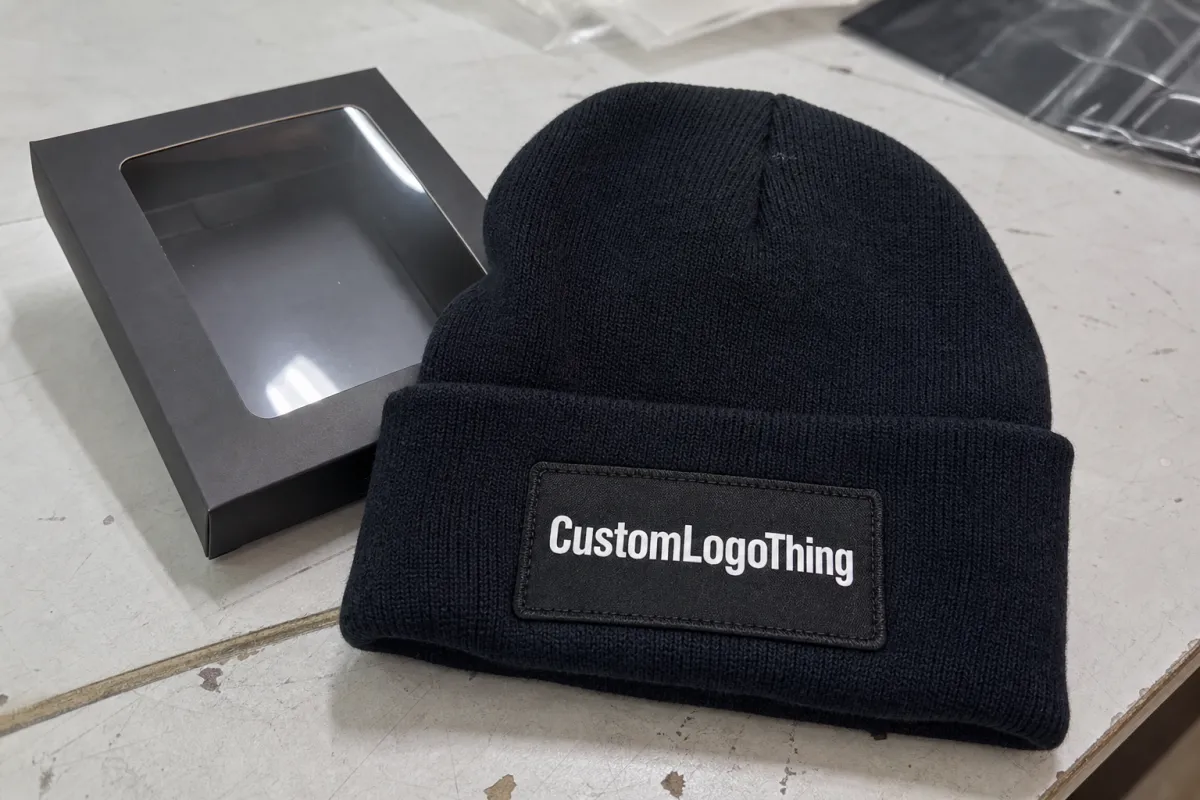
Flat prints can work on some apparel, but beanies are a different setup. Knit stretch, rib texture, and cuff fold all distort detail. Fine lines can blur. Small letters can disappear into the fabric. A patch creates a defined decoration zone, which is why it often wins for branded headwear that needs to photograph well and still look clean in person.
There is also a brand-fit issue. Candle buyers respond to soft, polished, deliberate presentation. A patch feels more curated than a graphic that tries to do too much. That is especially true for holiday bundles, influencer kits, staff uniforms, and market display merchandise. The beanie should feel like part of the candle brand, not like a random promo item that wandered in from another category.
Cost perception matters too. A cheap-looking decoration can drag down the whole set, even if the unit cost is technically lower. On the other hand, a well-made patch on a decent blank can make a mid-priced bundle look far more expensive than it is. That is useful if the beanie sits beside a jar candle, matches a seasonal label, or is meant to be worn after the event is over.
One practical upside: patch beanies bundle cleanly. Pair one with a candle, a wick trimmer, or a card insert and the whole package feels complete. The decoration does not need to dominate. It just needs to read clearly and hold up under handling. That usually means better decisions on size and placement, not more decoration layers.
Flat decoration also tends to show every compromise in the knit. If the artwork needs simplification, a patch gives you room to preserve the logo shape without fighting the fabric. That is the kind of tradeoff buyers should think through before pricing starts.
Patch Styles, Shapes, and Placement That Change the Look
The three patch styles that come up most often are woven, embroidered, and PVC. Woven patches are the best choice when the logo has fine detail, small type, or thin lines. They sit flatter and usually read cleaner from a normal viewing distance. Embroidered patches add texture and depth, which some brands like, but that texture can soften sharp artwork. PVC has a molded, heavier look. It can work for outdoor or utility brands. For a candle line, it usually feels too hard-edged unless the whole collection is intentionally rugged.
Placement changes the product more than many buyers expect. A centered cuff patch is the safest option because it is visible in photos, easy to align, and easy to repeat across production. Off-center placement can make the design feel more fashion-driven, but it demands tighter approval. Crown placement is possible, though it is less practical on folded beanies because the patch can sit awkwardly when the hat is worn or packed.
Shape is another quiet cost driver. Round and square patches are typically the most efficient. They are simpler to cut, easier to place consistently, and less likely to trigger extra setup work. Custom die-cuts and shield shapes can make the brand feel more distinctive, but they usually need more artwork prep and more approval time. If the logo is already busy, a custom edge can make the patch feel crowded. That is a bad trade.
Size has to be handled with a little discipline. Too small, and the logo gets lost. Too large, and the cuff starts to look stiff or overbuilt. For many cuffed beanies, a patch in the 2.0 to 2.75 inch range is a practical starting point. That is not a magic rule. It is a sane range that leaves room for the logo without overpowering the knit.
Color count also matters. A patch with one or two colors is usually easier to price and easier to keep clean. More colors can be fine, but every added thread color or print layer increases the chance that the artwork gets cluttered. The best result often comes from reducing the logo to what actually needs to be seen on a beanie. Not every desktop file deserves to be on a cuff.
Fit, Yarn, and Decoration Specs Buyers Should Lock Down
Before anyone starts comparing quotes, the beanie spec has to be real. Acrylic is the most common blank because it is affordable, stable, and easy to produce in volume. Acrylic-wool blends cost more, but they feel heavier and usually read as more premium. Rib knit is the usual choice because it stretches well and keeps its shape. Cable knit looks more textured and lifestyle-oriented, but it can make patch alignment less predictable.
Fit is not just a comfort issue. It changes where the decoration sits. A taller cuff gives more front-facing space and makes the patch easier to see. A shallow cuff can push the patch too low or cause it to wrap. Double-layer beanies usually feel warmer and present better in retail. Single-layer beanies are lighter and cheaper, but they can look thinner and less substantial on a shelf.
Yarn weight and knit gauge affect the final handfeel. A tighter knit usually looks cleaner, which helps if the beanies will be photographed or sold in a premium display. A looser knit can feel softer, but it may not hold a patch as neatly. Buyers often lead with color and forget texture. That is backward. The texture is what makes the product feel solid or cheap once it is out of the package.
Color control can move the schedule quickly. Stock colors are faster and cheaper. Custom-dyed yarn or exact PMS matching takes more back-and-forth and can add delay. If the beanie needs to coordinate with a candle label, a holiday box, or a retail display, decide that early. Late color changes are one of the fastest ways to create an unnecessary production headache.
Finishing details matter more than they look on a spec sheet. Woven labels, care tags, polybags, and hangtags all affect how the piece is perceived. If the end goal is retail-ready packaging, those details should be locked before sample approval. After the sample is approved, every add-on becomes a revision, and revisions cost time.
For brands that care about shipping presentation or recyclable components, it helps to think about the pack-out, not just the hat. The ISTA test protocols are useful if beanies travel with candles or fragile inserts, and FSC is the right reference if you want paper packaging claims to hold up.
candle logo patch beanies unit cost review: What Moves Price
Here are the main price levers: the blank beanie, patch style, patch size, artwork complexity, labeling, packaging, and shipping. The logo matters, but it is rarely the only thing driving the number. A simple one-color logo on a stock acrylic blank can be a very different order from a custom-shaped woven patch on a double-layer beanie with hangtags and individual polybags.
MOQ changes the math fast. On a very small run, sampling, patch creation, and any tooling fees get spread across fewer units, so the unit cost feels high. Once the order moves into mid-volume territory, those fixed costs spread out and the price starts to make more sense. That is why a 50-piece quote can feel annoying while a 300-piece quote starts looking usable.
For a practical benchmark, these are common ranges for stock beanies with one patch and standard labeling. They are not promises. They are the kind of numbers that help a buyer compare suppliers without pretending every order is identical:
| Order Profile | Typical Unit Cost | Common Setup Charges | Best For |
|---|---|---|---|
| 50-100 pieces | $4.80-$8.50 each | $40-$120 tooling fees plus sample costs | Small launches, staff gifts, testing a design |
| 150-300 pieces | $3.20-$6.10 each | $30-$100 setup charges | Seasonal promotions, small retail drops |
| 500-1,000 pieces | $2.40-$4.20 each | Lower per-unit setup impact | Stable programs, bundled resale, repeat orders |
The range shifts quickly if the spec changes. Woven patches are often more economical than heavily stitched embroidered patches when the artwork includes small detail. A custom die-cut shape usually adds cost. Special finishing, such as woven labels, branded hangtags, or individual bagging, pushes the number up again. A quote that looks low at first glance can turn into a higher landed cost once all the small extras are added back in.
The cleanest way to think about price is to separate one-time costs from recurring costs. Sample development, patch artwork, and tooling are usually one-time or first-run expenses. The blank, patch application, labeling, and packing are recurring. If a supplier hides that split, the quote is not actually clean. It is just compressed.
One more caveat: the cheapest unit cost is not always the best buy. A weak blank that loses shape after a few wears can make a “low-cost” order expensive in practice. A better beanie with a tidy patch often justifies a higher unit price because it survives display, shipping, and repeat use. That is real value. The rest is noise.
Order Process and Lead Time From Artwork to Bulk Delivery
The best order process is also the least dramatic: send artwork, confirm specs, review the mockup, approve the sample or pre-production image, then move into bulk production and shipping. If a supplier cannot explain that sequence clearly, expect friction later. Good production work should feel controlled, even a little boring.
Timing usually falls into a few realistic windows. Artwork proofing often takes 1-3 business days. Sample or pre-production development usually takes 7-14 days. Bulk production often lands in the 15-25 day range, depending on order size, patch complexity, and how many rounds of approval the buyer creates. Shipping is separate, and freight method changes the calendar more than most people expect.
What slows an order down? Unclear artwork. Missing Pantone references. Changing the beanie color after the mockup is approved. Adding labels, polybags, or hangtags late in the process. These delays are avoidable. The more the buyer treats production like an open-ended design session, the more the schedule slips.
For fixed launch dates, the safest move is to lock the non-negotiables first and only revise if the supplier confirms the change will not affect timing. That sounds basic because it is. Yet this is where orders lose days. Not because the factory cannot sew a patch. Because the spec keeps moving.
If the beanies are traveling with candles, the pack-out deserves attention. Glass jars, inserts, and soft goods can all be damaged if the box plan is lazy. A clean shipment is cheaper than replacing broken product. That applies whether the beanies are headed to retail, event kits, or warehouse fulfillment.
How We Keep Patch Beanie Orders Clean, Fast, and Repeatable
A supplier should make the process feel organized, not mysterious. Start with artwork preflight. Confirm the exact patch size. Lock the cuff width, yarn color, and placement in writing. Approve a sample image or physical sample before bulk production starts. That sequence prevents rework, and rework is where margins disappear.
Sampling discipline matters more than most buyers want to admit. A good factory checks patch alignment, color, thread choice, and cuff dimensions before the run. If the sample is right, the bulk order usually stays on track. If the sample is treated as “close enough,” the final batch tends to expose every loose assumption. Close enough is not a production standard. It is a shortcut.
Repeat orders should get easier, not more chaotic. Once a spec is saved, the patch dimensions, knit style, and placement should not need to be rediscovered every time. Clean records shorten approval cycles and reduce unnecessary back-and-forth. That matters when the same candle brand reorders for another season and expects the beanie to match the previous run without a fresh round of guesswork.
Here is the buyer checklist I would use before approving any patch beanie supplier:
- Ask how they inspect stitching and patch alignment.
- Ask what tolerance they allow on patch placement and cuff width.
- Ask whether they photograph samples before bulk production.
- Ask how they handle tooling fees and whether those fees are one-time.
- Ask whether the same spec can be repeated on future batches without redesign work.
That list is not glamorous. Good. Glamour does not keep a knit order on spec. Process does. If the supplier is vague about tolerances or will not put measurements in writing, that is a warning sign, not a style choice.
Strong suppliers also keep the approval path short. They show where the patch sits, how large it is, what colors are used, and which changes affect timing. That is the difference between a production partner and someone who only knows how to send pretty mockups.
What to Send Before You Request the Final Quote
If you want a quote that is actually useful, send the logo file in vector format, beanie color, patch shape, patch size, quantity, target delivery date, and any packaging or labeling requests. That is the minimum. Leave those out and you will get a vague number that looks tidy and helps nobody.
It also helps to ask for two versions. One can be a lower-cost stock-beanie option with a standard woven patch. The other can be a premium version with upgraded patch construction, branded hangtags, or better packaging. That makes the tradeoff visible. A lot of buyers do not need the cheapest option. They need the version that gives the strongest brand impact for the money.
Before approving the order, compare sample timing, bulk timing, and total landed cost. Do not optimize the wrong number. A low unit price can hide expensive freight, packaging, or setup charges. A proper candle Logo Patch Beanies unit cost review should cover the whole landed number, not just the sticker price.
For launches, holiday drops, or gift sets, the best path is usually the simplest one: pick the patch style, confirm the size, approve the blank, and lock the delivery window. That is enough. Chasing tiny savings on decoration details that nobody will notice is how orders become late and expensive.
Most candle brands are better off choosing a clean, readable patch on a solid beanie with one or two finishing details done well. That combination keeps the product wearable, keeps the logo legible, and keeps the quote under control. The winning move is usually restraint, not decoration overload.
FAQ
What affects candle logo patch beanies unit cost the most?
Patch type, patch size, and logo complexity usually move price more than the beanie blank itself. MOQ, packaging, and custom color matching can also change the landed cost quickly. A simple logo on a stock blank is usually the calmest quote.
How many candle logo patch beanies do I need to get a better unit price?
Pricing usually improves once the order moves past very small quantities and into mid-volume runs. Ask for quotes at 50, 100, and 300 pieces so you can see where the per-piece drop actually starts. That gives you a real buying comparison instead of a guess.
Are woven patches cheaper than embroidered patches for beanies?
Often yes, especially when the logo has fine detail and the patch does not need heavy texture. Embroidered patches can cost more, but they may be worth it if the brand needs a thicker, more tactile finish. The right choice depends on the artwork and the look you are trying to keep.
How long does a patch beanie order usually take?
Artwork proofing is often quick, but sampling and approval set the real schedule. A realistic plan is proofing in a few days, sample work in 1-2 weeks, and bulk production after approval. Shipping time depends on freight method and destination.
What do I need to send for a fast quote on candle logo patch beanies?
Send a vector logo, preferred beanie color, patch size, quantity, and target delivery date. If you want a useful quote, include packaging and labeling requirements up front instead of adding them later. That keeps the estimate and the production plan aligned.


