Why Supplement Brands Order Pom Pom Beanies Before the Rush
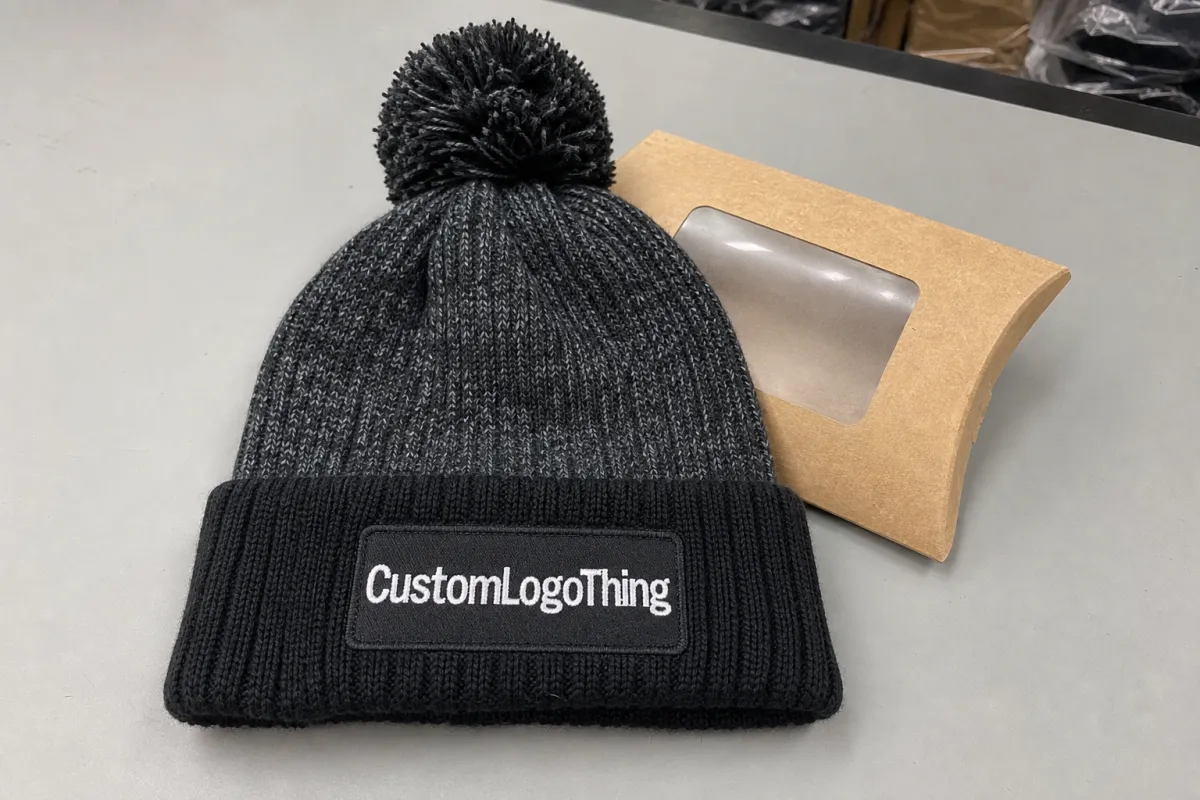
The beanie is not the supplement. Funny enough, it may get more public wear than the shaker bottle. Supplement Pom Pom Beanies bulk order planning is less about finding a cute winter item and more about timing, logo clarity, fit, color control, packaging, and unit economics before promo season starts eating the calendar.
Supplement brands use Pom Pom Beanies because they move easily between gym culture and everyday wear. They fit winter product drops, athlete welcome packs, influencer mailers, event merch tables, retail bundles, loyalty rewards, and gym partnership kits. A well-made beanie keeps showing up in mirror selfies, parking lots, lift videos, cold morning errands, and team travel photos. A flyer goes in the trash. Another sticker nobody asked for ends up in a drawer. The beanie has a real chance of being worn.
From a merchandise buyer’s point of view, the strongest promo item is the one with a long shelf life in someone’s routine. A cuffed pom pom beanie can do that if the knit feels decent, the logo is readable from 6 to 8 feet away, and the colors look intentional rather than close enough. That is the line between useful brand merchandise and leftover giveaway clutter.
Most buyers looking at bulk beanies for supplement brands fall into familiar groups: marketing managers building launch kits, gym owners ordering member gifts, supplement startups trying to look more established, wholesale teams supporting retailers, or operators preparing for trade shows and holiday bundles. Different goals. Same production reality. Every order still needs a quantity, a decoration method, a delivery date, and artwork that can survive being stitched, patched, or knitted onto a curved cuff.
Practical rule: if the beanie is tied to an event, launch, retail set, or mailer date, plan backward from the day it must be in hand, not the day production might begin. Hope is not a logistics strategy.
Beanies can look premium, or they can look like a rushed afterthought pulled from a promotional bargain bin. The difference usually comes from decisions made early: knit weight, cuff depth, logo method, color tolerance, packaging, and freight timing.
Product Details That Matter Before You Approve a Beanie
A standard custom pom pom beanie has five parts worth approving with care: the knit body, the cuff, the pom, the brand decoration, and the packaging. Skip one of those choices and production will make it for you. That rarely produces the cleanest result.
The most common base is a cuffed knit beanie with a stretch-fit body and pom pom top. Adult sizing usually runs one-size-fits-most, often around 8.5 to 9.5 inches tall before stretch, with a cuff depth of roughly 2.5 to 3.5 inches. That cuff depth matters more than many buyers expect. A shallow cuff squeezes the logo area and makes embroidery look cramped. A taller cuff gives a woven patch, rubber patch, or embroidered mark enough room to breathe.
Rib knit is the safe retail-style option because it stretches well and feels familiar. Jacquard knit allows simplified logos, stripes, or patterns to be knitted into the beanie itself, but it needs cleaner artwork and often higher quantities. Cable knit feels heavier and more winter-specific, which can work for premium seasonal drops or mountain-market promotions. It can also look bulky with the wrong patch size. Not every premium-sounding choice is automatically better.
Pom pom choices are more visible than buyers expect. Solid-color poms look clean. Two-tone and three-color poms can echo brand colors. Oversized poms feel loud and merch-forward, while smaller poms lean closer to retail. For supplement brands with strong flavor systems, matching the pom to the hero color of a product line can be smart. Just remember that yarn has limits. Neon pre-workout green may not exist in the exact shade your label designer selected on screen.
Branding methods deserve a real decision, not a default click on the cheapest option:
- Direct embroidery: good for bold marks, 1 to 4 thread colors, and simple lettering; less forgiving with tiny taglines.
- Woven patch: better for small detail, multi-color logos, and clean edges; usually includes a setup charge.
- Rubber patch: strong for fitness brands with modern marks; works well in 1 to 3 colors and adds texture.
- Leatherette patch: warmer retail feel, often used for lifestyle, outdoor, or wellness-positioned supplement brands.
- Sublimated patch: useful for gradients or complex color, though it feels flatter and less dimensional.
- Jacquard knit logo: premium when handled well, but it needs simplified artwork and careful scale control.
Here is the mistake that keeps showing up: a brand sends the full tub label logo with tiny claims, flavor text, metallic gradients, and a tagline that was barely readable on a 4-inch label. Then the team expects it to look crisp on a ribbed cuff. It will not. Screenshots from social media are not production artwork either. Painfully common, still not artwork.
Specs to Lock Before Sampling: Yarn, Fit, Logo, and Color
Good planning starts before the quote request. Locking basic specs early prevents three rounds of repricing, two confusing mockups, and one late-night message asking if the logo can move “just a little” after sampling. Sometimes it can. Often it cannot move without cost, delay, or a new sample.
Start with material. Acrylic is the standard for most bulk pom pom beanie orders because it is cost-effective, holds color well, and works across promotional quantities. Recycled acrylic can support a sustainability angle, especially if the brand already uses lower-waste packaging or responsible sourcing language. Cotton blends feel softer but may not have the same winter weight. Wool blends are warmer and more premium, but they cost more and may bother wearers who dislike wool against the skin. Buyers tend to remember that only after customer service hears about it.
Fit comes next. One-size-fits-most works for most adult supplement merch runs, especially for gym audiences, retail bundles, and influencer kits. Youth sizing needs to be called out early. Oversized slouch fits also require early planning because body height, cuff behavior, and logo placement change. A patch that looks centered on a standard cuff can look odd on a slouch body.
Color matching is useful, not magical. Pantone references help guide thread, patch, and yarn selection, but yarn inventory has real-world limits. Common colors such as black, white, navy, red, gray, forest green, and royal blue are usually straightforward. Metallic gold, neon orange, electric teal, or complex gradient label colors may require a close match, a patch, or a simplified brand version. If hang tags, belly bands, or retail cartons are part of the kit, brands that make sustainability claims can review broader material responsibility standards through groups such as the Forest Stewardship Council.
Logo files should be vector whenever possible: AI, EPS, or clean PDF. Embroidery and patch suppliers need clean paths, clear color breaks, and readable sizing. Raster art can sometimes be rebuilt, but that adds time and may add cost. A 600-pixel PNG dragged from a website is fine for a sales deck. It is not fine for production.
Packaging is another spec buyers delay too long. Bulk polybag packing is cheapest and works for internal giveaways. Individual polybags help with warehouse handling or mailer assembly. Hang tags, belly bands, size stickers, branded insert cards, and retail-ready carton packing make sense for resale or premium bundles. They also affect unit cost, lead time, carton count, freight volume, and receiving labor.
| Spec Choice | Typical Use | Cost Impact | Buyer Note |
|---|---|---|---|
| Acrylic rib knit | Giveaways, event merch, gym bundles | Lower to moderate | Best all-around starting point for most supplement brands. |
| Recycled acrylic | Sustainability-focused campaigns | Moderate | Ask for available colors early; options may be narrower. |
| Woven patch | Detailed logos and multi-color marks | Moderate | Often cleaner than embroidery for small supplement logo text. |
| Rubber patch | Fitness, performance, streetwear look | Moderate to higher | Great texture, but mold or setup fees may apply. |
| Retail belly band | Resale, retail drops, gift bundles | Higher | Improves presentation but adds print setup and packing labor. |
Cost, Pricing, and MOQ for Bulk Pom Pom Beanie Orders
Price is not one number. It is a stack of decisions. Quantity, yarn type, knit style, number of colors, decoration method, logo size, patch material, packaging, sampling, inspection, and shipping method all push the final unit cost up or down.
For planning purposes, simple decorated acrylic beanies at lower quantities may land roughly in the $7.50 to $14.00 per unit range depending on decoration and order size. At 500 to 1,000 units, many straightforward programs price better, often around $5.25 to $10.50 per unit before unusual packaging or expedited freight. Fully custom jacquard patterns, special yarn colors, rubber patches, belly bands, or retail-ready packing can move higher. These are planning ranges, not a promise that every quote behaves politely. They do not.
MOQ depends on how custom the product is. A standard blank beanie with decoration may start around 100 units for some programs. More efficient price breaks often appear at 250, 500, 1,000, and 2,500 units. Fully custom knit beanies, custom yarn colors, jacquard designs, or retail packaging can require higher minimums because the supplier is setting up yarn, machines, trims, or packing steps specifically for the order.
Setup costs are another place buyers get surprised. Embroidery digitizing may be billed separately, often in the $40 to $90 range depending on complexity. Woven patch setup can sit around $50 to $150. Rubber patch mold fees can run higher, sometimes $100 to $300 or more depending on size and detail. Pre-production samples may be free only after a certain order value, or they may cost $75 to $250 plus freight. The cheap quote is not cheap if it hides every setup line until after approval.
For supplement pom pom Beanies Bulk Order Planning, request quantity breaks instead of asking for one random number. Compare 100, 250, 500, 1,000, and 2,500 units if your campaign can support those volumes. The best buy is usually the quantity where the unit cost drops enough without leaving the warehouse buried in merch until next winter.
Cheapest is not always useful. Ultra-low-cost beanies can feel thin, stretch out quickly, show loose yarn, or make a performance brand look like it bought leftovers. Not exactly premium wellness energy. If the beanie is going into a $79 product bundle or an influencer kit, saving $1.20 per unit while making the merch feel cheap is a strange trade.
Shipping changes the math too. Domestic inventory can move faster but may offer fewer custom options. Overseas custom production may provide better variety and lower unit pricing at scale, but freight, customs, duties, and port delays need to be built into the schedule. Air freight is faster and useful for deadline pressure, but it can erase the savings on a lower unit price. If packaging must survive parcel shipping, transport-performance guidance from groups such as the International Safe Transit Association can help frame testing expectations, especially for kits with tubs, shakers, and apparel in the same carton.
Process and Timeline From Artwork to Delivered Beanies
The clean order flow is simple on paper: submit artwork and specs, confirm quote, approve mockup, produce a sample if needed, approve the sample, begin bulk production, inspect, pack, ship, and deliver. The messy part is buyer response time. A supplier can move quickly only if decisions move quickly too.
Artwork review and quoting can be fast when files are clean and specs are complete. A basic quote may come back in 1 to 3 business days. Digital mockups often take another 1 to 3 business days after the quote direction is clear. Physical samples can take 7 to 15 business days or longer, depending on the decoration type and whether custom yarn, patches, or labels are involved.
Bulk production timing varies. A simple embroidered beanie order may run in roughly 10 to 20 business days after proof approval if materials are available. Patch orders may need more time because the patch has to be made before final attachment. Fully custom knit or jacquard programs can run 25 to 45 business days or more, especially during peak demand. Freight adds another layer: small domestic shipments may take days, while ocean freight can add weeks.
Rush orders are possible only under boring conditions: simple specs, available materials, ready artwork, fast payment, and quick approvals. Magic is not a production step. If the deadline cannot move, simplify the order. Choose stock yarn colors, a standard beanie body, one decoration method, and practical packaging.
Plan backward from the event date, product launch, retail drop, gym partnership delivery, or influencer mailer assembly date. Add buffer for approvals, freight, customs, receiving, and the very real chance that someone on the brand team will suddenly want the pom changed from black-white-red to black-red-gray after everyone approved black-white-red. It happens. It is annoying. It costs time.
A digital mockup is fine for a 100-unit internal giveaway if the logo is simple and the beanie style is standard. A physical pre-production sample is smarter for larger orders, new patch materials, unusual brand colors, resale programs, or campaigns where the beanie appears in photography. If the beanie needs to sit next to a supplement tub in a retail box, sample it. Guessing at tactile quality is how brands end up disappointed.
Common timeline delays are predictable: late artwork, missing Pantone references, low-resolution logos, indecision on decoration, changing logo placement after sampling, unpaid deposits, and trying to match a yarn color that does not exist. A focused bulk order plan removes most of these problems before they become production delays.
How Custom Logo Things Keeps Supplement Merch Orders Clean
Custom Logo Things is useful for supplement brands that need branded beanies made correctly, not just quoted quickly. Fast quotes are nice. Accurate production guidance is better. A bad quote with missing setup costs or impossible artwork assumptions is just a future argument wearing a price tag.
The first job is matching the decoration method to the artwork. Not every logo belongs in embroidery. A bold icon with clean lettering may stitch beautifully. A supplement logo with micro text, gradient effects, and five color breaks may need a woven patch, sublimated patch, or simplified mark. Forcing everything into embroidery because it is convenient is how logos turn fuzzy.
Artwork support matters because beanies are not flat paper. Ribbed knit stretches. Cuffs curve. Thread has thickness. Patches need edge allowances. Custom Logo Things can check logo size, contrast, patch readability, and whether the brand mark still looks sharp at real beanie scale. If the artwork needs cleanup, that should be handled before production, not after 500 units are decorated.
Order planning support matters just as much. Quantity breaks can change the budget conversation quickly. A 250-unit order may be right for a gym launch, while 1,000 units may make more sense for a national retail bundle if the unit cost drops enough. Packaging choices should match the channel: bulk cartons for giveaways, individual polybags for kitting, hang tags or belly bands for resale. Broader supplier and ordering details are available through the Wholesale Programs page.
Quality control should not be vague. Practical checks include knit consistency, cuff height, logo placement, thread contrast, patch attachment, loose threads, pom security, color accuracy within production tolerance, carton labeling, and packing count. For a supplement brand, those details matter because the merch may sit beside tubs, sachets, shakers, and printed inserts. Sloppy apparel makes the whole kit feel cheaper.
The goal is not to sell the fanciest beanie. The goal is to make the right beanie for the campaign, budget, and brand standards. Sometimes that means a basic acrylic rib knit with a clean embroidered icon. Sometimes it means a rubber patch, custom pom, belly band, and retail carton. Honest planning separates useful upgrades from expensive decoration theater.
Next Steps Before You Request a Bulk Beanie Quote
Before requesting pricing, gather the details that make a quote accurate. A supplier can estimate from vague information, but estimates are not production plans. Better inputs create better pricing, cleaner mockups, and fewer revisions.
- Choose a target quantity and at least one backup quantity for price breaks.
- Set the required in-hand date, not just the campaign launch date.
- Select preferred beanie body color and pom color direction.
- Prepare a vector logo file, plus Pantone colors if available.
- Pick a decoration direction: embroidery, woven patch, rubber patch, leatherette patch, sublimated patch, or jacquard knit.
- Decide whether packaging is bulk, individually polybagged, hang tagged, belly banded, or retail-ready.
- Confirm the ship-to address, warehouse rules, or kitting destination.
Collect brand assets before asking for a final quote. Send the vector logo, previous merch photos, supplement label references, retail packaging examples, compliance notes, and any brand guideline document. If the brand has required colors, minimum clear space, or rules against altering the logo, say so early. Production teams are good at many things. Mind reading is not on the list.
Decide what the beanies are for. Giveaways can use simpler specs. Resale needs stronger presentation. Influencer kits need camera-friendly details. Employee gear should feel comfortable enough to wear repeatedly. Gym partnerships may need a more universal look because the beanie represents both the supplement brand and the gym. Bundled promotions often need packaging that fits the box or mailer without crushing the pom.
If budget is still flexible, ask for two or three versions: basic embroidery, patch upgrade, and premium packaging. That gives the team real tradeoffs instead of one quote that everyone argues about for a week. For broader order questions, the FAQ is a useful place to check general process details before sending artwork.
For a fast, accurate quote, Custom Logo Things needs quantity, artwork, beanie style, pom colors, decoration method, required delivery date, and ship-to location. Add packaging needs before pricing is finalized. Changing from bulk pack to individual polybag plus belly band after approval can affect cost, cartons, labor, and timeline.
Supplement brand merch works best when specs, pricing, and delivery dates are settled before production pressure starts. Decide early, approve cleanly, and the finished beanies have a much better chance of looking like intentional brand gear instead of a cold-weather panic buy.
FAQ
What is the best MOQ for supplement pom pom beanies in a bulk order?
For a simple decorated beanie, buyers often start by comparing 100, 250, and 500 units. Fully custom knit, custom yarn colors, jacquard patterns, or retail packaging usually need higher MOQs. The best MOQ is the quantity where the unit cost drops enough without leaving you buried in unused merch.
How early should I start supplement beanie bulk order planning before an event?
Start several weeks ahead for basic decorated beanies and longer for custom knit or sample-approved orders. Add buffer for artwork cleanup, sample approval, freight, customs, and warehouse receiving. If the event date cannot move, simplify the specs instead of gambling on a complicated rush order.
Which logo method works best for supplement brand pom pom beanies?
Direct embroidery works well for simple, bold logos with limited detail. Woven or rubber patches are better for detailed supplement logos, small text, or multi-color brand marks. Jacquard knit logos can look premium but usually need simpler artwork and higher quantities.
Can I match my supplement label colors on custom pom pom beanies?
You can usually get close, especially with common brand colors like black, white, red, navy, gray, and green. Exact Pantone matching depends on yarn availability and decoration method. If your label uses neon gradients or metallic effects, use a patch or simplified color version instead of forcing yarn to do gymnastics.
What information is needed for a fast quote on bulk supplement beanies?
Send quantity, logo file, preferred beanie color, pom color, decoration method, delivery deadline, and shipping address. Mention whether the beanies are for resale, giveaways, influencer kits, gym partnerships, or bundled promos. If you need packaging such as hang tags, belly bands, or individual polybags, include that before pricing is finalized.


