Supplement Logo Patch Beanies Unit Cost Review: Buy Smart
Why Supplement Brands Use Patch Beanies as Low-Waste Merch
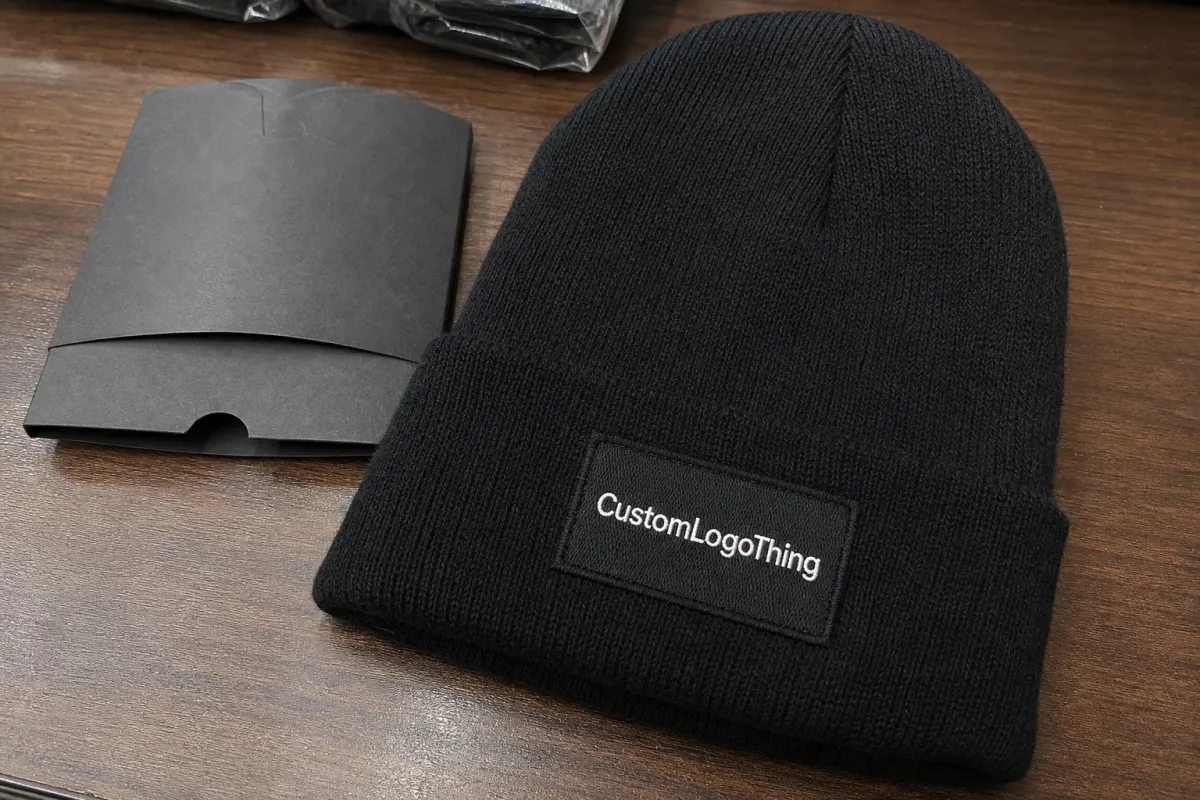
A beanie lasts longer than a flyer, insert, or disposable mailer, so it works well when a supplement brand wants merch that keeps getting worn after the launch is over. Buyers searching for a supplement Logo Patch Beanies Unit Cost review are usually deciding whether the piece fits a bundle, retail drop, ambassador kit, or seasonal campaign with a real reuse path.
That makes the buy a product decision, not just a branding decision. A cuffed beanie packs easily with tubs, pouches, shaker bottles, or cards, and one size usually covers most audiences. That keeps sizing risk low compared with apparel and makes it easier to reorder for future runs.
Patches are usually the better decoration choice because rib knit is not a flat print panel. On stretchy knit, heat transfer can crack or lift if the material and adhesive are not matched correctly. Woven, embroidered, leatherette, PVC, rubber, and printed patches generally hold up better and give the beanie a more retail-ready finish.
The best value is not always the lowest unit price. Buyers should judge whether the beanie matches the brand image, arrives on time, photographs clearly, and can be reordered with the same yarn color, patch size, and placement. That matters for expo giveaways, staff wear, subscription add-ons, and loyalty gifts.
Practical buying rule: compare the beanie as a small product, not a throwaway promo item. Cost per piece matters, but so do freight, packaging, and the chance that customers will actually wear it.
Beanie Materials, Knit Styles, and Patch Choices That Affect the Finished Look
The beanie body controls the base feel before the logo goes on. Basic acrylic rib knit is the common starting point because it is warm, flexible, and usually the most cost-efficient. Recycled polyester blends support sustainability messaging, cotton blends feel softer, and wool blends move the piece into a more premium winter tier.
Cuffed beanies are the safest option for most supplement merch because the fold creates a stable patch zone. A 2 to 3.5 inch patch usually fits well on the cuff and keeps the logo readable. Fisherman beanies have a shorter cuff and a tighter streetwear look, but they leave less room for tall marks. Slouch styles feel more casual, while pom styles can work for winter bundles if the brand can support the look.
Patch construction changes both appearance and price. Woven patches are good for fine lettering and clean icons. Embroidered patches create more texture but may require simplifying small text. Leatherette suits lifestyle and premium wellness branding. PVC and rubber fit bold gym or endurance marks. Printed patches are useful when the artwork has gradients or detail that does not stitch cleanly.
| Patch Option | Best Use | Cost Notes | Artwork Fit |
|---|---|---|---|
| Woven | Fine text, clean icons, detailed marks | Often efficient for detail at moderate quantities | Best with vector art and limited color count |
| Embroidered | Raised texture and classic merch feel | Stitch count and thread density affect cost | Works best with simplified shapes |
| Leatherette | Lifestyle, outdoor, premium wellness | May include die, edge, or engraving variables | Strong with bold marks and high contrast |
| PVC or Rubber | Gym, endurance, outdoor, bold branding | Tooling fees can matter at smaller runs | Best with strong shapes and separated colors |
| Printed | Gradients, complex artwork, full-color looks | Can be efficient for artwork that resists stitching | Needs high-resolution source files |
Attachment method matters too. Sewn-on patches are usually the most durable and the most premium-looking on rib knit. Heat-applied patches can work on some materials, but the adhesive, stretch, and wash behavior need to be matched carefully. A patch that looks fine on a table can behave differently after repeated wear.
Contrast is an easy way to improve the result without changing the core product cost. A black patch on black knit may look sleek in hand, but it can disappear in photos. A tan leatherette patch on black, a white woven patch on charcoal, or a bold PVC patch on olive can improve visibility fast.
Specifications to Lock Before You Request a Beanie Quote
Accurate pricing starts with complete specs. Custom Logo Things will need the beanie style, knit material, yarn color, patch type, patch size, patch shape, attachment method, quantity, packaging preference, delivery location, and in-hands date. If one of those is missing, the unit cost can move once the quote is revised.
Patch size should be chosen around the logo, not guessed from a sample photo. Most cuff patches fall between 2 and 3.5 inches wide, but a long brand name, round seal, or shield shape may need a different proportion. Cuff height matters too. A tall patch can crowd a short fisherman cuff or curl if the fold is too narrow.
Artwork quality affects setup and output. AI, EPS, or clean vector PDF files are best for woven and embroidered patch setup. Printed patches can use high-resolution raster files, but low-resolution web logos often need redraw work. Small supplement text, ingredient copy, or certification marks may need to be simplified because knitwear stretches and curves when worn.
Color matching should be discussed early. Pantone references help, but yarn, thread, leatherette, rubber, PVC, and print all reflect light differently. The physical result may land a little differently than the screen version, so buyers should identify which colors must stay closest to the brand standard and which can tolerate some shift.
- Packaging: individual polybags, hang tags, belly bands, barcode labels, and carton labels all affect pricing.
- Compliance review: supplement logos, claims, seals, or co-branded marks may need approval before production starts.
- Use case: a giveaway, retail product, and premium gift should not be specified the same way.
If the beanie will be sold rather than given away, retail details matter more. A branded belly band, hang tag, barcode, or carton label can add cost, but it may save labor later. For programs tied to sourcing language, buyers can also review paper claims through the Forest Stewardship Council when using certified tags or bands.
Supplement Logo Patch Beanies Unit Cost Review: Pricing and MOQ Factors
A real Unit Cost Review has to include more than the blank beanie price. Final pricing depends on quantity, beanie body, patch type, patch size, color count, attachment method, packaging, proofing, freight, and destination. A low blank price can become a higher landed cost once decoration and shipping are included.
MOQ is the minimum quantity needed to make the order practical. Smaller runs are possible for launch kits or seeding, but the best value usually appears when fixed work is spread across more units. A 100-piece order may fit a targeted campaign. A 500 or 1,000-piece order often lowers the per-piece cost because setup, patch production, and sewing are divided across more hats.
Pricing varies too much to quote honestly without specs, but the pattern is predictable. Basic acrylic cuffed beanies with a standard sewn patch usually sit in the most efficient range at higher quantities. Heavier knits, recycled yarns, wool blends, custom colors, pom styles, premium packaging, and specialty patch materials push the number up. Small runs feel the setup more because the fixed work does not shrink with the order.
Woven and embroidered patches price differently because they are built differently. Woven patches hold detail efficiently, and cost is driven by size, color count, border style, and backing. Embroidery is influenced by stitch count and thread density, so a bold block logo may price better than a dense logo with tiny lettering. Leatherette adds material and edge variables, while PVC may add tooling costs that are more visible on low quantities.
Beanie body cost also matters. A basic acrylic cuffed beanie is usually the entry point. Recycled yarns, wool blends, custom yarn colors, pom styles, and specialty silhouettes increase the base price. Packaging can look small on a quote, but individual bagging, barcode labels, and retail-ready packing become meaningful at scale.
Freight should be part of the math. Beanies are light but bulky, so carton size can matter as much as weight. A single warehouse delivery is different from cartons split across gyms, ambassadors, retailers, or a fulfillment center. If the launch date is fixed, shipping speed may matter as much as product cost.
Quote comparison tip: compare landed unit cost, not decoration alone. Ask whether setup, proofing, patch production, sewing, packaging, labels, and freight are included.
Production Steps, Proofing, and Lead Time for Custom Patch Beanies
The order path is usually simple, but each step protects the final result. It begins with consultation, specification confirmation, artwork review, quote approval, digital proof, optional sample or pre-production photo, beanie sourcing, patch production, patch attachment, inspection, packing, and shipment. Rush orders can compress the schedule, but skipped decisions add risk later.
Digital proofing confirms layout, patch size, placement, color direction, and beanie style. A physical sample or pre-production photo goes further by showing texture, edge behavior, and how the patch sits on the cuff. That matters most when the order is retail-facing or the artwork has tight spacing.
Lead time depends on stock availability, patch complexity, quantity, proof approval speed, packaging, and shipping method. A stock acrylic beanie with a simple woven patch will usually move faster than a custom yarn color, PVC patch with tooling, and branded retail packaging. Winter demand, trade shows, and holiday windows can tighten capacity, so buyers should start earlier than the ideal ship date suggests.
Buyer delays are a common schedule problem. Late artwork, unclear Pantone references, revised logos, added packaging, or quantity changes after proof approval can move the ship date. A firm in-hands date is better than a vague event date because receiving and internal distribution may need extra time.
Quality checks should include patch alignment, stitch security, cuff consistency, color separation, loose threads, carton counts, and packaging instructions. If the shipment has to meet retail or fulfillment requirements, carton labeling and packing order should be reviewed before production ends. For broader transport testing and kit planning, buyers can reference the ISTA standards when the beanies ship alongside bottles, jars, or powder tubs.
Common Ordering Mistakes That Raise Cost or Weaken the Logo Patch
The first mistake is choosing a patch type before reviewing the logo. Fine lines, small text, gradients, and certification marks behave differently across woven, embroidered, leatherette, PVC, rubber, and printed patches. A logo designed for a label or website may need a simplified textile version.
Oversized patches are another common problem. A tall patch on a short cuff can curl, distort, or crowd the fold once the beanie is worn. It may look premium on the quote sheet because it is larger, but better proportion usually beats bigger decoration.
Low-contrast branding can weaken the result. Tonal decoration has a place, especially for premium or streetwear-inspired programs, but black-on-black, navy-on-black, or dark gray-on-charcoal can disappear in photos. If social posts, gym displays, or expo tables matter, test contrast before approving the proof.
Cost mistakes usually come from reading only one line of the quote. The beanie body may be inexpensive, but the final number changes through decoration, patch setup, sewing, packaging, carton handling, and freight. Last-minute quantity changes can also affect MOQ tiers, patch counts, sewing schedules, and shipping plans.
- Approve one logo version: avoid switching between stacked, horizontal, seal, and icon-only marks after proofing begins.
- Confirm patch size: review width, height, cuff fit, and placement before production.
- Decide packaging early: polybags, hang tags, belly bands, and labels can change both cost and lead time.
- Provide the delivery plan: one warehouse shipment is different from multiple gym, ambassador, or fulfillment-center shipments.
- Review every line item: ask what is included in setup, proof, decoration, packing, and freight.
Another weak spot is treating all beanie colors as interchangeable. Heather yarns, marled knits, and deep solids can change how a patch reads. A cream patch that looks crisp on black may feel too soft on heather gray. A rubber patch that works on olive may feel too heavy on a pastel wellness color. Review color and texture together.
Getting an Accurate Custom Beanie Order Started
The fastest way to get accurate pricing is to gather the core details before requesting a quote. Send the logo file, preferred beanie style, target quantity, budget range, patch type, packaging needs, delivery address, and in-hands date. If you have reference photos, include them. A beanie meant to feel like outdoor merch should not be built the same way as a gym drop, wellness gift, or streetwear release.
Custom Logo Things can help narrow the options by matching the patch method to the artwork, the beanie body to the audience, and the MOQ to the cost target. If the direction is not settled, ask for good-better-best options. A useful comparison should show material, patch finish, setup charges, unit cost, MOQ, packaging, and timeline so the tradeoffs are visible before approval.
Do not leave the delivery side vague. Exact destination, launch date, number of shipping locations, packaging requirements, carton labeling, and retail-ready versus giveaway-ready status all affect the recommendation. If the beanies need to be packed into supplement kits, shipped to athletes, or sent to a fulfillment center, that handling should be planned before the order reaches production.
A smart buying process does not make the beanie more complicated; it prevents avoidable surprises. Review the artwork against the patch method, check the cuff size against the patch dimensions, confirm color contrast in the environment where the product will be seen, and compare quotes by landed unit cost. Those few checks usually do more for the final result than chasing the lowest blank beanie price.
FAQs
What affects supplement logo patch beanies unit cost the most?
The biggest drivers are quantity, beanie material, patch type, patch size, color count, attachment method, packaging, and shipping destination. The best comparison is landed unit cost, including setup, decoration, packing, and freight, not just the blank beanie price.
What is the typical MOQ for custom supplement logo patch beanies?
MOQ depends on the beanie body, patch construction, and whether the order uses stock materials or custom components. Small runs can work for launch kits or seeding, while larger runs usually produce better pricing because fixed work is spread across more pieces.
Which patch type is best for supplement brand beanies?
Woven patches are strong for fine text and detailed icons. Embroidered patches create a more textured look but may need simpler artwork. Leatherette and PVC are good when the logo is bold and the brand wants a premium or athletic feel.
How long does production take for custom logo patch beanies?
Lead time depends on stock availability, patch complexity, proof approval speed, order quantity, packaging, and shipping method. The process usually includes artwork review, proofing, patch production, sewing, inspection, packing, and shipment.
Can I review a proof before my supplement beanies are produced?
Yes. A digital proof should confirm patch size, placement, logo layout, color direction, and beanie style before production begins. A sample or pre-production photo may be useful when texture, color accuracy, or retail presentation matters more.


