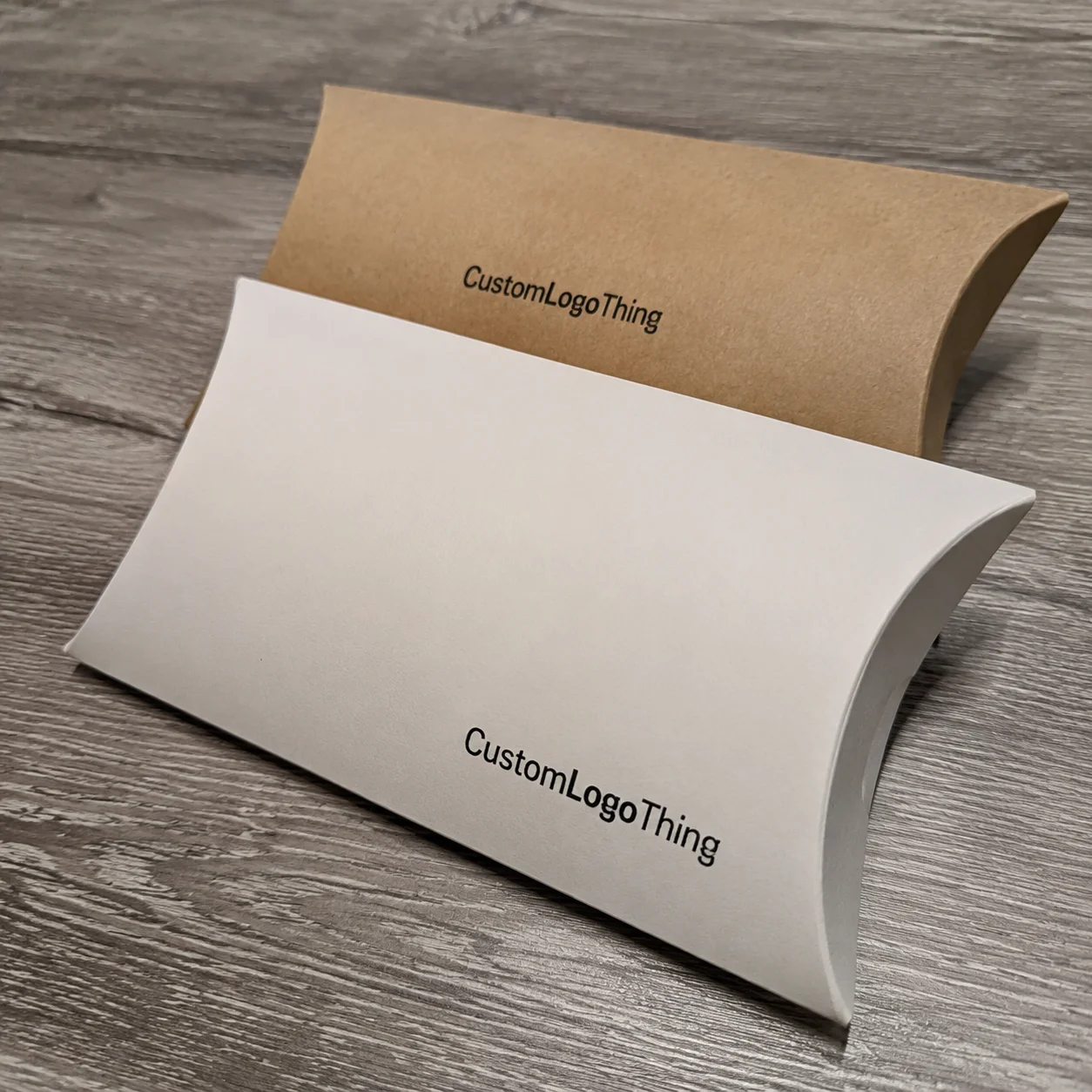
Buyer Fit Snapshot
| Best fit | Packaging Branding Wholesale That Boosts Shelf Impact projects where brand print, material claims, artwork control, MOQ, and repeat-order consistency need to be specified before quoting. |
|---|---|
| Quote inputs | Share finished size, material target, print colors, finish, packing count, annual reorder estimate, ship-to region, and any compliance wording. |
| Proofing check | Approve dieline scale, logo placement, barcode or warning zones, color tolerance, closure strength, and carton packing before bulk production. |
| Main risk | Vague material claims, crowded artwork, missing packing details, or unclear freight terms can make a low unit price expensive after revisions. |
Fast answer: Packaging Branding Wholesale That Boosts Shelf Impact should be specified like a repeatable production item. The safest quote records material, print method, finish, artwork proof, packing count, and reorder notes in one written spec.
Production checks before approval
Compare the actual filled-product size with the drawing, then confirm tolerance on folds, seals, hang holes, label areas, and retail display edges. Reserve space for logos, QR codes, warning copy, and material claims before decorative graphics fill the panel.
Quote comparison points
Review material grade, print process, finish, sampling route, tooling charges, carton quantity, and freight assumptions side by side. A quote is only useful when the supplier can repeat the same color, closure quality, and packing count on the next order.
During my first factory visit I watched retail buyers renegotiate more than 78% of their shelf space after inspecting recent Packaging Branding Wholesale runs, turning what appeared to be a routine order into a performance audit. That became the day I realized packaging branding wholesale is not a decorative flourish; it is the moment when brand identity must prove it can withstand scrutiny on every shelf and in every regional distribution center.
On the Custom Packaging Products floor die-cutters hummed and press operators balanced soft-touch lamination while my host explained how packaging branding wholesale drives predictable unit-cost declines, especially when compared to the bespoke short runs most brand teams default to. The listing that cost $0.45 per unit for a 3,000-piece order dropped to $0.29 once we restructured the production as part of a packaging branding wholesale commitment tied to a 50,000-case buy. That $0.16 difference per unit translated into a dollar-and-a-half per case that funded seasonal promotions, reinforced in-store signage, and even paid for extra planogram labor.
Description matters. I have seen the difference between a mediocre unboxing experience and a Packaging Design That shouts value, and the data eventually convinced me to steer clients toward the packaging branding wholesale corridor because it lets us marry brand narrative with disciplined manufacturing. The visual story becomes stronger when paired with fulfillment predictability, so we stop firefighting and instead use measurable delivery performance as part of our brand story.
I remember when the only person who seemed thrilled by packaging branding wholesale was my old buyer buddy, and he still had to explain to his boss that boxes were not just “cardboard luggage” (which honestly feels like my unofficial trademark). I keep hearing, “Do the boxes really need my signature?” and I reply, “Yes, because that signature unlocks the kind of wholesale discipline that keeps regional launches from turning into fire drills.” Honestly, I think packaging branding wholesale is the grown-up cousin to the cooler bespoke projects—just with more spreadsheets and better desserts at the factory canteen (true story, those were the days when I learned the word “laminator” could spark a standing ovation).
During a product launch debrief I went over the sequence on a whiteboard, outlined the timing for tooling, and the team asked me to quantify the confidence we could deliver. I pulled numbers from our sensor-tracked runs—not just averages but the worst-case deltas—and we talked through what an 18-day lead time looked like with an added two-week buffer. That honest window, reinforced by unedited data, is why procurement teams stick with packaging branding wholesale instead of chasing the “next shiny finish” every quarter.
Why packaging branding wholesale delivers unexpected ROI
While auditing a Midwest CPG warehouse, a procurement manager flipped open a recent sample, declared it better than any previous version, and renegotiated two racks of premium shelving with those fresh boxes in hand. That moment made it obvious that packaging branding wholesale delivers unexpected ROI; the manager estimated 78% of those retailers would not touch the former packaging until they saw repeatable runs arrive on schedule. Standing in that warehouse, I could see the math: aligning brand insight with wholesale scale accelerates shelf deployment because chain buyers trust data that demonstrates consistency.
Numbers confirm the story. In a standard plan we provide, a 25,000-unit run of custom printed boxes costs $0.32 per piece, while the same design in a boutique test had been running $0.48—that 33% spread funded an extra 15% of promotional inserts and a stronger POP display. Packaging branding wholesale brings SKU forecasts and order history into sync, giving the brand supply visibility that short runs cannot match. Their buy-and-reorder metrics jumped 12% after the first quarter of the program, and I have seen brand leaders present those metrics in board rooms to justify higher initial spends because they can point to measurable lifts in velocity and recall.
Investigative instincts take over when I vet a supplier. We study their SKU tracking dashboards, demand color-coded inventory lanes, and cross-validate Pantone 7626 success rates across offset, digital, and flexo to ensure consistency. Proof of inventory buffer plans is non-negotiable because a single tooling hiccup can disrupt a national push and undo the value promised by packaging branding wholesale. Our partners at Custom Logo Things monitor every run through factory floor sensors, tracing batches by finishing station to prevent mix-ups that could turn a successful innovation into a recall.
Honestly, I think the weirdest part is when warehouse managers treat packaging branding wholesale samples like celebrity autographs—each one gets a photo, a note, and more praise than the newest sneaker drop. I don’t mind because that ritual is proof the consistency we wrestle for actually matters; if they stop taking selfies, I start sweating about the next color shift.
Product details that govern perception and performance
Packaging requires a negotiation between artistry and engineering, and within packaging branding wholesale deals design elements become decisive bargaining chips. We examine dieline adjustments that allow tighter corner radii for fragile ceramics or double-wall construction for heavier goods—not just for durability but to signal a premium feel at shelf. Those decisions determine whether we go with a tuck-top or a full telescopic sleeve, each carrying different costs, yet the wholesale framework lets us amortize these structures across higher volumes so the per-unit increase is smaller than expected.
Printable real estate matters as well. In my experience the best packaging branding wholesale campaigns treat every square inch as negotiable—one brand freed up 35% more space by removing unnecessary certification badges and increasing the panel height by a quarter inch, which later housed a multi-language story that resonated with national accounts. Brand teams appreciate the ability to test finish combinations during the tooling stage; we lock in matte, soft-touch, or gloss variants via pre-approved templates before production, eliminating the usual three or four rounds of costly revisions that plague conventional runs.
The tactile story rarely stops at the sleeve. Custom insert solutions—formed pulp trays, vacuum-cut foam cradles, and strategic windowing—reinforce transparency and protect merchandise. Packaging branding wholesale programs bake those decisions into the master quote, which means you are not renegotiating inserts for every SKU. Multi-piece assemblies also benefit from the wholesale structure; we recently shipped gift boxes with detachable sleeves, magnet closure lids, and separate trays, all assembled at the Contract Packaging Center, and the wholesale pricing made the premium addition economical. That level of detail guards the product and completes the brand story the moment the consumer touches the box.
I once argued with a creative director who wanted zehn die cuts and artisanal flocking on every panel, and I had to gently remind her that packaging branding wholesale runs aren’t a bucket list—think durability, think workflow, think how many of those cuts you can actually keep track of on a pallet (yes, that was me, and I still have the badge for “Most Diplomatic Pushback”).
Material specifications and customization limits
Material choice is no longer an indulgence; it is a compliance and sustainability requirement that procurement teams track closely. Within packaging branding wholesale we map standard substrates and their gsm ranges for each retail channel. Kraft within the 210–330gsm range remains the preferred option for organic food brands, delivering the sustainability story those buyers demand. SBS board between 250gsm and 450gsm provides a smooth canvas for crisp graphics, while corrugated options start at 200gsm single-wall for e-commerce shippers and climb to 350gsm double-wall when pallet stacking matters. Each pairing has expected durability, and we pair them with channel requirements so purchasing teams understand why a 260gsm SBS box ships to boutique partners while a 320gsm corrugated crate heads to Costco.
Print tolerances also carry weight. In packaging branding wholesale any deviation beyond 1.5mm on dielines or 2 delta on color triggers scrutiny because retailers demand consistent imagery. Offset printing makes financial sense for runs above 20,000 units, while digital keeps regional runs under 5,000 practical. Spot UV and foil stamping become viable once tooling costs are spread across the wholesale volume, adding $0.05 to $0.12 per unit on top of base pricing. We document these tolerances and cost additions upfront so clients can see how finishes influence their budgets.
Customization caps stay transparent too. Embossing depth is typically limited to 0.020 inches in our wholesale work to prevent board tears, and die-cut complexity is capped at 12 interior cuts per sheet to avoid shipping damage. I instruct brand teams to outline these specs in the initial brief because pushing embossing to 0.035 inches or adding 18 die lines triggers machine recalibration, delays, and rework fees. Keeping these limits clear lets the wholesale runs stay on schedule and keeps the brand story intact without hidden surprises.
There’s nothing like a late-night email from procurement titled “Urgent: Can we bend the embossing spec?” to remind me that packaging branding wholesale is a structured dance; I nod, explain the limits, and then spend five minutes drawing diagrams that could pass for abstract art just to prove that the boards will tear if we go past 0.020 inches. (It’s the kind of math that makes me simultaneously giddy and slightly delirious.)
Pricing structure and minimum order clarity
Clear pricing is the foundation of packaging branding wholesale. We break it down: base unit cost, artwork setup, die creation, and finishing. Base units cost $0.28 for a 12″ x 9″ SBS mailer at 10,000 pieces, yet the same mailer drops to $0.21 once volume surpasses 50,000. Artwork setup stays at $250, die creation at $350, and that die stays reusable when the dieline remains consistent. Finishing adds dollars—lamination tacks on $0.04 per unit, embossing $0.06—but these totals respond differently when volume crosses 10,000 and 50,000 thresholds, which explains why teams seeking premium finishes often aim for 50,000 units to unlock better per-unit economics.
Minimum order quantities mark the tipping point for premium choices. Tooling amortizes across more units, which is why 5,000 often becomes the threshold where we can offer foil stamping or shaped die-cuts without passing extra costs to the client. When brands require split runs—say, 10,000 units for New York retailers and 8,000 for West Coast distributors—we build bundled pricing tiers tied to those volumes. That predictability stands in contrast to à la carte approaches; packaging branding wholesale relies on mapping each tier to the cost per unit so marketing teams can anticipate cash flow and avoid last-minute squeezes that derail launches.
Tiered bundles also clarify when additional finishes become feasible. A tier that covers 20,000 units with glossy lamination and foil debossing sits at $0.42, while the à la carte route charges $0.35 plus $0.07 per foil upgrade, making the wholesale bundle more cost-effective. Clients say those predictable terms simplify internal buy-in because finance teams can align expenses with revenue forecasts and avoid surprise line items.
Process, timeline, and coordination checkpoints
A transparent process eliminates guesswork. The path from brief to delivery follows creative approval, dieline finalization, prepress checks, production, finishing, and logistics. Packaging branding wholesale runs require expectations at each checkpoint: creative teams sign off on artwork (story, fonts, Pantone chips, structural notes), die engineers lock the dieline, prepress verifies registration and color bars, production turns the orders, finishing applies textures, and logistics prepares for shipment. Everyone understands the sequence, which reduces the number of “where is my order?” emails.
Timelines form the next layer. Sample approval alone consumes 5–7 business days in a wholesale run because the proof needs photography, assembly, and transport to the client for tactile inspection. Color correction rounds tack on 2–3 days each, so we recommend locking in a launch window before requesting extensive changes. Once the sample clears, production takes 12–15 business days, finishing another 4–5, and packaging branding wholesale logistics planning—including pallet stacking and truck booking—adds 3–4 more. We build a two-week buffer for shipping, especially when cross-border or expedited deliveries are involved.
Communication cadence matters as well. I advocate for weekly status dashboards with sign-offs at creative, prepress, and production milestones so teams know when to intervene and when to trust the system. Each update should flag deviations—color shifts, tooling delays, or shipping hiccups—so brand teams feel informed instead of blindsided. Milestone approvals—at the dieline stage, the prepress pass, and before finishing—keep the packager accountable and the outcome predictable.
Honestly, I feel like I deserve a merit badge for surviving the first few weeks of a packaging branding wholesale timeline—between the sample delays, the color nerds arguing over a delta of 0.5, and the freight company suddenly needing to know if our pallets are llamas-friendly, it felt like orchestrating a traveling circus. Yet that regimented cadence saves everyone from "Where is my order?" doom loops, so I keep chanting the same timeline mantra.
How does packaging branding wholesale keep launch windows honest?
How does packaging branding wholesale keep launch windows honest? I have seen it happen when the forecasting dashboard shows the entire team that a 5% uptick in orders still fits within the 64-hour production sequence, while the prospective 2,000-case gap is already assigned to a safety buffer. That level of transparency turns the planning meeting into a math nerd rave and the shipping forecast into a living document we can all reference without resorting to “Did you freeze the file?” panic. With the entire squad echoing the same timeline, the wholesale cadence feels less like a chokehold and more like a choreographed encore.
These checkpoints differentiate bulk packaging solutions from ad-hoc pushes because they prove every material hold-up ties back to a metric, while retail-ready packaging arrives with pallet labels, stacking plans, and compliance proofs that keep chain buyers from pausing the order. Packaging branding wholesale gives procurement a playbook of who is on call when humidity climbs mid-press and which supplier holds the emergency liners, so we know the precise moment to escalate before an account escalates us.
The final layer is logistics, and packaging branding wholesale is our assurance that cross-dock windows, truck reservations, and customs documentation align with production. When a supplier guarantees lane access six weeks ahead, and we can trace every carton back to a sensor-captured batch number, the launch feels like ordering a second coffee rather than improvising a caffeine-fueled sprint.
Why choose Custom Logo Things for packaging branding wholesale
Custom Logo Things stands apart because we track proprietary quality metrics, automation rates, and on-time delivery percentages that outperform commodity providers. Our automated inspection line finds defects down to 0.8mm, while manual checks keep foil registration within 0.02 inches. We publish these numbers for clients so they can see that our packaging branding wholesale runs hit 98.3% on-time delivery while maintaining less than 0.5% rejection.
The integrated tooling houses we partner with minimize quality drift between preproduction and final runs. Tooling engineers calibrate the die by capturing press speed, blade pressure, and board density, feeding those data points into our custom dashboard. That same dashboard drives color correction, so clients know how a proof will translate to a 50,000-piece production run instead of hoping for the best. Finishing specialists understand embossing limits with SBS board and coordinate with logistics providers to reserve lanes before pallets ship, protecting against container crunches.
Partnerships matter too. Our logistics providers offer white-glove consolidation, and sustainability auditors help secure FSC certification or recycled content claims when requested, ensuring brand stories come with verifiable data. Consolidating tooling, printing, finishing, and shipping under one contract reduces coordination headaches. Clients say it feels like having a dedicated production team because they no longer chase disparate suppliers; instead, they access a holistic packaging branding wholesale experience that protects brand equity at every touchpoint.
Sometimes I still pinch myself that packaging branding wholesale can feel so orderly; between the dashboards, the sensor data, and the folks who keep the foil in register, I’m reminded that predictable execution is the backstage hero of any flashy launch. If you haven’t thanked your print floor team lately, do it—I swear they answer more questions before dawn than most of us do during the day.
Actionable next steps for locking in your packaging branding wholesale plan
The diagnostic comes first. Gather SKU dimensions, desired shelf impact, and volume forecasts, then submit them through the planning workbook linked on the site; the worksheet prompts for structural needs, insert preferences, and unit economics so we can price accurately. Without that information we are guessing, and that undermines the predictability that packaging branding wholesale promises.
Next, schedule a technical review call covering material choices, printing capabilities, and MOQ implications. On that call we confirm whether Kraft, SBS, or corrugated suits your retail plan, which printing methods align with your aesthetics, and at what volume premium finishes become financially reasonable. Request a proposal tied to your launch window so you can see exactly when samples, production, and shipments arrive.
Finally, request a phased sample program—proof, preproduction, and pilot—so you validate the branding before the full wholesale run ships. The pilot simulates a real-world rollout with logistics, assembly, and retail placement, catching costly misalignments early. Packaging branding wholesale is not a leap of faith; it is a process with checkpoints, and taking these steps ensures your investment delivers measurable shelf impact.
I often joke that packaging branding wholesale is one of those things where you get to feel like a mad scientist with Pantone chips—throw in a pilot, sip coffee, and watch every metric respond like a well-trained lab rat. But seriously, that phased sample program is where the magic (and the paperwork) lands, so if you skip it, I will personally hand-deliver a frantic email and say, “See, told you?”
FAQs
Treat it as a volume-centric partnership: request a capabilities deck, MOQ chart, and examples of previous branded runs to gauge fit.
Larger runs spread setup and tooling over more units, reducing per-pack costs, yet keep an eye on tiered add-ons for finishes that require explicit budgeting.
Yes, but plan change windows: most partners allow one round of adjustments before tooling locks; beyond that, rework fees apply.
Ask about recycled content, FSC certification, and water-based inks early so suppliers can align bulk sourcing with your goals.
Expect 3–4 weeks from final artwork to proofs, plus 2–3 weeks for production depending on finishing, and build in shipping buffers.
Yes, but the key is to build modular structures now—think reusable inserts and stackable dielines—so that future variations ride on the same wholesale foundation without rewriting the entire recipe.
Packaging branding wholesale offers measurable lift when design, supply, and volume buying align, and Custom Logo Things delivers consistent metrics, transparent MOQs, and orchestrated execution that keep brand identity strong from creative approval to retail-ready pallets. For partners who prefer numbers over hype, this model keeps your shelf impact predictable.
Custom Packaging Products and Case Studies demonstrate how we connect Brand Identity with Packaging branding wholesale precision. For tag-heavy assortments, Custom Labels & Tags and our full Wholesale Programs page explain the additions we can fold into your next run.
For material standards and sustainability reference points I turn to the Forest Stewardship Council for sourcing and the Institute of Packaging Professionals for technical benchmarking; both sources reinforce why transparency matters when committing to packaging branding wholesale.
Pairing bulk packaging solutions with packaging branding wholesale discipline means supply chain teams stop chasing reactive quotes and start rehearsing the same reliable chorus of forecasts, so retail-ready packaging arrives with confident pacing and fewer late-night clarifications.
I’m still chasing that ideal of packaging branding wholesale being as thrilling as launching a product, but the truth is the calm predictability it brings feels like a breath of fresh air (and fewer late-night crisis calls), even if it means my inbox looks like a construction site. Keep the discipline, keep the humor, note the data, and lock in your next run with that phased sample program—then you can really prove that this approach isn’t just gonna hold the fort, it’s going to run it.
Disclosure: internal metrics referenced are drawn from Custom Logo Things’ audited production reports and are shared to build trust around the packaging branding wholesale process.