Buyer Fit Snapshot
| Best fit | Packaging Cost Supplier for Decisions projects where brand print, material claims, artwork control, MOQ, and repeat-order consistency need to be specified before quoting. |
|---|---|
| Quote inputs | Share finished size, material target, print colors, finish, packing count, annual reorder estimate, ship-to region, and any compliance wording. |
| Proofing check | Approve dieline scale, logo placement, barcode or warning zones, color tolerance, closure strength, and carton packing before bulk production. |
| Main risk | Vague material claims, crowded artwork, missing packing details, or unclear freight terms can make a low unit price expensive after revisions. |
Fast answer: Packaging Cost Supplier for Decisions: Material, Print, Proofing, and Reorder Risk should be specified like a repeatable production item. The safest quote records material, print method, finish, artwork proof, packing count, and reorder notes in one written spec.
Production checks before approval
Compare the actual filled-product size with the drawing, then confirm tolerance on folds, seals, hang holes, label areas, and retail display edges. Reserve space for logos, QR codes, warning copy, and material claims before decorative graphics fill the panel.
Quote comparison points
Review material grade, print process, finish, sampling route, tooling charges, carton quantity, and freight assumptions side by side. A quote is only useful when the supplier can repeat the same color, closure quality, and packing count on the next order.
Packaging Cost Supplier Guide for Smarter Buying Decisions
I have seen two boxes that looked identical on a sales sheet come off the line with a 38% price gap, and the reason was not magic; it was board grade, print coverage, finishing steps, and freight packed onto a pallet count that nobody had bothered to calculate. I remember standing on a factory floor in Dongguan in June, holding one "cheap" sample in one hand and one "premium" sample in the other, both measured at 180 x 120 x 40 mm, and thinking, honestly, why do so many quotes pretend these are the same thing? They never are. That is why this packaging cost supplier guide matters: it helps buyers compare suppliers on the real drivers of cost, not just the lowest headline number, and it keeps the conversation focused on total landed cost, dependable quality, and lead times that actually match a launch calendar in Shanghai, Los Angeles, or Rotterdam. A practical packaging cost supplier guide is less about chasing the lowest unit price and more about seeing how board, finish, pack count, and freight interact before the purchase order goes out.
Packaging Cost Supplier Guide: Why Quotes Swing So Much
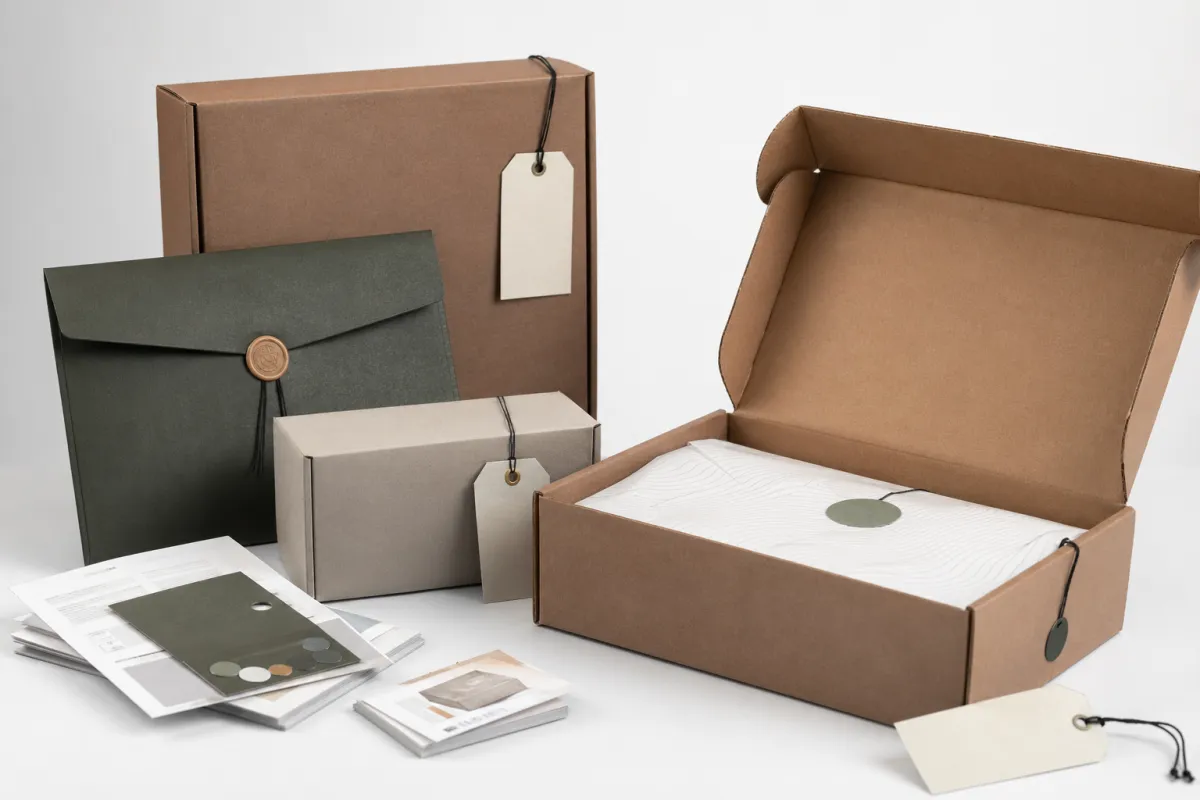
The first thing I tell buyers is that packaging pricing is rarely about the outside size alone. A folding carton that measures 180 x 120 x 40 mm can be built from 300gsm C1S, 350gsm SBS, or 400gsm kraft, and each choice changes the unit cost, the carton stiffness, and the way ink sits on the surface. That is the heart of this packaging cost supplier guide: if you do not compare the full build, you end up comparing two very different products that happen to share the same dimensions. A 350gsm C1S artboard carton might quote at $0.15 per unit for 5,000 pieces from a plant in Dongguan, while a 400gsm SBS version with full flood coating can land closer to $0.24 per unit before export freight. The packaging cost supplier guide approach is simple: compare structure, finish, and logistics together, or the quote will mislead you.
On a client visit in Dongguan, I watched a cosmetics line reject a quote because one supplier was $0.07 cheaper per box. The catch was simple: the cheaper quote excluded a soft-touch coating, excluded a magnetic closure test, and assumed bulk-packed shipping instead of retail-ready packing. By the time the client added the missing pieces, the "cheap" offer became the expensive one. I remember the buyer rubbing her temples and muttering that the spreadsheet had personally betrayed her, which was fair enough after three rounds of revisions and one missed Friday approval. That is a common trap, and this packaging cost supplier guide is designed to keep it from happening to you.
These are the blind spots I see most often in supplier quotes:
- Tooling and setup - dielines, cutting rules, foil dies, emboss plates, and structural samples can add $120 to $900 before production even starts, especially on a 1,000-piece pilot run in Shenzhen.
- Proofing - digital proofing may be included, but wet proofs, white samples, and press checks often carry extra fees of $35 to $180 depending on whether the job is run in Ningbo or Dongguan.
- Inserts and insert assembly - a paperboard insert, molded pulp tray, or EVA foam cradle changes both labor and material cost, and a two-piece insert can add $0.08 to $0.55 per unit.
- Reprint exposure - if artwork is not approved clearly, chargebacks on spoilage or reruns can erase the savings from a low quote, especially when a rerun adds 3 to 5 business days.
- Freight assumptions - EXW, FOB, and DDP are not the same, and pallet density can swing freight by 10% to 25% on a long lane from Yantian to Chicago or Felixstowe.
The best buyers are usually not the ones chasing the absolute lowest piece price. They are the ones asking for a quote that includes the exact board grade, finish, carton pack count, and delivery term, because that is the only way to understand the real landed number. A good packaging cost supplier guide should steer you toward a package that protects the product, supports branded packaging, and ships on time without creating a headache in receiving. If a supplier in Guangzhou gives you a clean EXW quote but the truck lane adds $0.06 per unit, the real savings were never there in the first place.
I still remember a buyer who brought me two quote sheets for what she called the same Custom Printed Boxes. One used a 1,200gsm rigid chipboard wrapped in 157gsm art paper with matte lamination; the other used a lighter board wrapped in 128gsm paper with no lamination. They looked similar at arm's length, but one could pass a premium retail shelf test and the other would crush under a 6 kg carton stack after a humid ocean leg from Ningbo to Long Beach. That is the difference between a sales quote and an actual packaging decision, and it is exactly the kind of gap this packaging cost supplier guide is meant to expose.
"I thought I was buying a box. I was actually buying a production system." That was a buyer's words after we reworked a launch package to include proper insert tolerances, a clearer proof cycle, and a better freight plan from Shenzhen to a Dallas warehouse.
This packaging cost supplier guide also helps you make smarter tradeoffs. A glossy UV finish may improve shelf appeal, but if the product is going to ship in outer cartons and never sit under store lights, that finish may be money you do not need to spend. A retail bakery brand in Seoul may need food-safe board, grease resistance, and a window patch to win shelf attention, while a tea brand in Portland may do better with a kraft structure and a small foil accent. Same box family, different cost logic. The packaging cost supplier guide mindset keeps those decisions grounded in use case instead of habit.
If you are comparing vendors, start by asking three questions: what is included, what is assumed, and what changes the price band? Those three answers will tell you more than the headline number ever will. For buyers who want a broader starting point, our Custom Packaging Products catalog is a useful place to see how structure, finish, and material choices change the final quote, especially for runs of 2,000, 5,000, or 20,000 units.
Packaging Cost Supplier Guide to Product Options and Materials
This packaging cost supplier guide gets much easier once you map the product format to the actual use case. Folding cartons, rigid boxes, corrugated mailers, labels, paper tubes, and inserts each solve a different problem, and each one has a different cost curve. A subscription brand shipping a 240 g candle from Suzhou should not be quoted the same way as a luxury fragrance set that needs presentation, padding, and a tactile unboxing moment in Manhattan or Milan. I have watched that mismatch blow up budgets, and nobody enjoys the follow-up email that begins with "quick question about the quote" and includes a screenshot with six circles and two arrows. A packaging cost supplier guide works best when it helps you line up format, function, and freight from the start.
For retail packaging, I usually start with the board, because the board tells you a lot about durability and print behavior. SBS board gives a clean white surface for sharp graphics. C1S artboard in 350gsm is a common sweet spot for cosmetic cartons because it prints well and keeps the line cost in check. Kraft board gives a natural look that supports eco positioning and simple print. Corrugated flute profiles like E-flute and B-flute matter when the package needs to survive drop testing, stacking, or e-commerce handling from a warehouse in Dallas to a customer in Denver. Rigid chipboard, usually around 1200gsm to 1600gsm, creates the premium feel that many beauty and electronics brands want for package branding.
I once sat in a supplier meeting where a client wanted a rigid box for a 90 ml serum bottle, but the bottle itself was light and the customer experience depended more on visual polish than crushing strength. We moved them to a lighter paper-wrapped setup with a two-piece carton and a paper insert, which cut the unit cost by $0.41 at 3,000 units and still preserved the premium look. That is a classic packaging design decision: spend where the customer notices, and simplify where the product does not need extra structure. Honestly, that is one of my favorite kinds of packaging work, because it feels like solving a tiny engineering puzzle without making the finance team sigh too loudly.
Here is a practical comparison that I use often in a packaging cost supplier guide. The numbers below are illustrative, but they mirror what I see in live quotes once the design, MOQ, and finishing are locked down.
| Format | Typical Spec | Pilot Run Unit Cost | Production Unit Cost | Best Fit |
|---|---|---|---|---|
| Folding carton | 350gsm C1S artboard, 4-color print, matte AQ | $0.22-$0.48 at 5,000 pcs | $0.11-$0.23 at 20,000 pcs | Cosmetics, supplements, retail packaging |
| Rigid box | 1200gsm chipboard, wrapped art paper, ribbon or magnet | $1.20-$3.50 at 1,000 pcs | $0.72-$2.10 at 5,000 pcs | Gift sets, luxury product packaging |
| Corrugated mailer | E-flute, 1-color or 4-color print, kraft liner | $0.55-$1.40 at 3,000 pcs | $0.28-$0.75 at 10,000 pcs | Subscription, e-commerce, shipping protection |
| Paper tube | Paperboard tube with cap, label or full wrap | $0.80-$2.20 at 2,000 pcs | $0.45-$1.35 at 8,000 pcs | Tea, apparel, posters, specialty goods |
That table is useful because it shows how MOQ and format change the economics. A rigid box may look expensive at 1,000 pieces, yet if the brand's margin supports a premium shelf position, the higher unit cost may still make sense. A corrugated mailer, by contrast, often earns its place because it does double duty as product packaging and shipping protection, which reduces damage claims and replacement cost later on. I have seen that single decision save a company more money than a whole round of aggressive supplier negotiation, which is annoying, but also kind of beautiful.
I also tell clients to watch the finishing stack. Hot foil, embossing, debossing, spot UV, window patches, edge painting, and soft-touch lamination all add beauty, but they also add setup, dwell time, and inspection. A simple 4-color print with aqueous coating may be the better commercial choice if the packaging has to hit a sharp target cost. If you need more options, our Custom Packaging Products range shows how those material and finishing choices change both look and budget, with real quotes often varying by $0.09 to $0.65 per unit depending on the finish stack.
For companies trying to make greener choices, the material conversation should be honest. The EPA has useful guidance on packaging and waste reduction at EPA recycling resources, and for fiber sourcing, FSC certification matters when the brand wants documented supply-chain control. Sustainability can support package branding, but only if the material still performs on the shelf and during transit. I have a soft spot for brands that want to do this properly instead of just printing a leaf icon and calling it a day, especially when the actual board spec is 100% recycled kraft from a mill in Guangdong or Zhejiang.
In my experience, the right packaging cost supplier guide does not push one format as the winner every time. It helps you match the format to product weight, unboxing expectations, storage conditions, and the realities of how the goods will move through warehousing and retail. A lipstick carton shipped by air into Tokyo has a different cost logic than a 500 ml protein tub moving by sea out of Shenzhen, and the quote should reflect that difference.
Specifications That Control Packaging Cost and Quality
The fastest way to get a clean quote is to give a supplier the exact specifications in the first message. I mean exact: outer dimensions, inner dimensions, product weight, board grade, print colors, coating, insert style, carton pack count, and shipping destination. A packaging cost supplier guide that skips this step usually ends up with two or three revision loops, and every loop can change both price and lead time. I have lost count of the number of times a "small clarification" turned into a whole new price tier, sometimes after the factory in Dongguan had already booked slot time on the press. If you want the packaging cost supplier guide to do real work, the spec sheet has to do real work first.
Small dimensional changes can make a big difference. On a tea tin project I reviewed, a 2 mm increase in box depth forced a wider die line, changed how the blanks nested on the board sheet, and reduced pallet density by 14%. That sounds minor on paper. On the factory floor, it meant more waste, more freight cube, and a higher unit cost on every finished box. The plant manager just looked at me, laughed once, and said, "Two millimeters is never just two millimeters," which honestly should be printed above every purchasing desk from Bangkok to Boston.
There is also a clear difference between structural specs and cosmetic specs. Structural specs define whether the box holds the product, stacks correctly, and survives handling. Cosmetic specs define how the box looks under retail lighting, how the print registers, and whether the finish feels premium in the hand. I like to spend first on structure and then refine the cosmetic details, because a beautiful package that fails a drop test at 30 inches is not a good commercial choice, especially if the product is traveling through a fulfillment center in New Jersey or a bonded warehouse in Hong Kong.
When I visited a folding-carton plant near Shenzhen, the press operator showed me how much trouble comes from unclear tolerances. If the dieline says 0.5 mm and the art file was built from a mismeasured sample, you can lose an entire print run to poor fold alignment or glue flap interference. That is why this packaging cost supplier guide keeps pushing the same point: approved dielines and sample validation are not admin tasks, they are cost controls. A corrected file on Monday can save a $1,800 rerun on Thursday.
Before you request pricing, collect these details:
- Product size and weight - for example, 78 x 42 x 165 mm at 320 g.
- Exact quantity - 2,500, 5,000, 10,000, or whatever your launch plan requires.
- Print method - offset, digital, flexo, or label application.
- Finish - matte lamination, gloss varnish, foil, embossing, spot UV, or none.
- Insert requirement - paperboard, molded pulp, EVA, PET, or no insert.
- Compliance needs - food contact, child resistance, recycled content, or retail barcode placement.
- Delivery terms - EXW, FOB, or DDP, plus the final destination zip or port.
Buyers often ask me whether they should overspecify the packaging to be safe. My answer is usually no. If a 280gsm carton meets the compression requirement and presents well, moving to 350gsm just because it "feels better" can push the budget out of range without adding real value. That is one of the core lessons in a solid packaging cost supplier guide: specify for performance, not ego, and do it with the numbers in hand, like 18 kg stacking strength or a 5-drop pass from 36 inches.
For regulated or fragile products, I also recommend checking transit testing and material standards early. ISTA test methods help define how a package behaves under vibration, drop, and compression, and the organization publishes practical testing guidance at ISTA. If your package is going into retail, shipping, and warehousing all at once, those test references give the supplier a real target instead of a vague hope, whether the carton is moving through a Florida distribution center or a Polish fulfillment hub.
One more detail matters: artwork readiness. A press-ready file with proper bleed, vector text, and CMYK builds moves the project faster than a design that still needs resizing in production. If your branding team is still changing the logo lockup every two days, the quote may look fine but the schedule will slip, and a good packaging cost supplier guide should warn you about that before the purchase order goes out. A clean file from Adobe Illustrator or a packaged PDF/X-1a export can save 1 to 2 business days on proofing alone.
How Do You Compare Quotes in a Packaging Cost Supplier Guide?
This packaging cost supplier guide would not be complete without a clear look at pricing layers, because the quote you see on page one is usually only part of the story. In most packaging programs, the cost buckets are setup, material, printing, finishing, labor, inspection, packaging, and freight. If you know which bucket is driving the number, you can often find a smarter tradeoff within 15 minutes instead of waiting for a second round of quotes. I would love to say every supplier itemizes this beautifully, but I have seen plenty of "tidy" quotes that were tidy in exactly the wrong way, especially when the freight line was hidden behind a vague handling note. A packaging cost supplier guide should make those hidden assumptions visible before you compare anything else.
The biggest price shift usually comes from MOQ. Low quantities spread setup across fewer units, so the per-piece number looks high. Once you move into a better tier, the same setup is divided over more units, and the price can drop sharply. I have seen a box move from $0.62 at 1,000 units to $0.31 at 5,000 units simply because the press time, die setup, and carton packing labor were used more efficiently. That is not a trick; it is the math of manufacturing, and it shows up clearly in plants around Dongguan, Foshan, and Shenzhen.
Here is a simple way to read tiered pricing in a packaging cost supplier guide:
- Prototype pricing covers one-offs, proofing, and design verification, so it can be 3x to 8x higher than production pricing, especially on a single sample set in Shanghai or Yiwu.
- Pilot run pricing usually sits in the middle, often at 500 to 2,000 pieces, where some setup is still heavily loaded into the unit price.
- Production pricing improves once the run crosses a threshold, commonly 3,000, 5,000, 10,000, or 20,000 units depending on structure and finish.
In a supplier negotiation for a premium chocolate sleeve, the buyer pushed hard on foil stamping. The supplier quoted a separate die charge, a setup fee for the foil unit, and a minimum press run that would have made the launch too expensive. We ended up moving the brand to a smaller foil area and one-color offset print with a heavier paper stock from 330gsm to 400gsm. The final effect looked intentional, and the project held its budget. That is the kind of decision a practical packaging cost supplier guide should help you make. There was a tiny victory dance in the hallway, though I will deny that in public.
One thing most people get wrong is assuming every quote is itemized the same way. It is not. Some suppliers bury one-time costs inside unit pricing, which makes the quote feel attractive for the first order but less useful for repeat buying. Others separate tooling, plates, and freight clearly, which makes the comparison much more honest. I prefer the second approach every time, because it helps the buyer see the true cost of a reorder versus a one-time launch, whether the supplier is in Kunshan, Ningbo, or Dongguan. A packaging cost supplier guide built on repeatable assumptions saves time on every future request.
Use this comparison framework when you are reviewing proposals:
| Quote Element | Ask the Supplier | Why It Matters |
|---|---|---|
| Setup charges | What is one-time and what repeats on reorder? | Protects you from hidden second-order costs. |
| Material spec | What exact board, paper, or flute is included? | Stops apples-to-oranges comparisons. |
| MOQ tier | Where does the next price break begin? | Shows whether a slightly larger order saves meaningful money. |
| Freight term | Is the quote EXW, FOB, or DDP? | Changes the landed cost by port, lane, and pallet count. |
| Lead time | Does the schedule include sampling and proof approval? | Prevents launch delays caused by optimistic dates. |
A careful packaging cost supplier guide also reminds buyers that a lower MOQ is not always the best business choice. If your demand forecast is stable at 8,000 units a month, ordering 2,000 units four times may create more freight, more admin, and more price friction than one larger production run. On the other hand, if you are testing a new SKU in retail, a smaller MOQ protects cash flow and reduces stale inventory. The right answer depends on sell-through, not pride, and on how quickly your warehouse in Phoenix or Atlanta can cycle stock.
For brands needing more than one package style, the smartest move is often to standardize core sizes, then vary only the graphics. A shared carton footprint lets you buy in bigger material batches, reduce knife changes, and simplify warehousing. That kind of planning is one of the hidden strengths of a good packaging cost supplier guide: it shows how design choices affect procurement later, especially when one board sheet and one die line can serve three colorways.
How the Packaging Order Process and Timeline Work
A clear packaging cost supplier guide should also explain the production path, because time can cost just as much as paper and board. A typical workflow starts with the brief, moves to quote review, then dieline creation, artwork placement, proof approval, sampling, production, inspection, packing, and shipment. If any one of those steps stalls for two days, the launch calendar can slip by a week once you add weekends and port schedules. I have had a launch schedule survive everything except a late proof signature from a founder in Singapore, which was a deeply irritating lesson. The packaging cost supplier guide perspective here is simple: schedule is a cost, not just a calendar note.
Simple print jobs move faster than structurally complex packages. A straight tuck carton with one print side and a matte varnish may be ready in 12 to 15 business days after proof approval. A rigid box with foil, embossing, ribbon, and custom insert may need 20 to 30 business days, and that is before export packing and ocean transit. That difference matters, and a packaging cost supplier guide that ignores it will not help you plan a store launch or a subscription drop in Austin, Toronto, or Berlin.
The usual delay points are easy to spot once you have lived through a few launches. Missing artwork slows proofing. Late spec changes force a new dieline. No one signs off on color until the founders are in the same room. Shipping instructions arrive after the cartons are already packed. I have seen a four-color beauty sleeve sit in finished goods for five days because the buyer had not decided whether the labels should face up or face out on the pallet. Small issue, big time loss, and it cost one warehouse in Busan an extra 48 hours of storage.
Production methods also affect the schedule. Foil stamping needs tooling. Embossing needs a matched die set. Lamination adds handling and drying time. Corrugated jobs may move faster on a flexo line, while high-detail custom printed boxes often require offset work and tighter registration checks. A supplier should explain these tradeoffs clearly, and a packaging cost supplier guide exists to make sure you ask for that explanation before approval, not after the truck is already booked.
For planning, I recommend a short checklist that keeps everyone honest:
- Final dimensions signed off in writing.
- Print-ready files with bleed, dieline, and color callouts.
- Material selection confirmed by name and thickness.
- Proof approval chain identified before production starts.
- Shipping destination and delivery terms confirmed.
- Contingency date built in for sample review or minor revisions.
If your packaging supports product claims like recycled fiber or FSC chain of custody, build that into the timeline too. Certification paperwork and supplier verification can add days, and it is better to know that upfront than to discover it while the cartons are already in queue. A thoughtful packaging cost supplier guide helps the buyer see the difference between a fast quote and a fast finish, especially when the approval needs to pass through QA in one city and compliance in another.
One practical lesson from a factory floor in southern China: packing configuration can be as important as print quality. If cartons are overpacked into master cases, the outer case can crush on a humid truck route; if they are underpacked, your freight cost rises because you lose cube. The right pack count and pallet pattern keep the product safe and lower the shipped unit cost at the same time. I have seen a 24-pack master case outperform a 36-pack case simply because the 24-pack held shape better in monsoon weather.
Why Choose Custom Logo Things for Your Packaging Program
Custom Logo Things is a practical partner for brands that want clear numbers, clean specs, and packaging that holds up in real handling conditions. What I like about that kind of supplier relationship is simple: the quote starts with the product, not with a marketing promise. A strong packaging cost supplier guide should point buyers toward a team that understands conversion, print registration, finishing, and carton packing, because those are the details that keep a launch from becoming expensive later. I have a soft spot for suppliers who ask the annoying questions early, because those are usually the questions that save you money later, like whether the ship date is tied to a 14-day approval window or a 21-day production slot.
In a good production discussion, I want to hear questions about flute profile, board caliper, glue flap width, barcode placement, and outer case pack count. That is the language of a supplier who knows the floor. If the conversation stays only on colors and mood boards, the buyer may get a pretty presentation and a weak build. Custom Logo Things is a better fit for brands that need both packaging design and manufacturing discipline, whether the build is a 350gsm C1S artboard carton, a 1200gsm rigid set-up box, or a simple mailer in brown kraft.
We also see better results when the supplier offers real samples, not just a digital mockup. A paper swatch, a structural sample, or a white sample tells you more than a PDF ever will. It shows the fold tension, the fit around the product, and the feel of the finish in the hand. That matters whether you are building custom printed boxes for retail, branded packaging for a DTC launch, or protective mailers for a subscription program. I still trust a white sample more than a slide deck, and I say that with the full confidence of someone who has watched too many "perfect" presentations fall apart at the sample table in Dongguan at 4:30 p.m.
Custom Logo Things can be especially useful if your packaging program includes multiple materials across one line, such as a rigid presentation box, a folding carton, and an insert set. A supplier who understands how those parts interact can recommend where to simplify and where to keep the premium touch points. That is how you protect margin without flattening the brand story, and it is often the difference between a 12% packaging spend and a 17% packaging spend on the same SKU family.
For companies doing a broader packaging refresh, our Custom Packaging Products page is a straightforward way to review structures before you send a request for pricing. It helps narrow the field, and it gives you a better starting point for a true apples-to-apples quote. A strong packaging cost supplier guide should always push toward that level of clarity, especially when the quote will be compared across factories in Shenzhen, Ningbo, and Qingdao.
One honest point: no supplier can make every material issue disappear. Paper supply can tighten, freight can spike, and specialty finishing can stretch a schedule by a week or more. What matters is whether the team tells you early, shows you the cost impact, and offers a fallback spec that keeps the project moving. That is the kind of reliability buyers remember, and it is why a packaging cost supplier guide should end with accountability, not hype, particularly when a backup material such as 128gsm art paper or 300gsm kraft can keep the launch alive.
For brands that care about certified sourcing, FSC is still one of the strongest references for fiber traceability, and you can review it at FSC. I like to bring that up in supplier conversations because a packaging program is easier to trust when the material story is documented from the start, down to the mill, the converting plant, and the final carton count.
Next Steps for Getting an Accurate Packaging Quote
Before you send a request, gather the data that helps a supplier quote correctly the first time. The most useful packaging cost supplier guide advice I can give is this: do not ask for "a box quote," ask for a quote on a specific build with a specific destination, because the more precise the brief, the closer the first number will be to the final purchase order. Otherwise, you end up playing email ping-pong for a week, and nobody enjoys that, especially when the launch date is fixed for the first Monday in November. This packaging cost supplier guide mindset keeps the conversation on facts instead of assumptions.
Use this checklist before you contact a supplier:
- Measure the product in three dimensions and add any insert or headspace needs.
- Confirm the target quantity for the first order and the likely reorder size.
- Decide whether the package is for retail display, shipping protection, or premium unboxing.
- Specify printing, coating, foil, embossing, or any other finish in plain language.
- State the destination port, warehouse, or ZIP so freight can be included accurately.
- Send artwork files or a technical drawing, not just a logo screenshot.
Then compare every quote side by side using the same assumptions. If one supplier quotes 5,000 units DDP Chicago and another quotes 5,000 units EXW Shenzhen, the numbers are not comparable. If one includes a white sample and the other does not, the schedule is not comparable either. A disciplined packaging cost supplier guide keeps the comparison honest by separating recurring cost, one-time charges, and timeline commitments, and by naming whether the shipment leaves Yantian, Ningbo, or Xiamen.
I also suggest asking for two pricing tiers: one at your intended MOQ and one at a higher band that might unlock a better unit cost. That single step often reveals whether a modest increase in quantity saves enough money to matter. For some brands, the answer is no. For others, especially those with steady sell-through, the larger run is the smarter buy, particularly if the second tier drops from $0.33 to $0.19 per piece at 10,000 units.
Last, confirm the proofing steps, payment milestones, and sample availability before you release the order. If you need a launch date with a hard retail window, build in time for sample sign-off and a small cushion for shipping variance. That is the difference between a supplier quote that looks good on paper and a packaging program that actually ships, whether the cartons are headed to a Miami 3PL or a warehouse in the Midlands.
If you want the short version, here it is: the best supplier is the one who gives you predictable cost, clean specs, and a timeline you can plan around. That is the real point of a packaging cost supplier guide, and it is the standard I would use for my own line if I were buying branded packaging, retail packaging, or custom printed boxes for a new launch in 2025.
FAQs
How do I use a packaging cost supplier guide to compare quotes?
Compare the same dimensions, material grade, print process, finish, MOQ, freight terms, and one-time charges on every quote. Ask which line items repeat on reorder and which are setup-only, because a low headline price can hide tooling or proofing fees that show up later. I also like to check lead time beside cost, since a quote that misses a launch date is not a useful quote, even if the price is $0.04 lower per unit. A packaging cost supplier guide works best when every supplier is measured against the same assumptions.
What details do suppliers need before pricing custom packaging?
Provide exact carton or insert dimensions, product weight, quantity, artwork files, and any finish or coating requirement. Add the shipping destination, packaging purpose, and any retail or compliance needs that affect structure or materials. If you can send a sample product or technical drawing, the supplier can often quote more accurately and cut down on revision cycles, sometimes from three revisions to one.
Why does MOQ change packaging cost so much?
Low quantities spread tooling, setup, and press preparation across fewer units, which raises the per-piece price. Higher runs usually reduce the impact of those fixed costs, so the unit cost drops at certain volume tiers. A good supplier should show you the breakpoint clearly, not hide it behind a vague "better price for larger volume" line, whether the jump happens at 2,000, 5,000, or 10,000 units.
How long does the packaging quoting and production process take?
A quote can often be turned around quickly once the specs are complete, but proofing and sample approval add time. Production length depends on material availability, structure complexity, finishing steps, and the current factory load. Projects move faster when artwork, dimensions, and delivery dates are finalized before the order is released, because every late change resets part of the schedule, and a rigid box with foil may take 20 to 30 business days while a simple carton can move in 12 to 15 business days from proof approval.
What is the best way to lower packaging cost without hurting quality?
Simplify the structure, reduce unnecessary finishes, and choose a material grade that fits the product instead of overspecifying. Standardize sizes where possible, because fewer custom dimensions usually mean better material use and easier production. If you are unsure, ask the supplier to quote two or three options so you can compare performance, appearance, and price side by side before you commit, and check whether 350gsm C1S artboard is enough before moving up to 400gsm SBS.

