Buyer Fit Snapshot
| Best fit | Packaging Printing for Small Business projects where brand print, material claims, artwork control, MOQ, and repeat-order consistency need to be specified before quoting. |
|---|---|
| Quote inputs | Share finished size, material target, print colors, finish, packing count, annual reorder estimate, ship-to region, and any compliance wording. |
| Proofing check | Approve dieline scale, logo placement, barcode or warning zones, color tolerance, closure strength, and carton packing before bulk production. |
| Main risk | Vague material claims, crowded artwork, missing packing details, or unclear freight terms can make a low unit price expensive after revisions. |
Fast answer: Packaging Printing for Small Business: Production Spec, Color Control, and Delivery Risk should be specified like a repeatable production item. The safest quote records material, print method, finish, artwork proof, packing count, and reorder notes in one written spec.
Production checks before approval
Compare the actual filled-product size with the drawing, then confirm tolerance on folds, seals, hang holes, label areas, and retail display edges. Reserve space for logos, QR codes, warning copy, and material claims before decorative graphics fill the panel.
Quote comparison points
Review material grade, print process, finish, sampling route, tooling charges, carton quantity, and freight assumptions side by side. A quote is only useful when the supplier can repeat the same color, closure quality, and packing count on the next order.
Packaging printing for small business often decides whether a product feels like a real brand or a box with a logo slapped on it. A plain mailer can make a carefully made item feel ordinary. A thoughtful printed carton can make the same product feel priced correctly before the customer ever touches it. Packaging printing for small business is not decoration. It is protection, sales support, and first-impression work all at once. It also sets the tone for product packaging, whether you are shipping candles, supplements, apparel, or skincare.
For a small business, packaging printing for small business can do the work of a storefront, a sales rep, and a brand handshake in one shot. That is a heavy lift for a box, sleeve, label, or mailer, which is why the choices around structure, stock, and finish matter more than many owners expect. If you are comparing formats, start by looking at Custom Packaging Products and then match those options to your budget and order volume. The right setup can make branded packaging feel intentional without forcing you into a huge first run.
Packaging Printing for Small Business: Why It Grabs Attention
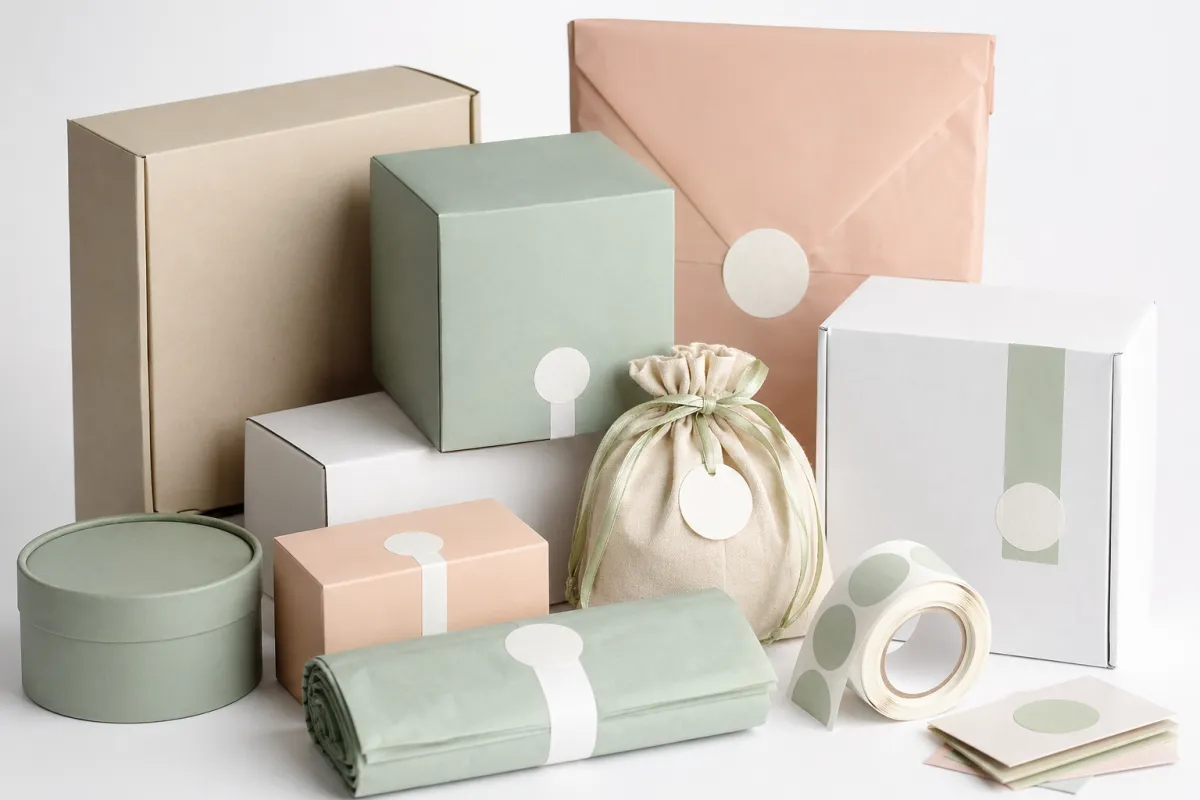
Packaging printing for small business grabs attention because it shows up at the exact moment when a buyer is deciding whether your product feels credible, giftable, and worth the price. A food jar, candle, supplement, shirt, or skincare item can be strong on its own, but the printed layer around it changes the story fast. A clean mailer, a well-registered logo, or a carefully chosen kraft stock can make the whole purchase feel more considered. A weak print job does the opposite. It can make a great product look like it came from a rushed run.
In plain terms, packaging printing for small business is the process of adding brand graphics, product information, warnings, barcodes, instructions, and visual cues to boxes, bags, labels, sleeves, and shipping materials. That can mean Custom Printed Boxes, a one-color mailer, a premium foil stamp, or a straightforward label system. The point is not to cover every surface. The point is to make the package do its job clearly and consistently. Good package branding should help the customer understand the product before they even open it.
Why does that matter so much for small businesses? Because the package often carries the whole buying experience. In retail packaging, the printed surface may need to catch a shopper from three feet away. In ecommerce, the outer carton has to survive transit and still look good when it is opened. In both cases, packaging printing for small business is doing more than brand decoration. It is signaling product value, helping with handling, and cutting confusion once the item reaches the customer. It also supports product packaging decisions that affect returns, reorders, and customer trust.
Here is where a lot of owners get tripped up: they treat print as an afterthought, then wonder why the unboxing feels flat. Good package branding does more than show a logo. It can guide how the buyer handles the item, point them toward usage instructions, and set up a smoother first-use experience. A label that clearly explains size or scent reduces returns. A clean insert can answer the three questions people usually have before they even ask them. That is strategy, not just style. Packaging printing for small business works best when those details are planned early.
- Brand clarity: the printed package tells people what the product is before they read a long description.
- Perceived value: better print control often makes a lower-cost product feel more established.
- Operational help: labels, inserts, and marks can speed fulfillment and cut avoidable mistakes.
- Customer memory: the opening moment sticks longer when the package feels intentional.
There is also a practical side to packaging printing for small business that gets missed in branding conversations. Print choices affect how much ink coverage is needed, how visible scuffing will be, and whether a package is easy to stack, palletize, and store. That means the right decision is rarely the fanciest one on paper. It is the one that fits the product, the handling path, and the amount of cash you want tied up in inventory. For many owners, that makes packaging printing for small business a finance decision as much as a design decision.
If you want a useful reference point for structure, stock, and print categories, industry resources from packaging.org can help frame the bigger picture. For a small business, though, the real question is simpler: what will the customer touch first, and what should that touchpoint say? That is where packaging printing for small business earns its keep.
How Does Packaging Printing for Small Business Actually Work?
Packaging printing for small business starts long before ink hits board. The workflow usually begins with the product itself, then moves into the package format, the dieline, the artwork, the proof, the press run, finishing, and finally delivery. When the process is handled cleanly, the brand gets a package that looks right and folds right. When it is rushed, even a good design can land with crooked copy, soft color, or text that disappears into a seam. That is why packaging printing for small business rewards planning instead of improvisation.
- Concept: define what the package must do, whether that is shipping protection, shelf appeal, product information, or all three.
- Structure: choose the box, bag, label, sleeve, or insert that fits the item and the way it will move through the business.
- Dieline: map the folds, glue tabs, safe zones, bleed, and cut lines so artwork lands where it should.
- Artwork setup: place logos, copy, barcodes, and product details in the correct file format and color mode.
- Proofing: review digital proofs for layout and request physical samples when color or texture matters.
- Production: print, cut, crease, coat, and finish the packaging according to the approved spec.
- Delivery: inspect cartons on arrival, then store them in conditions that protect the print surface and board.
The two print methods people ask about most are digital printing and offset printing. Digital printing is usually the better fit for smaller runs, frequent design changes, and faster turnarounds because it avoids plates and can handle short quantities with less setup. Offset printing is stronger for larger volumes and repeat runs, especially when the artwork is clean and the brand wants very consistent color across a long order. Flexographic and label-based processes also show up often in product packaging, especially for roll labels, pouches, and shipping or logistics applications. Packaging printing for small business often starts with digital printing and graduates to offset printing as volume rises.
The substrate matters just as much as the press. Paperboard accepts ink differently than corrugated board, and kraft paper behaves differently again because of its color, absorbency, and surface texture. Film, label stock, and specialty papers each change how the artwork appears. The same red can look richer on coated board, warmer on kraft, and flatter on an uncoated stock. That is not a defect. It is a material decision. Packaging printing for small business works best when the artwork is designed with the stock in mind instead of being forced onto any available surface. The same logic applies to folding cartons, corrugated mailers, and labels.
Two packages can carry the same graphic and still feel totally different in the hand. Coating affects glare. Fiber direction affects how a box folds. Ink coverage affects drying and scuff resistance. The print area itself affects how much brand information is visible before the package is opened. For small businesses, the fastest path is usually to choose standard sizes, keep special finishes limited, and build the artwork with print-ready files from the start. A clean PDF or packaged design file saves time, and it saves the awkward back-and-forth that comes from fixing a file one mistake at a time. That is the boring part of packaging printing for small business, which is also the part that saves money.
I have seen more than one owner lose a week because a logo file was built for the web, not for print. It looks fine on a phone. On a carton? Not so much. If you skip the file prep, you are gonna hear about it from the printer. The fix is not glamorous, but it is simple: work from the correct dieline, keep fonts outlined or embedded, and confirm the color mode before anyone starts approving proofs.
If you are comparing structural options, the range of Manufacturing Capabilities available to a packaging supplier can tell you a lot about whether they are a fit for your product line. Packaging printing for small business is easier when the printer understands how the package will actually be used, not just how it will look on a screen.
What Shapes the Cost of Packaging Printing for Small Business
Packaging printing for small business can look cheap or expensive depending on where the money goes. The biggest driver is quantity, because setup costs get spread across more or fewer units. After that come print method, material choice, box style, ink coverage, coatings, and any special finish such as foil, embossing, spot UV, or soft-touch lamination. A simple one-color mailer on standard corrugated board is a very different budget from a full-coverage folding carton with metallic accents and a custom window. Packaging printing for small business becomes easier to quote when those variables are pinned down early.
Setup economics matter a lot. Smaller runs often cost more per piece because the press still needs to be prepared, the files checked, the dies or plates approved, and the production line scheduled. Larger runs lower the unit price because those same setup costs are distributed across more cartons. That is why packaging printing for small business is often a balancing act between cash flow and inventory risk. Ordering too few units can make each box expensive. Ordering too many can leave money tied up in cartons that sit in storage for months. The sweet spot changes by product, season, and how fast you sell through.
Design complexity also moves the number. Full-bleed artwork uses more ink and can require tighter control. Multiple colors can increase prepress time. Foil stamping and embossing add tooling and setup. Custom Die Cuts raise both the design and production burden. A smart first run usually focuses on the features that matter most to the buyer. If the package only needs shelf clarity and shipping strength, a stripped-down layout may do the job better than a highly finished piece that eats margin. Packaging printing for small business should make the product look better, not bury it in extra costs.
| Packaging Option | Typical Order Range | Approx. Unit Cost | Common Use | Main Tradeoff |
|---|---|---|---|---|
| Digital folding carton | 250-2,000 units | $0.40-$1.10 | Launches, limited editions, fast reprints | Higher unit cost at low quantities |
| Offset folding carton | 2,500-20,000 units | $0.18-$0.42 | Steady retail packaging and repeat orders | More setup, more planning, larger minimums |
| Corrugated mailer | 500-5,000 units | $0.80-$2.40 | Ecommerce shipping and product protection | Board grade and print coverage change the price fast |
| Labels and sleeves | 1,000-10,000 pieces | $0.06-$0.45 | Bottles, jars, pouches, and fast product changes | Less structural impact than a fully printed carton |
Those figures are broad on purpose. They are ballpark ranges, not promises, and any supplier who treats them like a quote is skipping a few steps. A box size, board grade, coating choice, and shipping location can move them in either direction. Still, the table gives a useful starting point for packaging printing for small business because it shows how quickly the economics change between a test run and a repeat production order. A brand selling 500 subscription kits has very different needs from a brand shipping 8,000 units a month. Neither one should be forced into the same print strategy. The Right Packaging Supplier should be able to quote both without pretending they are the same job.
There are also secondary costs that catch owners off guard. Inserts, labels, proof copies, shipping cartons, storage space, and fulfillment time can all change the real cost of packaging. A package that stacks well may save freight. A better insert may lower breakage. A label system that simplifies SKUs may reduce picking errors. So the cheapest quote is not always the least expensive answer. Packaging printing for small business works best when the quote is read as a full system, not just as a unit price. That is especially true for custom packaging with multiple components.
The Process and Timeline From Dieline to Delivery
Packaging printing for small business usually follows a predictable path, but the pace changes depending on how ready the artwork is and how complex the structure becomes. A basic run with clean files can move quickly. A custom carton with special finishes, multiple proofs, or unusual board requirements will need more lead time. The best way to avoid delays is to treat the timeline as part of the design, not as a detail to fix later. Packaging printing for small business is much smoother when production timing is mapped before the art is approved.
The dieline is the anchor point. It shows where the package folds, where glue lands, where the safe zones begin, and where artwork should stay away from structural seams. If text sits too close to a fold or a barcode crosses a cut line, the package can technically print and still fail in use. That is why dielines need to match the approved structure exactly. Packaging printing for small business is far smoother when the artwork team works from the final dieline version and does not keep swapping templates midstream. A stable dieline means fewer surprises.
Proofing comes next. A digital proof is useful for checking copy, layout, barcode placement, and general alignment. A physical proof matters when color accuracy, coating, board feel, or fold behavior could change the customer experience. For branded packaging that depends on a certain shade or tactile finish, a sample is worth the extra time. A screen never tells you how a soft-touch surface will reflect light or how a kraft board will mute a deep ink color. Packaging printing for small business benefits from one round of sample review more than from three rounds of guessing.
Here is a realistic timeline range that many small businesses can plan around:
- Digital print with simple artwork: often 7-12 business days after proof approval.
- Offset print with standard finishing: often 12-18 business days after proof approval.
- Custom structure or specialty finish: often 3-5 weeks, sometimes longer if tooling or materials are unique.
- Artwork revisions: add 2-5 business days per round if copy, colors, or dielines change materially.
That timeline can stretch if the supplier needs to source a specific board, if the press is booked, or if freight has to travel a long distance. It can also shrink when the business is using standard packaging sizes, pre-approved artwork, and a finish that does not slow production. Packaging printing for small business tends to reward planning more than urgency. A launch date is not the time to discover that the barcode is the wrong size or the logo file is not print-ready. It is also not the time to learn that your product packaging needs a different closure than the one you ordered.
The smoothest projects usually give themselves breathing room for one final check. That might be a proof sent to the owner, a color review against an existing sample, or a last confirmation that the legal copy is correct. If a package must support regulated product packaging, like cosmetics, supplements, or food, that review becomes even more important. Packaging printing for small business is far easier to manage when the timeline includes one buffer for human review, not just machine production. Clean approvals save money. Rushed approvals usually do not.
Common Mistakes That Hurt Print Quality and Budget
Packaging printing for small business often goes sideways for reasons that are surprisingly basic. Low-resolution files, missing bleed, text too close to a fold, and artwork built in the wrong color mode are still among the most common mistakes. They are not glamorous problems, but they are expensive. Every extra proof round, every last-minute fix, and every reprint eats time and margin that a small brand would rather spend elsewhere. A few avoidable errors can turn a decent quote into a painful one.
One frequent issue is choosing artwork before the package structure is settled. A design that looks balanced on a rectangle may behave badly once it is wrapped around a sleeve or folded over a carton seam. Another issue is assuming that a design approved on screen will print exactly the same on kraft, corrugated, coated board, or film. Packaging printing for small business demands that the material and the artwork be considered together. The substrate is not a blank canvas. It changes the color and the feel of the piece. That is true for folding cartons, labels, and shipping cartons alike.
There is also a temptation to overcomplicate the first run. Specialty foil, embossing, custom inserts, complex finishes, and multiple components can all be beautiful, but they can also slow the project and raise the bill. If the brand is still learning order volume and customer reaction, it is often better to launch with a clear, disciplined package and add premium touches later. That approach gives the business room to learn without locking up cash in features that may not improve conversion. Packaging printing for small business should support sales, not act like a dare.
"A package has to look right under real handling, not just on a computer screen. If it cannot survive stacking, shipping, and opening, the print job has not finished its job."
Another hidden budget trap is the long list of extras that get forgotten in early quoting. Inserts, labels, proof copies, shipping cartons, warehousing, and replacement units can all show up as separate line items. A smart quote should make those visible. If a supplier gives a neat base price but hides the rest, the real cost of packaging printing for small business can rise quickly once the project moves from sample to fulfillment. That is why comparing custom packaging quotes line by line matters more than comparing headline prices.
Real-use testing matters too. A carton that feels sturdy in the office may crush or rub badly in transit. A label that sticks fine in a clean room may lift on a cold bottle or a dusty jar. A printed sleeve that looks sharp under LED lights may scuff when it is packed tightly. That is why packaging testing should include actual handling, not only visual approval. Drop tests, stack checks, and fit tests may not be glamorous, but they save money by catching weak points before full production. The product packaging has to work the way the customer will actually use it, not the way a mockup suggests it should.
Expert Tips for Smarter Materials, Files, and Finishes
Packaging printing for small business gets a lot easier when the project starts with one clear question: what should this package do first? Some packages exist mainly to protect. Others need shelf appeal. Some have to make shipping efficient. Many need all three. If you know the main job, material and finish choices become much clearer. A package that ships fragile items has different priorities from a carton that sits in a boutique, and the print spec should reflect that. Packaging printing for small business works best when the spec follows the product, not the other way around.
For material selection, I usually tell smaller brands to match the substrate to the product weight, fragility, and customer experience before chasing the fanciest option. Kraft can feel honest and grounded. Coated paperboard can give stronger color and cleaner imagery. Corrugated board offers much better shipping resilience. If you need a paper source with traceability, FSC certification is a useful reference point for responsibly managed fiber. For many buyers, that matters as much as the print itself because it tells a story about sourcing and brand values. It is also a practical way to support sustainable packaging claims without making the copy do all the work.
File discipline matters just as much as material discipline. Packaging printing for small business goes more smoothly when the artwork is print-ready from the beginning: CMYK or specified spot colors, outlined fonts, linked images embedded, bleed built out to the printer's request, and a naming system that makes versions easy to track. A good file set should include the dieline version number, a proof PDF, and any barcode or legal copy in a clearly marked layer. That small amount of organization saves a lot of costly confusion later. It also makes proofing faster because everyone is looking at the same file.
Finishes should support the message, not distract from it. Matte can feel understated and premium. Gloss can sharpen contrast and make color pop. Soft-touch can create a tactile, high-end feel, though it also adds cost and can show wear differently than a standard coating. Spot UV is useful when the brand wants a glossy accent on top of a flat field. Foil can signal a special edition or a premium product tier. Package branding works best when those finishes are used with restraint and with a reason. One strong finish is usually better than three competing ones. Packaging printing for small business gets better when the finish is doing a job, not just spending money.
- Matte coating: good for a refined, quieter look and easier readability.
- Gloss coating: useful for bright color, contrast, and a more energetic presentation.
- Kraft stock: works well for natural, handmade, or earthy branding.
- Soft-touch lamination: strong for premium unboxing, but it needs careful handling.
- Label systems: practical for fast-changing SKUs or short product runs.
If you want to move from general ideas to a real spec, start with Manufacturing Capabilities and narrow the field to the methods that actually fit your timeline and order size. Packaging printing for small business is not about using every possible upgrade. It is about choosing the few details that make the package feel finished without making the budget wobble. For many brands, the winning mix is simple: a stable structure, one strong finish, and clean artwork built for the selected printing method.
One more practical point: if your customer opens the box, sees the product, and immediately understands what to do next, that is a good package. If they have to hunt for instructions, peel a label off a seam, or guess which side is up, the package is working against you. That sounds kind of basic because it is. But basic done well is usually what prints money in Small Business Packaging.
Actionable Next Steps for a Launch-Ready Packaging Plan
Packaging printing for small business works best when the project is planned as a series of small, concrete decisions instead of one vague order. Before you ask for quotes, define the product, measure the package, estimate the quantity, choose a print method, and decide what the package must communicate. That simple sequence keeps the project from drifting into endless revisions and lets suppliers quote apples-to-apples options. It also makes it easier to compare custom packaging against standard stock options without guessing.
A practical launch checklist looks like this:
- Confirm the product dimensions: measure the item and any insert or inner pack so the package fits the real object, not the mockup.
- Set the target quantity: decide whether this is a test run, a seasonal order, or a replenishment cycle.
- Choose the format: box, mailer, sleeve, label, bag, or insert based on product and fulfillment needs.
- Gather files early: logo, product copy, barcode, warnings, ingredient text, and any required regulatory language.
- Request multiple quotes: compare at least two or three options so you can see how cost and lead time change by method.
- Ask for a sample: a small test run or proof catches fit and finish problems before full production.
That last point is especially helpful for brands that are new to packaging printing for small business. A sample shows whether the box closes cleanly, whether the label sits straight, whether the ink reads as intended, and whether the finish scratches too easily in transit. A mockup can look perfect on a desk and still fail when packed with the real product. A sample is your warning system, and it is a lot cheaper than reprinting 1,000 units that do not fit.
It also helps to think about inventory and replenishment before you place the order. A smaller run may be right if the product is seasonal, experimental, or likely to change soon. A larger run makes sense only if the design is stable and the product will sell through predictably. That is where packaging printing for small business becomes a cash-flow decision as much as a design decision. A smart buyer is not chasing the lowest unit price alone. A smart buyer is matching unit price, storage needs, and reorder frequency so the package supports the business instead of tying it down.
For a first production order, it is often wise to keep the structure simple, approve one strong finish, and leave room for refinement on the next cycle. That approach gives the brand cleaner data on what customers respond to. It also reduces the chance that the first order gets held up by a special die cut or an expensive coating that does not add much to the sale. Packaging printing for small business should help the product sell and ship with confidence, not create more moving parts than the brand can manage.
The takeaway is pretty straightforward: lock the structure first, then choose the print method, then choose the finish. If those three pieces fit the product and the budget, the rest gets a lot easier. Get that order wrong and you end up paying to decorate a problem. Get it right and the packaging starts doing real work the second it lands on a shelf or a doorstep.
Frequently Asked Questions
What is packaging printing for small business, exactly?
It is the process of applying brand graphics, product information, and functional details onto boxes, labels, sleeves, inserts, and shipping materials. For a small business, it usually blends protection, branding, and customer experience into one physical asset. The best setup depends on product size, order volume, and how the package will be handled in shipping or retail. Packaging printing for small business can be simple or highly customized, depending on the brand's goals.
How much does packaging printing for small business usually cost?
Pricing depends on quantity, material, print method, and any special finishing such as foil, embossing, or spot UV. Smaller runs usually cost more per unit because setup costs are spread across fewer pieces. A good quote should break out unit price, setup, proofs, and shipping so you can compare options clearly and see where the money is going. That makes packaging printing for small business easier to budget and less likely to blow up mid-project.
What files should I send for packaging printing?
Send print-ready artwork in the requested format, usually with correct bleed, safe zones, and outlined or embedded fonts. Include the dieline version approved by the printer, plus any barcode, legal copy, or variable data needed for the package. If color accuracy matters, ask whether the printer wants CMYK, spot colors, or a sample reference. Clean files make packaging printing for small business faster, cheaper, and less annoying for everyone involved.
How long does packaging printing take from proof to delivery?
Timelines vary based on artwork revisions, material availability, print method, finishing, and shipping distance. Simple projects can move quickly, while custom structures or specialty finishes usually need more lead time. Build in extra time for proofing so you are not forced to approve something before you have checked color, layout, and fold behavior. Packaging printing for small business is rarely delayed by the press alone; the delays usually start earlier.
Which packaging materials print best for small business brands?
Paperboard, corrugated board, kraft stock, and label-friendly surfaces are common starting points because they balance cost and versatility. The best material depends on whether the package needs shelf appeal, shipping durability, moisture resistance, or a premium hand-feel. For most brands, packaging printing for small business works best when quantity, material, and shipping are planned together, because those choices control cost, lead time, and the first impression the buyer sees. If your product is changing often, labels or sleeves may be smarter than a fully printed carton.