Buyer Fit Snapshot
| Best fit | Packaging Printing Selection projects where brand print, material claims, artwork control, MOQ, and repeat-order consistency need to be specified before quoting. |
|---|---|
| Quote inputs | Share finished size, material target, print colors, finish, packing count, annual reorder estimate, ship-to region, and any compliance wording. |
| Proofing check | Approve dieline scale, logo placement, barcode or warning zones, color tolerance, closure strength, and carton packing before bulk production. |
| Main risk | Vague material claims, crowded artwork, missing packing details, or unclear freight terms can make a low unit price expensive after revisions. |
Fast answer: Packaging Printing Selection: Production Spec, Color Control, and Delivery Risk should be specified like a repeatable production item. The safest quote records material, print method, finish, artwork proof, packing count, and reorder notes in one written spec.
Production checks before approval
Compare the actual filled-product size with the drawing, then confirm tolerance on folds, seals, hang holes, label areas, and retail display edges. Reserve space for logos, QR codes, warning copy, and material claims before decorative graphics fill the panel.
Quote comparison points
Review material grade, print process, finish, sampling route, tooling charges, carton quantity, and freight assumptions side by side. A quote is only useful when the supplier can repeat the same color, closure quality, and packing count on the next order.
Packaging printing how to choose is one of those decisions that looks tidy on a spreadsheet and messy everywhere else. One tiny spec change can turn into a full reprint, a delayed launch, and a freight bill nobody budgeted for. That happens more often than teams want to admit. The right call is never just "make it look good." It is matching print method, substrate, finish, and order size to the actual job the package has to do every day.
For Custom Logo Packaging, packaging printing how to choose should start with product risk, shelf position, and order economics, not a pile of pretty references. A cosmetic carton, a fragile electronics mailer, and a food sleeve all need different decisions even if they all happen to be rectangular. I have watched brands try to force one look across three very different products, and the result is usually a compromise that satisfies nobody. The process gets easier when design ambition and production reality answer the same brief instead of talking over each other.
That is why this guide stays practical. Packaging printing how to choose works best when method, material, finish, cost, timeline, and proofing are treated as one chain, not six separate guesses. If you want fewer reprints and fewer "we'll fix it in the next run" conversations, that chain is where the work happens.
Packaging Printing How to Choose: Why the Wrong Choice Costs You More
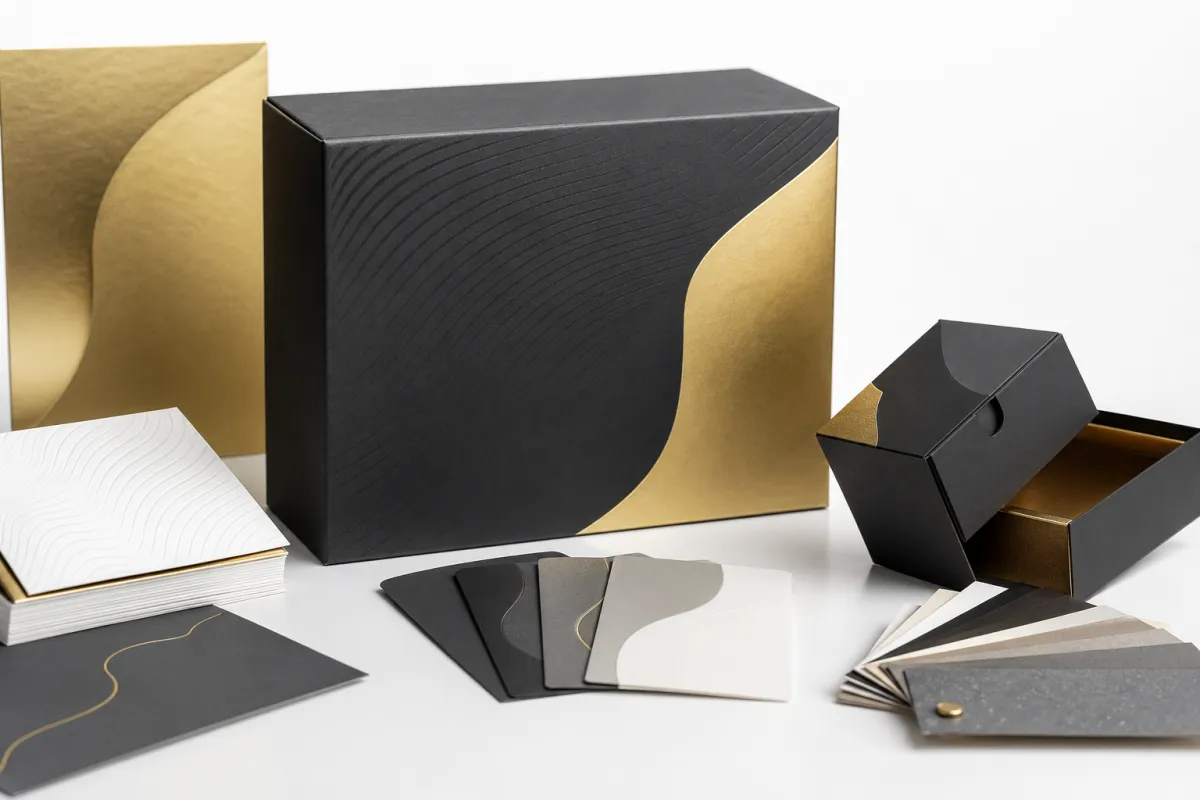
Most packaging mistakes are not dramatic. They are small, boring, and expensive. A board that curls after humidity exposure. A foil accent that looks premium in mockups but wrecks readability under store lighting. A dieline approved too fast with no room for glue, folds, or barcode placement. Packaging printing how to choose is mostly about catching those problems before they reach production.
In practice, packaging printing how to choose means aligning product type, shelf environment, legal requirements, and budget with the right print route. A lightweight retail box needs a different setup than a rigid shipping mailer. If the package has to survive transit, sit under bright retail lighting, and still carry compliant labeling, print method becomes a core decision, not a decorative one.
Teams usually get stuck because design and production reward different things. Designers chase full-bleed art and rich finishes. Production teams watch ink coverage, registration risk, drying time, and how the board behaves once it is creased. Packaging printing how to choose means understanding both sides before either one locks in a decision that is painful to reverse.
"A beautiful box that fails in transit is not premium. It is just expensive proof that nobody checked the specs."
You can make this decision repeatable. Packaging printing how to choose narrows to six points: method, material, finish, cost, timeline, and proofing workflow. Compare suppliers against those six points and the difference between a capable printer and a paper-pushing sales team becomes pretty obvious, pretty fast.
Branded packaging carries the same pressure. A logo does not protect a brand if the color shifts from lot to lot, the surface scuffs in shipping, or the fold crushes the front panel. A smart choice keeps brand impact high while the package survives its actual life. Nobody shares photos of boxes that only looked good in the studio.
For buyers who are still building a process, use this rule first: evaluate packaging printing how to choose by failure mode. Identify what could break during storage, shipping, shelf display, and daily handling. Then choose method, board, and finish that lower those risks without torching margin.
How do you choose packaging printing without guesswork?
Start with the package's job, not the design file. Packaging printing how to choose gets easier when you answer three questions first: what must the product survive, what should the buyer feel, and what does the budget actually allow. That short list clears a lot of fog.
From there, compare print method, board or substrate, finish, and quantity together. Digital printing is usually better for short runs and versioned SKUs. Offset printing makes more sense when consistency and unit economics matter at scale. Corrugated packaging, folding cartons, and Premium Retail Boxes all behave differently, so one "best" option rarely exists. Packaging printing how to choose is about fit, not fantasy.
If you want a fast starting point, use this order:
- Define product risk and handling conditions.
- Lock the structure and dieline.
- Choose print method based on quantity and color needs.
- Match finish to brand goals and durability.
- Request a proof or sample before full production.
That sequence keeps packaging printing how to choose tied to production reality. It also makes supplier comparisons cleaner, which helps a lot when quote sheets start leaving out the awkward bits.
How Packaging Printing Works: From File Upload to Finished Box in Simple Terms
Packaging printing how to choose gets a lot less mysterious once you see the actual workflow. It is not "send file, receive boxes." The real flow runs through prepress checks, setup, proofing, production, finishing, and final inspection. Each stage either protects the job or quietly sets it up to fail.
- Prepress review: The file is checked for bleed, resolution, dieline fit, font consistency, and color mode.
- Setup: The printer configures plates for offset printing or prepares the digital press based on run size and graphics.
- Proofing: You approve a digital or physical proof to verify color, layout, and compliance.
- Production: Sheets or rolls move through printing, cutting, folding, and assembly.
- Finishing: Lamination, spot UV, foil, embossing, die cutting, and glue are applied here.
- Inspection: The supplier checks registration, color consistency, cutting accuracy, and defects before packing.
That sequence looks straightforward, but the real risk sits where design handoff meets production logic. A carton can look perfect on screen and then fail once the dieline is applied, ink density is tested, or board thickness changes fold behavior. Packaging printing how to choose means knowing where those handoffs can break and testing them on purpose instead of hoping for the best. Hope is not a production plan.
Technical details matter sooner than most teams expect. Raster assets usually need around 300 dpi at final size. Color profiles have to match the print environment, or the proof looks fine and the job still misses the mark. Trapping, bleed, and safe zones prevent white slivers and cutoffs that only show up after trimming. Complex die-cut geometry shrinks margin for error and raises the risk of rework.
Glue, folds, and panel count matter just as much. A clean folding carton is easier to print and fold than a design with awkward tuck closures, nested sleeves, and heavy embellishment. The more moving parts a structure has, the more packaging printing how to choose has to prioritize production discipline instead of pure visual ambition. That is the line between a clean commercial package and a headache with a nicer font.
If sourcing or sustainability are part of the brief, verify the material direction early. The FSC framework helps with paper traceability, but it does not replace mechanical testing of structure and finish. Recycled board, virgin fiber, and coated art paper all behave differently on press and once stacked for shipping. I cannot promise a foil-stamped sleeve is recyclable just because the board has a nice certificate attached to it. Real-world recycling depends on local facilities and the full material stack.
For more technical vocabulary and standards context, the Packaging Alliance has practical references. That kind of source keeps packaging printing how to choose grounded in actual process language instead of marketing fluff.
Before production starts, use a tight checkpoint list:
- Is the artwork print-ready at final size?
- Do the fold lines and glue areas match the intended structure?
- Can the substrate carry the required strength, tactile feel, and finish?
- Are barcodes, warnings, and ingredient details placed for scan reliability?
- Will the package survive stacking, shipping, and store handling without shape or print failure?
Key Factors That Decide Whether Your Packaging Printing Choice Is Right
Packaging printing how to choose starts with substrate. The material has to fit the product, environment, and positioning you are promising customers. A food carton that needs grease resistance and moisture tolerance asks for a different board than a cosmetic sleeve sitting on a dry shelf. Electronics packaging adds another layer: crush resistance, dimensional fit, and transit protection.
Board type affects both aesthetics and performance. Lightweight folding cartons work well for retail packages when product weight is low. Corrugated inserts and mailers are stronger bets for impact-prone shipments. Coated art paper improves image clarity, while uncoated stock feels more natural and can suit an eco-minded or minimal brand identity. If a premium look is non-negotiable, make sure the surface can actually carry it without turning into a scratch magnet after the first customer opens the box.
Finish selection is where a lot of brands overspend. Matte can read refined but reduce contrast. Gloss lifts contrast but shows scuffs under heavy handling. Soft-touch delivers perceived quality, but it wears faster on packages that get touched a lot. Foil and embossing can create visual weight, yet too much can clutter the design and complicate the run. Packaging printing how to choose is about selecting what supports the message, not stacking every effect from the sample board.
Print method is a separate decision layer. Digital printing is effective for short runs, variable data, and frequent SKU updates. Offset printing usually wins when consistency and per-unit cost matter at scale. Flexo is often stronger for corrugated and high-volume formats, with setup and appearance characteristics that differ from sheet-fed options. Compare methods by actual suitability, not habit or whatever the sales deck happened to say.
Sustainability claims need to match behavior. Ask if the board is FSC-certified, whether inks and coatings support your environmental goals, and whether finish choices damage recycling performance. Recyclability depends on the total structure and material stack, not one label line. Packaging printing how to choose gets stronger when storytelling and measurable performance are kept separate.
Use this brand-first filter before narrowing options:
- Does the audience expect premium, economical, technical, or natural packaging?
- Is the package viewed from three meters in a store, or from arm's length in an online unboxing?
- Will the package be handled often, shipped globally, or stored for long periods?
- Is color consistency more critical than tactile finish for your campaign?
- Does structure need to signal luxury, speed, or sustainable intent?
If all five answers are "premium," that still does not mean foil everywhere. A clean structure, controlled color, and one deliberate finish often outperform five decorative layers. That is the difference between packaging that looks considered and packaging that looks like somebody got carried away at the sample desk.
If you are checking supplier capability, connect print route to production reality. The Manufacturing Capabilities page helps map whether a supplier handles finishing, die cutting, and assembly internally or sends the job all over town. That matters when packaging printing how to choose depends on reliability, not a nice-looking brochure.
Packaging Printing How to Choose: Cost, Pricing, and Budget Traps to Avoid
Packaging printing how to choose often gets flattened into unit price, and then everybody acts surprised when the real bill shows up. A low quote is only useful if it includes quantity, finish, revision policy, and freight assumptions. Shift one of those inputs and the bargain evaporates.
Cost is a system, not one number. Setup can include prepress time, plates, and file processing. Revisions cost money and time once art loops begin. Ink coverage drives material usage and press time. Substrate can swing budget quickly, from basic stock to premium board or coated specialty paper. Finishing adds another layer, especially for soft-touch, embossing, foil, or complex die cutting. Freight can erase a "cheap" quote faster than you think.
A better way to compare options is to test expected output rather than only headline price. Packaging printing how to choose depends on format size, color coverage, and finishing complexity. A price that works for a small mailer does not apply cleanly to a heavy retail carton. Treating them as the same is where budgets split open.
| Method | Best Fit | Setup Cost | Typical Unit Economics | Main Tradeoff |
|---|---|---|---|---|
| Digital printing | Short runs, fast samples, versioned SKUs | Low to moderate | Higher per unit, often best below mid-volume orders | Fast and flexible, but not always the cheapest at scale |
| Offset printing | Mid to high volumes, tight color consistency | Moderate to high | Often lower per unit once volume rises enough | Better economics at scale, but slower setup |
| Flexo printing | Corrugated, larger repeat jobs, high-volume work | Moderate | Efficient for repeat production with simple graphics | Great for scale, less ideal for ultra-premium detail |
| Specialty finishing add-ons | Premium retail packaging and branded packaging | Added per feature | Raises unit cost noticeably | Looks strong, but can wreck margin if overused |
Unit economics still fool teams. A supplier may offer lower per-unit pricing for 10,000 pieces, but if the minimum order quantity exceeds your real need, you will pay more in carrying cost, tied-up cash, and disposal risk. Packaging printing how to choose should be based on total landed cost, not one shiny line in a quote.
Hidden charges hide in the details. Proof fees rise with each revision round. Additional handling for rush jobs can spike unexpectedly. International freight may add customs handling time and cost. Poor sheet nesting can increase waste in die-cut layouts. Small-looking choices in layout efficiency can turn into real production waste.
Vendor quotes become useful only when costs are separated. Ask for clear line items on:
- Setup and prepress fees
- Quantity breaks and minimum order size
- Material grade and board thickness
- Finish upgrades and embellishment charges
- Proofing, sampling, and rush handling
- Freight, packaging, and delivery terms
A practical internal benchmark uses three quote levels. A "good" baseline can include standard board, digital printing, and no extras. A "better" option adds stronger board and matte lamination. A "best" case may include foil or embossing where it supports actual positioning. Packaging printing how to choose becomes much easier to defend when upgrades are compared against results instead of vibes.
Packaging Printing Process and Timeline: Where Delays Actually Happen
Packaging printing how to choose is also a timing decision. A route that looks efficient on paper can still miss a launch if approvals stall. The fastest printer in the room cannot rescue a moving target, especially if late file changes keep showing up like unpaid taxes.
A realistic timeline flows through brief and dieline lock, design freeze, prepress approval, proofing, production, finishing, and quality inspection. Short digital jobs run quickly when files are complete. Complex offset runs with foil, embossing, or premium coatings take longer because setup and finishing are heavier. A complex Custom Printed Boxes order can feel slow even when the supplier is actually on schedule.
The biggest delay drivers are painfully predictable. Late artwork edits come first. Color mismatch between proof and output comes right behind. If proof review fails, the process resets. Legal approvals can also pause work for regulated categories like food, supplements, and sensitive consumer claims. A printer can only move as fast as the slowest approver in the chain. That sounds rude, but it is just math.
"The best timeline plan is the one that assumes at least one revision cycle, because real details always surface late."
Digital short runs usually move fastest because setup is lighter and changes are easier to absorb. Large offset batches are slower but usually cheaper when volume fits. Premium foil, blind embossing, spot UV, and complex die cutting all add operations and QC time. Every finishing choice should be checked against the launch date before it is approved. A visually sharp finish is nice; a finish that pushes the release window is just expensive delay.
For shipping-sensitive programs, practical testing matters. If cartons are stack-prone, vibration-prone, or climate-sensitive, request testing aligned with ISTA methods. A structure that passes visual checks can still fail after compression, drops, or humid storage. That gap is where packaging printing how to choose goes sideways for first-time buyers.
Use this sequencing to avoid most timeline drag:
- Lock structure and measurements before polishing artwork details.
- Approve functional elements first: copy, barcode, legal warnings, and panel order.
- Finalize visual treatment and production specs after functional correctness is stable.
That order is strict for a reason. If graphics move ahead of structure, rework usually follows. Structural mistakes are painful to repair and expensive to hide, especially once the box shape is already part of the campaign plan.
Step-by-Step Guide to Packaging Printing How to Choose With Less Guessing
Packaging printing how to choose gets cleaner when you move from browsing samples to scoring decisions. This framework cuts through design noise and keeps attention on constraints that actually affect production.
Step 1: Define the product constraints
Start with weight, moisture risk, storage temperature, shipping distance, and handling frequency. A powder cosmetic box does not behave like a bottle carton. A battery-powered accessory does not face the same risks as a small food serving pack. As exposure increases, structure and finish requirements rise. This is the first filter in packaging printing how to choose.
Step 2: Define the visual goal
Clarify the intended look from shelf distance and hand-level distance. Decide whether the pack needs to feel clinical, playful, premium, technical, or sustainable first. Match that position to the method that can consistently produce it. Digital printing supports fast iteration and variable content. Offset supports stable color and texture across scale. Packaging printing how to choose becomes much easier when visual goals are tied to process capability instead of a mood board somebody made before lunch.
Step 3: Score the vendor options
Build a scoring sheet with your budget cap, minimum reorder size, turnaround expectations, finish capability, proofing method, and quality tolerance. Ask each supplier for the same spec. Otherwise you are comparing different requests and pretending they are equal. If structure and process need grounding, the Custom Packaging Products section can help connect your requirement to real packaging formats instead of a random sample gallery.
Use a scoring lens that exposes tradeoffs:
- Cost: Does the quote fit your real landed budget?
- Speed: Can the supplier meet launch timing while preserving review windows?
- Quality: Can the print method hold the detail your design needs?
- Fit: Does structure support product protection and distribution?
- Repeatability: Will the same spec pass again on the next run?
Step 4: Test before full commitment
Request a small proof, a production mock, or a short-run sample in real usage conditions. Test with the actual filling environment. Stack packages. Ship one through the same path it will follow in the field. Open it like the customer will open it. Packaging printing how to choose becomes real here, not theoretical.
Use a simple test protocol: one proof for color and layout, one mockup on final substrate, one handling test after packing and closure. That is not overkill. It is the fastest way to avoid approving on faith and pretending a screen image is a physical object.
If your team needs deeper support in production planning, the Manufacturing Capabilities page helps connect creative requirements to tooling, finishing, and assembly limits. Packaging printing how to choose is easier when a supplier explains process limits in plain language instead of hiding behind jargon.
Common Mistakes and Expert Tips for Packaging Printing Choices
Packaging printing how to choose falls apart fast when teams stop questioning assumptions. A polished screen mockup can seduce approval. A competitor's finish can trigger imitation without context. A low quote can make people feel like the decision is already done. Those are shortcuts, not strategy.
The first recurring mistake is treating a digital mockup as proof. Screens can hide coating behavior, ink density, and texture. The second is copying another brand's finish without evaluating your own handling profile. A foil treatment that works on premium candles can look noisy on a small supplement carton. The third is underestimating transit stress. A shelf display that stays in one store tolerates different wear than a product that moves through three carriers and sits in a hot distribution center.
Overdesign is another persistent problem. Too many effects, too many layers, and too many decorative calls often destroy clarity. Negative space is not wasted. It improves legibility, folding tolerance, and stacking behavior. In packaging printing how to choose, a restrained dieline and consistent printing can outperform a catalog of gimmicks. Clean usually wins. Fancy is optional.
Practical habits that reduce risk:
- Request tolerance notes on color drift, registration range, and board curl risk.
- Ask for side-by-side sample comparisons instead of isolated approvals.
- Fix version control early so legal, operations, and marketing do not edit in parallel.
- Validate barcode location for real scanning conditions, especially in busy retail or warehousing.
- Verify finish compatibility with adhesive, fold memory, and readability requirements.
Supplier communication is a strong quality signal. If a supplier cannot explain tradeoffs clearly, they are probably selling options, not outcomes. Strong partners can tell you why a finish raises cost, how substrate changes lead time, and why a tiny design edit creates risk in tooling or assembly.
Honesty beats hype. A seller who admits a spec is possible but risky gives useful information. A seller who promises everything without mentioning tolerance and scrap risk usually creates problems later. Packaging printing how to choose should be a controlled method, not a blind bet.
Conclusion: Packaging Printing How to Choose with a Real Action Plan
Packaging printing how to choose stops feeling random when the decision expands beyond visual preference and evaluates product, material, method, finish, cost, and timeline together. The right answer protects the product, supports your brand promise, and still survives the budget once hidden costs are counted.
A practical path starts with three priorities: protection, budget, and launch date. Next, request three comparable quotes built on the same technical spec so pricing differences actually mean something. Then lock the approval calendar early and keep everyone in the loop. If anything is uncertain, sample before scaling. Packaging printing how to choose should not jump from concept to full production because somebody is impatient.
Before placing an order, confirm:
- Final proof sign-off
- Finish confirmation
- Quantity lock
- Reprint policy in writing
- Contingency stock timing
This checklist keeps decisions visible when momentum drops and projects stretch across reorder cycles. A gut-led choice may look bold once; a documented approach keeps working when SKUs grow, suppliers change, and volume increases. That is what builds repeatable packaging quality and stronger packaging performance over time.
If you want the shortest rule, use this one: packaging printing how to choose should end with a spec sheet, a sample review, and a documented reason for the selected route. If the sample looks right but the quote leaves out the real extras, the spec is not finished yet. Build the scorecard, gather supplier data, and review the physical sample before anyone signs off on volume. That is the whole trick, and it is boring for a reason: boring is cheaper than reprinting 10,000 boxes.
What is the fastest way to do packaging printing how to choose for a new brand launch?
Start with five non-negotiables: product protection, shelf life, required quantity, budget ceiling, and launch date. Shortlist methods by structural compatibility first, then compare digital printing and offset printing once the package form is fixed. Build review windows for proofs before purchase, because packaging printing how to choose gets messy when last-minute revisions arrive and no one has time to look at them properly.
How do you choose between digital and offset in packaging printing how to choose decisions?
Use digital printing for short runs, quick turnarounds, and frequent version updates. Use offset printing for larger volumes, tighter consistency, and lower per-unit cost once setup is absorbed. Compare both options with setup fees and proofing included so the unit price does not hide expensive process items.
How does packaging printing how to choose affect pricing, and which costs are usually missing from quotes?
Request a full cost breakdown including setup, die-cut revisions, color corrections, substrate grade, and finish upgrades. Common omissions include extra proof rounds, rush handling, special freight packaging, and late rework fees. Ask for a final all-in total for your exact quantity so packaging printing how to choose does not turn into a surprise invoice.
What packaging printing timeline should I expect when I am evaluating options?
Map proofing and review windows first, because those stages usually consume the most time. Small digital jobs can move in days, while complex die-cut designs and specialty finishing can stretch into weeks. Work backward from launch, then add room for at least one revision cycle so packaging printing how to choose stays under control.
What is the biggest packaging printing mistake that ruins packaging printing how to choose outcomes?
The biggest mistake is approving from a single sample image without a physical package under realistic handling and light conditions. The second is optimizing for looks while ignoring function. Prevent both by requiring physical mockups and a realistic usage test in your actual fill and distribution environment before committing full volume.


