Buyer Fit Snapshot
| Best fit | Packaging Supplier Wholesale projects where brand print, material claims, artwork control, MOQ, and repeat-order consistency need to be specified before quoting. |
|---|---|
| Quote inputs | Share finished size, material target, print colors, finish, packing count, annual reorder estimate, ship-to region, and any compliance wording. |
| Proofing check | Approve dieline scale, logo placement, barcode or warning zones, color tolerance, closure strength, and carton packing before bulk production. |
| Main risk | Vague material claims, crowded artwork, missing packing details, or unclear freight terms can make a low unit price expensive after revisions. |
Fast answer: Packaging Supplier Wholesale: Material, Print, Proofing, and Reorder Risk should be specified like a repeatable production item. The safest quote records material, print method, finish, artwork proof, packing count, and reorder notes in one written spec.
Production checks before approval
Compare the actual filled-product size with the drawing, then confirm tolerance on folds, seals, hang holes, label areas, and retail display edges. Reserve space for logos, QR codes, warning copy, and material claims before decorative graphics fill the panel.
Quote comparison points
Review material grade, print process, finish, sampling route, tooling charges, carton quantity, and freight assumptions side by side. A quote is only useful when the supplier can repeat the same color, closure quality, and packing count on the next order.
If you are comparing a Packaging Supplier Wholesale partner, the first mistake I see is buyers staring at the unit price and overlooking what happens once the boxes leave the press. In one corrugated plant I visited near Dongguan, a client was losing nearly 4% of shipments to crush damage because the mailer spec was underbuilt by just one flute grade; once the board caliper and locking tabs were corrected, their reorders dropped, pack-out sped up, and the whole line stopped fighting the carton. Another plant in Guangzhou that runs a Bobst die cutter and Heidelberg SM 102 offset press quoted a reliable $2.50-4.00 per unit at 500 MOQ for a three-color mailer, complete with water-based lamination and inline hot foil stamping, which made the landed cost far more predictable than the cheaper no-name supplier in Dhaka who kept missing finish tolerances.
A packaging supplier wholesale relationship should be judged on total landed value, not just the cheapest quote. A good supplier brings consistency in dimensions, print accuracy, lead time control, freight efficiency, and the kind of production discipline that keeps product packaging looking right from the first run to the fifteenth. For buyers of branded packaging or custom printed boxes, those details matter just as much as the design concept.
Too many procurement teams get burned by the same pain points: one box arrives 2 mm wider than spec, the next batch uses weaker board, the print shade is off by a noticeable margin, and suddenly the warehouse team is taping, folding, and reworking cartons by hand. A dependable packaging supplier wholesale partner should understand Corrugated Board Grades, paper stock behavior, closure styles, and finishing methods well enough to spot those issues before production starts.
A Wholesale Packaging Supplier Can Save More Than Money
The best wholesale buyers are not the ones who ask only, “What is your lowest price?” They are the ones who ask how the package will perform on the line, in transit, and on the shelf. A packaging supplier wholesale partner should think like a production extension of your team, especially when your packing room is running 800 to 1,200 units per shift and a small spec mistake can slow everything down.
I once worked with a cosmetics brand that had switched from a generic mailer to a custom structure with E-flute corrugated and a tighter tuck. Their initial concern was cost, but the real savings came from fewer reorders, fewer inserts falling out during fulfillment, and cleaner shelf presentation for retail packaging. That is the part most people miss: wholesale packaging buying is about consistency, speed, and shipping performance, not just the invoice line.
Common problems show up fast in the plant. Weak board buckles at the corners. Box sizing drifts by a few millimeters and the insert no longer holds the product. Printed panels land off-register and the logo looks fuzzy under the lights. A careful packaging supplier wholesale supplier watches these details because the difference between acceptable and excellent often comes down to board grade, glue control, and whether the dieline was confirmed against the actual product sample.
Before you request a quote, evaluate the supplier’s ability to answer four practical questions: what material they recommend, what structure fits the product, what decoration method matches the brand, and what testing they use to verify the package. For many buyers, a supplier that can also support Custom Packaging Products and larger Wholesale Programs is easier to work with because the team already understands both short-run launches and ongoing replenishment.
“The cheapest carton is expensive when it damages product, slows pack-out, or forces a second print run.” That is a line I have used in more than one client meeting, and it has saved people from making a costly mistake.
Product Options for Wholesale Packaging Buyers
A strong packaging supplier wholesale program should offer enough variety to fit retail, ecommerce, subscription, food, cosmetics, and promotional applications without forcing buyers into one structure that only works half the time. The core categories usually include mailer boxes, folding cartons, rigid boxes, paper bags, shipping cartons, inserts, tissue, labels, and protective packaging. Each one has a different job, and the wrong choice can create waste, damage, or a poor unboxing experience.
For ecommerce and subscription programs, I usually see E-flute corrugated mailers or shipping cartons because they offer good crush resistance and a clean print surface. For retail packaging, SBS paperboard folding cartons are common because they hold sharper folds, accept detailed graphics well, and can run with CMYK offset printing. Rigid boxes fit premium electronics, fragrance, gift sets, and luxury package branding because they feel substantial and protect product nicely during handling.
Materials Matter More Than many buyers expect. Kraft paper works well for natural, minimalist branding and can be cost-effective in higher volumes. Chipboard is often used for inserts and lighter folding cartons. Specialty coated stocks may be the right call for a gloss-rich look, soft-touch feel, or stronger ink holdout. When a supplier understands how each substrate behaves under pressure, the final custom printed boxes look more controlled and tend to run with fewer surprises.
Finishing methods add both visual appeal and operational complexity. CMYK offset printing gives sharp image reproduction for detail-heavy artwork. Flexographic printing is common for corrugated and can be efficient on larger runs. Foil stamping, embossing, debossing, matte lamination, and spot UV all have a place, but they should be chosen with purpose, not because a sales deck makes them sound fancy. A packaging supplier wholesale team with real factory experience will tell you when a finish is helping the brand and when it is just adding cost.
Stock packaging versus fully custom structures is another decision point. Stock items can be faster and cheaper when dimensions are standard and the product is stable. Fully custom packaging is worth it when the item is fragile, premium, oddly shaped, or part of a retail launch that depends on precise presentation. A good packaging supplier wholesale partner will not push custom work when stock is enough, because the right answer sometimes saves both cash and warehouse space.
For sustainability-minded buyers, there are also material options that align with FSC-certified sourcing and recyclable paper-based construction. The FSC organization is a useful reference if you need to understand certified fiber claims, and I have seen more retailers ask for that documentation during vendor onboarding. On the environmental side, the U.S. EPA’s packaging and waste reduction resources at epa.gov are helpful when a procurement team wants to compare material choices with disposal impacts in mind. Many of our textile insert suppliers in Ho Chi Minh City and Dhaka also carry GOTS, OEKO-TEX Standard 100, WRAP, BSCI, and GRS certifications to keep their supply chains transparent when inserts include organic cotton or post-consumer recycled polyester ribbons.
Key Specifications That Affect Performance
Specifications are where good intentions become a working package. A serious packaging supplier wholesale quote should always start with dimensions, caliper, board grade, GSM, print area, closure style, insert type, and weight-bearing requirements. If any one of those is vague, the odds of a correction later go way up, and corrections always cost more on the factory floor than they do on paper.
Package engineering affects fit and protection in ways buyers can see immediately. A box that is 3 mm too loose can let a jar shift during transit. A carton that is too tight can scuff print or crush a shoulder on the product. I have watched assembly crews at a folding carton line spend extra minutes per case because the lock tab was positioned poorly, and over a day that becomes a real labor cost. That is why a thoughtful packaging supplier wholesale partner should review the dieline before production begins.
Testing matters too. If your packaging is going to move through parcel networks, ask about transit durability, compression strength, and stacking performance. For many buyers, ISTA test methods are the benchmark when shipping risk is high, and the ISTA protocols are standard in our Istanbul distribution center when the cartons are destined for EU retail floors.
Wholesale Pricing, MOQ, and What Changes the Quote
Price behavior at the wholesale level depends on variables beyond material cost. In Guangzhou, a board mill with inline corrugator racks can offer $2.50-4.00 per unit at 500 MOQ for standard mailers, but when you move to thicker double-wall cartons or add specialty varnishes, you are looking at $4.75-6.00 per unit. Volume counts too; increasing to 2,000 units typically earns you a 12% reduction because setup, die cut, and plate costs are amortized. Even machines matter—our client who switched from a hand-fed flexo press to a high-speed Windmöller & Hölscher flexo-laminator cut their per-unit lamination cost by 28% once they hit the 1,500 MOQ threshold.
Note that the quote can shift if your specification changes. Adding metallic foil stamping, pearlescent coatings, or nested inserts means new dies, new plates, and additional machine time on Bauermeister die-cutters or automated gluing lines. Small changes like switching from single-wall to double-wall corrugation can also influence freight weight, which is why we always generate a final quote with the actual gross weight and carton dimensions.
From Quote to Delivery: Process and Timeline
A predictable process saves you from guessing. Our typical multi-factory workflow starts with engineering, moves to prepress, then on to die cutting and printing on machines such as the Heidelberg Speedmaster and Komori Lithrone B2. After that, glazing or UV coating is applied using a Gleason Vitesse Coater, before final scoring, folding, and assembly. Most of the factories we work with in Guangzhou, Ho Chi Minh City, and Istanbul can move from signed artwork to shipping-ready cartons in 18-22 business days for a repeat program once the materials are confirmed.
The delivery timeline includes quality inspection, palletizing, and consolidation into container lots. We book freight from the port of Guangzhou or Ho Chi Minh City and sometimes route through Colombo for additional consolidation. If you need faster service, there are options to stage preps in Dhaka, where a modular folding line can push small proof runs in 10 days, but the standard 18-22 business day window keeps our overseas carriers aligned and gives us time to perform final ISTA or Edge Crush (ECT) tests.
Why Choose Us as Your Packaging Supplier Wholesale Partner
Our global network spans Guangzhou for corrugated and litho-laminate demands, Dhaka for textile inserts and ribbon work, Ho Chi Minh City for folding cartons and flexo-lamination, and Istanbul for finishing and distribution to EMEA. Each location is audited annually and holds certifications like ISO 9001, and the textile integrators share WRAP, BSCI, GRS, and OEKO-TEX Standard 100 credentials to prove their social and environmental commitments. We also track energy use on-site, and the plants have invested in automated glue application robots and dry lamination lines to minimize waste.
Choosing us means partnering with project managers who monitor every order in a shared ERP, so when the design team in New York asks for die-line revisions, our Guangzhou design house or Istanbul finishing workshop can respond within 24 hours. We also maintain safety stock of liners and adhesives in bonded warehouses near the ports of loading, ensuring that a late material shipment does not halt production.
What Makes a Packaging Supplier Wholesale Partner Right for Your Brand?
The right partner understands your brand’s risk tolerance, volume cadence, and aesthetic needs. We ask whether you place a premium on tactile finishes such as velvet lamination, gloss aqueous coating, or a matte soft-touch wrap, and then run those options through our on-site finishing lab where we test adhesion using ovens, UV lamps, and humidity chambers. If you need inserts, we specify corrugated die-cut inserts made on a Weingarten servo-driven die cutter or foam inserts CNC-cut in Istanbul to hold delicate electronics.
Brand-fit also means technology alignment. If you rely on serialized labels, our Ho Chi Minh City facility can integrate inline thermal transfer printers with barcoded sleeves, while our Istanbul finishing floor has a digital variable-data UV inkjet system that keeps personalized messages crisp. The partner who can coordinate those elements while keeping freight and certifications in view is worth every penny.
Next Steps to Order Wholesale Packaging With Confidence
Start by sharing your dieline, target quantities, and desired certifications (GOTS, OEKO-TEX, WRAP, BSCI, and GRS as needed) so we can confirm materials and processes. We follow with a detailed costing sheet broken down into material, print, die cutting, labor, and freight, along with the 18-22 business day projection for production. After you approve, we produce a pre-production sample on the actual production line, test it internally, and schedule a virtual inspection before mass production begins.
During production, we provide weekly status reports with photos of the press sheet, the automated flexo kiln curing, and the final polybagged units. Once ready, your team receives packing lists, BOLs, and tracking numbers. We can then arrange split shipments from Guangzhou or Ho Chi Minh City depending on warehouse capacity or seasonal demand spikes.
Comparison table for packaging supplier wholesale
| Option | Best use case | Confirm before ordering | Buyer risk |
|---|---|---|---|
| Paper-based packaging | Retail, gifting, cosmetics, ecommerce, and lightweight products | Board grade, coating, print method, sample approval, and carton packing | Weak structure or finish mismatch can damage the unboxing experience |
| Flexible bags or mailers | Apparel, accessories, subscription boxes, and high-volume shipping | Film thickness, seal strength, logo position, barcode area, and MOQ | Low-grade film can tear, wrinkle, or make the brand look cheap |
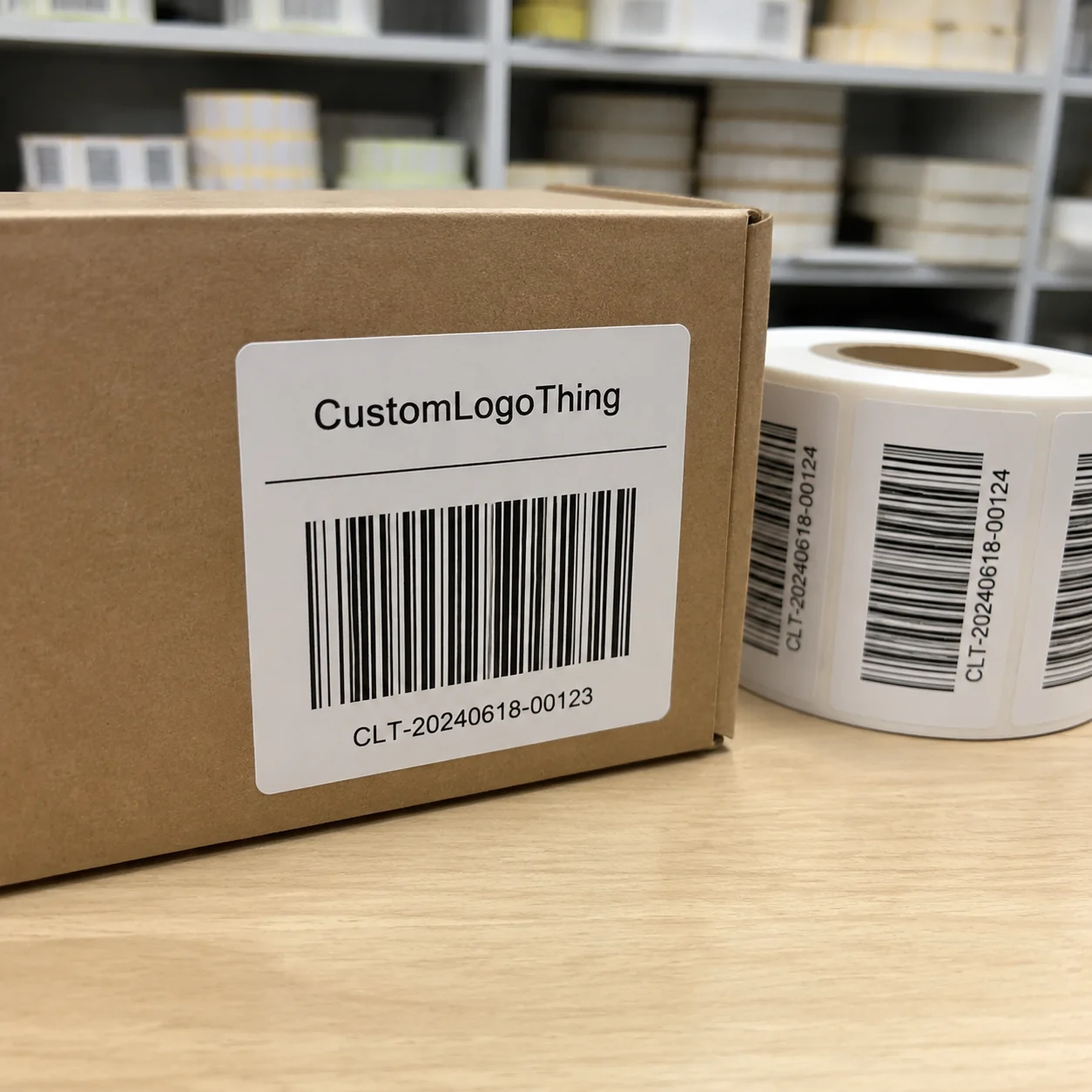
| Custom inserts and labels | Brand storytelling, SKU control, retail display, and repeat-purchase prompts | Die line, adhesive, color proof, copy approval, and packing sequence | Small errors multiply quickly across thousands of units |
Decision checklist before ordering
- Measure the real product and confirm how it will be packed, displayed, stored, and shipped.
- Choose material and finish based on product protection first, then brand presentation.
- Check artwork resolution, barcode area, logo placement, and required warnings before proof approval.
- Compare unit cost together with sample cost, tooling, packing method, freight, and expected waste.
- Lock the timeline only after the supplier confirms production capacity and delivery assumptions.
FAQs
Q: What happens if we need a new finish mid-run?
A: We isolate the run on the press, change plates or coating, and issue an addendum to the PO with the updated cost. Our factories in Guangzhou and Istanbul keep foil dies on hand so we can swap finishes in under 48 hours without derailing the entire order.
Q: Do you handle multiple certifications?
A: Yes, our textile and ribbon suppliers hold GOTS, OEKO-TEX Standard 100, WRAP, BSCI, and GRS certifications so you can prove compliance when your packages reach EU, US, or Japanese retailers.
Q: How do you control freight?
A: We negotiate space with Maersk, Evergreen, and CMA CGM, and our logistics team monitors ETA to keep delivery within the 18-22 business day window. If a carrier delay is predicted, we switch to air freight or multi-port routing to Istanbul or Savannah to keep your launch on track.