The best personalized boat tote bags carry real weight, hold their shape, and make the brand look intentional. That is harder to do than it sounds, because the bag has to balance structure, decoration, Cost, and Lead Time.
A boat tote is a structured, open-top carryall with a wide base, upright sides, and handles that hold up to regular use. Buyers choose it for marinas, resorts, boutiques, conferences, and corporate programs because the format is familiar and useful. The decision usually comes down to the right combination of size, fabric, decoration, and finish.
A weak tote with a loud logo still looks weak. A well-built tote with restrained branding usually ages better, because people keep using it after the event is over.
Personalized boat tote bags: what they are and where they work
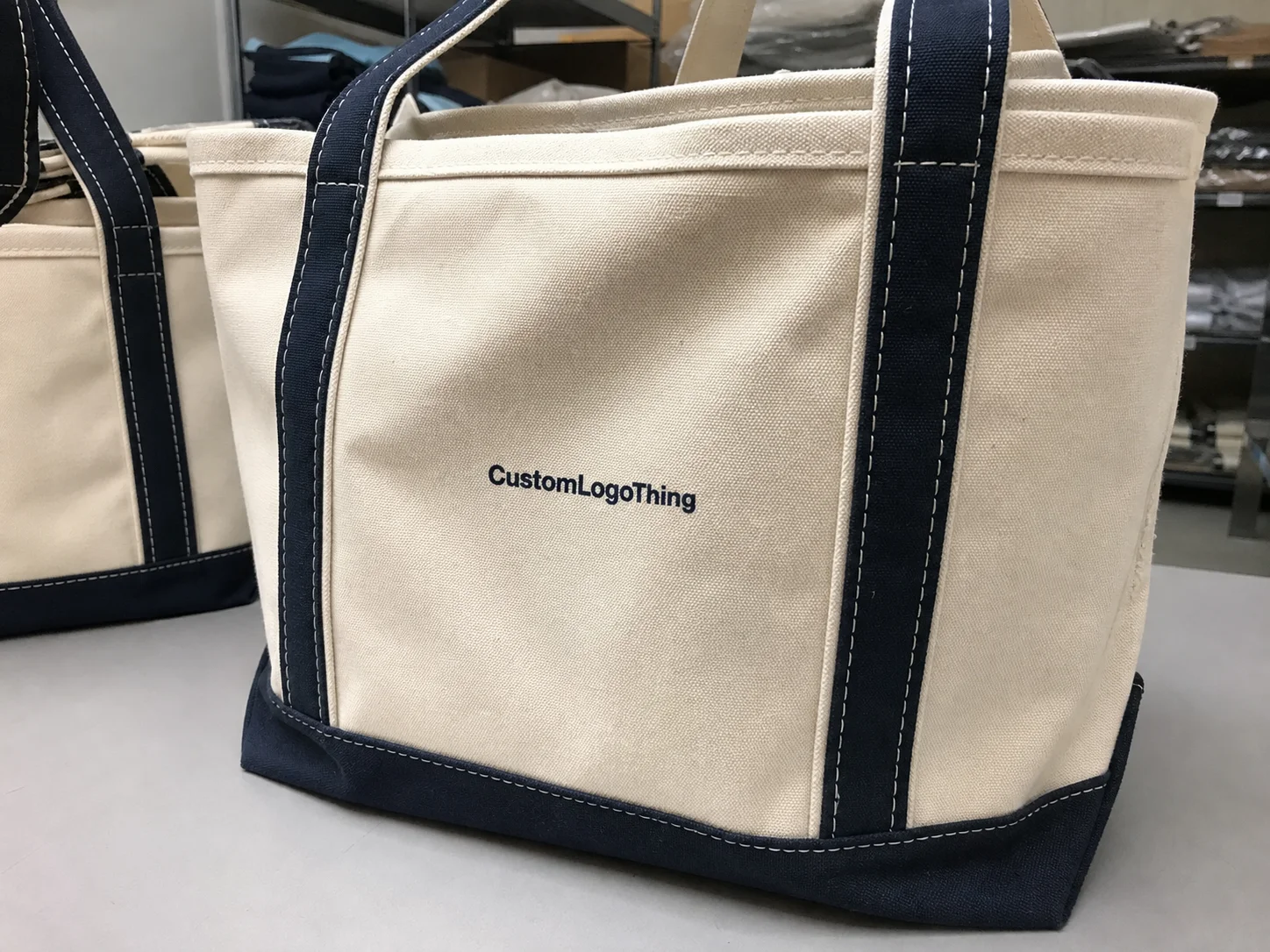
A boat tote is useful because the shape does practical work. The open top makes loading easy, the gusset adds depth, and the flat bottom helps the bag stand instead of collapsing. That makes it a fit for folders, product samples, retail purchases, water bottles, and travel items.
That is why the format shows up in so many settings. Marinas use it for shop purchases and welcome gifts. Resorts use it for guest programs and retail counters. Boutiques can sell it as merchandise rather than give it away. Corporate teams use it because it feels more substantial than a standard promo bag.
The right spec depends on where the bag will live. A casual giveaway can use softer construction. A bag meant for retail, gifting, or resale usually needs more structure and cleaner finishing so it looks deliberate on a shelf and in photos.
Decoration also changes the result. Heavy canvas can support a crisp one-color screen print. Thin material with a dense logo can look cheap fast. Fabric texture, weave density, and seam placement all affect how the artwork reads, so the bag should be treated as a finished product first and a print surface second.
The lowest unit price can be the most expensive outcome if the handles stretch, the seams pull, or the logo fades after a few uses.
- Marinas and resorts: practical for gift shops, guest welcome items, and branded retail.
- Retail and boutiques: useful as a sellable merchandise piece or premium shopping bag.
- Corporate programs: works for onboarding, sales meetings, incentive gifts, and internal events.
- Associations and events: good for brochures, handouts, water bottles, and product samples.
How customization works from artwork to approval
The process is straightforward when the input is clean. Pick the bag style, confirm the size and fabric, send the artwork, review the proof, approve the layout, then move into production. Most delays come from vague specs or rushed approvals.
Suppliers usually need a vector logo, color references if brand colors matter, the print placement, quantity, ship date, and any extras such as a hang tag, polybag, or insert card. If the logo has thin strokes or small type, call that out early. Those details can disappear on textured canvas or shift on coated materials.
Proofing is where preventable mistakes get caught. A logo too close to a seam, type that is too small after scaling, a dark print on a dark bag, or a handle that covers the art are all common problems. A useful proof should show the actual bag shape, not just artwork floating on a blank panel.
Most orders use one of three decoration paths:
- Screen printing for bold graphics, simple logos, and higher-volume runs.
- Embroidery for a stitched finish that feels more tactile on heavier fabrics.
- Label or patch applications for a cleaner retail look or more tailored finish.
The decoration method has to match the substrate. A thick embroidered patch can look premium on a sturdy tote and clumsy on a flimsy one. A large multicolor print can look sharp on a flat panel and messy if the fabric warps around the seams. Good customization respects the bag instead of fighting it.
Pricing, minimums, and what drives unit cost
Unit price is driven by material cost, construction quality, decoration method, color count, quantity, and setup. The bag itself is only part of the number. Artwork prep, digitizing, screens, proofing, and packing can matter more than buyers expect, especially at lower quantities.
Small orders usually cost more per unit because the fixed steps do not shrink much. A 100-piece run still needs art setup, proofing, and production coordination. A 1,000-piece run spreads those fixed costs across more bags, which is why the per-unit price usually improves at scale.
Quotes also differ in what they include. Some look low until freight, revision fees, or rush charges appear. Others package more into the base price. Compare apples to apples or the cheapest line item can turn into the most expensive invoice.
| Option | Typical unit range at 500 pieces | Feel and structure | Best use | Notes |
|---|---|---|---|---|
| Cotton canvas with one-color screen print | $2.60-$4.20 | Classic, sturdy, familiar in hand | Retail bags, gifting, events | Good value when the goal is a clean logo and a natural look |
| Heavyweight canvas with reinforced handles | $3.80-$6.50 | More structure, better shelf presence | Premium merch, member programs | Worth the extra cost if the bag will be reused often |
| Poly-cotton blend with print | $2.00-$3.40 | Moderate structure, lighter feel | Large giveaways, promotional events | Useful when the budget matters more than a heavy hand feel |
| Woven polypropylene or similar reusable substrate | $0.90-$1.60 | Lightweight, economical, functional | High-volume promotions | Best for utility. Less useful if the bag needs a premium impression |
Those ranges are directional, not a quote. A wider handle, boxed corners, lining, or a second print location can move cost faster than the logo itself. If the bag needs to feel retail-ready, budget for that directly instead of assuming the cheapest construction will read as premium later.
For personalized boat tote bags used as client gifts or retail merchandise, spending a little more on structure and less on decorative noise is often the better decision. People notice how a tote feels in the hand before they study the artwork.
Materials and construction details that change the final bag
Material choice changes the way the tote behaves. Cotton canvas gives a natural look and holds print well. Poly-cotton blends can reduce cost while keeping a decent hand feel. Woven polypropylene works for high-volume utility programs where durability matters more than a luxury finish.
Fabric weight is one of the first things worth confirming. Heavier canvas generally stands better, resists distortion, and feels more substantial. Lighter fabric may be fine for a giveaway, but it often sags faster and makes the bag look less refined.
Construction details are where weak bags show themselves. Check the bottom seams, side gussets, handle attachment points, and any binding around the top edge. If the tote needs to carry bottles, catalogs, or product samples, ask about reinforcement, stitch density, and whether the base is double-stitched or boxed.
Size should be chosen for use, not just appearance. A smaller tote can feel neat and retail-friendly, but the logo may get crowded. A larger tote gives the art more room, but a tiny logo can disappear. A 14 x 16 inch bag does not behave like a 20 x 14 inch bag, even with the same mark and same fabric.
Surface behavior also changes the result. Coarse weaves soften detail. Dark fabrics can dull light inks if the print system is not matched correctly. Coated materials can change the feel of embroidery and patches. These are normal production constraints, not defects, but they need to be accounted for before approval.
Packaging details matter when the tote is part of a larger gift kit. Paper inserts, hang tags, and outer cartons should be checked for consistency with the bag spec. For shipping protocols around kits or bundled products, references from ISTA are useful when transit durability matters. For paper components, FSC certification can support responsible sourcing language, but only if the paper chain is documented.
Quality checks that keep the order from going sideways
Good tote orders are built on checks. Start with the sample or proof against the real use case. A tote can look fine flat on a screen and still fail once seams, handles, and bottom shape are all in play.
Verify the measurements first: bag width, height, gusset depth, and handle drop. Then check the construction details. Are the handles stitched evenly? Is the seam allowance consistent? Does the bag stand up on its own? Does the print sit where it was approved?
For print quality, inspect edge sharpness, color density, and registration. On canvas, a little texture is normal. Fuzzy art, patchy fill, or obvious misalignment is not. If the brand color needs precision, ask for a controlled match and approve it against the fabric, not a white monitor background.
It helps to ask for a finished sample photo before the run ships. That catches crooked placement, uneven handle length, off-center branding, or a print that disappears against the fabric. Once 1,000 bags are packed, fixes get slow and expensive.
The useful question is not whether the bag looks good in isolation. It is whether it will still look good after a few weeks of use. Some bags hold up. Some fray, flatten, or stretch at the handles quickly. The difference is usually in the construction, not the logo.
Timeline, production steps, and lead time expectations
The production path is usually predictable: quote, art setup, proof approval, material sourcing, decoration, finishing, quality check, packing, and shipment. The steps are ordinary. The problems start when artwork arrives late or the spec changes midstream.
Simple stock orders move faster than custom builds. A one-color screen print on an available bag can turn around on a practical schedule if the proof is approved quickly and the material is in stock. Embroidery, specialty materials, extra labels, or custom packaging add time because each step creates another checkpoint.
The more custom the bag, the more margin the schedule needs. Rush timelines shrink options, reduce proof rounds, limit material choices, and leave less room to catch small art issues before production starts. If the delivery date matters, state it early and ask for a realistic schedule.
Buyers make their own lives easier when they lock a few things early:
- Final logo files before pricing requests go out.
- The ship-to address and receiving hours.
- Whether the order can ship in parts or must arrive together.
- Whether brand colors must be exact or just close.
Approval speed matters more than people think. One slow proof round can cost more time than the decoration itself. For personalized tote programs, a clean spec and a quick approval path often make the difference between a smooth order and a rush job.
Common mistakes that make the bags look cheap
Overcrowded artwork is the most common problem. A logo that feels tidy on a website mockup can become noisy once it is stretched across a tote with seams, handles, and a gusset. Too much text or too many colors usually makes the bag feel less confident, not more branded.
Low-resolution files cause another set of problems. Web graphics are not print-ready art. Once the design hits fabric, jagged edges, soft type, and poor contrast show up quickly. The same issue appears with color choices. A pale print on a pale bag can look elegant in a mockup and nearly disappear in real use.
Picking the lowest-cost construction without checking the build is a fast way to weaken the brand impression. Thin handles, loose stitching, and a bag body that collapses under light use all make the item feel disposable. If the tote is supposed to represent a premium offer, the construction has to support that claim.
Placement errors are easy to miss and hard to unsee. Printing too close to a seam warps the art. Centering without accounting for gusset depth can make the logo sit oddly. Oversized art can crowd the handles, while undersized art makes the brand look timid.
Skipping the proof is the fastest route to regret. Once bags are in circulation, every small mistake gets magnified because people carry them at eye level and reuse them in public. The proof is the cheapest place to catch a mistake. The warehouse floor is the most expensive.
Next steps: build a usable spec before requesting quotes
Before asking for pricing, define the use case in plain language. Is the bag going to a retail counter, a marina shop, a conference, or a client gift program? That answer does more to shape the right tote than any trend report or style board.
Build a simple spec sheet with the details a supplier actually needs:
- Target quantity.
- Bag size and preferred material.
- Logo placement and number of print colors.
- Deadline and shipping destination.
- Any extra finish, tag, or packaging requirement.
Ask for a proof every time. If the order matters, request a sample or finished-photo reference so you can judge structure, handle comfort, and print appearance before you commit. That extra step usually costs less than fixing the wrong run.
Compare quotes on more than unit cost. Check setup, revision limits, freight, and production timing side by side. A cleaner quote from a supplier who understands the job is often the better purchase, even if the base price is slightly higher. That is especially true for personalized boat tote bags that are meant to stay in use long after the original event ends.
What should I know before ordering personalized boat tote bags?
Start with the use case. A retail tote, an event giveaway, a marina merchandise bag, and a client gift all call for different materials and finishes. Confirm the size, decoration method, quantity, and deadline before you ask for pricing so the quote reflects the real job.
How do personalized boat tote bags usually get customized?
Most orders use screen printing for simple logos, embroidery for a stitched and more tactile feel, or label-based branding for a cleaner retail look. The best method depends on the fabric, the number of colors, and how durable the imprint needs to be in normal use.
What affects the price the most?
Quantity, material weight, and decoration complexity usually have the biggest effect on unit cost. Setup charges, extra print locations, rush turnaround, and special packaging can move the final number as well. A better-built bag often costs more up front, but it can carry more value in the hand.
How long does production usually take?
Timing depends on artwork approval speed, stock availability, and the decoration method selected. Simple runs can move quickly once the proof is approved, while custom sourcing or multi-step decoration adds time. Build the deadline into the quote request so the supplier can tell you whether standard or rush production is realistic.
Which size and material work best?
The best choice depends on what the bag must carry and how premium it should feel. Heavier fabrics and reinforced construction usually hold shape better and create a stronger brand impression. For most buyers, personalized boat tote bags work best when the size gives the artwork enough room to read clearly without making the bag feel oversized or cramped.