Personalized Cotton Tote Bags do a simple job well. They carry products, and they keep a brand visible after the transaction is over. That is the whole point. A paper bag disappears into the nearest bin. A decent cotton tote keeps moving through grocery trips, commutes, book runs, and errands until the print starts to outlast the packaging.
The catch is that not every tote order is built for real use. Some are too thin, too small, or decorated in a way that looks good on a proof and bad on fabric. The difference usually comes down to spec discipline. If the buyer knows how the bag will be used, the order is easier to price, easier to produce, and less likely to turn into a pile of complaints.
That is why the best tote purchases start with the use case, not the artwork. Retail packaging, event handouts, gift-with-purchase programs, and merch drops all need different constructions. A tote that works for folded apparel will not always hold boxed goods. A tote that looks premium at the counter may fail if the handles are weak or the print is too busy for the fabric.
Why Personalized Cotton Tote Bags Beat Disposable Giveaways
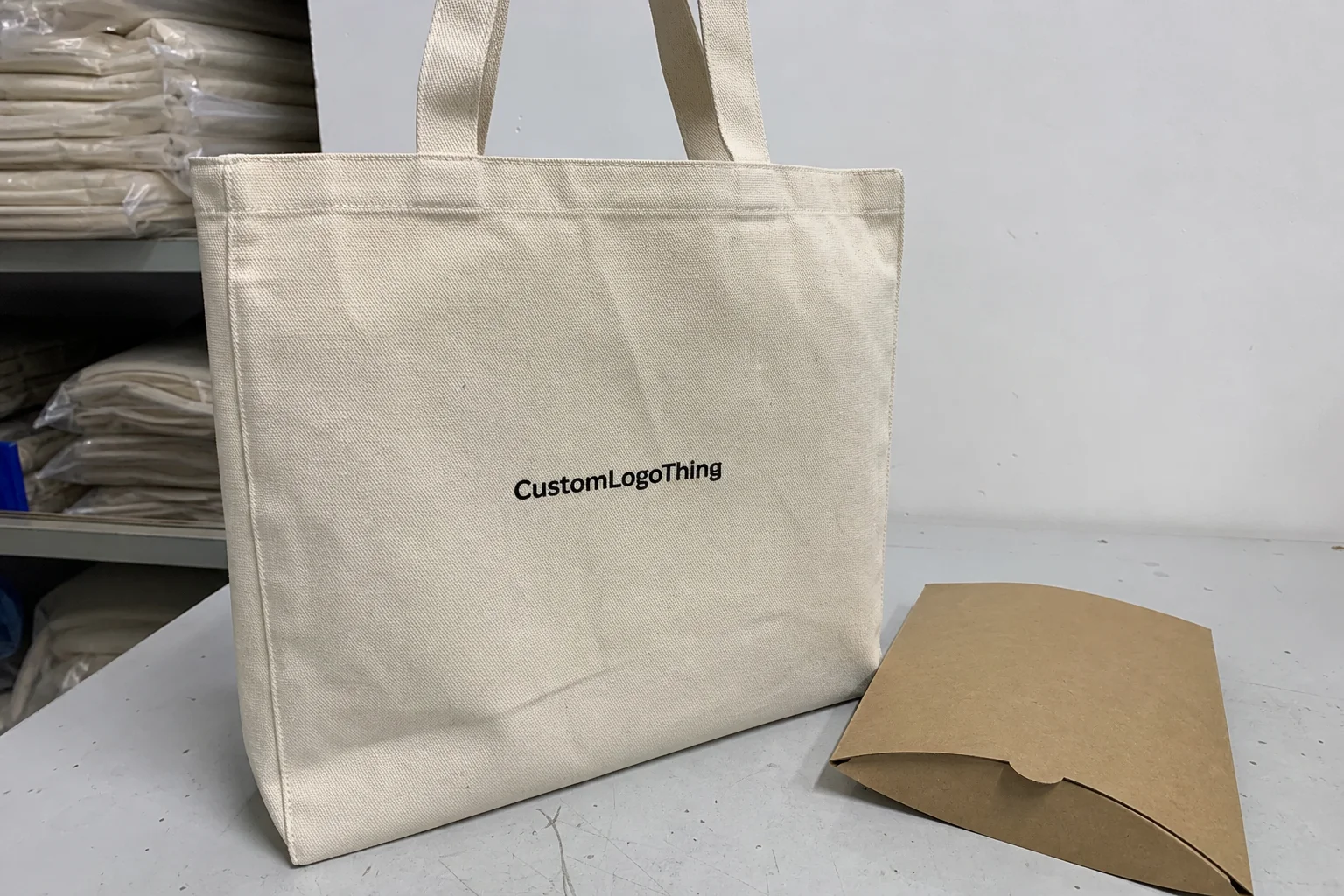
A disposable carrier is cheap because it is temporary. A reusable tote is more expensive because it has to survive repeated use. That extra cost is not waste. It is what creates a longer brand life. Personalized cotton tote bags usually outlast standard giveaway packaging by a wide margin, and the economics shift once the bag gets reused enough times.
That matters for two reasons. First, the brand impression extends far beyond the original handoff. Second, the tote starts to act like mobile media. People notice logos on bags in parking lots, on sidewalks, in office kitchens, and at checkout lines. A bag with a clean imprint can quietly do more than a stack of low-cost flyers ever will.
The real decision is not whether the tote is attractive. It is whether the buyer wants the lowest unit price or the lowest cost per useful impression. Those are not the same thing. A thin tote at a tiny price can be expensive if it gets torn, stored away, or thrown out after a single use. A better-made tote can justify a higher upfront cost if it stays in circulation.
Artwork quality plays a bigger role here than many buyers expect. Cotton has texture. That texture softens tiny details and makes weak contrast look worse. A simple one-color logo on natural cotton often looks sharper and more expensive than a crowded multicolor design that was never simplified for print. A tote is not a poster. The art needs to survive fabric, stitching, and real handling.
A reusable tote only pays off if people actually reuse it. That means the material, print, and handles have to hold up after the first day.
There is also a practical branding issue. A bag that feels flimsy cheapens the product inside it. A bag that feels solid improves the perceived value of the entire order. That is why buyers in retail, hospitality, and events keep coming back to personalized cotton tote bags. They are not magic. They are just one of the few packaging items people keep long enough to matter.
How the Cotton Tote Printing Process Works
The production flow is predictable, but only if the buyer gives clean input. It usually starts with artwork review, then file cleanup, proofing, print prep, production, inspection, and packing. Each stage has failure points. Most of them are avoidable.
Suppliers typically need a vector logo, exact bag size, print area, number of colors, and the decoration method. If the file is low resolution or the design contains fine strokes, transparency effects, or gradients, that needs to be reviewed before the job is approved. The screen or transfer can only reproduce so much. What looks crisp on a monitor can soften fast on cotton.
Different decoration methods serve different jobs:
| Decoration method | Best use | Typical setup | Cost behavior | Main watch-out |
|---|---|---|---|---|
| Screen print | Simple logos, one to three colors, larger runs | Screen prep, ink separation, press setup | Usually the best value at scale | Less suitable for photo detail and tiny type |
| Heat transfer | Small runs, detailed art, names or variable data | Lower upfront setup, more hand labor | Can be expensive per piece on larger orders | Durability depends on film quality and application accuracy |
| Embroidery | Premium branding on heavier totes | Digitizing and machine setup | Higher unit cost, especially with large logos | Dense stitching can distort lighter fabric |
Screen print usually wins on price and consistency for standard branding. Heat transfer helps when the art is complex or the quantity is too small to justify full screen setup. Embroidery gives a different feel altogether. It adds texture and a premium finish, but it also adds weight, stitch time, and potential fabric distortion. None of those methods is automatically best. The right choice depends on the tote's job, the print area, and how much wear the bag needs to take.
For buyers comparing packaging specs and print constraints, the Packaging Machinery Manufacturers Institute has useful general material context. It will not pick your tote for you, but it does help frame quality expectations.
Fabric Weight, Size, and Finish: The Specs That Change the Result
Fabric weight changes everything. A 4 oz tote is light and folds down easily. That makes it fine for handouts, lightweight inserts, and simple giveaway use. It also feels thin if the bag is expected to carry books, groceries, or boxed items. A 6 oz or 8 oz canvas has more structure and usually feels like a better retail product. Go heavier and the tote starts to behave more like a premium accessory than a disposable carrier.
Buyers often ask for "good quality" and leave it there. That is too vague to be useful. A better request is a target weight in ounces or GSM, plus the type of carry load. If the tote will hold apparel, the spec can be lighter. If it will hold bottles or hard goods, the build needs more body. The load should drive the fabric choice, not the other way around.
Size is another place where vague language causes trouble. A medium tote is often the safest starting point for retail because it fits shirts, books, and small boxed items without feeling oversized. Bigger totes are useful for bulky goods, but only if the gusset depth supports the pack-out. A shallow gusset can make the bag look broad on paper and awkward in use. Handle length matters too. Too short, and the tote rides too high. Too long, and it swings around or drags.
Finish details are not cosmetic trivia. They affect how the bag feels in the hand and how long it lasts. Natural cotton usually looks honest and straightforward. Dyed fabric can make the bag feel more tailored, though the color has to work with the print. Recycled content can support a sustainability claim, but only if the claim is documented correctly. Overstated green language invites problems. Reinforced seams, bar-tacked handles, and bound edges matter when the tote is meant to be reused.
- 4 oz to 5 oz: light giveaways and event handouts.
- 6 oz to 8 oz: general retail use, books, apparel, everyday carry.
- 10 oz and up: premium feel, heavier goods, stronger perceived value.
- Short handles: hand carry and lower-profile bags.
- Long handles: shoulder carry and better comfort for longer use.
- Deep gussets: boxed products, fuller pack-outs, better volume.
Pick the tote for the load first. Pick the print second. If the order goes the other way, the quote may look fine and the bag may still be wrong.
Shipping can affect the spec too. A tote that is packed flat and sent inside a larger product kit may need different cartonization than one that ships as a standalone item. Soft goods still get crushed, bent, and abraded in transit. If the order is part of a larger distribution program, ask how the bags are packed and whether the cartons hold up under normal freight handling. The ISTA standards are a sensible reference point for thinking about transit stress.
Cost, Pricing, MOQ, and What Shapes the Quote
Cost is usually shaped by five things: fabric weight, bag size, print colors, decoration area, and quantity. Shipping sits on top of that. Small runs cost more per unit because the setup work is spread over fewer bags. Larger runs lower the unit price, but the total spend rises. That is not a flaw in the quote. That is how production math works.
MOQ means minimum order quantity. It is the point where the supplier can cover setup, materials, and labor without losing money on the job. For first-time buyers, MOQ is often the friction point. A simple one-color tote may allow a lower MOQ. A complex print or stitched design usually pushes that number up. If the order is small, the unit price will climb. That is normal.
Here is the practical way to compare quotes without getting fooled by nice-looking totals:
| Quote variable | What changes | Typical price effect | Buyer response |
|---|---|---|---|
| Fabric weight | Material cost, structure, durability | Heavier fabric raises unit price | Match the weight to the actual load |
| Print colors | Setup complexity and ink passes | More colors usually cost more | Simplify the design if the brand allows it |
| Quantity | Setup spread across more pieces | Higher volume lowers unit cost | Compare breakpoints, not just one number |
| Rush timing | Scheduling and freight options | Rush fees can be significant | Separate deadline pressure from product choice |
For budget planning, simple cotton totes often land around $0.70 to $1.80 per unit at moderate volume. Premium canvas, heavier fabric, embroidery, or specialty printing can push that higher. Small quantities can climb fast because setup is not free. Freight can also move the total more than buyers expect, especially if the order is heavy or the delivery window is tight. A quote only means something if the same spec sheet is used across suppliers.
Ask for a price breakdown that shows material, decoration, setup, and shipping separately. Bundled pricing is not always suspicious, but it is harder to compare. If one supplier is far below the others, check the hidden variables first. The cheapest quote is often lighter fabric, fewer print colors, or a different production method dressed up as a bargain.
Production Steps and Turnaround: What Happens After Approval
Once the proof is approved, the job moves. Typical production includes print prep, printing or stitching, curing or drying, inspection, packing, and shipment. If the fabric is in stock and the artwork is clean, the run can move quickly. If either of those is off, the schedule slips. Artwork revisions are a common delay because they push the order back into review before production can start.
Lead time should be split into three parts: proof time, production time, and freight time. Buyers often hear one quoted number and assume it covers everything. It usually does not. A supplier might quote 7 to 10 business days for production, but that does not include file fixes, proof approval lag, or transit. If a delivery date matters, ask for a schedule that names each step. That makes the risk visible before the purchase order is sent.
For standard screen-printed personalized cotton tote bags, a reasonable planning window is often 12 to 15 business days after final proof approval. Embroidery, special finishes, or complicated layouts usually take longer. Large runs can also stretch the schedule even if the artwork is simple. Peak seasons make all of this slower. There is no shortcut around a crowded production queue.
Packing is easy to ignore and expensive to ignore badly. Carton count, bundle orientation, and labeling affect how the order arrives and how easily it can be distributed. If the totes are part of a larger retail kit or an event pack, the packing instructions need to be clear up front. Otherwise, the print may be correct and the delivery still lands in a mess.
Most preventable delays come from the proof stage. If the artwork is checked properly before approval, the rest of the job is usually much calmer.
That is why dated proof approval matters. It creates a clear start line. Without it, timeline conversations get blurry fast, and nobody benefits from that.
Common Mistakes That Make Tote Orders More Expensive
Bad artwork is the obvious one. Low-resolution files, unclear placement notes, and last-minute swaps all add cost. A production team can fix some things. They cannot guess what the buyer meant. Every extra revision adds time, and time turns into money.
Another mistake is designing the tote for the mockup instead of the job. A tiny logo may look refined on a presentation slide. It may also disappear on a textured cotton surface. A delicate print can work for a boutique gift bag and fail for an everyday carry tote. The design should match the actual usage, not just the brand deck.
Skipping physical samples causes problems too. A digital proof does not show how ink sits on fabric, how the color shifts on natural cotton, or whether the logo feels too close to the seam. These things are easy to miss until the first sample arrives. If the brand has strict color rules, this step matters even more. Cotton is not a flat white sheet. It has texture, absorbency, and small variations that change the print result.
Here is a practical checklist that avoids the usual mess:
- Confirm exact bag dimensions, not a vague size label.
- Specify fabric weight or GSM.
- Send vector artwork and brand color references.
- Limit print colors unless the extra colors are worth the cost.
- Check placement, spelling, and scale before approving the proof.
- Build transit time into the deadline from the start.
Clarity usually saves more money than hard bargaining. Clear specs reduce back-and-forth. Less back-and-forth means fewer delays, fewer revisions, and fewer chances for the order to drift away from the original plan.
Next Steps for Personalized Cotton Tote Bags
A useful quote starts with a usable brief. Include the bag size, fabric weight, handle length, print method, artwork file type, quantity, and delivery date. If the order is for retail, event use, or a kit, say that too. The same tote can be priced and built very differently depending on how it will be used. Generic requests get generic answers.
A proof or placement mockup should come next. If the supplier can provide a sample, even better. That shows how the art behaves on the actual fabric instead of on a screen. Compare quotes on the same spec sheet. If one price is far lower, check what was left out. Usually it is lighter fabric, fewer print colors, or a simpler process.
The simplest buying sequence is still the best one: define the use case, lock the spec, request a dated quote, review the proof, then approve production. That sequence does not remove every risk, but it cuts the usual avoidable ones down to size.
Personalized cotton tote bags are at their best when they feel ordinary in use and deliberate in construction. If they are built well, people keep them. If they are built badly, they get stuffed in a closet or tossed after the first event. There is not much middle ground.
How do personalized cotton tote bags compare with paper or polyester bags?
Cotton usually feels more premium and tends to be reused more often, which extends the life of the brand impression. Paper is often cheaper for short-term use, while polyester can make more sense if wash performance or different durability requirements matter more than a natural feel.
What size works best for personalized cotton tote bags used in retail?
A medium tote is often the most flexible choice because it fits apparel, books, and small boxed goods without feeling oversized. If the bag needs to carry bulkier products, ask about gusset depth and handle length instead of choosing by the outer dimensions alone.
What affects the price of personalized cotton tote bags the most?
Fabric weight, bag size, print colors, and order quantity are usually the biggest drivers. Setup fees, rush timing, and shipping can also change the final quote more than buyers expect, especially on smaller runs.
How long does production usually take after artwork approval?
Turnaround depends on the decoration method and order size, but proof approval is the point where the clock really starts. Ask suppliers to separate proof time, production time, and transit time so the deadline is realistic.
What artwork do suppliers usually need for a clean print?
Vector files are preferred because they stay sharp at any size and are easier to separate by color. Buyers should also provide exact placement, imprint size, and any brand color references before the proof stage so personalized cotton tote bags can move into production without avoidable revisions.