Personalized Fabric Labels are one of those small details that change how a product feels in the hand. A shirt, tote, baby blanket, or hoodie often looks unfinished until the label is sewn in, folded correctly, and readable at a glance; after that, it starts to feel like a branded product rather than a one-off piece.
That shift matters more than many first-time buyers expect. Labels carry brand identity, size information, care instructions, and sometimes fiber content or country-of-origin details, all in a space smaller than a business card. The challenge is not just making the label attractive. It has to survive wear, washing, and handling without irritating the customer or making the garment look cheap.
Why personalized fabric labels change how customers remember a brand
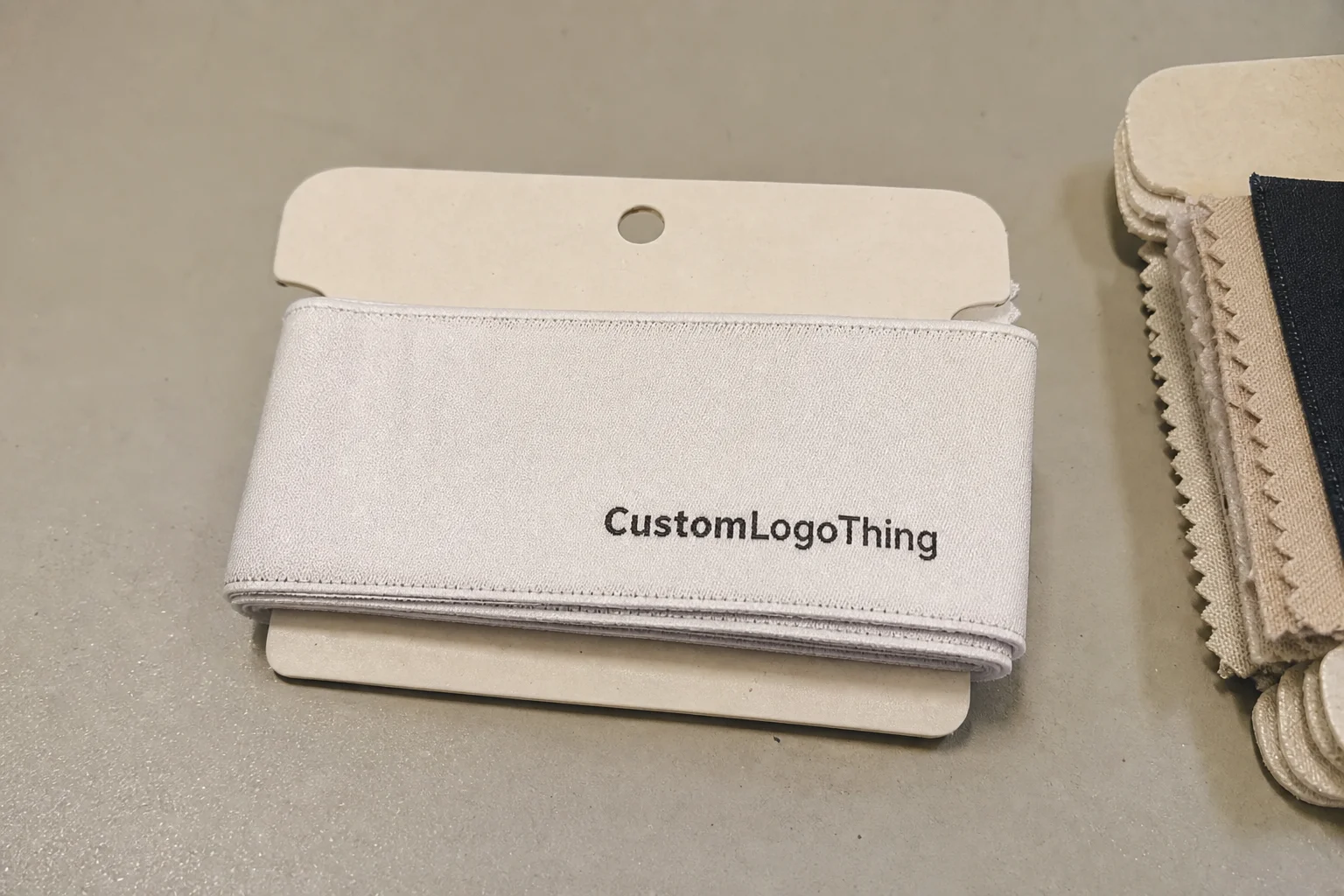
From a packaging buyer’s point of view, labels do more than identify a maker. They help the product feel finished, organized, and repeatable. A clean woven label on a garment line tells customers the brand pays attention to details, while a wrinkled tag or inconsistent placement can make the whole product feel less deliberate.
That’s partly because shoppers read consistency as competence. If one item in a line has a crisp sewn-in label and the next has a loose or badly placed tag, the entire collection feels less trustworthy. The garment itself may be excellent, but the presentation works against it.
Common label types include woven labels, printed satin labels, cotton labels, heat-transfer labels, and traditional sew-in tags. Each serves a different purpose. Woven labels feel durable and structured. Satin labels have a smoother face and suit softer garments. Cotton labels bring a natural texture. Heat-transfer options remove the scratch factor entirely, which is why they appear often in activewear and children’s apparel.
The right choice depends on the fabric, wash durability, brand style, and how the label will be attached. A label that feels right on a canvas bag can feel wrong on a fine knit. That is where many buyers get surprised: the label is not decoration alone, it is a functional component that has to live through laundering, abrasion, stretching, and repeated folding.
Practical rule: the best label is the one customers barely notice while wearing it, but immediately recognize when they see the brand again.
How custom clothing labels are made and finished
Most Custom Clothing Labels begin with artwork and then move into one of a few production paths. Woven labels are made by weaving colored threads into the label structure itself, which is why the design tends to hold up well over repeated laundering. Printed labels are usually created by printing ink or dye onto ribbon-like fabric such as satin, nylon, or cotton. After that, the labels may be cut, folded, sealed, and packaged for sewing or heat application.
The process sounds straightforward, but the final look depends heavily on finishing. A label can be produced as a center fold, end fold, straight cut, loop fold, or size flag label. Center-fold labels are commonly sewn into a seam. End-fold labels often sit neatly at a neckline or hem. Straight-cut versions are useful when the buyer wants to sew all sides into a seam or use them as an external branding tab. Loop folds wrap around an edge. Size flags are usually smaller and are often paired with a main brand label in apparel production.
Material changes the feel immediately. Damask weaving gives a tighter surface and better detail than a looser weave. Satin printing can look elegant, especially for fashion items, but satin is not always the best choice for heavy wear or frequent washing. Cotton has a softer, more natural appearance, though small text can be less sharp than on a woven label. For products worn close to the skin, softness may matter as much as branding.
Design setup is where many orders succeed or fail. A logo file should be clean, high resolution, and simplified enough to read at small size. Fine lines and tiny type can disappear once the label is scaled down to 1 inch or 1.5 inches. Thread color matching also matters, though exact reproduction is limited by the material and process. In practice, you are not buying a poster; you are buying a miniature production piece.
Finish options can include sealed edges, cut edges, adhesive backing for temporary placement, or heat-activated backing where the garment construction allows it. Some labels are meant to be sewn in only. Others can be ironed or heat pressed, but that depends on both the material and the fabric they sit on. If the garment is delicate, stretchy, or highly textured, sew-in construction usually gives better control.
Personalized fabric labels: cost, MOQ, and quote factors
Personalized fabric labels usually cost less per unit as quantity goes up, but pricing is not as simple as “more pieces equals cheaper labels.” The main drivers are material, size, fold style, color count, and artwork complexity. A simple one-color woven label in a standard size will usually price lower than a detailed full-color printed label with multiple folds and specialty finishing.
Minimum order quantity, or MOQ, is another place where first-time buyers need realistic expectations. Many custom label runs start around 100 to 500 pieces, sometimes more depending on the material and method. Lower quantities often carry a higher unit cost because setup work has to be spread across fewer labels. That does not make small orders a bad idea; it simply reflects the cost of sampling, programming, proofing, and machine time.
For planning purposes, many buyers see pricing move from about $0.08-$0.18 per label for simple higher-volume printed options, to roughly $0.15-$0.35 per label or more for woven labels, specialty folds, or small runs. Exact numbers vary by supplier, but those ranges help with early budgeting. Add samples, shipping, and rush charges, and the landed cost can shift quickly.
Multiple sizes or versions can also affect cost. If you need one brand label, one size label, and one care label in the same order, the setup math changes. The quote should clearly show whether artwork preparation, digital proofing, and physical samples are included. If the artwork has fine detail or the color match matters, request a proper quote rather than estimating from a posted tier.
| Label type | Typical strengths | Common price tendency | Best use case |
|---|---|---|---|
| Woven label | Durable, detailed, premium feel | Usually higher than printed | Apparel, bags, long-life products |
| Printed satin label | Smooth hand feel, good for branding text | Often budget-friendly | Soft garments, fashion pieces |
| Cotton label | Natural texture, artisan look | Mid-range, depending on finish | Handmade goods, natural brands |
| Heat-transfer label | Tagless comfort, clean interior | Varies by art and coverage | Sportswear, kidswear, fitted garments |
For broader packaging context, many buyers compare label spend against overall presentation cost, especially if they are coordinating hang tags and packaging from Custom Labels & Tags. That comparison is sensible. A product’s visual finish is usually the sum of several small parts, not one dramatic element.
Production steps and timeline for ordering labels
The usual workflow starts with artwork submission, then proofing, then production, then finishing, then shipping. It sounds clean on paper, but delays usually come from the same handful of places. If the logo file is unclear, the text is too small, or the buyer has not decided on fold style, the proof stage can drag longer than expected. A label supplier can move quickly only when the information is clear.
Typical production timing depends on label type and order size. Simple printed labels may move through production faster than woven labels with intricate detail. In many cases, a buyer should expect somewhere around 10-20 business days after proof approval, though urgent orders can be quicker if the construction is simple and the schedule is open. Sampling, if requested, adds time. That is normal.
Here is what tends to slow an order down:
- Missing or low-resolution artwork files
- Unclear dimensions or no finished size confirmation
- Color revisions after proofing begins
- Changing fold style or attachment method mid-order
- Waiting to confirm care text, fiber content, or size information
If you want the order to move faster, prepare a short spec sheet before asking for pricing. Include label width and height, the fold style, intended garment use, and whether the label will be sewn, ironed, or heat applied. If the brand is launching a collection, getting that information ready early can save days. A buyer who already knows the smallest garment size, the placement location, and the required text usually gets a cleaner proof on the first pass.
Some projects need a sample or strike-off before full production, especially if the label is central to the brand identity or if the artwork contains small text. That extra step can be worthwhile because it shows actual texture, color behavior, and readability. For apparel labels, testing against the garment material is a good habit, and for products that may face repeated laundering or shipping abrasion, standards like ISTA testing logic help buyers think more carefully about how the finished item will travel and wear.
How to choose the right label material, size, and finish
Label selection becomes easier once the material is matched to the product. Woven labels are often the safest choice for durability and crisp branding. Printed satin labels are strong candidates when the brand wants a smooth, elegant look or more room for care information. Cotton labels feel natural and handmade, which suits artisan goods. Heat-transfer labels work well when interior comfort matters more than visible stitching.
Size affects everything. A label that is too small can make the text unreadable, while one that is too large can feel bulky or interfere with the garment’s drape. For many brands, a label around 1 inch by 2 inches is a useful starting point, but that is not a rule. A baby garment may need smaller dimensions. A jacket or tote can usually take a larger mark. The smallest garment in the line should be the test piece, not the biggest one.
Finish matters just as much as size. Matte surfaces usually feel more understated and can reduce glare. A slight sheen may fit fashion or gift items better. Soft hand feel is valuable for anything worn close to the skin, especially knitwear and activewear. Edge sealing can keep fraying under control, while specific fold choices help the label sit correctly in a seam or on an outer edge.
Garment type should guide the decision:
- Children’s wear: prioritize softness, wash durability, and safe attachment methods.
- Activewear: choose tagless or low-bulk options that do not irritate the skin.
- Knitwear: avoid overly stiff labels that distort stretch fabrics.
- Outerwear: use stronger construction and clear branding that can stand up to repeated wear.
- Delicate fabrics: test sewing placement carefully so the label does not pucker the fabric.
Brand tone should guide the final look. A label should look intentional, not generic. A minimalist brand might use a small monochrome woven tab. A playful children’s line may want brighter color and a softer printed finish. A natural goods brand may prefer cotton with a slightly raw texture. The label should support the product story, not fight it.
Common mistakes when ordering custom textile labels
The most common mistake is asking too much of a tiny label. If the artwork has a detailed crest, six lines of text, and a tiny care statement, the final piece may become muddy or unreadable once it is woven or printed at scale. Simpler usually works better. Clean logo marks, short product names, and legible type deliver a stronger result.
Another frequent issue is choosing the wrong attachment method for the fabric. A thick sewn label may feel fine on denim but annoying on lightweight knitwear. Heat application may perform well on some surfaces and poorly on others. The label has to match the garment’s construction and wash cycle, not just the designer’s preference.
Some brands skip care or size information because they think the label is only for branding. That can create extra work later. If the label is going to function as a retail component, it may need practical details too. Depending on the market, buyers may need fiber content, washing guidance, or sizing. For product categories that move through formal supply chains, compliance expectations can matter, and that is not something to guess on.
Proof approval is another place where errors slip through. A buyer may approve too fast and miss a spelling issue, a flipped fold, or a color that looks different than expected. Always check orientation, text order, and line breaks. A proof is not just a picture; it is the map for production.
Finally, price-only shopping can backfire. The cheapest option may use a material that feels scratchy, prints too lightly, or frays after washing. A label should be judged on durability, softness, wash resistance, and appearance together. The EPA’s textile sustainability guidance is a useful reminder that material choices have a lifecycle, and product decisions should account for what happens after the first sale, not only at checkout.
Expert tips for getting better results from your label order
Use high-contrast artwork whenever possible. If the background and logo are too close in tone, the label can lose definition once it is sewn in and viewed at arm’s length. Thin fonts also tend to disappear faster than people expect, especially after laundering. Stronger type, cleaner icons, and fewer lines of text usually produce a better finished piece.
Order a sample or at least review a digital proof carefully when the label is central to the brand launch. That small step can save an entire run. If the label is part of a retail presentation, it should be checked against the garment, the hang tag, and any outer packaging so the whole product feels coordinated. Buyers often think of labels as a standalone item, but the strongest result usually comes from the combined presentation.
A useful habit is to test dimensions against the smallest garment in the range. What works on an adult hoodie may overwhelm a child’s tee. Also, keep a repeatable spec sheet for future reorders: size, fold style, material, thread or print colors, and attachment method. That way, when the line grows or reorders happen later, the look stays consistent.
Best practice: keep the label simple enough to survive sewing, washing, and everyday handling, while still showing enough of the brand to be recognized instantly.
If sustainability is part of the brand promise, ask whether the material is compatible with responsible sourcing goals. For example, FSC is relevant for paper-based packaging decisions, and that broader mindset often leads teams to make better finishing choices across the whole product set. Labels are not paper, of course, but the thinking is similar: choose materials that fit the brand story and the use case.
Next steps for placing an order that fits your product
The cleanest way to order custom clothing labels is to make a short decision list before asking for pricing: choose the label type, confirm the garment use case, gather the artwork, decide quantity, and settle on the attachment method. That sequence keeps the conversation focused and helps the supplier quote the right thing the first time.
A simple checklist goes a long way:
- Label type: woven, printed satin, cotton, or heat-transfer
- Finished size: width and height in inches or millimeters
- Fold style: center fold, end fold, straight cut, loop fold, or size flag
- Brand text: logo, name, size, care, or fiber information
- Quantity: enough for this run and a possible reorder
- Attachment method: sew-in, iron-on, heat press, or specialty backing
Ask for a sample when the label is visible on the front of the product, when the artwork is unusually detailed, or when the garment fabric is delicate. A digital proof may be enough for simpler orders, especially if you already know the dimensions and the layout well. For a first-time line, a sample is often cheap insurance.
Then compare the cost tiers, confirm the timeline, and send final artwork files in the requested format. If the brand is growing, it is smart to think ahead to future reorders so the same label specs can be repeated without changes. That kind of consistency helps the product line feel established, which is exactly what good packaging details are meant to do.
Personalized fabric labels should support the garment, not distract from it. The strongest results come from matching material, finish, and function to the product, so the piece feels complete the moment the label goes in.
FAQ
What are personalized fabric labels used for on clothing?
They identify the brand and help garments feel finished and professional. They can also carry size, care, content, and country-of-origin information, depending on the product and market. Different materials are used based on comfort, wash durability, and the look you want.
Which type of custom fabric label lasts the longest?
Woven labels are often the most durable because the design is built into the fabric structure. Printed labels can still last well if the material and print method are matched correctly. Durability also depends on how the label is sewn in and what garment it is attached to.
How much do personalized fabric labels usually cost?
Price depends on quantity, size, material, fold style, and artwork complexity. Lower quantities usually cost more per label because setup expenses are spread across fewer pieces. Shipping, sampling, and rush production can also affect the final price.
How long does production usually take for custom clothing labels?
Timing depends on the label type, proof approval speed, and order size. Simple printed labels may move faster than highly detailed woven or specialty labels. Artwork revisions and last-minute changes are the most common cause of delays.
Can I order personalized fabric labels with my logo and care instructions?
Yes, many labels can include both branding and functional text if the size allows it. Small labels work best with short, legible copy and clean artwork. If the label must fit a lot of information, it may be better to use two labels or a larger format.


