Personalized gatorade bottle labels look small on a table, but they do a lot of work. They turn a standard sports drink into something that feels organized, intentional, and tied to the moment. That matters whether the bottles are lined up for a school tournament, set out for a sponsor table, or tucked into welcome bags for a wedding weekend.
The packaging truth is simple: a tiny identifier changes perception faster than most people expect. Before anyone opens the bottle, the label has already communicated identity, care, and a level of planning that plain packaging cannot deliver. For event buyers, that first impression is often part of the value.
The real challenge is not picking a nice design. It is choosing the right stock, adhesive, size, and production timeline so the finished bottles still look good after refrigeration, handling, and a few hours in a cooler. That is where a lot of orders either succeed quietly or start peeling at the edges.
What Personalized Bottle Labels Actually Do for Events
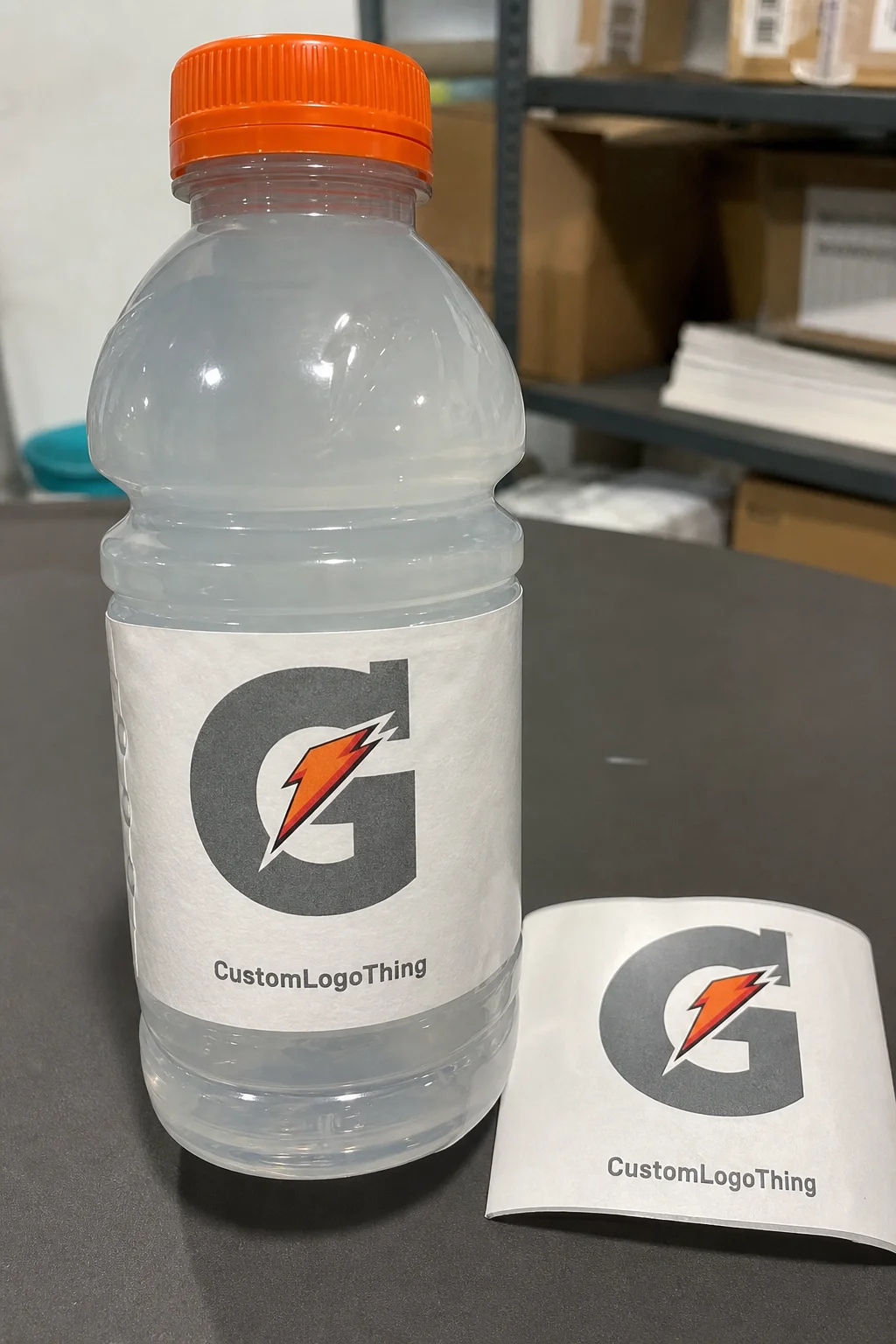
At their simplest, personalized gatorade bottle labels are custom-printed labels made to fit sports drink bottles. They may wrap around the bottle, cover an existing brand label, or sit as a removable front panel depending on the use case. Most are produced for short-term events, so the goal is not permanent packaging. The goal is presentation that survives the event.
That distinction matters. Decorative labels can look polished on a dry table for a few hours, while event labels have to withstand condensation, refrigeration, transport, and repeated pickup. If you have ever seen a corner curl in an ice chest, you know how quickly an otherwise good design starts to look improvised.
These labels show up in a wide range of settings because they solve a practical branding problem. They are common for:
- Team tournaments and sideline hydration stations
- School fundraisers and graduation tables
- Fitness studios and sports performance events
- Wedding welcome bags and rehearsal dinners
- Corporate activations and trade-show refreshment areas
- Race day hydration points and community runs
The payoff is straightforward. Branded drink packaging helps organizers create a more deliberate guest experience, and it gives sponsors or hosts one more visible surface for recognition. A bottle sitting in front of a guest can do quiet branding work for hours without calling attention to itself.
From a packaging buyer’s point of view, the smartest use of Custom Bottle Labels is often not more decoration. It is better coordination. Matching the bottle to the event palette, logo, or team identity makes the whole setup feel planned instead of pieced together at the last minute.
Practical takeaway: if the bottle is part of the event presentation, the label is part of the event branding. Treat it that way.
How the Labeling Process and Timeline Usually Works
The ordering flow is usually straightforward, but the details matter. Most projects move through five stages: choose the bottle size, submit artwork, approve the proof, print and finish, then ship. The buyers who have the smoothest experience are the ones who know their bottle dimensions before asking for a quote.
That sounds basic, yet it is where many orders go sideways. A Label That Fits one sports drink bottle may not fit another, even if both look standard on the shelf. Bottle diameter, taper, shoulder shape, and usable label area all affect placement. If the bottle will be chilled, that should be mentioned early, because refrigeration changes both adhesive choice and material selection.
Proofing is where most issues get caught. A digital mockup helps confirm label size, edge margins, text legibility, and logo placement before anything is printed. Color can also shift slightly between screen and press. That is normal. What matters is making sure the proof reflects the real production intent, not just the concept.
Lead time depends on more than print speed. A simple order with one design and print-ready artwork can move quickly. Multiple versions, names, player numbers, or QR codes add setup time. Shipping distance matters too, especially if the labels need to arrive before a fixed event setup day.
For reference, many custom label jobs move faster when artwork is supplied in a clean vector format or high-resolution PDF, and when the label dimensions are already confirmed. If the art needs reconstruction or the bottle spec is vague, expect the timeline to stretch. That is not a problem so much as a reality of production setup.
Rush orders are rarely only about print capacity. They are often about approval speed. If the proof sits for two days because someone is chasing a logo file or waiting on spelling confirmation, the production clock does not really start. That is why good scheduling starts with the event date and works backward from there.
Build in time for proof review, one possible revision, and shipping buffer. It is not glamorous, but it is the difference between bottles arriving ready to label and bottles arriving with no margin for correction.
Material, Adhesive, and Fit Factors That Decide Performance
The material choice determines whether the label looks polished for the whole event or starts failing halfway through setup. Paper labels are common for dry, short-use applications. Waterproof film, polypropylene, and similar synthetic stocks are better for cold bottles and high-moisture conditions. The practical difference is easy to understand: one is fine on a table, the other is built for a cooler.
Adhesive choice is just as important. A removable adhesive can be useful for short-term promotional use when the label needs to come off cleanly. A stronger adhesive is better when the bottles will sit in ice, be handled repeatedly, or spend time in humid conditions. There is no single best option. It depends on how the bottle will be used and how long the label needs to stay attractive.
Fit is where packaging people get picky, and for good reason. A label that is too wide will wrinkle at the overlap. A label that is too tall may hit a shoulder curve or taper. Even a good design can look awkward if the seam lands in the wrong place. That is why bottle measurements matter more than brand assumptions.
Finish affects both appearance and performance. A matte finish often reads as softer and more premium. Gloss can deliver brighter color and stronger visual pop. Waterproof film usually performs better in wet or chilled environments, especially if the bottle is handled by many people throughout the day.
Print quality is the final layer. High-resolution artwork, accurate color management, and enough contrast between text and background all affect how the label feels in hand. A clean logo with crisp edges will always look more intentional than a busy design that fights the bottle shape.
Here is a practical comparison of common options:
| Material / Finish | Best for | Typical performance | General cost impact |
|---|---|---|---|
| Paper label | Dry indoor events, short display periods | Good appearance, weaker around condensation | Lowest |
| Gloss film | Branded events, bright presentation | Better moisture resistance, vivid color | Moderate |
| Matte film | Premium look, softer visual style | Strong overall, less glare under lights | Moderate to higher |
| Waterproof synthetic stock | Ice buckets, sports, outdoor use | Best resistance to moisture and handling | Higher |
For buyers comparing options, the key question is simple: do you need something that only looks good, or something that stays put through real event conditions? That answer usually points to the right stock immediately.
If you are designing labels alongside other branded pieces, it can help to think about them the way you would think about apparel identifiers. Our Custom Labels & Tags category follows the same logic: the material has to match the use case, not just the mockup.
For production and sustainability references, the packaging industry often looks to groups like the Association for Packaging and Processing Technologies and material standards guidance from FSC when paper sourcing matters. Different projects call for different priorities, and not every event label needs the same level of performance or certification.
What Personalized Gatorade Bottle Labels Cost and Why
Pricing usually depends on quantity, size, material, finish, and whether every label is identical or variable. The artwork itself rarely drives cost as much as people think. A clean logo and a few lines of text may be simple. The real expenses come from setup, calibration, specialty materials, and how much the production run has to change from one label to the next.
Unit price tends to fall as volume rises. That is why event planners often buy in batches rather than piecemeal. A run of 500 labels can carry a much higher per-unit cost than 5,000 because the setup cost is spread across fewer pieces. That is standard print economics, not a pricing quirk.
Common cost drivers include:
- Material choice: paper is cheaper than waterproof film
- Custom shape: die-cut labels usually cost more than standard rectangles
- White ink or specialty color: useful on clear or dark stock, but adds complexity
- Rush production: short schedules often raise pricing
- Split shipping: multiple destinations add handling and freight
- Variable data: names, numbers, or QR codes can increase setup time
Minimum order quantities exist for a reason. Press setup, material waste, and proof calibration all need to be recovered over the run. A vendor quoting a very low quantity may still have a setup fee that makes the real unit cost less attractive than it first appears.
For comparison, straightforward event labels might land in the low cents per unit at higher quantities, while waterproof or specialty-finished labels can rise quickly depending on coverage and finish. A custom print job with premium materials is closer to buying a well-made garment tag than a plain paper sticker. The difference is durability, presentation, and how long it needs to stay looking right.
If you are quoting multiple vendors, compare total delivered cost, not just the sticker price. A lower unit rate can disappear once freight, proof revisions, and reprint risk are included. For short event schedules, that delivered total is usually the number that matters.
Step-by-Step Ordering Plan for Custom Bottle Labels
The easiest orders are the ones that start with a clear use case. A hydration station for a 5K is not the same as a sponsor activation at a corporate conference. The event purpose tells you how hard the labels need to work and how polished they need to look.
- Define the event use. Team day, birthday, wedding, school function, sponsor table, race station, or retail-style promotion.
- Measure the bottle. Confirm diameter, label height, taper, and where the label can sit without crossing curves.
- Choose the design direction. Logo, message, names, numbers, colors, and any variable elements.
- Prepare artwork. Submit vector files when possible, or high-resolution files that can reproduce cleanly.
- Review the proof carefully. Check spelling, contrast, alignment, and whether the label still reads well when wrapped.
- Confirm quantity and delivery date. Add buffer time for shipping and event prep.
- Plan application. Decide who applies the labels and whether bottles need to be dry, chilled, or staged in advance.
One overlooked detail is color contrast. A white logo on a translucent background might look elegant on screen but disappear in bright gym light. Black text on a pale field usually reads better. If the bottle is handed out outdoors, glare becomes a real design variable, not just a style preference.
Another useful habit is standardization. If you can use the same label size across multiple bottle types, you reduce version creep and make reorders easier. That matters when the next event comes up faster than expected.
From a production standpoint, label application is part of the job, not an afterthought. Dry bottles produce cleaner results. If the bottles are cold and wet, expect more slippage and more corner issues during application. A label can only stick as well as the surface allows.
Common Mistakes That Make Labels Peel, Smudge, or Look Off
The most common mistake is sizing by eye. A label can look perfect on a computer screen and still wrap badly around an actual bottle. This is where buyers get frustrated, because the design may be fine and the measurement assumption is not.
Paper stock on a wet bottle is another classic error. If condensation is expected, paper is a risk. It can wrinkle, soften, or lose adhesion. For iced drinks or cooler storage, synthetic or waterproof material is the safer choice.
Low-resolution artwork causes another hidden problem. Logos may look acceptable in a digital proof, but once printed at scale, fuzzy edges and jagged text become obvious. That is especially true on small bottles where there is not much viewing distance to hide mistakes.
Too much text is also a problem. Labels on sports drink bottles are small, and curved surfaces compress readability. If the wording is dense, the design becomes hard to scan quickly. That defeats the purpose of clear branding.
Timing causes its own set of problems. Many reprint issues begin with a rushed order that leaves no room for proof corrections, production hiccups, or shipping delays. If the event date is fixed, the schedule has to include slack. Otherwise the label becomes one more thing running late.
Honestly, the labels that look best in production are usually the ones that look slightly simpler in the proof. Clean layouts age better under event conditions. Busy layouts tend to expose every alignment issue the second someone picks up a bottle.
Expert Tips for Better Design, Faster Approval, and Cleaner Application
Start with readability. High contrast, larger type, and fewer words generally perform better than crowded copy. If someone has to squint to read the label from arm’s length, the design needs editing.
Keep critical elements centered and away from the edges. Wrapping around a small bottle can distort anything that sits too close to the seam. That is especially true for logos with thin strokes or tiny tagline text.
Choose the finish for the environment, not just for the mood board. Matte can look elegant under indoor lighting. Gloss or waterproof stock is usually better when moisture, cold storage, or repeated handling are part of the plan. A slightly less dramatic finish that stays intact is usually the better trade.
If the event matters, order a test. One physical sample can reveal issues that proof images miss: label curl, adhesive behavior, and how the color looks on the real bottle surface. That one test is often cheaper than a full reprint.
It also helps to keep the bottle and label plan simple across the order. One bottle style, one label size, one finishing spec. The more variables you add, the more opportunities there are for delay.
Standards matter too. For transport-heavy or event-shipping scenarios, packaging professionals often reference ISTA test protocols to think about handling risk, even if the order itself is not being lab-tested. The point is practical: if the shipment can be jostled, stacked, or stored warm, the label should be chosen with that reality in mind.
Application is the last mile. Dry bottles, clean hands, and a flat prep surface make a bigger difference than most people expect. The label is only half the story. The way it is applied determines whether the result looks polished or rushed.
Next Steps: How to Move from Concept to a Print-Ready Order
If you are ready to order personalized gatorade bottle labels, start by gathering the non-negotiables: bottle dimensions, quantity, event date, logo files, and whether the labels need to be waterproof or removable. That alone will make quote comparisons much cleaner.
Then decide what matters most. Is this about presentation, moisture resistance, speed, or budget? Usually it is a mix, but one priority should lead the decision. A cheap label that fails in ice water is not really cheap.
Compare vendors on total value: pricing, proof support, material options, and realistic delivery timing. A slightly higher quote can be the better buy if it includes better proofing and fewer surprises. That is especially true for event work, where there is no second chance once guests arrive.
Build in a buffer for approvals and shipping. Chilled bottles, assembly schedules, and volunteer labeling time all need to line up. The earlier the labels arrive, the more control you have over the final presentation.
The best personalized gatorade bottle labels are the ones that look sharp, survive real handling, and arrive in time to be used without stress. That standard is practical, not fancy, and it is usually what separates a clean event setup from one that feels improvised.
How do personalized gatorade bottle labels fit standard sports drink bottles?
Fit depends on the bottle diameter, taper, and available label area, so exact measurement matters more than brand name alone. A proof or template should be matched to the actual bottle shape before production starts.
Are personalized gatorade bottle labels waterproof enough for ice buckets?
Waterproof film and the right adhesive are the safest choices when bottles will be chilled or surrounded by condensation. Paper labels can work in dry, short-use settings, but they are more likely to wrinkle or smudge.
What affects the price of custom bottle labels the most?
Quantity, material, finish, and design complexity usually drive pricing more than the artwork itself. Rush production, custom sizing, and specialty finishes can also increase the final quote.
How long does it take to order personalized bottle labels?
Timeline depends on proof approval, print method, and shipping distance, but ready artwork usually shortens the process. Orders with multiple versions or last-minute changes need extra lead time.
What should I check before approving personalized gatorade bottle labels?
Verify spelling, logo placement, color contrast, size, and whether the finish matches the event conditions. If possible, test one label on a real bottle to confirm the final look and adhesion.