Personalized Macaron Boxes: How to Order Custom Packs That Protect the Product and Sell the Brand
One cracked shell is enough to make a premium dessert look like a handling problem. That is the real job of personalized macaron boxes: protect fragile product, carry brand identity, and keep the contents looking intentional from packing table to customer hand. Pretty matters. So does structure. If the box fails on either side, the rest is expensive decoration.
Macarons are small, but they are not forgiving. The shells chip easily, fillings smear under pressure, and a loose insert can turn a polished gift set into a damaged return. Buyers often focus on print quality first, then ask about fit later. That order is backwards. Packaging should start with shell diameter, count per box, and handling path. Artwork comes after the structure makes sense.
For bakeries, chocolatiers, and dessert brands, the box also sets the price expectation before anyone tastes the product. A clean folding carton suggests restraint and everyday retail use. A rigid presentation box signals premium gifting. A windowed pack says the product needs to be seen. None of those choices is automatically right. The correct one depends on how the product moves, how long it sits, and what margin the set has to support.
Why the box matters more than most people admit
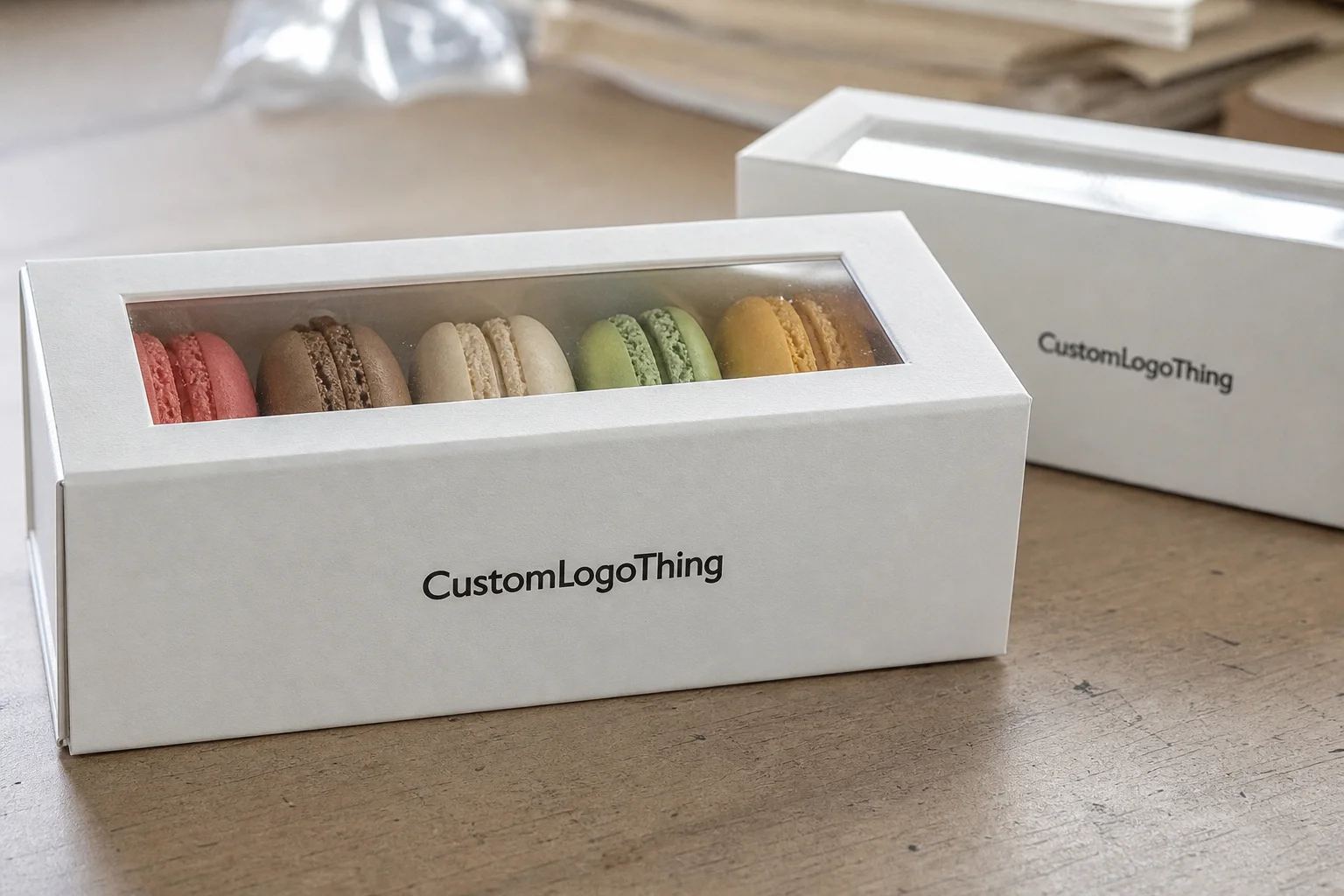
A macaron package has three jobs. It has to hold the product in place, survive handling, and make the set feel worth the price. Miss any one of those and the box becomes a liability.
Protection is the obvious part. Macarons do not tolerate much movement. A few millimeters of extra space can mean shells rubbing against each other, filling transfer on the lid, or broken edges after a short courier ride. Presentation is the quieter part, but it matters just as much. Customers judge dessert packaging before they open it. If the carton looks flimsy, the product feels less valuable. That is true even when the pastry itself is excellent.
There is also a practical retail angle. A box sitting under bright lights needs to stack cleanly, keep its print legible, and look consistent across a shelf or display tray. If the packaging bows, scuffs, or collapses, it does not matter how good the logo is. The box has already lost the argument.
That is why personalized macaron boxes should be treated as a product component, not an accessory. The best packaging choices reduce breakage, support fulfillment speed, and still look clean enough to photograph without retouching. The worst ones create waste and then force the brand to explain why the “luxury” set arrived in pieces.
A nicer-looking box that damages three shells in transit is not premium packaging. It is a refund with better graphics.
For buyers comparing Custom Packaging Products, the first question should be simple: how many pieces go in the box, what is the shell diameter, and how far does the order need to travel? Those three answers narrow the structure faster than any mood board ever will.
How custom packaging is built from the inside out
Custom packaging starts with the insert, not the artwork. That is where the fit is won or lost. A 6-count box, a 12-count box, and a 24-count box are usually three different structural problems, even if they share the same visual style. The cavity size, wall thickness, and lid clearance all change with the product count and shell height.
The insert design matters because macarons need controlled spacing. Single-cavity inserts keep each piece isolated, which helps presentation and reduces rubbing. Tray-style layouts are good for gift sets because they look orderly and photograph well. Tighter compartmented layouts are better for shipping because they limit movement under vibration and compression. If the box has to do both, the insert is where the compromise gets solved.
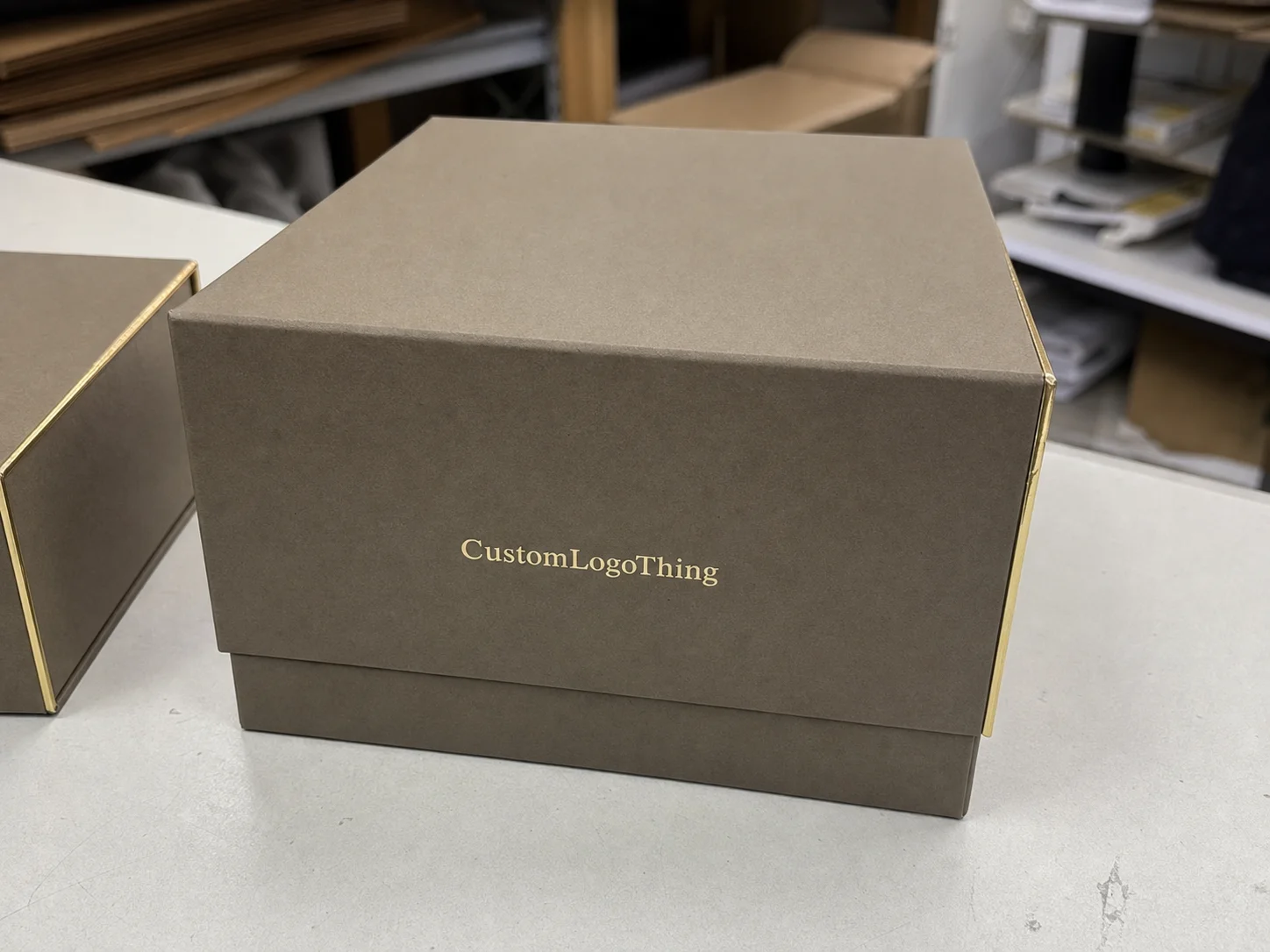
Outer structure comes next. Folding cartons are common for lighter retail packs and counter sales because they store flat, print well, and are easy to assemble. Rigid boxes cost more, but they carry better perceived value and resist crush damage more effectively. Mailer-style boxes are useful for direct-to-consumer orders because they handle transit better than a display-first carton. If the box will be stacked, shipped, or refrigerated, the structure has to reflect that reality.
Branding should fit the structure instead of fighting it. A narrow lid cannot carry a crowded layout. Small front panels do not reward long copy. On dessert packaging, restraint usually works better than trying to say everything at once. One strong logo, one readable type system, and one accent finish often outperform a cluttered surface packed with claims.
There is also a tolerance issue that buyers underestimate. A design can look elegant on screen and still fail if the internal dimensions are loose by 2 to 3 mm. That gap is enough for shells to shift during packing, handoff, or delivery. If the product is fragile, the box should feel fitted rather than roomy. Tight enough to hold. Not so tight that the shells scrape on insertion. That balance is the whole game.
Spec decisions that change fit, shelf appeal, and damage rate
Material is the first real buying decision because it affects print quality, crush resistance, storage, and total cost. Paperboard folding cartons are common for lighter gift sets and retail packs. They usually print cleanly and fold efficiently. Typical board weights for these runs often sit in the 300 to 400 gsm range, depending on size and structure. Rigid board offers more stiffness and a heavier feel, which is why it shows up in premium dessert packaging. Rigid setups generally use thicker chipboard wrapped with printed or specialty paper, so they cost more and take up more storage space.
Coated stocks sit between the two. They offer a smoother print face and often produce sharper color on logos, patterns, and photographic work. But thicker stock alone does not solve anything. If the fit is off, the box still fails.
Windows are useful because macarons sell visually. Color matters. Texture matters. Customers buy with their eyes before they buy with their hands. A clear PET window can improve sell-through, especially for retail display. The tradeoff is obvious: every window is another point where adhesive, die-cut quality, or handling can go wrong. For shipping-heavy programs, a smaller reveal window is often safer than a full front panel.
Finishes add another layer of choice. Matte lamination gives a softer, more restrained feel. Gloss can make colors pop and works better for bright, playful branding. Foil stamping, embossing, and debossing raise perceived value and can make a small box feel more deliberate. They also increase setup complexity and cost. A lot of buyers want every finish at once. That usually makes the packaging look busier, not better.
Assembly time should be part of the spec discussion. Flat-packed cartons save space and freight, but they need folding time on the line. Rigid boxes arrive pre-formed or semi-formed, which can speed packing in some operations, though they cost more to ship and store. If your team packs hundreds of units a day, even a small assembly delay matters. Twenty extra seconds per box sounds minor until it multiplies across a shift.
It helps to compare common formats side by side before requesting a quote.
| Box option | Best use case | Typical unit cost | Strengths | Tradeoffs |
|---|---|---|---|---|
| Printed folding carton with insert | Retail packs, gift sets, counter sales | $0.18-$0.48 at volume | Lightweight, compact storage, strong print surface | Less crush resistance than rigid styles |
| Windowed folding carton | Display-driven bakery packaging | $0.24-$0.62 at volume | Shows product, works well for impulse sales | More assembly steps, added window risk |
| Rigid presentation box | Premium gifting, upscale launches | $1.10-$2.80 at volume | High perceived value, better crush resistance | Higher freight, more storage space |
| Mailer-style shipping box with insert | Courier delivery, direct-to-consumer orders | $0.55-$1.25 at volume | Better transit protection, easier stackability | Less shelf appeal than gift-focused formats |
For transit-heavy programs, ask whether the structure has been tested against relevant distribution standards, especially ISTA protocols for drop, vibration, and compression. If sustainability claims matter, check whether the paperboard is FSC certified. Those signals do not fix bad design, but they do separate disciplined suppliers from people making vague promises in a quote.
Pricing, MOQ, and what actually moves the quote
Pricing for personalized macaron boxes is driven by a short list of variables, and most of them are predictable. Box size affects material usage. Board thickness changes stiffness and raw cost. Print coverage affects press time and ink use. Inserts add tooling and assembly. Specialty finishes add setup and finishing labor. Short runs push the setup cost onto fewer units, so the unit price climbs fast.
MOQ works the same way. Lower minimums are useful for seasonal launches, small bakeries, and test runs, but they usually come with a higher per-unit price. Larger quantities reduce unit cost and make custom tooling more efficient. They also increase cash tied up in inventory. That is fine for a fast-moving product. It is risky for a line that sells slowly or changes often.
The quote itself deserves scrutiny. A cheap-looking number can hide setup fees, plate charges, sampling, freight, or artwork revisions. If those costs are not listed, they usually show up later. The cleanest comparison is apples to apples: same size, same board, same insert, same finish, same delivery terms. Anything else is noise.
There is a second trap: the lowest unit price is not always the lowest total cost. If the box causes breakage, slows packing, or makes the product look ordinary, the real cost rises. Packaging should be judged on total performance, not just the line item. A few cents saved per unit is not a win if the losses come back through waste and rework.
If the package reduces damage and speeds assembly, it can pay back faster than a cheaper box that creates shrinkage and complaints.
As a rough rule, simple printed cartons can work at a few hundred units, while rigid gift boxes usually start making more economic sense around 1,000 pieces or more. That is not a hard rule. It depends on complexity, region, tooling, and finish. Still, it is a useful starting point when a buyer is trying to decide whether the design is ready for a small test or a larger production run.
Production, proofing, and timeline expectations
The production path is straightforward if the brief is complete. It usually starts with the product count, shell diameter, target box style, and whether the pack is intended for retail, gifting, or shipping. After that comes dieline review, artwork setup, proof approval, production, finishing, packing, and shipment. Miss any one of those details and the timeline starts slipping.
Artwork problems are a common delay. Low-resolution logos, missing fonts, incorrect bleed, and vague color references all create back-and-forth. A supplier can only proof what it receives. Vector files, clear Pantone or CMYK instructions, and properly labeled dielines shorten the process. So does sending the artwork in a state that is actually press-ready. Surprising concept, apparently.
Lead time depends on the structure. A simple printed folding carton can move faster than a rigid box with foil, embossing, or a custom insert. For many runs, simple printed work may ship a few business days after proof approval, while more complex packaging often needs two to four weeks, especially if tooling or specialty finishing is involved. Shipping time is separate from production time. Buyers mix those two up constantly and then act surprised when freight is not counted in the manufacturing clock.
Proofing is where expensive mistakes get caught cheaply. Check fold lines, insert cutouts, logo size, text hierarchy, and color density. If the order is new, ask for a physical sample or a structural mockup before full production. A sample costs far less than rerunning a batch because the cavity was too tight or the print looked different under real light.
If the launch is new, start with a trial order. Fill the box with actual macarons. Stack it. Move it. Send it through the handling path it will really face. A box that survives a showroom table but fails in courier transit is not ready. Better to find that out with one small run than with a full pallet of packaging that has nowhere useful to go.
Quality control checks that catch expensive mistakes
Packaging quality is not just whether the print looks good. It is whether the box functions after folding, filling, stacking, and shipping. That means checking more than color and logo placement.
Fit is first. The insert should hold each macaron without forcing it or leaving enough room for movement. A practical tolerance check is to insert the product, close the lid, then inspect for contact points. The shell should not rub the lid, and the filling should not smear under light pressure. If the box needs to be pressed shut, the cavity is too tight. If the shells slide around during a short shake test, it is too loose.
Print registration matters too. A premium dessert box with blurry type or a crooked logo looks cheaper than a plain carton with crisp graphics. Check line sharpness, color consistency, and alignment against the dieline. If foil is involved, inspect for pinholes, flaking, or weak transfer edges. Embossing should be clean, not crushed flat. Window edges should be free from adhesive bleed or visible gaps.
Structural QC matters just as much. Look for warped panels, weak glue joints, cracking at folds, and any curl in the lid or base. If the box is meant to stack, test the stack. If it is meant to travel, test compression and vibration. A small batch should also be opened and closed repeatedly to make sure the lid does not fatigue too quickly. The box has to work in production, not just on a mockup page.
One more thing: fill the box with the actual product, not a guess. Macaron weight, shell diameter, and garnish height all affect the final fit. A paper insert that looks fine empty can fail as soon as the real product goes in. That failure is avoidable. Use the right sample, not a stand-in.
Common mistakes that make premium packaging look cheap
The easiest way to make a premium dessert box look generic is to overload it. Too many type sizes, too many colors, too many icons, too many claims. Small packaging does not reward clutter. It punishes it. One clean hierarchy beats a wall of text every time.
Another common error is choosing the wrong structure for the product count. A 12-piece box with loose cavities can look fine in a product shot and still fail once it moves through actual handling. The shells shift, the filling marks the lid, and the customer gets a damaged set. That is not a design problem. It is a fit problem.
Cheap print is another tell. If the logo is soft, the contrast is weak, or the type is too thin for the stock, the box loses authority immediately. Buyers sometimes spend their energy on finishes and forget image quality, but a premium carton with fuzzy graphics reads as a compromise. Clarity matters more than decoration.
Distribution conditions matter as well. Heat, humidity, stacking pressure, and courier vibration all change performance. A box that survives a calm countertop can still fail after a full route of stops and starts. If the product is going to retail, ask how the cartons stack. If it is going into delivery, ask how the insert behaves under compression. If it has to do both, design for the tougher path first.
That is where disciplined packaging teams stand out. They test with real product, not just a render. They fill the box, shake it lightly, stack a few units, and inspect the result. It is not dramatic. It is also the fastest way to catch problems before customers do.
What to confirm before placing the order
Before ordering personalized macaron boxes, confirm four things: shell diameter, count per box, insert style, and the main use case. Retail, gifting, and shipping are not interchangeable. Each one pushes the structure in a different direction. If the supplier has those details, it can size the cavities correctly and recommend the right board and finish.
Ask for a sample or mockup before full production, especially if the job includes a new insert layout, a new finish, or a new box style. Real macarons are the only honest test. They show whether the cavity is too tight, whether the lid touches the product, and whether the box still feels premium once it is filled. A good-looking empty box is not proof of anything.
Artwork should be prepared as if it is going straight to press. Send vector files when possible. Confirm bleed and safe area. Verify brand colors. If the supplier needs fonts outlined or packaged, provide that in the first round. Clean files shorten proofing and reduce the risk of avoidable revisions.
My practical rule is simple: do not sign off on the full quantity until a filled sample passes the real-world check. Look at it on a counter, in a gift bag, and in transit if possible. If it holds up in all three settings, then scale the order. That is the most reliable way to buy personalized macaron boxes without paying for expensive surprises later.
What size personalized macaron boxes do I need for 6, 12, or 24 pieces?
Start with the insert layout, then size the outer carton around shell diameter and a small clearance gap. A 6-count, 12-count, and 24-count set usually need different cavity spacing, not just a larger box. Ask for a dieline or a physical sample using real product before you commit to a full run.
How much do personalized macaron boxes usually cost per unit?
Unit cost depends on size, board thickness, print coverage, finish, insert style, and quantity. Short runs cost more per box because setup is spread across fewer units. For a fair comparison, request quotes with identical specs so you are not comparing different structures or hidden charges.
What files should I send for custom macaron box printing?
Send editable vector artwork when possible, plus any fonts or outlined text the supplier requests. Use the supplier’s dieline and place artwork to the correct bleed and safe area. Confirm whether the job needs CMYK, spot colors, or a brand color match before proof approval.
How long does production take after proof approval?
Timeline depends on structure and finish, but proof approval starts the real production clock. Simple printed cartons usually move faster than rigid or specialty-finish packaging. Add time for shipping and any final artwork fixes, because those steps are the ones that most often push delivery dates.
Can I order a small MOQ before I scale up?
Yes, and that is often the smarter first move. A smaller run lets you test fit, presentation, and customer response before committing to a larger quantity. The unit price is usually higher, but the trial reduces the risk of locking into the wrong structure or finish.