Personalized Name Labels waterproof are not about decoration. They solve a simple problem that gets expensive fast: names need to stay readable after repeated washing, drying, folding, and handling. That matters on school polos, daycare clothing, team kits, uniforms, and any item that passes through shared spaces.
Most labels do not fail in a dramatic way. They fade, lift at the corners, collect lint, and become hard to read. From a buyer’s perspective, that is the real test. If a label survives a demo rinse but not ten laundry cycles, it is not durable enough for practical use. The better personalized name labels waterproof options are built to resist water, detergent, friction, and heat at the same time, not one after another.
It helps to think of the label as a system. Material, print method, adhesive, finish, and application all affect the result. A label can look fine in a mockup and still fail in a washer if one part of that system is weak. For buyers comparing formats, the right question is not whether the artwork looks good. It is whether the name stays legible after real laundering.
What personalized name labels waterproof really solve
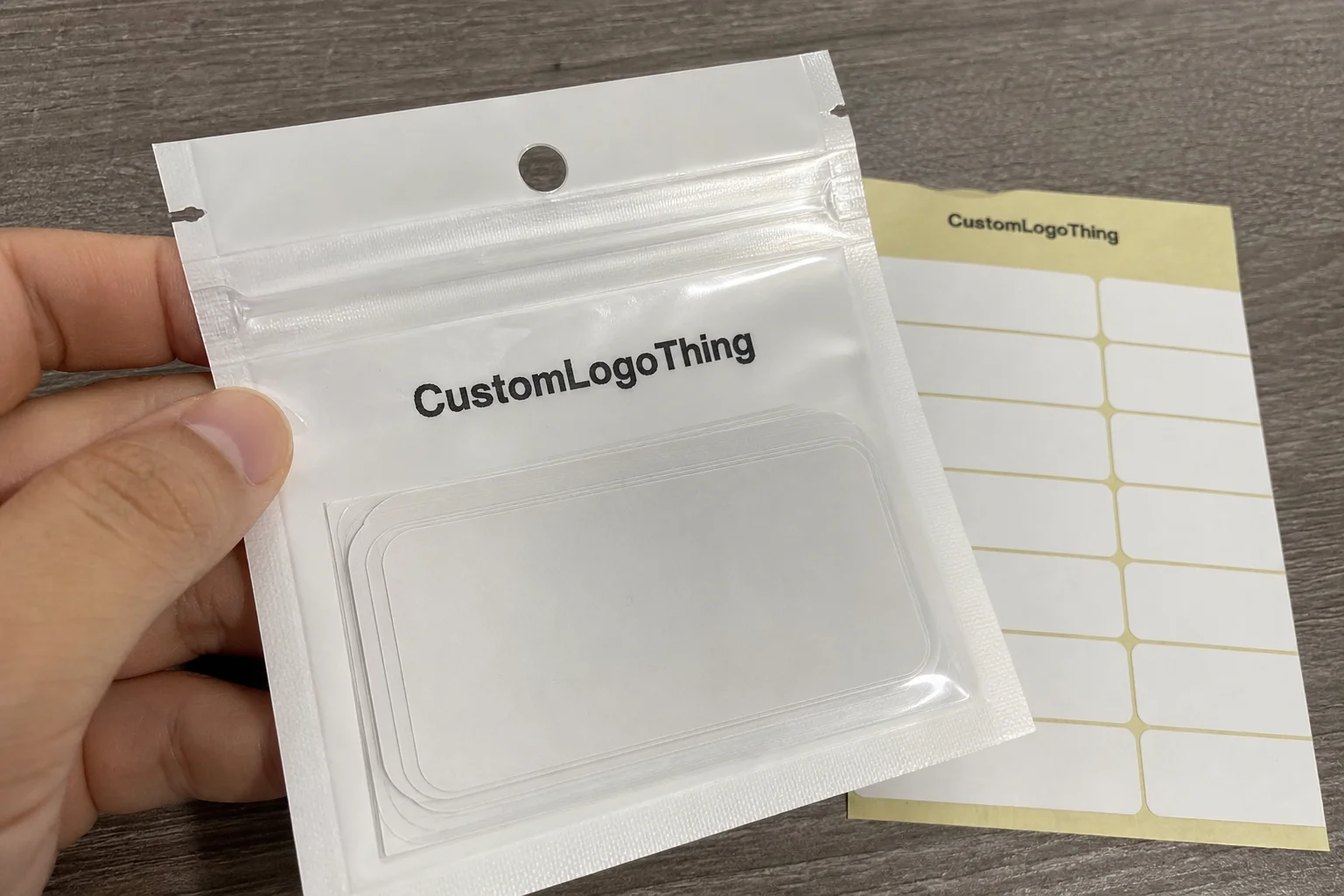
The core issue is misidentification. Clothing moves through shared spaces quickly, especially in schools, childcare, sports, healthcare, and staff uniform programs. A handwritten tag can smudge. Marker ink can wash out. A cheap sticker can peel before the first serious wash. Personalized name labels waterproof reduce those failures by keeping the garment connected to the right person after handling, washing, and re-folding.
There is also a practical workflow benefit that gets overlooked. Parents want fewer lost items. Teachers want faster sorting. Coaches want kit returns that do not turn into a guessing game. Operations teams want fewer replacements. That is the real value. The label is not a novelty. It is a control point.
Waterproof is not the same thing as laundry-safe. A label can shrug off a splash and still fail in a hot wash with detergent, agitation, and dryer heat. That distinction matters because a lot of product descriptions blur it. If a supplier cannot explain the wash limits, the adhesive behavior, or the fabric restrictions, the spec is not complete.
In practice, these labels are chosen for the same reason across very different buyers: they reduce friction. Fewer mix-ups. Faster returns. Cleaner sorting. Less time spent relabeling items. On a small family order that might mean a few saved garments. On a school or uniform program, it can mean a meaningful cut in replacement cost across a term or season.
Waterproof also does not mean indestructible. Fabric texture, wash temperature, detergent chemistry, and application quality all matter. A label that performs on smooth polyester may lift sooner on a coarse weave. A label applied over lint or damp fabric may fail early even if the material itself is excellent. Real durability starts with honest limits, not marketing language.
“A label that survives the proof stage but fails the wash routine is decoration, not identification.”
That is why the best buying decisions start with the garment, not the artwork. If the label is going on schoolwear, workwear, or activewear, the fabric and wash routine should set the spec. The design comes after that.
How the label structure keeps names readable after washing
A durable label is built in layers. The print layer carries the name. The bonding layer keeps the label in place. The top finish protects the graphics from abrasion, moisture, and detergent contact. If one layer is weak, the whole label suffers. That is why two labels that look nearly identical on screen can perform very differently in laundry.
Material choice comes first. Polyester film is common because it holds detail well and resists wrinkling. Flexible vinyls conform well to fabric curves. Laminated constructions add abrasion resistance, which helps when labels rub against seams, collars, or rougher garment edges. Paper-based options can work in controlled packaging use, but they are not the right answer for clothing that will be washed repeatedly.
Attachment method matters just as much. Adhesive-backed labels are fast and clean, which makes them useful for mixed clothing orders. Heat-applied options can bond more strongly on compatible fabrics if the temperature, dwell time, and pressure are controlled. Sew-in labels stay secure on heavy-use garments, but they require more labor and are less convenient for bulk personalization. There is no universal winner. The fabric decides the method.
Readability is part of durability. Small type, low contrast, and busy backgrounds reduce performance even if the label itself is waterproof. A name printed in a thin script may look attractive in the proof and become difficult to read after the first wash because lint and fold lines crowd the edges. Clear typography wins more often than decorative typefaces. Rounded corners help too. They reduce corner lift and make the label less likely to catch during repeated folding.
For buyers comparing label families, the use case should drive the spec:
- Daycare and school clothing: prioritize fast identification, soft edges, and wash-safe contrast.
- Sports kits: prioritize abrasion resistance, heat tolerance, and quick visual sorting.
- Workwear: prioritize legibility, repeat laundering, and firm adhesion under friction.
- Retail or brand programs: prioritize finish quality, color consistency, and packaging presentation.
There is a useful habit borrowed from packaging quality control: test for the failure that matters, not the one that looks impressive on a sample sheet. The label is not a shipping box, but the logic is the same. Repeated handling exposes weak points faster than any mockup does.
Cost, pricing, and MOQ: what changes the quote
Price usually comes down to five variables: quantity, size, print coverage, finish, and cutting method. Higher volume lowers unit cost, but not in a perfectly straight line. A simple one-color name label in a standard size may land around $0.18 to $0.35 per unit at several thousand pieces. Custom shapes, full-color artwork, or extra finishing steps can push that closer to $0.30 to $0.60 per unit, sometimes higher for small orders or highly detailed work. Those are practical ranges, not fixed rates.
MOQ matters because it changes how the supplier allocates setup time. Some factories will take low quantities and charge more per piece. Others price more aggressively once the run clears a minimum threshold. For a parent testing a label format or a school pilot order, a smaller MOQ can be more valuable than the lowest unit rate. For a brand folding labels into uniforms or retail packs, the reverse can be true. The right answer depends on reorder frequency and how much inventory you want to carry.
There are also cost items that buyers miss on the first quote. Proofing fees, sample packs, rush charges, special packaging, and split shipments can move the landed cost enough to change the decision. A label that looks cheaper on paper may not be cheaper once it reaches the warehouse door. That is especially true if the supplier charges separately for custom cutting or if the design needs more than one proof revision.
| Option | Typical MOQ | Indicative unit cost | Best fit |
|---|---|---|---|
| Stock-size waterproof label | 100-300 pieces | $0.22-$0.40 | Small clothing runs, family orders, quick restocks |
| Custom-size printed label | 300-1,000 pieces | $0.18-$0.35 | Schools, uniforms, repeat brand use |
| Laminated or premium-finish label | 500+ pieces | $0.30-$0.60 | Higher abrasion, sharper presentation, longer service life |
| Sew-in or heat-applied format | Varies by production setup | $0.25-$0.75 | Heavy-use garments and workwear |
The fair comparison is not just unit price. It is unit price plus setup, plus lead time, plus expected service life. A label that lasts twice as long can be the cheaper choice even if the quote is higher. That sounds obvious, but buyers still skip the calculation because the low headline number is easier to focus on than the wear cycle.
Production process and timeline: proof, print, ship
A clean production workflow starts with artwork review. That means checking file resolution, spelling, bleed, cut line placement, and contrast. Then comes the digital proof. After approval, the supplier prints or converts the labels, cures or sets the ink or adhesive, checks quality, and packs the order for shipment. If the design is simple and the supplier holds stock materials, the path is short. If the order requires special cutting, lamination, or multi-step finishing, the timeline expands quickly.
Most delays do not happen in the machine room. They happen in the inbox. Missing sizing decisions, last-minute font changes, unclear names, and color corrections slow the process more than the print run itself. A buyer who sends complete artwork and final text usually gets to production faster than one who keeps adjusting the design after the proof stage.
Lead time depends on the order type. Stock-format labels can often move in 5 to 10 business days after approval, depending on queue and shipping method. Fully custom labels, special finishes, or larger quantities may take 10 to 15 business days, sometimes longer if there is a complex cut path or a tight dispatch window. Rush service exists in some cases, but it should be treated as an exception.
Sampling is the checkpoint that saves the most money. One sample pack can show whether the adhesive grips the fabric, whether the type size is large enough, and whether the finish survives a real wash test. That is cheaper than discovering a weakness after the full run is already boxed. If the labels are for uniforms or school kits, test the sample using the same settings the garments will actually face. A gentle cycle is not a substitute for the real one.
For multi-site delivery or retail kit packing, ask about outer carton strength and carton labeling too. A good label can still arrive damaged if the packing is weak. If packaging sustainability is part of the brief, ask whether inserts or backing cards can be produced on FSC-certified paper so the package matches procurement requirements without introducing avoidable waste.
Material, adhesive, and finish choices that affect durability
The garment itself should guide the material choice. Cotton polos, polyester sportswear, blended school uniforms, and heavier work garments all react differently to heat, friction, and washing. A label that performs well on a smooth polyester surface may lift earlier on a textured fabric with more weave movement. That is why the spec should match the substrate, not a generic promise.
Adhesive choice is just as specific. Wash temperature, tumble-dry heat, and fabric texture all influence bond strength. On a soft, low-pile garment, the adhesive has more continuous contact. On a rougher weave, the label has to bridge tiny surface gaps, which can create edge lift after repeated laundering. Heat-activated systems can work well if the application settings are controlled. If the temperature or dwell time is off, performance drops quickly.
Finish is the layer the buyer sees every day. Matte finishes usually read better under indoor light and show less scuffing than gloss. A protective topcoat can slow fading and reduce scratch marks. Rounded corners help the label survive folding and rubbing. In some cases, a slightly thicker construction is worth the extra millimetres because it keeps the text legible longer. The key is not to chase the thickest option. The key is to match the label to the garment and the wash routine.
If the labels are going into retail-ready clothing sets, the finish also affects presentation. Clean edges and consistent color signal quality before the garment is worn. That matters in branded packs, and it matters in workwear programs where the label becomes part of the overall product impression.
- Matte over gloss: better readability and less visible scuffing.
- Lamination: stronger protection against abrasion and detergent contact.
- Rounded corners: less edge lift and better wear under folding.
- High contrast text: faster sorting and fewer read errors.
One technical detail that separates decent labels from good ones is print resolution. If the file is too small or the text is too thin, a label can fail visually even when the material is fine. On tiny labels, 300 dpi artwork and generous letter spacing are not luxuries. They are part of the durability spec because legibility is the point.
Common mistakes that shorten label life
The most common failure is not a bad label. It is bad application. Lint, moisture, oil from handling, and fabric finishes can all interfere with bonding. If the surface is not clean and dry, even a well-made label may start lifting earlier than expected. That is frustrating because the product gets blamed for a setup error.
Another frequent mistake is trying to fit too much into too little space. Long names, decorative icons, extra lines of text, and script fonts can look tidy on a screen and turn unreadable once the label is trimmed to size. In laundry work, readability beats decoration. A clear, bold name with a clean margin is easier to sort, easier to scan, and more likely to stay useful after repeated washing.
Buyers also overvalue appearance. A glossy label can look strong in a proof, but rough uniforms, folded seams, and repeated rubbing may make that finish age faster than a matte or laminated alternative. A visually striking label is not automatically the right label for heavy-use clothing. Real performance shows up after friction, not before it.
Skipping a test cycle is the last common error, and it is the easiest to avoid. One sample washed and dried under actual conditions will show whether the label curls, lifts, fades, or becomes hard to read. That small test can prevent a large reorder mistake. It also gives you a better spec for the next purchase because you are working from evidence instead of assumption.
There is another simple mistake: assuming all fabrics behave the same. They do not. A label that sticks perfectly to smooth synthetic fabric may behave differently on a brushed cotton blend or a garment with a water-repellent coating. If the clothing has special finishing, that should be disclosed before approval. Otherwise, the sample result can be misleading.
Expert checks and next steps before you order
Start with a sample pack or a small pilot run. Then wash it under the same conditions the garments will actually face: the same detergent, the same temperature, the same drying method. That one step tells you more than a polished proof ever will. If the sample stays flat and legible, you have a workable spec. If it fails, there is still time to adjust the material, adhesive, or layout.
Before approval, lock down four variables: size, font, contrast, and placement. A label that looks good in isolation can still fail in practice if it is too small for quick reading or placed where seams and folds hide the text. The best personalized name labels waterproof options are the ones people can identify in a laundry basket without slowing down.
Ask for a quote that separates the real cost components: unit cost, setup cost, sample cost, and shipping. That makes comparison straightforward and removes the usual confusion around low headline pricing. If one supplier is cheaper but slower, or faster but weaker on adhesion, the tradeoff is clear only when the quote is broken out properly.
Keep a simple production record after the first order. Note the garment type, wash setting, adhesion result, label size, and any edge wear. That becomes the repeatable standard for the next run. It also saves time on reorders because you are not starting from zero. For clothing programs that need consistency across families, schools, or staff uniforms, that record is worth more than a one-time discount.
The practical rule is simple: buy for real use, not for the proof. A label that survives the machine cycle, stays readable, and fits the garment is the right label. Everything else is noise.
How long do waterproof personalized name labels last on clothing?
Lifespan depends more on wash heat, detergent, fabric texture, and application quality than on a single cycle count. A well-matched label can hold up through dozens of household wash and dry cycles, but the only meaningful check is a real wash test on the actual garment.
Can personalized name labels waterproof options go through hot washes and dryers?
Yes, if the material and adhesive are rated for the garment and temperature range. The supplier should state the care limits clearly. If they do not, ask for them before placing the order and test the harshest routine you actually use.
What affects the price of waterproof clothing name labels the most?
Quantity, size, print colors, finish type, and MOQ are the main drivers. Rush production, samples, and shipping can materially change the total landed cost, so compare quotes on the same basis rather than only looking at unit price.
Do I need iron-on, adhesive, or sew-in labels for uniforms?
It depends on the fabric and how often the clothing is washed. Adhesive or heat-activated options are usually faster for mixed orders, while sew-in can be better for some heavy-use uniforms or garments that see frequent abrasion.
What should I test before ordering personalized name labels in bulk?
Check legibility, edge lift, and adhesion after one wash and dry cycle on the actual garment. Confirm the size, font, and placement before committing to the full quantity. That small test usually prevents the most expensive mistakes.