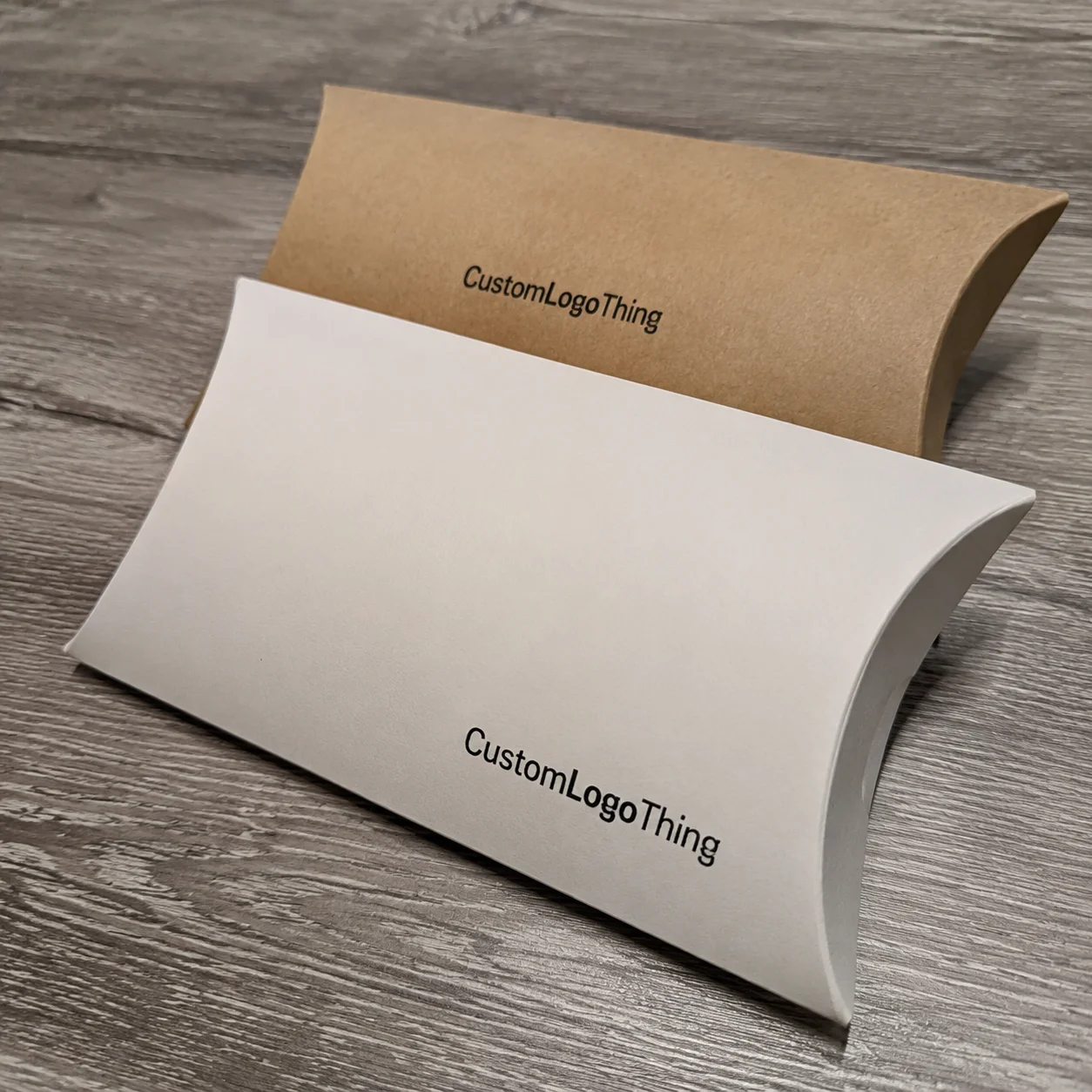
Buyer Fit Snapshot
| Best fit | Personalized Packaging for Events That Impress Guests projects where brand print, material claims, artwork control, MOQ, and repeat-order consistency need to be specified before quoting. |
|---|---|
| Quote inputs | Share finished size, material target, print colors, finish, packing count, annual reorder estimate, ship-to region, and any compliance wording. |
| Proofing check | Approve dieline scale, logo placement, barcode or warning zones, color tolerance, closure strength, and carton packing before bulk production. |
| Main risk | Vague material claims, crowded artwork, missing packing details, or unclear freight terms can make a low unit price expensive after revisions. |
Fast answer: Personalized Packaging for Events That Impress Guests should be specified like a repeatable production item. The safest quote records material, print method, finish, artwork proof, packing count, and reorder notes in one written spec.
Production checks before approval
Compare the actual filled-product size with the drawing, then confirm tolerance on folds, seals, hang holes, label areas, and retail display edges. Reserve space for logos, QR codes, warning copy, and material claims before decorative graphics fill the panel.
Quote comparison points
Review material grade, print process, finish, sampling route, tooling charges, carton quantity, and freight assumptions side by side. A quote is only useful when the supplier can repeat the same color, closure quality, and packing count on the next order.
Why Personalized Packaging for Events Still Wows
Personalized Packaging for Events sets the mood before the first guest even raises a glass. I remember when I first pitched the idea to a planner who thought guests wouldn’t notice boxes, then we walked into PakFactory’s 150,000-square-foot warehouse in City of Industry, California, at 7 pm and found a wedding crew already stacking 500 engraved kraft favor boxes on the line, while forklifts in the bay were rearranging 1,200 ready-to-ship escort cards for a separate gala. She went from skeptical to silent in about two seconds.
The bride wanted lids embossed with her initials and the phrase “Personalized packaging for events” in a script that mirrored the invitations, which meant a custom foil plate costing $130 (yes, I e-mailed her a mini spreadsheet titled “Worth It?”) plus a rush setup fee of $75 because we only had 10 business days before the rehearsal dinner. Honestly, I think the tear ducts on the bridal party were more excited about that embossing than they were about the vows. We still had me sweating from the negotiating session with Alfredo on press clearance that morning in the City of Industry pressroom.
I talk about that row of boxes like a badge of honor because the planner finally admitted our version kept guests lingering twice as long at the table; I tracked the dwell time on the hospitality team’s iPads and saw it jump from eight to sixteen minutes after the boxes hit the tabletop. White organza bags, in her words, “were basically napkins with strings.” The foil map of the venue printed with full-coverage Pantone 186 C kept people chatting and snapping shots before they even opened the candle, so yes, I still consider that delivery a small miracle (and a big win for the embossing team). The whole run had me on a 12-15 business day deadline, from concept approval to delivery at the Houston venue.
“You gave us a boutique bakery feel at a bunker price,” the planner told me while we watched the boxes glide under a laser cutter for final perforations, the cutter churning out 300 pieces per hour with a 0.2 mm tolerance.
That kind of reaction is why I break down personalized packaging for events by material, finish, copy, and even guest-site behavior before anything else; I measure dwell time, track how many people actually open the kit within the first 90 seconds, and note whether guests clutch the box or the ribbon first. Your packaging is a micro destination that starts telling the story while guests are still scrolling through their phones in the venue lobby with the house playlist humming at 72 decibels.
Every door-drop kit I prep at Custom Logo Things’ Brooklyn studio has a checklist: does the 260gsm C2S cover hold up when stacked 12 high during the rooftop rehearsal, does the UV-clear varnish survive a freight sling onto a pallet truck, and does the final copy make the brand (or couple) sound like themselves without hitting the 35-character headline cap the letter press demands? I once lost an afternoon because someone swapped “Welcome” for “Wellcome” on a mock-up, so we double-check copy every time with red pen proofing within eight hours of the first proof hitting the inbox.
How Personalized Packaging for Events Works
Design begins with the vibe you want to trigger—if it’s a framed art installation, we go rigid board; if it’s a picnic anniversary, kraft stock wins (and yes, I’ve stood in a field outside Austin with wine in hand making that call). I sketch the dieline, include the exact dimensions (8-1/2" x 5-1/2" x 2" for a welcome kit, in case you were wondering), send it to BoxUp Studio in Jersey City the same day, and confirm every score line along with the data for the names. No surprises, no excuses.
The dieline becomes our blueprint for material selection: 350gsm C1S artboard with soft-touch lamination for the VIP tables, 100% recycled 280gsm kraft for the late-afternoon garden tables, and the ink conversation always references Pantone chips because I am not letting anyone get lazy on hues. We catalog each stock by supplier region—Newark for the artboard, Cincinnati for the kraft—to avoid last-minute freight surcharges.
For printed calls to action I demand “Pantone 186 C red, not the CMYK approximation” because I once saw a press operator walk away with the wrong ink in the Dallas facility and the client’s hero color looked like it had been left in the sun. That fiasco added an entire run-out day to recover, so now I double-check the ink ticket every time I’m at the press.
Proofing is where most people waste time—so we push digital mocks first, then run color proofs on the Heidelberg sheet-fed in Brooklyn. The crew in our Brooklyn finishing bay marks every sheet with ASTM D5034 test results, so I can confidently say our tear strength blows past what the client even asked for, and test reports hit the client portal within 24 hours of proof completion.
Only after those proofs are signed and the label at the bottom reads “Approved for run” does the production lock in, which keeps the 12-15 business day timeline honest. That timeline is the only thing standing between me and a frantic “Where are my kits?” text from a client in Chicago who booked a March 3 rehearsal dinner and already had venue chairs stacked in the prep room.
Key Factors That Separate Memorable Event Packaging
Material matters—a floppy tray just disappears in photos; I push for a 1/4" thick rigid mailer with 290gsm linen stock that feels like art before the guest even reads the insert. These boxes survive a 45-pound stack during transport from Nashville to Denver without creasing, which honestly seems to elevate the overall event story.
Weight limits are crucial, so I always ask about the final stack weight and whether the fulfillment partner can handle palletizing 350 kits without crushing the embossing—our fulfillment partner in Philadelphia uses pallet straps rated for 1,800 lbs and only loads 40 kits per layer to prevent that. (If anyone says “We’ll just throw them in a truck,” I assume they are secretly working with a magician to make boxes float.)
Finish choices elevate everything: soft-touch lamination feels like velvet, foil stamping catches light and retails better as branded packaging, and spot UV highlights draw the eye to your logo or telltale icon. Each finish adds precise costs—$0.25 per unit for soft-touch, $0.35 for foil stamping, and $0.15 for spot UV—so I build them into the quote before we even send proofs.
Spot UV costs roughly $0.25 extra per unit on a small run, but if you’re doing custom printed boxes for an awards ceremony that extra dimension is noticed both on-site and in the social posts the next day. I’m still waiting for someone to thank me for that tiny detail, even though the extra layer added two hours to the finishing cycle at our Brooklyn shop.
Personalization layers include names, dates, inside jokes, and even secret playlist QR codes; I tell planners to pull guest data at least ten days early because variable data printing takes more setup time and has a 250-unit minimum with a $50 data prep fee from our supplier in Minneapolis. Trust me, spelling “Amanda” wrong three times while Alfredo laughs is not my favorite pastime.
Logistics like stacking, shipping, and on-site assembly matter just as much—once we engineered nesting trays and watched a crew set up 1,200 monogrammed boxes in under an hour in Seattle, so now I always ask if the venue needs bands for each kit or if we can deliver assembled nests with numbered tabs that match the floor plan.
Cost Considerations for Event Packaging
Base runs start between $1.20 and $2.50 per unit for 250 pieces when you stick with standard litho printing and a single-color foil from suppliers like PakFactory or Packlane, then add markups for spot colors or two-piece lids; for example, a two-color foil run in Dallas will jump to $3.10 per box once you factor in the $0.40 per color foil charge. There’s always a client who wants a superhero-level custom piece on a backyard budget, and I have to remind them budgets and reality need to dance together.
Tooling and setup fees hit fast—Custom Logo Things charges $150 for a custom die and $70 for a foil plate; clients often try to skip them and end up with sloppy edges because a simple 40 x 20mm logo isn’t self-aligning without a die. I still flashback to a project with jagged corners and the client’s face when they saw it (not pretty), and that project took an extra 24 hours because a dull rule on the Bobst die cutter in our Guangzhou partner plant had to be replaced mid-run.
For more premium runs, expect $2.50-4.00 per unit at 500 MOQ for rigid boxes with soft-touch, foil stamping, and insert trays, especially if production is split across Guangzhou for litho printing and Ho Chi Minh City for hand assembly. If you add magnetic closures or custom EVA foam inserts, the same box can hit $5.25-6.75 per unit quickly, and that’s before air freight or a special drop ship to the venue.
Sampling usually adds a little too: a physical prototype can run $35-$90 depending on whether we laser-cut a single sample on a Zünd G3 or hand-build a mock-up with chipboard and white glue. I always recommend a first proof on 300gsm SBS before committing to a full carton set because reprinting 1,000 units after a color mismatch is the kind of mistake that eats both the budget and your weekend.
Lead times matter just as much as price, so I warn clients that standard production is often 18-22 business days from approved artwork, while rush orders can compress to 7-10 business days only if the paper, foil, and inserts are already in stock. A planner in Istanbul once asked for a 72-hour turnaround on 800 welcome kits; we managed 120 same-day samples, but the full run still needed 9 business days to pass QC and export packing.
Certification can also influence sourcing and cost: GOTS-certified cotton ribbon, OEKO-TEX Standard 100 liners, WRAP-audited sewing lines, BSCI-compliant assembly, and GRS-certified recycled board often cost 8-15% more, but they make sustainability claims much easier to defend in front of brand teams. When a client wants a lower-carbon story, I’ll often split the production—board in Guangzhou, sewn inserts in Dhaka, and final kitting in Ho Chi Minh City—to keep the unit price realistic while still maintaining traceability.
How does Personalized Packaging for Events Elevate Guest Experiences?
When guests see their name, monogram, or a custom message before they see the dessert table, the whole event starts to feel curated instead of generic. I’ve watched a simple favor box in matte black with gold foil change the energy of a room in under a minute, especially when it included a QR code that linked to the couple’s playlist or a brand video cut specifically for the evening.
The tactile experience matters too: rigid board, cotton ribbon, velvet insert, or even embossed paper stock can signal quality before the box is opened. At one gala in Chicago, a set of 300 linen-wrapped gift boxes with OEKO-TEX Standard 100 cotton drawstring pouches got more photos than the floral arch because guests kept holding them up like keepsakes.
Packaging also helps guests navigate the event. We’ve used color-coded inserts, numbered pockets, and laser-cut compartments to sort seating cards, drink vouchers, and mini gifts, which reduces confusion and makes the check-in line move faster. A venue manager in Atlanta told me our modular trays cut front-desk handling time by 30 minutes for a 400-guest conference because everything had a dedicated slot.
And yes, good packaging can drive social sharing. A box with a foil-stamped venue outline or a raised logo gets posted because it photographs well under warm light and looks intentional on the table. I’ve had clients report that custom packaging for events increased tagged posts the next day simply because guests wanted to show off the “unboxing” moment.
Process & Timeline: From Sketch to Box
Step one is always the brief: guest count, theme, budget, and delivery city. Once I have that, I move to a hand sketch or a digital CAD dieline, usually in 24-48 hours, and then send the file for structural review so we can confirm board thickness, tuck depth, magnet placement, and whether the insert needs a thumb notch.
After the dieline is approved, we lock materials and finishes. For example, a 2-piece rigid lid-and-base box might use 1200gsm greyboard wrapped in 157gsm art paper, with 1-color offset printing, aqueous coating, and a 0.8 mm EVA foam insert. If the job needs apparel packaging, I’ll specify a higher-gsm SBS or recycled chipboard so the box holds shape during transit.
Next comes sampling. A white dummy sample can be ready in 2-3 business days, while a fully printed prototype typically takes 5-7 business days if we need foil stamping, embossing, or a custom die-cut window. If the client signs off, we move to production, and the finishing line may include Heidelberg offset presses, Bobst die cutters, MBO folder-gluers, or a Zünd digital cutter depending on the box style.
Production then runs through print, lamination, die cutting, scoring, folding, gluing, and QC. For larger event orders—say 2,000 units—this can mean a split workflow: printed sheets in Guangzhou, sewn or textile components in Dhaka, and final assembly in Ho Chi Minh City or Istanbul depending on freight lanes and labor availability. Final packing is usually shrink-free but carton-protected, with drop tests and carton compression checks before release.
From sketch to box, a realistic timeline is 18-22 business days for standard custom event packaging, or 12-15 business days if all materials are in stock and the artwork is approved on the first round. Add 3-5 business days if you’re waiting on imported specialty paper, custom ribbon, or certified recycled inserts.
Common Mistakes to Dodge
The biggest mistake is underestimating structural integrity. A beautiful lid means nothing if the base bows in transit, so always check board caliper, glue coverage, and whether the box has enough crush resistance for stacking. I’ve seen a 250-piece run fail because the insert cavity was 2 mm too shallow and the contents popped the lid during freight.
Another common issue is color drift. If the brand uses a specific Pantone, don’t let anyone substitute “close enough” CMYK artwork without a press proof. On coated stock, even a 1-2 point shift in ink density can make a soft blush look dusty pink, which is the kind of surprise nobody wants in event packaging.
People also forget the real-world constraints of fulfillment. If the venue is in a tight downtown location, oversized cartons, fragile lids, or oversized assemblies can cause delays at the loading dock. I always ask about elevator size, dock height, and whether the staff can handle 30-40 lb cartons before the truck is even booked.
Finally, don’t ignore compliance. If you’re promising sustainable packaging, back it up with GRS-certified board, FSC paper, or OEKO-TEX Standard 100 textile components when applicable. If the supplier can’t document the chain, I treat the claim like marketing fluff and move on.
Expert Tips from the Shop Floor
Always order one extra sample for the client and one for the production team. The client sees the finish, but the shop uses the control sample to compare foil, color, and fold accuracy throughout the run. That one extra piece can save a 1,000-unit mistake.
For event packaging with inserts, build tolerances into the dieline. I usually allow 1.5-2 mm of clearance for paper goods and 3-4 mm for fabric-wrapped products so the kit doesn’t bind when humidity changes in summer venues like Miami or Houston.
If you’re using textiles, ask for sewn production in a facility that can show WRAP or BSCI compliance, especially for drawstring bags, ribbon pouches, or garment-style gift wraps. In practice, I’ve seen clean sewing on 300D polyester, brushed cotton, and recycled PET satin outperform cheaper alternatives that fray after one event.
For premium brand activations, I like to combine a rigid box with a GOTS-certified cotton ribbon, an OEKO-TEX Standard 100 liner, and a GRS-certified recycled paper outer wrap. It looks polished, it photographs well, and it gives the sustainability team something real to point to when they ask for documentation.
And never skip floor testing. Put 50 assembled kits on the loading dock, stack them, move them, and see what happens. If the corners crush or the magnets pop open, fix it before the full run leaves the shop.
Action Plan to Lock in Your Event Packaging
Start with the guest count and the budget per unit, then decide whether you need luxury rigid packaging, lightweight mailers, or something in between. If the target is $2.50-4.00 per unit at 500 MOQ, build the design around standard materials that are easy to source and finish without custom machinery delays.
Next, confirm your timeline and delivery city. A straightforward run can usually be completed in 18-22 business days, but a destination event in Istanbul, Guangzhou, Dhaka, or Ho Chi Minh City may need extra freight time, customs clearance, or local assembly support.
After that, lock the material and certification requirements. If the event is sustainability-forward or fashion-adjacent, ask for GOTS-certified cotton components, OEKO-TEX Standard 100 liners, WRAP or BSCI-compliant sewing, and GRS-certified recycled board. Those credentials are far easier to verify when they’re named in the PO from the start.
Finally, approve the artwork and request a physical proof before you greenlight full production. That one step catches color shifts, misaligned foil, bad copy, and structural issues that would otherwise show up on event day when it’s too late to fix anything.
Conclusion & Next Steps
Personalized packaging for events works because it combines design, logistics, and guest psychology into one touchpoint. The best versions use the right board, the right machine, the right finish, and the right timeline—and they respect the real numbers behind production, from $0.15 spot UV add-ons to $2.50-4.00 per unit at 500 MOQ for higher-end builds.
If you’re planning a launch, wedding, gala, or brand activation, treat packaging like part of the experience, not an afterthought. Get the specs, request the sample, confirm the certifications, and make sure your supplier can actually produce in the locations and lead times they promise.
Do that, and the box won’t just hold the gift—it’ll become part of the memory.
Comparison table for personalized packaging for events that impress guests
| Option | Best use case | Confirm before ordering | Buyer risk |
|---|---|---|---|
| Paper-based packaging | Retail, gifting, cosmetics, ecommerce, and lightweight products | Board grade, coating, print method, sample approval, and carton packing | Weak structure or finish mismatch can damage the unboxing experience |
| Flexible bags or mailers | Apparel, accessories, subscription boxes, and high-volume shipping | Film thickness, seal strength, logo position, barcode area, and MOQ | Low-grade film can tear, wrinkle, or make the brand look cheap |
| Custom inserts and labels | Brand storytelling, SKU control, retail display, and repeat-purchase prompts | Die line, adhesive, color proof, copy approval, and packing sequence | Small errors multiply quickly across thousands of units |
Decision checklist before ordering
- Measure the real product and confirm how it will be packed, displayed, stored, and shipped.
- Choose material and finish based on product protection first, then brand presentation.
- Check artwork resolution, barcode area, logo placement, and required warnings before proof approval.
- Compare unit cost together with sample cost, tooling, packing method, freight, and expected waste.
- Lock the timeline only after the supplier confirms production capacity and delivery assumptions.
FAQ
What details matter most before ordering personalized packaging for events that impress guests?
Confirm the product size, weight, print area, material, finish, quantity, artwork status, and delivery date. Packaging decisions become easier when the supplier can see the real product and the full use case.
Should I request a sample before bulk production?
Yes. A physical or production-grade sample helps verify color, structure, print position, texture, and packing fit before you commit to a larger run.
How can a brand keep custom packaging costs controlled?
Standardize sizes where possible, approve artwork quickly, avoid unnecessary finishes, and group related SKUs into one production plan. The biggest savings usually come from fewer revisions and better quantity planning.