Buyer Fit Snapshot
| Best fit | Personalized Packaging for Coffee Brand projects where brand print, material claims, artwork control, MOQ, and repeat-order consistency need to be specified before quoting. |
|---|---|
| Quote inputs | Share finished size, material target, print colors, finish, packing count, annual reorder estimate, ship-to region, and any compliance wording. |
| Proofing check | Approve dieline scale, logo placement, barcode or warning zones, color tolerance, closure strength, and carton packing before bulk production. |
| Main risk | Vague material claims, crowded artwork, missing packing details, or unclear freight terms can make a low unit price expensive after revisions. |
Fast answer: Personalized Packaging for Coffee Brand: Launch Blueprint should be specified like a repeatable production item. The safest quote records material, print method, finish, artwork proof, packing count, and reorder notes in one written spec.
Production checks before approval
Compare the actual filled-product size with the drawing, then confirm tolerance on folds, seals, hang holes, label areas, and retail display edges. Reserve space for logos, QR codes, warning copy, and material claims before decorative graphics fill the panel.
Quote comparison points
Review material grade, print process, finish, sampling route, tooling charges, carton quantity, and freight assumptions side by side. A quote is only useful when the supplier can repeat the same color, closure quality, and packing count on the next order.
Personalized Packaging for Coffee Brand: Launch Blueprint
Two coffee brands can roast nearly identical beans and still end up with very different repeat rates. The difference is often not the coffee profile. It is the package. personalized packaging for coffee brand starts working before a customer sees the brew guide or first sip. It signals quality, helps the brand be remembered, and keeps distribution from turning into a chaos loop. If the pack feels generic, the whole product feels generic. That is a brutal thing for any coffee brand to carry.
There is a real gap between cosmetic personalization and functional personalization. Cosmetic choices are the obvious layer: logo, color palette, illustration, tagline, and finishing style. Functional choices are the practical layer: batch codes, roast date, freshness notes, QR or NFC links, reseal performance, refill systems, and subscription codes. In practical launches, I see teams succeed only when both layers are built together. A package that looks good but does not perform will lose trust. A package that works well but has no brand identity is hard to remember.
By the end of this guide, You Should Know what to fund, what to skip, and how to launch without chaos. That means planning structure, substrate, print method, and timeline before the design team polishes everything into something pretty but vague. Attractive packaging helps. Useful packaging sells. In a crowded category, utility outlasts aesthetics.
The surprising power of personalized packaging for coffee brand growth
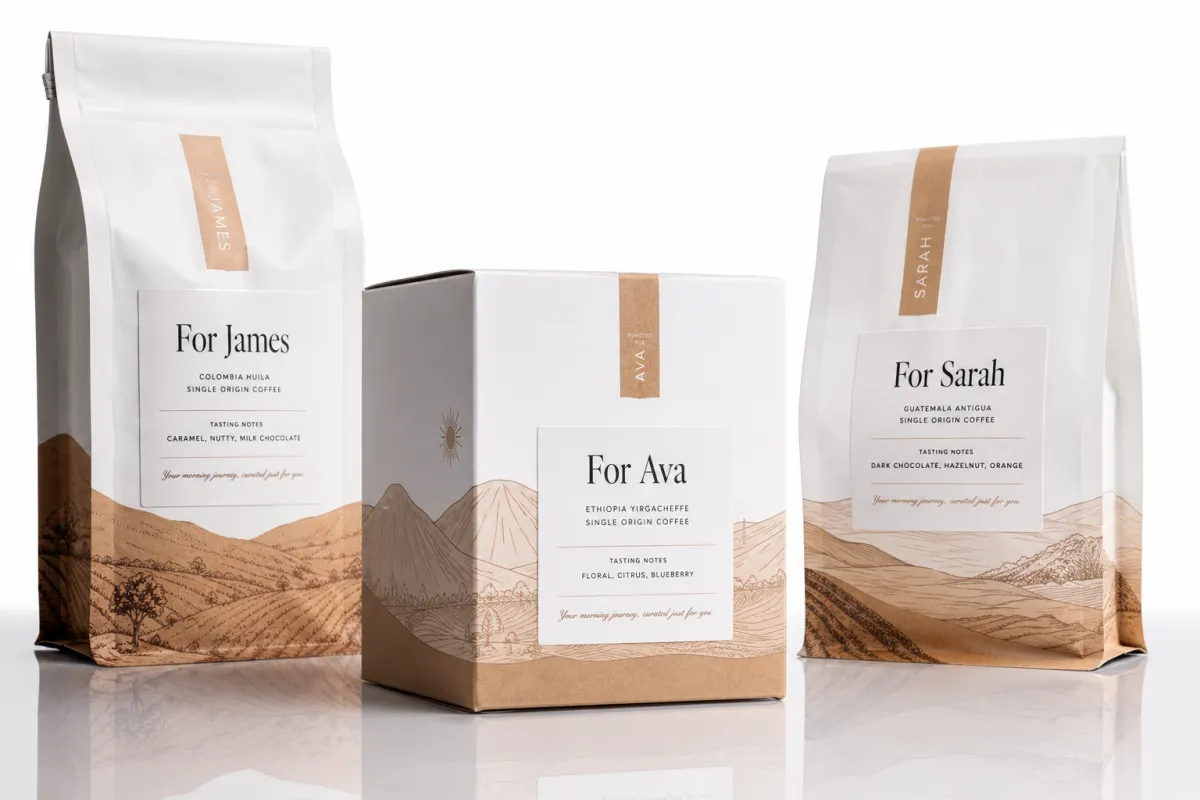
A package is not a wrapper. It is a sales surface, a logistics asset, and a trust signal all at once. personalized packaging for coffee brand matters because it affects shelf visibility, repurchase confidence, and operational efficiency from warehouse to doorstep. A customer might not know your origin story yet, but they will notice whether the roast label is clear, whether the seal feels dependable, and whether the pack seems intentionally designed.
I worked with a micro-roaster last year who had exceptional coffee and weak packaging. Their labels looked beautiful until products hit the pallet, then the tear notches and zipper placement created complaints. They were not trying to be lazy. They were trying to move too fast. Once they changed only the top 40% of the design rules — hierarchy, barcode placement, freshness cues — the support calls about damaged packs dropped noticeably. That shift had nothing to do with slogans, and everything to do with clarity and function.
In practice, the brands that keep customers coming back treat personalized packaging for coffee brand as part of brand identity, not decoration. The package tells the buyer what it is, helps the warehouse pick and ship faster, helps the retailer display it correctly, and helps the customer know what to expect at home. One bag or can can carry way more information than people realize.
Here is the blunt version: if packaging confuses people, the coffee has to work twice as hard. If packaging looks clear and credible, the coffee gets a fair first chance. That is why personalized packaging for coffee brand is both a marketing channel and an operations tool. It improves unboxing, reduces complaints, and supports shelf credibility.
The smartest packaging systems separate personalization into two layers:
- Cosmetic personalization: logo placement, color palette, typography, hero illustration, and premium finishes.
- Functional personalization: roast date, flavor notes, origin map, QR content, brewing instructions, subscription hooks, and traceability data.
That split matters because not every launch needs a custom printed bag, pouch, and insert from day one. Sometimes personalized packaging for coffee brand should start with one hero format and one strong idea. Then you scale after customer response is visible. That is almost always cheaper than styling everything before proofing demand.
"If the packaging tries too hard, customers assume the coffee is trying too hard, too." That line sounds harsh, but I hear it from buyers a lot.
For a new launch, the goal is not to make the package do everything. The goal is to make it do the right things well: freshness signaling, clear copy hierarchy, easy handling, and strong recall. If you want wholesale buyers to take you seriously, personalized packaging for coffee brand has to sit comfortably beside stronger labels in the aisle, not in a corner of indecision.
Repetition builds memory. The same name placement, roast code system, and visual structure across SKUs helps packaging become instantly recognizable. That is how personalized packaging for coffee brand turns from a one-off campaign into long-term shelf equity.
How personalized packaging for coffee brand works from idea to shelf
A clean plan keeps this from becoming expensive guesswork. I break personalized packaging for coffee brand into five parts: structure, substrate, printing method, finishing, and application logic. Skip one piece and you still get a pretty proof and a disappointing production result. Mockups are cheap. Reality is measured on the pallet, not in design software.
Structure selection
Start with the format that matches the channel. Stand-up pouches stay popular because they are light, shelf-friendly, and generally efficient for shipping. Kraft bags can feel artisanal and natural. Tin cans feel premium and durable for reuse. Cartons or Custom Printed Boxes work for gift sets, samplers, and bundles. For personalized packaging for coffee brand, structure has to follow promise. A $14 bag should not visually compete with a $4 commodity sack.
If you choose a rigid format, define whether stacking depth, case-pack dimensions, and retailer shelf constraints are part of the requirement. If not, your team will run into surprises when the first pallets arrive and the pack does not fit the fixture plan.
Substrate and barrier performance
Coffee is chemically sensitive. Oxygen, moisture, and light are enemies. For whole bean coffee, barrier performance is not cosmetic, it is foundational. Metallized film, laminated pouches, and lined paperboard are common because they preserve aroma and shelf life far better than plain paper stocks. If you need a natural aesthetic, you can still deliver it, but the structure still has to protect the roast.
When I say "protects the roast," I mean you test headspace behavior, seal integrity, and valve performance to reduce off-gassing. A bag that looks authentic but leaks freshness is just a pretty failure. There is no upside to that kind of compromise.
Printing method
Digital printing usually fits short runs, seasonal drops, and variable artwork. It gives faster setup, lower minimums, and easier testing loops. Flexographic print works better when volumes rise and you need a stable unit cost over repeated runs. Offset is strong for cartons, sleeves, and premium boxes when high detail and color consistency matter. In many personalized packaging for coffee brand projects, one method is best for launch, another method becomes better at scale.
Think in phases. Lock the brand look first, then lock the process that can execute it efficiently.
Finishing and tactile detail
Soft-touch lamination, matte varnish, spot UV, foil stamping, embossing, and textured stocks change what people feel in hand. Coffee is a premium sensory category in most markets. The tactile element should match the message, not compete with roast quality. For personalized packaging for coffee brand, finish should reinforce the promise. A natural-origin blend can pair with kraft-matte texture. A limited reserve roast may want subtle metallic accents and tighter visual contrast.
Different formats behave differently in production:
| Format | Best Use | Typical Strength | Common Tradeoff |
|---|---|---|---|
| Stand-up pouch | Core retail coffee, subscriptions | Lightweight, high barrier, efficient shipping | Less rigid premium feel than a box or can |
| Tin can | Premium launches, gifting | Strong shelf presence, reusable | Higher unit cost and freight weight |
| Carton or sleeve | Samplers, bundles, gift sets | Great for storytelling and structure | Needs careful fit and insert planning |
| Kraft bag | Natural, small-batch positioning | Warm, familiar, approachable | Print quality and barrier can be limited |
| Rigid box | Subscription kits, premium sets | Strong unboxing experience | More expensive and more material-heavy |
That table looks simple because this decision really is simple: choose the format for margin, channel, and story. Build personalized packaging for coffee brand around that format. Do not force a single design style to survive every channel by accident. Brands waste months when visual decisions outrun manufacturing logic.
For structural and transit checks, compare your packaging against recognized standards. Many teams use ISTA guidance for transit testing and FSC for responsibly sourced fiber. If you are in a regulated grocery path, check local labeling and allergen rules in your market. You do not need a dissertation inside the packaging. You need a pack that survives real shipping and still matches the brand promise.
What makes personalized packaging for coffee brand convincing?
Pretty packaging gets attention. Convincing packaging gets the sale. Those are not the same thing. personalized packaging for coffee brand needs four things to feel credible: shelf visibility, functional performance, consistency, and channel fit. Miss one, and the pack looks weaker in-store, at home, and in your reorder numbers.
Shelf visibility
Contrast matters more than decoration. If critical text cannot be read at shelf distance, the design is performing theater, not retail communication. Color temperature matters, too. Warm browns and creams signal comfort and origin narratives. Clean neutrals can imply precision and control. Bright accents work only when they fit brand logic and do not break readability. Convincing packaging uses contrast as a tool, not an excuse for visual noise.
My rule is simple: the roast name and roast type should be readable in under two seconds. If a shopper cannot process those details quickly, the package has work to do before coffee can even be considered.
Performance essentials
Coffee needs protection. Aroma valves, reseal zippers, tear notches, and barrier layers should be validated before final approval. If closure fails, the packaging fails. Experienced teams treat packaging as both design system and product performance system. personalized packaging for coffee brand should show freshness clearly while staying honest about what the pack can and cannot do.
The valve is not branding. The zipper is not identity. They are utility pieces and should behave like a machine part: consistently and quietly.
Brand consistency checks
Voice, typography, and pack logic must align with roast profile. A bright fruit-forward Ethiopian roast can carry a lighter layout. A dense espresso blend can do better with stronger contrast and fewer decorative touches. Claims language must also stay consistent. If one SKU says "bold," another says "smooth," and a third says "balanced" without a framework, customers sense confusion. personalized packaging for coffee brand works best when hierarchy is predictable and tone is consistent across every SKU and channel.
Distribution fit
E-commerce, retail, and B2B wholesale punish different mistakes. DTC shipping matters: dimensional weight, crush resistance, and inner pack experience. Retail matters: visibility, handling, and durability. Wholesale matters: case-pack efficiency, barcode clarity, and stackability. So personalized packaging for coffee brand must be designed for actual channel realities, not for the idea of a perfect photoshoot where every pack is held by perfect light.
If you are running multi-channel lines, keep the system modular: one core artwork, few interchangeable panels, strict batch-coding language. That keeps consistency high without drowning operations in file chaos.
Step-by-step guide to personalized packaging for coffee brand rollout
Good launches are boring in the best possible way. They are planned, reviewed, and approved. They do not run on last-minute panic edits. A disciplined rollout for personalized packaging for coffee brand usually follows five controlled steps.
- Define the goal. Choose one primary objective: improve trial, support repeat, boost gifting conversion, strengthen wholesale pickup, or raise average order value. Trying to do five goals at once leaves everything half-built.
- Lock the system. Confirm dielines, copy, legal text, barcode strategy, claims hierarchy, and visual rules for all SKUs before concept polishing begins.
- Compare suppliers. Request 2-3 options across methods or structures. Ask for sample counts, proof turnaround, setup fees, lead times, and revision policy.
- Test with real buyers. Use a short pilot with your real customer segment and your real buyers, not just the design team. Ask what they notice first and what feels premium or confusing.
- Preflight and approve. Finalize files, verify overprints and bleeds, review barcodes, and sign off only after the proof and sample checks are done.
That sequence sounds obvious because it is obvious. The hard part is sticking to it. In practice, everyone wants one more tweak after approvals start. A color adjustment triggers delay, then one panel change triggers another, then the calendar starts moving backward. Before long, the project loses momentum and people pretend the delay was intentional.
Run a test pack before full scale whenever possible. Put it in front of people who actually buy coffee. Confirm they can read roast style, understand price-value signals, and connect the pack story to the product claim. That is how personalized packaging for coffee brand gets tested for reality instead of applause.
For brands with a product roadmap, I use a simple matrix: core SKU, seasonal variant, campaign version. Keep the same structure and most of the same layout logic. Change only what your test results demand. If your team wants extra context before committing, review Custom Packaging Products and compare packaging structures for your channel mix.
Process and timeline for personalized packaging for coffee brand projects
There is always a gap between "let's launch next month" and actual production. Most of that gap is managed, not mysterious. A realistic personalized packaging for coffee brand timeline moves through concept, artwork, proofing, production, quality control, and fulfillment. The cleanest projects finish faster because the team stops making avoidable decisions late.
A practical planning timeline often looks like this:
- Concept and direction: 2-5 business days for focused projects; longer if brand positioning is unresolved.
- Artwork and dieline setup: 3-7 business days, depending on legal copy, variant count, and revision volume.
- Proofing and sample review: 3-10 business days; longer when physical samples are required and shipping is involved.
- Production: 7-15 business days for many runs, longer for complex structures or constrained stock periods.
- QC and freight: 2-7 business days depending on destination, inspection scope, and customs checkpoints.
That is a planning baseline, not a hard guarantee. Projects with variable data, special finishes, or complex structures tend to need more time. First runs almost always take longer than reorders because unresolved details are finally discovered together. That is not the printer being difficult. That is production being honest.
Batch size changes the math. Small runs can start fast but can also be more sensitive to setup and approval delays. Medium runs are often the sweet spot for specialty brands because they balance flexibility with per-unit cost. Large runs reduce unit price but increase risk if claims, legal, or design decisions are not fully tested. For personalized packaging for coffee brand, scale should follow validated demand, not guesswork.
Common delay points include claim approval, artwork corrections, stock shortages, and die-cut changes. Holiday demand adds pressure, and suddenly everyone wants the same gift-ready option at once. If your team wants fewer surprises, assign owners early using a simple RACI:
- Brand lead: owns message, visuals, and final taste-positioning alignment.
- Operations lead: owns timelines, inventory, and freight coordination.
- Compliance lead: owns label claims, allergen language, and regional legal checks.
- Printer or pack partner: owns prepress, proofing, production readiness, and status updates.
Clear ownership reduces debate and rework. Delays are expensive not just because of rush fees. They also cost internal focus, shelf timing, and trust from buyers.
Common mistakes in personalized packaging for coffee brand decisions
Most mistakes are boring, and that is why they are expensive. The first mistake is ignoring compliance early. Barcode setup, batch coding, allergen language, origin claims, and ingredient statements must be reviewed before print. One missing line can stop an entire run. personalized packaging for coffee brand is design, yes, but also logistics and compliance.
Second is visual-first design and late operations planning. Where does the barcode go? What is the case pack logic? Is there room for shipping labels? Does the closure close after one cup extraction cycle without failure? If the answer is "we'll sort it out later," assume the team will pay for artwork changes later too.
Third is over-customization. Too much variation in color, stock, and story panels across SKUs can crush print efficiency and make reorders painful. Variation is useful if controlled. A brand architecture that repeats key elements is easier to scale and easier to execute without errors.
Fourth, teams skip physical mockups. Digital previews are helpful, but they also flatten reality. Color shifts, small text, and edge behavior often change once the pack is printed. personalized packaging for coffee brand should be checked in hand before full production whenever the budget allows. A 15-minute physical sample review can prevent a very expensive 15,000-unit correction.
Fifth, some teams overorder a single design before testing alternatives. A two-variant pilot can reveal whether retail readability, online imaging, and in-hand quality are actually different. A small test run usually costs less than storing a warehouse full of low-performing packaging.
If you need evidence from real brand work, look at Case Studies. The useful part is not the visuals. It is the before-and-after logic: what was solved, what was delayed, and what the package had to do once it hit the market.
Cost and pricing reality for personalized packaging for coffee brand
Cost is where aspirations collide with invoices. For personalized packaging for coffee brand, cost usually splits into fixed setup costs and variable per-unit costs. Fixed costs include setup, plates or templates, die work, prepress, sample charges, and proofing rounds. Variable costs are material, print coverage, finishing, and quantity-driven unit costs. Comparing only unit price usually misses setup impact and creates budget shock later.
Honest truth: smaller runs almost always have higher unit costs. Not because partners are trying to trick you. Fixed costs are spread across fewer pieces. In many markets, digital short runs can land around $0.75-$1.40 per unit depending on structure, finish, and ink coverage. Mid-size runs often improve into $0.32-$0.68 when structure is efficient and specs are stable. Large runs can drop further, but only if artwork and materials are well controlled. For personalized packaging for coffee brand, quantity is one of the strongest cost levers.
Material thickness, laminate type, zipper quality, valve type, foil options, embossing, and structural complexity all affect cost. Fulfillment strategy affects cost too. A simple pouch is often cheaper than a custom box with inserts. A plain matte finish is usually cheaper than spot UV plus metallic accents. None of this is mysterious if you map it before design lock.
Trustworthiness note: final pricing varies by supplier, geography, metal foil surcharges, paper futures, and local customs taxes. Ask for a regional quote and a full assumptions list, then compare only apples to apples. I know that feels slower. It saves more in the long run.
Below is a planning frame, not a contract quote:
| Project Type | Typical Quantity | Approx. Unit Cost | Best For | Main Risk |
|---|---|---|---|---|
| Digital short run pouch | 250-1,000 units | $0.75-$1.40 | Testing, seasonal drops, small roasters | Higher cost per unit |
| Mid-run retail pouch | 3,000-10,000 units | $0.32-$0.68 | Core SKUs, subscription packs | Artwork errors get expensive |
| Premium carton or sleeve | 1,000-5,000 units | $0.55-$1.25 | Gift sets, samplers, DTC bundles | Assembly and fit issues |
| Rigid box system | 500-3,000 units | $1.20-$3.50 | Premium launches, holiday sets | Freight and material cost |
Discounts usually come from practical moves: standardizing artwork, increasing run cadence, keeping one packaging module, and bundling proof revisions early. The more consistent the system, the cheaper reorders become. That is why personalized packaging for coffee brand can improve margin over time even after a seemingly expensive first run.
A useful equation to keep in your working notes:
Cost per purchase impact = unit packaging cost - conversion lift - lower returns or waste.
If packaging improves conversion and reduces complaints, the ROI is usually better than unit cost alone suggests. Teams should evaluate against the sale outcome, not just the invoice line.
Expert tips and final steps to execute personalized packaging for coffee brand
Start with one measurable goal. Seriously, one. If the goal is trial, design for clarity and credibility first. If the goal is repeat purchase, prioritize batch trust, roast notes, and packaging consistency. If the goal is wholesale, optimize for fast recognition in a retailer environment. personalized packaging for coffee brand works best when it solves one main problem before adding extras.
Build a three-version content matrix before production: core SKU, seasonal drop, and campaign-first version. This keeps the system flexible without turning launch execution into chaos. Version control matters. Every file should have an owner, revision date, and approval status. That is how you avoid the infamous "which file version did we print?" conversation.
Use the pilot order as a test instrument, not a prestige print. Score options on shelf visibility, material feel, message clarity, and packaging cost. Then match the scorecard with actual sales and buyer feedback. If the top design loses in customer testing, trust the customer test.
In one roaster project I advised, we cut print variants from nine to three and added one modular panel system. Same brand, less confusion, and a cleaner reorder flow. It was not sexy, but it was scalable and it kept the team sane. That kind of structure is usually what separates steady growth from one-off launches.
The best path is still simple: pick three package options, run them against a pre-launch checklist, place a pilot order, measure outcomes, then scale the winner. That process can feel slower than improvisation, but it is usually cheaper than correcting a bad print run.
A practical package does three things well: protects the coffee, supports brand identity, and makes buying decisions easier. If it misses one, even the best roast can get blocked before it reaches the mug.
Final sequence I recommend for most teams:
- Finalize the brand message and top-level objective.
- Lock structure and materials before art polish.
- Confirm legal copy, claims language, and barcode placement.
- Approve proof only after physical review whenever possible.
- Run the first test order.
- Measure sales, feedback, and reorder behavior by channel.
- Refine and then scale intentionally.
In short, this is how personalized packaging for coffee brand becomes a repeatable system instead of a one-time design exercise. Spend first on structure, legibility, and freshness cues. Then let pilot data shape the next version. If you do that, packaging stops being decoration and becomes an operational advantage.
How does personalized packaging for coffee brand affect repeat purchase behavior?
It improves recognition and trust when roast notes, origin details, and brewing guidance remain consistent across channels. Retailers and customers usually view personalized packaging for coffee brand as more credible when presentation and product quality line up.
What is the typical timeline for personalized packaging for coffee brand from artwork to fulfillment?
Most standard projects take 2 to 5 weeks from artwork to fulfillment, depending on approvals, print method, and quantity. The fastest outcomes come when legal text, barcodes, and sample approvals are ready before prepress begins, which is where many teams lose the most time.
How can I estimate personalized packaging for coffee brand costs without a big surprise on invoice?
Ask for a full cost split: setup, printing, material, finishing, and freight. Compare quotes for different batch sizes side by side, and confirm whether any assumption changed between samples and production. personalized packaging for coffee brand can look cheap until fixed costs are surfaced.
Do small roasters need personalized packaging for coffee brand at all, or is it optional?
For competitive channels, it is usually not optional. Even minimal customization can improve recall and support premium perception. A lean pilot with one hero pack, two SKUs, and a short test window is usually the cleanest way to start.
Which personalized packaging for coffee brand details are most important to customize first?
Start with name clarity, logo consistency, roast information, and batch/expiry readability before visual complexity. Functional details like reseal quality, valve behavior, and freshness indicators usually build trust faster than extra graphics. In most cases, personalized packaging for coffee brand should begin with essentials and expand only after testing.
Done right, personalized packaging for coffee brand is a selling system, not just a container. It supports brand identity, protects the coffee, and gives buyers a reason to trust the product before the first brew. That is the practical point.


