Buyer Fit Snapshot
| Best fit | personalized packaging for artisan soaps for packaging buyers comparing material specs, print proof, MOQ, unit cost, freight, and repeat-order risk where brand print, material, artwork control, and repeat-order consistency matter. |
|---|---|
| Quote inputs | Share finished size, material target, print colors, finish, packing count, annual reorder estimate, and delivery region. |
| Proofing check | Approve dieline scale, logo placement, barcode or warning zones, color tolerance, and any recyclable or compostable wording before bulk production. |
| Main risk | Vague material claims, crowded artwork, or missing packing details can create delays even when the unit price looks attractive. |
Fast answer: Personalized Packaging for Artisan Soaps: Material, Print, MOQ, and Cost should be specified like a repeatable production item. The safest quote includes material, print method, finish, artwork proof, carton packing, and reorder notes in one written spec.
What to confirm before approving the packaging proof
Check the product dimensions against the actual filled item, not only the sales mockup. Ask for tolerance on folds, seals, hang holes, label areas, and retail display edges. If the package carries a logo, QR code, warning copy, or legal claim, reserve that space before decorative graphics fill the panel.
How to compare quotes without losing quality
Compare board or film grade, print process, finish, sampling route, tooling charges, carton quantity, and freight assumptions side by side. A lower quote is only useful if the supplier can repeat the same color, closure quality, and packing count on the next order.
Personalized Packaging for Artisan soaps can lift shelf appeal, protect delicate bars, and justify better pricing. On a 500-piece run, that may mean moving from a plain $0.22 sleeve to a $0.68 tuck box, with proofs approved in 3 days and production finishing 12-15 business days later. Here is how I plan materials, costs, and timelines without burning a week on the wrong format or pretending a pretty box can rescue a bad fit.
I still remember a Saturday market in Columbus, Ohio, where a plain 4.8 oz lavender bar sat untouched for 90 minutes, then vanished in 20 minutes after the maker wrapped it in a cream paper sleeve with a small foil logo. The soap did not change. The story did. The price suddenly looked like $6.00 instead of $3.50, and buyers treated it that way. That is the quiet force behind Personalized Packaging for Artisan soaps: the product stays the same, while perception shifts enough to alter the sale.
Shoppers move quickly. In a retail aisle, you often get 2 to 4 seconds before attention drifts, and that narrow window is where personalized Packaging for Artisan soaps does its work. It protects the bar, gives the brand a voice, and does the job of a salesperson without making a sound. Honestly, I think that is why soap packaging is such an underrated part of the business. People call it a wrapper and move on, but the wrapper is often the first reason someone reaches for one bar instead of another, especially beside a $4.99 mass-market bar and a $9.50 handmade one.
By personalized packaging for artisan soaps, I mean Packaging That Fits the bar size, scent story, buyer, and sales channel rather than a generic carton pulled from a shelf of stock sizes. A 3.2 oz exfoliating bar for a holiday set needs a different structure than a 5.5 oz unscented bar sold at a farmers market. The wrong box can crush corners, trap moisture, or make a handmade product look ordinary. The right one can make a small batch feel curated, and that matters when the customer is comparing three bars at eye level in a booth in Portland, Maine or a shop in Tucson, Arizona.
Custom logo work may sound like a visual decision, yet the practical side matters just as much. Personalized Packaging for Artisan soaps can be a simple one-color wrap, a kraft tuck box with a die-cut window, a fully printed sleeve, or a rigid gift box with an insert. I have seen makers use all four successfully, though never in the same way. A pop-up seller needs speed and low unit cost. A boutique stockist wants a consistent shelf presence. A subscription box needs transit strength. That is why Personalized Packaging for Artisan soaps is really a packaging decision tree, not a single product, and why a factory in Dongguan may quote differently than a converter in Toronto or a print shop in Guadalajara.
"I do not need fancy; I need the bar to survive a market table, an online shipment, and a customer’s bathroom shelf for 30 days." That line came from a client during a packaging review in Atlanta, Georgia, and it still captures the brief better than any deck I have seen. I laughed when she said it, because she was half joking and completely right.
The perception problem is easy to miss. A plain soap bar with a handwritten sticker can feel charming in one setting, then unfinished in another. Place that same bar in personalized packaging for artisan soaps and it can read as giftable, premium, and trustworthy. I have watched that happen with a $4.25 oatmeal bar, a $7.50 charcoal bar, and a $12.00 seasonal trio. Package branding, not the formula, changed the willingness to pay. I know that sounds a little too neat, but the numbers keep repeating themselves in front of me, which is how I know it is not a fluke.
What follows breaks down how personalized packaging for artisan soaps works, what drives cost, where projects stall, and how to choose between labels, sleeves, wraps, tuck boxes, kraft cartons, and rigid gift boxes. If one soap box looks artisan while another looks generic, the difference is usually hiding in the first 10 seconds of a shopper’s glance and the first 10 millimeters of material choice.
What Personalized Packaging for Artisan Soaps Means
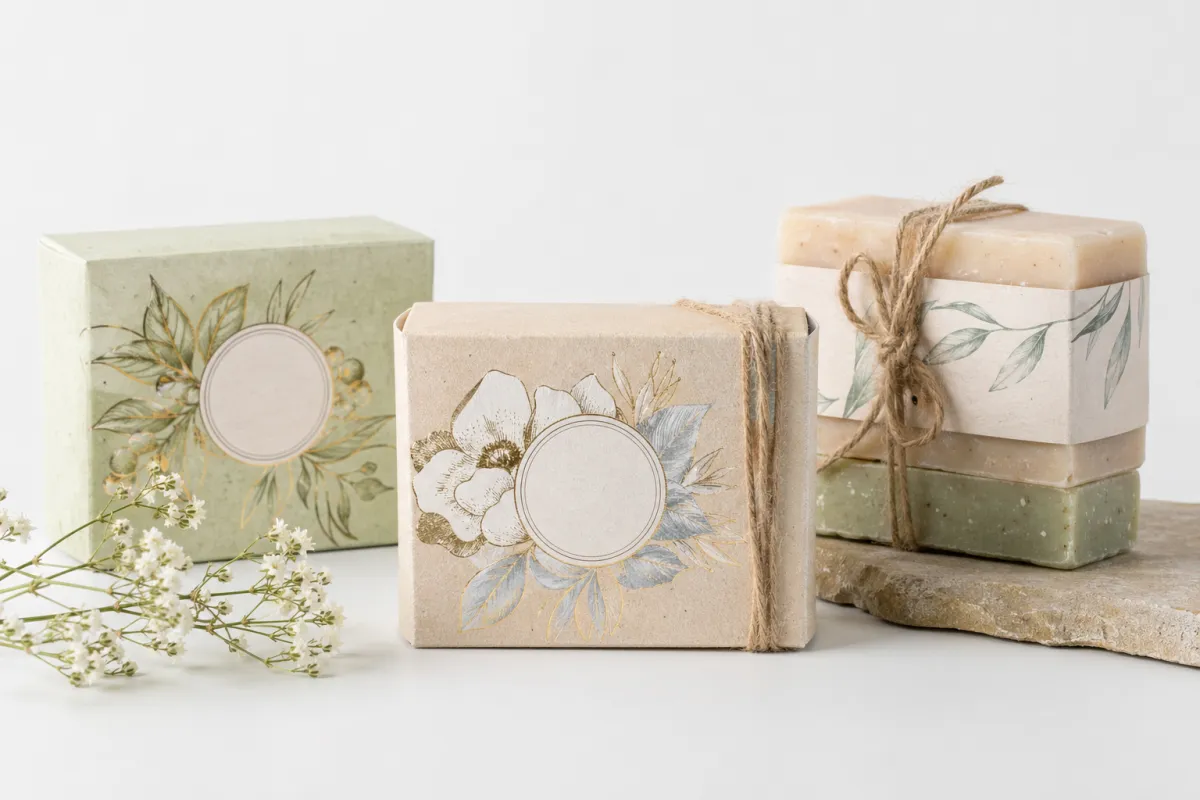
Personalized packaging for artisan soaps starts with a straightforward idea: the package should feel like it belongs to the bar, not like it was borrowed from another product line. That sounds obvious. The reality is messier. I have seen 100-piece runs where the box dimensions were copied from candle packaging and then trimmed with filler. Loose movement followed. So did dented edges and a product that looked cheaper than it was. There is nothing glamorous about a soap bar rattling around in a box like a coin in a dryer.
Think about the main formats. Labels are the lowest-friction option, usually applied to a bar or a paper wrap, and they work well when the soap is cured, dry, and sold in small quantities. Sleeves give you more surface area for scent notes and brand story. Wraps can be paper, glassine, or waxed paper, depending on how much airflow the bar needs. Tuck boxes and kraft cartons are where personalized packaging for artisan soaps starts to feel retail-ready, especially in 250-count or 500-count runs. Rigid gift boxes sit at the premium end: sturdy, giftable, and heavier, which means a higher freight bill and a higher expectation. I am biased here, but I think rigid boxes should be reserved for products that can actually carry the weight of the format, visually and financially.
I learned that the hard way during a supplier meeting in northern New Jersey. A maker wanted a rigid box for a 3.8 oz soap trio, but the finished package came in at nearly 2.5 times the shipping weight of the carton version. The box looked beautiful on the table, yet the margin on each set dropped by 11%. That kind of number changes a launch plan fast. Personalized packaging for artisan soaps has to hold up in a spreadsheet as well as in a mockup, and I say that as someone who has stared at more than one spreadsheet while muttering, "Please be the cheaper option." It rarely is.
First impressions matter because soap is a tactile purchase. Customers pick it up, smell it, read the label, and decide within seconds whether it feels like a $5.00 impulse buy or a $14.00 gift. With personalized packaging for artisan soaps, you are steering four signals at once: color, typography, texture, and structure. If one of them slips, the package can drift toward generic retail packaging instead of handcrafted product packaging.
There is a protection angle too, and it gets skipped more often than it should. Handmade bars can chip at corners, smudge during wrapping, and develop scent transfer if they sit near oils or botanicals. A well-planned personalized packaging for artisan soaps system protects the edges, keeps fragrance notes distinct, and cuts down on returns from crushed cartons. That matters online, where a damaged box can turn into a one-star review before the seller has time to reply. I have seen a beautiful bar get blamed for the shipping damage, which is a little unfair, but customers do not separate the soap from the box the way we do.
For readers comparing carton and label options, our Custom Packaging Products page is a sensible starting point. I also suggest placing a few personalized packaging for artisan soaps examples side by side before signing off on a run. The differences are subtle on a screen, then obvious in hand: 350gsm C1S artboard feels different from 16pt SBS, and a soft-touch coating tells a very different story than an uncoated kraft wrap. A buyer in Minneapolis can feel that difference in less than 5 seconds.
How Do You Choose Personalized Packaging for Artisan Soaps?
Start with the cured bar, then choose the format that fits the channel, the budget, and the unboxing experience. If you need fast-moving custom soap labels for a launch, keep the structure simple. If you want more shelf appeal, soap sleeves and tuck boxes usually add more visual presence without pushing the project into luxury pricing. For seasonal gifting, a rigid gift box may make sense, but only if the price point can carry it. That is the shortest path to personalized packaging for artisan soaps that feels intentional instead of improvised.
There is a practical comparison hiding inside that decision. A market table rewards speed and clarity. A boutique shelf rewards consistency and tidy package branding. E-commerce rewards transit protection. One package rarely wins all three without compromise. I have seen makers try to force one design into every channel, and the result is usually a box that is too large for the booth, too light for shipping, or too generic for retail. Good personalized packaging for artisan soaps starts by accepting that the channel shapes the box almost as much as the art does.
When I help clients choose, I look at three things before I look at color. First, how the bar is cured. Second, how the customer buys it. Third, what the product needs to do after the sale. If the soap is still shedding a little moisture, a tight wrap can be the wrong call. If it is headed into a humid market tent, a carton with a breathable paper wrap may perform better than a glossy printed sleeve. That kind of judgment keeps the package from becoming a pretty mistake.
How Personalized Packaging for Artisan Soaps Works
The workflow for personalized packaging for artisan soaps usually begins with the bar, not the artwork. I ask for exact dimensions in millimeters: length, width, height, and weight after curing. A 3.25 x 2.25 x 1.00 inch bar creates a different packaging problem from a 4.00 x 2.50 x 1.25 inch loaf cut bar. One client in Asheville brought samples in three cure stages, and the bars shrank by 1.5 mm over 21 days. That tiny shift was enough to make the first die line sloppy. The odd thing is that most people notice shrinkage only after they have already approved artwork. By then, everyone is annoyed, including me.
After measurements, the project moves into concept sketches and dielines. A dieline is the flat template showing fold lines, glue panels, and cut lines. In personalized packaging for artisan soaps, this step matters because the package has to support the soap’s cure profile and the seller’s channel. A market seller may want easy-open wraps and quick packing. A boutique account may want a shelf-facing carton with a barcode panel. An online brand may want crush resistance and an insert that stops the bar from rattling across 300 miles of transit, whether that shipment leaves Charlotte, North Carolina or San Diego, California.
Here is the basic timeline I usually see when a client is organized:
- Discovery: 2 to 4 business days for measurements, target cost, and channel planning.
- Design: 3 to 7 business days for artwork, copy hierarchy, and structure decisions.
- Sampling: 5 to 10 business days for a physical prototype or digital proof set.
- Revision: 2 to 5 business days if the bar fit, colors, or text need changes.
- Approval: 1 to 2 business days once the final spec is signed off.
- Manufacturing: typically 12 to 15 business days from proof approval, depending on quantity and finishing.
Personalized packaging for artisan soaps changes by sales channel more than most people expect. At farmers markets, the package has to explain itself fast because the buyer may be standing in direct sun, holding a tote bag, and comparing six scents in a row. In boutiques, shelf blocking and brand consistency matter more. Online, the package must survive handling, scanning, and a few hard corners in a mailer. Gift sets add another layer, because unboxing becomes part of the product and the inner tray can matter as much as the outer box. A bar that looks humble at a market can look downright premium once it is nested properly inside a set.
Project bottlenecks show up in predictable places. The biggest three I see are mismatched dimensions, slow sample approval, and artwork files that arrive as low-resolution JPGs instead of print-ready PDFs or vector files. A supplier can forgive one of those. Two is annoying. Three can add a full week to the schedule. If you are serious about personalized packaging for artisan soaps, bring the dimensions, a clean ingredient list, and a rough mood board before you ask for pricing.
If you want packaging that follows recognized transit logic, look at ISTA testing standards. For soap sets that ship cross-country, that guidance can be the difference between a neat unboxing and a dented corner. I have also seen manufacturers in Ningbo, Zhejiang, and Puebla, Mexico reference FSC-certified paper sourcing when clients want a more sustainable paperboard choice without losing a premium feel. Those references are not decorative. They shape material decisions and shipping expectations in personalized packaging for artisan soaps.
One more practical detail: ask for a white sample and a printed sample if the budget allows. The white mockup tells you whether the fit is correct. The printed version tells you whether the design is actually legible, which is a different question altogether. I have had lovely art fail because the scent name disappeared under a botanical pattern once ink hit the board. That kind of miss is avoidable, and it is usually cheaper to catch on the second proof than after 1,000 boxes have landed at your door.
Key Factors That Shape Cost, Materials, and Fit
Price is where personalized packaging for artisan soaps stops being theoretical. The biggest cost drivers are material, print coverage, finishing, quantity, insert complexity, and shipping weight. A 1-color label on paper is cheap because it uses little material and little press time. A full-wrap tuck box with foil stamping, embossing, and a custom insert is not cheap because every extra touch adds setup, time, and freight weight.
In my notes from a carton negotiation in Shenzhen, the jump from a 1-color kraft sleeve to a 4-color printed box added only 0.6 cents in ink cost, but the real increase came from setup, die tooling, and pack-out time. That pattern is common. Many brands focus on print cost and ignore handling cost. In personalized packaging for artisan soaps, a clean structure with fewer pieces can save more money than shaving paper thickness by 10gsm. I know that sounds a bit unromantic, but packaging tends to reward boring arithmetic, especially on 5,000-piece jobs where a $0.15 per unit difference adds up to $750.
Here is a practical comparison I give clients when they ask what to expect at common order sizes. These are real-world ranges, not promises, because artwork coverage and finishing can move the numbers by 15% or more.
| Format | Typical Look | Best Use | Approx. Unit Cost at 500 Units | Approx. Unit Cost at 5,000 Units |
|---|---|---|---|---|
| Custom label | Simple, direct, flexible | Market bars, low-MOQ launches | $0.12 to $0.28 | $0.04 to $0.10 |
| Paper wrap or sleeve | Handmade, light, clean | Cured bars, scent-focused lines | $0.18 to $0.38 | $0.07 to $0.16 |
| Tuck box | Retail-ready, structured | Boutiques, online sales | $0.42 to $0.85 | $0.15 to $0.32 |
| Kraft carton with window | Natural, visible, practical | Artisan positioning, eco-led brands | $0.55 to $1.05 | $0.24 to $0.48 |
| Rigid gift box | Premium, giftable, heavy | Sets, seasonal gifting, luxury bars | $1.80 to $3.50 | $0.85 to $1.80 |
That table is the reason MOQ matters so much. A 250-unit run often carries a higher per-unit cost because setup fees are spread over fewer boxes. At 1,000 units, the unit price may drop by 18% to 35%, depending on the factory and the finish. This is why personalized packaging for artisan soaps can feel expensive at first and reasonable later. Fixed costs do not shrink just because the brand is small.
Material choice changes the story too. Recycled paperboard can deliver a strong, earthy look if the print is restrained and the typography is clean. Kraft stock supports an honest, workshop feel, especially for rosemary, oat, and charcoal bars. Coated stock gives a sharper print image for color-rich lines, while clear windows show texture and swirl pattern. Moisture resistance matters if the soap is packed before fully airing out, though plastic-heavy barriers are not the answer for every bar. There is a balance between protection and brand values in personalized packaging for artisan soaps.
Brand positioning is not abstract here. A minimal tuck box with one black ink pass can make a $7.00 bar feel considered and contemporary. A rigid lid-and-base box with a textured wrap can justify a $14.00 gift set. The wrong choice does the opposite. I have seen a gorgeous lavender oatmeal bar lose its premium feel because it was packed in a glossy carton with too many icons and a cramped ingredient panel. The package shouted, while the soap whispered. That mismatch is maddening because the soap maker had done everything else right.
There is also a difference between what looks premium in a render and what feels premium in a hand. A 350gsm board with a matte aqueous coat can feel richer than a heavier stock with a slick finish if the design is cleaner. That is the sort of detail a buyer may not articulate, but they feel it. I have watched customers hold two boxes for 3 seconds each, then pick the one that felt quieter. Packaging does that kind of work without asking permission.
Step-by-Step Guide to Building the Right Package
Start with the soap itself. Measure the finished bar after curing, not the mold size, because shrinkage of 1 to 3 mm is common. Note the weight, scent family, and whether the bar is firm enough for a snug sleeve or needs a little airflow. For personalized packaging for artisan soaps, those details decide whether you need a wrap, a box, a tray, or a vented structure.
Next, match the package to the selling channel. If the soap is headed to a craft fair, choose a format that is easy to open, easy to stack, and easy to explain from 3 feet away. If it is going into a boutique, think about facing, shelf height, and color blocking. If it will ship direct to customers, test the design in a mailer or corrugated shipper. I have seen brands overspend on a fancy outer carton only to place it inside a plain postal box, which defeats half the point of personalized packaging for artisan soaps. It is a little like buying a tailored jacket and then stuffing it into a plastic bag; the contradiction shows immediately.
Copy hierarchy is another step that gets rushed. A good package tells the customer what the item is in this order: brand name, scent name, product type, net weight, ingredients, and care notes. If you bury the scent under a large decorative pattern, the shopper spends more time decoding than buying. With personalized packaging for artisan soaps, the reader should be able to find the scent in under 2 seconds and the ingredients in under 6.
Artwork works best with one visual anchor. It might be a botanical illustration, a muted color band, a wax-seal style logo, or a textured paper background. What you do not need is 14 ideas fighting for attention on 1 small carton. That is where personalized packaging for artisan soaps starts to look noisy instead of artisan. I have had to say this more than once: if everything is emphasized, nothing is.
What to ask your supplier before production
Ask for the dieline in editable format, the paper spec, the finish spec, the proof method, and the target lead time. If the supplier cannot tell you whether the board is 14pt, 16pt, or 350gsm C1S, keep asking. I once caught a packaging file built for a 2.75-inch bar even though the actual bar was 3.05 inches wide. That 0.30-inch mismatch would have turned into warped flaps and a reprint. In personalized packaging for artisan soaps, small numbers are the big numbers.
Use samples early. A physical prototype can reveal a lot that screen proofs miss: scent transfer, tab tension, barcode placement, and whether the package can be closed by someone wearing nitrile gloves at a production table. One maker I met at a pop-up in Philadelphia had beautiful artwork but no sample check; the first production run arrived with a window cut that hid the logo half the time. We fixed it by shifting the window 8 mm and increasing the top panel by 4 mm. That is normal. It is also why personalized packaging for artisan soaps should never be approved from a mockup alone. A mockup can flatter a bad idea for far too long.
Then lock the file set. Confirm quantity, finish, ink colors, delivery address, and carton counts per master case. I like a checklist with at least 8 items because a rushed launch can forget the one detail that costs the most: a missing UPC, a wrong net weight, or an ingredient panel that cannot fit the available space. If you are building personalized packaging for artisan soaps, the goal is not just approval. The goal is a repeatable process that works again on the next scent family.
There is one more step that saves grief later: get someone who did not design the box to read it. Not a marketer with a hand on the mouse, but a practical pair of eyes. If they cannot find the scent, the net weight, or the ingredient list in less than a minute, the package is asking too much of the buyer. That test has saved me more than once, and it is a whole lot cheaper than reprinting 3,000 cartons.
Common Mistakes That Hurt Artisan Soap Packaging
The first mistake is designing before measuring. It sounds trivial until you see a loose sleeve that slides 6 mm side to side or a tight tuck box that scuffs the corners on the first insert. In personalized packaging for artisan soaps, a 2 mm error can be enough to make the package look cheap. I have watched teams spend $900 on artwork only to discover that the soap was tall enough to buckle the top flap. That is the sort of thing that makes everyone in the room go quiet for a second.
The second mistake is visual clutter. A lot of small brands try to place their mission statement, ingredient story, certification badge, social handle, and three botanical icons on one side panel that is only 65 mm wide. That is not package branding; that is a traffic jam. Strong personalized packaging for artisan soaps usually has one primary visual move and one secondary support move. More than that, and the package starts to look busy instead of handcrafted.
Humidity is the third issue, and soap makers learn this one the hard way. In a humid storage room or a summer booth, uncoated paper can absorb moisture and warp slightly. On the other side, heavy laminates can trap scent or make a bar feel less natural. I have seen a citrus line lose some of its brightness after sitting in a sealed tray for 6 weeks because the packaging and storage conditions were both too aggressive. Personalized packaging for artisan soaps should respect the chemistry of the product, not fight it. I know that sounds almost too tidy, but the chemistry does not care about our feelings.
There is also a margin problem. Some brands overinvest and spend $2.20 per set on packaging for a soap that retails at $8.00. Others underinvest and then wonder why the bar looks like a craft project after being priced like a premium gift. The right answer usually sits in the middle. If your unit cost is $0.22 for a sleeve and $1.05 for a rigid box, the decision should depend on channel, average order value, and shipping method. That is the real math behind personalized packaging for artisan soaps.
Compliance misses can be expensive too. Ingredient listing, net weight, business identity, and any required warnings need to be readable, not decorative. A beautiful carton that hides the net weight in 5 pt type is asking for trouble. I would rather see a clean 7 pt minimum on a well-planned panel than a crowded design that forces the customer to squint. The best personalized packaging for artisan soaps makes compliance feel integrated, not bolted on.
Another mistake is assuming the box only has to look good in a mockup. The real test is how it behaves after being packed, carried, stacked, shipped, and opened by someone who is not emotionally attached to the project. That is where bad glue tabs, weak folds, and flimsy corners show up. I have had clients call a box "done" because it looked polished in a render, then watch the same box fail after 20 minutes on a market table in hot weather. The render did not lie; it just did not tell the whole story.
Expert Tips for Better Shelf Appeal and Sustainability
One strong visual idea usually outperforms five weak ones. That might mean a single herb illustration, a bold scent color, or a restrained paper texture. I have watched artisan soaps move faster when the package uses 2 typefaces instead of 4 and 3 colors instead of 7. Personalized packaging for artisan soaps does not need to shout to be noticed; it needs to read clearly from 4 feet away, whether the buyer is in a studio boutique in Boston or a farmers market in San Diego.
Think in scent families. A color-coded system for lavender, citrus, mint, and oat can help buyers shop faster, especially when they are comparing 6 bars at a market table. A clean naming system matters too. “Midnight Patchouli” and “Patchouli Noir” are both dramatic, but they should be visually distinct if you want the customer to remember the difference. That is practical package branding, not just aesthetic preference. I like this approach because it reduces decision fatigue for the shopper and makes the booth feel organized without needing a giant sign saying "organized."
Sustainability works best when it is specific. Recycled paperboard, FSC-certified stock, minimal coating, and water-based inks can keep the package aligned with eco-conscious messaging while still looking polished. I have seen a 100% kraft box with a single black ink pass outperform a glossy carton because the restraint felt honest. If you want verification on sourcing claims, the FSC site is a sensible place to start, especially when you are planning personalized packaging for artisan soaps with recycled or certified paper.
Test the unboxing experience in the real world. Put the soap in the box, shake it 10 times, drop the mailer from table height once, and leave the package in a warm room for 48 hours. Design mockups rarely show whether a flap catches, a label peels, or a fragrance note transfers to the carton. I have had clients discover all three in the same week. Personalized packaging for artisan soaps should pass a practical test, not just a photo test. If a sample survives my abuse, it usually survives a customer’s porch, and that is a better standard than the glossy rendering people fall in love with.
There is a comparison most makers overlook: packaging that photographs well online is not always the same as packaging that survives market handling. A delicate embossed box may look fantastic under studio lights but show scuffs after 12 hand-offs in an event tent. A plain kraft carton may seem modest in photos and then outperform everything on a crowded retail wall. The sweet spot is where personalized packaging for artisan soaps handles both jobs without becoming too heavy, too glossy, or too fragile.
I also pay attention to the back panel because that is where trust quietly accumulates. Customers are increasingly reading ingredient lists, origin notes, and usage directions. A neat rear panel can make a small brand feel much larger than it is, which is useful when a soap is competing against a wall of polished mass-market bars. That is one of those unexpected connections I keep running into: the package is doing branding work, compliance work, and logistics work at the same time, and the best versions never look like they are trying that hard.
And yes, sustainability can still feel premium without the usual sermon. A calm layout, accurate claims, and a board that feels good in the hand can do more than a pile of eco badges. Buyers are not fooled by clutter dressed up as virtue. They can smell the overreach from across the aisle, kinda like they can smell the soap.
Next Steps for Planning Personalized Packaging
If you are ready to move forward, start with a short action list: measure the soap, define the sales channel, choose a package format, and set a target unit cost. Those four decisions remove half the guesswork in personalized packaging for artisan soaps. They also make the supplier conversation more productive, because you can ask for exact numbers instead of vague "something premium" language.
Before you talk to a vendor, gather 3 sample references, 1 material preference, and 1 finish preference. That could be a kraft sleeve from one brand, a rigid gift box from another, and a matte tuck box from a third. Bring those references with the bar dimensions and a rough quantity list, such as 250, 500, and 1,000 units. When a client does that, I can usually quote or compare options in one call instead of three. That efficiency matters in personalized packaging for artisan soaps.
Ask for tiered quotes so you can compare labels, wraps, sleeves, and boxes on equal terms. A 250-unit price can look alarming until you see how much it drops at 1,000 units. I have seen a paper sleeve go from $0.41 to $0.19 per unit after the MOQ was crossed, and a tuck box fall from $0.68 to $0.15 per unit at 5,000 pieces. That kind of drop can change the whole launch plan. It is one of the clearest reasons personalized packaging for artisan soaps should be priced across multiple breakpoints, not just one.
Here is the checklist I recommend before production starts:
- Confirm bar dimensions in mm, not guesses from the mold.
- Choose a format that fits the channel: market, boutique, e-commerce, or gift set.
- Set the target unit cost, including inserts and freight.
- Verify ingredients, net weight, and any required copy.
- Approve the dieline and sample before final print.
- Check shipping method, master carton counts, and timeline buffers.
- Decide whether sustainability means recycled stock, FSC paper, or lower ink coverage.
I would also build a 2-week buffer into any seasonal launch. Simple label projects can move quickly, but personalized packaging for artisan soaps with Custom Printed Boxes, foil, or inserts usually needs more room for revisions and samples. In practice, 12 to 15 business days after proof approval is common for production, and that does not include design back-and-forth. If your holiday market starts on a Friday, count backward and protect the calendar. I have seen too many people trust a calendar like it is a promise. It is not. It is a suggestion with teeth.
When the brief is done, hand it to your supplier as a clean decision document: product specs, target price, quantities, finish, timeline, and 2 or 3 reference images. That single file can save days of email. It also makes personalized packaging for artisan soaps more predictable from one scent family to the next. If you want the simplest rule of thumb, it is this: measure once, quote twice, approve once, and print only when the fit is right.
That is the real path to personalized packaging for artisan soaps that sells. Not a flashy effect for its own sake. Not a box that looks expensive but ruins the margin. A package that protects the bar, explains the brand, and makes a customer feel like they found something worth paying for. In my experience, that is the difference between soap that sits and soap that moves. The practical takeaway is simple: start with the cured bar, choose the channel first, and do not approve any design until the sample survives handling, shipping, and a second pair of eyes. That is the version that keeps a launch on schedule and the product looking like it belongs on the shelf.
FAQs
How much does personalized packaging for artisan soaps usually cost?
Cost depends most on material, print coverage, quantity, and finishing, so labels are usually cheapest and rigid boxes cost more. A 500-unit run might land around $0.12 to $0.28 for labels and $1.80 to $3.50 for rigid gift boxes, while 5,000 units can drop the per-unit price significantly; for example, a simple tuck box can land near $0.15 per unit at 5,000 pieces. Ask suppliers for tiered quotes at 250, 500, and 1,000 units so you can see the real spread in personalized packaging for artisan soaps. I would also ask for shipping cost, because the cheap-looking option is not always the cheapest once freight shows up from places like Dongguan or Ningbo.
What is the best packaging format for handmade soap bars?
Use breathable wraps or paper-based cartons for soaps that still need to release moisture after curing. Choose sleeves or tuck boxes when you want more shelf presence without moving to a premium rigid format. Pick the format based on where the soap is sold, because market tables, boutiques, and e-commerce each create different needs. In many cases, the best personalized packaging for artisan soaps is the one that matches the channel first and the style second. My own bias is to keep the first version simple, then upgrade only when sales data says the market wants more polish.
How long does the packaging process take?
Simple label projects can move faster, while fully custom boxes usually need extra time for dielines, proofing, and sample rounds. A well-run project may finish manufacturing 12 to 15 business days after proof approval, but design revisions and sample checks can add 1 to 2 weeks before that. If you are ordering for a seasonal drop or gift bundle, start earlier than you think you need to for personalized packaging for artisan soaps. The worst packaging deadlines are always the ones that arrive on a holiday weekend, which feels like a joke until it happens to you.
What information should go on artisan soap packaging?
Include the brand name, scent name, net weight, ingredients, and any care or storage instructions that help the customer use the soap well. Add batch or lot coding if you want tighter inventory control and easier traceability. Keep the hierarchy clean so the story is readable without burying the practical details, which is especially important in personalized packaging for artisan soaps sold in retail settings. A package that makes the customer squint is doing too much and too little at the same time.
Can personalized packaging be eco-friendly and still look premium?
Yes, recycled paperboard, kraft stock, and selective printing can create a polished look without heavy material use. Premium does not have to mean glossy everywhere; a restrained finish can feel more artisan and more expensive. The strongest sustainable packages usually balance visual restraint, material efficiency, and a good unboxing experience, which is exactly what shoppers expect from personalized packaging for artisan soaps. I actually think the most convincing eco-friendly packages look calm, not loud.


