Buyer Fit Snapshot
| Best fit | Personalized Packaging for Cosmetics Brand projects where brand print, material claims, artwork control, MOQ, and repeat-order consistency need to be specified before quoting. |
|---|---|
| Quote inputs | Share finished size, material target, print colors, finish, packing count, annual reorder estimate, ship-to region, and any compliance wording. |
| Proofing check | Approve dieline scale, logo placement, barcode or warning zones, color tolerance, closure strength, and carton packing before bulk production. |
| Main risk | Vague material claims, crowded artwork, missing packing details, or unclear freight terms can make a low unit price expensive after revisions. |
Fast answer: Personalized Packaging for Cosmetics Brand: How It Works should be specified like a repeatable production item. The safest quote records material, print method, finish, artwork proof, packing count, and reorder notes in one written spec.
Production checks before approval
Compare the actual filled-product size with the drawing, then confirm tolerance on folds, seals, hang holes, label areas, and retail display edges. Reserve space for logos, QR codes, warning copy, and material claims before decorative graphics fill the panel.
Quote comparison points
Review material grade, print process, finish, sampling route, tooling charges, carton quantity, and freight assumptions side by side. A quote is only useful when the supplier can repeat the same color, closure quality, and packing count on the next order.
Personalized Packaging for Cosmetics brand work usually starts with a question that sounds simple and turns out to be anything but: what should the box do before anyone opens the serum? I have watched a plain kraft carton make a $22 cleanser feel like a commodity, then seen a rigid compact box with a 1.5 mm greyboard shell and soft-touch lamination push the same price point into boutique territory. That difference is not decorative fluff. It is brand perception doing measurable work on shelf, online, and in the hand, and the margin effect can show up by the first 500-unit reorder.
I learned that lesson on a factory floor outside Shenzhen in Guangdong, where a buyer from a mid-sized skincare label stood beside two samples on a steel table under 5,000K lighting. One was a standard folding carton. The other had an embossed logo, a silver foil band, and a custom insert holding a 30 ml glass bottle upright. She kept picking up the second sample even though the formula inside had not changed by a single gram. That reaction explains why personalized Packaging for Cosmetics brand decisions matter: the package can build trust before a shopper reads an ingredient list or tests a texture.
For a packaging team, the cleanest definition is straightforward: Personalized Packaging for Cosmetics brand means packaging shaped around the product, the audience, the sales channel, and the brand story rather than a one-size-fits-all carton pulled from a catalog. That can include Custom Printed Boxes, rigid boxes, sleeves, labels, inserts, mailers, protective shippers, and outer cartons. If the system fits a 15 ml lip oil, a 12-pan palette, and a holiday gift set without looking copied and pasted, it is doing its job, whether the line ships from Dongguan, Ningbo, or a co-packer in Southern California.
Good personalized Packaging for Cosmetics brand design does three things at once. It protects fragile goods like glass dropper bottles and pressed powders, it carries compliance copy such as ingredients and batch codes, and it creates a visual story that stays consistent across the line. I have seen a 3-SKU skincare launch raise its perceived shelf value simply by moving from mixed-size stock boxes to a unified 18 pt SBS carton system with a shared color bar and one recurring tactile detail. That is package branding in practice, not theory, and it can cut artwork revisions from three rounds to one.
What does personalized packaging for cosmetics brand mean?
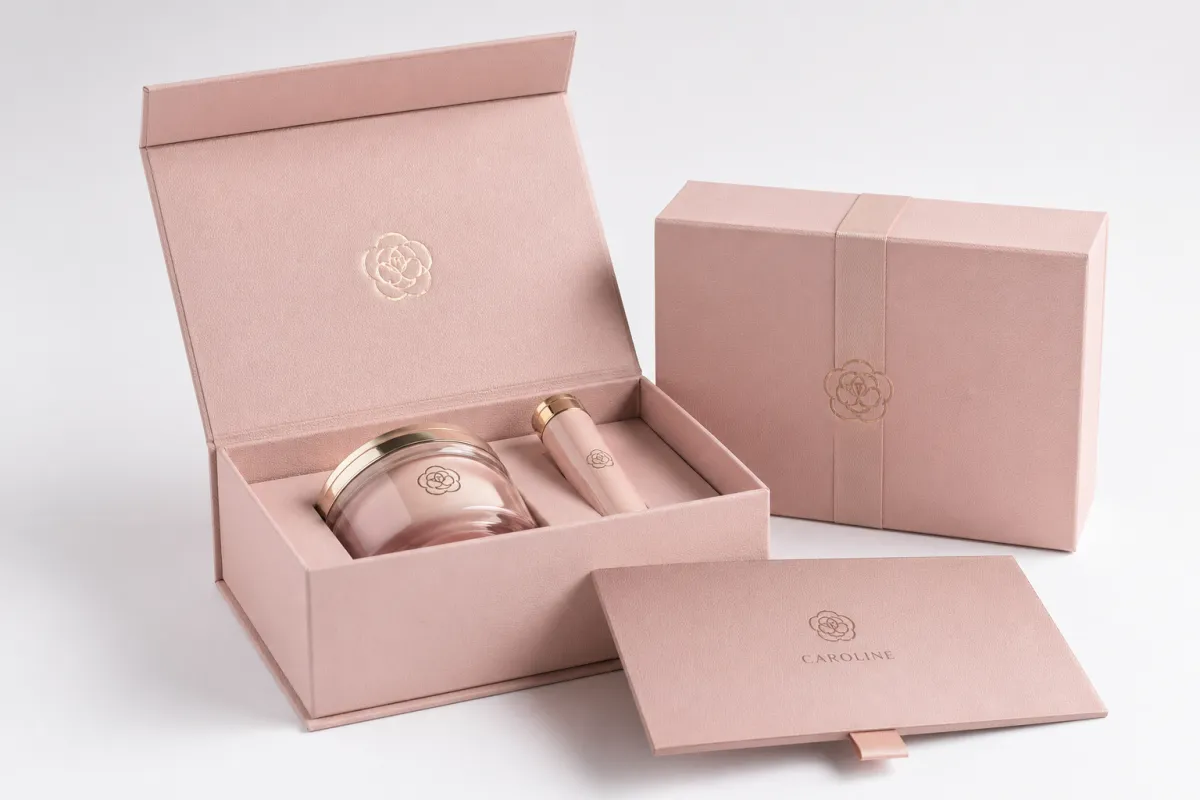
Personalized Packaging for Cosmetics brand starts with the product itself, but the stronger versions are built around the first three seconds of attention. A buyer in a retail store sees shape, color, finish, and hierarchy before reading claims. A DTC customer sees the box on a doorstep in Chicago or Atlanta, then decides in about 10 seconds whether the brand feels premium enough to post. Those moments are short, yet they carry a lot of weight, especially in categories where product packaging has to do the selling before the formula gets a chance.
Many teams miss a simple point: a premium package does not need to be heavy or complicated. I visited a cosmetics co-packer running two launches on the same line in Dongguan, one in a plain white folding carton and one in a matte black sleeve with a spot UV logo. The second pack cost only $0.04 more per unit at 10,000 pieces, yet the client reported stronger retailer confidence because the box looked intentional from 2 meters away. That is why personalized packaging for cosmetics brand decisions should track actual shopper behavior, not just design mood boards.
A complete packaging system can include retail packaging cartons, rigid presentation boxes, secondary sleeves, paperboard or molded-pulp inserts, tamper-evident labels, shipping mailers, and protective layers like corrugated outer shippers. Smart brands assign each layer a specific job. The inner carton carries the story. The insert stops movement. The shipper survives a 1.2 m drop test, which is the kind of number that matters after a parcel rides 800 miles through a FedEx hub in Memphis. If the line sells online and in stores, those layers need to work together or the experience breaks apart fast.
“If the carton feels expensive before you touch the jar, you have already won half the sale.”
That line came from a client meeting in Los Angeles where a founder compared two prototypes for a 50 ml face cream. One sample used a simple tuck-end flap. The other used a shoulder-style rigid box with a 0.5 mm silver foil line around the lid. She chose the second option even though it added $0.28 per unit at 5,000 pieces. Her reason was direct: she wanted the packaging to justify the shelf price in a single glance, especially next to an $18 competitor in the same Ulta fixture. That is the everyday logic behind personalized packaging for cosmetics brand work.
The phrase also matters because it points to specificity. A blush compact needs different protection than a fragrance vial. A serum box needs different moisture resistance than a paper tube for a lip balm. The more precisely you define the audience, channel, and fill weight, the more likely your branded packaging will support the product instead of fighting it. In practice, that means matching substrate, finish, structure, and graphic system to the SKU instead of forcing one template across everything, even when the line includes 4 ml samples and 100 ml hero sizes.
For readers comparing options, the most useful internal starting points are our Custom Packaging Products page and a few Case Studies showing how other brands balanced cost, finish, and protection. Review both before artwork is approved, because the difference between a decent carton and a smart one usually shows up in the details: a 2 mm board choice, a 0.25 mm dieline adjustment, or a coating that resists fingerprints in transit from Guangzhou to Los Angeles.
How does personalized packaging for cosmetics brand move from concept to artwork?
Personalized packaging for cosmetics brand projects usually begin with a brief, though the strongest briefs read more like a production memo than a creative prompt. They include target audience, retail price, channel mix, hero SKU, desired board thickness, print quantity, and any compliance text that must fit on pack. I have seen teams waste two weeks because they skipped the basics and later discovered that the barcode had to sit on a 22 mm panel, not the 18 mm panel the design team had imagined.
The next step is a structural conversation. A dieline is not just a technical file; it is the boundary that keeps design from drifting into expensive mistakes. If a 120 ml bottle has a shoulder diameter of 38 mm, the insert cavity and tuck flap need to respect that measurement from the start. A good production partner in Shenzhen or Dongguan will map the structure in millimeters, then design around bleed, glue tabs, and panel orientation so the final Custom Printed Boxes line up with the approved mockup.
Material choice follows structure. A 350gsm C1S artboard might work for a lightweight serum carton, while a 1.5 mm greyboard wrapped in printed art paper makes more sense for a gift set. Finishes change the feeling quickly: soft-touch lamination gives a velvety surface, aqueous coating helps with scuff resistance, and foil stamping can lift a logo without turning the whole box into a mirror. That is the real craft of personalized packaging for cosmetics brand work: balancing protection, price, and the moment a customer touches the pack.
I once watched a supplier negotiate with a brand manager over a $0.02 per unit difference on a 25,000-piece run. The manager wanted matte varnish plus embossing, while the supplier suggested dropping the embossing and putting that money into better paper stock. The final sample looked calmer, cleaner, and more expensive than the original mockup. The decision likely saved the launch by preserving both the budget and the visual hierarchy, and package branding looked stronger because of it.
Once structure and materials are aligned, artwork can finally do its job. That means setting type sizes, checking contrast on dark substrates, reserving batch code space, and building a repeatable system across SKUs. A skincare family might use one color band for cleansers, one pattern for serums, and one foil accent for gift sets, while still keeping the same logo placement and typography scale. That is how personalized packaging for cosmetics brand projects feel connected without becoming repetitive, and it also makes reorders easier when the factory in Ningbo reruns the same job six months later.
One practical standard I encourage brands to use is a sample ladder: structural sample first, press proof second, then color target approval before production. If the sample is wrong by 3 mm, the artwork should not move forward. If the color drifts too far from the approved Pantone reference, the client should stop and correct it. For testing expectations and shipping durability, I often point teams to the International Safe Transit Association at ISTA, because drop tests and compression checks matter more than a pretty render.
Personalized packaging for cosmetics brand: process and timeline
The workflow for personalized packaging for cosmetics brand projects looks straightforward on paper: brief, concept, structural sample, artwork, proofing, production, and shipping. In real life, the calendar bends around approvals. A clean folding carton job might move from brief to shipment in 12 to 15 business days after proof approval, while a rigid box with a magnetic closure, custom insert, and foil detail can stretch to 25 to 35 business days. Those numbers shift with factory load in Shenzhen, Dongguan, or Huizhou, but they are useful planning anchors.
Timeline pressure usually comes from four places: material availability, finishing complexity, approval speed, and design revisions. A simple carton on 18 pt stock with one-color print may be ready quickly, but a multi-piece gift set with spot UV, foil, and a formed tray can trigger extra prepress checks and a longer drying window. I have seen a launch slip by nine days because the brand revised a single compliance line after the final proof had already been signed. That kind of delay is common in personalized packaging for cosmetics brand work, and it is usually preventable.
There is a clear difference between a fast retail carton and a presentation box that needs to feel like a gift. A folding carton is often the right answer for a lotion tube or mascara because it keeps unit cost lower and still provides strong visual real estate. A rigid box, by contrast, gives more structure and a more deliberate unboxing experience, but it carries higher material and assembly cost. The choice should follow the SKU, not the mood board, especially if the retail shelf price sits between $14 and $32.
I remember a supplier meeting where a buyer asked whether her three-piece skincare set could ship in a single rigid format with nested inserts. The answer was yes, but only after the team accepted a longer pre-production phase and a minimum order quantity of 3,000 units per size. That extra planning made sense because the brand wanted one look across cleanser, toner, and serum. Personalized packaging for cosmetics brand systems get easier to manage once the launch calendar includes a 2-week buffer for revisions, a 1-week buffer for freight, and another cushion for unexpected barcode edits.
The cleanest schedule I have seen blocks decisions early. First, lock dimensions. Second, approve structure. Third, sign off on print-ready artwork. Fourth, release production. Fifth, reserve shipping space before the cartons are even packed. Brands that try to approve structure and color on the same day usually invite rework. Brands that separate those decisions reduce churn, and their retail packaging tends to reach market without last-minute scrambles, even when the shipment leaves from a port like Yantian or Long Beach.
For sustainability-minded teams, the timeline should also account for sourcing. FSC-certified boards, recycled content liners, and water-based coatings may take a little more coordination, but the planning pays off. The Forest Stewardship Council at FSC is a useful reference point if your team wants traceability claims that are more than decorative copy on a carton. Buyers and consumers ask sharper questions now, and personalized packaging for cosmetics brand choices need to hold up under that scrutiny.
Cost and pricing factors that shape the final quote
The quote for personalized packaging for cosmetics brand work is shaped first by five things: board grade, format, print method, finish level, and quantity. A simple tuck-end carton in 300gsm SBS at 10,000 pieces can sit in a very different price band than a rigid box with a magnet, wrapped tray, and foil logo at 2,000 pieces. If a brand does not ask for itemized pricing, it becomes almost impossible to see where money is going or where value can be shifted.
Quantity matters more than most founders expect. A run of 2,500 units may carry a much higher unit cost than 10,000 units because setup work, plate creation, and machine time are spread across fewer boxes. On a recent quote I reviewed from a supplier in Guangdong, the unit price on a folding carton dropped from $0.31 at 2,500 pieces to $0.18 at 10,000 pieces, with the same 18 pt board and two-color print. That is not magic; it is volume math. Personalized packaging for cosmetics brand budgets improve when teams think in SKU volumes, not generic packaging spend.
Premium treatments also shift the economics quickly. Foil stamping might add $0.03 to $0.08 per unit. Embossing can add another $0.02 to $0.05. A clear window, specialty laminate, or molded insert can push the quote higher again. I often tell clients the right question is not “What is the cheapest finish?” but “Which single effect will make the package feel most deliberate?” With branded packaging, one strong tactile cue usually beats three minor ones, especially on a 15 cm x 20 cm carton seen under store LEDs.
| Format | Typical use | Estimated unit cost at 5,000 | Estimated unit cost at 10,000 | Notes |
|---|---|---|---|---|
| Folding carton | Serums, mascaras, lip care | $0.22 - $0.34 | $0.14 - $0.24 | Best for efficient personalized packaging for cosmetics brand launches and retail display |
| Rigid box | Gift sets, premium kits | $1.10 - $2.40 | $0.85 - $1.70 | Higher material and assembly cost, stronger unboxing experience |
| Sleeve + tray | Palettes, curated sets | $0.48 - $0.92 | $0.31 - $0.63 | Good middle ground for package branding and shelf visibility |
| Mailer + insert | DTC orders, subscription kits | $0.62 - $1.25 | $0.42 - $0.88 | Useful for shipping protection and repeat purchase retention |
Hidden costs can matter just as much as the printed price. Tooling for specialty inserts, sample freight, color corrections, warehousing, and reprints after a failed approval cycle all add up. I have seen a launch budget blown by a rushed second proof because the first proof did not account for a 4 mm insert offset. The cheapest quote can become the most expensive outcome if the packaging is wrong and the team has to reorder. That is why personalized packaging for cosmetics brand planning should include a 7% to 10% contingency line.
There is also a strategic pricing point that gets missed. If you are launching five SKUs, do not ask for five completely different systems unless the products truly need them. A smarter approach is to build one core architecture with shared board thickness, shared print layout logic, and one or two variable elements such as a color band or foil mark. That keeps the quote saner, simplifies reorders, and strengthens brand identity across the line, whether the goods are boxed in Ningbo or packed for fulfillment in New Jersey.
Step-by-step guide to building the right package
Step 1 is defining the product promise. A cleanser for oily skin does not need the same emotional language as a luxury eye cream, even if both live in 50 ml cartons. The box should say something about the formula before a customer reads a single claim. I like to ask clients what they want a shopper to feel in the first 5 seconds: clinical trust, spa calm, ingredient transparency, or boutique luxury. That answer shapes personalized packaging for cosmetics brand decisions more than any trend board.
- Gather the facts: exact dimensions, fill weight, compliance copy, barcode size, and sustainability goals such as FSC or recycled content.
- Choose the structure: folding carton, rigid box, sleeve, tray, insert, or mailer based on channel and product fragility.
- Set the design rules: logo placement, color palette, typography scale, and how much empty space the carton can carry before it starts feeling blank.
- Map the production limits: print method, board thickness, finish compatibility, and any area that must stay clear for codes or seals.
- Review a physical sample: I am biased here, honestly, because a render can lie to you with a straight face while a sample tells the truth immediately.
- Approve with intent: sign off only after the team checks fit, color, closure, and shipping behavior, not just the pretty front panel.
Step 2 is choosing the structure that protects the product and supports the channel. A DTC face oil may do fine in a mailer with a molded insert. A retail eyeshadow palette may need a sleeve and tray so the unboxing feels deliberate while the palette stays secure on a shelf. A powder compact with a mirror needs very different inside engineering than a serum bottle with a dropper. I once saw a gorgeous box fail because the bottle rattled inside like a tiny maraca, and the test team caught it only after the 200-unit pilot run.
Step 3 is deciding how the brand should feel in hand. Soft-touch lamination, matte varnish, embossing, foil, aqueous coating, and uncoated paper all send different signals. Personally, I think too many brands overdo the finishes because they assume more effects equal more luxury. Usually, that just creates visual noise. One crisp logo treatment and one carefully chosen tactile detail are often enough for personalized packaging for cosmetics brand work to land with confidence, especially on a carton that is only 60 mm wide.
Step 4 is building the artwork system. This is where a brand can either gain clarity or wander off into a swamp of inconsistent shades, random type sizes, and awkward copy wrapping around a flap. I have sat through design reviews where everyone agreed the carton looked “premium” but nobody could explain where the SKU name should sit. That is a red flag. If the hierarchy is not clear, the package will look uncertain in a store, and uncertainty is expensive.
Step 5 is testing the package in the real world. Put the carton in a shipping box. Shake it gently. Drop it from counter height onto a hard floor if your quality process allows it. Set it next to a competitor's pack and look at both from two meters away. Then look at them again on a phone screen because that is where a lot of shopping happens now. If the package works in all those contexts, your personalized packaging for cosmetics brand strategy is probably on the right track, and the next reorder should be easier than the first.
Common mistakes with personalized packaging for cosmetics brand
One of the biggest mistakes is designing for mood instead of use. I have seen teams fall in love with a concept board and then discover the carton can’t fit a safety seal, a barcode, and mandatory ingredient text. That is not a small oversight; it is a production problem pretending to be a creative decision. Good personalized packaging for cosmetics brand work keeps the romance, but it checks the measurements first, down to the 1 mm code clearance.
A second mistake is overcomplicating the finish stack. Foil plus embossing plus spot UV plus texture coating can feel exciting in a meeting, and then the quote arrives and everyone stares at the screen like it has insulted their family. I understand the temptation. But cosmetics packaging does not need to shout to feel premium. Sometimes a simple board upgrade gives a better result than three decorative effects fighting each other, especially on a box sold at $24 or less.
Another common issue is treating all SKUs as if they were the same object. A cream jar, a mascara, and a serum dropper may belong to the same brand family, but their packaging needs are not identical. If the line uses the same box style for every product, the taller bottle may look awkward and the smaller one may rattle. The whole system starts to feel forced. Personalized packaging for cosmetics brand should feel tailored because the product set is actually different, not because a design template was stretched across every SKU.
Brands also get tripped up by poor copy discipline. I have watched a launch stall because three different teams edited the same carton text and nobody owned the final proof. The result was a typo in a shade name and a missing recycling line. That sort of error is maddening because it is avoidable, and it still happens in factories from Guangzhou to New Jersey. A clean proofing workflow is boring, but boring is cheaper than reprints.
There is also a subtle mistake around sustainability claims. A box can be recyclable, recycled-content, or FSC-certified, but the claim has to be accurate and supported. Consumers have gotten sharper, and so have retailers. If the packaging says one thing and the sourcing file says another, trust erodes quickly. Good personalized packaging for cosmetics brand strategy treats sustainability as a documented part of the build, not a decorative line in a marketing deck.
Finally, many teams underestimate what happens after launch. Reorders, storage, shipping damage, and seasonal variations all matter. If the first run was perfect but the second run requires new plates, new paper stock, or a color correction, the brand can lose time and money fast. I like to plan packaging like a living system instead of a one-time project. That mindset keeps the line stable and saves everyone a headache later, especially when the 2026 holiday set needs to match the 2025 flagship set within a Delta E of 2.
Expert tips for a stronger brand result
First, build around one signature detail. That detail can be a foil line, a custom opening motion, a repeated texture, or a color panel that shows up across every SKU. I am not saying every box should look identical. I am saying the system should have a recognizable rhythm so shoppers can spot the brand without squinting. That kind of brand identity does more than pretty design ever will, and it helps a buyer in a Target aisle identify you from 3 feet away.
Second, ask for a physical sample before the artwork is finalized. I know, I know, everyone wants to skip to the pretty mockup because it feels faster. It is not faster. It is usually just a more expensive mistake waiting for a second meeting. A sample exposes structural issues, fit problems, and coating surprises that a screen will politely hide from you, including a lid gap of 2 mm that becomes obvious only when the box is in your hand.
Third, think about how the package photographs. A lot of cosmetics buying now happens through a phone, which means reflections, glare, and type contrast matter more than some teams expect. A gloss black box may look luxurious in person and unreadable in a product carousel. A cream or muted paper tone with a strong black logo can sometimes perform better online. I have seen a slightly quieter package outperform a louder one simply because it could be read in bad lighting on an iPhone at 8 p.m. That is not glamorous, but it is real.
Fourth, make the unboxing experience feel purposeful rather than staged. A magnetic rigid box with a clean lift tab, a nested insert, and one well-placed message card can feel thoughtful without becoming theatrical. Honestly, I think too many unboxings try to produce a movie trailer when all the customer wants is a pleasant, premium reveal. A little restraint goes a long way in personalized packaging for cosmetics brand work, particularly for a $38 serum set or a $72 holiday kit.
Fifth, keep reorders in mind from day one. Ask whether the structure can be repeated, whether the board is widely available, and whether the color recipe can be held on the next run. A beautiful one-off package is nice. A beautiful package that can be reordered without drama is far better. That is the kind of quiet operational strength that protects margins, especially when the next production slot in Shenzhen opens three weeks later than planned.
Sixth, remember that the box is part of the product story, not an accessory. I have met founders who treated packaging as the thing they would sort out later, after the formula, after the launch plan, after the influencer outreach, after basically everything. That order tends to create friction. The packaging should be in the room early because it affects cost, shelf fit, freight, and how the customer reads the brand in the first place, often before the 100 ml bottle is even photographed.
Next steps for personalized packaging for cosmetics brand
If you are building a launch or revising an existing line, the most useful next move is to audit what your current packaging is actually doing. Does it protect the product? Does it fit the channel? Does it make the brand feel more believable, or just more decorated? Those are different questions, and the answers are not always flattering. That is fine. Packaging audits are supposed to be honest, and a 10-minute side-by-side review often reveals more than a 20-slide deck.
From there, define the non-negotiables: size, substrate, finish, compliance space, sustainability target, and budget ceiling. Then decide what emotional role the package should play. Should it feel clinical, botanical, indulgent, minimalist, or giftable? Once that decision is clear, the rest of the personalized packaging for cosmetics brand process becomes much easier to evaluate. You stop arguing about vague taste and start checking whether the box serves the product.
If you need a practical starting point, gather three things: a sample of the current pack, the exact product dimensions, and one competitor package you respect. Put them side by side. Then ask what yours is saying that the others are not. I have done that exercise with brands that thought they were “pretty close” to premium, and the gap was often obvious within five minutes. Sometimes the fix was a finish change. Sometimes it was a new structure. Sometimes, honestly, it was a redesign from the ground up because the original box had the personality of a tax form.
For teams ready to move forward, our Custom Packaging Products page can help narrow the format, and our Contact Us page is the quickest way to start a quote conversation. Bring the real product measurements, not estimates scribbled on the back of a notebook, because a 0.5 mm error can ripple into a 2 mm fit issue later in the line. I say that with love, and a little pain.
Once the structure is chosen, lock the artwork, approve a sample, and protect the launch calendar with a small buffer. That buffer has saved more beauty launches than any fancy presentation deck I have ever seen, especially when freight from Guangdong slips by four days or a proof needs one last barcode correction. If you want the shortest path to a better result, start with fit, then finish, then the story. In that order.
FAQs
What is personalized packaging for cosmetics brand products?
It is packaging designed specifically for one cosmetic product line, audience, and sales channel rather than pulled from a generic stock format. That can include custom printed boxes, inserts, sleeves, mailers, and rigid presentation packaging, often built around a 30 ml serum, a 50 ml cream, or a 12-pan palette.
Which packaging format works best for skincare?
There is no single winner. Folding cartons work well for serums and creams, rigid boxes fit premium kits, and sleeve-and-tray formats are useful for curated sets. The right choice depends on fragility, price point, and where the product will be sold, whether that is Amazon, Sephora, or a direct-to-consumer storefront.
How much does personalized packaging for cosmetics brand launches usually cost?
Costs vary widely based on board grade, quantity, print method, and finish. A folding carton may land under a dollar per unit at scale, while rigid gift packaging can be several times higher. The best way to control cost is to standardize the structure and keep finishes focused, then ask for quotes at 2,500, 5,000, and 10,000 pieces.
How long does production usually take?
A simple carton can move fairly quickly after proof approval, while rigid boxes and multi-component sets take longer. A practical planning range is about 12 to 15 business days for simpler cartons and 25 to 35 business days for more complex presentation packaging, depending on approvals, factory load, and shipping from the region.
What finishes make cosmetic packaging feel premium?
Soft-touch lamination, foil stamping, embossing, and careful use of matte or gloss contrast are common options. My view: one strong finish usually looks better than stacking too many effects on the same box, especially if the brand wants to stay readable at arm's length.
Can personalized packaging help with online sales?
Yes. The package affects the unboxing experience, protects the item during transit, and shapes how the brand looks in photos and social content. If the box looks good on a phone screen and arrives intact after a 1,200-mile shipping journey, it does a lot of heavy lifting.
Should sustainability change the packaging design?
Absolutely. Sustainable board choices, recycled content, and water-based coatings can influence structure, finish, and timeline. The packaging should be designed around the sustainability goal, not patched together afterward, and the claim should match the sourcing file and supplier paperwork.
What is the biggest mistake brands make?
They often design for appearance before checking fit, compliance, and shipping behavior. A beautiful box that cannot hold the product properly is just an expensive problem with nice graphics, and it can cost a launch an extra reprint cycle and a week of calendar time.
The most practical takeaway is simple: build the box from the product outward, not from the mood board inward. Measure first, sample early, keep the finishes disciplined, and leave a little time in the schedule for one more proof than you think you need. That is how personalized packaging for cosmetics brand projects move from looking good on screen to performing well in the market.