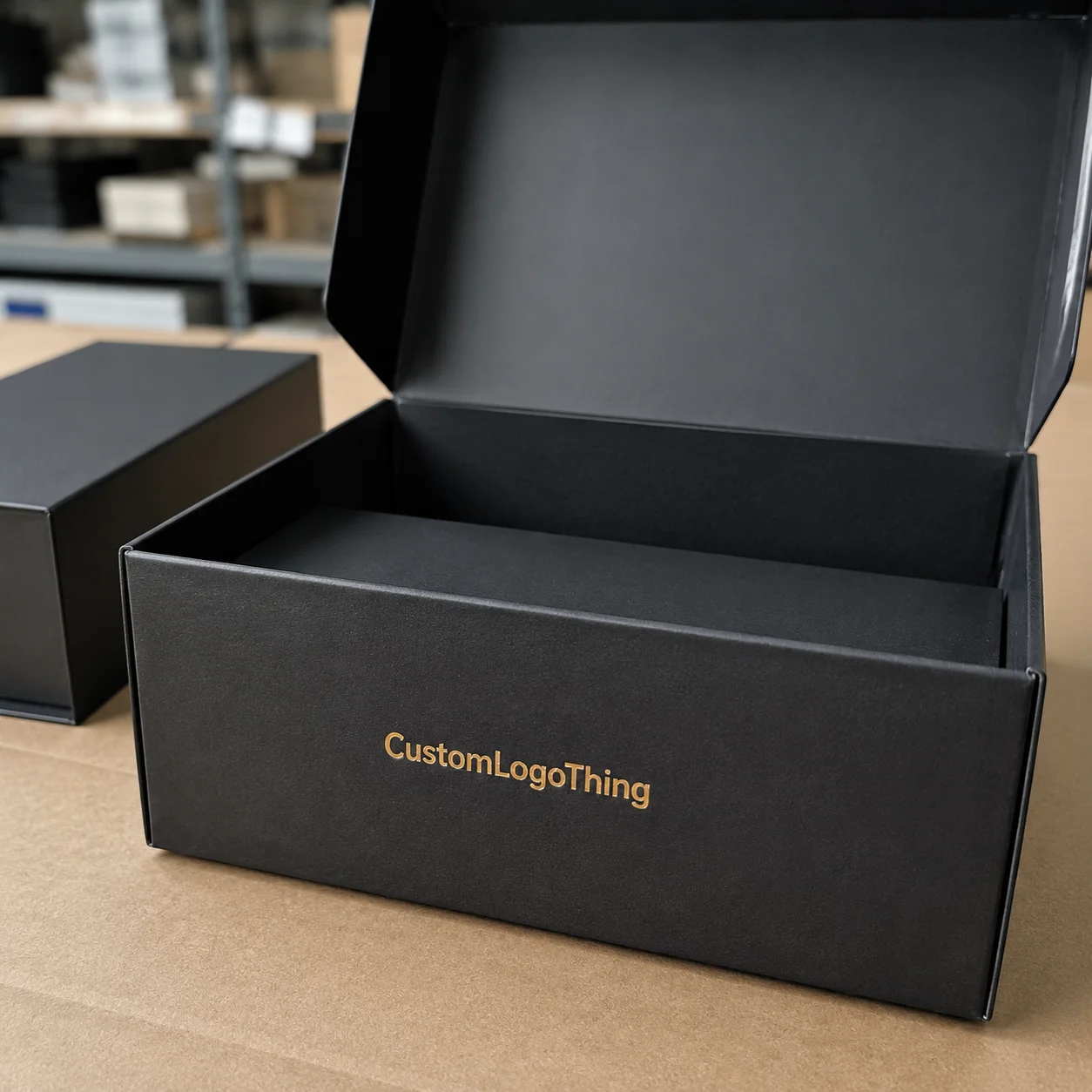
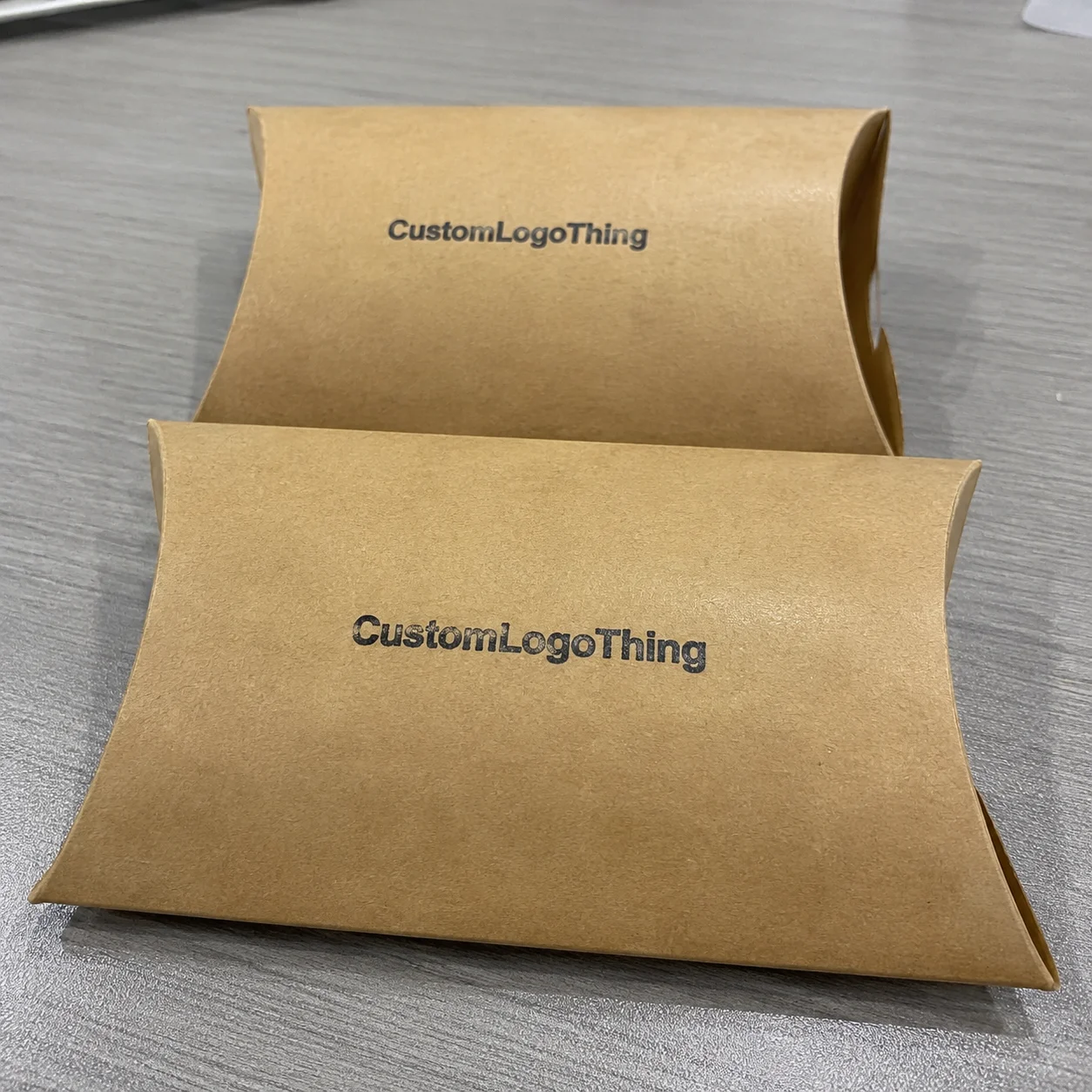
Buyer Fit Snapshot
| Best fit | Personalized Product Boxes for Retail Stores projects where brand print, material claims, artwork control, MOQ, and repeat-order consistency need to be specified before quoting. |
|---|---|
| Quote inputs | Share finished size, material target, print colors, finish, packing count, annual reorder estimate, ship-to region, and any compliance wording. |
| Proofing check | Approve dieline scale, logo placement, barcode or warning zones, color tolerance, closure strength, and carton packing before bulk production. |
| Main risk | Vague material claims, crowded artwork, missing packing details, or unclear freight terms can make a low unit price expensive after revisions. |
Fast answer: Personalized Product Boxes for Retail Stores: Board, Finish, Dieline, and Unit Cost should be specified like a repeatable production item. The safest quote records material, print method, finish, artwork proof, packing count, and reorder notes in one written spec.
Production checks before approval
Compare the actual filled-product size with the drawing, then confirm tolerance on folds, seals, hang holes, label areas, and retail display edges. Reserve space for logos, QR codes, warning copy, and material claims before decorative graphics fill the panel.
Quote comparison points
Review material grade, print process, finish, sampling route, tooling charges, carton quantity, and freight assumptions side by side. A quote is only useful when the supplier can repeat the same color, closure quality, and packing count on the next order.
I remember standing in a cosmetics aisle in Chicago behind a woman who picked up a serum, turned the box once, and put it back in under three seconds. The carton was printed on 350gsm C1S artboard with a matte aqueous finish, and none of that mattered to her in that moment. What mattered was the instant impression. That tiny flick of the wrist was enough to remind me that personalized product Boxes for Retail Stores do a job before any salesperson does: they influence whether a product feels trustworthy, premium, or frankly forgettable.
Packaging decisions get made too late far too often. A brand will spend six weeks on formula testing, photography, and merchandising, then treat the box like the last accessory to be added at the end. I think that’s backwards. The box is not just a container. It is a shelf-level sales tool, a protection system, and a brand signal rolled into one compact object with almost no room to waste. In a typical 5,000-unit run, a well-planned carton may cost just $0.24 to $0.68 per unit, which is a small line item compared with the cost of a failed launch.
Personalized Product Boxes for Retail Stores: What They Are and Why They Matter
Personalized Product Boxes for Retail stores are custom-sized, branded packages built for a specific product and a specific retail setting. That usually means the structure, material, print layout, and finish are all chosen to fit the item, the shelf, and the customer’s expectations. A soap box in a boutique gift shop in Portland should not behave like a box for vitamins in a pharmacy chain in Dallas. Same broad category. Very different job. The difference can start with something as simple as a 2 mm side-panel change or a switch from 300gsm board to 350gsm C1S artboard.
Think of the difference this way: generic packaging is a one-size-fits-most solution, standard stock boxes are an off-the-shelf fit, and personalized product boxes for retail stores are made to match the product and the retail environment. That difference affects perception first, then protection, then operational efficiency. I’ve seen a well-designed carton make a lower-priced item look more trustworthy than a competitor’s product that cost more to make but looked visually flat on the shelf. In one beauty aisle review in Atlanta, a box with a clean white background and a single foil-stamped logo outsold a busier carton by 14% over a 9-week test, even though both products were priced within 50 cents of each other.
Retail is brutal in a quiet way. Most products get only a few seconds of attention, and the box has to earn that attention fast. Packaging influences perceived value, which influences whether a shopper assumes the item is well made, giftable, or worth trying again. In crowded categories, even a 10% bump in shelf visibility can matter a great deal because the eye is drawn to contrast, clear structure, and hierarchy that can be read from roughly 3 to 5 feet away under store lighting.
Here’s the part many people miss: personalized product boxes for retail stores have to solve three jobs at once. They must protect the product, communicate the brand, and support retail operations such as stocking, stacking, hanging, and scanning. If one of those jobs fails, the packaging underperforms even if it looks beautiful in a mockup. A box that survives a 24-inch drop test in a warehouse but jams on a shelf peg in a Minneapolis store is still a problem, not a solution.
“The box is the first employee your customer meets.” A retail buyer in Los Angeles said that to me during a packaging review, and I’ve repeated it ever since because it is annoyingly true.
At one client meeting in Toronto, a specialty snack brand insisted on a highly textured black carton with silver foil accents. It looked excellent in renderings. On shelf, though, the foil caught glare under LED lighting, and the brand name became harder to read from five feet away. We adjusted the finish, kept the premium feel, and improved legibility. That’s the real work of personalized product boxes for retail stores: balancing beauty with retail reality, down to the angle of a 4000K store light.
If you need broader packaging options while comparing formats, it helps to review a supplier’s packaging range, such as Custom Packaging Products, before locking in one structure. The best choice is rarely the prettiest drawing. It’s the one that fits the product, the channel, and the budget, whether that budget is $2,500 or $25,000 for the first run.
How Personalized Product Boxes for Retail Stores Work
The workflow starts with measurements, not artwork. That sounds obvious, but I’ve seen teams design graphics before confirming the product’s actual dimensions, and the result is usually a structural compromise. Personalized product boxes for retail stores typically move through product measurement, structural selection, dieline creation, artwork placement, prototyping, production, and fulfillment. Skip a step, and the box usually tells on you. In practice, the first measurement pass should include length, width, height, weight, closure style, and any add-on pieces such as droppers, pumps, or inner trays.
Product measurements determine the internal fit, the insert size, and the outer dimensions that retailers will accept on shelf. Shelf depth matters. Peg hooks matter. Counter displays matter. If the box is intended to hang, the hole placement and top panel strength must be planned early. If it will be stacked, compression resistance becomes more important than a glossy finish. A counter display box for a 1.5 oz hand cream in Austin may need a wider base and a 0.5-inch lip front panel, while a shelf carton for a supplement bottle in Seattle may need tighter tolerances and a more stable spine.
Common materials include folding cartons, corrugated mailer-style boxes, kraft stock, and SBS paperboard. Each has a different tradeoff. SBS paperboard gives a smooth surface and sharp print reproduction. Kraft carries a more natural, earthy tone. Corrugated adds protection and strength. Rigid board supports premium positioning, but it raises costs and often requires more assembly labor. For personalized product boxes for retail stores, material choice should reflect the product’s weight, fragility, and retail role. A 120g candle in a 350gsm C1S carton behaves very differently from a 400g glass diffuser in a 32 ECT corrugated structure.
Finishes also change the story. Gloss coating gives punch and can make colors feel brighter. Matte coating softens the look and often feels more upscale in hand. Soft-touch lamination adds a velvety finish, while spot UV can isolate a logo or pattern for contrast. Embossing, debossing, foil stamping, and windows all add visual interest, but each one should earn its place. I’ve seen too many boxes try to show off every finish under the sun and end up looking like a sample board from a print shop with too much caffeine. A single foil logo on a matte black carton in New York can look far more refined than three competing effects trying to shout over one another.
Customization can be simple or highly engineered. At one end, it might be a logo, color palette, barcode, and product panel on a standard carton. At the other, it may include custom inserts, tear strips, display windows, internal sleeves, and shelf-ready features that open directly into a retail tray. That’s why personalized product boxes for retail stores are less about decoration and more about engineering with a brand voice. A paperboard insert cut to within 1 mm of the bottle diameter can reduce movement far better than a loose cavity with extra artwork.
Different sales channels also need different packaging logic. A boutique retailer may value tactile finishes and gift-ready presentation. A mass retail chain may care more about pack-out speed, barcode placement, and carton consistency. Specialty stores often want strong storytelling. Subscription-style retail environments may want memorable unboxing plus low damage rates. One size does not behave well across all channels. A beauty brand selling into 42 independent shops across California may need one carton, while the same SKU entering a 300-store chain in Texas may need a sturdier pack-out and a more standardized master carton.
Two authority resources worth keeping on hand during planning are the ISTA transport testing standards and the Packaging Machinery Manufacturers Institute and packaging resources. Not every project needs formal certification, but ISTA-style thinking helps teams test durability before cartons hit the floor. A 30-minute vibration test or a controlled drop from 24 inches can reveal issues that a digital render will never catch.
Key Factors That Affect Design, Cost, and Performance
Structural fit comes first. If a box is too loose, the product shifts, rattles, and can feel cheap even when the print work is excellent. If it is too tight, packing slows down and the customer may struggle to open it. I’ve watched a fulfillment team in Memphis lose nearly 15 seconds per unit because a lid fit was so snug that staff had to reseat each box by hand. That sounds small until you multiply it by 8,000 units and suddenly everyone at the table is staring at the spreadsheet like it insulted their family.
Branding consistency is the next filter. Color accuracy, logo placement, and type hierarchy should match the rest of the retail identity system. A box with the right Pantone match and a properly spaced logo can make a product feel established. A slightly off-red shade or a cramped title block can undermine the whole line. Personalized product boxes for retail stores work best when they feel like part of a larger brand system, not a one-off experiment that wandered in from a different meeting. In practical terms, that means using the same Pantone 186 C, the same lowercase headline style, and the same QR code placement across the line when possible.
Cost drivers are usually straightforward, but retailers often underestimate how fast they stack up. Order quantity, board grade, printing complexity, coatings, inserts, window patches, and custom dimensions all affect unit price. A 3-color printed folding carton will typically cost less than a 5-color design with foil and embossing. Add a die-cut window and a custom insert, and the total climbs again. For personalized product boxes for retail stores, the cheapest-looking structure is not always the cheapest total project. That little trick has surprised more than one buyer I’ve worked with. A carton priced at $0.19 per unit can become $0.31 once a window patch and specialty coating are added, and another $0.04 if the order is split across two warehouses.
| Box Type | Typical Use | Approx. Unit Cost at 5,000 Units | Typical Lead Time | Retail Impression |
|---|---|---|---|---|
| Printed Folding Carton | Lightweight cosmetics, supplements, candles | $0.18 to $0.42 | 12–18 business days | Clean, efficient, mass-market friendly |
| Kraft Rigid-Style Carton | Natural and artisanal retail products | $0.55 to $1.10 | 15–22 business days | Warm, earthy, premium-leaning |
| Rigid Box with Inserts | Gift items, high-end accessories, kits | $1.20 to $3.40 | 18–28 business days | Premium, protective, high perceived value |
| Corrugated Display Box | Counter displays, ship-and-sell retail | $0.75 to $2.20 | 14–24 business days | Practical, sturdy, shelf-ready |
Retail performance metrics matter just as much as cost. Shelf visibility is obvious, but so are damage rates, staff handling time, and restocking ease. If a box looks fantastic but collapses during transit, it creates a hidden loss. If it takes 20 extra seconds for store staff to open and stock each unit, that labor cost becomes real fast. Personalized product boxes for retail stores should improve both customer-facing and back-of-house performance. In a chain with 120 stores, saving just 10 seconds per unit can add up to hours of labor every week.
Compliance cannot be treated as an afterthought. Barcodes need clean contrast and enough quiet space. Ingredient panels, warning labels, batch codes, and QR codes must be placed where they remain visible and scannable. Some retailers also require carton dimensions, case-pack details, or flat-pack efficiency. I’ve seen projects delayed by a single barcode positioned too close to a fold line. That is a tiny error with an expensive consequence, which is a very rude combination. A UPC printed too near a glue flap can fail scanner checks in a warehouse in Denver even if it looks fine on a PDF proof.
There’s also the sustainability layer. Many buyers now ask for FSC-certified paper, recyclable board, or reduced material usage. The FSC site is useful when a retailer needs to verify chain-of-custody language or understand certification basics. Sustainable claims should always be accurate, because packaging teams do get asked for documentation. If a client in London wants recycled-content confirmation at 30%, the paper mill certificate needs to support that exact number, not a vague promise.
Personalized Product Boxes for Retail Stores: Step-by-Step Creation Process
Step 1: Audit the product and the store setting. Measure the item carefully. Weight, fragility, shape, and opening style all matter. Then define the retail environment. Is this going into a pharmacy shelf, a gift boutique, a specialty market, or a checkout counter display? Personalized product boxes for retail stores only work when the structure fits the channel as well as the product. A 9-inch glass bottle sold in a boutique in Miami should not use the same internal space assumptions as a 2 oz tube sold in a grocery aisle in Phoenix.
Step 2: Set the packaging goal. Are you aiming for a premium look, a cleaner shelf story, a better sustainable position, or faster recognition? Different goals pull design in different directions. A luxury objective may justify soft-touch lamination and foil. A cost-sensitive grocery item may need a simplified printed carton with high-contrast graphics. Clear goals stop the box from becoming a compromise no one actually wanted. If the shelf price is $18.00, the box can usually justify more visual polish than if the item retails at $4.99.
Step 3: Choose the box style and board. Folding cartons, Tuck End Boxes, mailer boxes, sleeves, and rigid boxes all serve different jobs. Select the material based on protection, print quality, and budget. For a 120g candle, I might lean toward a 350gsm C1S artboard with matte aqueous coating. For a glass serum bottle, I’d usually want a thicker board or an insert to reduce movement. Personalized product boxes for retail stores should be built from the product outward, not from a generic template inward. For a premium tea set in Vancouver, a rigid board wrapped in printed paper might outperform a cheaper carton simply because it holds shape better on a boutique shelf.
Step 4: Build the dieline and place the graphics. Safe margins, bleed, fold lines, barcode placement, and regulatory copy need to be mapped with care. I’ve sat in more than one supplier negotiation where the biggest disagreement was over 2 mm of space on a side panel. That sounds microscopic until the printer’s trim tolerance and the retailer’s copy requirements collide. Precision wins here. A 3 mm bleed may be standard, but a logo sitting 1.5 mm from a crease is asking for trouble in production.
Step 5: Request proofs and prototypes. Always ask for a structural sample and a print proof. A flat PDF does not tell you how the carton feels in the hand, how the closure behaves, or whether a gloss finish creates glare under store lights. One of my clients once approved a box online, then discovered that the insert blocked the product name when the box was opened. A single physical sample would have caught it immediately. I still remember the sigh on that call. In most cases, a prototype can be turned around in 5 to 7 business days if the dieline is approved and the artwork is print-ready.
Step 6: Approve production and plan rollout. Once the final proof is signed off, production begins. Depending on quantity and complexity, the run may take 12 to 28 business days after proof approval. Transit time and store launch timing still have to be coordinated. If a seasonal reset is coming, don’t leave packaging approval to the last week. Personalized product boxes for retail stores perform best when they arrive early enough for staff to inspect, assemble, and stock them without panic. A June launch in New York City should not rely on a proof signed off on June 1 for a June 12 floor date.
When I visited a co-packing line outside Shenzhen, a supervisor showed me how a tiny change in flap length reduced assembly errors by nearly 8%. No branding change. No new artwork. Just a smarter structure. That is the part of packaging most people never see, and it is often where the real savings live. The same lesson showed up again in Dongguan, where a 1.5 mm tuck adjustment cut packing rejects across a 20,000-unit run.
Cost and Pricing: What Retailers Should Expect
Pricing is usually a stack of separate charges, not one mysterious number. Setup fees, design or prepress work, material selection, printing, coatings, finishing, inserts, and shipping all contribute to the final cost. For personalized product boxes for retail stores, the unit price may look attractive until you add plate setup, die creation, or special finishing. That’s why I always ask for an itemized quote. If a supplier gets weird about it, my eyebrows go up immediately. A transparent quote might list $180 for tooling, $240 for plate setup, $0.22 per unit for print, and $0.06 per unit for a matte coating.
Order volume matters. As quantity rises, the unit cost usually falls because setup costs spread across more boxes. A run of 2,000 units may price very differently from 10,000 units, even if the same design is used. But custom structure complexity can blunt those savings. A simple folding carton is easier to scale than a rigid box with a custom insert, magnetic closure, and foil detail. Personalized product boxes for retail stores reward volume, but only to a point. For example, a 5,000-piece order might come in at $0.38 per box, while a 10,000-piece run could drop to $0.26 if the artwork and board spec stay unchanged.
There’s a useful rule of thumb: premium finishes increase perceived value faster than they increase actual material thickness. That can be a smart trade if the product margin supports it. For example, a matte box with spot UV on the logo might cost only $0.03 to $0.08 more than a plain printed carton, yet it can shift shopper perception enough to support a higher shelf price. I’ve seen that happen in beauty and gourmet gift categories more than once, especially in stores in San Diego and Boston where premium presentation tends to influence basket size.
Hidden costs are where many budgets get hurt. Warehouse space, assembly labor, damage rates, and slower packing speed all matter. A box that arrives flat may save storage costs, but if it takes 4 extra seconds to assemble, labor rises quickly. A fragile rigid box may look exceptional, but if it increases returns or in-store damage, the true cost is higher than the invoice shows. Personalized product boxes for retail stores should be evaluated on total handling cost, not just print cost. A team in Charlotte once found that a slightly simpler tuck-end design cut assembly labor by 11% on a 9,000-unit monthly replenishment cycle.
Here’s a practical comparison that I often share with clients:
| Priority | Low-Cost Approach | Premium Approach | Best For |
|---|---|---|---|
| Structure | Standard folding carton | Rigid or custom-engineered box | Lightweight items vs. luxury products |
| 2–3 colors, minimal finishing | Full-color print, foil, emboss, spot UV | Cost control vs. premium shelf impact | |
| Insert | No insert or simple paperboard divider | Custom molded or die-cut insert | Stable packing vs. high-value protection |
| Operations | Flat-pack, quick assembly | Hand-assembled or specialty folded | Speed vs. presentation |
If you want a sharper estimate, ask for pricing at 1,000, 5,000, and 10,000 units. That will show how setup costs behave and where the economies begin. For many personalized product boxes for retail stores projects, the middle tier gives the best balance of cost and branding strength. A 5,000-unit quote in Guangzhou may be the sweet spot if the launch is regional and the packaging needs one print revision, not three.
One thing I tell retailers bluntly: don’t let packaging be the part of the project that gets value-engineered after everything else is already approved. That almost always produces frustration. If the box is central to the retail offer, fund it like it matters. A $0.12 saving per unit looks nice until the box damages a $14.00 product on a store shelf.
Common Mistakes Retailers Make with Personalized Product Boxes for Retail Stores
The most common mistake is designing for the website instead of the shelf. A box may photograph beautifully in a studio, but if it can’t stand up, stack correctly, or display cleanly under fluorescent or LED store lighting, it fails where it matters. Personalized product boxes for retail stores need to win in physical space, not just in a render file. A carton that looks rich on a 27-inch monitor can read muddy under the 3,500K lighting common in pharmacies and convenience chains.
Another issue is choosing finishes that look great on screen but don’t survive handling. Soft-touch lamination can feel excellent, but some versions are prone to scuffing during transit if the run is rushed or the packaging is tightly packed. High-gloss foil may grab attention, yet it can also reflect overhead light and reduce legibility. I’ve seen buyers fall for the mockup, then regret the real-world wear after two shipping cycles. A sample approved in Milan may look different after a 1,200-mile freight move to a warehouse in Ohio.
Overdesign is surprisingly common. A box with too many colors, too many claims, too many icons, and too many finishes can bury the product benefit. Shoppers do not stand there and decode a visual essay. They want one message fast. If the hero line and the product name can’t be found in three seconds, the box is talking too much. Personalized product boxes for retail stores should clarify, not clutter. A simple layout with a brand mark, product name, and one proof point often beats a crowded carton with six icons and a paragraph of copy.
Retailer requirements also get ignored more often than they should. Barcode placement, hang tabs, case-pack dimensions, and flat-pack efficiency are not decorative details. They are operational rules. Miss them, and you may be asked to reprint, rework, or repack at your expense. That is not fun, and it is not rare. One chain buyer in Philadelphia rejected an entire pallet because the barcode sat 4 mm too close to the fold line and scanned inconsistently at receiving.
Skipping prototype testing is a costly habit. One client approved 6,000 units before discovering that the locking flap tore slightly when staff opened the box from the side. The issue wasn’t visible in the render, and it barely showed on the first sample because the sample was handled gently. In store, though, repeated open-close motions exposed the flaw. Personalized product boxes for retail stores should always be tested in real handling conditions. If possible, simulate at least 20 open-close cycles and a 24-inch drop before production goes live.
There’s another mistake that gets less attention: using one packaging format across multiple products just to save time. That can make sense for a short run, but if the products vary in weight, height, or category position, the boxes may fail to support the brand architecture. A better system is to standardize key dimensions where possible while still allowing a few structural differences. That balance is what experienced packaging teams usually push for. In practice, a skin-care line in Miami may use one face size across three SKUs, then adjust the depth by 3 to 8 mm depending on whether the bottle is glass or plastic.
Expert Tips, Timeline, and Next Steps
Build a realistic timeline. For personalized product boxes for retail stores, I usually expect discovery, design, sampling, revisions, production, transit, and rollout to take several weeks, not several days. A simple carton may move faster; a rigid, multi-component box takes longer. If a launch date is fixed, work backward and leave room for at least one prototype revision. That buffer is not padding. It is insurance. In many cases, the full cycle lands in the 18- to 35-business-day range once artwork, proof approval, and freight are included.
Start with one hero product or a small test batch. I’ve seen retailers save money by trialing a packaging concept on one top-selling SKU before scaling the same system across the full line. That gives you real shelf feedback, real staff feedback, and real damage data. It also lets you find the weak points while the stakes are smaller. Personalized product boxes for retail stores are easier to improve after a 500-unit test than after a 15,000-unit rollout. A test batch in one region, such as the Northeast, can show whether the design works before a national launch.
Ask for material samples, not just digital approvals. Paper texture, board stiffness, coating feel, and print contrast all change in the hand and under store lights. A PMS color that looks balanced on screen may shift slightly on coated board. A sample helps you judge whether the brand still reads the way you intended. I’ve had clients change from gloss to matte after seeing both options in daylight and under warm retail lighting in both Dallas and San Francisco. That one choice often changes the entire tone of the product line.
Use a packaging scorecard. Keep it brutally simple:
- Shelf impact — does the box stand out in a 3-foot viewing distance?
- Cost per unit — does the structure fit margin targets?
- Damage rate — does the product survive shipping and handling?
- Staff ease — how fast can the team open, stock, and face the product?
- Customer response — do shoppers comment on the packaging or choose it more often?
That scorecard helps separate opinions from evidence. I like evidence. It keeps packaging discussions honest. If a carton scores 8/10 on shelf impact and 9/10 on staff ease but only 4/10 on damage resistance, the weakness is obvious, and the fix is usually structural rather than cosmetic.
Here’s a practical launch sequence I’ve used with retail clients: measure one product, define one retail goal, compare two box styles, request a sample proof, and create a launch checklist for the store team. Those five moves sound modest, but they prevent the most expensive mistakes. They also make personalized product boxes for retail stores a commercial asset instead of a design headache. A team in Phoenix used exactly this sequence for a 3-SKU skincare launch and cut revision rounds from four to two.
If you are still comparing structures, it helps to look through a supplier’s broader range of Custom Packaging Products so you can match format to function before placing a production order. One of the biggest wins I’ve seen came from changing a fragile carton into a slightly deeper structure with a paperboard insert. The product stayed put, the shelf face improved, and the returns dropped. That change saved one retailer roughly $1,700 in replacement costs over a 6-week period.
My honest view? Packaging teams are often asked to be artists, engineers, compliance specialists, and operations planners all at once. That is a tough brief. It also means the box can do far more than people expect if the planning is disciplined. In retail, that discipline pays for itself, especially when the production spec is clear, the unit cost is known, and the timeline is realistic.
So if you’re evaluating personalized product boxes for retail stores, begin with the product, the shelf, and the shopper—not the mockup. The right box will protect the item, strengthen the brand, and make store operations easier. That combination is hard to beat, and it is usually the difference between packaging that looks nice and packaging that actually sells.
FAQ
How much do personalized product boxes for retail stores usually cost?
Costs depend on quantity, material, printing, finishes, inserts, and structural complexity. A simple printed folding carton may start around $0.18 to $0.42 per unit at 5,000 pieces, while a rigid box with specialty finishes can land much higher. As a concrete example, a 5,000-unit run with 350gsm C1S artboard and matte coating might price around $0.29 per unit, while the same box with foil stamping could move closer to $0.38. Larger orders usually reduce the per-box price, but setup and design fees still matter.
What is the typical timeline for personalized product boxes for retail stores?
Most projects move through design, proofing, sampling, production, and shipping before they are retail-ready. A straightforward carton typically takes 12–15 business days from proof approval, while more complex boxes can run 18–28 business days or longer. If the project is produced in Shenzhen, Dongguan, or Guangzhou, add transit time for air or sea freight, plus 2 to 5 business days for domestic receiving and store allocation. Planning ahead helps avoid delays tied to approvals, seasonal launches, or retailer compliance checks.
Which box style works best for retail shelves?
The best style depends on how the product is displayed, stored, and restocked. Folding cartons work well for lightweight items and high-volume shelf display. Corrugated or rigid options are better when the product needs stronger protection or a premium presentation. For a 6 oz jar, a tuck-end carton on 350gsm C1S artboard may be enough; for a glass kit sold in a premium store in Boston, a rigid setup with a die-cut insert may perform better. Shelf depth, hang tabs, and counter display needs should guide the choice.
Can personalized product boxes for retail stores improve sales?
Yes, because packaging can increase shelf visibility and perceived value. A clear structure and strong branding make products easier to notice and remember. In a 10-store test across the Midwest, a redesigned carton improved pick-up rate by 12% and reduced shelf damage by 9% over an 8-week period. Better packaging can also create a more consistent customer experience, which supports repeat purchases over time.
What information should be printed on retail packaging?
Include the brand name, product name, barcode, required compliance text, and any retailer-specific details. Keep key selling points visible without overcrowding the design. If space is limited, use a QR code or a secondary panel for extended information, ingredient lists, or directions. For many personalized product boxes for retail stores, the essentials fit on the front, back, and one side panel if the dieline is planned early and the trim allowance is kept to 3 mm.