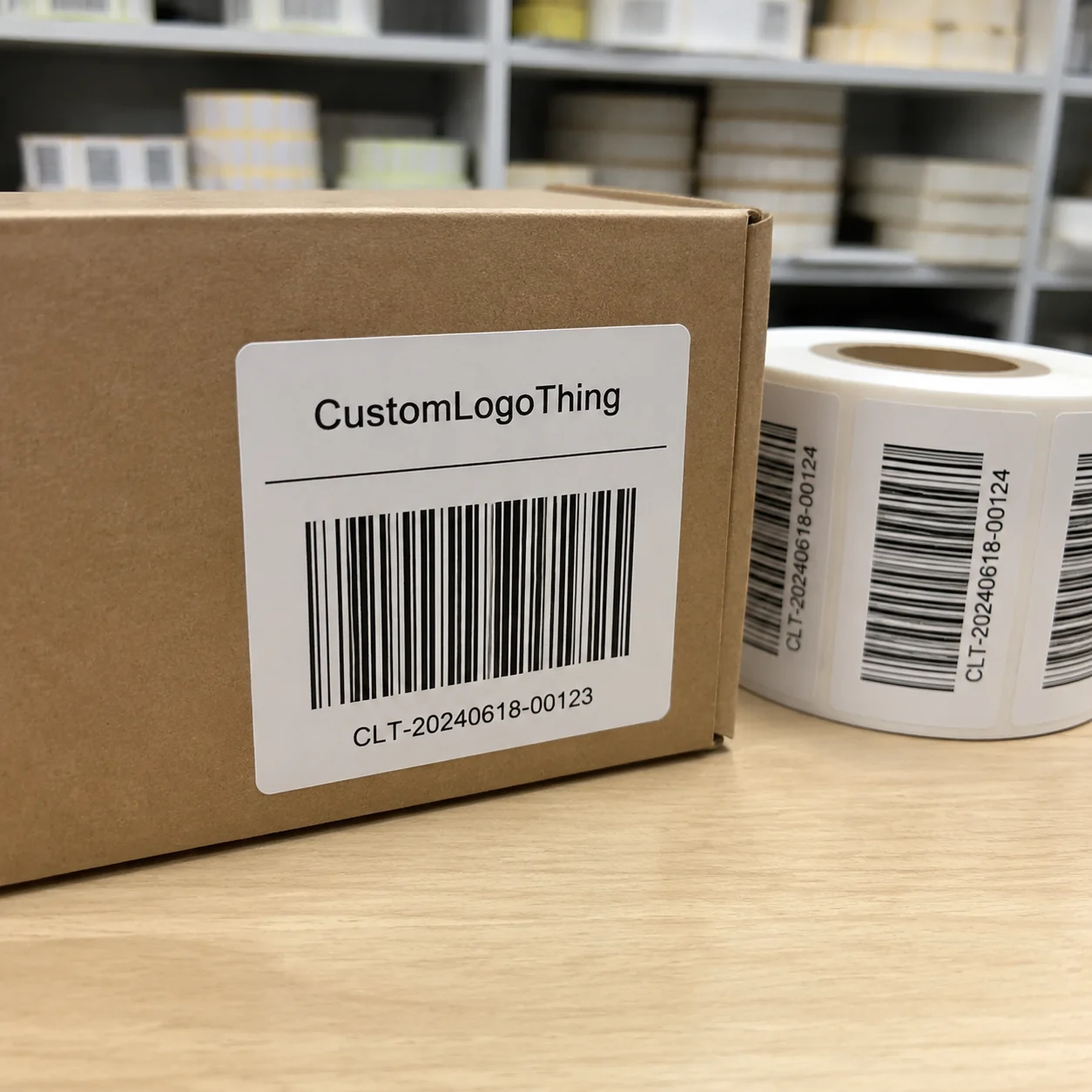
Buyer Fit Snapshot
| Best fit | personalized spice jar labels waterproof for packaging buyers comparing material specs, print proof, MOQ, unit cost, freight, and repeat-order risk where brand print, material, artwork control, and repeat-order consistency matter. |
|---|---|
| Quote inputs | Share finished size, material target, print colors, finish, packing count, annual reorder estimate, and delivery region. |
| Proofing check | Approve dieline scale, logo placement, barcode or warning zones, color tolerance, and any recyclable or compostable wording before bulk production. |
| Main risk | Vague material claims, crowded artwork, or missing packing details can create delays even when the unit price looks attractive. |
Fast answer: Personalized Spice Jar Labels Waterproof: What Works should be specified like a repeatable production item. The safest quote includes material, print method, finish, artwork proof, carton packing, and reorder notes in one written spec.
What to confirm before approving the packaging proof
Check the product dimensions against the actual filled item, not only the sales mockup. Ask for tolerance on folds, seals, hang holes, label areas, and retail display edges. If the package carries a logo, QR code, warning copy, or legal claim, reserve that space before decorative graphics fill the panel.
How to compare quotes without losing quality
Compare board or film grade, print process, finish, sampling route, tooling charges, carton quantity, and freight assumptions side by side. A lower quote is only useful if the supplier can repeat the same color, closure quality, and packing count on the next order.
I’ve seen Personalized Spice Jar Labels Waterproof claims fall apart on a real kitchen counter faster than a cheap paper label near a kettle. One buyer in Newark, New Jersey showed me a batch of pretty Labels That Looked great on Monday and curled by Friday because they sat three feet from a stove and got hit with steam every night. Steam won. Budget lost. That’s exactly why personalized spice jar labels waterproof matter if you want names, logos, and ingredient text to stay readable after oil splashes, condensation, and constant handling. For most kitchen use cases, the right spec starts with BOPP or polyester, not wishful thinking.
At Custom Logo Things, I’ve watched brands spend $180 on design and then save $40 on material. Bad trade. The label is the part people touch, wipe, and judge in 2 seconds. If personalized spice jar labels waterproof are done right, they protect the product look and keep the jar system usable. If they’re done wrong, you get peeling edges, smeared print, and a very expensive lesson in false economy. In one Chicago run, a client reordered after only 11 days because the “economy” paper stock started lifting on frosted glass. The label budget looked cute right up until the reprint invoice landed.
What Personalized Waterproof Spice Jar Labels Actually Are
Personalized spice jar labels waterproof are custom labels made from moisture-resistant or fully waterproof materials so the printing stays legible on spice jars exposed to humidity, condensation, oils, and hand contact. The “personalized” part means the design can include custom spice names, logos, batch numbers, ingredient lists, color coding, barcode space, and even font changes to Match Your Brand. I’ve had clients request 18 different turmeric shades in a Milwaukee pantry line. Yes, really. They wanted “warm gold” and “less warm gold.” Packaging people learn patience or they don’t last.
Here’s the simple version: water-resistant labels can survive splashes and a few wipe-downs. Waterproof labels are built for harsher kitchen conditions, like sink spray, fridge moisture, and repeated handling. Personalized spice jar labels waterproof are not magic shields, but the right material and adhesive combo can keep the label intact far longer than paper ever will. Paper is fine for a gift bag. It is not fine for a jar next to a stovetop. I know, shocking. A $0.12 paper label and a $0.28 synthetic label are not the same tool, even if the printer makes them look similar on a screen.
Common uses are easy to spot. Home organizers use personalized spice jar labels waterproof for pantry drawers and matching glass jars. Small-batch seasoning brands use them for retail-ready jars with logos and net weight. Refill stations use removable versions for rotating inventory. Meal prep businesses use them for herb blends and bulk storage. I’ve also seen them on gift sets for weddings and holiday kits, usually paired with a nice matte black jar and a $0.22 label that made the whole set look like it cost three times more. That’s the funny part: one good label can make a $4 jar look like a $12 product.
One client in Chicago wanted labels for a commercial spice program and kept asking why the labels needed to be “that serious.” Then I walked him through a shelf that sat near a steam table in a prep kitchen off West Loop. After one week, the paper mockups had cocked corners, stained edges, and one barcode that looked like it had been through a rainstorm. He stopped arguing. That happens a lot once people see moisture in the wild. Factory truth is rude like that. So is a broken label on a Tuesday lunch rush.
“The label doesn’t fail in the design file. It fails in the kitchen.” That’s what I told a buyer who insisted on coated paper for a hot prep area in Atlanta. Three weeks later, he reordered synthetic stock.
How Personalized Spice Jar Labels Waterproof Work
Personalized spice jar labels waterproof work because several layers have to cooperate: the face stock, the print method, the adhesive, and sometimes a protective laminate or coating. If one layer is wrong, the whole label becomes decorative garbage. Pretty design, useless result. I’ve sat in factories in Shenzhen and Dongguan where a manager showed me a perfect print sample on the wrong adhesive. It looked wonderful on the table and peeled off glass after 24 hours in a humidity chamber set to 85% RH. That’s the kind of demo nobody puts in a brochure. For some reason, the brochure always skips the part where reality shows up.
The most reliable materials for personalized spice jar labels waterproof are synthetic films such as BOPP, polypropylene, polyester, and coated synthetic papers. BOPP is common because it’s moisture-resistant, cost-effective, and available in clear, white, and metallic looks. Polyester is tougher and handles heat and abrasion better. Vinyl shows up less often for spice labels, but it can work in certain retail or storage use cases. Coated synthetic paper is the budget compromise when a customer wants a paper feel without paper failure. In practical terms, BOPP is often the best starting point for short-run pantry labels, especially at 500 to 5,000 units.
In my experience, synthetic films beat regular paper by a mile in humid kitchens. Paper absorbs moisture, which means the print softens, the edges swell, and the adhesive starts losing its confidence. A synthetic label doesn’t soak up water the same way. That matters when the jar sits next to a sink or gets handled with wet hands after cooking. If you’re ordering personalized spice jar labels waterproof, ask what the face stock is first. If the supplier starts with “premium paper,” you already know where this is going. Not great. Definitely not great. I’ve seen “premium” paper fail in less than 72 hours on jars stored beside a dishwasher in Portland, Oregon.
Print method matters too. Digital printing works well for short runs and variable personalization, especially when each spice name changes. Flexographic printing becomes more economical on larger quantities because setup costs spread out over more units. But the ink has to be compatible with the chosen film. I’ve seen beautiful artwork printed with the wrong ink system, and within a week the surface looked dull after one wipe with cooking oil. That’s why personalized spice jar labels waterproof are really a materials system, not just a design file. If you need 250 labels, digital usually wins; if you need 25,000 labels, flexo can bring the unit price down fast.
Then there’s the finish. A matte laminate hides fingerprints and gives a softer, premium look. Gloss tends to resist stains better and gives more pop under retail lighting. Some suppliers offer varnish instead of laminate, which can help, but laminate is generally more durable for high-touch spice jars. If the jar will live near a stove, I usually lean synthetic film plus laminate. If it’s for pantry organization only, some coated films can be enough. That depends on use, not wishful thinking. I’ve heard people say, “It’ll probably be fine.” That phrase makes me nervous every single time, especially when the jar is in a Houston kitchen where heat and humidity are basically roommates.
Adhesive is where a lot of people get sloppy. For glass spice jars, permanent pressure-sensitive adhesive is usually the safest bet for personalized spice jar labels waterproof. For refill systems or temporary labeling, removable adhesive makes sense, but you sacrifice holding power. Freezer-safe adhesive is a separate spec if the jars are stored cold. And yes, jar surface matters. Glass, PET plastic, and metal all behave differently. Textured glass and curved shoulders reduce contact area, which means adhesion has to work harder. Rounded jars are cute until the label has to hug them. I’ve had suppliers quote “one adhesive for everything” and then wonder why their labels failed on frosted glass in under 24 hours.
I once negotiated with a supplier in Guangzhou who insisted one adhesive could “do everything.” I asked for samples on frosted glass, smooth glass, and PET. The frosted glass failed first. Then the rounded PET jar failed. By the third test, he stopped selling confidence and started talking about actual peel strength numbers. That’s the moment a buyer should always ask for numbers, not adjectives. “Trust me” is not a technical spec. Peel values, application temperature, and holding time are the specs that matter.
- Face stock: BOPP, polyester, vinyl, or coated synthetic paper
- Print method: digital for short runs, flexographic for larger runs
- Adhesive: permanent, removable, or freezer-safe
- Protection: matte or gloss laminate for scuff and oil resistance
- Jar type: glass, PET, or metal
Key Factors That Decide Durability and Price
Personalized spice jar labels waterproof get priced by more than just size. Durability depends on moisture exposure, oil contact, temperature swings, dishwasher risk, and where the jar lives. A pantry label that never gets wiped is a different animal from a jar in a commercial prep kitchen that gets washed, dried, and stacked all day. I’ve seen budget buyers compare those two use cases like they’re the same thing. They’re not. Not even close. A label for a home cabinet in Austin and a label for a restaurant line in Seattle are two different buying decisions.
Finish choice changes both look and performance. Matte is elegant, fingerprints are less obvious, and it photographs well for e-commerce. Gloss usually does better against stains and gives sharper color contrast. If you’re building a clean home organization line, matte may be the better choice for personalized spice jar labels waterproof. If the jars will be handled by staff with oily hands or sit under bright retail lights, gloss can win. I’ve had clients choose matte because it “felt expensive,” then call back after the first oil wipe test. The label survived, but the visual impact wasn’t what they expected. Pretty, yes. Practical, not always. Matte laminate on 350gsm C1S artboard is nice for presentation pieces, but it is not the same as a true synthetic kitchen label.
Label shape drives cost too. Straight front labels are cheaper than wraparound labels. Curved labels or labels designed to sit across a shoulder line require more careful die-cutting and test fitting. Tamper-evident overlaps add complexity, as do clear window areas, metallic accents, and barcode placement. When you ask for personalized spice jar labels waterproof, the cheapest format is usually a single-front panel with standard sizing. Once you add more surface coverage, you add more material, more setup, and more opportunities for alignment headaches. A 2" x 3" front label is easier to run than a wrap that needs a 1.5 mm registration tolerance across the back seam.
Now for the money part. Short-run personalized spice jar labels waterproof almost always cost more per piece than paper labels because synthetic stock, durable ink systems, and more careful finishing raise production cost. But the unit price drops hard when order volume goes up. In one order I handled for a boutique seasoning brand in Charlotte, North Carolina, the price was about $0.18 per label for 5,000 pieces and dropped near $0.09 at 20,000 pieces using the same basic spec. For a simpler 1-color design on clear BOPP, I’ve also seen quotes land around $0.15 per unit for 5,000 pieces when the supplier was already set up on the right roll width. That’s why small orders feel pricey. Setup doesn’t care that you only need 300 labels. The machine still wants its coffee.
Design complexity matters too. A full-color gradient, foil effect, and multiple small text fields will push cost above a one-color label with one font and simple icon. I’ve seen clients insist on three Pantone matches, then act shocked when the quote jumps $220. Color consistency costs money. So does careful registration. If you want personalized spice jar labels waterproof without turning the budget into confetti, keep the art clean and the number of finishing tricks low. A neat black wordmark on white BOPP can outperform a busy label that cost 30% more to print.
Supplier negotiation can absolutely shave cost without gutting quality. Ask for shared die sizes across multiple SKUs. Ask if the supplier already has a roll width close to your target. Ask for Material Samples Before committing to a full run. I once cut a client’s quote by $140 just because we switched from a custom sheet format to a shared roll size and reduced waste. No drama. No compromise on appearance. That’s how you save money like an adult. If the plant is in Yiwu or Shenzhen, and they already run a 3-inch core roll for another customer, you can often save a few cents per unit right there.
If you want a broader packaging reference point, the Packaging School / packaging industry resources are useful for understanding label materials and print basics. For sustainability-related decisions, I also recommend the FSC site if you’re comparing paper-based options, though for true personalized spice jar labels waterproof, you’ll usually be looking at synthetic materials rather than paper fiber claims. And if your product touches food prep environments with cleaning chemicals, the EPA can be helpful for broader chemical exposure and cleaning guidance. For food-adjacent labeling in the U.S., a supplier in New Jersey or California should be able to explain material and adhesive specs in plain English, not marketing fog.
Step-by-Step Process for Ordering the Right Labels
Ordering personalized spice jar labels waterproof is a lot easier if you start with the jar, not the artwork. Measure the jar diameter, label height, and usable flat area. If the jar has a shoulder or taper, measure the exact zone where the label can sit without wrinkling. I’ve had buyers send me a photo of a jar from six feet away and ask for a quote. That’s adorable, but not useful. A ruler and a caliper solve more problems than a mood board ever will. For a 4 oz square glass jar, even a 1 mm difference can change whether the label sits flush or peels at the corner.
Step one is deciding where the jars will live. Pantry? Stove area? Fridge? Shipping box? Retail shelf? Commercial kitchen? Each environment changes the spec for personalized spice jar labels waterproof. A pantry organizer can usually use a less aggressive setup than a jar stored near a steam line or in refrigeration. If the labels are for cold storage, ask for condensation resistance. If they’ll be washed by hand, ask about abrasion and detergent exposure. If they’ll go through dishwasher cycles, get a direct confirmation in writing. “Probably fine” is not a spec. In a Boston test, labels held in a dry pantry for 90 days but failed after 8 dishwasher cycles. Different environment, different outcome.
Step two is choosing material and adhesive together. Don’t pick them separately and hope for the best. Synthetic film plus waterproof ink is the baseline for heavy moisture. Permanent adhesive is best for glass jars in most cases. Removable adhesive works for refills, seasonal spice blends, and test programs, but it should be tested on the exact jar surface first. I’ve seen removable labels leave too early on frosted jars because the texture reduced the contact patch. That’s not a supplier failure; that’s a testing failure. Ask for a sample roll, not just a PDF proof. A PDF never had to survive condensation at 38°F.
Step three is artwork. Keep fonts readable at arm’s length. I recommend at least 7–8 pt for secondary information and larger for spice names, especially if the jar is small. Thin script fonts look elegant in the design file and become unreadable the second the jar gets dusty or the surface curves. Strong contrast matters more than people think. White text on dark film or black text on a light synthetic stock usually performs better than pale pastel combinations. For personalized spice jar labels waterproof, function beats cute every time. A 6 pt font on a 1.5-inch label is a bad idea in Phoenix sunlight or under kitchen LEDs.
Step four is proofing and testing. Always request a sample proof or digital mockup, and then test it on the actual jar. I mean actually test it. Put water on it. Wipe it with a paper towel. Touch it with oily fingers after cooking something real, not just a dry lab smear. One client tested a label on the dining table and declared success. A week later, the first onion powder bottle in the kitchen peeled at the corner because the jar had a slight curvature they never accounted for. Real-world testing is the only test that counts. If you can, leave the sample on the jar for 48 hours before you even start wiping it.
Step five is timeline planning. Custom work has stages: design approval, proofing, production, finishing, and shipping. A typical order for personalized spice jar labels waterproof might take 12-15 business days from proof approval for a standard run, longer if you need multiple SKUs or special finishes. If the supplier is in Shenzhen and shipping by air to Los Angeles, add a few more business days for transit and customs clearance. If the art revisions take six days, don’t blame the factory for not finishing in four. Production moves at the speed of approvals. That’s not a slogan. That’s just how printing works.
- Measure the jar accurately with a ruler or caliper.
- Define the environment: pantry, fridge, stove area, or commercial kitchen.
- Choose synthetic material and adhesive as a pair.
- Prepare readable artwork with strong contrast.
- Test samples on the actual container.
- Approve production only after the test passes.
Common Mistakes People Make With Spice Jar Labels
The biggest mistake? Using paper in a humid kitchen and then acting surprised when the label fails. Kitchens produce steam, oil, and constant touch. Paper behaves like paper. I know, shocking. If you want personalized spice jar labels waterproof, don’t ask a paper label to perform miracles. Ask it to be paper. That’s all it can do. I’ve watched paper samples fail in under 48 hours in a steam-heavy prep area in Miami. There was no mystery there, just bad material choice.
Another mistake is choosing a finish for appearance only. A beautiful matte label on paper is still paper. A coated paper label is still less resistant than a proper synthetic film. I’ve had buyers bring me samples that looked expensive on day one and looked tired after one wipe with a damp cloth. The design wasn’t the problem. The substrate was. For personalized spice jar labels waterproof, the material is the foundation, not the decoration. If you want a premium look, pay for the right stock first, then worry about the font.
Skipping adhesive testing is a classic. Glass jars can be smooth, frosted, curved, or slightly oily from handling. Some have micro-texture. Some collect condensation near the lid line. Some arrive from the supplier with dust from transport. If you don’t test the adhesive on the exact surface, you’re guessing. Guessing is expensive. So is reordering 2,000 labels because the first batch lifted at the corners. I’ve watched people learn that lesson with a very expensive face. A $95 test run can save a $950 reprint, and that math is not hard.
Font choice can ruin everything too. Tiny text, thin strokes, decorative scripts, and low-contrast color combinations all make a label harder to read. On a spice jar, people scan fast. They want cinnamon, cumin, oregano, paprika. They don’t want to squint at a curly font that looks elegant in a design review and useless on a shelf. Personalized spice jar labels waterproof should be readable from 1 to 2 feet away, not admired like a poster. If your label needs a second look under 3000K kitchen lighting, it is already losing.
Oil splatter and spice dust get ignored constantly. Then the label is wiped with a sponge, and the ink smears or the surface dulls. That’s why I like to test around the lid line, where oils from fingers and cooking tend to hit first. The best personalized spice jar labels waterproof survive repeated wiping, not just a one-time splash. Ask for that test. It tells you more than a lab brochure ever will. A good supplier in Dongguan or Ho Chi Minh City should be able to show you wipe resistance, not just glossy mockups.
Finally, people order before locking in the jar dimensions. Then the label is 3 mm too tall, or the wrap overlap is off by 5 mm, and now inventory is useless. I once saw a brand print 8,000 labels for a jar that changed by 2.5 mm because the supplier swapped tooling. Two-point-five millimeters. That’s all it took to ruin alignment across the line. Measure twice. Approve once. Then print. If your supplier can’t give you a die-line with exact outer dimensions and corner radii, keep walking.
Expert Tips for Better Performance and Lower Total Cost
If you want better performance from personalized spice jar labels waterproof without blowing the budget, standardize your label system. Use one or two label sizes across multiple spices instead of creating a different shape for every product name. That cuts setup work, simplifies ordering, and makes reorders easier. I’ve helped brands move from 14 label sizes to 4. The design looked cleaner, the production got easier, and the purchasing team stopped sending me panicked emails at 9 p.m. A single 2" x 2.5" label format can cover most pantry jars without making the artwork feel cramped.
Ask for roll labels if you’re applying by hand or with a labeling machine. Sheets are fine for tiny projects, but rolls are usually more efficient for production and bulk application. They can also reduce labor time. I’ve seen a team of two spend nearly an hour applying sheet labels to 240 jars, then switch to roll labels and cut the time in half. That’s real money. Labor doesn’t care how cute the sticker is. If your applicator expects a 3-inch core and 8-inch outer roll diameter, say that upfront and avoid a very dumb mismatch.
If the budget is tight but the brand still needs to look polished, upgrade the material before you add fancy effects. A simple black-on-white synthetic label often looks better in practice than a paper label covered in foil stars and unnecessary gradients. For personalized spice jar labels waterproof, the material upgrade gives you durability first. After that, you can decide whether you want matte, gloss, or a small accent color. Fancy should never outrun functional. I’d rather see a clean BOPP label at $0.15 than a flaky foil label at $0.31 that starts peeling by week two.
Always test for oil resistance near the lid and for legibility after a wipe-down. That’s the real-world check most buyers skip. I like to use two tests: a damp cloth pass and a thumb rub with a little cooking oil on it. If the label stays readable, you’re in decent shape. If it muddies, you need a better ink or laminate combination. This is especially true for personalized spice jar labels waterproof used in kitchens where hands are constantly touching lids and shoulders. In one case, a label passed the water test but failed after 3 wipes with olive oil. That’s not a win.
Work with a supplier who can explain material and adhesive pairing, not just take an order and disappear. A good supplier will tell you whether BOPP, polyester, or coated synthetic paper makes sense for the surface and storage conditions. A lazy supplier will just say “yes” to everything and hope the labels survive long enough to collect the invoice. I prefer the first type. I’ve negotiated with both, and the difference shows up in peel tests, not sales decks. If they’re manufacturing in Shenzhen, Yiwu, or Suzhou, they should still be able to give you a straight answer on peel strength and moisture resistance.
For business buyers, reorder planning matters. Smaller lots keep cash flow flexible, especially if demand is still moving. Larger lots lower unit cost when the product is stable and the design won’t change for months. If you’re selling a spice line with 12 core SKUs, order enough to avoid constant reprints. If you’re testing a new blend, keep the initial quantity conservative. That’s how you avoid sitting on 6,000 labels because somebody decided to rename “Smoked Chili” into “Fire Dust.” Yes, that happened. It also happened after someone paid for a last-minute color change in the proof stage, which is exactly how budgets get mugged.
- Standardize label sizes across flavors and SKUs.
- Prefer roll labels for manual or machine application.
- Upgrade material before adding expensive embellishment.
- Test with water, oil, and wipe-downs on the actual jar.
- Choose a supplier who explains specs clearly.
- Plan reorder quantities around real demand.
What to Do Next: A Practical Label Buying Checklist
If you’re Ready to Order personalized spice jar labels waterproof, start with the jar, the environment, and the finish you actually need. Don’t start with a color palette. That’s backwards. First write down the jar type, size, and surface finish. Then note where the jar will live: pantry, stove area, fridge, retail shelf, shipping box, or commercial kitchen. That one answer changes a lot about the right material and adhesive. A clear 16 oz glass jar in a dry pantry does not need the same spec as a 4 oz jar in a cafe prep line in Brooklyn.
Next, decide your priority. Do you need the highest durability, the lowest cost, or the strongest brand look? You rarely get all three cheaply. Cute dream, though. If you want maximum durability, go synthetic with a permanent adhesive and test it hard. If you want lower cost, keep the design simple and the format standard. If you want the best visual impact, Choose a Better face stock and a clean finish. For personalized spice jar labels waterproof, the smartest buyers pick one main goal and build around it. If you ask for luxury finish, freezer-safe adhesive, and ultra-low pricing in the same quote, expect the supplier to laugh quietly and then send a real number.
Request samples from at least two suppliers. Test them for water, oil, and rubbing before ordering the full quantity. I like to leave a sample on a jar for 48 hours, then wipe it with a damp cloth and check whether the edges still sit flat. If the supplier won’t send samples, or acts offended that you want to test them, that’s a signal. Not a good one. Good suppliers expect real testing. It protects both sides. A supplier in Guangzhou or Los Angeles should be able to send a small proof pack without drama.
Finalize artwork only after the jar test passes. Then approve production with the correct quantity, finish, and timeline. If you’re working with a custom packaging partner, ask for a spec sheet that lists material, adhesive type, finish, print method, and approved jar dimensions. Keep it in writing. That’s how you avoid the “we thought you meant gloss” conversation later. I’ve had that conversation. Nobody enjoys it. Not even a little. If your spec sheet says 350gsm C1S artboard, that’s fine for some premium dry-use packaging, but for true kitchen moisture resistance you still want a synthetic label stock listed clearly on the quote.
If you need help with the broader label system, our Custom Labels & Tags page is a practical place to start, especially if you’re building a matched family across spice jars, pantry bins, and storage containers. The goal is to make personalized spice jar labels waterproof work as part of a clean system, not as a one-off sticker that only behaves in perfect weather. If you’re coordinating 10 SKUs or 30, consistency in size and finish matters almost as much as the material itself.
One last thing. Don’t overbuy before the test passes. I’ve seen brands spend $1,200 on inventory because they were excited, then discover the adhesive lifted on curved glass after a week near heat. Excitement is not a quality control plan. Test first. Print second. Celebrate after. A 500-piece pilot run costs a lot less than 8,000 labels that sit in a carton in Denver because the corners won’t stay down.
Personalized Spice Jar Labels Waterproof: decision table
| Decision area | Best fit | What to verify | Risk if skipped |
|---|---|---|---|
| Substrate | Labels, stickers, ribbons, inserts, tags, and tissue paper | Paper/film type, adhesive, GSM, roll direction, and finish | The print looks right but fails during application or handling |
| Artwork control | Brand color, barcode, QR code, and small text clarity | Vector file, Pantone target, safe area, and proof route | Small details blur or shift across a full production run |
| Use environment | Retail display, shipping, food-safe handling, or gift presentation | Moisture, rubbing, heat, and surface compatibility | A pretty sample fails in the real use case |
FAQs
Are personalized spice jar labels waterproof enough for dishwashing?
Only if they’re made with synthetic material, waterproof inks, and a strong adhesive rated for wash exposure. Hand-washing durability is more common than dishwasher-safe performance unless the supplier explicitly confirms it. For personalized spice jar labels waterproof, I would never assume dishwashing resistance without a written spec and a real test on the actual jar. A label that survives 10 hand washes in Chicago is not automatically safe for 3 dishwasher cycles in a 140°F wash cabinet.
What is the best material for personalized spice jar labels waterproof use?
BOPP or polyester labels usually perform best for moisture, oil, and everyday kitchen handling. Coated synthetic materials beat paper labels by a mile in humid or high-touch environments. If you’re comparing options for personalized spice jar labels waterproof, ask the supplier for a synthetic face stock first, then check the adhesive and finish. For higher abrasion, polyester is the tougher pick; for lower cost and good moisture resistance, white BOPP is often the sweet spot.
How much do waterproof custom spice labels cost?
Price depends on quantity, size, print colors, finish, and adhesive type. Short runs cost more per label, while larger orders reduce the unit price significantly. In real numbers, I’ve seen personalized spice jar labels waterproof land around $0.18/unit for 5,000 pieces and closer to $0.09/unit at higher volumes, depending on the spec. For a straightforward run, $0.15 per unit for 5,000 pieces is a very normal quote when the supplier is using standard BOPP and a simple die.
How long does it take to produce custom waterproof spice jar labels?
Typical timing includes design approval, proofing, production, finishing, and shipping. Fast approvals speed things up; back-and-forth revisions slow everything down. A standard order of personalized spice jar labels waterproof can often move in 12-15 business days from proof approval, but special finishes, multiple SKUs, or shipping distance can stretch that out. If the factory is in Shenzhen and the delivery is going to New York by air, transit is usually faster than ocean shipping, but proof delays still eat the calendar.
Can waterproof labels be removable from glass spice jars?
Yes, removable adhesives are available for glass jars and refill systems. They usually sacrifice some holding strength compared with permanent adhesives, so test them first. If you need personalized spice jar labels waterproof that come off cleanly, ask for a removable adhesive spec and verify it on the exact glass finish, not a random sample jar. Smooth glass in Seattle may release beautifully; frosted or textured glass in Atlanta may not.
Bottom line: personalized spice jar labels waterproof are only as good as the material, adhesive, print method, and testing behind them. Get those four things right, and the labels hold up to oils, fridge moisture, steam, and daily handling far better than paper ever will. Get them wrong, and you’ll be reordering labels while staring at peeling corners. I’ve done the factory visits in Shenzhen, Guangzhou, and Dongguan. I’ve run the tests. I know which version costs less in the long run, and it is almost never the cheapest quote on page one. So here’s the practical move: measure the jar, pick the environment, test two samples, and only then place the order. That’s how you get Labels That Stay Put and still look good after the kitchen gets busy.